Head gasket problems can sound intimidating, but it all starts with understanding one crucial part. The head gasket is a specialized seal sandwiched between your engine block and the cylinder head. Its job is to manage the intense pressure of combustion while keeping vital fluids like oil and coolant from mixing.
Think of it as the engine's most important diplomat. When it fails, all-out chaos breaks loose under the hood.
Understanding Your Engine's Head Gasket
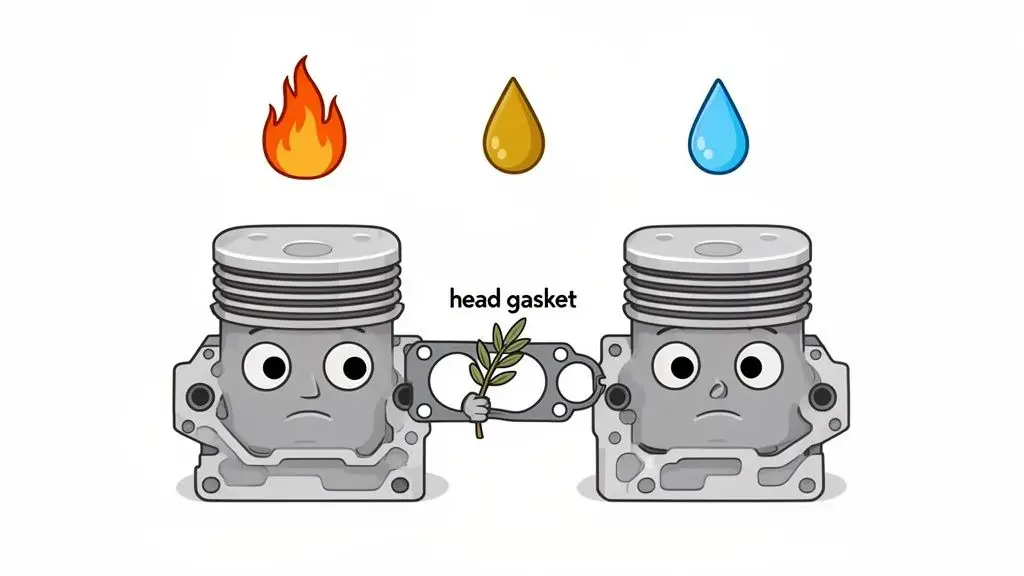
To really get a handle on head gasket issues, you have to picture your engine as a high-pressure, high-temperature battlefield. The engine block, where the pistons pump up and down, and the cylinder head, which holds the valves and spark plugs, are two massive metal components bolted together under immense force. The head gasket is that thin, resilient layer in between, responsible for keeping the peace.
This small but mighty part is usually made from layers of steel and other durable materials. It has to withstand some incredible forces, including temperatures that can spike over 2,000°F and pressures exceeding 1,000 psi every single time a cylinder fires. Its job is thankless but absolutely essential, and it boils down to three main duties.
The Three Core Duties of a Head Gasket
A head gasket is designed to maintain a perfect seal across different channels and passages that are built into the engine block and cylinder head. A failure in any one of these sealed areas is what causes the classic symptoms of a blown head gasket.
- Containing Combustion Pressure: The gasket seals the top of the cylinders, making sure the massive pressure from the fuel-air explosion pushes the pistons down to create power. If that seal breaks, pressure leaks out, leading to lost power and engine misfires.
- Separating Engine Oil: It creates a barrier that stops high-pressure oil from seeping into the cooling system or the combustion chamber. An oil leak here can cause blue smoke out of the tailpipe or contaminated coolant that looks like a chocolate milkshake.
- Isolating Coolant: The gasket also keeps engine coolant flowing through its own passages to carry heat away from the engine. If this seal is breached, coolant can leak into the oil (creating that "milky" look) or into the cylinders, which produces clouds of sweet-smelling white smoke from the exhaust.
A blown head gasket isn't just a simple part failure; it's a total breakdown of your engine's internal systems. It ruins the fundamental separation between combustion, lubrication, and cooling, which is why the symptoms can be so dramatic and affect the whole engine.
Ultimately, the head gasket is the firewall between these three critical systems. It's the one component that allows intense heat, high-pressure liquids, and explosive force to exist just millimeters apart without causing a catastrophic failure. So when you see those tell-tale signs like white smoke, milky oil, or an engine that just won't stay cool, it’s often because this critical peacemaker has given up. Knowing this helps explain why head gasket issues are so serious and why a professional diagnosis is a must.
Telltale Symptoms of a Failing Head Gasket
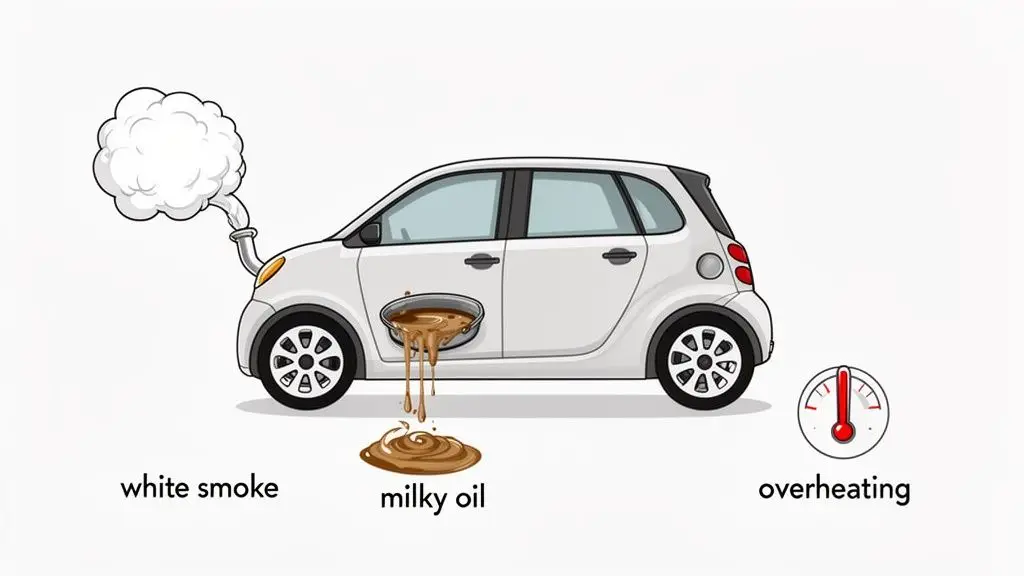
A head gasket rarely gives up without a fight. Instead, it sends out a series of distress signals, asking for help before a complete failure leaves you stranded. Learning to spot these clues early can be the difference between a manageable repair and a catastrophic engine replacement.
Each symptom is a direct result of the head gasket no longer being able to keep coolant, oil, and combustion pressure separated. Think of it as a series of internal leaks where fluids and gases are ending up where they absolutely should not be. Recognizing these signs is your cue to take action.
Is Your Engine Constantly Overheating?
One of the most common signs of head gasket trouble is an engine that just won't stay cool. When the gasket fails, hot combustion gases can get forced into the cooling system, overwhelming it with heat and pressure it was never designed to handle. You'll see this as your temperature gauge climbing into the red, especially when accelerating or going uphill.
Alternatively, the gasket might fail in a way that allows coolant to leak out, either visibly or internally. With low coolant levels, your engine doesn't have enough fluid to regulate its temperature, leading to the same overheating problem. If your car is constantly running hot and you can't find an obvious radiator leak, the head gasket becomes a prime suspect.
Seeing White Smoke from the Exhaust?
A little thin, white vapor on a cold morning is perfectly normal, but you should never ignore thick, sweet-smelling white smoke billowing from your tailpipe. This is a major red flag, pointing directly to coolant leaking into the combustion chamber, where it's being turned into steam and pushed out the exhaust.
This isn't the same as the darker smoke you might see from burning oil. For more on what different smoke colors mean, you can check out our guide on what causes blue smoke from your car. If that white smoke sticks around, you're almost certainly looking at an internal coolant leak—a classic sign of head gasket failure.
Key Insight: The sweet smell is a critical clue. Engine coolant contains ethylene glycol, which has a distinct, syrupy odor when it burns. If you notice this smell accompanying the white smoke, it's a very strong indicator that coolant is getting into your cylinders.
Does Your Engine Oil Look Milky or Foamy?
Another telltale symptom shows up right on your dipstick. When you check your oil or look under the oil filler cap, a milky, frothy, or light-brown substance that looks like a coffee milkshake is bad news. It means coolant has breached the seal and is mixing directly with your engine oil.
This contamination is incredibly dangerous for your engine. Oil that’s been diluted with coolant loses its ability to lubricate vital components like bearings, camshafts, and pistons. Driving with this "milky" oil can quickly cause severe internal friction and seize the engine completely.
Losing Coolant with No Visible Leak?
Are you constantly topping off your coolant reservoir, but you can’t find a single puddle under your car or a leak from any hoses? That "disappearing" coolant has to be going somewhere. A blown head gasket provides two escape routes: into the cylinders (creating white smoke) or into the oil passages (creating that milky sludge).
It's also possible for the gasket to fail on an outer edge, creating an external leak that's hard to spot. For instance, a common symptom is a gasket leaking oil that drips onto hot engine parts and simply burns off before it ever hits the ground. If you suspect any kind of leak, a professional inspection is the only way to know for sure.
To help you connect the dots, here's a quick-reference chart that matches these symptoms to what’s happening inside your engine.
Head Gasket Failure Symptom and Cause Chart
| Observable Symptom | What You Might See or Smell | What Is Likely Happening in Your Engine |
|---|---|---|
| Engine Overheating | Temperature gauge in the red; boiling sounds. | Combustion gas is entering the cooling system or coolant is leaking out. |
| White Exhaust Smoke | Thick, white clouds from the tailpipe with a sweet smell. | Coolant is leaking into the combustion cylinders and burning off. |
| Milky Engine Oil | Frothy, tan or light-brown residue on the dipstick. | Coolant and oil are mixing due to a breach between their passages. |
| External Leaks | Visible fluid dripping from below the cylinder head. | The gasket has failed on an outer edge, allowing oil or coolant to escape. |
Catching these signs early gives you the best chance to address the problem before it spirals into something much worse. Ignoring them, however, will only lead to more severe and expensive engine damage.
The Root Causes of Head Gasket Failure
A head gasket almost never fails on its own. It’s usually the last domino to fall after another problem has been brewing inside the engine. To really understand why a head gasket blows, you have to look past the gasket itself and focus on the real culprit. Nine times out of ten, that culprit is engine overheating.
Think of the head gasket’s job: it creates a seal between two very different metals, usually an aluminum cylinder head and an iron engine block. When your engine gets hot, these metals expand, but they do it at different rates. When things get too hot, the aluminum head expands much more than the iron block, causing it to warp or bend.
Even a warp of just a few thousandths of an inch is enough to break the seal. Once that happens, the gasket can no longer keep the high-pressure combustion gases, engine oil, and coolant in their separate channels. They start mixing, and that’s when the serious trouble begins.
The Overheating Domino Effect
An overheating engine isn't just a single problem; it's a system failure. It usually starts with a minor issue in the cooling system that, left unchecked, triggers a cascade of damage that ultimately takes out the head gasket.
- Low Coolant Levels: A slow leak from a hose or a small crack in the radiator can drain your coolant over time.
- Failed Thermostat: If the thermostat sticks in the closed position, it traps coolant in the engine, preventing it from circulating to the radiator to cool down.
- Water Pump Failure: The water pump is the heart of your cooling system. If it fails, coolant stops moving entirely, leading to a rapid and dangerous spike in temperature.
Any of these issues can send engine temperatures into the red zone, putting incredible stress on the cylinder head and gasket. This is why addressing cooling system problems early is so critical. If you see coolant on the ground, understanding what causes radiator leaks can help you head off a far more expensive head gasket disaster.
Other Hidden Triggers for Failure
While overheating is the number one cause, a few other issues can also destroy a head gasket. These problems create intense pressure spikes inside the engine that the gasket simply wasn't designed to handle.
One of the most damaging is detonation, which you might know as "engine knock." This is when the fuel and air mixture in the cylinder ignites violently instead of burning smoothly. This uncontrolled explosion is like taking a hammer to the piston, sending a shockwave straight up into the head gasket and weakening its seal over time.
A botched repair job is another common, and frustrating, cause. If a mechanic replaces a head gasket but doesn't check if the cylinder head is perfectly flat or fails to tighten the head bolts to the exact torque spec in the right sequence, it creates uneven pressure. This all but guarantees the new gasket will fail prematurely.
Finally, age and mileage are undeniable factors. The global automotive head gasket market was valued at USD 2.3 billion in 2024, a number that reflects our aging fleet of cars. With the average vehicle on US roads now 12.5 years old, more and more drivers are facing age-related repairs. After years and thousands of heating and cooling cycles, the gasket material simply gets brittle and weak, making it vulnerable to failure from even a minor overheating event. You can read the full research about these automotive trends to see why this is a growing issue for older cars.
How Professionals Accurately Diagnose Head Gasket Issues
When you're facing a potential head gasket problem, guessing is the last thing you want to do. It’s a recipe for expensive, unnecessary repairs. A professional technician won't just look at the symptoms; they’ll follow a methodical process of elimination using specialized tools to get a definitive answer.
Think of it like a detective story playing out inside your engine. Each test is a clue that reveals what's really going on, confirming or ruling out specific failures. This way, a technician can pinpoint the exact problem before a single bolt is turned.
Sniffing for Clues with a Block Tester
The first and often most conclusive test is a chemical combustion leak test, more commonly known as a "block test." This simple but brilliant tool is designed to do one thing: "sniff" the air in your cooling system for exhaust gases, which should absolutely not be there.
A technician uses a device that looks a bit like a turkey baster, which holds a special blue chemical fluid. By placing it over the open radiator or coolant reservoir, they can draw air from the cooling system through the fluid. If carbon dioxide (CO2) from your engine’s exhaust is present, the blue fluid will have a chemical reaction and turn yellow or green.
A positive block test is definitive proof that there is a breach between a combustion chamber and a coolant passage. This means the head gasket has failed, and there is no other explanation for exhaust gases getting into the coolant.
This test is incredibly reliable and one of the quickest ways to confirm one of the most common types of head gasket failure. It tells the mechanic that a leak exists, setting the stage for more tests to find its exact location. This decision tree shows how different problems can lead to specific head gasket issues.
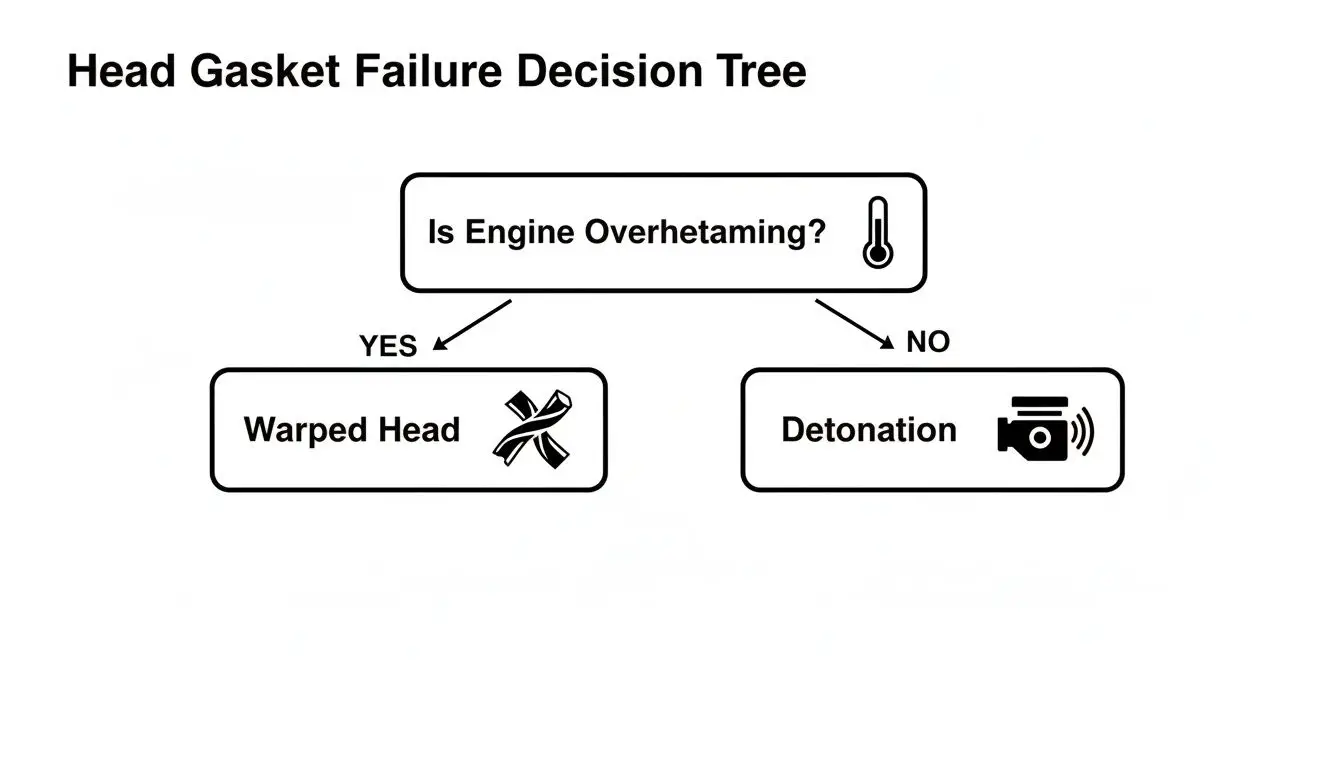
As the diagram shows, a symptom like overheating can cause a warped head, while other issues like engine detonation might cause a failure without any obvious overheating at all.
Pressurizing the System to Find Leaks
What if you're losing coolant but the block test comes back negative? The leak might not be related to combustion at all. To track it down, technicians will perform a cooling system pressure test. This involves attaching a special pump with a pressure gauge right onto your radiator neck.
The technician then pumps air into the system, bringing it up to the pressure specified on your radiator cap—usually around 15-18 psi. Then, they watch the gauge.
- If the pressure holds steady, your cooling system is sealed tight. The problem is likely something other than a leak.
- If the pressure drops, it’s a sure sign of a leak. The technician can then start looking for drips or listening for the hiss of escaping air to find the source, whether it's a weak hose, a tiny crack in the radiator, or an external head gasket leak.
This test is a critical part of a complete car trouble diagnosis because it can uncover other cooling system faults that might otherwise look like head gasket symptoms.
The Gold Standard: Cylinder Leak-Down Test
Once a head gasket failure is confirmed, the final piece of the puzzle is to pinpoint which cylinder is the culprit and where exactly the leak is going. For this, mechanics turn to the cylinder leak-down test. It’s the most precise diagnostic tool in their arsenal.
The process involves bringing a specific cylinder to the top of its compression stroke. Then, compressed air is pumped into it through the spark plug hole. By listening for where that air escapes, a technician can map out the failure:
- Hissing from the radiator: Air is leaking into the cooling system.
- Hissing from the oil cap: Air is getting into the oil passages.
- Hissing from an adjacent spark plug hole: The gasket has blown between two cylinders.
- Hissing from the exhaust pipe or intake: A valve isn't sealing correctly.
This test gives the technician a complete picture of the failure, providing the exact information needed to perform an accurate and effective repair. Together, these professional tests take the guesswork out of a very serious problem.
Head Gasket Repair Options and Realistic Costs
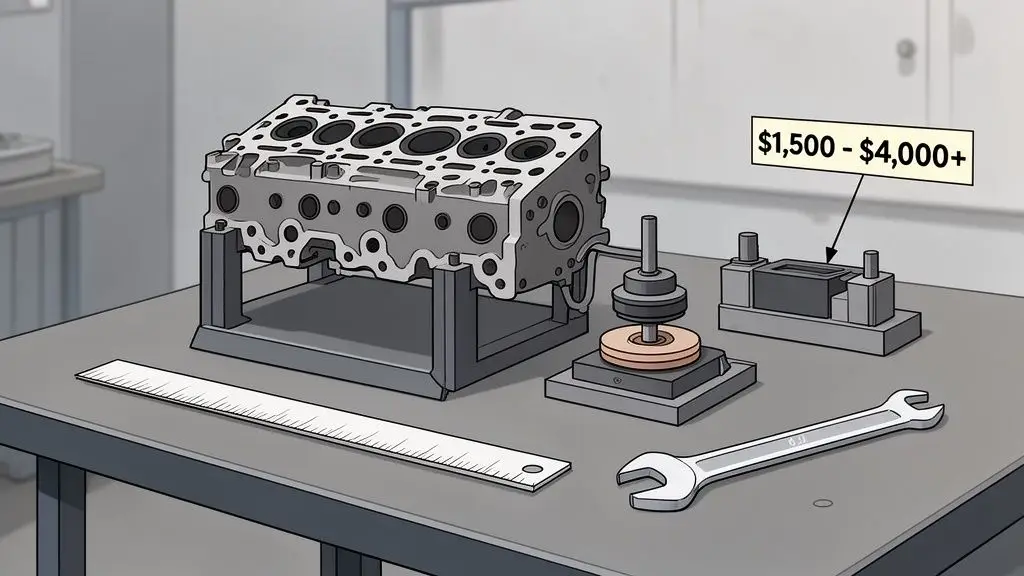
Once you’ve confirmed you’re dealing with a blown head gasket, the next question on everyone's mind is always the same: what's this going to cost me? It's a fair question, as this is one of the most labor-intensive jobs in the auto repair world.
The process isn't just about swapping out a single part. A huge chunk of the engine has to be taken apart just to get to the gasket. That’s why the final bill is driven almost entirely by labor, not the cost of the gasket itself.
The Proper Repair Process
A professional head gasket replacement is a serious undertaking that goes way beyond the gasket. Because overheating is what usually causes the gasket to fail in the first place, the cylinder head itself has almost certainly warped from the intense heat. Just slapping a new gasket onto a warped head is a surefire way to see it fail again almost immediately.
To get a seal that actually lasts, a technician has to follow these essential steps:
- Engine Disassembly: A tech has to methodically remove the intake and exhaust manifolds, timing components, and a host of other parts just to access the cylinder head.
- Cylinder Head Removal: The head is unbolted and carefully lifted off the engine block.
- Machining the Cylinder Head: This is the critical part. The head is sent to a machine shop where it’s checked for straightness and resurfaced to create a perfectly flat, true surface for the new gasket.
- Reassembly with New Parts: Finally, the engine is put back together with the new head gasket, new head bolts (which are one-time-use parts designed to stretch), fresh oil and coolant, and any other gaskets disturbed along the way.
Crucial Insight: That machining step is completely non-negotiable for a reliable repair. Trying to save a few hundred dollars by skipping it is a recipe for disaster. The new gasket will almost certainly fail again, often within a few hundred miles, and you’ll be right back where you started.
Understanding the Cost Factors
Given how involved the job is, it’s no surprise that head gasket repairs are a significant investment. The final price tag can vary quite a bit depending on a few key factors.
Key Cost Drivers:
- Engine Design: A straightforward 4-cylinder engine with one cylinder head is far less work than a V6 or V8, which has two separate heads that often both need service.
- Vehicle Make and Model: Some cars have notoriously tight engine bays, making it much harder and more time-consuming for technicians to get everything apart and back together.
- Local Labor Rates: Shop rates can differ quite a bit from one city to another.
- Extent of Damage: If the engine severely overheated, you might also need a new water pump, thermostat, or radiator, which will add to the total cost.
The market for replacement cylinder head gaskets is huge and is projected to hit US$ 3.6 billion in sales between 2025 and 2031, mostly because our cars are staying on the road longer. Data shows these failures make up 20-30% of all engine repairs caused by overheating, with typical costs falling somewhere between $1,500 and over $4,000. You can discover more about these head gasket market trends to see why this is a common issue for owners of older vehicles.
The Temptation of "Pour-In" Sealants
You've probably seen them on the shelf at the auto parts store—bottles promising a cheap, easy fix for a head gasket leak. These "pour-in" chemical sealants are incredibly risky and something we always advise against. They work by hardening when they hit air or high heat, which can temporarily plug a small leak.
The problem is, these products aren't smart. They can't tell the difference between a gasket leak and the tiny, vital passages inside your radiator or heater core. Using one often clogs up the whole cooling system, leading to even worse overheating than you started with. They're a temporary band-aid at best and can easily cause thousands of dollars in new damage at worst.
Common Questions About Head Gasket Problems
Facing a potential head gasket problem brings up a lot of questions. It’s a complex and often expensive repair, so it’s natural to feel some uncertainty. We've put together some clear, direct answers to the most common questions we hear from drivers, helping you make a confident, informed decision.
Can I Drive My Car with a Suspected Blown Head Gasket?
This is one of the most common—and most critical—questions we get. The short answer is an emphatic no. Driving with a suspected blown head gasket is a huge gamble with your engine's life.
Even a quick trip to the store can lead to severe, irreversible engine damage. If hot combustion gases are leaking into your coolant, the system can get overwhelmed almost instantly, causing extreme overheating. This can warp or even crack the cylinder head or engine block, turning a costly repair into a catastrophic one that requires a full engine replacement.
Worse yet, if coolant is seeping into your oil, it’s a ticking time bomb for your engine’s internal parts. That contaminated oil can no longer lubricate properly, causing metal-on-metal friction that will quickly chew up bearings and other components. The only safe and financially smart move is to have your vehicle towed to a professional shop for an accurate diagnosis.
Do Head Gasket Sealant Products Actually Work?
When you walk down the auto parts aisle, you’ll see bottles promising a quick, cheap fix for a blown head gasket. While it's tempting, these "pour-in" sealants are a risky bet that almost never pays off in the long run. At best, they might offer a very temporary patch for a very minor leak. At worst, they create even bigger problems.
These products work by flowing through the cooling system and solidifying when they hit high temperatures at the leak point.
The big problem is that these sealants aren't smart. They can’t tell the difference between a crack in your head gasket and the tiny, vital passages inside your radiator and heater core. You can easily end up with widespread clogs, which block coolant flow and cause even more severe overheating issues.
The only truly reliable, long-term fix is a proper mechanical repair that gets to the root cause of the failure. A sealant is just a band-aid on a major wound—it's no substitute for professional work from a certified technician.
How Can I Prevent Head Gasket Failure in the Future?
Prevention is, without a doubt, your best defense against having to deal with another head gasket repair down the road. Since overheating is the #1 cause of head gasket failure, your focus should be on keeping your vehicle's cooling system in top shape.
Here are the most effective steps you can take:
- Maintain Your Cooling System: Get your coolant flushed at the intervals your car’s manufacturer recommends. This keeps the fluid fresh and its anti-corrosion additives working as they should.
- Keep an Eye on Fluid Levels: Make a habit of checking your coolant reservoir. If the level is slowly dropping, it’s an early warning sign of a leak that needs attention.
- Never Ignore Overheating: If you see that temperature gauge start to climb, pull over as soon as it's safe. Trying to push your car "just a little further" is exactly how a minor cooling problem becomes a major head gasket disaster.
- Stick to Your Oil Change Schedule: Clean oil also plays a role in helping manage engine temperature. Regular oil changes ensure your engine is properly lubricated and running as cool as possible.
Is Replacing a Head Gasket Worth the Cost on an Older Car?
This is a tough but important question, and the answer really depends on your specific situation. The decision comes down to weighing the repair cost against the car's overall value and condition.
If your older car is otherwise in great shape—it's reliable, rust-free, and has been well-maintained—investing in a proper head gasket repair could give you many more years of dependable service. It's often a fraction of the cost of buying a new or used replacement vehicle.
However, if the car is already plagued with other major problems like a failing transmission, widespread rust, or serious electrical issues, the high cost of a head gasket job might be more than the car is worth. A trustworthy technician can give the vehicle a thorough inspection to provide a complete picture of its health, helping you make a sound financial decision.
When facing the complexity of head gasket issues, you need a team you can trust to provide an accurate diagnosis and a reliable repair. The ASE-certified technicians at Kwik Kar Oil Change and Auto Care have the expertise and state-of-the-art diagnostic tools to get the job done right. Schedule your appointment today and drive with confidence. Learn more and book your service online at kkrichardson.com.