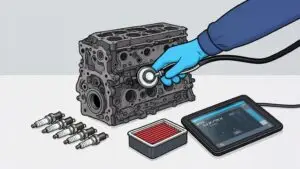
A professional oil change, known in the industry as a lube service or engine oil service, takes 20 to 40 minutes from the moment your car enters the bay to the moment you drive away. That window covers draining the old oil, swapping the filter, refilling with fresh oil, and running basic engine checks. What stretches your total visit beyond that window is almost never the mechanical work itself. Scheduling gaps, walk-in wait times, and add-on inspections are the real culprits. Understanding how the process actually unfolds gives you the power to protect your engine and reclaim your afternoon.
How fast does the oil change process work, step by step?
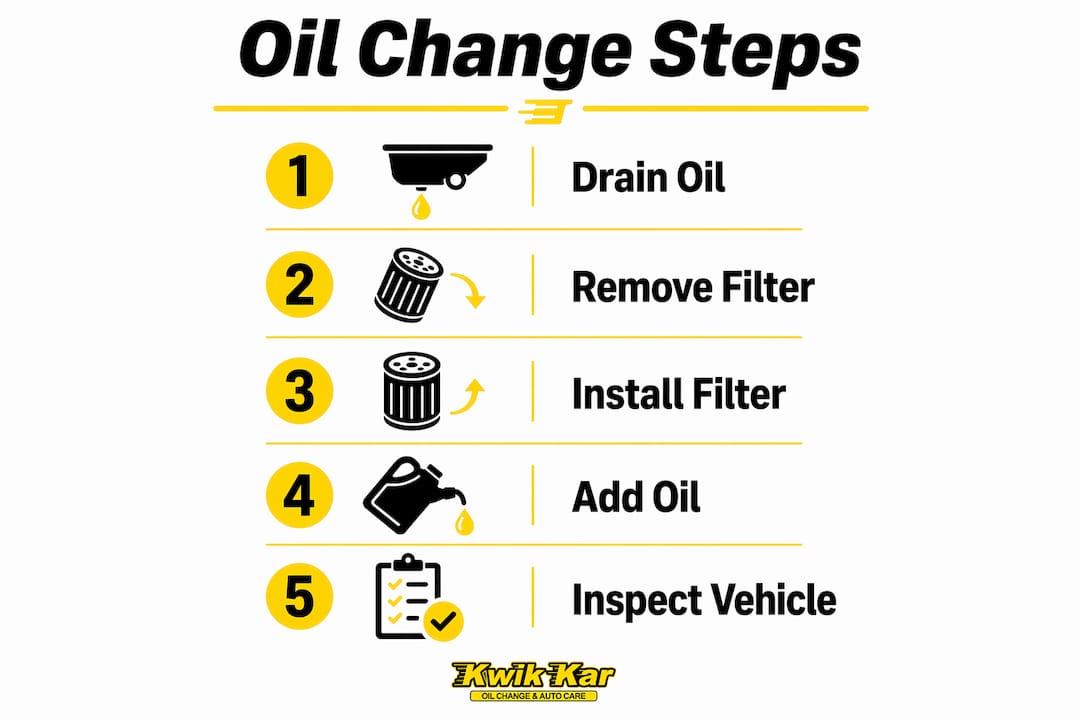
The professional oil change process follows a tight, repeatable sequence. Each step has a predictable time cost, and knowing those costs tells you exactly where your time goes.
-
Vehicle intake and positioning (2–3 minutes). The technician pulls your car into the service bay, places it over the drain pit or on a lift, and confirms your oil type and filter part number. This step sounds minor, but a wrong oil grade or mismatched filter can cost you far more time later.
-
Draining the old oil (3–5 minutes). The drain plug is removed and spent oil flows into a collection pan. Gravity does the work here, so the technician moves to the filter while the pan empties. Rushing this step and pulling the plug before the oil is fully drained leaves contaminated oil behind.
-
Replacing the oil filter (2–3 minutes). The old filter is removed and the new one is hand-tightened, then snugged with a filter wrench. One detail most drivers never see: replacing the drain plug crush washer at this stage. Skipping the crush washer causes slow leaks that show up days later, forcing a return visit and adding unexpected delay to what should have been a clean service.
-
Refilling with fresh oil (2–3 minutes). The technician adds the manufacturer-specified grade and volume of oil, whether that is a conventional 5W-30 or a full-synthetic 0W-20. The oil cap goes back on and the fill area is wiped clean.
-
Post-fill engine check (3–5 minutes). The engine runs for 30 to 60 seconds to circulate the new oil and pressurize the system. The technician watches for leaks at the drain plug and filter, then shuts the engine off and waits briefly before pulling the dipstick for a final level confirmation.
-
Documentation and vehicle return (2–3 minutes). The service record is updated, a new oil life sticker goes on the windshield, and the car is returned to you.
Total hands-on time: roughly 15 to 22 minutes of active work. The 20 to 40 minute service window accounts for that work plus transitions, paperwork, and any quick visual inspections the shop performs as standard practice.
Pro Tip: Ask the technician to confirm your manufacturer-specified oil grade before the service starts. Correcting a wrong oil selection mid-drain adds 10 to 15 minutes and wastes a partial quart.
How does a DIY oil change work and how long does it take?
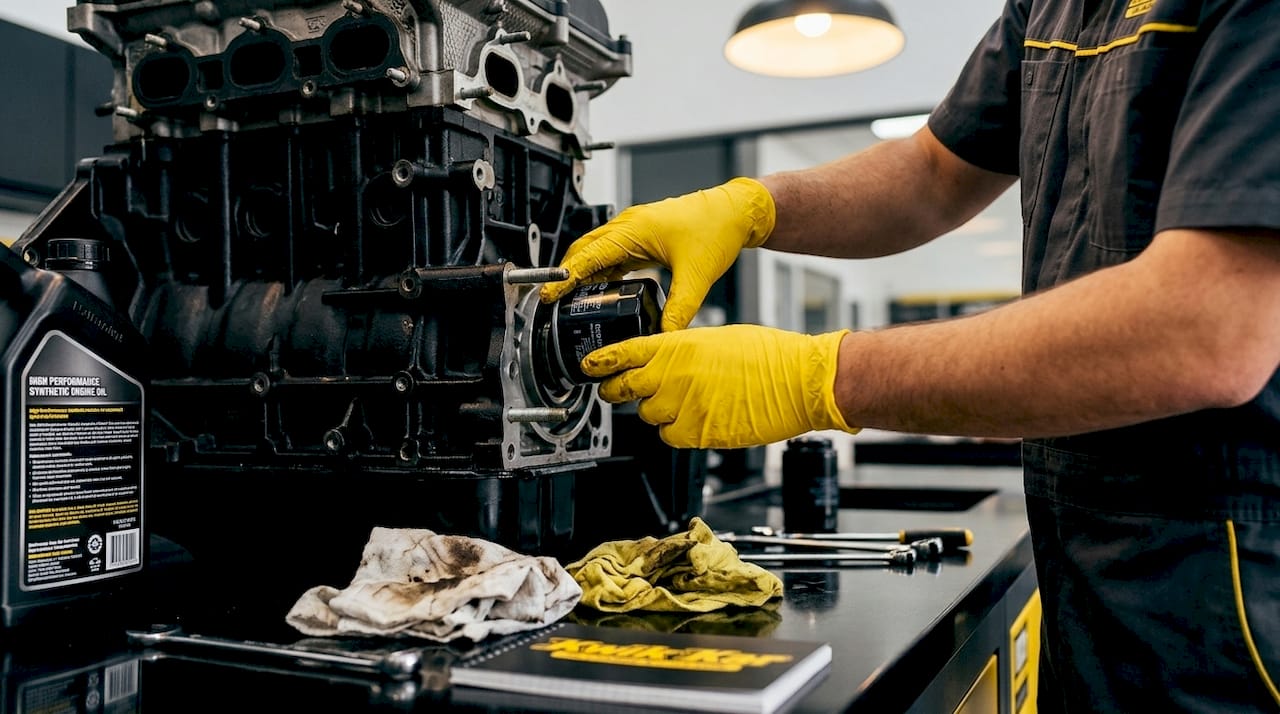
A DIY oil change follows the same mechanical logic as a professional service, but the timing shifts because you are working alone, without a lift, and without a pre-staged parts cart. DIY oil changes typically take 30 to 45 minutes once you have done it a few times. Your first attempt will likely run 60 minutes or more as you locate the drain plug, figure out the filter housing, and manage the mess.
Here is the sequence that keeps the process efficient and safe:
-
Gather tools and parts before you start. You need the correct oil grade and quantity, a new filter, a drain pan, a filter wrench, a socket set, gloves, and rags. AutoZone and O’Reilly Auto Parts both carry vehicle-specific filter lookup tools at the counter. Hunting for a missing tool mid-drain is the single biggest time waster in DIY maintenance.
-
Warm the engine for 2 to 3 minutes. Slightly warm oil flows faster and carries more suspended contaminants out of the engine. Do not run the engine to full operating temperature. Hot oil causes burns. Two to three minutes of idle is enough.
-
Drain the oil fully (5 to 10 minutes). Position the drain pan, remove the plug, and let gravity work. GEICO’s DIY guide recommends allowing a full 3 to 5 minutes of drain time, which means the oil has genuinely stopped flowing before you reinstall the plug. Cutting this short leaves old oil in the system.
-
Replace the filter and reinstall the drain plug. Hand-tighten the new filter after applying a thin film of fresh oil to the gasket. This pre-lubrication prevents the gasket from tearing on first startup. Reinstall the drain plug to the manufacturer’s torque specification. Over-tightening the drain plug strips the threads in the oil pan, which is an expensive repair that no quick fix can undo.
-
Refill and run the engine for 30 to 60 seconds. Add the correct volume of fresh oil, replace the cap, and start the engine. Watch the oil pressure warning light. It should extinguish within 5 seconds. Let the engine idle for 30 to 60 seconds, then shut it off.
-
Wait, then check the level (5 to 10 minutes). Let the oil settle back into the pan for at least 5 minutes before pulling the dipstick. Check the engine oil level against the full mark and add oil in small increments if needed.
Pro Tip: Lay a sheet of cardboard under the engine before you start. Any drips show up clearly on cardboard, letting you spot a slow leak from the filter or drain plug before you pull out of the driveway.
What factors influence oil change service duration?
The mechanical steps of an oil change are nearly fixed in time. What varies is everything surrounding them. Scheduling and wait times consistently add more minutes to your total visit than the actual oil drain and refill combined. Understanding these variables lets you make smarter choices about where and when you go.
-
Walk-in versus scheduled appointment. Walk-in visits at busy shops can add 20 to 45 minutes of waiting before a bay opens. A scheduled appointment at a shop like Kwik Kar Oil Change & Auto Care puts your car in the bay within minutes of arrival. If you want to know your options, oil change without appointment services in Richardson do exist, but peak hours still carry wait risk.
-
Quick lube versus full-service oil change. A quick lube focuses on speed: oil out, filter swapped, oil in, done. A full-service oil change adds tire pressure checks, fluid top-offs, belt and hose inspections, and a multi-point vehicle review. The extra time is worth it for vehicles approaching higher mileage or those due for a broader inspection.
-
Vehicle complexity. Trucks with skid plates, European vehicles with cartridge-style filters, and some hybrid models require additional steps that extend service time by 10 to 15 minutes. Knowing your vehicle type helps you set realistic expectations.
-
Technician availability and shop workflow. A well-organized shop with two technicians working a single bay moves faster than a solo technician juggling three cars. Drive-thru or stay-in-vehicle service models, where you remain in the car throughout, reduce total visit time by eliminating check-in and waiting room procedures entirely.
-
Seasonal and peak-time demand. Monday mornings and Saturday middays are the busiest windows at most shops. Visiting mid-week, mid-morning cuts wait time significantly.
Pro Tip: Call ahead and ask the shop’s current wait time before you leave home. A 90-second phone call can save you 30 minutes of sitting in a waiting room.
How to speed up your oil change visit
Cutting your total oil change time is less about the wrench work and more about preparation and timing. These steps work whether you are heading to a professional shop or doing the job yourself.
- Book an appointment. Shops with online scheduling, including Kwik Kar Oil Change & Auto Care, let you reserve a bay time in advance. This single step eliminates the largest variable in your total visit time.
- Know your oil grade before you arrive. Your owner’s manual lists the exact grade. Showing up without this information means the technician has to look it up, which adds a few minutes and creates room for error.
- Communicate add-on requests upfront. If you want a tire rotation or cabin air filter check alongside the oil change, say so when you check in, not after the car is already in the bay. Technicians can stage the additional work in parallel rather than sequentially.
- Choose a shop that specializes in oil changes. General repair shops treat oil changes as one item in a long queue. Dedicated quick-service centers treat it as their primary workflow, and their bay turnover reflects that.
- For DIY, stage everything before you start. Place every tool and part within arm’s reach before the drain plug comes out. A staged workspace cuts DIY time by 10 to 15 minutes compared to searching for tools mid-job. For a full walkthrough of the DIY process, the synthetic oil change steps guide covers preparation in detail.
- Follow manufacturer intervals, not guesswork. Vehicle-specific interval guidance from Valvoline Global confirms that fixed mileage rules do not apply universally. Changing oil too early wastes your time; changing it too late risks engine damage that costs far more than any oil change.
Quick lube versus full-service oil change: which is faster and what do you get?
The choice between a quick lube and a full-service oil change is a trade-off between speed and thoroughness. Neither option is universally better. The right choice depends on your vehicle’s age, mileage, and maintenance history.
Quick lube services take 10 to 20 minutes and focus entirely on the oil drain, filter swap, and refill. That speed comes from a narrow scope. Many quick lube visits skip fluid top-offs, belt inspections, and tire pressure checks. For a newer vehicle on a regular maintenance schedule, that trade-off is acceptable.
Full-service oil changes, as detailed in the full-service oil change benefits guide, run 30 to 45 minutes and include a multi-point inspection. The extra time pays dividends for vehicles with higher mileage or those that have gone longer between services.
| Feature | Quick lube | Full-service oil change |
|---|---|---|
| Typical duration | 10 to 20 minutes | 30 to 45 minutes |
| Oil drain and refill | Yes | Yes |
| Filter replacement | Yes | Yes |
| Fluid top-offs | Rarely | Yes |
| Multi-point inspection | No | Yes |
| Best for | Newer vehicles, tight schedules | Older vehicles, comprehensive care |
| Cost range | Lower | Moderate to higher |
The types of oil change services available at modern shops span conventional, synthetic blend, and full-synthetic options, each with different viscosity profiles and drain interval expectations. Matching the service type to your vehicle’s actual needs is what keeps your engine running cleanly between visits.
Key takeaways
A professional oil change takes 20 to 40 minutes of hands-on service time, but scheduling, shop type, and vehicle complexity determine your total visit length far more than the mechanical steps themselves.
| Point | Details |
|---|---|
| Professional service duration | Hands-on oil change work runs 20 to 40 minutes, covering drain, filter, refill, and checks. |
| DIY timing | DIY oil changes average 30 to 45 minutes with experience and a pre-staged workspace. |
| Biggest time variable | Scheduling and wait times add more minutes to your visit than the actual mechanical work. |
| Quick lube trade-off | Quick lube services finish in 10 to 20 minutes but often skip inspections included in full-service visits. |
| Speed tip | Booking an appointment and knowing your oil grade before arrival cuts total visit time most reliably. |
What we’ve learned from years of oil changes in Richardson
At Kwik Kar Oil Change & Auto Care, we see a consistent pattern: the drivers who spend the most time in our waiting room are almost never there because of a slow oil change. They are there because they arrived during peak hours without an appointment, or because they discovered mid-service that they needed an additional repair they had been ignoring.
The mechanical work is fast. A well-trained ASE-certified technician can drain, swap, and refill in under 20 minutes without cutting corners. What slows the experience down is everything outside the bay. We have watched customers add 40 minutes to their visit by arriving at noon on a Saturday and then being surprised by the wait.
Our honest advice: treat the oil change appointment the same way you treat a doctor’s visit. Schedule it, show up on time, and communicate what you need upfront. The drivers who do this are in and out in under 30 minutes, consistently. The ones who treat it as a drop-in errand on the busiest day of the week are the ones who feel like oil changes take forever.
Speed and thoroughness are not opposites. A properly sequenced, well-staffed service center delivers both. The key is choosing the right shop and arriving prepared.
— Kwik Kar
Fast, reliable oil changes at Kwik Kar Richardson
Kwik Kar Oil Change & Auto Care in Richardson, TX delivers professional oil change service without the waiting room marathon. Our ASE-certified technicians work a tight, efficient bay sequence that gets your car in, serviced, and back to you in under 40 minutes. We offer both quick lube and full-service options, so you choose the depth of care that fits your schedule and your vehicle’s needs.

Whether you drive a daily commuter or a high-mileage truck, our team confirms your oil grade, inspects for leaks, and documents every service in your vehicle’s record. Kwik Kar is recognized by CARFAX and RepairPal, and we offer special discounts for military personnel and first responders. Book your next service or explore our full auto repair and oil change services to see everything we offer Richardson drivers.
FAQ
How long does a professional oil change take?
A professional oil change takes 20 to 40 minutes for the core mechanical work, including draining, filter replacement, refilling, and a basic engine check. Total visit time can be longer depending on wait times and any additional services requested.
How long does a DIY oil change take?
DIY oil changes average 30 to 45 minutes for experienced home mechanics with tools and parts already staged. First-time attempts typically run 60 minutes or more due to unfamiliarity with the vehicle’s drain plug and filter locations.
What makes an oil change take longer than expected?
Scheduling and wait times are the primary cause of extended visits, not the mechanical process itself. Vehicle complexity, add-on services, and peak-hour demand at the shop also extend total time.
Is a quick lube service as thorough as a full-service oil change?
Quick lube services finish in 10 to 20 minutes but typically skip fluid top-offs and multi-point inspections that full-service visits include. For newer vehicles on a regular schedule, quick lube is sufficient. Older or high-mileage vehicles benefit from the broader inspection a full-service visit provides.
How can I make my oil change visit faster?
Book an appointment in advance, know your vehicle’s oil grade before arriving, and communicate any add-on requests at check-in rather than after the service begins. Drive-thru style service models that keep you in the vehicle also reduce total visit time by cutting check-in and waiting room steps entirely.