Don’t think of checking your engine oil level as just another chore on your to-do list. Think of it as taking your car’s pulse. It’s one of the simplest, yet most important, things you can do to protect your vehicle and save yourself from some truly eye-watering repair bills down the road.
Your Engine’s Lifeline: Protecting Your Investment
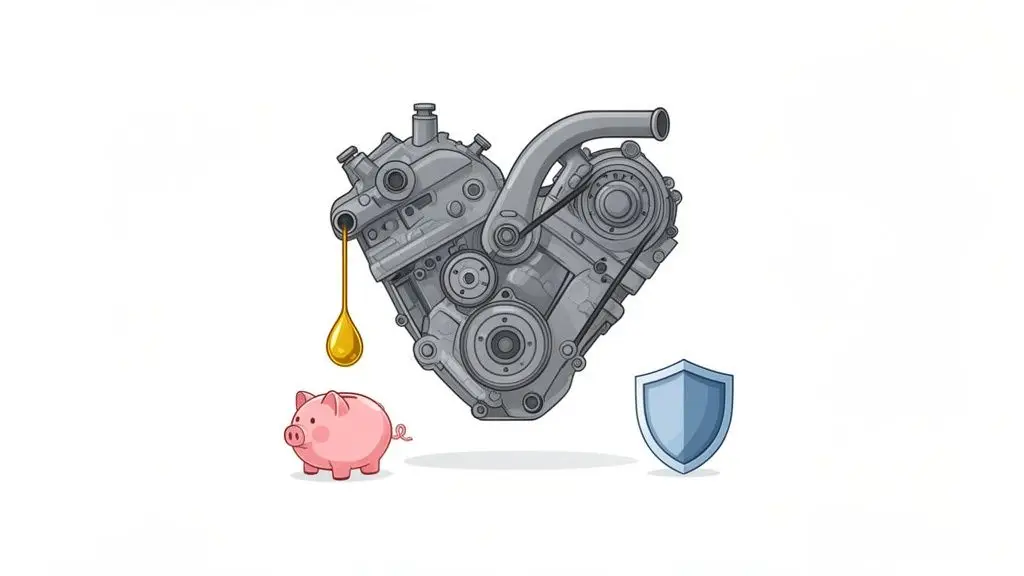
The oil circulating through your engine is doing a lot more than just lubricating parts. It’s the silent workhorse that keeps everything operating as it should, performing several critical jobs that are non-negotiable for your engine’s health.
At its core, oil’s main job is to cut down on friction. You’ve got pistons, bearings, and camshafts moving at incredible speeds under intense heat and pressure. Without a clean, adequate film of oil, these metal parts would grind against each other, leading to rapid, catastrophic damage.
The True Cost of Neglect
Letting your oil level drop isn’t just a bad habit—it’s a financial gamble. The consequences start small with minor performance dips but can quickly spiral into complete engine failure. That’s a repair that can easily cost more than the car is worth.
Just look at what happens when the oil runs low:
- Decreased Fuel Efficiency: More friction means the engine has to work harder. That extra effort burns more fuel, hitting you right at the pump.
- Accelerated Engine Wear: Without enough lubrication, metal components start wearing down much faster than they should. This literally shortens the life of your engine.
- Engine Overheating: Oil is also a coolant, carrying heat away from the hottest parts of your engine. When the oil level is low, its cooling ability drops, and you risk a serious overheat that can warp or crack major components.
We see it in the shop all the time—a low engine oil level is a leading, yet completely preventable, cause of major automotive trouble. In fact, historical data shows it contributes to roughly 15% of all engine failures in vehicles over 100,000 miles. Even dropping just one quart low can cause engine bearings to experience up to 40% more friction, which drastically speeds up wear. You can dig into more vehicle statistics from the U.S. Department of Transportation.
Empowering Yourself Through Simple Checks
Taking a few minutes every month to check your oil puts you in the driver’s seat of your car’s maintenance. It’s a small action that gives you a direct look into your engine’s health, letting you spot a small issue before it becomes a huge, expensive problem.
This guide will walk you through how this simple habit can translate into thousands of dollars saved and a more reliable car for you and your family. It’s about becoming an empowered owner, not just a passive driver.
Finding The Right Time And Place To Check Your Oil
Getting a true read on your engine oil isn’t as simple as just popping the hood whenever you feel like it. The when and where of checking your oil are just as important as the how. Checking under the wrong conditions can give you a completely false reading, which could lead you to overfill the engine or, worse, drive off thinking you’re fine when you’re actually dangerously low.
Think about it: checking your oil right after a long commute is going to give you a very different result than checking it first thing in the morning. When your engine is hot or has just been turned off, a good portion of the oil is still circulating through all its little passages. It hasn’t had time to settle back down into the oil pan, so the dipstick will make it look like you’re missing a lot of oil.
Optimal Conditions For An Accurate Check
For the most precise measurement, you need to let gravity do its job. The absolute best time to check your engine oil level is when the engine is cold—like before you start it for the day. This gives all the oil plenty of time to drain back into the pan overnight.
Of course, that’s not always practical. If you’ve already been driving, just make sure you park on a flat, level surface and shut off the engine. Give it at least 10-15 minutes to let the hot oil settle. Trying to check it on a hill is a classic mistake that will throw off the reading completely.
A slanted driveway can easily make your oil level appear a full quart higher or lower than it actually is. Always find the flattest ground possible—your garage floor or a level parking spot is perfect.
Gathering Your Simple Tools
The good news is you don’t need a toolbox full of equipment for this vital check. In fact, you really only need one thing, which makes it an easy habit to get into.
Before you get started, just grab:
- A clean, lint-free cloth or paper towel: You’ll use this to wipe the dipstick clean before you take the real reading. Stay away from dirty shop rags, as you don’t want to accidentally introduce dirt or grit into your engine.
With your cloth ready, it’s time to find the dipstick. It almost always has a brightly colored handle (usually yellow or orange) that’s easy to spot in the engine bay. Pulling it out is the first real step to getting a clear picture of your engine’s health.
How To Read Your Dipstick And Understand What It Says
Checking your engine oil is one of the quickest and most vital health checks you can perform on your car. Think of it as a direct look into your engine’s well-being, giving you a heads-up on both the amount and condition of its most important fluid—long before a warning light ever flashes on your dash.
The process is simple. First, make sure your car is parked on a level surface and the engine has been off for at least 10-15 minutes, giving the oil time to settle in the pan. Pop the hood, find the dipstick (it usually has a brightly colored handle, often yellow or orange), and pull it all the way out.
Have a clean, lint-free rag or paper towel ready. You’ll need to wipe the entire dipstick clean, from the handle down to the very tip. This first pull is just for prep; wiping it down is the key to getting a true reading.
Now, slide the clean dipstick all the way back into its tube until the handle is fully seated. Immediately pull it back out, and this time, hold it horizontally to keep the oil from running and smudging. This is the reading that counts.
Deciphering The Markings
Every dipstick has markings that show the proper engine oil level. The design might differ from car to car—some have two small pinholes, others use lines, and many have a crosshatched area—but they all serve the same purpose. You’ll see a mark for “Full” (often labeled ‘F’ or ‘MAX’) and one for “Add” (usually an ‘L’ for low, or ‘MIN’).
The distance between these two marks almost always represents one quart of oil. If the oil level sits right on the “Full” line, you’re good to go. If it’s about halfway between the marks, you’re roughly half a quart low. While that’s still a safe operating level, it’s a good idea to think about topping it off soon.
If your oil level is at or below the “Add” mark, your engine is running critically low. This is a problem you need to address right away by adding oil to prevent serious friction and potential engine damage.
This handy table breaks down what you’re seeing on the dipstick and what to do next.
Interpreting Your Engine Oil Dipstick Reading
| Dipstick Reading | What It Means | Recommended Action |
|---|---|---|
| At or slightly below the "Full" / "MAX" mark | Your oil level is perfect. | No action needed. Check again in a few weeks or per your routine. |
| Between the "Full" and "Add" marks | The oil level is acceptable but not full. You're likely down less than a quart. | It's safe to drive, but consider adding a small amount of oil to top it off. |
| At or below the "Add" / "MIN" mark | The oil level is dangerously low, and the engine lacks proper lubrication. | Add oil immediately. Start with half a quart, recheck, and add more if needed. |
| Above the "Full" / "MAX" mark | The engine has too much oil, which can cause foaming and increase pressure. | Do not start the engine. You will need to have the excess oil drained. |
Knowing how to read the level is just one part of the equation. This decision tree can help you visualize the entire process for getting the most accurate check.
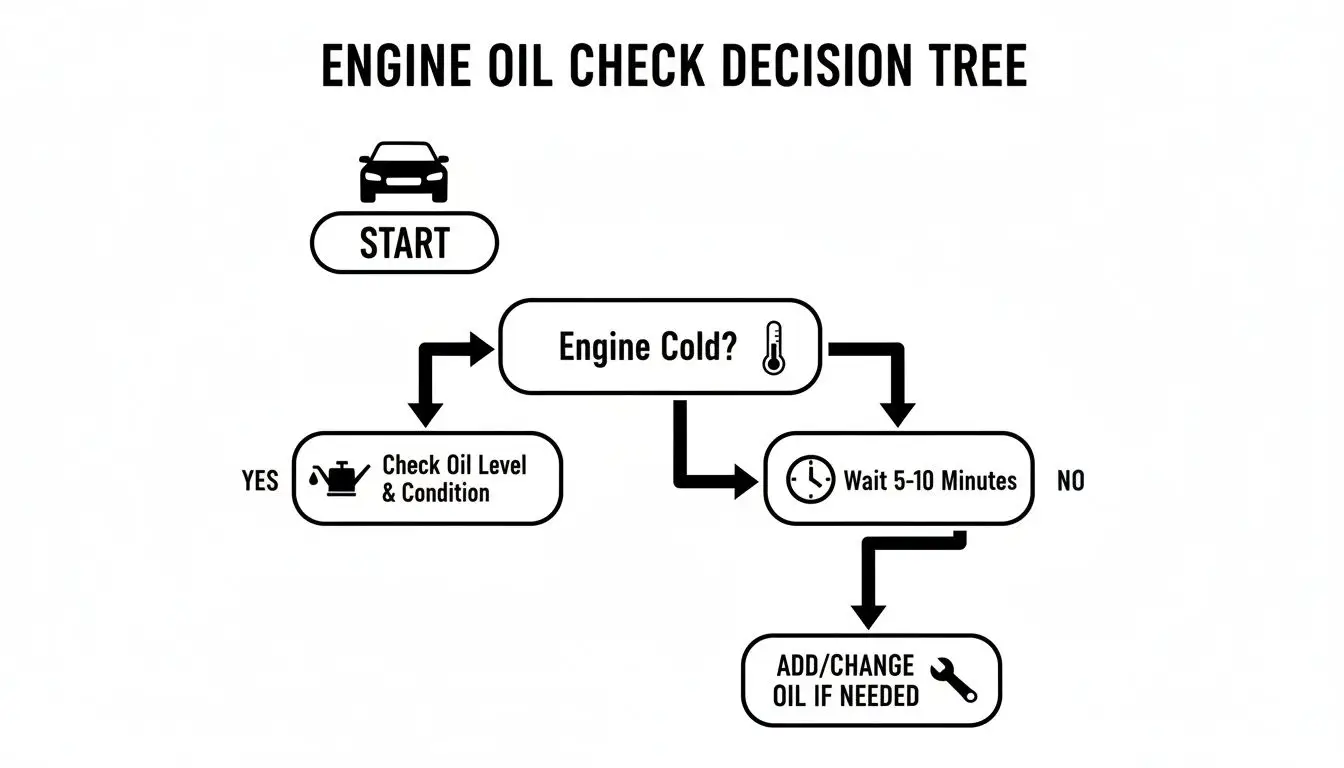
As you can see, checking the oil when the engine is cool ensures all the oil has returned to the pan, giving you the most reliable reading. We take a deeper look at this in our article about whether you should check your oil when it’s hot or cold.
Assessing The Oil’s Condition
The dipstick doesn’t just tell you how much oil you have; it also reveals its condition. New, healthy engine oil is typically a translucent, honey or amber color. As it circulates through your engine, cleaning away contaminants and enduring heat, it will gradually darken.
Take a small amount of oil from the dipstick and rub it between your thumb and index finger. It should feel smooth and slick. If you feel any grittiness or see small specks of dirt or metal, that’s a sure sign the oil is saturated and your engine is due for an oil and filter change.
Here’s what to look for when you inspect the oil’s color and texture:
- Dark Brown or Black Oil: This is perfectly normal for oil that’s been doing its job. It’s suspended the soot and byproducts of combustion. However, if the oil is extremely dark, thick, and opaque, it’s telling you it’s time for a change.
- Milky or Foamy Oil: A creamy, light-brown appearance is a major warning sign. This “coffee with too much creamer” look usually means coolant is leaking into your oil, a serious problem that requires a trip to a professional mechanic right away.
- Thin Oil or a Gasoline Smell: If the oil seems thinner than usual and has a distinct gasoline smell, fuel might be seeping past the piston rings. This dilutes the oil, severely weakening its ability to lubricate and protect the engine.
By getting into the habit of checking both the oil level and its condition, you’re no longer just a driver—you’re an informed owner who can spot potential issues before they become expensive problems.
Recognizing The Warning Signs Of Low Or High Oil Levels
Your car is pretty good at telling you when something’s wrong. It might not speak English, but long before a major breakdown, it will send out signals that something is off. When it comes to your engine oil, learning to read these signs is one of the most important things a driver can do.
Ignoring them can get expensive—fast. Believe it or not, improper oil levels are a factor in 28% of premature engine replacements around the world. With projected repair costs hitting an average of $4,150 per incident by 2026, listening to your car isn’t just smart, it’s a huge money-saver. You can see more on what’s driving these trends in this updated oil products demand outlook.
Symptoms Of A Low Engine Oil Level
When your engine is running low on oil, it’s not shy about it. The trick is connecting what you’re seeing, hearing, and smelling to the problem under the hood. Be on the lookout for these classic signs that your oil is dangerously low.
The most urgent warning you’ll get is the oil pressure light. It’s that little symbol on your dashboard that looks like a dripping oil can. This light doesn’t tell you the oil level is low, but that the oil pressure is. That means there isn’t enough oil circulating to keep your engine parts safely lubricated. If you see it flicker or stay on, pull over safely as soon as you can and shut off the engine to prevent catastrophic damage.
You might also hear something new. A faint but persistent ticking or tapping noise is a common sign, especially when you’re idling at a stoplight. That sound is your engine’s valvetrain—the lifters and rockers—complaining because they aren’t getting enough oil to operate smoothly and quietly.
Finally, just trust your nose. A sharp, burning oil smell either inside or outside the vehicle almost always points to an oil leak. When oil drips onto a hot surface like your exhaust manifold, it burns off and creates that unmistakable, acrid smell. It’s a dead giveaway that you’re losing oil somewhere.
The Dangers Of A High Engine Oil Level
It’s less common than low oil, but having too much is just as bad for your engine. When you overfill the crankcase, the spinning crankshaft acts like a high-speed whisk, whipping the oil into a bubbly froth. Aerated, foamy oil can’t properly lubricate your engine’s moving parts, which leads to friction, heat, and serious wear.
Here are the telltale signs of an overfilled engine:
- Foamy Oil on the Dipstick: If you pull the dipstick and the oil looks like a frothy, bubbly mess, you’ve got aeration. This is a classic symptom of too much oil.
- Blueish Exhaust Smoke: When there’s too much oil, it can get forced past the piston rings and into the combustion chamber. There, it burns along with the fuel and exits your tailpipe as a distinct blue-tinted smoke.
- Oil Leaks or Blown Seals: All that extra oil increases the pressure inside the crankcase. This pressure can be strong enough to force oil past gaskets and seals, causing new leaks where there were none before.
An overly high engine oil level can also lead to high oil pressure, which creates its own set of serious problems for your vehicle. Our guide on high oil pressure symptoms and causes provides more detail on this related issue.
Whether the level is too low or too high, these symptoms are your engine’s cry for help. Paying attention and acting quickly can be the difference between a quick, easy fix and a repair bill that costs thousands.
Adding Oil The Right Way To Avoid Common Mistakes
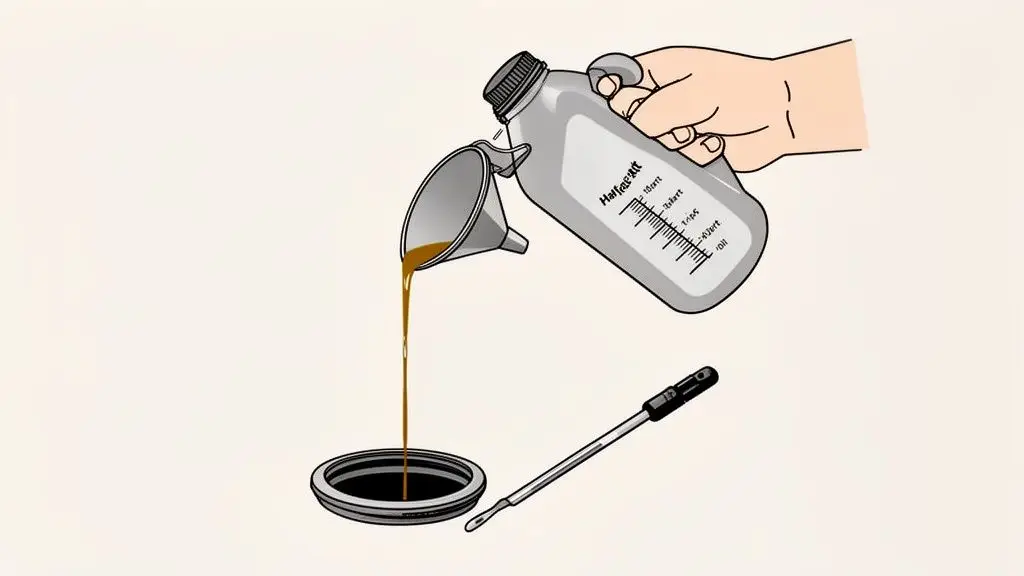
So, your dipstick reading came back low. Don’t panic, but don’t just grab the first bottle of oil you see, either. Topping off your oil is straightforward, but a simple mistake here can lead to some surprisingly expensive problems down the road.
Before you even think about unscrewing the oil cap, the most important step is making sure you have the right oil for your car.
Your owner’s manual is the ultimate authority here. It will tell you the exact oil viscosity (like 5W-30 or 0W-20) your engine was designed for. Using the wrong kind can mess with lubrication, hurt your fuel economy, and cause unnecessary engine wear. If you want to dive deeper, we have a guide that explains everything you need to know about engine oil viscosity.
How To Add Oil Without Overfilling
Once you’ve confirmed you have the correct oil, the name of the game is to add it slowly. It’s a common mistake to overfill, and that can be just as damaging as having a low engine oil level. Too much oil can get churned into a useless froth by the crankshaft, which means it can’t properly lubricate your engine’s moving parts.
Here’s a foolproof way to get it right:
- Start small. Begin by adding about half a quart of oil. A good rule of thumb is that the space between the “Add” and “Full” marks on most dipsticks represents about one full quart.
- Wait and check again. Give the oil a minute or two to drain down into the pan. Pull the dipstick, wipe it completely clean, reinsert it, and take a new reading.
- Top off if needed. If it’s still low, add a little more—maybe a quarter of a quart this time—and repeat the process. This slow, steady approach is the best way to hit the “Full” mark perfectly without going over.
According to a recent J.D. Power study, a shocking 22% of vehicle breakdowns were traced back to low oil, with an average repair bill of $1,800. It’s not just your wallet, either—improper oil levels can increase harmful emissions by as much as 15%.
Costly Mistakes To Avoid
Besides using the wrong oil or overfilling, a couple of other simple slip-ups can cause real trouble. First, always use a funnel. Spilling oil on a hot exhaust manifold will not only create a nasty burning smell but also poses a serious fire risk.
Also, double-check that you’ve screwed the oil filler cap back on securely when you’re done. If it’s loose or missing, oil can splash all over your engine bay. Worse, it can cause a sudden and dangerous drop in oil pressure, putting your engine at immediate risk of damage. Taking an extra minute to avoid these little mistakes can save you from a major headache.
When To Let The Professionals Take Over
While checking your own engine oil level is a great skill for any car owner, some problems are a clear sign to put down the rag and pick up the phone. Knowing when a situation is beyond a simple DIY fix is key to preventing a small issue from turning into a massive, expensive engine repair.
Some symptoms just aren’t solved by adding more oil. If you spot any of these red flags, it’s time to let an expert take a look under the hood.
Serious Warning Signs
A constantly dropping oil level is a major red flag. If you find yourself topping off the oil again and again, you almost certainly have an oil leak. Even a tiny drip can lead to serious engine damage if it’s ignored.
The way the oil looks is another huge clue.
If the oil on your dipstick is milky, frothy, or looks like a creamy coffee, stop driving the car immediately. This is a classic sign that coolant is mixing with your oil, often because of a failed head gasket—a major engine problem that needs professional attention right away.
Finally, never ignore a check engine light, especially if it comes on around the same time you notice an oil issue. These more complex engine problems require a professional diagnosis. It’s always the smart move to consult with professional auto repair shops and dealerships that have the specialized diagnostic tools to find the real source of the problem and get your vehicle the proper care it needs.
Frequently Asked Questions About Engine Oil
Even after you’ve got the hang of checking your oil, a few questions almost always pop up. We hear them from drivers all the time, so we’ve put together some quick, straightforward answers to help you handle your car’s maintenance like a pro.
How Often Should I Check My Engine Oil Level?
A great rule of thumb is to check your oil at least once a month. And always, always check it before you head out on a long road trip.
If you’re driving an older car, especially one with over 100,000 miles on the clock, checking every other week is an even smarter habit. These vehicles are just naturally more prone to consuming or leaking small amounts of oil between changes, so staying on top of it is key.
Is It Safe To Drive With The Oil Light On?
No, absolutely not. That little red oil can on your dashboard isn’t just a suggestion—it’s a critical warning. It means your oil pressure has dropped to a dangerously low level, and there isn’t enough oil circulating to properly lubricate your engine.
If this light comes on, pull over as soon as it’s safe and turn off the engine immediately. Driving even for a minute or two can cause severe, and often permanent, engine damage.
Can I Mix Different Brands Or Types Of Engine Oil?
In a pinch, yes, you can mix different brands of oil, but only if they have the exact same viscosity rating—for instance, topping off with a different brand of 5W-30 is okay. Think of it as a temporary fix to get your oil level back into the safe zone.
What you should never do, however, is mix different viscosities, like adding 5W-20 to an engine that has 10W-30 in it. This messes with the oil’s carefully designed formula, making it less effective at protecting your engine parts at different temperatures. Always stick with the single, manufacturer-recommended oil type for your car.
If you’re ever second-guessing what your dipstick is telling you or notice an oil-related issue that just won’t go away, it’s always best to get a professional opinion. The certified technicians at Kwik Kar Oil Change and Auto Care are here to help with everything from a quick top-off to a full diagnostic service. Schedule your visit today and drive with complete peace of mind.