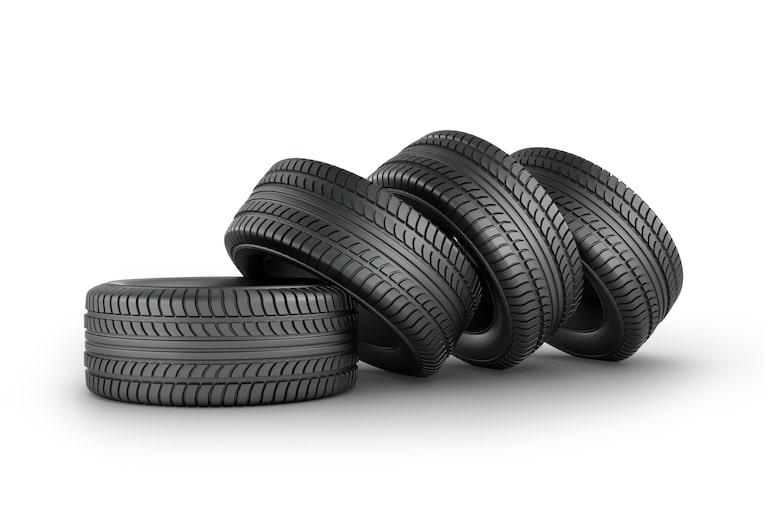
Let's get right to it. When people ask, "how long should my tires last?" they're looking for a straight answer. It really comes down to two things: mileage and age. Most new tires are built to go the distance, typically lasting between 50,000 to 75,000 miles. For the average American driver, that works out to about four to five years of use.
Your Quick Answer to Tire Lifespan

While mileage is a great benchmark, it’s only half the story. Tires also have a "best before" date. The rubber compounds they're made of naturally degrade over time, whether you're driving on them or not.
Think of it like a pair of running shoes. The soles obviously wear down from the miles you put on them, but the foam and rubber also get stiff and brittle just sitting in the closet for a few years. A tire that looks brand new but is eight years old can be just as dangerous as one with obviously worn-out tread.
Key Takeaway: Your tires are aging from two different clocks at the same time—one tracking mileage and one tracking calendar years. To stay safe, you have to pay attention to both.
Average Tire Lifespan At-a-Glance
Most quality car tires should last between 60,000 and 75,000 miles. If you drive a typical 14,000 to 15,000 miles a year, that means you'll be looking at a new set every four to five years. Some premium models even push the limits with warranties up to 80,000 miles, and independent tests have shown top-tier tires for family cars easily passing the 70,000-mile mark. You can explore more about these mileage expectations and the factors involved in this detailed guide on tire longevity.
To give you a quick reference, here’s a general idea of what to expect from different kinds of tires.
Average Tire Lifespan At-a-Glance
| Tire Type | Average Mileage Lifespan | Recommended Age Limit |
|---|---|---|
| All-Season Tires | 50,000 – 70,000 Miles | 6 Years |
| Performance Tires | 25,000 – 40,000 Miles | 6 Years |
| Touring Tires | 60,000 – 80,000 Miles | 6 Years |
This table is a simple benchmark to help you quickly gauge where your tires might be in their lifecycle. In the next sections, we'll dive deeper into why these numbers can change so much and how to know for sure when it's time for a replacement.
The Two Clocks Ticking on Your Tires
When people ask how long car tires should last, they’re usually thinking about mileage. But it’s not just about how far you’ve driven. Every tire has two clocks running at the same time: one tracking mileage and the other tracking its age. Understanding this is key to staying safe on the road.
The mileage clock is the one we all know. As your odometer racks up miles, your tire’s tread—the grooved part that grips the road—wears down. The more you drive, the faster that rubber disappears, which means less traction and less safety.
The second clock, the calendar clock, is much sneakier and often ignored. Even if your car is tucked away in the garage for months on end, its tires are still getting older. The rubber compounds are constantly exposed to the elements, like oxygen and UV rays, causing them to break down on a chemical level.
The Science of Tire Aging
Ever found an old rubber band in a junk drawer? It might look perfectly fine, but the second you try to stretch it, it’s brittle and snaps. That same process, called oxidation, is happening to your tires. The internal structure becomes fragile, which drastically increases the risk of a sudden, catastrophic failure—like a blowout on the highway.
This age-related decay can happen no matter how much tread is left. A tire that looks brand new based on its tread depth could be an accident waiting to happen if it’s too old.
Key Insight: A tire's age is just as critical as its mileage. A low-mileage tire that is too old can be a hidden hazard, as the rubber's integrity may be compromised even if the tread looks deep.
How to Check Your Tire's Birthday
So, how can you check this hidden expiration date? Every tire sold in the U.S. has a Department of Transportation (DOT) code stamped right on its sidewall. This code tells you exactly when and where the tire was manufactured.
To find your tire’s age, look for the letters "DOT" followed by a string of characters. The only part you really need to worry about is the last four digits.
- The first two digits tell you the week it was made (from 01 to 52).
- The last two digits tell you the year it was made.
For example, if you see the numbers "2422" at the end of the DOT code, it means the tire was made in the 24th week of 2022. It’s a simple skill that lets you assess tire safety beyond just a quick visual check. Misalignment can also cause uneven wear and speed up problems, which you can read more about in our guide on how often you should rotate your tires.
This isn't just a friendly suggestion; it's a critical safety standard. Virtually all major vehicle and tire manufacturers agree: tires should be replaced after 6 years from their manufacturing date, with 10 years being the absolute maximum lifespan—even if the tread looks perfect.
Why Your Tires Might Wear Out Faster
Ever find yourself wondering why your neighbor’s tires lasted 15,000 miles longer than yours, even though you drive similar cars? The truth is, there’s no single, fixed number for how long tires should last. It’s more of a moving target, heavily influenced by a handful of key factors. It’s not just about luck—it’s about the specific conditions your tires face every day.
Think of your tire’s tread like the sole of a running shoe. If you’re constantly sprinting, making sudden stops, and pivoting hard, those soles will wear out much faster than if you just maintained a steady walking pace. Your driving habits have the exact same effect on your tires. Aggressive maneuvers, like hard braking and jackrabbit starts, create a ton of extra friction and heat, literally grinding the rubber away.
Your Driving Style Matters
How you drive every day is one of the single biggest factors in premature tire wear. A smooth, steady hand behind the wheel can easily add thousands of miles to a tire's life, while an aggressive style can slash it.
Pay attention to these common habits that chew through your tread:
- Hard Braking and Acceleration: Every time you slam on the brakes or peel out from a stoplight, you’re scuffing rubber right off the tread. In stop-and-go city traffic, this adds up fast.
- High-Speed Cornering: Taking turns too quickly puts immense sideways stress on the tire's shoulder and sidewall, leading to strange, uneven wear patterns.
- Ignoring Road Hazards: Hitting potholes, clipping curbs, and running over road debris can cause instant damage, like bulges or punctures. Even if it doesn’t pop the tire, a hard knock can easily throw your alignment out of whack.
Climate and Road Conditions
Where you live and the roads you drive on play a massive role in your tire’s lifespan. Your environment is constantly working against the rubber compounds in your tires, causing them to break down over time.
For instance, a car that lives in a hot, sunny climate like ours in Texas is exposed to extreme heat and powerful UV radiation. This combination basically acts like an oven, baking the rubber until it becomes brittle and starts to crack. This happens much faster than it would in a milder, cooler area. Likewise, driving on rough, unpaved, or poorly maintained roads is like rubbing your tires with sandpaper every mile.
Key Takeaway: Tires in consistently hot climates may age out before they wear out. Even if you have plenty of tread left, the rubber itself can become unsafe from heat and UV damage, making annual inspections absolutely critical.
Your Vehicle's Health and Load
Finally, your car's own mechanical condition and how much you ask it to carry have a direct impact on tire longevity. If your wheels aren’t properly aligned, it's like forcing yourself to walk with a limp. One side of your shoe’s sole would wear down incredibly fast—and the same thing happens to your tires.
Misalignment causes the tires to drag or scuff along the road instead of rolling smoothly. This creates very distinct wear patterns, like "feathering" along the edges, and can slash a tire’s lifespan by 20% or more.
In the same way, consistently overloading your vehicle puts extra strain and heat on your tires. This not only makes them wear down faster but also seriously increases the risk of a dangerous blowout. Keeping your car well-maintained with regular alignments and simply respecting its load capacity are two easy but powerful ways to protect your investment.
A Simple Five Minute Tire Health Checkup
You don’t need to be a mechanic or have a garage full of fancy tools to get a good read on your tire’s health. In about five minutes, right in your own driveway, you can run a simple inspection that tells you whether your tires are safe or if they need a professional’s touch.
This quick checkup boils down to three easy steps: checking your tread depth, giving the tires a visual scan for damage, and verifying your tire pressure. Getting comfortable with these will make you a much more informed and safer car owner.
The Famous Penny Test
The classic penny test is probably the easiest way to check your tread depth. It's a surprisingly effective trick for seeing if your tires still have enough grip to keep you safe on the road.
- Grab a regular penny and hold it so Abraham Lincoln’s head is pointing down.
- Stick the penny right into one of the main grooves in your tire's tread.
- Now, look closely. If you can see the very top of Abe's head, your tread has worn down to 2/32 of an inch or less.
This isn't just a suggestion; that's the legal minimum tread depth in most states, including here in Texas. At this point, your tires are considered bald and are genuinely unsafe, especially in the rain. They need to be replaced right away.
Pro Tip: Don't just check one spot and call it a day. Test the tread on the inside, middle, and outside of each tire. If you see uneven wear, it’s a big clue that you might have an alignment or pressure problem that needs to be fixed.
A Quick Visual Inspection
Next up, take a slow walk around your car and give each tire a close look. You're on the hunt for any obvious signs that the tire's structure is breaking down or has been damaged.
- Cracks: Look for fine cracks running along the sidewall or deep in the grooves between the tread blocks. This often looks like a dried-out riverbed and it's a clear sign that the rubber is getting old and brittle.
- Bulges or Blisters: A bulge or bubble pushing out from the sidewall is a huge red flag. This means the internal structure of the tire has failed, and a dangerous blowout could be imminent. Treat this with extreme caution.
- Punctures and Objects: Do a quick scan for nails, screws, glass, or anything else that might have gotten stuck in the rubber. Even a tiny puncture can cause a slow leak, eventually leading to an unsafe, underinflated tire.
Don't Forget Tire Pressure
The last step is checking your tire pressure, which is, without a doubt, one of the most overlooked parts of basic car care. You'll just need a simple pressure gauge to do it. Keeping your tires properly inflated helps them wear more evenly, handle predictably, and even improves your gas mileage. You can learn more about finding and setting the right PSI in our guide on maintaining correct tire pressure.
This simple decision tree helps visualize how different factors can make your tires wear out much faster than you'd expect.

As the chart shows, things like your personal driving style, our local climate, and your vehicle's wheel alignment are three of the biggest culprits when it comes to premature tire wear.
How Smart Maintenance Extends Tire Life

While your driving style and local climate definitely play a role in how long your tires last, proactive maintenance is by far the most powerful tool you have. Instead of waiting for a problem to pop up, you can get ahead of it. This isn't about spending extra money—it's about making a smart investment that saves you from the much higher cost of replacing tires prematurely.
Put simply, consistent care is the secret to getting every last mile out of your investment. The three pillars of tire longevity are regular rotations, precise wheel alignment, and consistent pressure checks.
Tire Rotation: The Key to Even Wear
Imagine a busy hotel that never rotates its mattresses. The beds in the most popular rooms would wear out incredibly fast while the others remained almost new. Rotating your tires works on the exact same principle—it makes sure they all wear down at a similar pace.
Your front tires almost always wear out faster, especially on a front-wheel-drive car. They handle all the stress of steering and most of the braking force. Regularly rotating them moves the front tires to the back and the back ones to the front, spreading that wear and tear across all four. This one simple habit can dramatically extend the life of the entire set.
Expert Recommendation: For the best results, get your tires rotated every 6,000 to 8,000 miles. A great rule of thumb is to have it done with every other oil change. This routine stops one or two tires from giving out long before the others.
Wheel Alignment: Your Car’s Footprint on the Road
Proper wheel alignment is like a tune-up for your car's stance, making sure the tires strike the pavement perfectly with every single rotation. When your wheels are misaligned, they don't roll straight. They actually drag and scuff along the road, which creates uneven and accelerated wear.
You might have an alignment problem if you notice:
- Feathering: One side of your tread blocks feels sharper than the other.
- Camber Wear: The inside or outside edge of the tire is way more worn down.
- Toe Wear: The tread looks like it's being scraped or scuffed across its surface.
Even a minor bump from hitting a pothole can be enough to knock your alignment out of spec. A professional alignment service ensures all four wheels are parallel to each other and perpendicular to the ground. This allows for a smooth, efficient roll that preserves your tread.
Tire Pressure and Smart Driving
Finally, maintaining the correct tire pressure is absolutely non-negotiable for longevity. Underinflated tires flex too much as they roll, which generates heat and causes the outer edges to wear down prematurely. Overinflated tires are just as bad; they have a smaller contact patch with the road, causing the very center of the tread to wear out too quickly.
A simple monthly check with a pressure gauge is all it takes to prevent this kind of damage.
Beyond the garage, optimizing your driving habits can also make a huge difference. Understanding principles like route optimization can help you cut down on unnecessary mileage, hard braking, and sharp turns—all of which contribute to wear and tear. By preventing problems before they even start, you take control of your tires' destiny.
Your Trusted Partner for Tire Safety and Service
Ultimately, knowing how long your tires should last is about more than just numbers on a sidewall. It’s about recognizing when to turn to an expert for help, which is just as important as any check you can do in your own garage. This is where a trusted auto care partner becomes your greatest asset.
Proactive maintenance is your best defense against wearing out your tires too soon or dealing with an unexpected blowout. Here at Kwik Kar Richardson, our ASE-certified technicians take all the complex tire knowledge and put it into real-world action for you. We’re your local experts, and our main goal is to make sure every car that leaves our shop is safer than when it came in.
Your Local Tire Experts in Richardson
Whether you need a precision wheel alignment after hitting one of Richardson's notorious potholes or just a routine tire rotation to get more life out of your tread, we’re here to help. Our team provides a full range of services to keep you rolling safely.
- Tire Inspections and Tread Depth Checks to give you a clear picture of your tires' health.
- Professional Rotations and Balancing for smooth, even wear and a better ride.
- Expert Advice and Installation when it’s finally time for a new set of tires.
We are committed to the safety of our Richardson community. We invite local drivers, families, and fleet managers to experience the peace of mind that comes from having a reliable expert on your side.
Good tires aren't just about longevity; they're absolutely essential for your car's overall safety and for following safe driving practices. Don't wait for a problem to find you. Swing by Kwik Kar for an expert opinion and drive away with confidence.
Frequently Asked Questions About Tire Life
Even after covering the basics, you probably still have a few questions. That's perfectly normal. Let's tackle some of the most common things drivers ask about their tires.
Do I Have to Replace All Four Tires at Once?
For the best performance and safety, yes, you should. This is especially critical for all-wheel-drive (AWD) vehicles. On an AWD car, even small differences in tire size or tread depth between the front and back can put a serious strain on the drivetrain, leading to expensive damage.
If you absolutely must replace only two, make sure they are installed on the rear axle. It doesn't matter if your car is front-wheel or rear-wheel drive. New tires have the deepest tread and the best grip, and putting them on the back is essential for preventing hydroplaning and maintaining control in sharp turns.
Is It Ever Safe to Buy Used Tires?
Honestly, buying used tires is a huge gamble. You simply have no way of knowing their history. They could have been in an accident, leading to hidden internal damage like a bubble on the tire sidewall, driven for miles while severely underinflated, or be well past their safe calendar age.
While you might save a few dollars upfront, the potential safety risks just aren't worth it. Sticking with new tires from a trusted professional is the only way to guarantee performance and give yourself true peace of mind on the road.
What Does a Tire Mileage Warranty Actually Cover?
Think of a mileage warranty as a conditional promise, not an all-encompassing insurance policy. It's a pro-rated guarantee that the tread won't wear out before hitting a specific mileage number.
However, the warranty won't cover everything. Here’s what’s typically excluded:
- Road Hazard Damage: Potholes, nails, and curb scrapes are on you, not the manufacturer.
- Improper Maintenance: If your tires wear out early because of bad alignment or incorrect air pressure, the warranty is usually voided.
To even make a claim, you'll need detailed service records proving you kept up with maintenance like regular tire rotations. It's a guarantee of tread life under ideal conditions, not a bumper-to-bumper protection plan.
At Kwik Kar Oil Change and Auto Care, our ASE-certified technicians have the answers to all your tire questions and provide expert service you can rely on. From inspections and rotations to balancing and new tire installations, we're here to help you stay safe. Schedule your appointment today at https://www.kkrichardson.com.