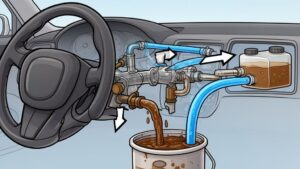
Most drivers are on top of their engine oil changes, but another critical fluid often gets completely forgotten: the differential fluid.
It's an easy one to miss, but ignoring it can lead to some seriously expensive damage. While every vehicle is a bit different, most manufacturers suggest changing this gear oil every 30,000 to 50,000 miles for normal driving. Let it go too long, and you're risking grinding gears and a major drivetrain failure.
What Differential Fluid Does for Your Vehicle
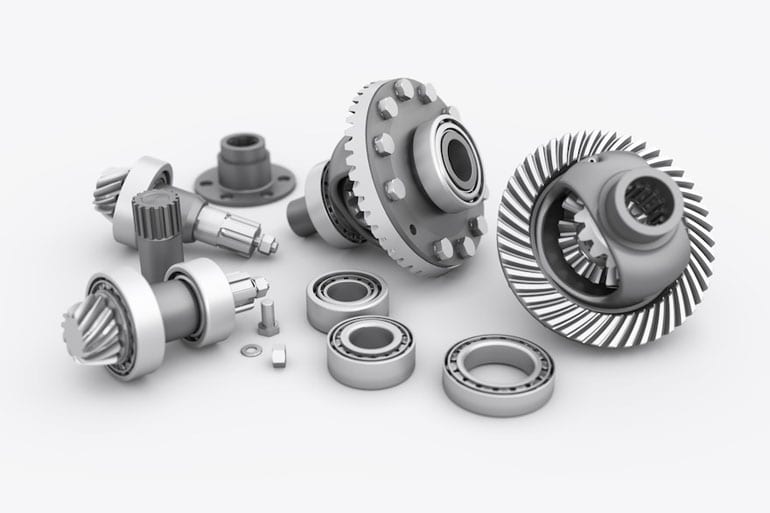
Picture your car's axle. The differential is like a flexible elbow right in the middle. When you take a turn, the wheel on the outside of the curve has to spin faster because it's covering more ground than the inside wheel. The differential is the mechanical marvel that lets this happen, ensuring both wheels get power from the engine but can still rotate at different speeds.
Without it, every corner would be a clumsy, tire-shredding fight. But for this complex system of gears to work its magic, it needs to be bathed in a protective lubricant. That's where differential fluid, or gear oil, steps in. It has three jobs that are absolutely vital to your vehicle’s health.
The Three Core Functions of Gear Oil
Differential fluid is the unsung hero of your drivetrain, quietly keeping everything moving smoothly. What's more, unlike engine oil which gets help from a filter, differential fluid is on its own.
Here's what it’s doing back there:
- Lubrication: It coats the ring and pinion gears with a thin, tough film that prevents metal-on-metal contact. This is what stops the grinding and drastically reduces the friction that would otherwise tear those gears apart.
- Cooling: Those gears meshing together generate a ton of heat. Gear oil is fantastic at absorbing that heat and pulling it away from the metal, preventing the differential from overheating and the gears from warping under stress.
- Cleaning: Over time, tiny metal particles flake off the gears as they wear. The fluid scoops up these shavings and holds them in suspension, keeping them from circulating and causing more abrasive damage. Many differentials even have a magnetic drain plug to help trap this metallic gunk.
There's a common myth that differential fluid is a "lifetime" fluid. The reality is, it breaks down from constant heat and eventually becomes saturated with metal particles. When that happens, it stops being a lubricant and turns into a gritty, abrasive sludge that actually speeds up wear and tear.
The experts at the Universal Technical Institute are clear: neglecting this fluid is a surefire way to cause differential failure, a repair that can easily run into the thousands. For drivers navigating the Dallas-Fort Worth freeways daily, sticking to a 30,000-mile service interval can prevent a 25% higher wear rate on those gears, according to NAPA AutoCare data. You can learn more about the critical role of differential fluid maintenance from seasoned automotive professionals.
When to Change Your Differential Fluid
So, how often should you really be changing your differential fluid? There's no single magic number. Your vehicle's manufacturer gives you a starting point, but the true schedule comes down to one simple thing: how you drive. To get it right, we need to look at two different scenarios: normal driving and severe service.
Figuring out which category you fall into is the most important step in protecting your drivetrain from expensive, premature wear. A lot of drivers think they're in the "normal" group, but you'd be surprised how many of us actually qualify for "severe" service without even knowing it.
This flowchart gives you a quick visual guide to see where your driving habits land you.

As you can see, the standard mileage range works for typical driving, but tough conditions demand a much shorter service cycle to head off any potential damage.
Intervals for Normal Driving Conditions
For the average driver, "normal" conditions mean smooth sailing—think steady highway speeds and daily commutes on paved roads without a heavy load. This kind of driving is pretty easy on your differential gears and the fluid that keeps them safe.
Under these ideal circumstances, most mechanics and manufacturers agree on a fluid change every 30,000 to 60,000 miles. This timeline ensures the fluid gets swapped out long before it breaks down from heat and contamination. Sticking to this schedule is a simple and highly effective way to keep your drivetrain healthy for the long haul.
Intervals for Severe Driving Conditions
Now, this is where the game changes. "Severe" service isn’t just for off-road warriors or race car drivers. It covers a lot of common driving situations that put a massive amount of strain on your differential.
You almost certainly fall into the severe category if you regularly:
- Tow a trailer, boat, or camper
- Haul heavy materials in your truck bed
- Drive in dusty, muddy, or off-road environments
- Operate in extreme heat (like a classic Texas summer)
- Spend a lot of time in stop-and-go city traffic
Each one of these forces the differential fluid to work overtime. The extra load generates a ton of heat, and heat is the ultimate enemy of any lubricant. It causes the fluid to break down and lose its protective qualities much, much faster. For any vehicle operating under these conditions, the service interval shrinks to just 15,000 to 30,000 miles.
Here's the key takeaway: Severe driving can cut the life of your differential fluid in half. Ignoring this can lead to a nasty situation called "thermal runaway," where intense heat thins the fluid so much that the metal gears grind directly against each other, causing rapid and catastrophic failure.
Towing your boat to Lake Ray Hubbard or hauling equipment for your business? Conditions like these are incredibly hard on your fluid. For example, some truck manufacturers suggest an interval of 150,000 miles for light highway use but slash that down to just 30,000 miles when towing in temperatures above 70°F—which is pretty much all year in North Texas.
Industry tests show this kind of heat can shear the fluid's protective film, leading to metal-on-metal contact that accelerates wear by a staggering 300%. In fact, 2024 data from RepairPal showed that 62% of truck differential failures in major markets like Texas were linked to overdue fluid changes under severe use, with repair bills hitting $2,500-$4,000. You can find more expert analysis on how towing impacts fluid life to better protect your investment.
Recommended Differential Fluid Change Intervals
To make things even easier, here's a quick reference table to help you find the right service interval for your vehicle and driving style. When in doubt, following the "Severe" schedule is your best defense against unexpected and wallet-draining drivetrain repairs.
| Vehicle Type | Normal Driving Conditions (Miles) | Severe Driving Conditions (Miles) |
|---|---|---|
| Sedans & Compact SUVs | 45,000 – 60,000 | 25,000 – 35,000 |
| Trucks & Large SUVs | 30,000 – 50,000 | 15,000 – 30,000 |
| Performance Vehicles | 30,000 – 40,000 | 15,000 – 25,000 |
| Fleet & Commercial Vans | 25,000 – 40,000 | 15,000 – 25,000 |
Ultimately, being honest about how you use your vehicle and adjusting your maintenance accordingly is the best way to ensure your differential lasts for years to come.
Warning Signs Your Differential Fluid Needs Service
Most major car problems don't just spring up out of nowhere. They usually start small, with subtle hints—a new noise you haven't heard before, a weird smell, or a slight vibration. Your differential is no different. It will almost always give you a heads-up when its fluid is breaking down and can no longer protect the gears inside.
Learning to spot these symptoms is your best defense against a catastrophic failure and a repair bill that could easily run into the thousands. Catching these issues early means you can fix the root cause—old, worn-out fluid—before it leads to permanent, expensive damage. Let's break down the most common red flags.

Unusual Noises From the Rear of Your Vehicle
One of the first and most obvious signs of trouble is noise. Fresh, clean differential fluid creates a protective cushion between the gears, letting them mesh together quietly and smoothly. When that fluid gets old or contaminated, the cushion disappears, leading to metal-on-metal contact that you can actually hear from the driver's seat.
Listen closely for these specific sounds:
- Whining or Howling: This is a classic symptom of worn gears. The noise often changes pitch as you speed up or slow down and points directly to a lack of proper lubrication.
- Grinding or Rumbling: A low-pitched grinding, especially when you're turning, is a bad sign. It suggests the fluid is so full of tiny metal shavings that it's now acting like liquid sandpaper, actively damaging the gears.
- Clicking or Clunking: If you hear sharp clicks when making a turn, it could mean internal parts are already damaged from running without enough good fluid.
Any new noise coming from your axles is a signal to get your vehicle inspected right away. If you keep driving, you could turn a simple fluid change into a full differential rebuild.
Vibrations and Handling Issues
Beyond strange noises, you might also feel a change in how your vehicle drives. Worn-out fluid can cause excessive friction and heat, which impacts the performance of the entire drivetrain. These vibrations often start off subtle but will get progressively worse as more damage occurs.
You might notice a shudder or vibration that appears during acceleration and then smooths out once you're cruising. This can be a sign that the gears are struggling to engage properly. In other cases, you might feel the vehicle resisting or "chattering" during tight, slow-speed turns, like when you're pulling into a parking spot. This happens because the gears aren't slipping smoothly against each other like they're designed to.
It's a common mistake to assume all vibrations come from the tires or engine. But if a vibration is directly tied to acceleration or turning, it's often a cry for help from your drivetrain—and the differential fluid is a primary suspect.
Visible Leaks and Burning Smells
Sometimes the clearest sign is one you can see or smell. If you spot dark, thick drips of fluid on your driveway directly under the rear or front axle, you probably have a differential leak. Unlike a thin, reddish transmission fluid leak, gear oil is much heavier and has a very distinct, potent smell.
That smell is another critical clue. Old, oxidized differential fluid has a powerful, burnt odor, sometimes compared to sulfur. You might notice it after a long drive, especially if you've been towing or hauling a heavy load. This smell means the fluid has broken down under extreme heat and is no longer protecting your gears.
Don’t ignore these warnings. A fluid leak will eventually cause a low fluid level, which guarantees accelerated wear and eventual failure. Fixing a leaking seal is a relatively minor repair compared to replacing an entire differential that has run dry. If you notice any of these signs, it's time to find out how often should differential fluid be changed for your vehicle and get it serviced.
Why a Professional Fluid Change Matters
Knowing how often to change your differential fluid is step one, but getting the job done right is a whole different ballgame. While a DIY fluid change might look like an easy way to save a few bucks, having a professional handle it is about more than just convenience. It’s a chance for an expert to give one of your vehicle's most critical systems a thorough health check—something you just can't do in your driveway.
Think of it this way: a certified technician isn’t just swapping old fluid for new. They're reading the story the old fluid tells about the health of your differential gears.

The Diagnostic Power of the Drain Plug
After safely lifting your vehicle, the first thing a tech does is position a pan and pull the drain plug. As that dark, old fluid starts to flow, the real detective work begins at the magnetic drain plug. This little component is a work of genius—it’s designed to catch the tiny metal particles that naturally shear off the gears as they mesh together over thousands of miles.
Inspecting this plug is like a doctor reading a blood test. A little bit of fine, metallic sludge, almost like a "gray fuzz," is completely normal. It’s just a sign of standard wear and tear.
But a trained technician knows exactly what to look for beyond that. Are there larger metal shavings? Shiny flakes that look like "cornflakes"? Or, worst of all, visible chunks of metal stuck to the magnet? Those are all major red flags, pointing to serious issues like a chipped gear tooth or a failing bearing inside the differential.
Finding significant metal debris on the drain plug is a mechanical SOS. A DIY-er might just wipe it clean and refill the differential, unknowingly setting themselves up for a catastrophic failure down the road. A professional, however, will recognize this as a critical warning sign that requires immediate attention before more damage occurs.
Precision in Every Step
Once every last drop of the old fluid is out, the process moves to careful cleaning and refilling. A technician will meticulously clean the differential housing and the cover to guarantee a perfect, leak-free seal. They’ll then install a fresh gasket or apply a precise bead of high-quality sealant—no guesswork involved.
Next comes the most crucial part: refilling with the right fluid. Your vehicle's manufacturer has a very specific recommendation for the type and weight of gear oil, and getting it wrong can be a costly mistake.
- Correct Fluid Type: Using the wrong stuff can cause inadequate lubrication, leading to overheating and accelerated wear.
- Correct Fluid Amount: Overfilling can blow out seals from the increased pressure, while underfilling will literally starve the gears of the lubrication they need to survive.
A professional service guarantees the exact manufacturer-specified fluid is used and filled to the precise level for optimal performance and protection. Our team provides expert differential service that follows these exact standards to protect your investment. That attention to detail is what prevents common mistakes and keeps your vehicle's drivetrain healthy for many more miles.
Choosing Between Conventional and Synthetic Fluid
When it’s time to service your differential, one of the biggest decisions you'll face is what kind of fluid to use. Not all gear oils are created equal, and your choice boils down to two main types: conventional and synthetic. The right one depends on your vehicle, how you drive it, and how much protection you're looking for.
Think of it like choosing between a standard cotton t-shirt and high-tech athletic wear. Conventional fluid is like the reliable cotton shirt—it gets the job done just fine under normal conditions. It's affordable and provides perfectly good lubrication for everyday driving. For a commuter car that isn't towing or hauling, conventional fluid is often all you need.
Synthetic fluid, on the other hand, is the high-performance athletic wear. It’s engineered in a lab to have a perfectly uniform molecular structure, giving it superior capabilities when things get tough.
Why Synthetic Fluid Excels Under Pressure
Synthetic gear oil is specifically designed to handle extreme stress, heat, and pressure far better than its conventional cousin. This translates into real-world benefits, especially for vehicles that work hard. If you frequently tow a boat, haul heavy loads, or just deal with the punishing Texas heat, synthetic is the clear winner.
Here’s a quick look at why it performs so well:
- Superior Thermal Stability: It won't break down at high temperatures, keeping your gears protected even under the most demanding conditions.
- Enhanced Shear Strength: The protective fluid film doesn't get "sheared" or thinned out under intense pressure, which is crucial for preventing metal-on-metal contact.
- Improved Flow in Cold Weather: While less of a concern here in Richardson, it provides much better lubrication on cold starts.
Because it’s so much more robust, synthetic fluid can often extend the time between changes. Top-tier synthetic gear lubes can push service intervals 50-100% further by resisting viscosity loss even at scorching 250°F temperatures.
At Kwik Kar, our CARFAX and NAPA-certified technicians help you make the right choice. We inspect your vehicle during state inspections, use premium fluids tailored to your rig, and provide transparent estimates for every service.
Making the Right Choice for Your Vehicle
Ultimately, the decision comes down to your specific situation. If your vehicle manufacturer requires synthetic fluid, the choice is already made for you. But if not, think about your driving style.
For light-duty cars and SUVs, conventional fluid is a perfectly fine and cost-effective option. But for any truck, performance car, or vehicle that sees severe service, upgrading to synthetic is a smart investment in the long-term health of your drivetrain. You can explore a deeper comparison in our article on synthetic vs. conventional oil.
Protect Your Drivetrain with Proactive Maintenance
Knowing when to change your differential fluid is one of the best ways to protect your vehicle's long-term health. Think of it as a small, affordable insurance policy against a multi-thousand-dollar drivetrain failure. The core takeaway is simple: proactive maintenance is always smarter and cheaper than reactive repairs.
For most drivers, the sweet spot for a differential fluid service is every 30,000 to 50,000 miles. However, if you use your vehicle for tough jobs like towing, hauling, or even just navigating frequent stop-and-go city traffic—especially in the Texas heat—that interval should be cut in half. Those severe conditions accelerate fluid breakdown, turning a vital lubricant into a damaging sludge much faster than you might think.
A Smart Investment in Your Vehicle's Future
Putting off this service is a real gamble. While some modern vehicle manuals might suggest longer intervals, real-world conditions tell a different story. For instance, some sources say that advanced fluids can last 100,000 miles or more, but studies show that only 35% of vehicles in major U.S. markets hit those milestones without issues, simply due to the degrading effects of daily driving.
Here in Texas, where extreme heat can oxidize fluid 20-30% quicker, bearing wear actually doubles, making that 30,000-50,000 mile check essential. In fact, our own Kwik Kar diagnostics have revealed that a staggering 55% of inspected differentials show significant contamination by just 60,000 miles. Discover more insights about these maintenance findings on Drivparts.com.
The bottom line is that a fluid change costing a couple hundred dollars today can prevent a catastrophic differential failure costing thousands tomorrow. It is the single best investment you can make in the reliability and longevity of your vehicle's drivetrain.
Taking care of your vehicle is about more than just one part; it's about a holistic approach to general automotive maintenance. By staying on top of simple services like this, you ensure your car, truck, or SUV remains dependable for years to come, giving you peace of mind on every drive. To learn more about your vehicle's other critical fluids, you can check out our guide on how often car fluids should be flushed.
Frequently Asked Questions About Differential Fluid
Even after you get the hang of when to change your differential fluid, a few more questions usually pop up. It's a vital service that often gets overlooked, so it’s natural to want to dig into the details. Let's tackle some of the most common things we hear from vehicle owners about their differential fluid.
Can I Just Top Off My Differential Fluid?
Unlike engine oil, which your engine naturally consumes over time, your differential is a sealed system. If the fluid is low, it’s not because it got used up—it's because you have a leak. The usual suspects are a worn-out axle seal or a failing gasket on the differential cover.
Simply adding more fluid is like putting a band-aid on a problem that needs stitches. It doesn't fix the leak. A technician needs to pinpoint where the fluid is escaping and repair it before refilling the differential. Driving with a known leak is a gamble, as low fluid can quickly lead to catastrophic gear failure.
Do Front and Rear Differentials Use the Same Fluid?
Not always, and getting this wrong can be a costly mistake. This is especially critical for all-wheel-drive (AWD) and four-wheel-drive (4WD) vehicles that have both front and rear differentials. While some vehicles are designed to use the same gear oil in both, many manufacturers specify different fluid types or weights for the front and rear.
Using the wrong fluid is a recipe for disaster. It can lead to poor lubrication, overheating, and accelerated wear on the gears. The best bet is to check your owner's manual or have a certified technician confirm the exact fluid your vehicle needs for each differential.
What Happens If I Never Change My Differential Fluid?
Putting off this service is one of the surest ways to face an expensive and completely avoidable repair bill. Over thousands of miles, the fluid becomes contaminated with microscopic metal particles from the natural wear and tear of the gears. This contamination transforms the fluid from a protective lubricant into a gritty, abrasive sludge.
This sludge then grinds away at your gears and bearings, leading to a cascade of problems:
- Loud whining or howling noises as the gears mesh improperly.
- Vibrations that you can feel during acceleration, caused by excess friction.
- Overheating, which can permanently warp the metal components.
- Total differential failure, a repair that can easily run into the thousands of dollars.
When it comes to your differential, proactive maintenance is always the cheaper and safer route.
How Can I Tell if My Fluid is Bad?
A quick visual and smell test can tell you a lot. Fresh gear oil is typically thick with a semi-transparent amber or reddish hue. Old, broken-down fluid, on the other hand, is a whole different story.
Bad differential fluid is often:
- Dark and Opaque: It will look black or a milky gray, completely saturated with contaminants.
- Full of Debris: You might see a metallic "glitter" in the fluid, or even larger shavings.
- Burnt-Smelling: It will have a very strong, pungent sulfur-like smell, which is a clear sign it has been broken down by extreme heat.
If your fluid looks like dark sludge or has a burnt smell, it's well past its expiration date. This is a red flag that your gears aren't getting the protection they need, and a fluid change is long overdue.
This is especially true for older, harder-working vehicles. Based on local data from over 5,000 high-mileage trucks we've serviced, a staggering 70% had degraded fluid that was already causing noticeable vibrations. For trucks used for towing, a proactive change every 30,000 miles can cut the risk of catastrophic failure by an estimated 40%. You can read more expert advice on fluid life for hard-working vehicles to stay ahead of potential problems.
At Kwik Kar Oil Change and Auto Care, our ASE-certified technicians have the expertise to inspect, diagnose, and service your vehicle's differential with precision. Whether you need a routine fluid change or have concerns about a potential leak, we provide dealership-quality care to keep your drivetrain running smoothly and reliably. Schedule your service with us today at https://www.kkrichardson.com.