How often you need to change your spark plugs can vary wildly, from every 20,000 miles to well over 100,000 miles. The answer depends almost entirely on what kind of plugs are in your engine.
The simple truth is that not all spark plugs are created equal, so there’s no single, one-size-fits-all replacement schedule.
A Quick Guide to Spark Plug Replacement Schedules
Think of a spark plug as the essential match that lights the fuel in your engine. Just like a match can only be struck once, a spark plug has a limited number of sparks it can produce before it's spent.
Every single time it fires—and we're talking thousands of times per minute—its electrodes wear down just a tiny bit. Over thousands of miles, this gradual wear and tear creates a wider gap for the spark to jump across. This forces the ignition system to work harder and eventually leads to a weaker, less effective spark.
This is exactly why the type of spark plug in your car matters so much. The material used for the electrode directly impacts how long it can stand up to this constant electrical erosion and intense heat. A basic copper plug just won't last as long as more advanced materials designed for the long haul.
Spark Plug Lifespan by Material
Here’s a quick rundown of the most common spark plug types, their estimated lifespan, and what makes them different.
| Spark Plug Type | Average Lifespan (Miles) | Key Feature |
|---|---|---|
| Copper | 20,000 – 40,000 | Great conductivity, but wears fast. |
| Platinum | 60,000 – 100,000 | More durable and heat-resistant. |
| Iridium | Up to 120,000 | The most durable and long-lasting. |
As you can see, choosing the right material makes a huge difference in your maintenance schedule.
This chart gives you a great visual of what to expect from each plug type.
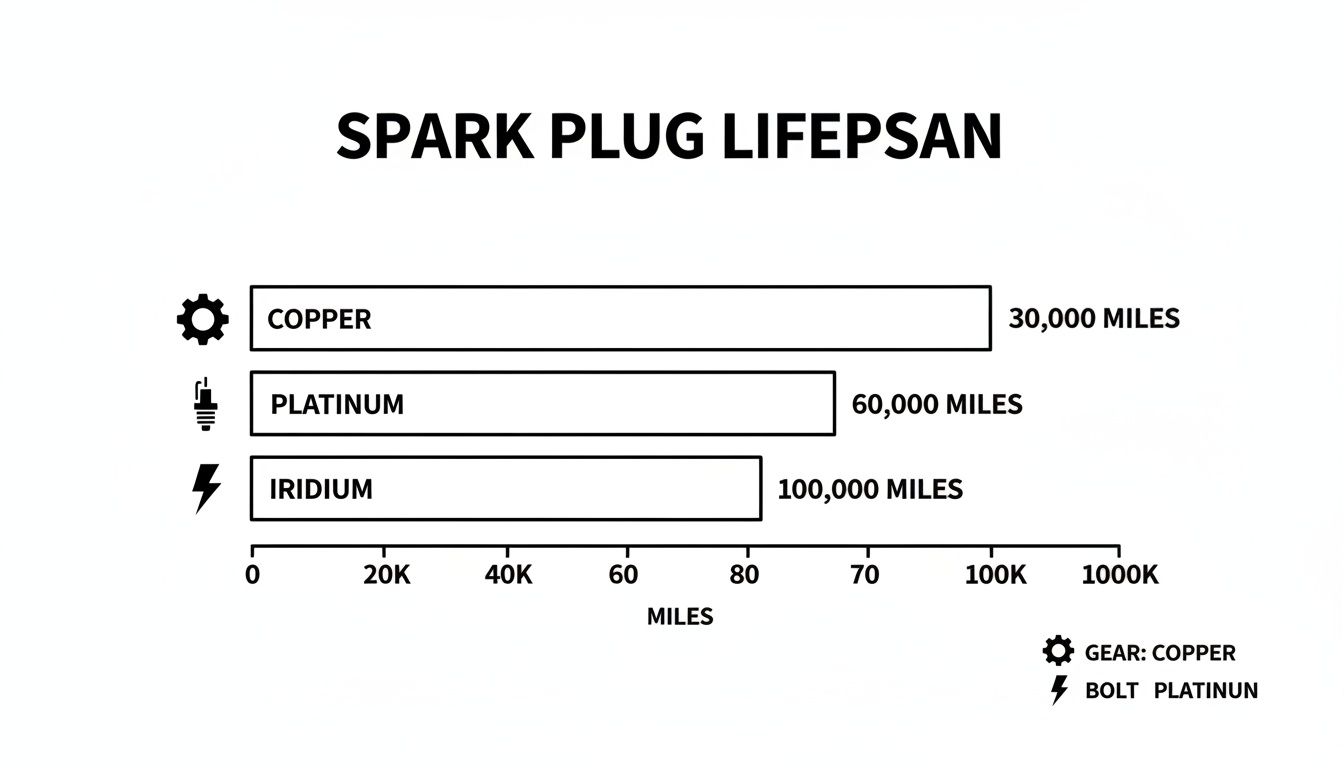
It’s pretty clear that investing in a higher-quality material like iridium can easily triple the time between replacements compared to a standard copper plug.
Key Takeaway: The type of spark plug in your car is the single biggest factor determining its replacement schedule. Always check your owner's manual for the manufacturer's specific recommendation for your vehicle.
Sticking to this schedule is a core part of your vehicle's overall upkeep. To see how this fits into the bigger picture, check out our guide on how often you should service your car.
Understanding Why Spark Plug Materials Matter
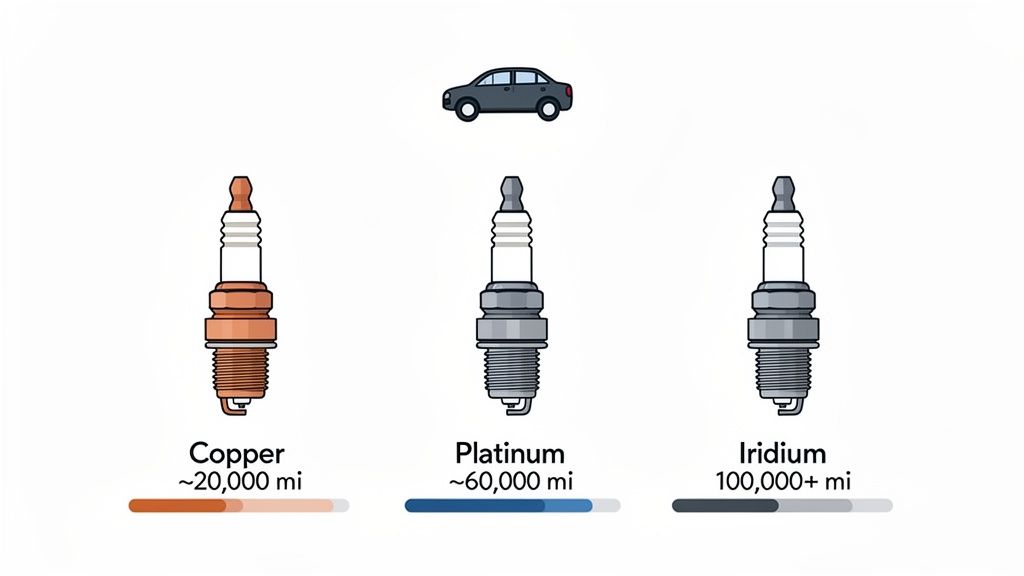
The huge difference in replacement schedules for spark plugs boils down to one simple thing: some materials are just plain tougher than others. It's a lot like comparing an old incandescent lightbulb to a modern LED. The old bulb gets the job done, but its delicate filament burns out pretty fast. The LED, on the other hand, uses more advanced, durable materials to keep shining for thousands of hours longer.
Spark plugs work on a very similar idea. The material used for the center electrode determines how well it can handle the intense heat, pressure, and electrical erosion happening inside your engine. This choice of material is the single biggest factor in how often you should change your spark plugs.
The Classic Copper Core
For decades, copper was the king of spark plug materials, and for one main reason: it’s an incredible electrical conductor. This trait allows it to create a strong, clean spark with less voltage, which was perfect for the older, less demanding ignition systems of the past.
But copper has a major weakness—it’s relatively soft and has a low melting point. In the harsh environment of an engine, its electrodes wear down much faster than those made from stronger metals. While it performs beautifully, its short lifespan of 20,000 to 40,000 miles just doesn't cut it for most modern, high-efficiency engines.
Platinum and Iridium: The Modern Standard
This is where the heavy hitters, platinum and iridium, come into play. These precious metals are significantly harder and have much higher melting points than copper. Automakers started using them to build spark plugs that could not only survive but thrive in the more intense conditions of today's engines.
- Platinum Plugs: These plugs feature a small disc of platinum welded to the electrode tip. That simple upgrade dramatically slows down the erosion process, stretching the plug's useful life all the way to 100,000 miles.
- Iridium Plugs: Iridium takes durability to the next level, being even harder than platinum. This allows for an extremely fine-wire electrode that creates a highly focused and powerful spark while lasting for an impressive 120,000 miles or more.
This move toward more durable materials isn't just a trend; it's a direct response to how much engine technology has evolved. The global spark plug market was valued at USD 1.76 billion in 2022 and is expected to keep growing as advanced engines become the norm. In fact, premium iridium and platinum plugs now make up over 70% of the replacement market, a clear sign that drivers prefer their longevity and performance. You can dig deeper into this industry shift and see the full spark plug market research for more details.
The Bottom Line: Using a harder, more resilient metal like platinum or iridium allows a spark plug to keep its precise gap for a much, much longer time. This ensures your engine gets a consistent, reliable spark, which is absolutely essential for modern engines with turbochargers or gasoline direct injection (GDI) systems that demand perfect ignition every time.
Factors That Shorten Your Spark Plug Lifespan
Your car's owner's manual is a fantastic guide, but the maintenance schedule it provides is based on a perfect world—one with ideal driving conditions. Out here in reality, a whole host of factors can shorten that timeline considerably. Think of it like the battery life on your phone. If you’re constantly running apps, streaming videos, and have the brightness cranked up, that battery will drain way faster than if it just sits idle.
The same idea applies to your spark plugs. Certain driving styles and engine issues put a ton of extra stress on the whole ignition system. This forces your plugs to work overtime, causing them to wear out much sooner than the manual suggests. Knowing what these factors are helps you set realistic expectations for your vehicle's needs.
Driving Habits That Age Plugs Faster
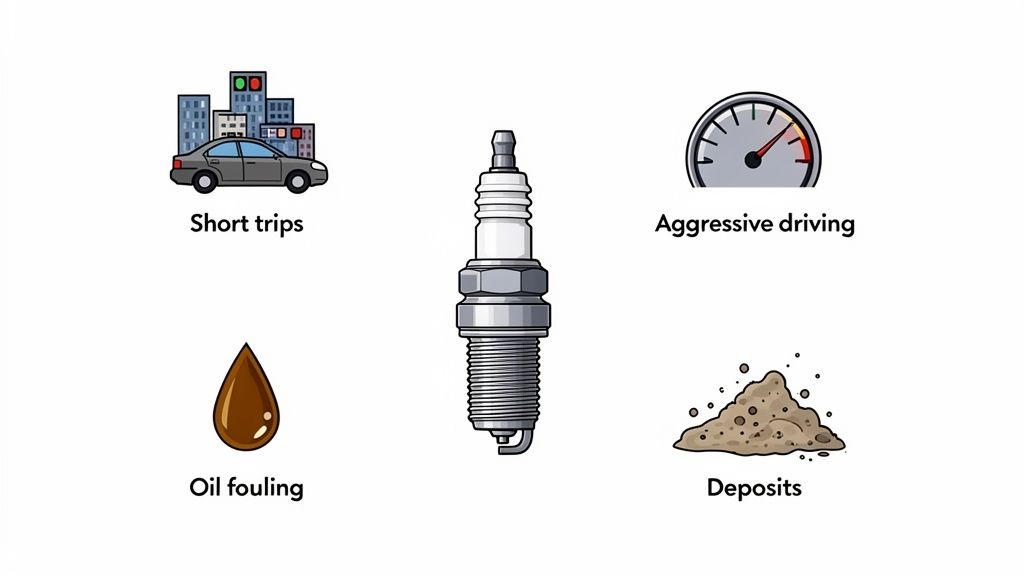
How you drive every single day has a direct line to your spark plugs' health. If you’re an aggressive driver or have a specific kind of commute, you might be cutting your plugs' life short without even realizing it.
- Frequent Short Trips: Is your daily drive less than 15 minutes? If so, your engine probably isn't getting hot enough to burn off carbon deposits. This gunk builds up on the spark plug tips, interfering with the spark and eventually "fouling" the plug.
- Aggressive Acceleration and High Speeds: Constantly putting the pedal to the metal or cruising at high RPMs creates an extreme environment inside your engine. The intense heat and pressure wear down the plug's electrodes much faster.
- Heavy Towing or Hauling: Pulling a trailer or loading up your truck bed puts a massive strain on the engine. To compensate, the ignition system has to work harder, making the plugs fire more often and with greater intensity. This accelerated workload leads directly to a shorter lifespan.
Your daily commute really matters. A car that only ever makes short, stop-and-go trips across town can burn through a set of plugs much faster than one that spends most of its time cruising at a steady speed on the highway.
Engine Conditions That Foul Plugs
Sometimes, the real problem has nothing to do with your driving habits. An underlying engine issue can chew through a brand-new set of spark plugs in no time, turning a simple replacement into a temporary band-aid for a much bigger problem.
For example, a leaky valve cover gasket can let oil seep into the combustion chamber, coating the spark plug tips. This is known as oil fouling, and it kills the plug's ability to create a strong spark, leading to misfires. In the same way, a bad sensor could cause the engine to run "rich" (too much fuel, not enough air), which leaves behind sooty, black carbon deposits that foul the plugs. This is exactly why a professional inspection during a spark plug change is so important—it can catch a small leak before it becomes a major engine repair.
Telltale Signs Your Spark Plugs Are Failing
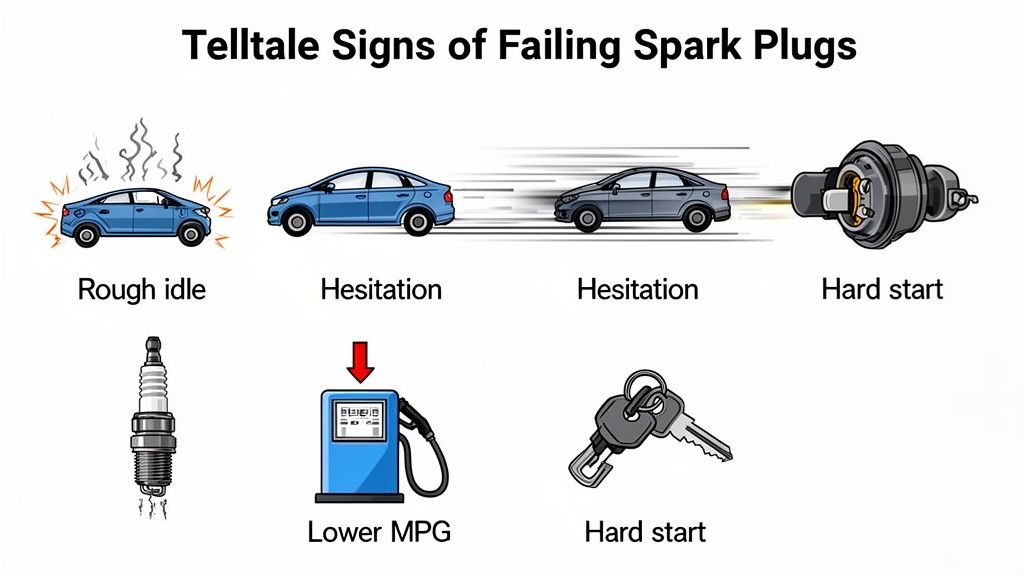
Your vehicle has a way of telling you when something’s wrong; you just have to know how to listen. Worn-out spark plugs rarely just give up overnight. Instead, they trigger a series of performance hiccups that tend to get worse over time. Learning to spot these warning signs can help you get ahead of the problem before it leaves you stranded or leads to more expensive damage.
Think of a failing spark plug like a flickering lightbulb. It might still work for a little while, but it’s becoming unreliable and it’s a clear sign it's on its way out. Ignoring these symptoms is a gamble that rarely pays off, so paying close attention to how your car feels is the first step toward smart, preventative maintenance.
Engine Performance Problems
The most obvious signs of failing spark plugs show up in how your engine runs. Since these tiny parts are responsible for igniting the fuel, even a small inconsistency can throw off the entire combustion cycle. You'll likely notice one or more of the following issues:
- Rough Idling: Does your car seem to shake, shudder, or vibrate while you’re stopped at a traffic light? This rough idle is often the first sign of an inconsistent spark, which causes uneven power delivery from the engine.
- Hesitation During Acceleration: When you step on the gas, you expect a smooth, instant response. If your car stumbles or hesitates before picking up speed, it’s a classic symptom that your spark plugs are struggling to keep up.
- Engine Misfires: A misfire feels like a sudden jerk or stutter from the engine, especially when you're accelerating or climbing a hill. This happens when a cylinder fails to fire correctly, usually because of a weak or nonexistent spark.
These problems are all direct results of a tired ignition system. As a spark plug’s electrodes wear down, the gap the spark needs to jump gets wider, requiring more energy to create a strong, consistent spark. Eventually, this inefficiency tanks your fuel economy, makes the engine hard to start, and can even damage your catalytic converter. To dig deeper, you can explore these bad spark plug symptoms.
Starting Issues and Poor Fuel Economy
Beyond just how the engine feels, failing plugs can hit your wallet and disrupt your morning routine. Two of the most frustrating signs are directly tied to that weakening spark.
A hard start is a major red flag. If your engine cranks over for longer than usual before it finally catches, the plugs might not be providing the strong initial spark needed to get things going. This issue often gets worse in cold or damp weather.
A sudden drop in your miles per gallon (MPG) is another clear warning. A weak spark means incomplete combustion, which is just a fancy way of saying you’re wasting fuel with every rotation of the engine. Keeping an eye on your fuel efficiency is a great way to catch this problem early. According to the experts at DENSO, a combination of poor acceleration, engine misfires, and reduced gas mileage are all classic signs that your spark plugs are overdue for replacement.
Choosing Between DIY and Professional Replacement
So, you've figured out your spark plugs are on their way out. Now comes the big question: should you tackle the job yourself or leave it to the pros? Doing it yourself can be a satisfying weekend project and definitely saves a few bucks on labor. But this isn't like topping off your washer fluid; it's a job that requires a delicate touch and the right tools.
One small mistake can turn a simple maintenance task into a seriously expensive engine repair.
On the flip side, bringing your car to a professional shop like Kwik Kar gives you peace of mind, knowing the job will be done right. The decision really boils down to your own mechanical skills and comfort level versus the potential risks. For many drivers, knowing when to change spark plugs is one thing—actually doing it is a whole different ballgame.
The DIY Route Potential Pitfalls
For the hands-on car owner, swapping out spark plugs might seem straightforward. But the devil is truly in the details. You’ll need more than a standard socket wrench from your toolbox; a high-quality torque wrench is an absolute must-have. Without one, you’re just guessing how tight to make the new plugs.
Go too tight, and you risk cracking the plug’s fragile ceramic insulator or, even worse, stripping the threads in the engine’s cylinder head. Too loose, and the plug can vibrate out, leading to terrible performance and potential engine damage.
But the mistake every mechanic dreads is cross-threading—inserting the plug at a slight angle. This can permanently mangle the threads in the engine block, a fix that can easily run into thousands of dollars.
A simple DIY spark plug replacement can quickly become a mechanical nightmare. The money saved on labor is insignificant compared to the potential cost of repairing a cross-threaded cylinder head.
The Value of Professional Service
Opting for a professional service at Kwik Kar means your vehicle is in the hands of ASE-certified technicians who do this job day in and day out. They have the proper experience, specialized tools, and diagnostic equipment to nail it the first time, every time.
A professional inspection is about more than just swapping parts. A trained technician can "read" your old spark plugs like a book, diagnosing other potential engine issues like a minor oil leak or an incorrect fuel mixture. They ensure every new plug is gapped perfectly for your specific engine and use a calibrated torque wrench to tighten them to the exact factory specs.
This level of detail is often part of a bigger service package. You can learn more about everything involved in a comprehensive engine tune-up.
DIY vs. Professional Spark Plug Replacement
Deciding who should handle your spark plug replacement involves weighing several key factors, from cost and time to the tools and expertise required. Here’s a quick breakdown to help you make the right call for your situation.
| Consideration | DIY Approach | Professional Service (Kwik Kar) |
|---|---|---|
| Cost | Lower upfront cost (parts only), but high risk of expensive mistakes. | Higher initial cost (parts + labor), but protects against costly errors. |
| Tools | Requires specialized tools, including a quality torque wrench, spark plug socket, and gapping tool. | No tool investment needed. Our technicians have professional-grade equipment. |
| Time & Convenience | Can take several hours, especially for beginners. You work on your own schedule. | Typically completed in about an hour. Drop off your car and let us handle it. |
| Expertise & Risk | High risk of errors like cross-threading or over-tightening, which can cause severe engine damage. | ASE-certified technicians eliminate risk. The work is done right and often guaranteed. |
| Diagnostic Value | You only see the old plug. You might miss signs of deeper engine problems. | Technicians can "read" old plugs to diagnose underlying issues like oil leaks or fuel problems. |
While the DIY approach can be tempting, the risks associated with improper installation are significant. For most drivers, the assurance and expertise offered by a professional service provide a far better value in the long run.
Ultimately, the slightly higher upfront cost of professional service buys you something invaluable: guaranteed work and the confidence that your engine's health is protected. It takes all the guesswork out of the equation and eliminates the risk of a simple job turning into a costly catastrophe.
Frequently Asked Questions About Spark Plug Care
Even after covering the basics, a few specific questions about spark plug maintenance always seem to pop up. Let's tackle some of the most common ones we hear from drivers to clear up any lingering confusion and help you feel more confident about your car's health.
Getting these details right is a huge part of understanding how often you should change spark plugs. It’s not just about hitting a certain mileage; it’s about making smart, informed decisions for your specific vehicle.
Can You Visually Inspect a Spark Plug?
Absolutely. A quick visual inspection is one of the best ways to get a read on what's happening inside your engine. A healthy, happy spark plug should have just a light tan or grayish-brown deposit on its tip.
But if you see something else, it’s usually a direct sign of trouble.
- Black, Sooty Deposits: This is a classic sign the engine is running "rich"—burning too much fuel. It can also happen if you do a lot of short-trip, city driving where the engine doesn't get hot enough to burn off the carbon.
- White, Glazed Deposits: This points to the opposite problem: the engine is running too hot. The culprit could be anything from a cooling system issue to using the wrong octane fuel.
- Oily Residue: Seeing oil on a spark plug is a clear red flag. It means oil is leaking into the combustion chamber, likely from a worn valve guide or a bad piston ring.
- Worn or Damaged Electrode: If the center electrode looks rounded off or the ground strap is eroded and pitted, the plug is simply worn out. It can't create a strong, consistent spark anymore and needs to be replaced.
What Happens If I Use the Wrong Type of Spark Plug?
Installing the wrong spark plugs is a recipe for disaster. Think of it this way: modern engines are finely-tuned instruments, and the spark plug is a critical part of that precision. Using a plug that wasn't specifically designed for your engine can set off a chain reaction of problems.
In a best-case scenario, you’ll just deal with poor performance, terrible gas mileage, and a rough, shaky idle. The worst-case scenario? Serious engine damage. A plug that's too "hot" (meaning it retains too much heat) can cause pre-ignition, which can damage pistons. A plug that's physically too long can actually hit the piston, leading to catastrophic failure.
Always follow the manufacturer's recommendation. That part number in your owner’s manual isn’t just a friendly suggestion—it’s essential for keeping your engine running strong and lasting as long as it should.
Is a Spark Plug Change Included in a Tune-Up?
The meaning of a "tune-up" has really changed over the years. Back in the day of carburetors and distributors, a tune-up was a very hands-on process of adjusting multiple components to get the engine running right.
Today's computer-controlled engines have made that kind of tune-up obsolete. A modern "tune-up" is now more of a major preventative maintenance service that involves replacing key parts that wear out over time. A spark plug replacement is almost always a central part of that service, but it's not a given. Your best bet is to always ask your service advisor to confirm exactly what's included in their tune-up package.
Leave Your Next Engine Service to the Pros at Kwik Kar
Your engine’s ignition system is the heart of your vehicle, and keeping it in top shape is non-negotiable. Knowing the right time to change your spark plugs is a big part of that. When that time comes, trusting the job to an expert is the best way to guarantee your engine runs safely and efficiently for the long haul.
Here at Kwik Kar in Richardson, TX, we take the guesswork out of it. Our ASE-certified technicians have the experience and the right diagnostic tools to get the job done right, every time. We only use high-quality parts that meet—or beat—your vehicle's original specs.
Why a Certified Local Shop Makes All the Difference
Choosing a professional service isn't just about swapping out a few old parts for new ones. A trained technician can spot the subtle, underlying issues that might have caused your plugs to wear out too soon, catching a small problem before it turns into a major headache. We’ve built our reputation on trust, earning certifications with CARFAX, RepairPal, and NAPA AutoCare so you can feel confident in our work. If you're wondering why it pays to work with a reputable neighborhood shop, it's worth learning why you can trust local auto repair.
We’re also proud to be part of this community and offer discounts to military personnel, first responders, and healthcare providers as a small thank you.
Your vehicle's health depends on precision and expertise. A professional spark plug service not only restores performance but also serves as a crucial health check for your entire ignition system, catching small issues before they become costly repairs.
Don't wait for the check engine light to be your reminder. Schedule an inspection with us today and get back on the road with the peace of mind that comes from knowing your vehicle is in expert hands. We’re all about delivering dealership-quality work with the personalized touch you only get from a local shop.
Ready for a smoother, more efficient ride? Schedule your engine service with Kwik Kar Oil Change and Auto Care and let our certified professionals take care of the rest. Visit us online at https://www.kkrichardson.com to book your appointment.