That high-pitched sound your brakes are making isn't just an annoyance; it's a message from your car. While worn brake pads are a common culprit, that squeak can also signal issues like debris, moisture, or a glazed-over pad surface. The key is learning how to decode the specific sound to figure out how to fix it safely.
Why Are My Brakes Squeaking?
Think of that distinct squeal as your car's way of trying to tell you something. Before you jump to the worst-case scenario, know that the noise is often a built-in safety feature doing its job.
Most modern brake pads come equipped with a small metal tab called a wear indicator. When your brake pads wear down to a certain point, this little tab makes contact with the rotor and creates that high-pitched squeal on purpose. It’s an audible alert telling you it’s time for a replacement.
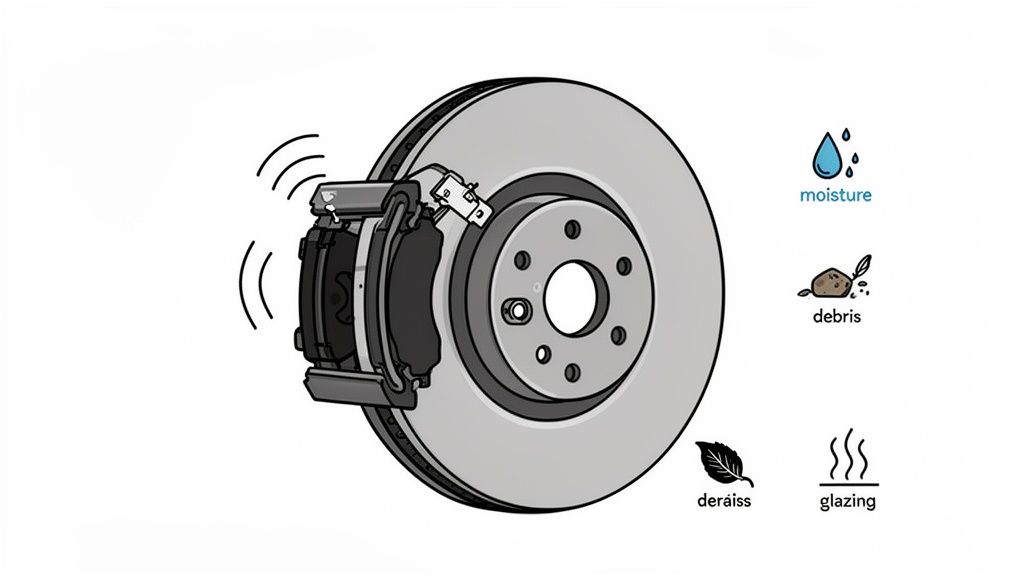
But worn pads aren't the only reason your brakes might be making a racket. Other common causes include:
- Moisture and Surface Rust: A thin layer of rust can form on the rotors after it rains or you wash your car. This usually causes a squeak for the first few stops until the pads wipe the rust away. It’s normal and nothing to worry about.
- Debris: Sometimes a small rock, a twig, or other road grime gets wedged between the brake pad and the rotor. This can cause a persistent, annoying squeal or even a grinding sound.
- Glazed Pads: This is a classic one. After 20,000-40,000 miles of driving, brake pads can harden from repeated heat cycles. This glazing creates a super-smooth surface that vibrates at a high frequency, causing that familiar squeal millions of drivers hear every day. If you're curious about industry trends, you can find more data on brake components in this automotive industry analysis.
This flowchart can help you visualize the diagnostic process, taking you from the initial sound to the likely cause.
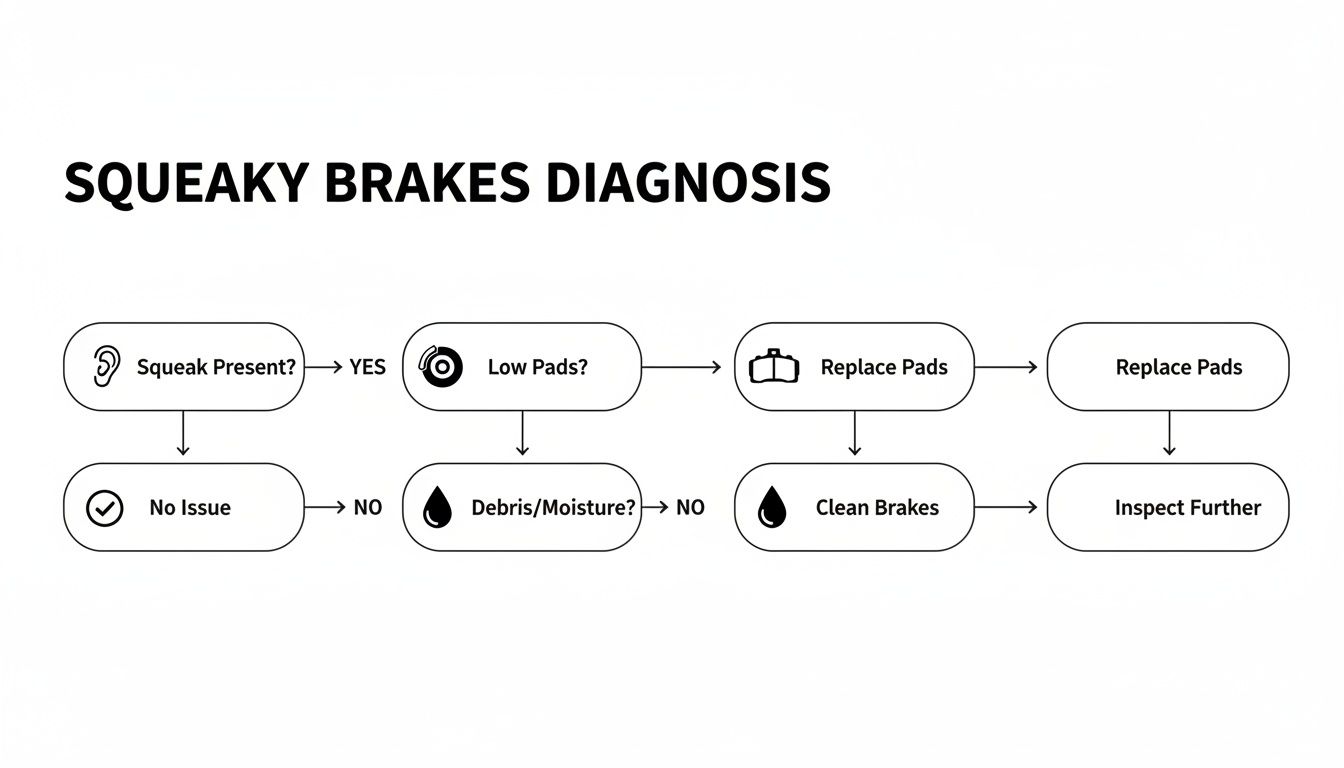
It really simplifies troubleshooting by walking you through the steps to pinpoint the problem. For a more detailed breakdown of how long pads should last, check out our guide on when to replace brake pads.
Brake Noise Diagnostic Chart
Sometimes, just describing the noise is half the battle. This chart will help you connect the sound you're hearing to its most likely cause and what you should do next.
| Type of Noise | Likely Cause | Recommended Action |
|---|---|---|
| High-Pitched Squeal | Worn Brake Pads (wear indicator) | Inspect brake pads for thickness. If they're thin, it's time for a replacement. |
| Grinding or Growling | Severely Worn Pads (metal-on-metal) or Debris | Stop driving immediately. This indicates serious wear that can damage rotors. Have it inspected by a professional. |
| Scraping Sound | Debris caught between pad and rotor | Try a few hard stops in a safe area to dislodge it. If the noise persists, a visual inspection is needed. |
| Squeaking After Rain | Surface Rust on rotors | Normal. The noise should disappear after the first few times you brake as the pads wipe the rotors clean. |
| Clicking Noise | Loose hardware or brake pad shift | Check that caliper bolts and pad clips are secure. This may require professional inspection. |
Using this as a starting point can help you make a more informed decision, whether you plan to tackle the job yourself or bring it into the shop.
Gathering Your Tools for a Safe Brake Job
Before you even think about loosening a single bolt, getting your workspace and tools in order is the most important part of the job. This isn't just about making the work easier; it's about staying safe. Attempting brake work without the right gear is a recipe for frustration and, frankly, it’s dangerous. Your car weighs thousands of pounds, and your safety hinges on having reliable equipment.
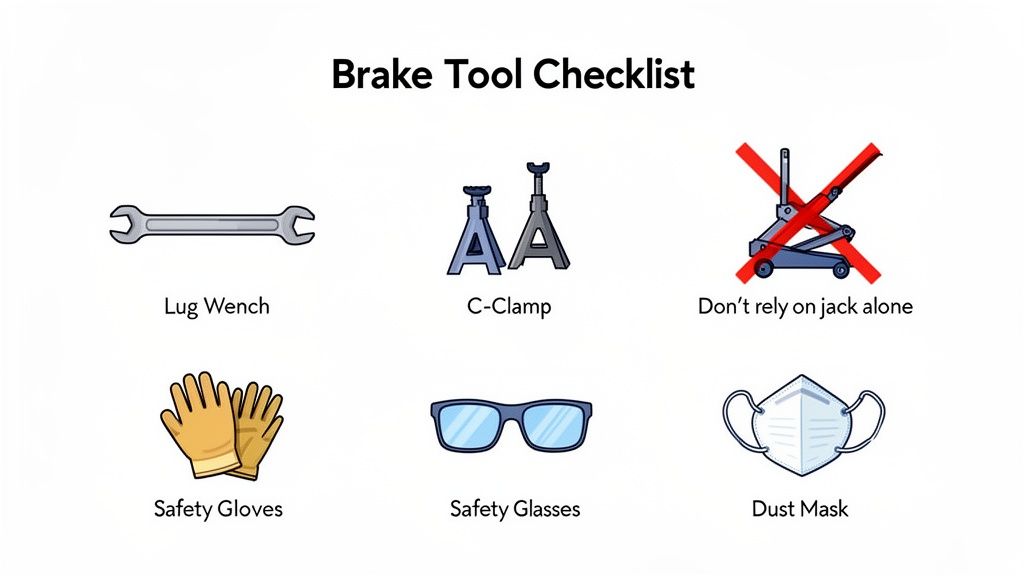
The single biggest mistake I see DIYers make is trusting the car's jack to hold the vehicle up. A jack is only for lifting—never for holding. They can slip, leak, or fail without warning.
Safety First: Always use a pair of rated jack stands on a flat, solid surface like a concrete driveway. Never work under a vehicle supported only by a jack. This is the single most important rule of any at-home auto repair.
Your Essential Tool Checklist
Having everything you need within arm's reach will save you a ton of headaches. There's nothing worse than getting halfway through a job only to realize you're missing a key tool.
Here's what you'll want to have ready:
- Lug Wrench: For getting the lug nuts off your wheels.
- Jack and Jack Stands: Absolutely essential for safely lifting and securing your vehicle.
- Wrench Set or Socket Set: You’ll run into various bolt sizes, especially on the calipers.
- C-Clamp or Brake Caliper Tool: Needed to push the caliper piston back so the new, thicker pads will fit.
- Brake Cleaner and Rags: You'll be cleaning off a lot of dust and grime from the components.
- Protective Gear: Safety glasses and gloves are non-negotiable. Brake dust is nasty stuff.
Speaking of brake dust, you need to be careful with it. Older brake pads often had asbestos, but health concerns led to a 90% shift toward semi-metallic and ceramic materials by the 1980s. You can explore the automotive aftermarket industry to see how things have changed. Even though modern pads are safer, you should still avoid breathing in any dust.
While you're checking your brakes, it's a great time to make sure other maintenance items are handled. Keeping fluids topped off is a great habit, and you can get a quick refresher with our guide on how to check car fluids.
Practical DIY Fixes for Common Brake Noises
Alright, with your tools laid out and the car safely up on jack stands, it's time to get to the root of that noise. The good news is that many of the most common causes of squeaky brakes are things you can handle yourself with some basic cleaning and the right products. Often, these simple, low-cost fixes are all it takes to get your brakes back to running silently.
The easiest place to start? A really good cleaning. Brake dust, road grime, and all sorts of gunk build up on your calipers and other brake parts over time. This mess can actually keep parts from moving the way they should, which creates the exact kind of vibration that makes brakes squeal.
Grab a can of dedicated brake cleaner spray for this job. You'll want to generously spray down the whole caliper assembly, the pads, and the rotor to dissolve and wash away all that buildup. For the really stubborn spots on the caliper bracket and pad slides, a wire brush will be your best friend. A clean starting point is non-negotiable for quiet brakes.
Apply Anti-Squeal Paste Correctly
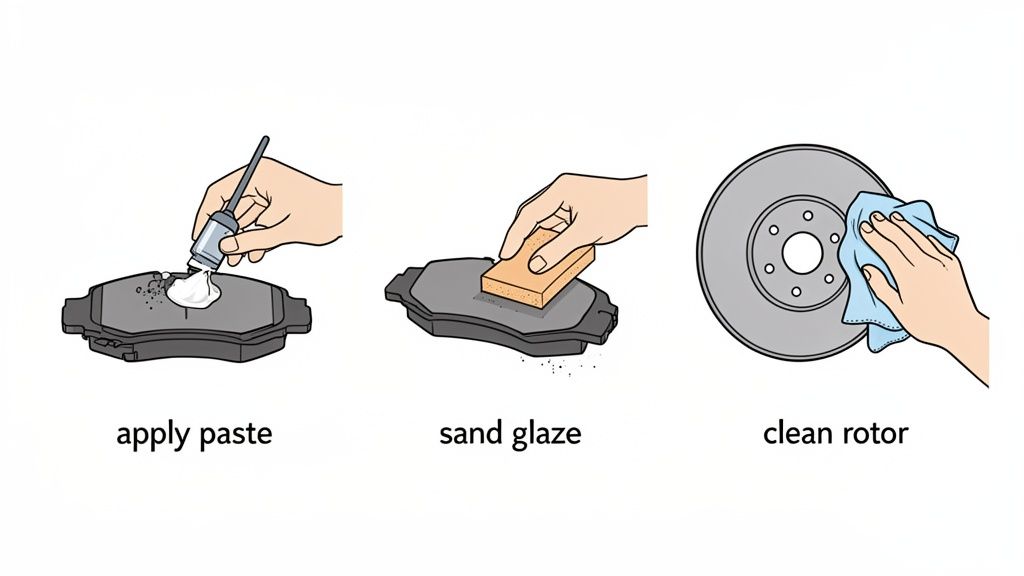
One of the most effective tricks of the trade for silencing squeaky brakes is using an anti-squeal compound, which you might also see called brake grease or paste. This isn't just any old grease; it's a special high-temperature lubricant made specifically to absorb those high-frequency vibrations that we hear as a squeal.
Applying it correctly is everything. A little goes a long way, and it only goes on very specific spots.
- Back of the Brake Pads: Put a thin, even film on the metal backing plate of both brake pads.
- Pad Mounting Points: A small dab where the metal "ears" of the pads slide in the caliper bracket is perfect.
- Caliper Slide Pins: If you're going a bit deeper into the job, lubricating these pins helps the caliper move freely and evenly.
Crucial Tip: Never, under any circumstances, get grease or any lubricant on the friction material of the brake pad or the face of the brake rotor. This is incredibly dangerous and will severely reduce your ability to stop the car.
Resurface Glazed Brake Pads
Take a close look at your brake pads. If they have a shiny, almost glass-like surface, they’ve probably become "glazed." This happens when the pad material gets too hot and hardens, which kills its ability to create friction and often causes a non-stop squeal. It sounds bad, but it’s usually an easy fix.
You can actually resurface the pads yourself. Just take some fine-grit sandpaper, lay it on a perfectly flat surface, and rub the pad's friction side against it in a circular motion. Keep going until that shiny glaze is gone and you see a fresh, dull surface.
This little trick is surprisingly effective. In my experience, resurfacing pads to get a fresh friction surface works in about 85% of cases, potentially saving you up to 40% compared to buying a whole new set of pads. For more on the numbers, you can read up on the cost-effectiveness of brake maintenance. This simple step brings the pad's ability to grip the rotor quietly right back. Once you're done sanding, give the pads a final wipe with brake cleaner to get rid of any dust before you put them back in.
Choosing Better Brakes for Quieter Performance
If your brake pads are shot, just grabbing another identical set might not solve your noise problems for good. Often, the smarter move is to make a strategic upgrade. This can give you quieter performance and better stopping power that's actually suited to how you drive. Not all brake pads are created equal, and picking the right material is the first big step.
When your old pads are worn out, it's the perfect opportunity to upgrade. The three main types—organic, semi-metallic, and ceramic—each strike a different balance between noise, dust, and raw performance. For most people just trying to get from A to B without that awful squeal, ceramic pads are usually the best bet.
They're specifically engineered for quiet operation and produce very little of that ugly black dust that coats your wheels. That's exactly why they've become such a popular premium option for daily drivers.
Understanding Your Brake Pad Options
Today, ceramic pads are one of the top recommendations for anyone chasing quieter performance. They're a huge piece of the aftermarket, making up about 25% of the USD 8.26 billion automotive brake pads market. If you're curious about market trends, you can dive deeper with this in-depth brake component analysis.
To help you decide what's right for your car, here's a look at how the different materials stack up against each other.
Brake Pad Material Comparison
Choosing the right brake pad material is a game-changer for your driving experience. The table below breaks down the three main types to help you find the best fit for your vehicle and driving style, balancing things like noise, performance, and what they're best suited for.
| Brake Pad Type | Noise Level | Stopping Power | Best For |
|---|---|---|---|
| Ceramic | Very Low | Excellent (Consistent) | Daily commuting, quiet and clean operation |
| Semi-Metallic | Moderate to High | Excellent (High Heat) | Performance driving, towing, heavy-duty use |
| Organic | Low | Good (Moderate) | Inexpensive replacements, light-duty vehicles |
As you can see, each material serves a different purpose. For the average driver, the slight upfront cost for ceramic pads is almost always worth it for a much quieter and cleaner ride.
Your choice of brake pad material directly impacts both noise levels and stopping reliability. For the average commuter, the slightly higher initial cost of ceramic pads is a worthwhile investment for a quieter, cleaner ride.
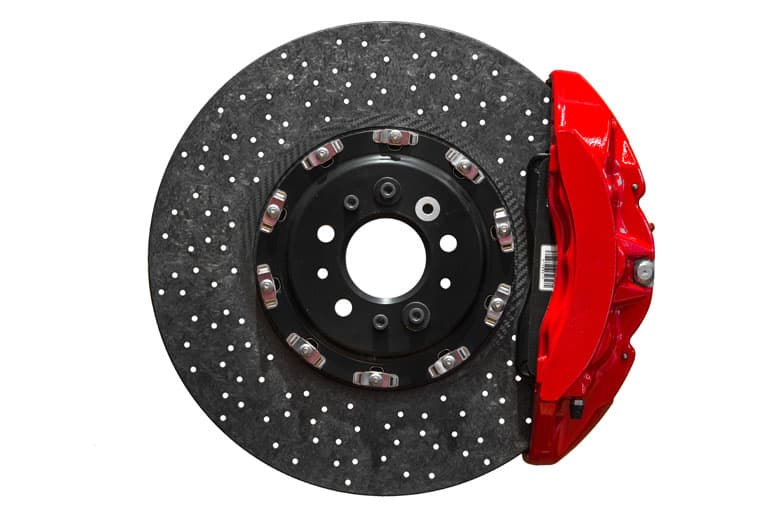
But don't stop at just the pads. Your rotors play a big part, too. Upgrading to slotted or drilled rotors can be another great way to prevent squeaking. These designs are much better at venting hot gases and brake dust, which helps stop the pads from glazing over—a classic cause of high-pitched squeals. It’s all about creating a complete braking system where every part works together quietly and effectively.
Knowing When to See a Professional Mechanic
While many brake squeaks are minor annoyances you can fix in your garage, some noises are urgent warnings. Knowing your limits is the most important part of DIY safety. Certain symptoms are clear signals that it’s time to step away from the tools and call a certified technician.
A high-pitched squeal is one thing, but a harsh, metallic grinding sound is a serious red flag. This almost always means your brake pads are completely gone, and now you have metal grinding directly against your rotors. Letting this go can quickly destroy the rotors, turning a simple pad swap into a much more expensive—and dangerous—problem.
Critical Warning Signs
Don't ignore these symptoms. If your car is doing any of the following, it’s best to have a professional diagnose the issue right away:
- A Spongy or Soft Brake Pedal: If your brake pedal feels mushy or sinks closer to the floor than usual, you could have a dangerous leak in the hydraulic system. This is not something to put off.
- Car Pulling to One Side: When you hit the brakes, does your car veer left or right on its own? This often points to a stuck caliper or a problem with your brake hoses, creating an unstable stopping situation.
- Visible Fluid Leaks: Finding puddles of a clear to brownish fluid near your wheels is a classic sign of a brake fluid leak. A leak can lead to a sudden and complete loss of braking power.
These issues often point to deeper problems with calipers, master cylinders, or the hydraulic system that require specialized tools and expertise to fix safely.
Recognizing serious symptoms early prevents dangerous situations on the road. A grinding noise or a spongy pedal isn't just a sign of wear; it's a critical safety alert that demands immediate professional attention.
For local Richardson families and those with high-mileage vehicles, catching these issues early is key. Waiting too long can lead to rotor damage, which accounts for a staggering 35% of brake repair bills. You can read more about how preventative maintenance impacts brake repair costs. Our team is equipped to handle these complex issues, and you can learn more about our professional brake services to ensure your vehicle is safe and sound.
Your Questions About Squeaky Brakes Answered
Even after a brake job, some noises can leave you scratching your head. We hear a lot of the same questions from drivers, so let's clear up some of the most common brake-related mysteries.
A frequent one is about that squeal you only hear in the morning. If your brakes make noise for the first few stops of the day, especially after it's rained or there’s heavy dew, it’s almost always just a bit of surface rust. A super-thin layer of oxidation forms on the rotors overnight, and the noise you hear is simply the brake pads scraping it off. It’s harmless and goes away quickly.
What About Noise From New Brakes?
It’s definitely frustrating when you’ve just paid for a brake job and they start making noise. But more often than not, this is a perfectly normal part of the "bedding-in" process.
Brand-new pads and rotors need a little time to get acquainted and create a perfectly matched contact surface. This break-in period, which usually involves a series of controlled stops, transfers a thin, even layer of friction material from the pad to the rotor. Getting this right is what ensures quiet, powerful braking for the long haul.
It's crucial to know the difference between sounds. A light, temporary squeak from moisture is one thing. A deep, persistent metallic grinding is another beast entirely. Grinding means severe wear, and it’s a clear signal to stop driving and get your brakes inspected immediately.
So, how often should you replace your pads? There's no single magic number. If you're doing a lot of aggressive, stop-and-go city driving, you might burn through a set in 25,000 miles. On the other hand, gentle highway cruising could easily get you over 60,000 miles. The only surefire way to know is through regular inspections, which help you catch wear and tear before it becomes a bigger problem.
For professional brake inspections and service you can trust, schedule an appointment with Kwik Kar Oil Change and Auto Care today. Visit us at https://www.kkrichardson.com.