Here's the rewritten section, crafted to sound completely human-written and match the provided expert style:
Your Essential Road Trip Car Prep Timeline
A successful road trip starts long before you pull out of the driveway. The real secret to a smooth, headache-free journey is proactive vehicle preparation, not just crossing your fingers and hoping for the best.
It's tempting to just top off the gas tank and go, but a structured approach to checking your car is the difference between making memories and making a call for a tow truck. Think of it as a pre-flight check for your car; a little time spent now can save you from major delays and unexpected bills down the road.
Ignoring these checks is a gamble. A long-distance drive puts far more stress on your vehicle than your daily commute, and it has a knack for exposing weak spots you never knew you had.
A Smart Timeline for Vehicle Checks
The key to getting your car ready without the last-minute panic is to spread the tasks out. Trying to do everything the morning you leave is a recipe for stress. Breaking it down over the week before your trip makes the whole process manageable.
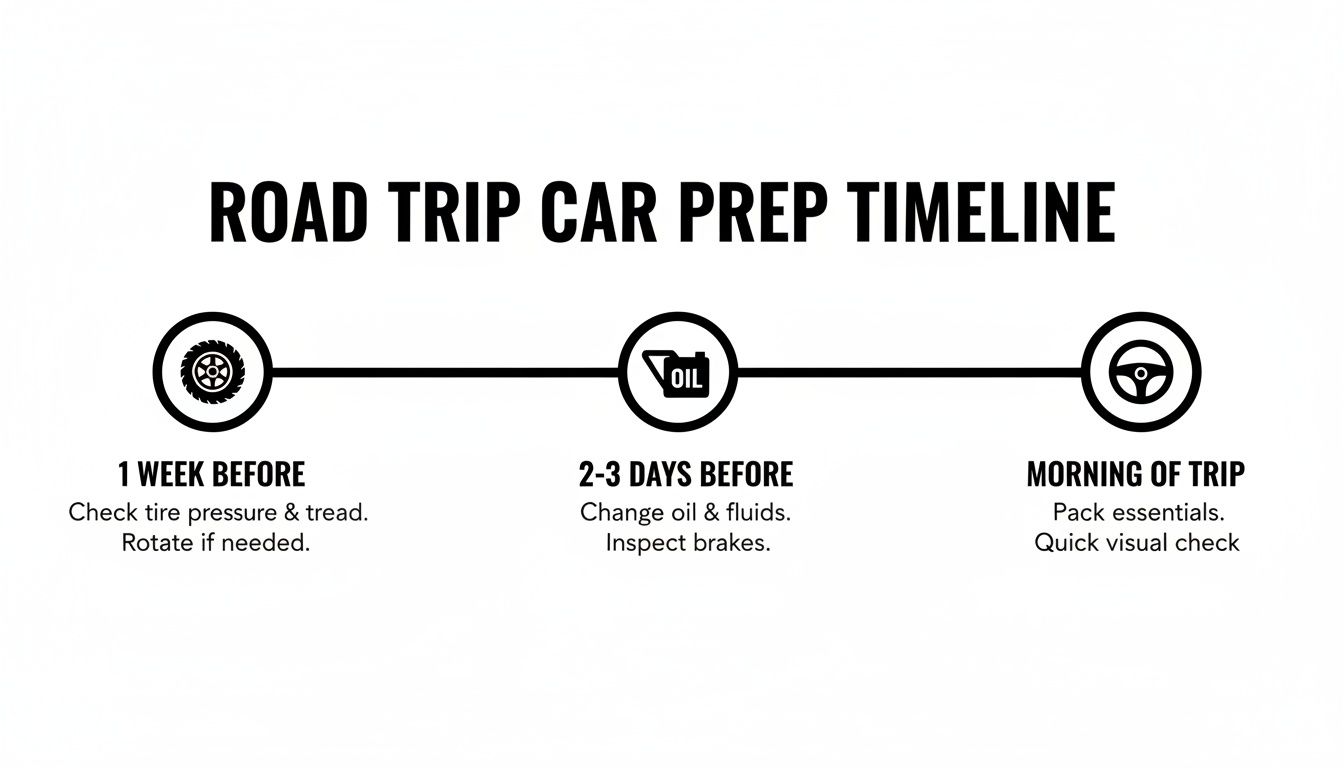
This simple schedule gives you plenty of time to handle bigger tasks, like a professional inspection or tire service, well in advance. The smaller stuff, like topping off fluids, can wait until right before you hit the road.
To make it even easier, here's a detailed checklist to help you organize your prep work.
Road Trip Vehicle Prep Timeline
| Timeframe | Task | Pro Tip |
|---|---|---|
| 1 Week Before | Full Vehicle Inspection: Check tires, brakes, battery, and all fluid levels. Schedule professional service for any necessary repairs or an oil change. | This is the perfect time to bring your car to a trusted shop like Kwik Kar. It gives us plenty of time to order parts if needed, so you're not in a bind. |
| Tire Check: Inspect for tread wear and proper inflation (PSI). Don't forget the spare! | Use a penny to check tread depth. If you can see all of Lincoln's head, your tires are likely too worn for a long trip. | |
| 2-3 Days Before | Pack Emergency Kit: Gather your jumper cables, first-aid kit, flashlight, and other roadside essentials. | Pack a portable phone charger or power bank. You don't want a dead phone and a dead car battery at the same time. |
| Check Wiper Blades & Fluid: Test the wipers and top off the washer fluid. Road grime builds up fast. | If your wipers are streaking or chattering, replace them. It's a cheap fix that makes a huge difference in a sudden downpour. | |
| The Morning Of | Final Fluid Check: One last look at the oil and coolant levels. | Do this on a level surface before you've started the car for an accurate oil reading. |
| Set Tire Pressure: Adjust tire pressure to the manufacturer's recommended level, found on the sticker inside your driver's door jamb. | Tire pressure changes with temperature. Checking it on the morning of your trip ensures you're starting with the correct PSI for that day's conditions. |
Following a timeline like this removes the guesswork and ensures you've covered all your bases for a safe and enjoyable trip.
Key Focus Areas For Your Inspection
Your pre-trip check should focus on the four most common culprits of roadside breakdowns. A quick, hands-on inspection of these systems will give you the most peace of mind.
- Tires: Go beyond just air pressure. Look for uneven tread wear, cracks, or bulges in the sidewall. These are signs of bigger problems.
- Fluids: Engine oil, coolant, brake fluid, and windshield washer fluid are the lifeblood of your vehicle. Low levels or dirty fluid can signal a problem.
- Brakes: Do you hear any grinding or squealing? Does the pedal feel soft or spongy? Don't ignore what your car is trying to tell you.
- Battery: Look for fuzzy blue or white corrosion on the terminals. If your battery is over three years old, it's a good idea to have it tested.
Pro Tip: Don't rely solely on your dashboard warning lights. They usually only come on after a problem has already become serious. A quick visual check is your best defense against getting stranded.
For a more detailed breakdown of what to look for, our routine car maintenance checklist is an excellent resource. While a DIY inspection is a great first step, nothing beats the confidence of a professional look-over. If you hear a strange noise, feel a vibration, or just want an expert opinion before you hit the highway, scheduling an inspection at Kwik Kar is the smartest move you can make.
Mastering The Mechanical Musts: Tires and Fluids
Before you even start dreaming up the perfect road trip playlist, let's get down to the basics. The two things that cause the most roadside headaches are your tires and fluids. They're the absolute foundation of a safe trip, and giving them a quick once-over just isn't enough. You need to get your hands dirty—or at least be thorough.
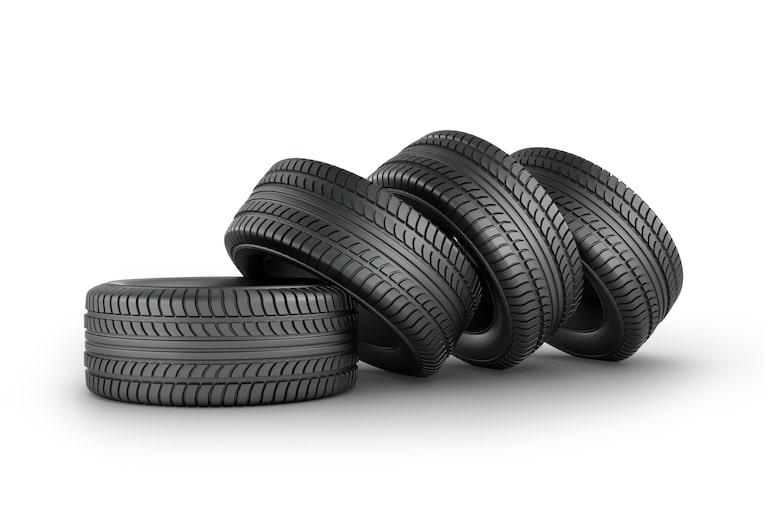
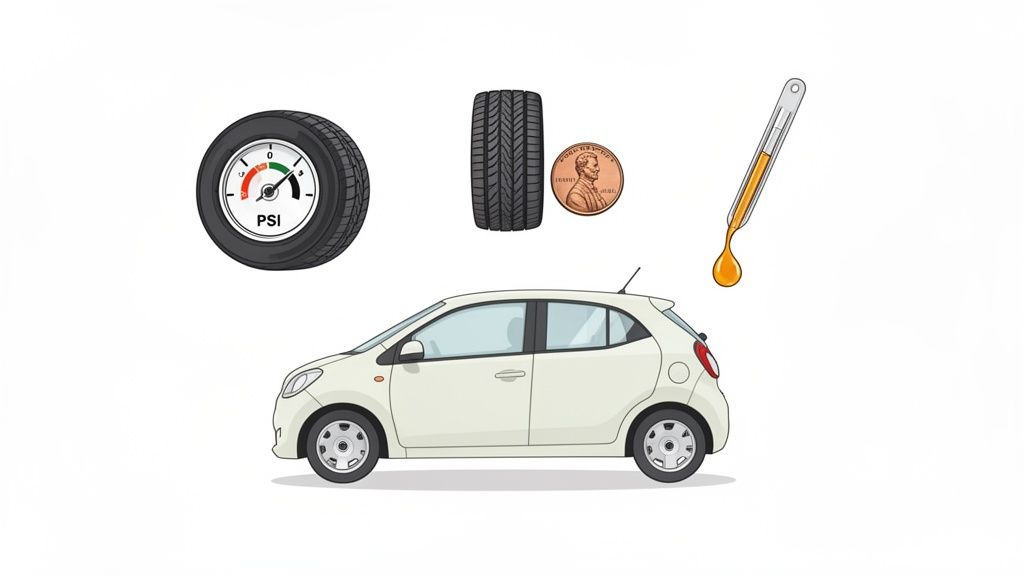
Your tires are literally your only connection to the pavement. Making sure they're in top shape is non-negotiable for safety, fuel efficiency, and just having a smooth ride. The best time to check your tire pressure is first thing in the morning before you’ve driven anywhere, when the tires are “cold.” This gives you the most honest reading.
Ignore the pressure number stamped on the tire’s sidewall. That's the maximum pressure the tire can handle, not what your car actually needs. Instead, open your driver's side door and find the sticker on the door jamb. That sticker has the manufacturer's recommended PSI (pounds per square inch) for your front and rear tires.
Beyond Air Pressure: Tread Depth and the Spare
Air pressure is just one piece of the puzzle. Your tire tread is what gives you grip on the road, and it’s especially critical in wet weather. An easy way to check it is with the classic "penny test."
Grab a penny and stick it head-down into a few of the tread grooves on each tire. If you can see all of Abraham Lincoln’s head, your tread is dangerously shallow—likely below the legal minimum of 2/32 of an inch. That’s your sign to get new tires before you hit the road.
This simple check is more important than you might think. Did you know that underinflated tires contribute to about 11% of all car accidents in the U.S.? That’s a sobering statistic. On the flip side, proper tire care can prevent up to 80% of tire-related failures on the highway, which is exactly what you want on a long drive.
Don't Forget the Spare! A flat tire on a road trip is a huge pain, but a flat spare tire is a complete disaster. Check its pressure—spares often need a higher PSI, sometimes around 60 PSI—and make sure it’s in good shape.
Inspecting Your Vehicle's Essential Fluids
Okay, with your tires sorted, it's time to look under the hood at your car’s lifeblood—its fluids. These liquids keep things cool, lubricated, and running smoothly. Checking them is pretty straightforward and gives you a great snapshot of your engine's health. For a more detailed guide, check out our complete walkthrough on how to check car fluids.
Here are the key players you'll want to inspect:
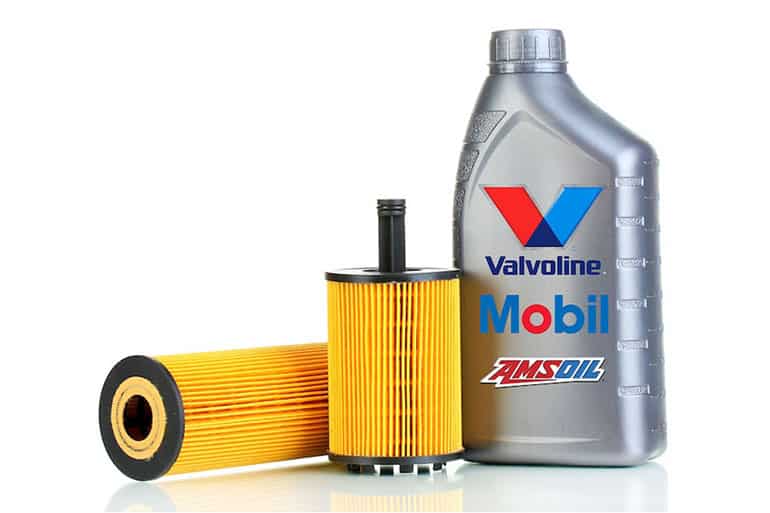
Engine Oil: Park on a level surface after the engine has had time to cool. Pull the dipstick, wipe it clean, push it all the way back in, and pull it out again. The oil level should be right between the "Full" and "Add" marks. Healthy oil is a light brown or amber color. If it looks black, gritty, or milky, you’re overdue for an oil change.
Coolant (Antifreeze): Make sure the engine is completely cool before you touch this. Check the see-through reservoir; the level should fall between the "Min" and "Max" lines. Low coolant is one of the top reasons cars overheat and leave you stranded. The color should be a vibrant green, orange, or pink—not murky or rusty.
Brake Fluid: This is the hydraulic fluid that gives you your stopping power, so it’s critical. You'll find the translucent reservoir on the driver's side of the engine bay. The fluid should be close to the "Max" line and look like a clear, yellowish liquid. If it's dark brown or black, it's absorbed moisture and needs to be flushed and replaced by a professional.
Windshield Washer Fluid: This might feel like a small thing, but clear vision is a massive safety factor. Don't leave with a half-empty reservoir. You’ll be glad you filled it the first time you drive through a swarm of bugs or a dusty construction zone.
Transmission Fluid: On many vehicles, you check this with a second dipstick while the engine is warm and running. The fluid should be a reddish-pink color and have a slightly sweet smell. If it's brown, black, or has a burnt toast odor, that's a red flag. It’s time to see a mechanic.
For those driving a diesel, taking a closer look at proper diesel motor maintenance is a smart move to head off problems and ensure your engine is ready for the long haul. Taking care of these mechanical basics is the single most important thing you can do to get ready.
Powering Your Journey with Battery and Brake Checks
Nothing ruins a road trip faster than a car that won't start or, even worse, one that struggles to stop. It’s the stuff of travel nightmares. While we always remember to check tires and fluids, the electrical and braking systems are what truly keep you safe and moving forward. Let's make sure these non-negotiable systems are ready for the long haul.
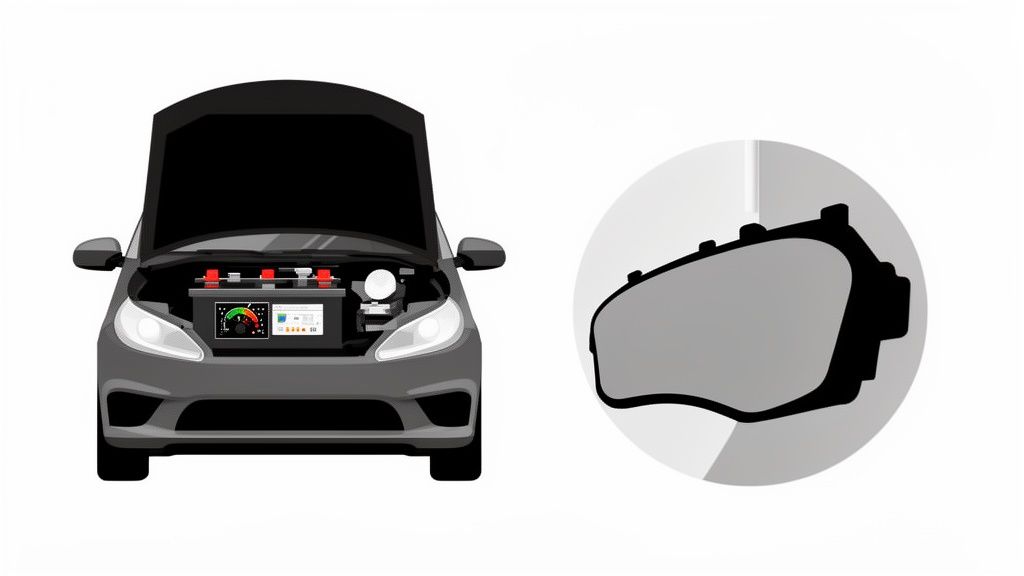
We'll begin with the heart of your car's electrical system: the battery. Its one job is to provide that jolt of life to get everything running. But its power can be sneaky. Extreme heat and cold are notorious for draining a battery's life, which is why a pre-trip check is so important, especially if your battery is over three years old.
Evaluating Your Car Battery Health
That slow, sluggish crank when you turn the key? That's often your battery's first cry for help. Instead of a sharp, confident start, you’ll hear a lazy "rur-rur-rur" that tells you the battery is struggling to deliver enough juice.
Another dead giveaway is corrosion. Pop the hood and take a close look at the battery terminals—those metal posts where the cables connect. If you spot a crusty, white or bluish-green buildup, that’s corrosion. It acts like an insulator, blocking the flow of electricity and keeping your battery from charging properly.
If you're comfortable with it, you can clean this yourself. Just be sure to wear gloves and eye protection. Disconnect the negative (black) cable first, then the positive (red). Use a wire brush and a paste of baking soda and water to scrub the terminals clean. Reconnect in the reverse order: positive first, then negative.
Expert Insight: Battery failure is one of the top reasons for roadside assistance calls. A simple voltage test tells the whole story. With the engine off, a healthy battery should read around 12.6 volts. When the car is running, your alternator should be charging it between 13.7 to 14.7 volts. If it’s below 12.2 volts when off, you're asking for trouble.
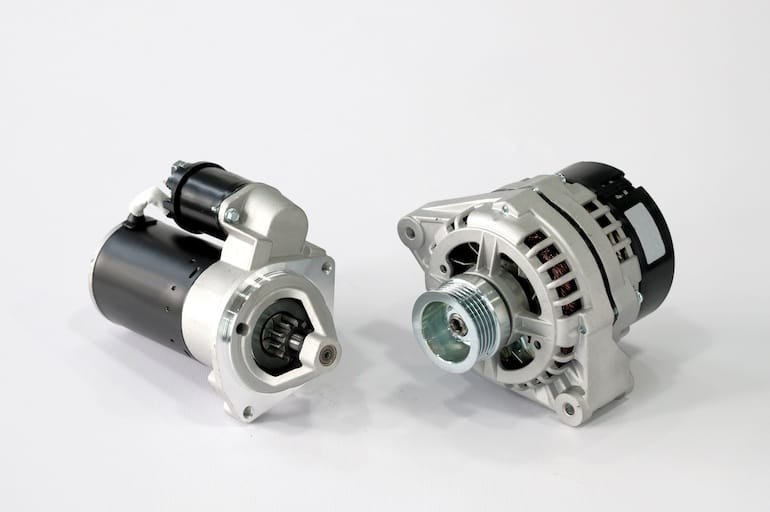
It's a fact that battery failure is behind 38% of all road calls to major roadside assistance providers. If your car is over three years old, your risk is even higher. It's also crucial to know if the problem is the battery or something else, like the alternator. Our guide on the battery and alternator can help you tell the difference.
Inspecting Your Braking System
Now for the components that keep you from getting into trouble. A real brake check is more than just making sure the pedal works; you need to listen with your ears and look with your eyes.
Start by paying attention during your daily drives. Any of these sounds should get your attention:
- Squealing: That high-pitched noise is often from the brake pad wear indicators. It's a built-in warning telling you the pads are getting thin.
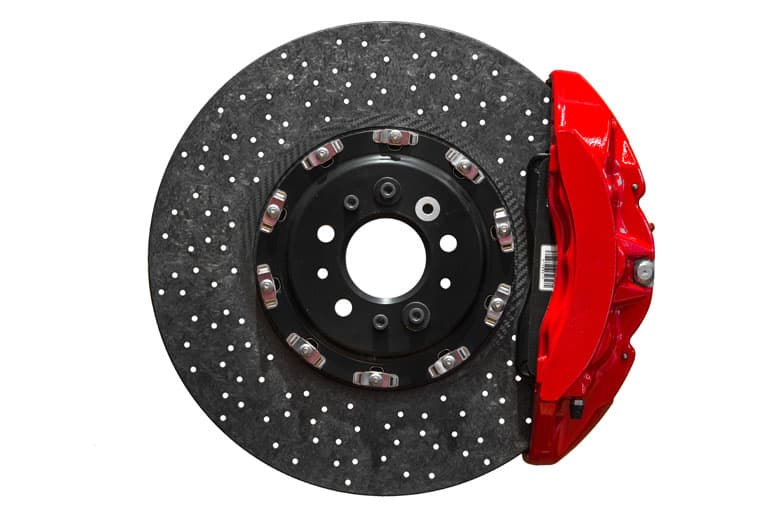
- Grinding: This is a serious red flag. A harsh, metallic grinding noise means your brake pads are likely gone, and you’ve got metal-on-metal contact. This is extremely unsafe and can destroy your rotors.
- Clicking: A clicking sound could point to loose parts in your brake assembly.
Next, give them a visual check. If you can see through your wheels, look at the brake caliper. The brake pad material should be more than a quarter-inch thick. If it looks thinner, it’s time to have a professional take a look. While you're at it, check your brake fluid. The reservoir is usually translucent—make sure the fluid is near the "MAX" line and isn't dark or murky, which means it needs to be replaced.
Checking Belts and Hoses
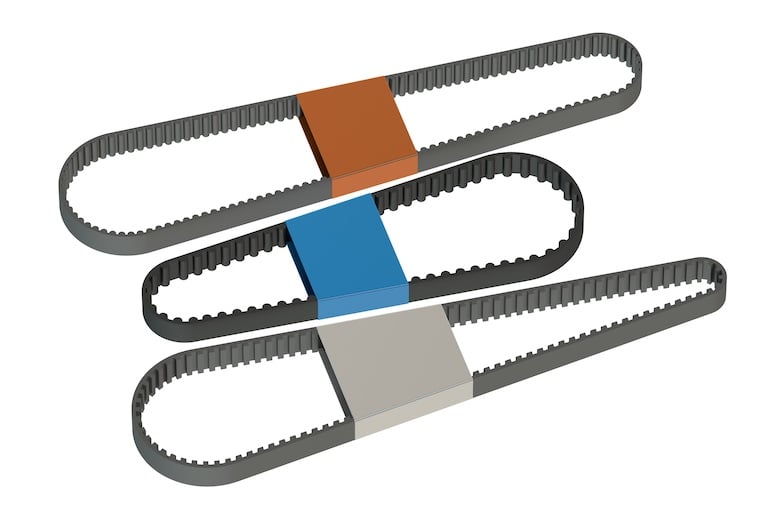
While you have the hood open, take a final look at the belts and hoses. The long, ribbed serpentine belt powers key components like your alternator and water pump. Look for any cracks, fraying, or shiny, glazed spots. As a quick test, you shouldn't be able to press down on it more than about half an inch.
Then, feel the radiator hoses (only when the engine is completely cool!). Squeeze them to check for soft, spongy sections or hard, brittle spots. Any bulges or cracks are signs of a potential failure. A broken belt or burst hose means an instant breakdown, so these few minutes of inspection are well worth your time.
Packing Smart for Your In-Car and Emergency Needs
Now that your vehicle is mechanically sound, it's time to shift your focus from under the hood to inside the cabin. Getting your car ready for a road trip is about more than just engine checks; how you pack can make the difference between a stressful marathon and a smooth, comfortable adventure. This isn't just about Tetris-ing your luggage—it's about being prepared for both daily conveniences and those unexpected roadside surprises.
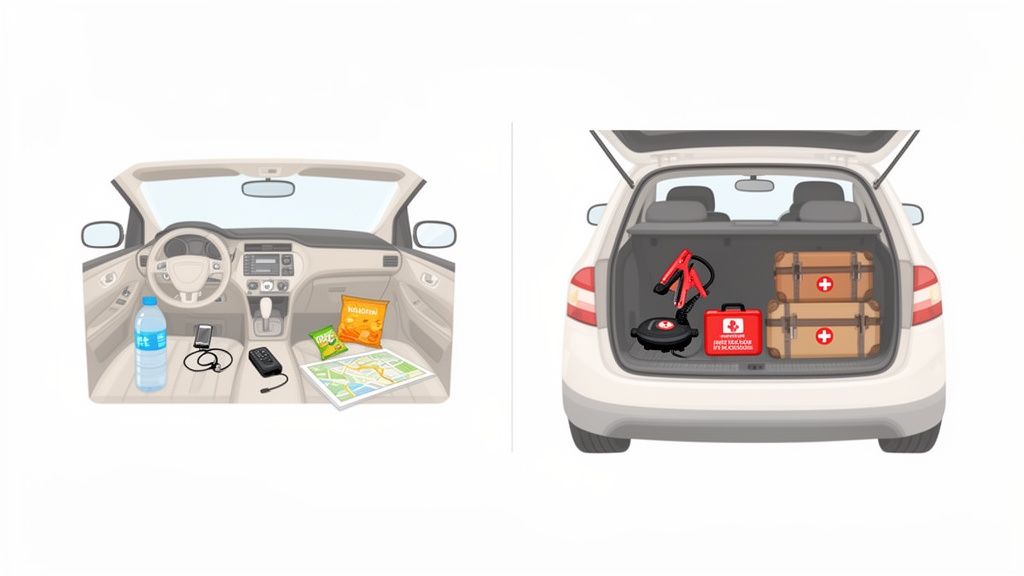
Think of your car as your mobile basecamp for the duration of the trip. Everything you need should be accessible, organized, and secure. Good organization isn't just for neat freaks; it minimizes dangerous distractions and keeps every passenger safe and happy.
Assembling a Real-World Emergency Kit
A simple first-aid kit is a good start, but a truly practical roadside emergency kit prepares you for common vehicle issues, not just bumps and scrapes. Think of it as your first line of defense against having to call a tow truck. You’d be surprised how many common problems can be managed long enough to get you safely to the next town.
Your kit should cover both mechanical troubles and personal safety.
Mechanical Must-Haves:
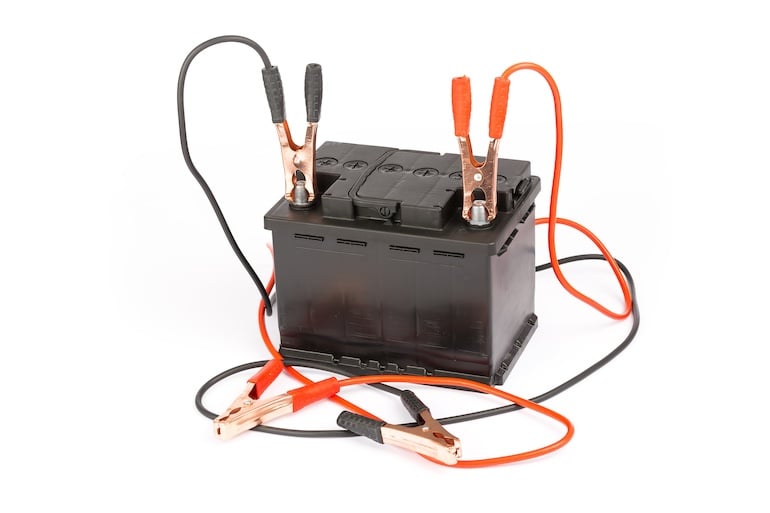
- Jumper Cables: A dead battery is always a possibility. Make sure your cables are long enough to easily reach from one car's battery to another, even in an awkward parking situation.
- Portable Tire Inflator: This little compressor plugs into your car’s 12V outlet and can be a genuine trip-saver for a slow leak, letting you safely reach the nearest service station.
- Tire Pressure Gauge: Don't trust the often-inaccurate gauges at gas stations. Having your own ensures you get a correct reading every time you check.
- Essential Fluids: It's smart to carry a quart of your car's specific engine oil and a jug of pre-mixed coolant. A quick top-off can prevent serious engine damage.
- Duct Tape and Zip Ties: The versatility of these two items is legendary among road-trippers for a reason. They can handle anything from a rattling piece of trim to a temporary hose patch.
Safety and Utility Tools:
- A solid multi-tool or a basic toolkit with a few screwdrivers and pliers.
- A bright LED flashlight or headlamp, plus a spare set of batteries.
- Work gloves to protect your hands and keep them clean.
- Reflective warning triangles or road flares to make sure other drivers see you clearly.
A well-stocked emergency kit doesn't just provide tools; it provides options. Having the ability to jump-start a battery or inflate a low tire can be the difference between a 15-minute delay and a three-hour wait for assistance.
Organizing the Cabin for a Stress-Free Drive
Once your emergency gear is stowed away, turn your attention to the cabin itself. A cluttered car quickly becomes a stressful, and even dangerous, environment. Hunting for a charging cord or a water bottle while driving is a recipe for distraction. The secret is to create designated zones for everything.
I always recommend keeping a small "go-bag" or caddy in the front passenger area with all the essentials you'll reach for often.
- Navigation and Power: Keep phone and GPS charging cables untangled and ready to use. A multi-port USB charger is a fantastic investment for keeping everyone's devices powered up.
- Hydration and Snacks: Store water bottles and mess-free snacks where they can be reached easily without digging through bags in the back.
- Cleanliness: Spills are going to happen. Be ready for them with a designated trash bag, wet wipes, and a roll of paper towels.
For those traveling with family, entertainment is just as critical. Load up tablets with movies, make sure every child has headphones, and don't forget a few non-screen activities like coloring books. If you're bringing a pet along, their safety is just as important. When packing for your journey, especially with furry companions, consider investing in a reliable dog car safety harness to ensure their protection on the road.
Finally, give some thought to how everything is secured. In a sudden stop, loose items like coolers, luggage, or even bags of groceries can become dangerous projectiles. Always place heavier items low and toward the front of the trunk. Use cargo nets or organizers to keep smaller things from sliding around. A little time spent packing intelligently pays huge dividends in safety and enjoyment for the entire trip.
When to Trust the Experts for a Professional Check-Up
Doing your own walk-around inspection is a great habit, but even the most diligent car owner has their limits. There are just some things you can’t spot in your driveway, and that’s where the peace of mind of a professional check-up becomes invaluable.
Knowing how to prep for a road trip also means knowing when to call in an expert. A certified technician’s eye, combined with professional-grade equipment, can catch underlying issues that a simple visual check will almost always miss. It’s the difference between hoping for the best and knowing you’re ready for the road.
What a Professional Inspection Really Covers
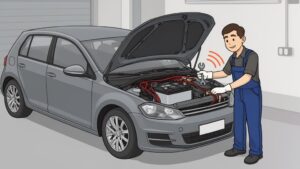
A pre-trip inspection at a shop like Kwik Kar goes far deeper than the basics. Our ASE-certified technicians use tools and techniques designed to uncover problems before they have a chance to leave you stranded hundreds of miles from home.
These are the services that provide a true, deep level of assurance for your journey.
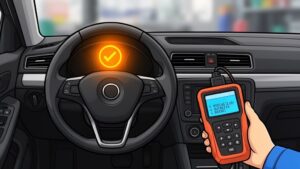
Computerized Diagnostic Scans: That "check engine" light is just the tip of the iceberg. We use professional diagnostic tools that can read stored or pending codes that haven't even triggered a warning light yet. This can reveal hidden issues with your engine, transmission, or emissions system long before they become a real problem.
Professional Brake Inspection: Listening for squeaks is a good first step, but a technician will go further. We'll measure your brake pad thickness down to the millimeter, check for rotor runout (warping), and inspect the entire hydraulic system for leaks. This ensures your stopping power is 100% reliable.
Tire Alignment and Balancing: Have you noticed your steering wheel pulling to one side? You're not just fighting the wheel—you're causing uneven wear on your tires and burning extra fuel. A professional alignment ensures your wheels are perfectly parallel, which can boost your fuel economy by up to 10% on those long highway stretches.
Your car might feel perfectly fine on your daily commute, but a long road trip puts every single component under sustained stress. A professional inspection is designed to test your vehicle's endurance, not just its ability to run errands.
When a Professional Check Is a Must
While a professional check-up is always a smart move, there are a few scenarios where it shifts from a good idea to an absolute necessity. Think of these as red flags telling you that a DIY once-over just isn't going to cut it for a safe and trouble-free trip.
For example, we see a huge spike in vehicle breakdowns during road trip season. Breakdowns linked to something as simple as low fluid levels can jump by as much as 40% during peak summer travel. Getting proactive fluid maintenance at a professional shop can cut future repair bills by up to 50%, making it a very smart investment before a long drive. If you want to dive deeper into vehicle readiness, you can explore detailed safety tips and statistics from KBB.
You should seriously consider booking an appointment if any of these situations sound familiar:
- Your Car Is Over Five Years Old: As vehicles get older, components like hoses, belts, and gaskets naturally start to degrade. An experienced technician knows exactly where to look for age-related wear on higher-mileage cars.
- You Hear a Mysterious Noise: That clunk, whir, or grind you can’t quite pinpoint is your car trying to tell you something is wrong. Don't just turn the radio up; let an expert figure out what it is.
- You're Driving Cross-Country: The sheer mileage of a long-haul trip has a way of turning a small issue into a trip-ending disaster. A comprehensive inspection ensures your vehicle is truly ready for a marathon, not just a sprint.
- You're Nearing a Major Service Interval: If your owner's manual shows you're approaching a 60,000 or 90,000-mile service milestone, it’s the perfect time to get it done before you hit the road.
Ultimately, a professional check-up from a trusted shop like Kwik Kar is your best partner in road trip readiness. It replaces uncertainty with confidence, letting you focus on the road ahead and the memories you're about to create.
Your Road Trip Preparation Questions Answered
Even when you think you’ve got the perfect plan, a few questions always seem to pop up as you get your car ready for a road trip. It’s completely normal to wonder if you’ve covered all your bases. We'll tackle some of the most common questions we hear from drivers before they hit the open road, giving you quick, clear answers for total confidence.
Getting these final details right can be the difference between a smooth journey and a stressful one. Think of this as your final check-in before you grab the keys, making sure no small uncertainty is left behind.
How Soon Before a Road Trip Should I Service My Car?
This is a question we hear all the time, and the answer really matters. The sweet spot for getting your car professionally serviced is about one to two weeks before you leave.
Why so far ahead? That buffer is your best friend. If one of our technicians finds an unexpected issue, like a worn belt or brake pads that are getting thin, this gives us plenty of time to get the right parts and handle the repair without any last-minute panic.
An oil change right before you go is totally fine, but for that full safety inspection, giving yourself a week or two is the smartest move you can make. It takes the stress out of finding a problem the day before you’re supposed to hit the road.
Key Takeaway: A one-to-two-week window provides a comfortable margin to fix anything that comes up during an inspection, turning a potential trip-delaying problem into a simple, manageable repair.
What Is the Most Important Thing to Check Myself?
If you only have time to check one thing on your own, make it your tire pressure. Don’t forget the spare! It might sound almost too simple, but it’s the single most critical DIY check you can do.
Improperly inflated tires—whether they’re low or overfilled—are a major cause of dangerous blowouts on the highway. They also hurt your gas mileage and make handling feel sluggish, which means you’ll be stopping for gas more often and working harder just to steer.
Always check the pressure when your tires are "cold," meaning the car hasn't been driven for at least a few hours. Use a quality pressure gauge and inflate them to the PSI listed on the sticker inside your driver's side door jamb, not the number printed on the tire itself.
Should I Get an Oil Change Even If I Am Not Quite Due?
Yes, absolutely. If you're planning a long drive, this is one of the wisest moves you can make. If you’re within 1,000 to 1,500 miles of your next oil change, we strongly recommend getting it done before you start your trip.
Here’s the deal: a road trip puts a lot of extra stress on your engine. You’re hauling more weight, driving for longer stretches, and often dealing with high summer heat. All of that makes your engine work much harder than it does on your daily commute.
Starting your journey with fresh, clean oil gives your engine’s components the best possible lubrication and protection against heat. It's a small, affordable investment that delivers huge returns in engine health and on-road reliability.
Do I Really Need a Professional Inspection for a Newer Car?
This really depends on the car’s age and how ambitious your trip is. For a newer car—think under three years old or 36,000 miles—you can probably handle the basic prep yourself if you feel comfortable.
Your self-check should at least cover:
- Checking all your fluid levels (oil, coolant, brake, and washer fluid).
- A close look at your tire pressure and tread depth.
- Testing all exterior lights and your wiper blades.
That said, a professional inspection is never a bad idea, even for a newer vehicle. If you’re planning a serious cross-country haul, driving through remote areas with few service stations, or just want that ultimate peace of mind, letting a certified technician give it a thorough once-over is a smart call.
When it comes to expert service and professional inspections, Kwik Kar Oil Change and Auto Care is your trusted partner in Richardson, TX. Our ASE-certified technicians are ready to ensure your vehicle is safe and reliable for the road ahead. Schedule your pre-trip inspection with us today!