That glowing amber engine symbol on your dash is rarely a welcome sight, but it's crucial to understand what it's telling you before taking any action. While you can reset the check engine light using methods like an OBD-II scanner or disconnecting the battery, remember this: clearing the light does not fix the underlying problem. Always get to the root of the issue first.
Understanding Your Check Engine Light Before You Reset It
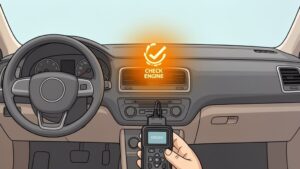
Before you even think about resetting that light, you need to interpret its message. This light, officially called the Malfunction Indicator Lamp (MIL), is your vehicle's main way of reporting a problem found by its onboard diagnostics (OBD-II) system. Turning it off without a diagnosis is like silencing a fire alarm without checking for smoke.
The most important thing to figure out is whether the light is steady or flashing. Think of it as the difference between a polite heads-up and an urgent emergency siren.
Steady vs. Flashing: The Two Scenarios
A steady check engine light is what you'll see most often. It means the car's computer has found a fault, but it’s usually not a catastrophic, stop-the-car-right-now emergency. The issue could be as simple as a loose gas cap, which is a surprisingly common culprit. A loose cap creates a tiny leak in the evaporative emission (EVAP) system, which is enough to trigger a fault code.
Other common reasons for a steady light include:
- A failing oxygen (O2) sensor
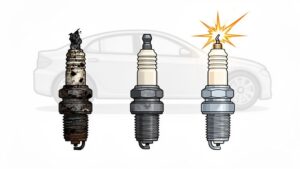
- Worn-out spark plugs or ignition coils
- A problem with the mass airflow sensor
On the other hand, a flashing check engine light is a sign of a severe problem that needs your immediate attention.
Critical Takeaway: If your check engine light is flashing, pull over as soon as it's safe and turn off the engine. Continuing to drive can cause rapid and expensive damage, especially to the catalytic converter.
A flashing light almost always points to a serious engine misfire. This means unburned fuel is getting dumped into the exhaust system, where it can superheat and literally melt the inside of the catalytic converter—a repair that can easily run into thousands of dollars.
Simply resetting a flashing light without a proper diagnosis is one of the fastest ways to turn a manageable repair into a major mechanical failure. For a deeper dive into specific codes, you can learn more about what your check engine light means in our detailed guide. Understanding the light's behavior is always the first step toward making a safe and smart decision.
Using an OBD-II Scanner for a Safe and Informed Reset
This is the method every mechanic recommends, and for good reason. Using an On-Board Diagnostics II (OBD-II) scanner is by far the safest, most informative way to deal with a check engine light. It shifts you from being a worried driver to an informed one by revealing the exact fault your car’s computer has logged.
Unlike just disconnecting the battery—which is like erasing a problem without knowing what it was—a scanner lets you see the Diagnostic Trouble Code (DTC) first. That code is the key to understanding what’s really going on under the hood.
Finding and Connecting Your Scanner
Every vehicle made for the U.S. market since 1996 is equipped with an OBD-II port. You’ll almost always find it under the driver's side dashboard, usually within a foot of the steering column. You might need to kneel down and look up to spot the 16-pin, trapezoid-shaped connector.
Getting the scanner connected is straightforward:
- Make sure your vehicle is turned completely off.
- Firmly plug the scanner's cable into the OBD-II port.
- Turn the ignition key to the "On" position, but don't start the engine. The scanner will power on and start talking to your car's computer.
Interpreting and Clearing the Codes
Once it’s connected, the scanner will offer an option to "Read Codes" or "Scan." This is the most critical step. The device will show one or more codes, typically a letter followed by four numbers, like P0420.
Pro Tip: Before you do anything else, write down the codes or snap a quick picture of the scanner's screen. If you clear the code without knowing what it is, you'll be completely in the dark if the light comes back on.
After you've recorded the codes, you can navigate the scanner's menu to find "Erase Codes" or "Clear Codes." Selecting this is what actually resets the check engine light. Just remember, this doesn't fix anything. If the root cause—like a failing oxygen sensor or a persistent engine misfire—isn’t addressed, that light is guaranteed to return.
This flow chart shows the crucial difference between a steady light, which an OBD-II scan helps diagnose, and a flashing one that points to an immediate, severe problem.

As the visual guide shows, a steady light gives you a window to diagnose the issue. A flashing light, on the other hand, means you should pull over and stop driving as soon as it's safe to do so.
Common Diagnostic Trouble Codes and What They Mean
Seeing a trouble code can be intimidating, but many are quite common. Here's a quick reference table for some of the codes we see most often, what they generally point to, and how serious they might be.
| DTC Code | Common Cause | Severity Level |
|---|---|---|
| P0455 | Large evaporative system leak (e.g., loose gas cap) | Minor |
| P0420 | Catalyst system efficiency below threshold (bad catalytic converter) | Moderate |
| P0301 | Cylinder 1 misfire detected | Severe |
| P0171 | System too lean (Bank 1) (e.g., vacuum leak, bad fuel injector) | Moderate |
| P0135 | O2 Sensor Heater Circuit Malfunction (Bank 1, Sensor 1) | Minor-Moderate |
This table is just a starting point. While some codes have simple fixes, others require professional diagnostics to pinpoint the exact failing component.
Why Knowing the Code Matters
Having the specific DTC in hand is incredibly empowering. For example, a P0455 code often points to a large leak in the evaporative emissions system—which can be caused by something as simple as a loose gas cap. You could tighten it, clear the code, and be on your way.
On the other hand, a code like P0301 (Cylinder 1 Misfire) or P0420 (Catalyst System Efficiency Below Threshold) signals a more serious issue that needs attention. Even though you've reset the light, you now know a specific system requires repair. Armed with this knowledge, you can have a much more productive and informed conversation with a technician. To dig deeper into what specific codes mean, you can check out our guide on how to investigate a check engine light.
The Old-School Method: Disconnecting The Battery

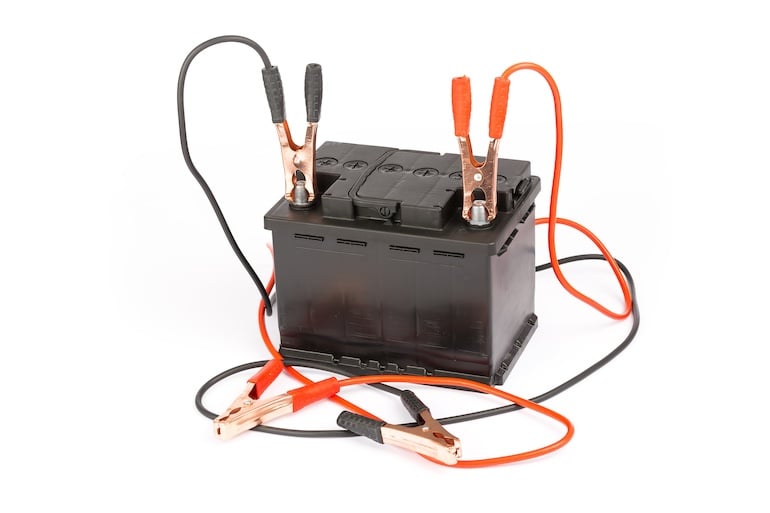
If you don't have an OBD-II scanner handy, you might be tempted by the old-school trick of disconnecting the car battery. While this approach can turn off the check engine light, it’s a bit of a blunt instrument. You absolutely need to understand the consequences before you grab a wrench.
This method forces a hard reboot of your car’s main computer, the Engine Control Unit (ECU). The idea is to cut off its power long enough for the short-term memory—which holds the trouble code—to get wiped clean.
How To Do It (If You Must)
Before touching anything, make sure the car is completely off and the keys are far away from the ignition. Safety is always number one when you're working near a battery; it packs a serious punch.
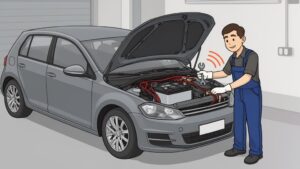
Find the Battery: Pop your hood and locate the battery. You'll see two connection points, called terminals, marked positive (+) and negative (-).
Disconnect the Negative Terminal: Take your wrench and loosen the nut on the negative (-) terminal. It's usually the one with a black cover or a "-" symbol. You only need to work with the negative side. Once it's loose, slide the cable off the post and tuck it away so it can't touch any metal.
Wait It Out: This is the important part. You need to wait at least 15 to 20 minutes. This gives the capacitors inside the ECU enough time to fully drain, which is what clears the memory.
Reconnect and Tighten: After waiting, put the negative cable back on the terminal and tighten the nut until it's snug. You shouldn't be able to wiggle the connection.
If you want a more detailed walkthrough, our guide on how to remove a car battery has you covered.
The Hidden Downsides of a Battery Reset
Sure, disconnecting the battery will probably turn off that light. But it also gives your car’s computer total amnesia, wiping out everything it has learned about your driving habits and engine performance.
Important Consideration: A battery reset erases all the emissions system readiness monitors. If you have a state emissions test coming up, this will cause an automatic failure because the system will report as "Not Ready."
This is a huge drawback. Your car's computer has to go through a complete "drive cycle"—a specific sequence of driving conditions—to re-learn its parameters and confirm all the emissions systems are working properly. This can sometimes take several days of normal driving to complete.
On top of that, you'll also lose all your personal settings, such as:
- Radio presets
- The clock
- Saved seat and mirror positions
- Learned transmission shift patterns
So while this method works, it comes at a cost. You clear the code without ever knowing what caused it, and you reset critical systems your car needs for a state inspection. It’s a temporary fix that can create bigger headaches down the road.
What to Do When the Light Comes Back On

It’s a feeling every driver dreads. You went through all the trouble of resetting your check engine light, enjoyed a few days with a clear dashboard, and then—it’s back. That stubborn little light is your vehicle’s way of telling you that the reset was just a temporary band-aid on a bigger problem.
When the light comes back, it means the car's computer has re-run its diagnostics and found the same fault. This confirms you're dealing with a persistent issue, and simply knowing how to reset the light won't be enough. To break the cycle, you have to find and fix the root cause.
Why Your Light Keeps Returning
When you clear a trouble code, you aren’t actually fixing the part that triggered it. The light usually stays off until your car completes a full drive cycle—a specific sequence of driving conditions like cold starts, stop-and-go city traffic, and steady highway speeds. This cycle gives the onboard computer a chance to test all the engine's systems again.
If the problem is still there after the drive cycle is complete, the computer logs the same fault and flips the light right back on. It can create a false sense of security, making you think the issue was just a random glitch when it was really just hiding in the background.
Common Culprits Behind a Stubborn Light
A check engine light that refuses to stay off is almost always tied to a handful of common issues that are easy to overlook. If your light has made a comeback, the problem is likely one of these:
- A Faulty Oxygen (O2) Sensor: These sensors are crucial for monitoring unburned oxygen in your exhaust. When one starts to fail, it sends bad information to the car’s computer, which can tank your fuel economy and increase emissions. If you ignore it long enough, a bad O2 sensor can ruin your expensive catalytic converter.
- A Persistent Vacuum Leak: A small crack or disconnected hose somewhere in the vacuum system can throw off your engine's air-fuel mixture. This often triggers "lean" codes like P0171 and can be surprisingly difficult to locate without the right diagnostic tools.
- A Failing Catalytic Converter: This is often the result of another problem that was ignored. For example, if you had a misfire code (like P0301) and didn't fix it, you may have inadvertently damaged the catalytic converter. A code like P0420 ("Catalyst System Efficiency Below Threshold") is a strong sign of this costly repair.
- Old Spark Plugs or Ignition Coils: Spark plugs don't last forever. When they get old and worn out, they can cause engine misfires. You might reset the light, but the misfire will return as soon as the engine is under load, triggering the light all over again.
Key Takeaway: A check engine light that comes back is not a glitch. It’s a definite sign that a physical part is failing or a system isn't working as it should. Continuing to reset the light without a proper repair is a recipe for more serious and expensive damage down the line.
At this point, you've gone beyond what a simple reset can handle. A recurring light is your car's way of telling you it’s time for a proper diagnosis. Throwing parts at the problem by guessing can get expensive fast. A professional technician can use advanced diagnostic tools to find the exact source of the failure, saving you both time and money.
When to Skip the DIY and Trust the Experts at Kwik Kar Richardson
Knowing how to reset your check engine light can make you feel empowered, but even the most confident DIY-er has limits. There are times when a problem is more than just a loose gas cap, and ignoring the real warning signs can lead to serious, expensive damage. Knowing when to put the scanner down and call a professional is just as important as knowing how to use it.
The clearest red flag is a flashing check engine light. This isn't a gentle suggestion; it's an urgent alert that points to a severe engine misfire. If you keep driving, you risk destroying your catalytic converter in just a few minutes—a repair that can easily run into thousands of dollars. The only safe move here is to pull over and call for service.
Other Signs It’s Time for the Pros
Even a steady light can signal that it’s time for expert help. If you reset the light and it pops right back on, you’re dealing with a persistent issue that a simple reset won't solve. Throwing parts at the problem—guessing if it's an O2 sensor, an ignition coil, or something else—gets frustrating and expensive fast. This is a clear indicator that your car needs a professional diagnostic scan.
Additionally, some trouble codes immediately tell you the problem is out of your league. If your basic OBD-II scanner pulls codes related to any of the following, it's time to call us:
- Transmission performance or solenoid issues
- Internal engine timing problems
- The anti-lock brake system (ABS)
- Airbag and safety systems (SRS)
These systems are complex and require specialized tools and deep knowledge to diagnose and repair safely. This is not the time for a weekend project.
Trust is built on transparency. At Kwik Kar Richardson, we believe in showing you exactly what our advanced diagnostic tools find, explaining the problem in clear terms, and providing a detailed estimate before any work begins.
The Kwik Kar Diagnostic Advantage
At Kwik Kar Oil Change and Auto Care, our ASE-certified technicians aren't just reading a basic code. We use advanced, professional-grade diagnostic systems that see far more than a consumer scanner ever could. These tools let us access manufacturer-specific codes, watch live data streams from every sensor, and perform functional tests to isolate the exact point of failure.
This level of detail is the difference between replacing a part and actually solving the problem. We can determine if a sensor is just a little slow or completely dead, if a fuel injector is leaking, or if an electrical circuit has a fault that only appears under certain conditions. It removes the guesswork and ensures we fix the root cause on the first visit.
As part of our commitment to the Richardson community, we are proud to support those who serve. We offer special discounts for military personnel, first responders, and healthcare workers as a small thank you for your incredible dedication.
Don't let a mysterious light on your dashboard turn into a major mechanical failure. Let our team provide the right diagnosis, the right fix, and the peace of mind that comes from knowing your vehicle is in expert hands.
Frequently Asked Questions About Resetting Your Check Engine Light
Even with the right tools, that little amber engine light can bring up a lot of questions. It’s one of the most misunderstood parts of car ownership for many drivers, so let's clear up a few of the most common uncertainties about what resetting that light really does.
Will Resetting the Light Clear the Code Permanently?
No, and this is probably the most important thing to understand about the whole process. Resetting the check engine light only clears the active trouble code from your car's computer memory. It does absolutely nothing to fix the actual problem that triggered the alert.
If the underlying fault is still there—like a worn-out sensor or a vacuum leak—the car’s computer will simply detect it again the next time it runs its self-checks. This means the light is almost guaranteed to come back on, usually within a few days of normal driving.
Can a Loose Gas Cap Really Cause the Light to Come On?
Yes! In fact, it's one of the most frequent and least scary reasons for that light to pop on. Your gas cap is a critical part of the Evaporative Emission Control (EVAP) system, which is designed to keep fuel vapors from escaping into the atmosphere.
When the cap is loose, cracked, or just not sealing correctly, it creates a small pressure leak. The onboard computer flags this leak and triggers a fault code (common ones include P0455 or P0457), which turns on the light. Before you panic or reach for a scanner, always give your gas cap a few extra clicks to make sure it’s tight.
How Long Does It Take for the Light to Reset Itself?
For minor issues that you've already fixed, like tightening that loose gas cap, the light often turns off on its own after a few "drive cycles." A drive cycle isn’t just a single trip; it's a specific sequence of driving events that lets the car's computer run all its diagnostic tests. This usually involves:
- A cold start (after the engine has been off for several hours).
- A mix of city driving with plenty of stops and starts.
- A stretch of steady driving at highway speeds.
It can take anywhere from one to three days of your normal commute for the computer to confirm the problem is resolved and switch off the light.
Important Note: A flashing check engine light signals a serious, active problem. This often means an engine misfire is dumping raw fuel into your exhaust, which can quickly destroy your catalytic converter—a very expensive repair. If you see a flashing light, pull over as soon as it's safe and have your vehicle towed.
A steady light, on the other hand, typically points to a less urgent issue. You can usually keep driving to your destination or directly to a repair shop, but don't ignore it.
If your check engine light won't go away or you’re dealing with a code that points to a bigger problem, don't leave it to guesswork. The ASE-certified experts at Kwik Kar Oil Change and Auto Care use advanced diagnostic tools to find the exact cause and give you a clear, honest plan for the repair. Schedule your diagnostic service online and let us give you true peace of mind.