When that "oil change required" light pops up on your dash, it's not a panic button. Think of it as a smart, calculated heads-up from your vehicle. It’s a proactive alert based on your actual driving patterns, essentially telling you it's time to schedule a service soon to keep everything running smoothly.
Your Dashboard's Most Misunderstood Warning
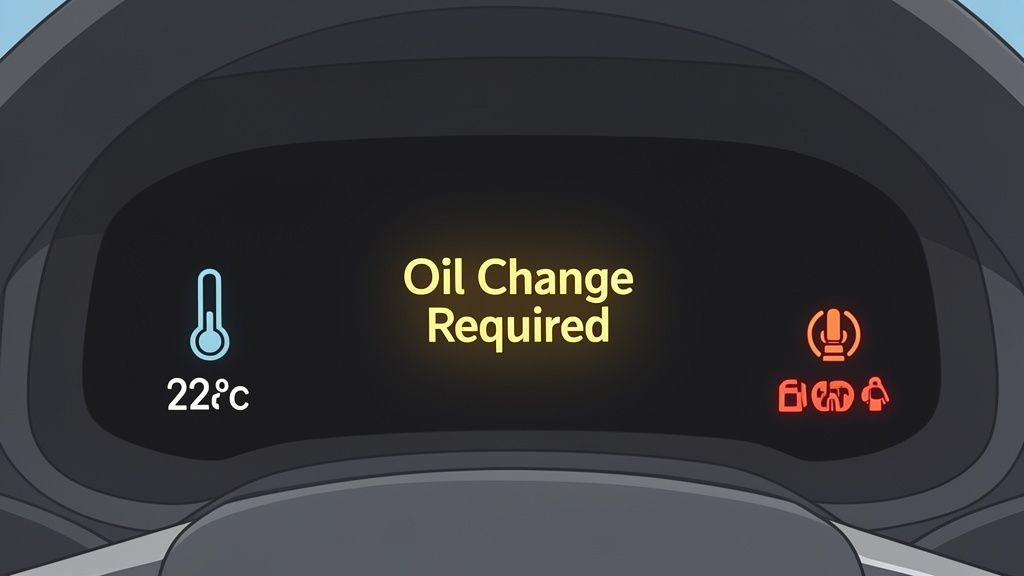
A lot of drivers see the "oil change required" message and think it's just a simple mileage counter, but it's way more sophisticated than that. Modern cars come with an Oil Life Monitoring System (OLMS), which is like a fitness tracker for your engine's oil.
Instead of just ticking off the miles, this system actually analyzes your driving habits to figure out the precise moment your oil starts losing its protective qualities. This is a huge deal, because not all miles are created equal. The OLMS is constantly crunching data on all the little things that affect your oil's lifespan.
How Your Driving Habits Affect Oil Life
Your daily commute and the way you drive have a direct impact on when this light comes on. The OLMS algorithm is smart, and it considers several key factors:
- Engine Revolutions: Always accelerating hard? Those higher RPMs put more stress on the oil.
- Engine Temperature: Frequent short trips where the engine never really warms up can lead to condensation and sludge.
- Driving Conditions: Stop-and-go traffic on US-75 here in Richardson is a lot tougher on your engine than a smooth cruise down the highway.
- Workload: Towing a boat or hauling heavy equipment puts extra strain on the engine, causing the oil to break down faster.
By analyzing all this data, the system predicts the point where the oil's additives are used up and it can no longer protect your engine effectively. This is completely different from a generic check engine light, which usually signals a problem that already exists.
The "oil change required" light is fundamentally a preventative alert. It’s your car’s way of saying, "Let’s address this now to avoid problems later," not a signal that damage has already occurred.
Understanding what this light really means empowers you to take the right action. Heeding the warning and getting your oil changed promptly is the single best thing you can do to protect your engine and ensure it stays reliable for years to come.
The Hidden Costs of Delaying Your Oil Change
Ignoring your "oil change required" light is a bit like a marathon runner skipping a water station—you might make it a little further, but you’re setting yourself up for a painful finish. It’s easy to dismiss it as a minor task you can get to later, but putting off this simple service starts a domino effect that can lead to some seriously expensive engine trouble.
Think of fresh engine oil as the ultimate multitasker for your vehicle. It’s the lubricant that keeps fast-moving metal parts from grinding each other into dust. It’s a coolant, pulling damaging heat away from the heart of your engine. And it’s a detergent, constantly cleaning away gunk and grime that would otherwise cause problems.
When Good Oil Goes Bad
But oil doesn't last forever. Over thousands of miles, the intense heat and pressure inside your engine start to break it down. It loses its viscosity—its thickness and ability to coat parts effectively—turning thin and watery. At the same time, the special additives that keep your engine clean get all used up, which is when sludge and nasty carbon deposits start to build up.
Once the oil is degraded, it just can't do its job anymore. This leads to a cascade of issues:
- Increased Friction: Without a good lubricating film, engine parts start rubbing directly against each other. This creates a ton of friction and accelerates wear and tear.
- Overheating: That thin, worn-out oil can no longer carry heat away efficiently. Engine temperatures start to climb, putting critical components at risk.
- Sludge Buildup: All those contaminants and broken-down oil particles clump together to form a thick, destructive sludge. This gunk can clog narrow oil passages, essentially starving parts of the engine from getting the lubrication they need to survive.
These problems don’t just pop up overnight. It starts subtly, maybe with a small dip in your gas mileage or a slightly rougher-sounding idle. But the longer you wait, the more that quiet damage adds up.
The Financial Impact of Neglect
Putting off a routine oil change can quickly turn a small maintenance expense into a jaw-dropping repair bill. Industry studies have found that skipping this one essential service can lead to 43% higher engine wear. That's how a simple service transforms into a potential multi-thousand-dollar engine repair. With the average car on U.S. roads now over 12 years old, this kind of basic maintenance is more critical than ever for keeping it alive. You can learn more about how proper maintenance impacts the automotive service industry.
Postponing an oil change is a gamble where the stakes are your engine's health. The few dollars you save by waiting are nothing compared to the potential cost of replacing major components or even the entire engine.
Ultimately, that "oil change required" light is a financial warning just as much as a mechanical one. Taking care of it quickly is one of the smartest investments you can make in your car's future reliability and value. Being proactive protects your engine from the silent, steady damage that old, tired oil will inevitably cause.
Performing a Quick Under-the-Hood Health Check
So, your car’s dashboard is flashing an “oil change required” alert. The good news is you don’t have to be a mechanic to get a handle on what's going on. A quick check under the hood is a pretty simple process that can tell you a lot about your engine's health right now.
First things first: park your car on a level surface and let the engine cool down completely. Once it's safe to touch, pop the hood and look for the oil dipstick. It's designed to be easy to find, usually with a brightly colored handle in yellow or orange.
Checking Your Oil Level and Condition
Got the dipstick? Great. Now, follow these simple steps to get an accurate read on your oil situation:
- Pull the dipstick all the way out. Grab a paper towel or an old rag and wipe it completely clean.
- Slide the dipstick all the way back into its tube. Make sure it’s fully seated.
- Pull it out one more time and take a close look at the tip. You’ll see two small marks or holes, indicating the "Full" and "Add" levels. Ideally, the oil film should fall somewhere between those two lines.
But the level is only half the story. The oil's appearance can tell you even more. Fresh, healthy oil has a clean, translucent amber color. If your oil looks like any of the following, it’s a sure sign you need to get it serviced right away:
- Dark and Gritty: If the oil is black and feels gritty when you rub a little between your fingers, it's packed with contaminants. It's lost its ability to properly lubricate your engine's moving parts.
- Milky or Foamy: A milky, light-brown, or foamy look is a serious red flag. This usually means coolant is leaking into your engine, a major problem that needs immediate professional attention to prevent catastrophic damage.
This quick visual check really brings to life how good, clean oil can break down into harmful sludge that can wreck an engine.
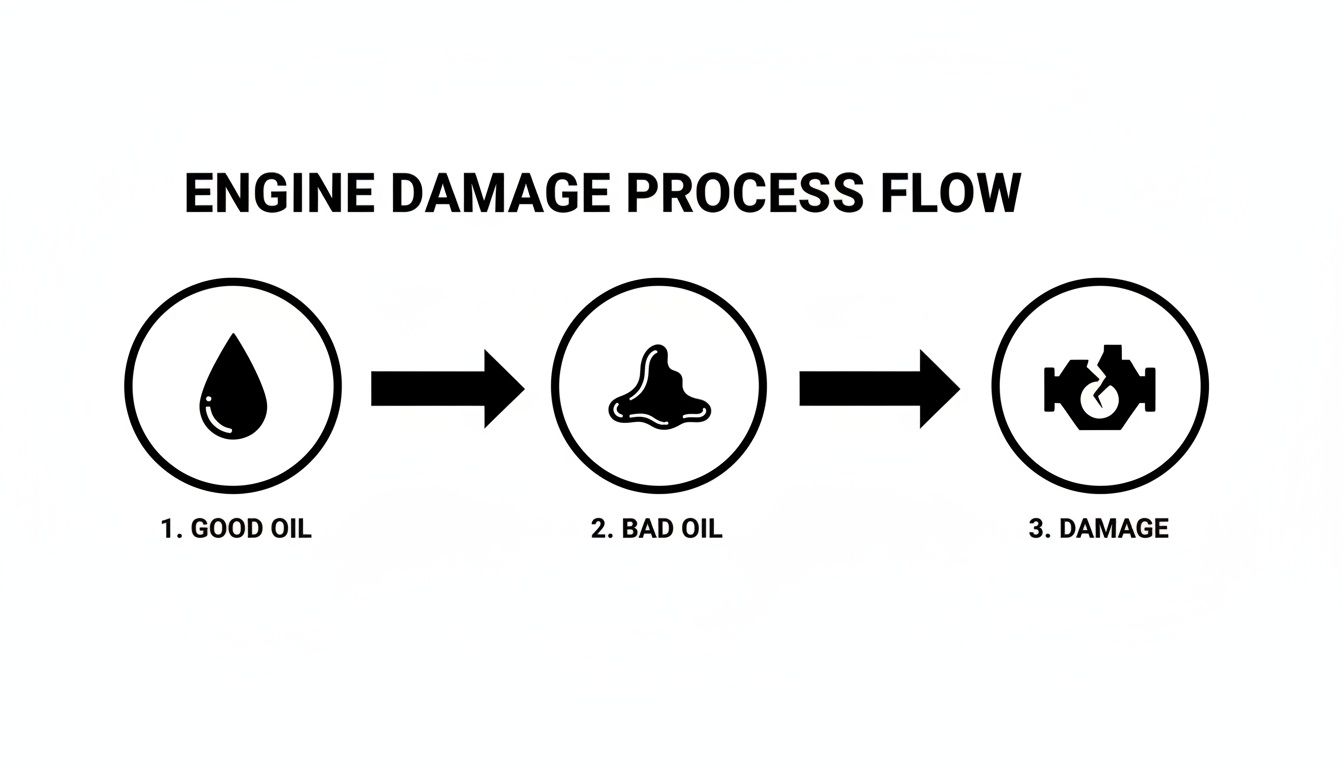
As you can see, the path from clean oil to a damaged engine is a straight line drawn by neglected maintenance.
It's important to remember that while a visual check is great for spotting low levels or serious contamination, it can't tell you about the chemical breakdown of the oil's protective additives. Only a timely oil change can truly restore your engine’s protection.
This simple check gives you some excellent information to share with your mechanic when you bring your car in. For a more detailed walkthrough of other fluids, you can learn more about how to check car fluids in our guide. An informed driver is always in a better position to make smart choices for their vehicle.
Why Your Driving Habits Trigger the Warning Light
Ever glanced down at your dashboard and seen that "oil change required" light pop on, even though the little sticker on your windshield says you still have thousands of miles to go? It’s a common moment of confusion. You're not dealing with a faulty sensor; you're seeing your car's smart technology react directly to how you drive.
Think of your car’s oil life monitoring system less like a simple mileage counter and more like a real-time analyst. It’s constantly watching your driving habits and adjusting its timeline accordingly.
A good analogy is your phone's battery life. If you spend the day just sending a few texts and making a quick call, you'll end the night with plenty of power left. But if you spend hours streaming videos, playing games, and using GPS, that battery is going to drain fast. Your engine oil behaves in the exact same way—some driving conditions are just a lot tougher on it than others.
Severe Driving Conditions That Shorten Oil Life
For those of us driving around Richardson, many of our daily routines are actually considered "severe" by our vehicles, even if they don't feel extreme to us. Your car's computer picks up on these patterns and recalculates your oil's remaining lifespan, often causing the oil change required alert to show up sooner than you’d expect.
Here are some of the most common triggers:
- Frequent Short Trips: Those quick runs to the grocery store or school that are under 15 minutes are surprisingly hard on your oil. Your engine never gets hot enough to burn off moisture and fuel contaminants that sneak in, which can lead to nasty sludge buildup over time.
- Idling in Heavy Traffic: That daily crawl on US-75 might not rack up the miles, but it keeps the engine running hot with almost no airflow to cool it down. This "thermal stress" breaks down the oil much faster than steady highway driving.
- Extreme Texas Heat: When summer temperatures soar past 100°F, your engine is under an enormous amount of stress. Your oil has to work overtime just to keep things from overheating, and that extra work drastically shortens its lifespan.
- Towing or Hauling: Pulling a boat out to the lake or loading up the truck with heavy gear puts a major strain on the engine. The increased workload and heat will accelerate oil degradation in a big way.
It’s a huge misconception that only long, high-mileage trips wear out oil. The reality for most of us is that the stop-and-go grind of city driving and our brutal Texas climate are the real culprits behind that early "oil change required" warning.
While these driving habits are almost always the reason for an early light, if the warning persists right after an oil change, it could point to a different problem, like a faulty sensor. That's why getting a professional diagnosis is so important. Understanding what your car is reacting to helps you see why its maintenance needs are unique and why it's crucial to act when that light comes on.
Choosing The Right Service For Your Vehicle
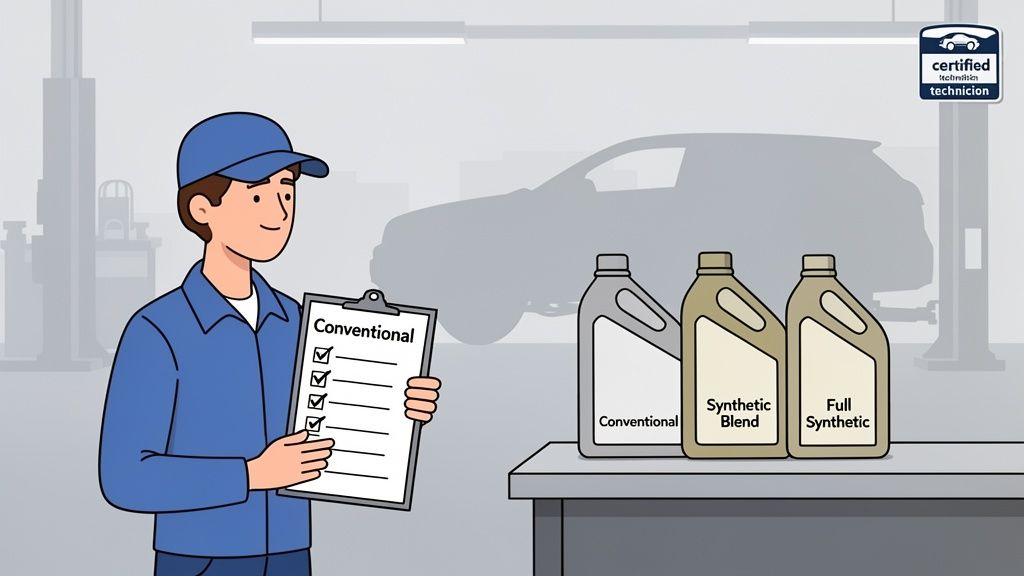
When that "oil change required" light pops up on your dash, it's easy to think of it as just another errand. But not all oil changes are created equal. A quality service is way more than just draining old fluid and pouring in new stuff—it's a critical health check for your vehicle that can save you from major headaches down the road.
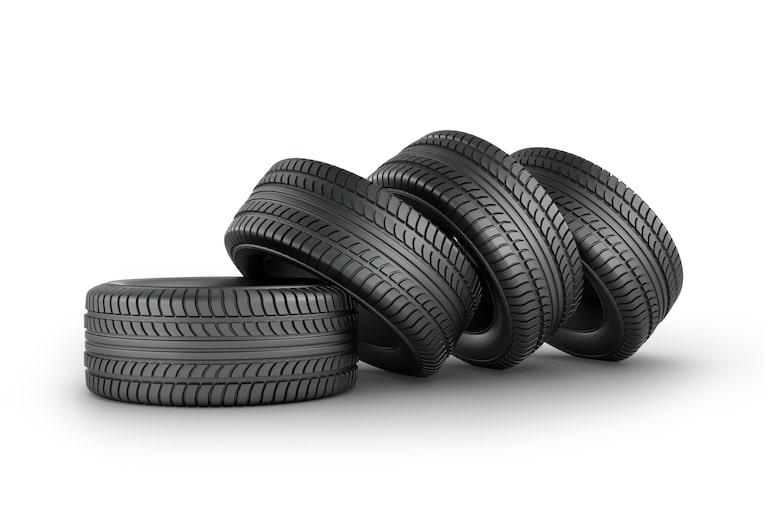
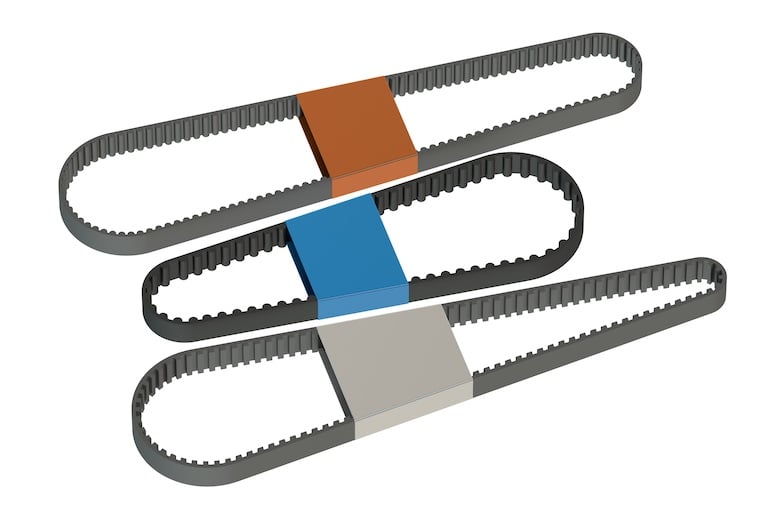
A trustworthy shop views an oil change as a chance for some preventative care. That means the service should include a good look-over of your vehicle's key systems. Technicians should be checking fluids, belts, hoses, and tires to catch small issues before they snowball into expensive problems. In the broader automotive industry, it's this commitment to thoroughness that separates the good shops from the great ones.
Selecting The Best Oil For Your Engine
One of the biggest choices you'll make is what kind of oil to put in your engine. This decision directly impacts your engine's performance, how well it's protected, and how long you can go between services. Think of it like picking the right fuel for an athlete—what goes in absolutely determines the output.
Your main options will boil down to three choices:
- Conventional Oil: This is your classic, most affordable option. It’s refined crude oil and does a perfectly good job lubricating standard engines under normal driving conditions.
- Synthetic Blend Oil: A happy medium, this is a mix of conventional and synthetic oils. It gives you better protection and performance than conventional alone, especially when dealing with high heat or heavy loads.
- Full Synthetic Oil: This is the top-shelf choice, engineered in a lab for ultimate purity and performance. It offers superior defense against engine wear, sludge, and extreme temperatures, making it the best bet for modern, high-performance engines and tough driving conditions.
Which one is right for you? It really depends on your car’s age, mileage, and your typical driving habits around Richardson. For a deeper dive, check out our guide on the differences between synthetic vs conventional oil.
Conventional vs Synthetic Oil Comparison
To make the choice a bit clearer, here's a quick breakdown of how these two popular oil types stack up. Understanding these key differences can help you pick the perfect oil for your vehicle's needs and your driving habits here in the Richardson area.
| Feature | Conventional Oil | Full Synthetic Oil |
|---|---|---|
| Source | Refined from crude petroleum | Chemically engineered in a lab |
| Purity | Contains more natural impurities | Highly uniform molecules, virtually free of impurities |
| Performance | Good for standard engines and normal driving | Superior performance in extreme temperatures and heavy loads |
| Protection | Provides basic lubrication and wear protection | Offers enhanced protection against sludge, deposits, and wear |
| Oil Change Interval | Typically 3,000 to 5,000 miles | Can extend intervals to 7,500 to 15,000 miles (or more) |
| Cost | More affordable upfront | Higher initial cost, but can be more economical over time |
While conventional oil gets the job done for many drivers, full synthetic offers a level of protection and longevity that's hard to beat, especially for modern engines or if you do a lot of stop-and-go commuting.
Why Professional Service Matters
While the oil itself is a big piece of the puzzle, the person actually doing the work is just as important. A proper oil change is an investment in your car’s future reliability.
A great oil change service isn't just about what comes out of the bottle; it's about the skilled eyes and hands that ensure every part of your vehicle is inspected and cared for correctly. This attention to detail is what turns a routine task into true preventative care.
Always look for a shop that employs ASE-certified technicians. This certification is the gold standard for technical expertise, so you know the person working on your car has proven their skills. It’s the difference between a simple fluid swap and a professional service that truly protects your engine's health. When a shop offers transparent pricing and shows a real commitment to comprehensive care, you know they'll handle your oil change required alert with the seriousness it deserves.
Answering Your Top Oil Change Questions
Even when you know what the "oil change required" light means, a few practical questions always seem to pop up the second it appears on your dash. What do I do right now? What's this really going to cost me?
We hear these questions all the time. Think of this section as your quick-reference guide to get you back on the road with confidence.
How Long Can I Drive After the Light Comes On?
This is, without a doubt, the most common question we get. The short answer is: you don't need to pull over immediately. That light is a "soon" reminder, not an "emergency stop now" command.
Most car manufacturers suggest you schedule your oil change within the next 500 miles or so—roughly two weeks of typical driving. This gives you a safe window to get the service done without putting your engine at immediate risk.
But there's a big "however" here. If you're dealing with Richardson's stop-and-go traffic or the brutal Texas summer heat, you're putting extra stress on your engine with every mile you drive on old oil. The smartest move is always to act promptly. It's the best way to keep a small warning from turning into a big, expensive repair bill.
Does the Warning Light Reset Itself After Service?
Nope, the light won’t turn off on its own after an oil change. Your car's Oil Life Monitoring System (OLMS) needs to be told it's starting fresh with a new batch of oil. This requires a manual reset.
This reset is a critical final step for any professional oil change. A qualified technician will always handle this for you. If you’re a DIYer, this is one step you absolutely can't forget. If you don't reset it, your car will keep thinking it has old oil, and that "oil change required" light will just stay on.
My Car Uses Synthetic Oil—Can I Wait Longer?
This is a fantastic question that gets right to the heart of modern car care. It's true that high-quality synthetic oils offer superior protection and can last longer than conventional oil. However, you should always listen to your car's monitoring system first.
Think of the warning light as the final word. Your car’s computer isn't just going by a generic mileage number. It's been analyzing your specific driving habits in real-time to make that calculation.
Even the best synthetic oil breaks down faster under severe conditions. When that light comes on, your car is telling you that your oil, in your engine, under your unique driving conditions, has done its job and is ready to be replaced. Always trust the light over a generic mileage sticker on your windshield.
Is It Just About an Oil Change, or Could It Be Something More?
The "oil change required" or "maintenance required" light is specifically tied to your engine oil's lifespan. It isn't a catch-all trouble light like the check engine light.
That said, it’s critical to notice what else might be happening. If you see the oil change light but also experience any of the following, you should stop driving as soon as it's safe and get professional help right away:
- A low oil pressure warning light (it usually looks like a classic oil can).
- Strange noises from the engine, like knocking, grinding, or loud ticking.
- Any visible smoke coming from your exhaust pipe.
- A sudden loss of power or a rough-sounding idle.
These are red flags for serious mechanical issues that go way beyond a simple service. While the oil change alert itself isn't an emergency, these other symptoms absolutely are. Acting quickly can be the difference between a manageable repair and catastrophic engine failure.
For reliable service and a thorough vehicle health check that gives you real peace of mind, trust the ASE-certified team at Kwik Kar Oil Change and Auto Care. Schedule your appointment today and drive confidently, knowing your vehicle is in expert hands.