Avoid an $800–$2,500 Converter Replacement: 7 Steps to Diagnose P0420
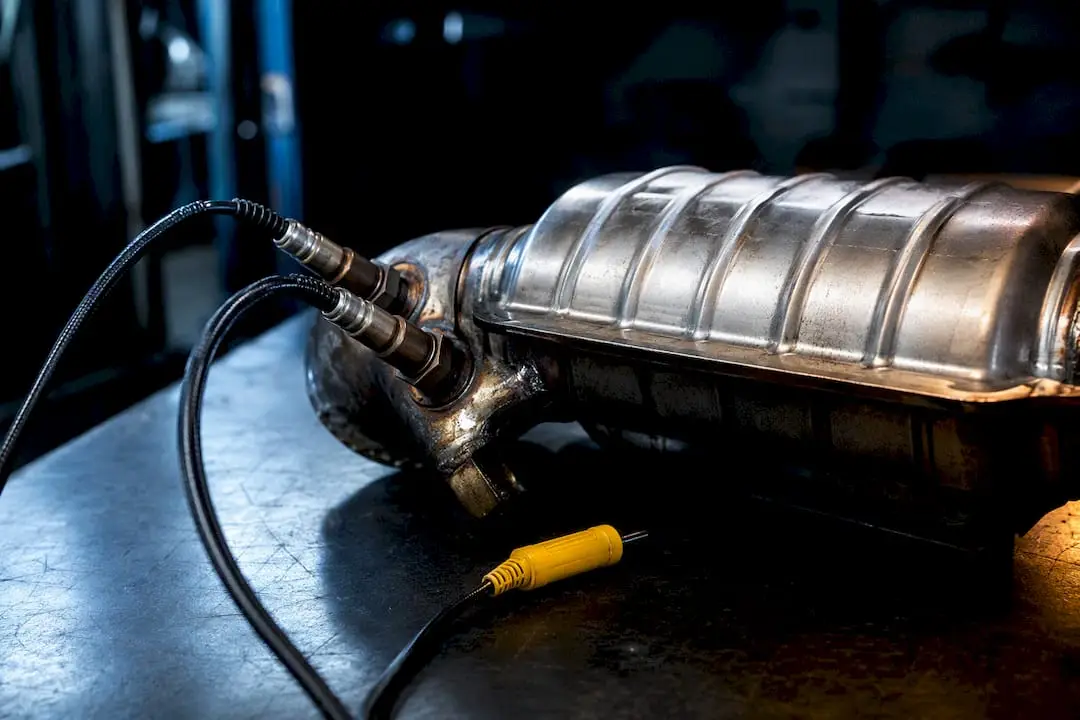
P0420 means the catalytic converter on Bank 1 is no longer scrubbing exhaust gases efficiently enough to meet the powertrain control module’s threshold. It’s rarely a sign your car is about to break down, but it deserves prompt attention. Scan for related codes and check for misfires or exhaust leaks before you assume the converter itself has failed.
TL;DR:
- Most P0420 codes are caused by exhaust leaks or faulty oxygen sensors, not the catalytic converter itself, which means repair often costs less than expected.
- Diagnosing a P0420 accurately involves checking for leaks, sensor function, and software updates before considering a replacement converter.
- Replacing the downstream oxygen sensor costs around $150 to $350, while fixing exhaust leaks usually costs $100 to $400; a new catalytic converter can cost from $800 to $2,500.
- Driving with P0420 is generally safe if no misfires or power issues are present, but you should stop if you notice sulfur smell, rough idle, or loss of power.
- Proper diagnosis, including waveform comparison and leak testing, can save hundreds of dollars by preventing unnecessary catalyst replacement.
Table of Contents
- How Serious Is a P0420 Code? Symptoms to Watch
- What Does P0420 Actually Measure Inside Your Engine?
- What Causes a P0420 Code? Ranked by How Often They Show Up
- How Do Technicians Diagnose a P0420 Code?
- P0420 Repair Costs: What Each Fix Actually Runs
- Can You Drive With a P0420 Code, and What About Emissions Testing?
- What Kwik Kar’s ASE-Certified Technicians Do Differently
- Why Diagnosis-First Thinking Beats the Quick-Swap Instinct
- Get Your P0420 Diagnosed Right the First Time
- Sources
- FAQ
How Serious Is a P0420 Code? Symptoms to Watch
The Check Engine Light is almost always your first clue, but what comes with it tells you how urgent the fix really is. The most common signs include:
- An illuminated Check Engine Light, sometimes without other noticeable changes in how the car drives
- A sulfur or “rotten egg” smell from the exhaust
- Noticeably decreased fuel economy
- Reduced power or sluggishness under acceleration, potentially including a protective “limp mode”
- Rattling or loose sounds from underneath the car, which can point to a physically damaged converter
A car showing only the light and a mild economy dip is usually fine to drive to a shop this week. One showing misfires, that sulfur smell, and a rough idle together is a different story. That combination often means raw fuel is cooking the converter right now, and every mile you drive makes the eventual repair more expensive.
What Does P0420 Actually Measure Inside Your Engine?
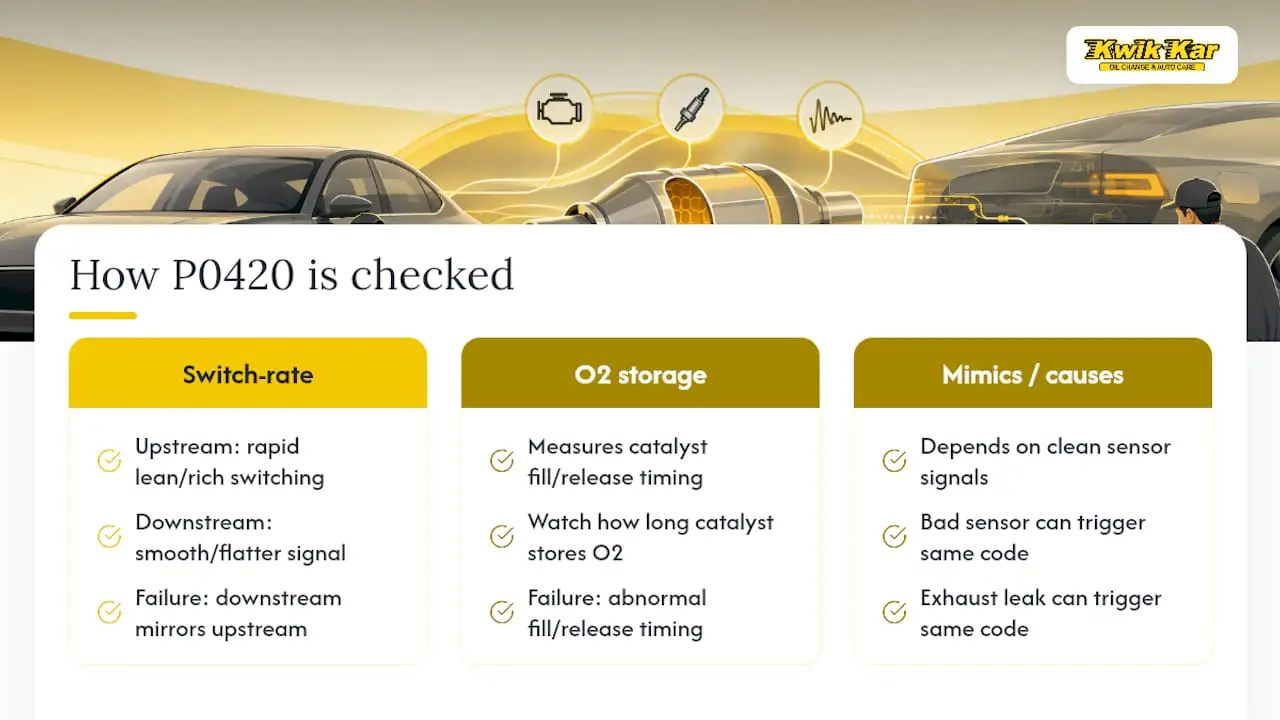
Bank 1 refers to the engine side that holds cylinder number one, and the code tracks a specific pair of oxygen sensors on that bank. The upstream sensor, mounted before the converter, should switch rapidly between lean and rich readings as combustion happens. The downstream sensor, mounted after the converter, should show a much smoother, flatter signal if the catalyst is doing its job of storing and releasing oxygen properly.
The powertrain control module runs one of two checks to catch a failing catalyst. The first compares the switching rate of both sensors. If the downstream sensor starts mirroring the upstream sensor’s rapid switching, the module assumes the converter has lost its ability to buffer oxygen and throws the code. The second method measures oxygen storage capacity directly, watching how long the catalyst takes to fill and release oxygen during a controlled test. Either way, the logic depends on clean, accurate signals from both sensors, which is exactly why a bad sensor or a stray exhaust leak can trigger the same code as a genuinely dead converter.
What Causes a P0420 Code? Ranked by How Often They Show Up
Most P0420 diagnoses go sideways because someone replaces the converter first and asks questions later. In order of how often they actually show up on a scan tool, the usual suspects are:
- An exhaust leak upstream of the rear oxygen sensor, letting fresh air skew the readings
- A slow, lazy, or wired-wrong downstream oxygen sensor
- Catalyst contamination or thermal damage from chronic misfires, or from oil or coolant burning through the engine can sometimes be prevented by following a clean engine bay: safe steps and ceramic protection routine to avoid contaminant buildup.
- Persistent lean or rich fuel trims that quietly cook the catalyst over months
- A low-quality replacement converter or a PCM calibration issue that never got addressed with a software update
Pro Tip: If your car recently had exhaust work done, check the joints and gaskets near the rear O2 sensor first. A leak the width of a pencil can mimic a failed converter and send you chasing a $1,200 part you don’t need.
Technicians and major diagnostic guides agree on this point: P0420 is a result, not a root cause. Skipping the upstream investigation is the single most common reason people replace a converter and watch the code come right back.
How Do Technicians Diagnose a P0420 Code?
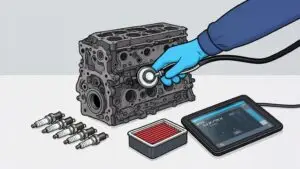
A proper diagnosis follows a specific order, and skipping steps is how good converters end up in the trash for no reason. Here’s the sequence a competent shop actually runs:
- Pull a full scan and record every pending and stored code, especially misfire codes (P03xx) and any O2 sensor faults, along with live fuel trim data.
- Save the freeze frame data from the moment the code set, capturing engine load, RPM, and temperature at that instant.
- Check for open TSBs or PCM software updates for that specific make, model, and calibration before touching a single part.
- Inspect the exhaust system upstream of the rear O2 sensor for leaks, using a smoke or pressure test where needed.
- Compare live O2 sensor waveforms on a scope or capable scan tool, then pull Mode 06 data to confirm the actual switching pattern the PCM recorded.
- Confirm fuel trims sit within roughly ±10% and check misfire counters. Fix any ignition or fuel delivery issues first.
- Check exhaust backpressure and temperature drop across the converter to rule out a physical restriction or internal collapse.
That order matters because each step is cheaper and faster than the one after it. The typical cost and time investment looks like this:
Once every upstream item checks out clean, the repair order runs leaks and engine issues first, then slow sensors, then any PCM update, and only then converter replacement.
P0420 Repair Costs: What Each Fix Actually Runs
Costs vary widely because P0420 has so many possible root causes, but here’s what to expect once diagnosis points to a specific fix.
- Downstream O2 sensor replacement: Often $150 to $350 parts and labor combined. It cures the code outright when the sensor itself was slow, contaminated, or wired incorrectly.
- Exhaust leak repair: A manifold gasket or flange leak typically runs $100 to $400 depending on accessibility. This alone resolves plenty of “converter failures” that were never real failures.
- Catalytic converter replacement: OEM units run highest, often $800 to $2,500 installed depending on the vehicle. Quality direct-fit aftermarket converters cost less and still meet emissions standards; cheap universal converters are the riskiest buy because many never meet the PCM’s efficiency threshold and can re-trigger the code within days. CARB-compliant converters are required in certain states and carry federal warranty coverage that can run 8 years or 80,000 miles.
- PCM reflash: Sometimes a documented TSB or software calibration update fixes the monitor’s behavior entirely, at little more than a labor charge.
None of this holds up long term if misfires or oil consumption caused the original damage. Fix the underlying engine problem first, or a brand-new converter fails the same way the old one did.
Can You Drive With a P0420 Code, and What About Emissions Testing?
Most vehicles remain drivable with P0420 alone. Skip long highway trips if you’re also smelling sulfur or feeling misfires, since that combination is actively damaging the converter with every mile. If misfires or a real loss of power show up alongside the code, stop driving and arrange a tow. Raw, unburned fuel dumping into a hot converter can melt its internal structure in a matter of minutes.
Before a smog check or state inspection, resolve any related codes and clear pending monitors first, since an active P0420 will fail most emissions tests outright. Confirm both O2 sensors are reading correctly and rule out exhaust leaks, which our emissions test prep guide walks through in more detail. If a TSB applies to your vehicle, a dealer or authorized shop may need to perform that specific software fix for warranty coverage to apply.
What Kwik Kar’s ASE-Certified Technicians Do Differently
Our technicians treat P0420 as a puzzle to solve, not a part to swap. That mindset saves customers real money.
- We save freeze-frame and Mode 06 data before clearing any code, since that snapshot often reveals the actual failure pattern the PCM saw.
- We compare upstream and downstream O2 waveforms side by side rather than guessing from a single sensor reading.
- We rule out small exhaust leaks with a proper inspection before ever quoting converter replacement.
That diagnostic discipline is backed by ASE-certified training, transparent digital estimates, and warranty coverage on the repairs we recommend. You’ll know exactly why a part failed before you pay to replace it.
Why Diagnosis-First Thinking Beats the Quick-Swap Instinct
The industry has a bad habit of treating P0420 as shorthand for “buy a new converter,” and that habit costs drivers real money. A converter is the most expensive component in the diagnostic chain, and it’s almost never the first thing that actually failed. Something upstream, a leak, a sluggish sensor, a string of misfires, usually did the damage first.
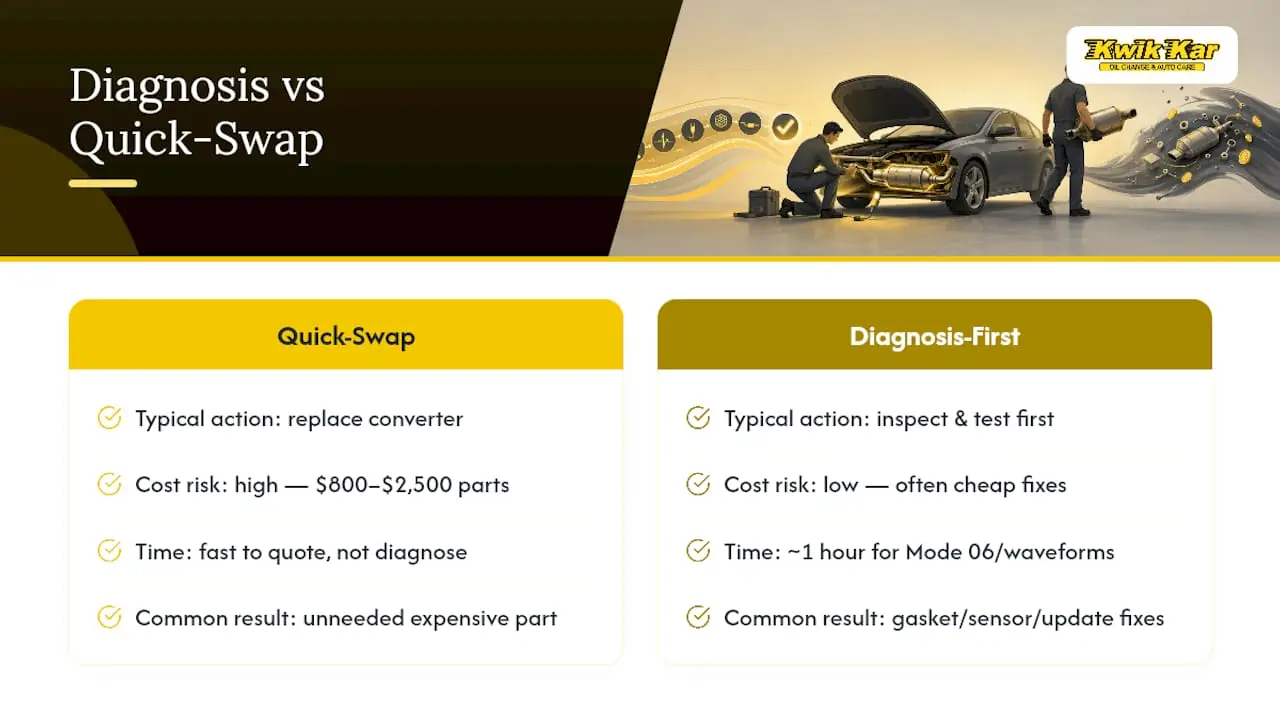
What gets overlooked is how often the fix is boring and cheap: a gasket, a sensor, sometimes just a software update your dealer already has on file. The technician-priority checklist exists precisely because skipping steps is expensive, not because shops enjoy paperwork. Pulling Mode 06 data and comparing O2 waveforms takes maybe an hour and can save a customer over a thousand dollars in unnecessary parts.
Readers should prioritize finding a shop that will show you that data, not just quote you a converter. If a shop jumps straight to “you need a new cat” without mentioning an exhaust inspection or a waveform comparison, ask why.
— Kwik Kar
Get Your P0420 Diagnosed Right the First Time
Guessing at a P0420 fix means risking a converter replacement you didn’t need, or missing a leak that keeps damaging a brand-new one. Kwik Kar Oil Change & Auto Care runs the full diagnostic sequence, scan data, freeze frame, Mode 06, O2 waveform comparison, and exhaust leak checks, before recommending any repair, so you pay for the actual problem instead of a guess.

Our engine diagnostics service covers everything from live sensor data to TSB verification, all performed by ASE-certified technicians with transparent, itemized estimates before any work begins. If your vehicle also needs exhaust repair, sensor replacement, or emissions test prep, we handle all of it under one roof with warranty coverage on the parts we install. Call your local Kwik Kar or visit our Richardson service page to schedule a diagnostic appointment and get a real answer instead of a parts-cannon guess.
Sources
FAQ
How Do I Fix a P0420 Code?
Start by scanning for related misfire or O2 sensor codes, then inspect for exhaust leaks and check for applicable TSBs before assuming the converter needs replacement. Most fixes turn out to be a sensor, a leak, or a software update rather than a new catalytic converter.
How Much Does a P0420 Repair Cost?
It depends entirely on the root cause: a downstream O2 sensor runs roughly $150 to $350, an exhaust leak repair often runs $100 to $400, and full converter replacement can run $800 to $2,500 installed.
Is a P0420 Code Serious?
It’s usually not an immediate breakdown, but it shouldn’t be ignored, since ongoing misfires or exhaust leaks can destroy a catalytic converter that would otherwise have been fine.
Can I Still Drive My Car With a P0420 Code?
Most cars remain drivable with P0420 alone, but you should stop driving and arrange a tow if misfires or noticeable power loss accompany the code, since that combination actively damages the converter with continued driving.