CARFAX recognition for an auto shop signals one concrete thing: the shop publishes VIN-linked service entries to vehicle history records and participates in a verified customer feedback program. It is a transparency and marketing signal, not a mechanical guarantee of repair quality. Two components define it — published service records tied to your VIN, and verified post-service ratings from real customers through CARFAX Car Care. When a shop earns the CARFAX Top-Rated Service Center designation, it has cleared a documented review threshold based on verified feedback on top of that reporting baseline.
Table of Contents
- What CARFAX shop programs exist and how they differ
- How shops publish service records and qualify for CARFAX recognition
- What CARFAX recognition means for you when servicing or buying a used car
- What CARFAX reports and badges do not show
- Step-by-step checklist for using CARFAX recognition to choose a shop or vet a used car
- What a trustworthy CARFAX-recognized shop actually looks like
- Key Takeaways
- Why transparent shop practices matter more than the badge alone
- Kwik Kar Oil Change & Auto Care: CARFAX-visible service in Richardson, TX
- Sources and further reading
- FAQ
What CARFAX shop programs exist and how they differ
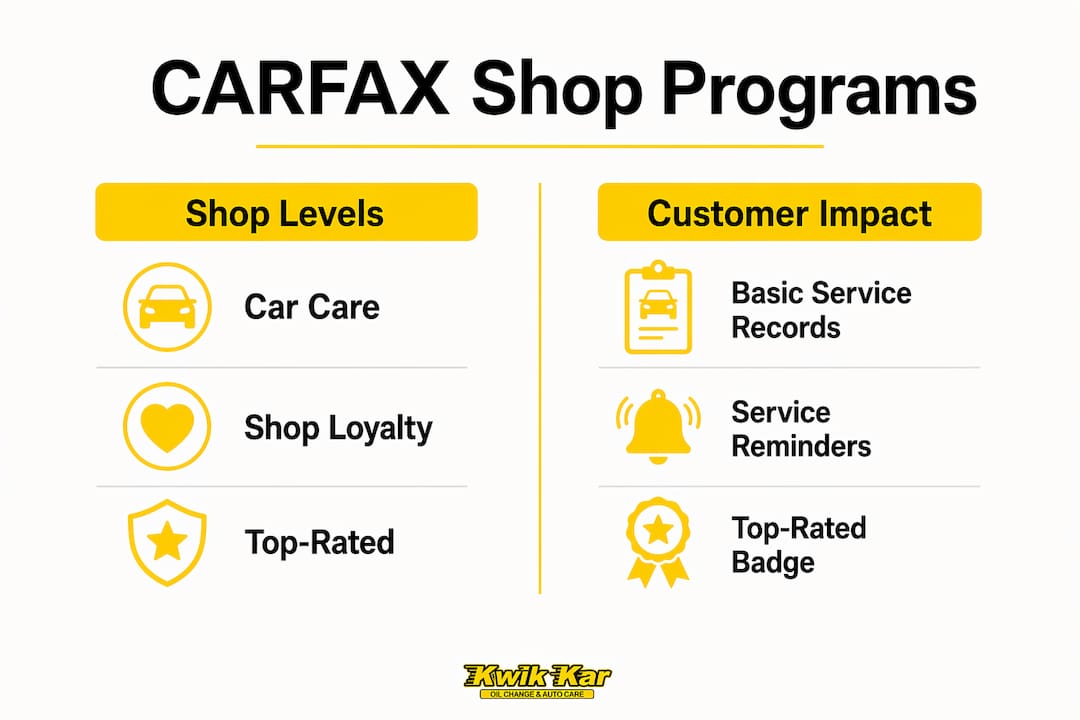
CARFAX offers shops three distinct levels of participation, each with different implications for what you can actually see as a customer.
CARFAX Car Care is the entry point. Shops enroll at no cost, integrate with CARFAX’s reporting system, and begin publishing closed repair orders to vehicle history. Car owners who use the Car Care app can track their maintenance, receive recall alerts, and see service reminders tied to their VIN. For you as a vehicle owner, this means a participating shop’s work can show up on a CARFAX report — a paper trail that follows the car, not just the owner.
The Shop Loyalty program builds on Car Care by deepening the shop-to-customer relationship through service reminders and repeat-visit incentives. Shops using this layer stay visible to Car Care members between visits, which benefits both sides: owners get timely maintenance prompts, and shops reduce the gap between service appointments.

CARFAX Top-Rated Service Center is the designation that carries the most weight for consumers. According to CARFAX’s own announcement, the badge is awarded based on verified post-service feedback from Car Care members, and the 2021 cohort received high average ratings. Shops typically must sustain strong verified review scores over time to qualify.
| Program | What customers see | How shops qualify | Shop benefit | Typical cost |
|---|---|---|---|---|
| Car Care (base) | VIN-linked service entries on CARFAX report | Enroll and report closed repair orders | Directory listing, service reminders | Free |
| Shop Loyalty | Same as above plus loyalty reminders | Active Car Care participation | Repeat-visit marketing, retention tools | Varies |
| Top-Rated Service Center | Public badge, star rating on CARFAX | Verified reviews ≥ ~4.7/5, sustained performance | Badge, digital assets, social media kit | Paid upgrade |
How shops publish service records and qualify for CARFAX recognition
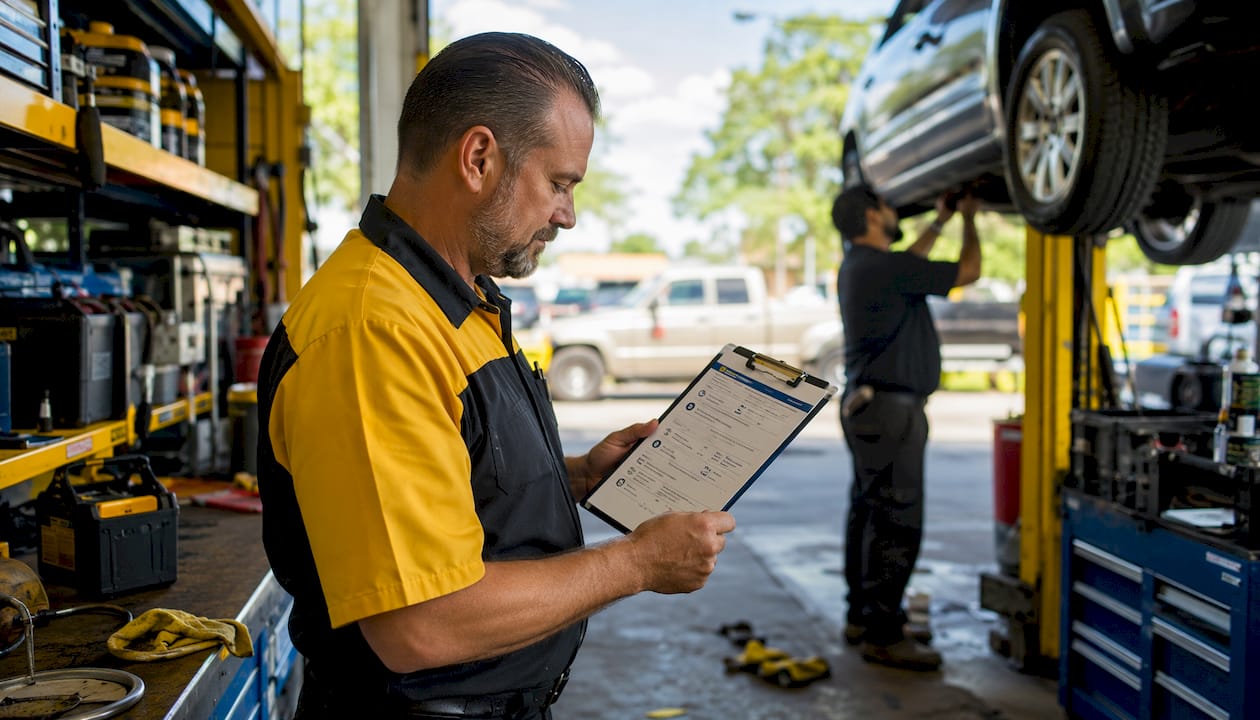
The process is largely automated. When a technician closes a repair order in an integrated shop management system (SMS) or parts-ordering platform, that event triggers an automated upload to CARFAX tied to the vehicle’s VIN. Manual entry is rare. This means the quality of a shop’s CARFAX reporting depends directly on whether its software is integrated and whether every job is written against the correct VIN.
Here is the typical workflow a participating shop follows:
- Customer vehicle is checked in; VIN is captured and linked to the repair order.
- Technician diagnoses and completes the work; the repair order is closed in the SMS.
- The closed RO triggers an automatic data push to CARFAX through the integration.
- CARFAX sends the customer a post-service review request via Car Care.
- Verified reviews accumulate toward Top-Rated eligibility.
For the Top-Rated badge specifically, verified post-service feedback from Car Care members is the core input. Mike Liou, Head of Service Marketing at CARFAX, described the program’s value as coming from “direct feedback from verified customers” across the Car Care membership base.
Pro Tip: When you visit a shop, ask whether they use an integrated SMS like ALLDATA or a similar platform. If they hand you a digital invoice with your VIN printed on it, that is a strong indicator the work is being pushed to CARFAX automatically.
What CARFAX recognition means for you when servicing or buying a used car
For routine maintenance, choosing a CARFAX-recognized shop means your service history builds on the vehicle’s record rather than living only in a paper folder you might lose. Oil changes, brake jobs, and inspections documented through CARFAX Service Suite integrations create an auditable trail that follows the car through future ownership. Buyers regularly cite documented maintenance as a reason to pay more for a used vehicle, so every VIN-linked invoice you accumulate has real resale value.
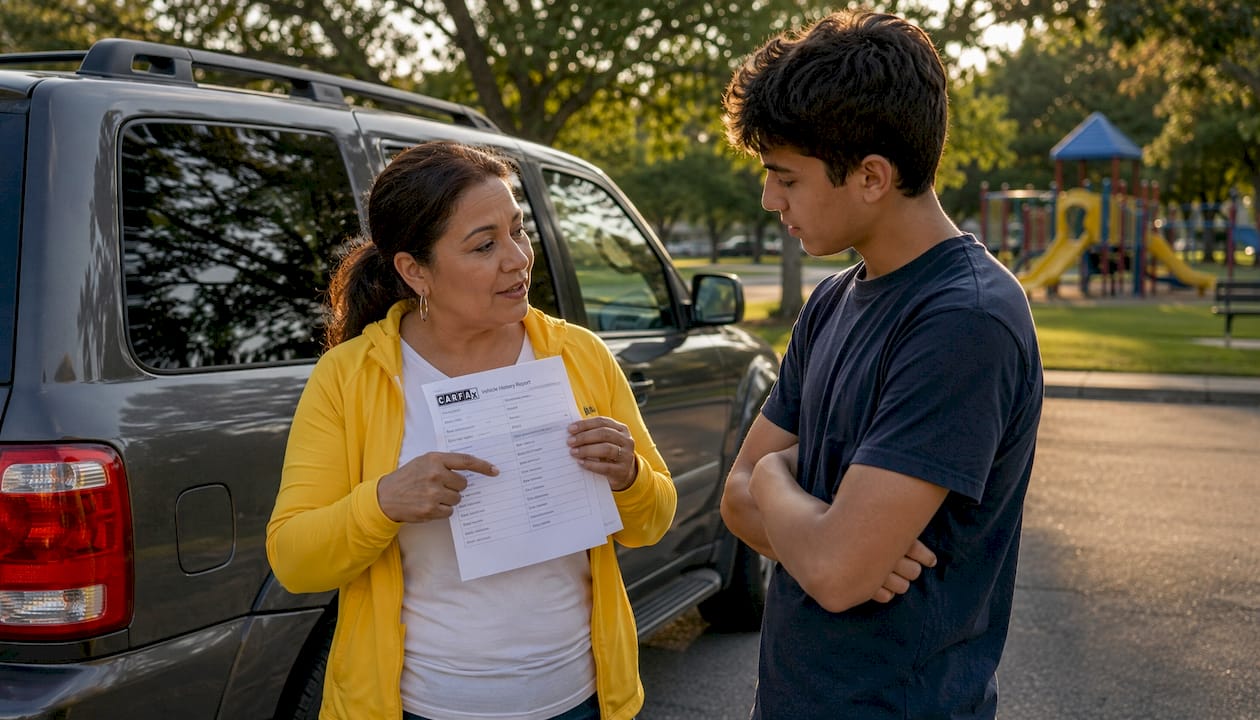
When you are buying a used car, a strong CARFAX service history at recognized shops tells you the previous owner used reporting shops — but it does not tell you the work was done correctly. Think of it as a logbook that proves visits happened, not a quality inspection of what was found. Pair the CARFAX history with a request for the actual repair invoices tied to the VIN and, for any significant purchase, an independent pre-purchase inspection by an ASE-certified technician.
For warranty claims, documented service entries at recognized shops can support your case that maintenance was performed on schedule. That is a practical benefit most owners overlook until they need it.
What CARFAX reports and badges do not show
A clean CARFAX is not a clean bill of health. Major red flags that require follow-up include branded titles (salvage, rebuilt, flood, lemon, or junk), inconsistent mileage entries across reporting events, documented airbag deployments without proof of repair, structural damage notations, and frequent short-term ownership changes. Any one of these warrants an independent inspection before you commit.
Coverage gaps are equally important to understand. Cash-only repairs, work done at non-reporting shops, or jobs closed without a VIN on the repair order will not appear on any CARFAX report. A vehicle serviced exclusively at independent shops that do not participate simply has no service history on CARFAX — which is not the same as having no service history at all. CARFAX and insurance databases like CLUE also track different event types, so some collision repairs processed through insurance may not trigger a CARFAX entry.
Scale check: CARFAX has referenced over 24–30 million Car Care members in public materials. That is a large network — but it still represents a fraction of the total repair shops operating in the U.S., which means gaps in coverage are a structural reality, not an exception.
Two quick verification steps close most of those gaps: request VIN-linked repair invoices directly from the seller or shop, and arrange an ASE-certified pre-purchase inspection for any vehicle where the history looks thin or the stakes are high.
Step-by-step checklist for using CARFAX recognition to choose a shop or vet a used car
- Run the VIN on CARFAX before booking service or making an offer. Check for title brands, mileage consistency, and whether any service entries exist from recognized shops.
- Confirm the shop’s Top-Rated badge on the CARFAX directory and ask how it is earned — verified reviews, not just self-reported ratings.
- Ask for VIN-linked invoices for any past service. A shop that cannot produce them may not be reporting to CARFAX, regardless of what their signage says.
- Verify ASE certifications for the technicians who will work on your vehicle. CARFAX recognition and ASE certification are separate credentials; both matter.
- Review service cadence on the CARFAX report. Regular, consistent entries suggest an owner who maintained the vehicle; large gaps suggest either non-reporting shops or deferred maintenance.
- Ask the shop directly: “Do you publish service records to CARFAX? Which shop management software do you use?”
- Watch for red-flag answers: evasive responses about reporting, no digital invoices, or inconsistent paperwork are reasons to walk away or request an independent inspection.
- Use documented maintenance in resale negotiations. A vehicle with a complete CARFAX service history from recognized shops gives buyers confidence and supports a stronger asking price.
What a trustworthy CARFAX-recognized shop actually looks like
Kwik Kar Oil Change & Auto Care in Richardson, TX is the kind of shop this checklist is designed to identify. CARFAX-recognized and RepairPal-certified, it operates with ASE-certified technicians who document every service against the vehicle’s VIN. The practices that make a shop genuinely trustworthy go beyond a badge:
- VIN-linked digital invoices issued for every service, creating a paper trail that follows the car.
- Transparent, upfront pricing before work begins — no surprises on the final bill.
- ASE certifications on staff, verifiable and current.
- Documented warranty coverage on parts and labor.
- Prompt CARFAX record updates through integrated shop management software.
- Post-service review invitations sent to customers, feeding verified feedback into the CARFAX system.
These practices connect directly to better outcomes for owners. Clear resale records support higher trade-in values, documented warranties make claims easier to pursue, and consistent VIN reporting means your vehicle’s history is building with every visit. For fleet managers, VIN-based maintenance tracking across multiple vehicles adds another layer of operational accountability.
Key Takeaways
CARFAX recognition is a transparency signal worth using, but it works best when paired with direct invoice verification and an independent inspection for high-stakes purchases.
| Point | Details |
|---|---|
| Recognition signals transparency | CARFAX recognition means a shop publishes VIN-linked service entries and participates in verified customer feedback. |
| Top-Rated requires sustained performance | Shops must sustain strong verified review scores over time to qualify for the Top-Rated badge. |
| Clean reports have real gaps | Cash work, non-reporting shops, and missing VINs on repair orders will not appear — always request VIN-linked invoices. |
| Red flags demand follow-up | Branded titles, inconsistent mileage, and airbag deployments without repair proof require an independent ASE inspection. |
| Kwik Kar Oil Change & Auto Care | CARFAX-recognized and RepairPal-certified in Richardson, TX, with ASE-certified technicians and VIN-linked digital invoices. |
Why transparent shop practices matter more than the badge alone
The CARFAX badge is a starting point, not a finish line. What actually protects you as a vehicle owner is the set of practices behind the badge: VIN-linked invoicing, verified technician credentials, and a shop culture that invites honest post-service feedback rather than avoiding it. At Kwik Kar Oil Change & Auto Care, we value CARFAX visibility because it holds us accountable in a way that benefits you directly. Every documented service entry is a record you can use at resale, a warranty claim you can support, and a maintenance gap you can catch before it becomes a breakdown. The shops that resist transparent reporting are usually the ones with something to hide. The ones that lean into it are the ones worth your trust.
Kwik Kar Oil Change & Auto Care: CARFAX-visible service in Richardson, TX
Documented maintenance should not be a luxury — it should be the standard every vehicle owner expects. At Kwik Kar Oil Change & Auto Care, every service is performed by ASE-certified technicians, documented with VIN-linked digital invoices, and backed by warranty coverage. You get the transparency that builds resale value and the confidence that comes from knowing exactly what was done to your vehicle and when.
Special discounts for military personnel and first responders are available, and our team is ready to answer your questions about what your vehicle’s CARFAX history shows. Book your next service at Kwik Kar’s service page and start building a maintenance record that works for you.
Sources and further reading
The primary sources for this article include CARFAX’s own PR Newswire announcements on the Top-Rated Service Center program, which detail verified-review thresholds and program scale. Technical reporting mechanics are drawn from RideCheckPro’s explainer on who reports to CARFAX and how VIN-linked records are generated. Red-flag identification and coverage limits are covered in depth at Baltimore Chronicle’s 2026 CARFAX reading guide. Shop integration context comes from the CARFAX Service Suite page. For additional context on logbook servicing and maintenance records, the TMMS servicing resource provides useful background on why documented service history matters across the vehicle’s life.
FAQ
Do some mechanics not report to CARFAX?
Yes. Shops that do not use integrated shop management software, handle repairs as cash-only jobs, or fail to link work to a VIN will not generate CARFAX entries. A missing service record means the work bypassed VIN-linked reporting, not necessarily that the work was never done.
What is the $3,000 rule for cars?
The $3,000 rule is a personal finance guideline with various interpretations about budgeting, down payments, or reserves for unexpected repairs, but specific amounts vary depending on personal circumstances.
What is a red flag on a CARFAX report?
Major red flags include branded titles such as salvage, rebuilt, or flood designations; inconsistent mileage entries; documented airbag deployments without proof of repair; structural damage notations; and frequent short-term ownership changes. Any of these warrants an independent inspection.
Does CARFAX recognition guarantee repair quality?
No. CARFAX recognition confirms that a shop publishes service records and participates in verified customer feedback — it does not certify the mechanical quality of the work performed. Always pair CARFAX data with VIN-linked invoices and, for major purchases, an ASE-certified pre-purchase inspection.