Your car represents one of the most expensive things you own and one of the most safety-critical. Yet most drivers pick a repair shop the same way they pick a restaurant: whatever is nearby and has decent reviews. The role of a trusted auto repair shop goes far deeper than fixing what’s broken. It shapes your long-term repair costs, your vehicle’s reliability, and whether the safety systems protecting your family actually work the way they’re supposed to. Not all shops operate the same way, and the difference between a trustworthy one and a mediocre one can cost you hundreds of dollars and real safety risks.
Table of Contents
- Key takeaways
- What makes a trusted auto repair shop
- Local shops vs. dealerships: the real trade-offs
- Why advanced vehicle tech raises the stakes
- How to find and build trust with a reliable shop
- Our perspective on what trust really looks like
- Why Kwik Kar Richardson is the trusted shop you need
- FAQ
Key takeaways
| Point | Details |
|---|---|
| Trust is observable behavior | Written estimates, clear communication, and warranties confirm trustworthiness beyond certifications alone. |
| ASE certification is a starting point | Certification qualifies a shop but transparency in pricing and explanations is what truly builds trust. |
| Local shops often beat dealerships on cost | Qualified independent shops charge less for identical work while avoiding unnecessary upsells. |
| Advanced systems require verified expertise | ADAS calibration and OEM procedures are safety requirements, not optional upgrades. |
| Start small to verify trust | Begin with an oil change to observe how a new shop communicates before committing to major repairs. |
What makes a trusted auto repair shop
The industry term for what most drivers are looking for is a reputable automotive service provider, meaning a shop that combines technical competence with ethical business practices. Trust is not a feeling. It is a pattern of observable behaviors repeated across every customer interaction.
Transparency in pricing is where that pattern starts. A shop that hands you a written estimate upfront outlining parts, labor, and any potential additional fees is telling you something important: they are not hiding anything. Any vagueness on pricing before work begins is a signal worth taking seriously.
Certification matters, but it does not tell the whole story. ASE certification is a verified standard of technical knowledge. Learning what an ASE-certified mechanic actually means helps you ask better questions. But a certified technician who refuses to explain what is wrong, or who cannot show you the worn part they just replaced, has not earned your trust through behavior. The certification is a qualifier, not the finish line.
Here is what genuine trust looks like in practice:
- The shop explains the problem in plain language and tells you whether the repair is urgent or can wait.
- They show you the worn or failed component before replacing it.
- They provide a written warranty on parts and labor, typically covering repairs for a defined period.
- They do not call you midway through a job to add services that were not discussed in the original estimate.
- They answer direct questions directly, without deflecting or using confusion as a sales tool.
Shops with AAA approval often provide 24-month/24,000-mile warranties and written estimates as standard practice, which gives you a useful benchmark for what accountability looks like.
Pro Tip: Ask any new shop to show you the replaced parts when you pick up your vehicle. A trustworthy shop will do this without hesitation. A shop that cannot produce them or deflects the question has told you something useful.
Local shops vs. dealerships: the real trade-offs
The assumption that a dealership is automatically more trustworthy than a local shop does not hold up under scrutiny. What dealerships do offer is brand-specific training and tools, which matters for warranty work or highly model-specific repairs. For everything else, the math often favors a quality independent shop.
Dealer labor rates frequently exceed $100 per hour, while qualified local shops charge less for work that is technically identical. The parts and procedures are the same. The bill is not.
There is also the upsell issue. Dealerships use free inspections to identify services that are often not called for by the manufacturer’s maintenance schedule, such as fluid flushes your owner’s manual does not recommend at that mileage. A trusted independent shop with no brand-affiliated sales quota has less financial incentive to push those services.
Here is a direct comparison to help you evaluate your options:
| Factor | Trusted local shop | Dealership service center |
|---|---|---|
| Labor cost | Lower for routine and standard repairs | Higher, often $100+ per hour |
| Brand-specific expertise | General expertise with most makes/models | Factory-trained for specific brand |
| Upsell risk | Lower with a transparent shop | Higher due to service department quotas |
| Written estimates | Standard at reputable shops | Varies by location |
| Turnaround time | Often faster for routine maintenance | Can be slower, especially for popular models |
| Trust building over time | Easier with a consistent local relationship | Staff turnover limits relationship continuity |
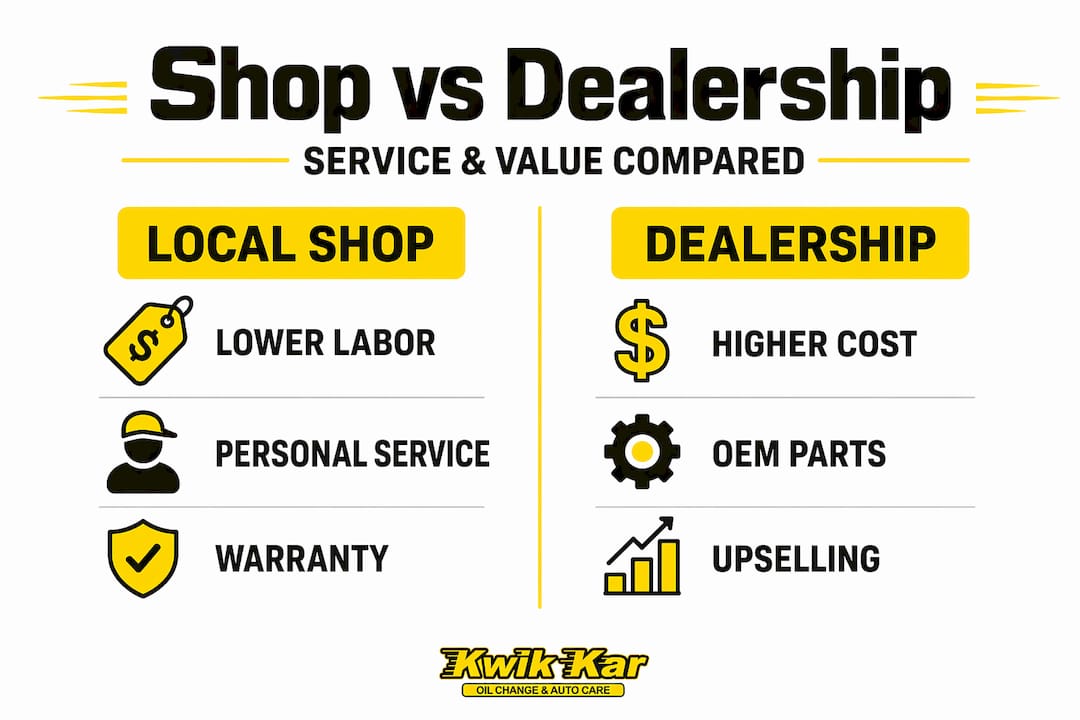
The most honest framing: a dealership is not your enemy, but it is not automatically your ally either. A trusted local shop that communicates clearly and charges fairly will serve most car owners better across the full lifespan of a vehicle.
Why advanced vehicle tech raises the stakes
Ten years ago, a poorly executed brake job was a serious problem. Today, a poorly executed repair on a vehicle equipped with advanced driver assistance systems (ADAS) can compromise collision avoidance, lane departure warnings, and automatic emergency braking. The technical bar has moved dramatically.
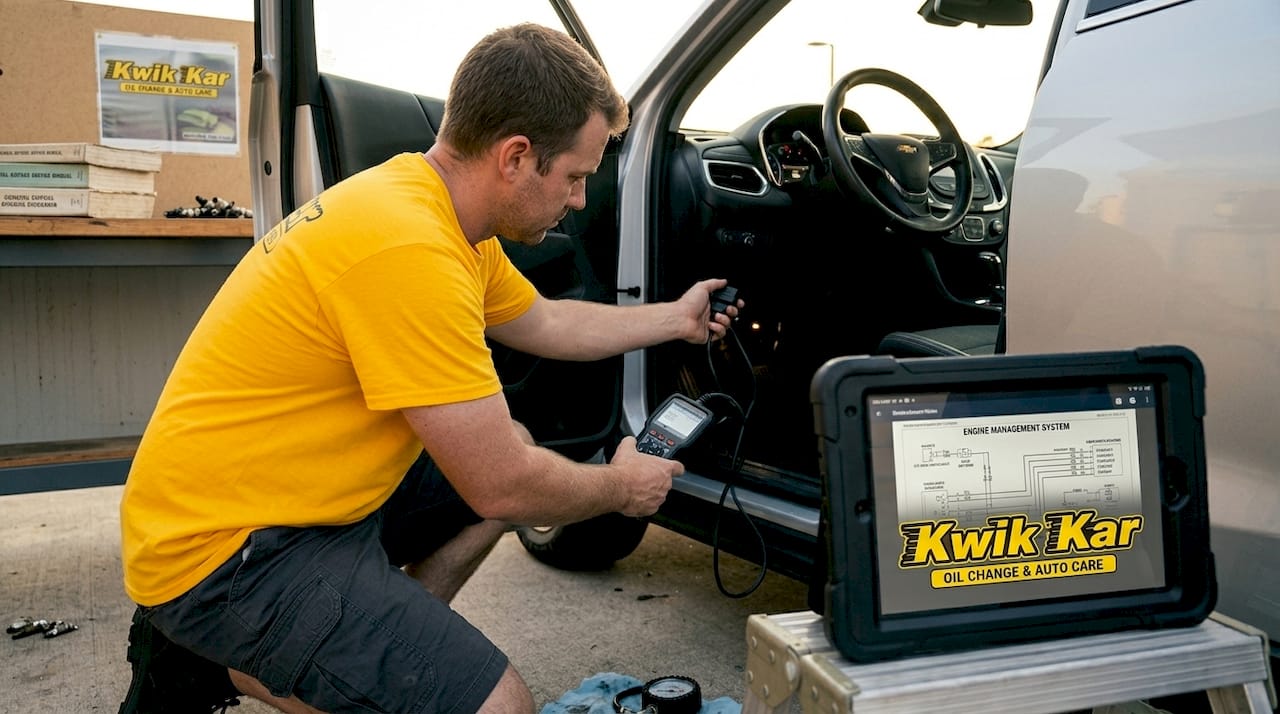
Improper ADAS calibration or failure to follow OEM repair procedures can result in safety-critical failures that are not immediately visible after the repair. Your windshield camera may look fine. Your forward collision sensor may appear to function. But if calibration was skipped or done incorrectly, the system’s response in a real emergency may be compromised.
As vehicles become more technologically advanced, the importance of a trusted repair shop shifts from cost and convenience to genuine safety. This is not a minor consideration. Before authorizing any repair involving cameras, sensors, radar modules, or structural components, ask these questions:
- Does the shop follow OEM repair procedures for this specific vehicle?
- Do they have calibration equipment for ADAS systems, and will they confirm calibration was completed?
- Is there a written warranty covering both parts and labor for this specific repair?
- Can they provide documentation of the procedures performed?
- Are the parts used OEM or OEM-equivalent, and will they disclose this before the job begins?
Shops that deflect or give vague answers to these questions are not equipped to handle modern vehicle systems safely. The right shop will answer all of them without hesitation.
Pro Tip: After any repair involving sensors or cameras, test the relevant safety features in a controlled low-speed environment before returning to normal driving. If something feels off, return to the shop immediately and ask for calibration verification documentation.
How to find and build trust with a reliable shop
Finding a reputable auto service takes more than reading a few online reviews. Here is a practical process that filters out underperforming shops before you are committed to an expensive repair.
-
Start with a small service. Begin with an oil change or tire rotation to observe how the shop communicates, prices their work, and whether they offer unsolicited upsells. Small transactions reveal character before stakes are high.
-
Verify certifications and standing. Confirm ASE certification, check BBB history for unresolved complaints, and look for recognition from organizations like RepairPal or CARFAX. These credentials are not guarantees, but they indicate a shop that operates under third-party scrutiny.
-
Request a written estimate before authorizing any work. This is non-negotiable. A shop that resists providing one in writing is telling you how they operate. Walk away.
-
Compare at least three shops. Get estimates from multiple sources for the same repair. Wide price variation without clear explanation is a red flag. A shop that explains why their estimate differs is demonstrating transparency.
-
Watch for red flags without waiting for them to escalate. Pressure tactics on the phone, evasive answers to direct questions, and reluctance to provide warranty terms in writing are all indicators that the shop does not operate from a foundation of transparency.
-
Keep your own records. Maintain a log of every service performed, including dates, mileage, and costs. Trusted shops build vehicle history over time, enabling faster and more accurate diagnostics. Your records complement theirs and make every future visit more productive.
-
Communicate openly about your budget and priorities. A good shop will help you triage repairs: what must be addressed now for safety, what can wait a few months, and what is optional. That conversation, when it happens honestly, is one of the clearest signs of a quality auto repair shop.
Our perspective on what trust really looks like
I have seen enough cars come through the service bay to know that trust is not built in a single visit. It is built the fifth time a customer comes back because we told them the truth the first four times, even when the truth was “you don’t need that repair yet.”
What I have learned is that certifications open the door, but they do not close it. I have encountered shops with impressive credentials that talked customers into repairs they did not need, and independent shops with fewer badges on the wall that treated every customer with complete transparency. The difference is in the conversation. Do they explain what they found? Do they show you the worn part? Do they tell you it can wait, or do they create urgency where none exists?
The part that frustrates me most is how modern vehicle complexity is being used as a justification for vague answers. “Your car is complicated” is not an explanation. A shop with the right tools and training should be able to explain what went wrong and what they did about it in terms you can verify. If they cannot, or will not, that is not a technology problem. That is a trust problem.
My honest take: the best thing you can do for your vehicle’s safety and your wallet is to find one shop, invest in the relationship, and stay with them. Long-term shop relationships reduce diagnostic redundancy, lower stress, and help you avoid the kind of surprise breakdowns that happen when no one is tracking your vehicle’s history. That is not a sales pitch. That is just how this works.
— Kwik Kar
Why Kwik Kar Richardson is the trusted shop you need
At Kwik Kar Oil Change & Auto Care in Richardson, TX, trust is not a tagline. Every technician on staff holds ASE certification, and the shop carries recognition from both RepairPal and CARFAX, meaning the standards you read about above are verified by third parties, not just claimed. Transparent pricing and written estimates are standard on every visit, whether you are in for a routine oil change or a complex diagnostic. The team explains what they found, shows you the evidence, and gives you options rather than pressure.
From brake repair to advanced diagnostics and everything in between, Kwik Kar Richardson delivers dealership-level expertise at a cost that respects your budget. Active military and first responders receive special discounts as a point of pride. Ready to experience certified, transparent auto repair from a shop that has already earned the trust of your Richardson neighbors? Book your appointment today.
FAQ
What does a trusted auto repair shop actually do differently?
A trusted shop provides written estimates before starting work, explains repairs in plain language, shows replaced parts, and backs labor with a warranty. These behaviors distinguish reputable shops from those that rely on confusion or pressure.
Is ASE certification enough to choose a shop?
ASE certification confirms technical knowledge but must be paired with transparency in pricing, communication, and written warranties to confirm genuine trustworthiness. Use it as a qualifier, not a final decision.
Why do local shops often beat dealerships on value?
Local qualified shops charge less for routine maintenance and standard repairs compared to dealer labor rates, and they are less likely to recommend services not called for by your owner’s manual.
How does ADAS affect which repair shop I should choose?
Modern safety systems like ADAS require calibration and OEM procedures after certain repairs. A shop that cannot confirm calibration was completed or skips OEM procedures creates safety risks that may not be visible immediately.
How long does it take to know if a shop is trustworthy?
Start with a small service like an oil change and observe how they communicate, price, and handle your questions. One or two small transactions reveal more about a shop’s character than any number of online reviews.