Your vehicle's fuel filter is a small but critical component, acting as the guardian between your fuel tank and your engine. Its primary job is to trap dirt, rust, and other contaminants before they can damage sensitive parts like fuel injectors and the fuel pump itself. Over time, as it does its job, this filter becomes saturated with debris and inevitably clogged, restricting the flow of clean fuel to your engine. This restriction isn't just a minor inconvenience; it's a direct threat to your vehicle's performance and long-term health.
Ignoring the warning signs can lead to a cascade of problems, starting with poor performance and decreased fuel economy, and potentially ending with expensive component failures down the road. This guide is designed to help you recognize the issue early. We will walk you through the seven most common and sometimes subtle signs of a clogged fuel filter, from engine hesitation to a stubborn check engine light. You'll learn what each symptom means, how to spot it, and what your next steps should be. We'll provide actionable insights to help you decide when it’s time to seek professional help from certified technicians, like those at Kwik Kar, to keep your engine running smoothly and reliably.
1. Engine Hesitation and Loss of Power During Acceleration
One of the most noticeable and common signs of a clogged fuel filter is a distinct hesitation or loss of power when you demand more from your engine. This symptom is most apparent during acceleration, such as when merging onto a highway like I-75, passing another vehicle, or climbing a steep hill. The engine may feel like it's stumbling or struggling to keep up with your input from the accelerator pedal.
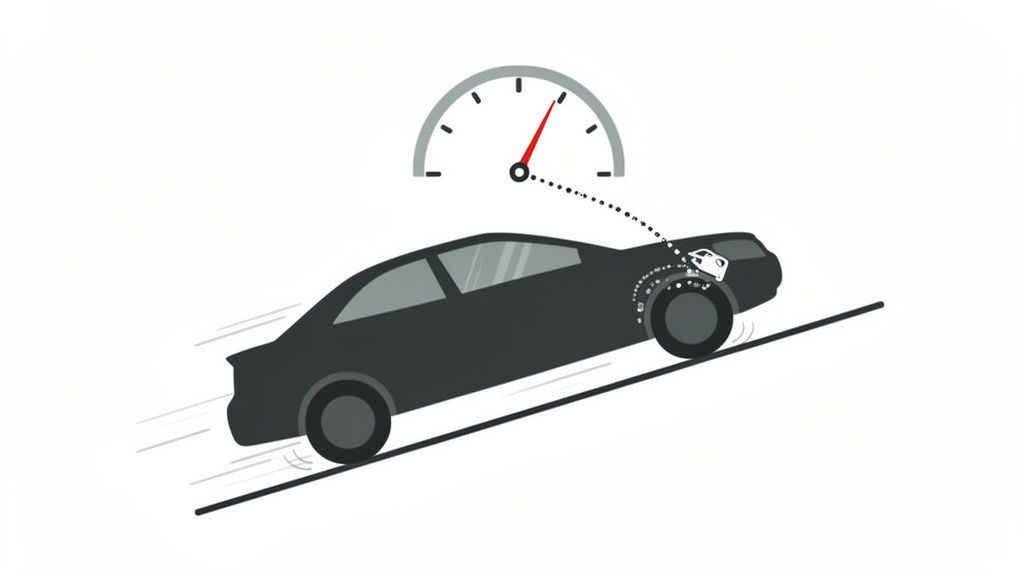
This power lag happens because the engine is temporarily "starved" of fuel. A clogged filter restricts the flow of gasoline from the tank to the engine. While it might allow enough fuel to pass through for idling or gentle cruising, it simply cannot meet the higher volume demand required for rapid acceleration. The fuel pump works harder to push gasoline through the obstruction, but the delay results in the hesitation you feel behind the wheel.
Why This Sign Matters
Ignoring this symptom can lead to more significant problems. The constant strain on the fuel pump can cause it to overheat and fail prematurely, a much more expensive repair than a simple filter replacement. Additionally, a lean fuel-to-air mixture (too much air, not enough fuel) can cause engine misfires and, in severe cases, damage internal engine components.
ASE Technician Insight: A fuel-starved engine is an inefficient engine. Professional mechanics identify hesitation under load as a primary indicator of fuel delivery issues, often starting their diagnosis with the fuel filter due to its role as the system's first line of defense against contaminants.
Practical Scenarios & Tips
Consider these real-world examples:
- A fleet manager notices their delivery vans, especially when fully loaded, are struggling to get up to speed on Richardson's city streets.
- A family's SUV, with over 100,000 miles, can't merge smoothly into fast-moving traffic, creating a safety concern.
- An older sedan sputters when trying to climb the incline on a local overpass.
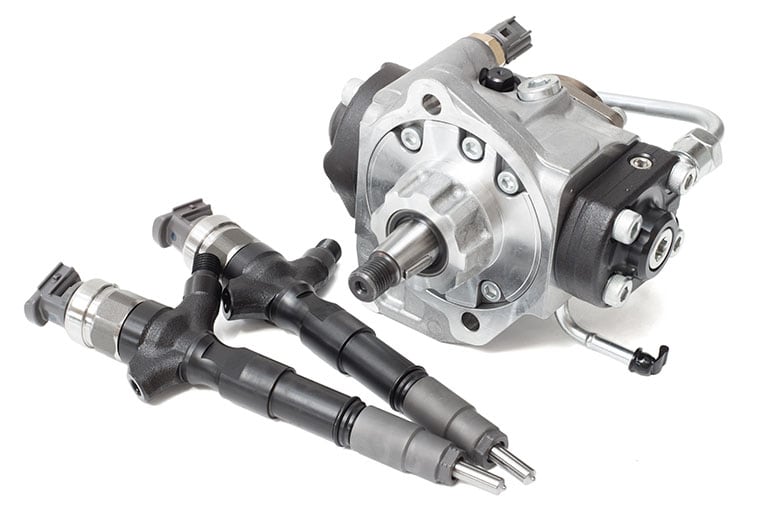
If you experience these issues, start paying close attention to your vehicle's performance. Note if the hesitation is consistent or only happens under specific loads. While a clogged filter is a common culprit, similar symptoms can arise from failing fuel injectors. You can get more insights on how to differentiate these issues by learning how to test fuel injectors. If the problem persists, schedule a diagnostic service at Kwik Kar to pinpoint the cause and prevent further damage.
2. Hard Starting and Extended Cranking Time
Another classic sign of a clogged fuel filter is when your engine takes longer than usual to start. You might find yourself turning the key and hearing the engine crank for several seconds before it finally fires up and turns over. This extended cranking time occurs because the fuel filter is so restricted that it's preventing the fuel pump from building up the necessary pressure for ignition on the first try.
For a healthy, clean start, the engine needs a precise amount of fuel delivered at the right pressure the moment you turn the key. A blockage disrupts this delicate process. The starter motor has to work overtime, spinning the engine repeatedly while the fuel pump struggles to force enough gasoline through the clogged filter medium. This symptom is often more noticeable during a cold start, like in the early morning or during a chilly Texas winter, when the engine requires an even richer fuel mixture to ignite.
Why This Sign Matters
Consistently hard starts put excessive wear and tear on two critical components: your starter motor and your battery. The starter isn't designed for prolonged cranking and can burn out, while the extended power draw can drain your battery, potentially leaving you stranded. Addressing this early is crucial to avoid a domino effect of more expensive and inconvenient electrical system repairs. This is one of the key signs of a clogged fuel filter that drivers should not ignore.
ASE Technician Insight: When diagnosing a "crank-no-start" or "long crank" condition, a fuel pressure test is standard procedure. Technicians will often check the pressure at the fuel rail; if it's below the manufacturer's specification, the fuel filter becomes a primary suspect before condemning a more expensive component like the fuel pump.
Practical Scenarios & Tips
Think about these common situations:
- A healthcare worker with an early morning shift can't afford the unreliability of a car that requires multiple attempts to start.
- A fleet manager notices their high-mileage delivery vans are becoming harder to start, causing delays in daily schedules.
- An older family vehicle that has accumulated years of fuel system deposits now struggles to turn over after sitting overnight.
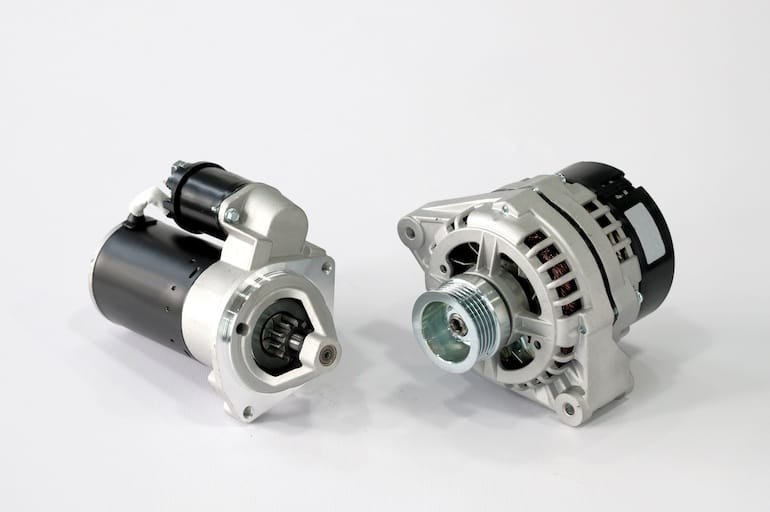
If your vehicle is exhibiting these symptoms, take note of how many seconds it cranks before starting. If the problem gets worse over time, it's a clear signal to act. It's important to distinguish this from issues with the starting system itself. You can better understand the differences by reading up on the signs of a bad starter. To be certain, bring your vehicle to Kwik Kar for a professional fuel pressure diagnostic test to accurately identify the cause.
3. Rough Idle and Engine Stalling at Traffic Lights
One of the more frustrating and potentially hazardous signs of a clogged fuel filter is a noticeable rough idle or, even worse, the engine stalling completely when you come to a stop. This often occurs at traffic lights on busy roads or at stop signs in your neighborhood. The engine, instead of purring smoothly, will feel choppy and uneven, sending subtle vibrations through the steering wheel and the seats.
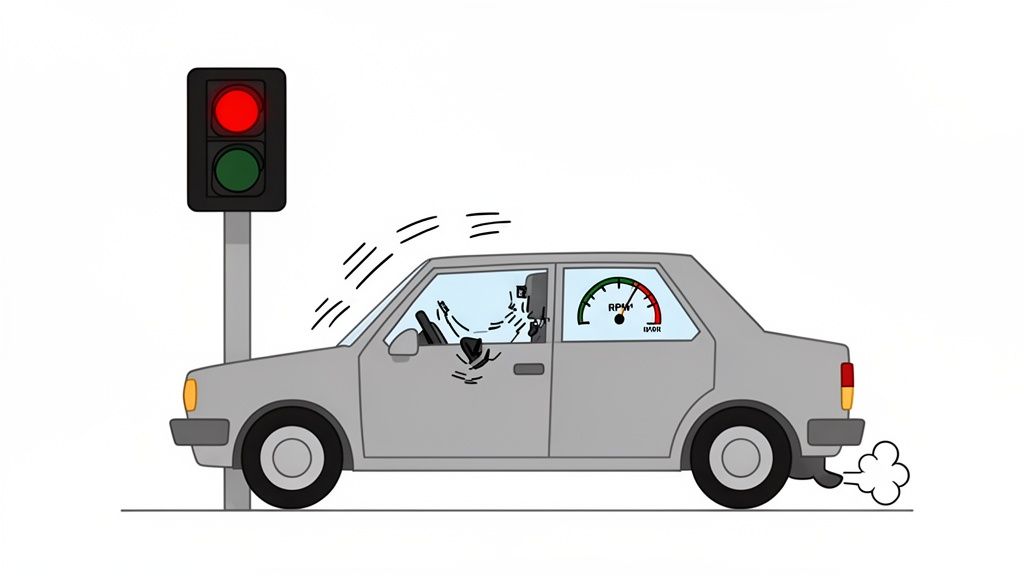
This symptom arises because even at idle, your engine needs a very precise, consistent flow of fuel to maintain stable operation. A partially clogged filter disrupts this delicate balance, creating an intermittent fuel shortage. This inconsistent supply causes individual cylinders to misfire, which is the source of the rough, shuddering sensation. If the clog is severe enough, it can cut off fuel flow entirely, causing the engine to stall unexpectedly.
Why This Sign Matters
An engine that stalls in traffic is a significant safety risk, leaving you stranded and vulnerable. For busy Richardson drivers, an unreliable vehicle can disrupt daily life, from school drop-offs to critical work commutes. Furthermore, a consistently rough idle can be an early warning before more severe symptoms, like stalling, begin. Ignoring it allows the fuel pump to continue working under strain, accelerating wear and leading to a more costly failure.
ASE Technician Insight: Technicians often use OBD-II diagnostic scanners to confirm fuel delivery problems. A rough idle frequently triggers diagnostic trouble codes related to engine misfires or lean fuel conditions. The fuel filter is one of the first components checked in these situations, as it's a common and relatively inexpensive part to replace.
Practical Scenarios & Tips
Consider how this issue impacts different drivers:
- A first responder's personal vehicle stalls in traffic, creating an unacceptable safety concern during their commute.
- A small business fleet vehicle repeatedly stalls during deliveries, damaging the company's professional reputation and schedule.
- A family vehicle becomes unreliable for daily errands, making it difficult to trust for school runs or grocery trips.
If your car exhibits these symptoms, try these diagnostic tips:
- Pay close attention to your RPM gauge when idling. Note if the needle fluctuates erratically instead of holding steady.
- Record any patterns. Does the car only stall when the engine is cold, or does it happen consistently in stop-and-go traffic?
- Never ignore a check engine light that accompanies a rough idle. Bring your vehicle to Kwik Kar for prompt code scanning to identify the root cause.
- For fleet managers, preemptively scheduling fuel filter replacements every 20,000 to 30,000 miles is a smart maintenance strategy to ensure fleet reliability.
4. Fuel Odor and Vapor Smell from the Tank Area
One of the most alarming signs of a clogged fuel filter is the distinct and persistent smell of gasoline around your vehicle. This odor might be noticeable near the fuel tank, around the exhaust pipe, or even inside the cabin. The smell is often strongest when the engine is running, as this is when the fuel system is fully pressurized.
This dangerous symptom occurs because a severely clogged filter creates a bottleneck, causing excessive pressure to build up in the fuel lines between the fuel pump and the filter. This high pressure can force gasoline vapors or even liquid fuel to escape through the weakest points in the system, such as seals, O-rings, or fuel line connections. It's the system's way of relieving pressure, but it creates a significant safety hazard.
Why This Sign Matters
A fuel odor is not just an unpleasant smell; it is a critical safety warning that should never be ignored. Leaking gasoline or its highly flammable vapors create a serious fire risk that can be ignited by a simple spark from the exhaust system or electrical components. Addressing this issue immediately is essential to protect yourself, your passengers, and your vehicle. The high pressure also puts immense strain on the entire fuel delivery system, potentially damaging the fuel pump and other components.
ASE Technician Insight: Fuel leaks are a top-priority repair. Professionals, following safety protocols like those emphasized by NAPA AutoCare, will immediately investigate any report of a fuel smell. The cause is often a pressure issue, and a clogged fuel filter is a prime suspect for creating that dangerous over-pressurization.
Practical Scenarios & Tips
Consider these real-world examples:
- A parent is concerned after noticing a strong gasoline odor in their family SUV during school drop-offs.
- Military personnel on their daily commute from a base to their home in Richardson notice the fuel smell is strongest after the vehicle has been running for a while.
- A fleet operator grounds a vehicle after a driver reports a persistent fuel smell, identifying a potential safety hazard for the entire fleet.
If you smell fuel, take immediate action:
- Park your vehicle outside and away from ignition sources; avoid enclosed spaces like a garage.
- Do not attempt a DIY repair. Working with a pressurized fuel system is extremely dangerous without proper training and equipment.
- Note when you first noticed the smell and if it's stronger under certain conditions.
- Schedule an immediate service with Kwik Kar. Our ASE-certified technicians can safely perform fuel system pressure testing and leak detection to find and fix the source of the problem.
5. Check Engine Light with Fuel Pressure Diagnostic Codes
Often, your vehicle's onboard computer will detect a fuel delivery problem before you notice severe performance issues. This detection system triggers the dreaded check engine light on your dashboard, providing a clear warning that something is amiss. Modern vehicles are equipped with sophisticated sensors that monitor fuel pressure, and a clogged filter is one of the key signs of clogged fuel filter that can throw these readings out of whack.
When the fuel filter is restricted, the fuel pressure in the system can drop below the manufacturer's specified range. The Engine Control Module (ECM) logs this anomaly and stores a specific Diagnostic Trouble Code (DTC). Common codes related to this issue include P0087 (Fuel Rail/System Pressure – Too Low) or P0171/P0174 (System Too Lean), which indicate the engine is receiving insufficient fuel. These codes are invaluable for technicians, as they point directly toward a fuel delivery issue.
Why This Sign Matters
The check engine light is your vehicle's primary method of communication for potential problems. Ignoring it can allow a minor issue like a clogged filter to escalate. The persistent low fuel pressure puts excessive strain on the fuel pump, leading to premature failure. Furthermore, a lean fuel condition can increase combustion temperatures, potentially causing long-term damage to pistons and valves. Understanding what a check engine light means is the first step toward preventing costly repairs.
ASE Technician Insight: A DTC is not a diagnosis, but a roadmap. When we see a code like P0087, we don't just replace the filter. We perform a fuel pressure test to confirm the blockage is in the filter and not due to a failing pump or a faulty pressure sensor, ensuring an accurate and efficient repair.
Practical Scenarios & Tips
Consider how this electronic warning system plays out in real life:
- A fleet manager receives a check engine light alert on a high-mileage van and uses the code to schedule preventive filter replacement, avoiding a breakdown.
- An owner of an older sedan sees the light appear and gets a diagnostic scan at Kwik Kar, revealing a low-pressure code that confirms their suspicion of a fuel system clog.
- A first responder wants transparent diagnostic data before authorizing repairs, and the specific DTC provides clear, objective evidence of the problem.
If your check engine light comes on, don't panic. Instead, bring your vehicle to a professional for an OBD-II scan. Ask the technician to explain the specific code and whether further pressure tests are needed to differentiate between a bad filter and a weak fuel pump. Documenting these codes can help build a comprehensive maintenance history for your vehicle.
6. Fuel Pump Whining and Electrical Noise from Tank
One of the more subtle yet critical signs of a clogged fuel filter is a new, high-pitched whining or buzzing sound coming from the rear of your vehicle, near the fuel tank. This noise is the sound of your fuel pump working overtime. It is often most noticeable when you first turn the key to the "on" position or during initial engine start-up.
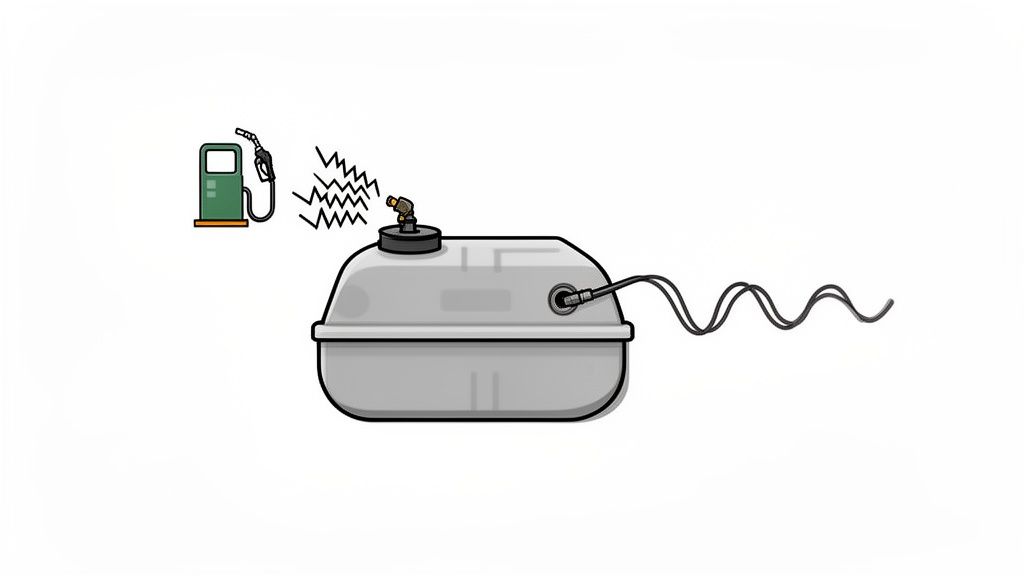
The fuel pump is designed to deliver fuel at a specific pressure and volume. When the fuel filter is clogged, it creates a significant restriction in the fuel line. To compensate and maintain adequate pressure, the electric motor inside the pump must spin faster and draw more electrical current. This excessive strain generates heat and causes the audible whining noise as the motor's bearings and internal components struggle against the resistance.
Why This Sign Matters
This audible warning is your fuel pump's cry for help. Ignoring the sound means allowing the pump to continue operating under extreme stress, which significantly accelerates wear and tear. This can lead to a premature and complete failure of the fuel pump, a repair that can cost anywhere from $400 to over $600. Catching this sign early and replacing the inexpensive fuel filter can save you from a much larger expense and the inconvenience of a vehicle that won't start.
ASE Technician Insight: Technicians often use fuel system acoustics as an initial diagnostic clue. A loud fuel pump is a classic symptom of high restriction. We can confirm this by performing a fuel pump amperage draw test; an abnormally high reading confirms the pump is overworking, and a clogged filter is the most common cause.
Practical Scenarios & Tips
Think about these real-world situations:
- An owner of an aging vehicle notices a strange hum from the back seat area and has the filter replaced, preventing an imminent fuel pump failure.
- A fleet manager addresses driver complaints about a new whining noise, preventing a delivery vehicle from breaking down during its route.
- A healthcare worker, who depends on their car for work, brings their vehicle to Kwik Kar for an inspection after hearing the sound, ensuring their vehicle remains reliable.
If you hear this noise, listen closely during cold starts and acceleration. Note if the whining changes in pitch or gets louder over time. For a definitive diagnosis, have Kwik Kar perform fuel pressure and amperage tests to confirm the filter is the source of the strain.
7. Fuel Economy Decline and Rich Running Condition
A sudden, unexplained drop in your vehicle's gas mileage is a significant financial indicator that can point directly to a clogged fuel filter. When the filter is restricted, it creates backpressure in the fuel system. The Engine Control Module (ECM) senses the potential for a lean condition and overcompensates by telling the fuel injectors to stay open longer, pushing more fuel into the cylinders to maintain performance. This creates a "rich running condition," where there's too much fuel and not enough air.
This inefficient process means your vehicle burns more gasoline than necessary just to operate normally. A drop of 10-20% is common, meaning a car that usually gets 25 MPG might suddenly only achieve 20 MPG. This extra fuel doesn't just empty your wallet faster; the unburned gasoline can exit through the exhaust, leading to other serious issues.
Why This Sign Matters
Ignoring poor fuel economy caused by a clogged filter has expensive consequences. The excess unburned fuel can overheat and damage the catalytic converter, a critical and costly emissions component. For budget-conscious Richardson commuters or fleet managers, the cumulative cost of wasted fuel can add up to hundreds of dollars per year, making a simple filter replacement a highly cost-effective repair.
ASE Technician Insight: A sudden rich condition that isn't caused by a faulty oxygen sensor often leads us to check fuel pressure. A clogged filter is a classic cause of pressure irregularities that force the engine's computer to make poor fueling decisions, wasting gas and risking long-term exhaust system damage.
Practical Scenarios & Tips
Consider these real-world examples:
- A commuter who diligently tracks their mileage in an app notices their average MPG has dropped from 28 to 23 over the past month.
- A fleet manager in Richardson sees a significant spike in fuel expenses for one specific van, far exceeding its budget.
- A family realizes that what used to be a weekly trip to the gas station has become a more frequent chore, despite no changes in their driving habits.
If you suspect your fuel economy has taken a hit, track it carefully. Establish your vehicle's baseline MPG over several fill-ups, then watch for significant deviations. Beyond addressing a clogged fuel filter, other factors can impact efficiency; for larger vehicles, you can learn more about how to boost your semi-truck fuel economy to maximize savings. If your car's MPG remains low, schedule a fuel system diagnostic at Kwik Kar to check fuel pressure and restore your vehicle's efficiency.
7-Sign Comparison: Clogged Fuel Filter
| Symptom / Sign | Complexity 🔄 (implementation) | Resources ⚡ (tools / cost / time) | Expected outcome ⭐ 📊 | Ideal use cases 💡 | Key advantages ⭐ |
|---|---|---|---|---|---|
| Engine Hesitation and Loss of Power During Acceleration | Moderate 🔄 — intermittent, requires fuel-pressure check | Low–Medium ⚡ — pressure gauge, short diagnostic, filter replacement | High ⭐⭐⭐ — restores acceleration, reduces throttle lag | Highway merges, hill climbs, heavy loads | Early detectable by drivers; quick, cost-effective fix |
| Hard Starting and Extended Cranking Time | Moderate 🔄 — overlaps with battery/starter issues; needs targeted tests | Medium ⚡ — OBD scan, pressure test, starter/battery check | High ⭐⭐⭐ — improves start reliability; prevents starter/battery wear | Cold starts, after overnight sit, repeated long cranks | Prevents expensive starter/battery replacement; inexpensive filter fix |
| Rough Idle and Engine Stalling at Traffic Lights | Moderate–High 🔄 — multiple potential causes; OBD + fuel tests required | Medium–High ⚡ — scanner, pressure test, possible injector cleaning | High ⭐⭐⭐ — smooths idle, reduces stalling, improves safety | Stalling at idle, RPM fluctuations, check engine light | Distinct symptom tied to fuel system; safety improvement once fixed |
| Fuel Odor and Vapor Smell from the Tank Area | High 🔄 — safety-critical, requires leak tracing and pressure diagnosis | High ⚡ — leak detection equipment, safe handling, immediate attention | Critical ⭐⭐⭐ — eliminates fire risk, identifies pressurized leaks | Strong gasoline smell at filler, tank, or cabin | Unmistakable safety alert; mandates prompt professional repair |
| Check Engine Light with Fuel Pressure Diagnostic Codes | Low–Moderate 🔄 — code read is simple; interpretation and confirmation needed | Medium ⚡ — OBD-II scanner, pressure testing, data logging | Very High ⭐⭐⭐⭐ — precise diagnostic guidance; reduces guesswork | Persistent fuel-pressure codes (e.g., P0087/P0088) | Provides definitive direction for repair and documentation |
| Fuel Pump Whining and Electrical Noise from Tank | Moderate 🔄 — acoustic diagnosis plus amperage/pressure testing | Medium ⚡ — cabin/underbody inspection, pump amperage tester, possible tank access | High ⭐⭐⭐ — relieves pump strain, prevents pump failure | High-pitched tank noise during start or acceleration | Audible early warning; saves cost by preventing pump replacement |
| Fuel Economy Decline and Rich Running Condition | Moderate 🔄 — many root causes; requires MPG logs and fuel tests | Medium ⚡ — fuel tracking, pressure/injector testing, possible cleaning | High (financial) ⭐⭐⭐ — restores MPG, prevents catalytic converter damage | Sudden MPG drop (≈10%+), more frequent fill-ups | Measurable financial indicator; motivates timely maintenance |
When in Doubt, Trust the Experts at Kwik Kar
Navigating the various signs of a clogged fuel filter can feel like deciphering a complex code. From the subtle dip in fuel economy to the more alarming engine hesitation or stalling at a busy intersection, each symptom is your vehicle’s way of signaling a critical problem within its fuel delivery system. As we've explored, these issues all stem from a single root cause: a restriction that prevents your engine from receiving the clean, consistent flow of gasoline it needs to operate efficiently and reliably.
Key Takeaways and Actionable Next Steps
Recognizing these symptoms is the crucial first step. Whether you've noticed a persistent "check engine" light, a rough idle that makes every red light a gamble, or a noticeable drop in power when you need it most, ignoring the warning signs is a recipe for more extensive and expensive repairs down the road. A severely clogged filter doesn't just impact performance; it places immense strain on your fuel pump, potentially leading to its premature failure.
The most important takeaway is that while the diagnosis might seem straightforward, the solution requires professional expertise. Modern fuel systems are highly pressurized and complex, making a DIY replacement a significant safety risk. Handling gasoline and pressurized lines without proper training and tools can lead to fuel leaks, fire hazards, or damage to other sensitive components. Moreover, it's crucial to confirm the filter is the true culprit, as similar symptoms can arise from a failing fuel pump or dirty injectors.
It's also important to distinguish these symptoms from other fuel-related emergencies. For instance, if you've accidentally filled your tank with the wrong type of fuel, the resulting engine damage can be catastrophic. In such cases, immediate professional intervention from specialized wrong fuel in car rescue services is essential to drain the system and prevent lasting harm.
Your Path to a Healthy Engine
For Richardson-area drivers, including local commuters, families, and small business fleet managers, the path to a reliable vehicle is clear. Don't let a small, inexpensive part like a fuel filter escalate into a major mechanical failure. The moment you suspect an issue, the best course of action is a professional diagnostic inspection.
At Kwik Kar, our ASE-certified technicians possess the advanced tools and in-depth knowledge to accurately diagnose the source of your fuel system problems. We don't just guess; we test fuel pressure, scan for diagnostic trouble codes, and inspect the entire system to provide a definitive answer. This commitment to precision ensures we replace only what's necessary, saving you time and money while restoring your vehicle's performance and your peace of mind.
Is your car showing the tell-tale signs of fuel starvation? Schedule your diagnostic appointment today at Kwik Kar Oil Change and Auto Care to have our certified experts pinpoint the problem and get you back on the road safely and efficiently. Visit our website at Kwik Kar Oil Change and Auto Care to book your service and drive with confidence.