That strange shudder when you accelerate, a weird whining sound that wasn't there before, or a noticeable delay when you shift into drive—these aren't just little personality quirks your car has developed. They're your car's way of sending up a flare, an urgent message that something is wrong with its transmission.
Ignoring these signs of transmission problems is a huge gamble. It's the kind of risk that can leave you stranded on the side of the road with a repair bill that takes your breath away.
Is Your Car Trying to Tell You Something Important?
Think of your transmission as your car's sophisticated gearbox. Its whole job is to translate the raw power from the engine into the smooth forward motion you depend on. It’s a complex dance of gears, clutches, and specialized fluids working in perfect harmony. When one part struggles, your whole vehicle feels it.
What starts as a minor annoyance can quickly snowball into a catastrophic failure. Ignoring these early warnings is like putting tape over your check engine light; the problem doesn't go away, it just gets worse and a lot more expensive. In fact, vehicle transmission issues have become so common and costly that they are now a leading cause of recalls across the auto industry. You can read more about the growing automotive gearbox market in this research report.
Why Listening to Your Car Matters
Understanding the symptoms of a failing transmission isn't about becoming a master mechanic overnight. It's about being a smart, proactive car owner. Recognizing the early signs can honestly be the difference between a simple fluid change or minor adjustment and a complete system replacement, which can easily run into thousands of dollars.
Your vehicle often communicates problems long before a dashboard warning light ever comes on. Learning its language—the unique sounds, smells, and feelings of a healthy transmission versus a struggling one—is the best way to prevent a major breakdown.
This guide is here to help you decode those warnings. We’ll walk through the seven most common signals of transmission trouble, explain what they mean in simple terms, and tell you what you should do about them. By learning to spot these key indicators, you can protect your investment, stay safe on the road, and dodge the stress of a sudden, budget-busting repair. Let’s dive in.
The 7 Most Common Signs of Transmission Problems
Your car has its own way of telling you when something's wrong—a language of sounds, smells, and feelings. When it's the transmission talking, the messages can start as whispers but quickly become urgent warnings. Learning to understand these signals is the key to catching a small issue before it turns into a massive, wallet-draining repair. Let's get into the seven most common signs of transmission problems.
1. Slipping Gears
This is one of the most unnerving things that can happen while you're driving. You're cruising along, and suddenly it feels like the car has popped into neutral all by itself. The engine revs up with a loud whine, but you're not going any faster—in fact, you might even be losing speed. It’s like trying to run on ice; your feet are moving, but you're not getting any grip.
Gear slipping is a huge safety problem. It can happen out of the blue, leaving you powerless to accelerate away from a hazard. This usually points to low or burnt-out transmission fluid, worn clutch plates, or failing shift solenoids.
2. Rough or Delayed Shifting
Ever notice a long pause when you shift from park into drive? Or feel a sudden, jarring clunk when the car changes gears on the road? That’s what we call rough or delayed shifting. A healthy transmission glides between gears so smoothly you barely notice it, but one that’s in trouble will make its presence felt with jerky, abrupt movements.
This kind of hesitation or harsh engagement is often one of the first clues that something is amiss. Sometimes it’s caused by something simple like low fluid or a clogged filter, but it could also signal a more complicated problem with the transmission's electronic sensors.
3. Strange Noises While in Neutral
When your car is sitting in neutral, it should be pretty quiet. If you start hearing new noises—like a whining, buzzing, or even a rhythmic clunking—your transmission might be sending out an SOS.
These sounds often mean the transmission fluid is too low to properly lubricate all the moving parts. A bad bearing or a failing torque converter could also be the culprit.
A great tip is to pay attention to sounds that change with your engine's speed. A whine that gets higher in pitch as you accelerate is a classic sign of a problem with the transmission fluid pump or a clogged filter.
4. A Burning Smell
Lots of things can make a car smell hot, but a transmission-related odor is very specific. When transmission fluid overheats, it gives off a sharp, acrid smell, a bit like burnt toast. This is a major red flag.
Heat is the absolute worst enemy of your transmission. It destroys the fluid's ability to protect internal parts, which leads to rapid wear and serious damage. That smell usually means you have a fluid leak or the level is dangerously low.
5. Leaking Transmission Fluid
If you spot a puddle of bright red or dark brown fluid under your car, you’ve almost certainly got a transmission fluid leak. Unlike engine oil, transmission fluid isn’t “used up” during normal driving, so if the level drops, it's leaking from somewhere.
The leak could come from a cracked fluid line, a bad pan gasket, or worn-out seals. Driving with low fluid is a surefire way to cause overheating and catastrophic failure. For a deeper dive, check out this excellent guide on the 7 Signs Your Transmission Is Failing.
6. Grinding Sounds During Shifting
Hearing a grinding or grating noise as your car changes gears is a clear signal that something is seriously wrong. It’s the sound of metal scraping against metal, which means internal components are being damaged with every single shift.
In an automatic transmission, this often points to an issue with the planetary gear system. In a manual, it could be worn-out clutches. This is not a symptom you can ignore; driving any further will only make the damage much, much worse.
7. The Check Engine Light Comes On
And finally, the most obvious warning sign of all: the check engine light. While this light can signal hundreds of different issues, modern cars are equipped with sensors that specifically monitor the transmission's performance.
If your car’s computer detects a problem with a solenoid, a pressure sensor, or the fluid itself, it will trigger that light on your dashboard. Don’t just write it off—getting the code read by a professional can pinpoint exactly what’s wrong. To learn more, take a look at our guide on what the check engine light means.
To help you quickly identify what your car might be trying to tell you, here’s a simple breakdown of these common symptoms.
Quick Guide to Transmission Warning Signs
| Symptom | What It Feels or Smells Like | Potential Cause | Urgency Level |
|---|---|---|---|
| Slipping Gears | Engine revs high with no acceleration. | Low/burnt fluid, worn clutches. | High – Safety risk |
| Rough Shifting | A clunk, jerk, or delay when gears change. | Low fluid, clogged filter, sensor issue. | Medium – Get checked soon |
| Strange Noises | Whining, buzzing, or clunking in neutral. | Low fluid, bad bearing, failing torque converter. | Medium – Don't ignore |
| Burning Smell | An acrid, sharp, burnt toast-like odor. | Overheating or leaking fluid. | High – Stop driving |
| Leaking Fluid | Red or brown puddles under the car. | Damaged seal, gasket, or fluid line. | High – Needs immediate attention |
| Grinding Sound | Metal-on-metal noise during shifts. | Severe internal damage (gears/clutches). | Critical – Stop driving now |
| Check Engine Light | Warning light illuminated on the dash. | Sensor failure, solenoid issue, pressure problem. | Medium – Get codes scanned |
Remember, your transmission is one of the most complex parts of your vehicle. Ignoring any of these signs can lead to more extensive and costly damage. If you notice any of these issues, it's always best to have it inspected by a professional right away.
Understanding What Causes Transmission Failure
Now that you know how to spot the common signs of transmission problems, let's pull back the curtain and see what’s actually happening under the hood. A transmission almost never fails out of the blue. It’s usually a slow burn, a gradual decline orchestrated by one primary culprit: your transmission fluid.
Think of this fluid as the lifeblood of your entire transmission system. It does way more than just lubricate parts. It also cools critical components, cleans away tiny metal shavings, and provides the hydraulic pressure needed to shift gears. When this fluid runs low or gets old and contaminated, it simply can’t do its job anymore.
Overheating: The Number One Enemy
The single biggest destroyer of an automatic transmission is excessive heat. When the fluid is low or dirty, it can't dissipate heat properly, causing the internal temperature to skyrocket. This intense heat literally starts cooking the transmission from the inside out.
When transmission fluid overheats, it breaks down chemically and loses its protective properties. This is like trying to run an engine without oil—it’s only a matter of time before severe, irreversible damage happens to seals, gaskets, and clutches.
This breakdown is what causes many of the symptoms you feel from the driver's seat. Hard shifting, slipping gears, and that distinct burning smell are all direct results of internal parts failing under extreme heat stress. It really highlights how something as simple as a fluid check can prevent a catastrophic failure down the road.
This is a bigger deal than you might think, contributing to major vehicle safety issues. In fact, 45% of all vehicle recalls in 2022 were tied to faulty parts, many of which involved transmission systems. You can dig deeper into how automotive parts impact vehicle safety with recent industry data.
The infographic below zeroes in on three of the most critical warning signs directly linked to fluid and heat problems.
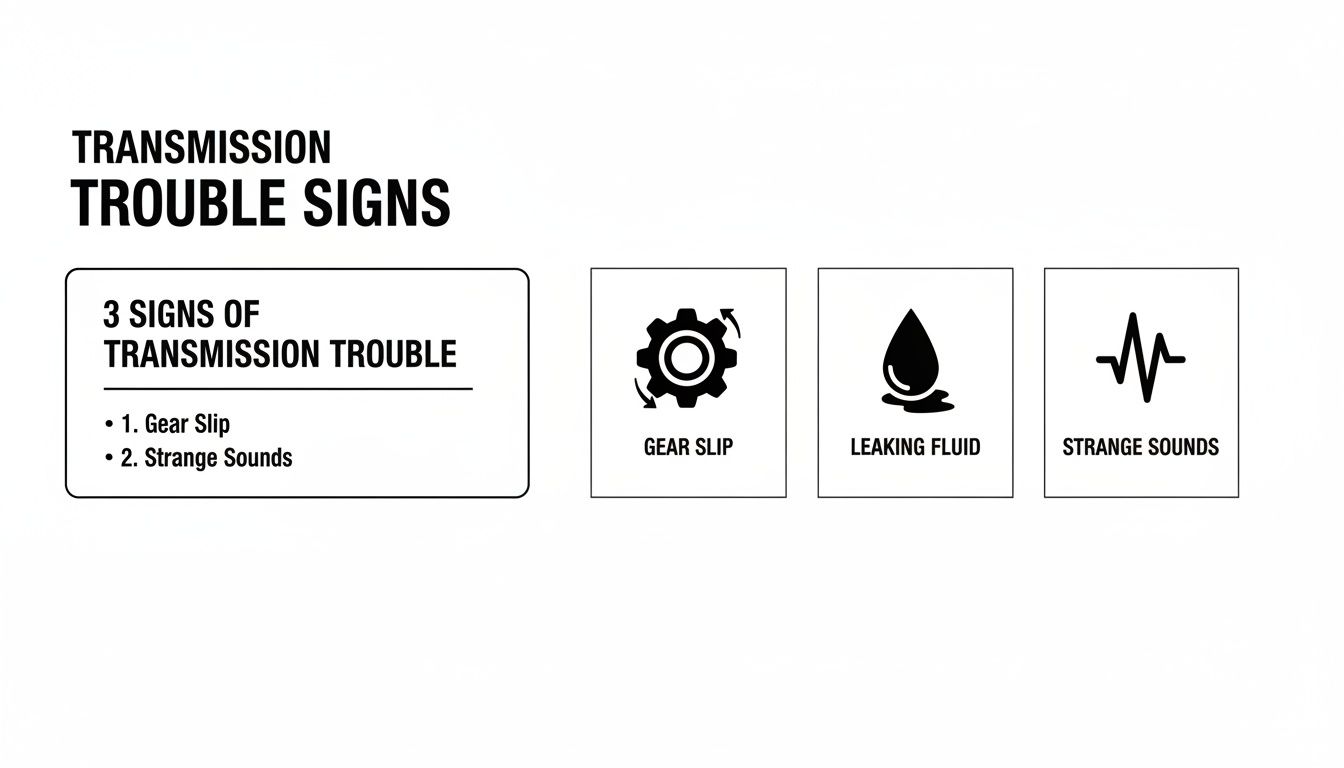
Each of these symptoms—gear slipping, fluid leaks, and strange noises—is a direct cry for help from your car. More often than not, the trail leads right back to compromised fluid and the internal damage it caused.
Connecting the Dots to Prevention
Once you understand the cause, the path to prevention becomes crystal clear. Proactive maintenance isn't just about sticking to a schedule; it’s about protecting one of your car's most complex and expensive components.
Regular fluid checks and changes are your single most effective defense against heat-related failure. By keeping the fluid clean and topped off, you ensure the transmission stays cool, lubricated, and ready to perform for years to come. That simple step can save you from a repair bill that could easily climb into the thousands.
Simple Checks You Can Do at Home
Before you pick up the phone to schedule a service, there are a couple of powerful checks you can do right in your own driveway. These aren't about turning you into a mechanic overnight; they’re about giving you the knowledge to be a more informed car owner.
Understanding the state of your transmission fluid can give you incredible insight and help you have a much better conversation with a technician. Your transmission fluid is the lifeblood of the system, and checking it is one of the easiest ways to catch early signs of transmission problems.
How to Check Your Transmission Fluid
For most cars, this process is pretty straightforward, but it's always a good idea to peek at your owner's manual for specific instructions, as the procedure can vary.
- Warm Up the Engine: Take your car for a short drive, about 10-15 minutes, to get everything up to its normal operating temperature.
- Park on Level Ground: This is a must. Parking on a slope will give you an inaccurate reading.
- Keep the Engine Running: Unlike an oil check, you'll need the engine running for this. Your car should be in Park or Neutral (your manual will confirm which).
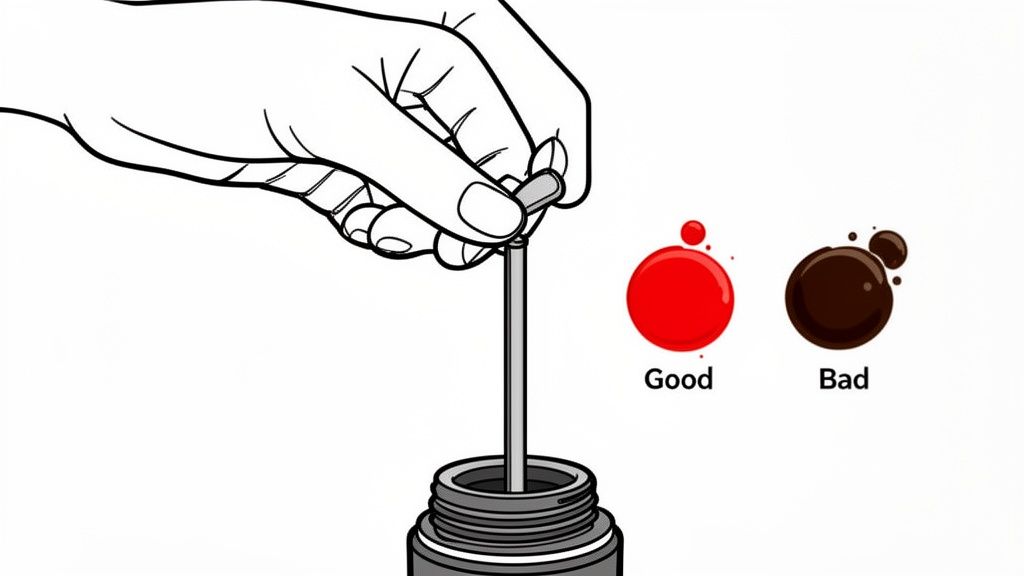
- Locate and Pull the Dipstick: Look for the transmission dipstick—it usually has a red or brightly colored handle. Pull it out, wipe it clean with a lint-free cloth, push it all the way back in, and then pull it out one more time.
- Check the Level and Condition: Take a look at the fluid level. It should be between the "Full" and "Add" marks. But more importantly, look closely at the fluid itself on the cloth.
Once the dipstick is out, pay close attention to the fluid’s color and smell. This is where your car starts telling you its story.
Healthy transmission fluid should be a bright, translucent cherry-red color and have a slightly sweet smell. Anything else is a clear signal that something is going on inside your transmission.
What the Fluid Tells You
The condition of your fluid offers some serious clues about your transmission's health.
- Dark Brown or Black Color: This means the fluid is old, burnt, and has probably lost its ability to lubricate and cool the internal parts. It's a sure sign of overheating and wear.
- A Burnt Smell: If the fluid has a sharp, acrid smell—like burnt toast—that's a major red flag for overheating.
- Gritty or Foamy Texture: Finding tiny metal shavings or seeing foam in the fluid points to serious internal damage that needs a professional’s eye right away.
These simple checks are a fantastic first step. For more details on this and other fluids, our guide on how to check car fluids is a great resource. While these DIY checks are helpful, they don’t replace professional diagnostics when a problem is serious. If your fluid is dark, smells burnt, or the level is low, it’s time to let an expert take a closer look.
Exploring Your Transmission Repair Options
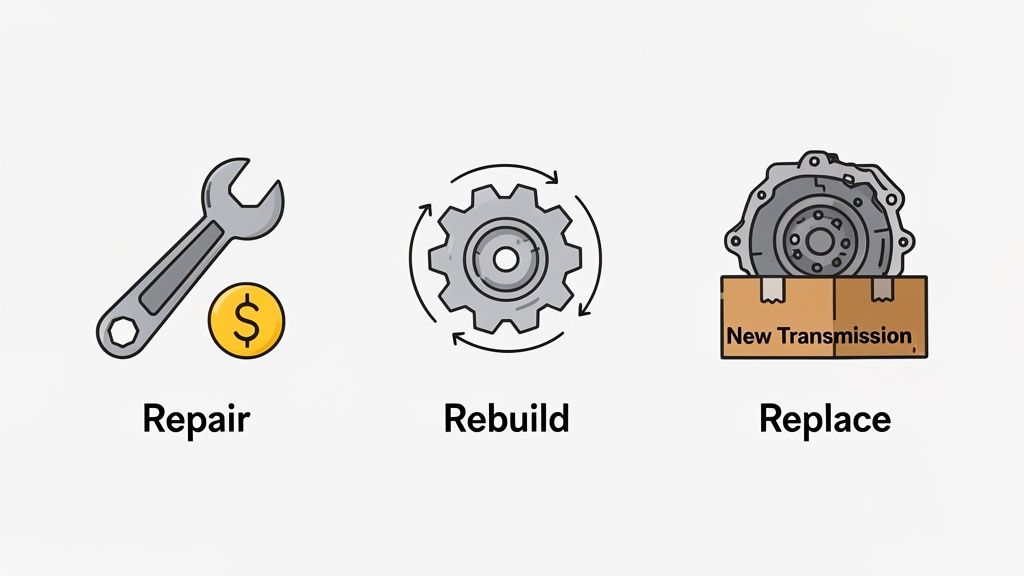
Hearing the words "transmission problems" can make any driver's stomach drop, mostly because of the potential cost. But it’s not always a worst-case scenario. The right fix depends entirely on what’s actually going on inside your transmission.
The good news is that many common signs of transmission problems can be sorted out with fixes that are surprisingly affordable. Let's walk through the different repair options, from simple maintenance to major work, so you have a clearer picture of what to expect.
Minor Repairs and Maintenance
Sometimes, the solution is much less dramatic than you'd think. If you catch a problem early, a minor, targeted repair might be all it takes to get you back on the road safely and smoothly.
- Fluid Flush and Filter Change: This is basic, but critical, maintenance. If your fluid is just old and contaminated but hasn't caused internal damage yet, a full fluid exchange can work wonders for shifting performance. A new filter makes sure all that new fluid stays clean.
- Replacing Solenoids or Sensors: Modern automatic transmissions are smart, using electronic parts to shift gears. A single faulty speed sensor or shift solenoid can cause all sorts of strange behavior. Swapping out one of these small parts is a world away from a complete overhaul.
- Resealing the Transmission: If a puddle of red fluid is your main symptom, a reseal service might be the perfect fix. This involves replacing the external gaskets and seals to stop the leak without having to tear the whole transmission apart.
Major Repairs: Rebuilds and Replacements
When the damage goes deeper, the solution gets more involved. Deciding between a rebuild and a full replacement usually comes down to the extent of the failure, your car's age, and your budget. This is where a professional diagnosis is non-negotiable.
A transmission rebuild is a detailed process where a technician takes your transmission completely apart. They inspect every single component, replace only the parts that are worn out or broken, and then put it all back together. It's often a great way to restore your original unit to factory-fresh condition without the cost of a brand-new one.
A full replacement, on the other hand, means taking out your entire problematic transmission and installing a new or remanufactured one. While it's typically the most expensive route, it can be quicker and often comes with a better warranty.
Understanding which path is right for your vehicle is key. You can learn more about how we handle these bigger jobs on our transmission and clutch replacement service page. A trustworthy mechanic will always explain why one option makes more sense than the other for your specific situation.
When to Call a Professional for Help
You’ve learned to spot the symptoms and get a handle on the potential causes, so what comes next? If there’s one thing to take away, it’s this: ignoring signs of transmission problems is a costly gamble you don't want to take.
While doing a few simple checks on your own can be helpful, your vehicle's transmission is one of the most complex systems it has. This isn't the place for guesswork. Attempting a fix without the right tools or expert training can quickly turn a small, manageable issue into a catastrophic—and expensive—failure. That’s when you need someone who knows exactly what they’re looking at.
Trust Your Vehicle to Certified Experts
A trusted shop doesn't just swap out parts and hope for the best. They dig in to find the root cause, ensuring any repair is effective and built to last. Choosing the right auto care partner is just as critical as noticing the problem in the first place.
At Kwik Kar in Richardson, our technicians are ASE-certified, which means they’ve proven their skills through tough, industry-standard testing. They have the experience to accurately diagnose complex issues the first time, saving you the headache of repeat visits, wasted money, and unnecessary stress. We pair that expertise with advanced diagnostic equipment to pinpoint the exact source of the trouble, whether it's a simple faulty sensor or more serious internal wear.
We believe in being your partner in car care. Our commitment is to provide honest, transparent service that gets you back on the road safely and with confidence.
As part of our dedication to the Richardson community, we're proud to offer exclusive discounts for military personnel, first responders, and healthcare workers. When you notice any of those transmission warning signs, don’t wait for things to get worse. Let our team provide a reliable, long-lasting solution.
Common Questions About Transmissions
Even after learning the warning signs, it’s natural to still have a few questions floating around. We get it. Here are some straightforward answers to the questions we hear most often from drivers, designed to help you make smart, confident decisions about your car.
How Often Should I Get My Transmission Fluid Changed?
While your owner’s manual is always the best guide, a good rule of thumb is to change your transmission fluid every 30,000 to 60,000 miles.
Keep in mind, though, that this is for "normal" driving. If you’re often stuck in stop-and-go traffic, tow a trailer, or drive in extreme heat, you’ll want to change it more frequently. Think of clean fluid as your transmission's number one defense against overheating and internal damage.
Is It Safe to Drive with a Slipping Transmission?
In a word: no. A slipping transmission is a serious safety risk. It creates unpredictable acceleration and speed control, which can leave you unable to get out of a dangerous situation on the road.
Beyond the immediate danger, driving with slipping gears is also causing rapid and severe internal damage. An issue that might have been a straightforward repair can quickly escalate into one that requires a full, expensive replacement. If you notice your transmission slipping, pull over as soon as it's safe and call for a tow.
What Is the Difference Between a Rebuild and a Replacement?
This is a great question. A transmission rebuild is when a technician takes your entire transmission apart piece by piece, inspects everything, and replaces only the specific components that are worn out or broken before putting it all back together. It can be a very cost-effective solution for internal problems.
A replacement, on the other hand, involves removing your entire transmission and swapping it with a completely new or professionally remanufactured unit. This is often a faster process and might come with a better warranty, making it the right call for more severely damaged transmissions.
What Happens During a Professional Transmission Diagnostic?
A professional diagnostic goes way beyond a quick look under the hood. An ASE-certified technician will start by checking the transmission fluid’s level and condition, looking for signs of burning or contamination.
From there, they'll use advanced scanning tools to pull any trouble codes from your car's computer, which can point directly to the source of the problem. They’ll likely perform a road test to feel the issue firsthand and finish with a detailed visual inspection for any leaks or external damage. It's a comprehensive process to ensure an accurate diagnosis.
If any of these issues sound familiar, don’t wait for a small problem to turn into a major headache. The expert team at Kwik Kar Oil Change and Auto Care is here to give you an honest diagnosis and clear, transparent repair options. Schedule your service with us today!