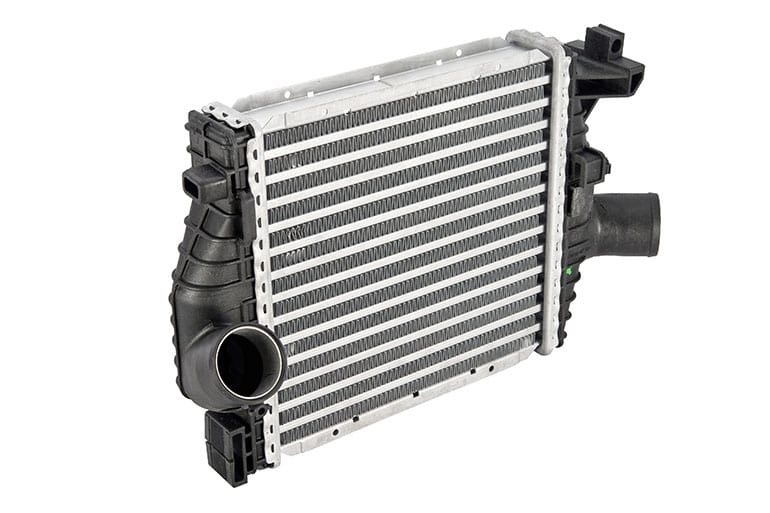
That bright, colorful puddle spreading on your driveway is an unmistakable sign of trouble. A radiator leak is your car's way of telling you its cooling system is compromised, putting your engine at immediate risk of overheating and serious damage. The causes can range from simple wear and tear to hidden internal problems, but they almost always trace back to corrosion, physical damage, or failing hoses and gaskets.
Your Quick Guide to Radiator Leaks

Seeing that fluid on the ground is alarming, and for good reason. Think of your car's radiator as its personal heat exchanger, constantly circulating coolant to pull scorching heat away from the engine. When a leak springs, that entire critical process starts to fail.
Getting to the root of the problem is the first step toward fixing it. The issue might be as simple as a loose hose clamp that just needs tightening, or it could be as serious as internal corrosion that has slowly eaten through the metal from the inside out. It's also common for rocks and other road debris to cause small punctures that slowly, but surely, drain your coolant.
A leak is more than just a mess; it's a direct threat to your engine's health. Ignoring it can transform a minor repair into a major engine overhaul, costing thousands.
This guide is for busy drivers who need to get a handle on the problem fast. We’ll walk through each potential cause, from brittle old rubber hoses to a bad radiator cap throwing off the system's pressure. The first step is always identifying the fluid, and you can learn more by reading our guide on how to check your car's fluids for some helpful pointers.
To make things even easier, the table below gives you a quick rundown of the most common culprits.
Common Radiator Leak Causes at a Glance
This table breaks down the main causes of radiator leaks, what to look for, and the best course of action to help you quickly figure out what's going on with your vehicle.
| Cause | Common Symptoms | Recommended Action |
|---|---|---|
| Corrosion | Pinhole leaks, rust-colored coolant, often seen in older vehicles. | Professional inspection and likely coolant system flush. |
| Physical Damage | Visible dents or holes from rocks/debris; leaks after a minor accident. | Immediate inspection; may require patching or full replacement. |
| Hose/Clamp Failure | Puddles near hose connections, visible cracks or bulging in rubber hoses. | Tighten clamps or replace worn-out hoses promptly. |
| Gasket Failure | Coolant leaking from where parts connect, such as the thermostat housing. | Gasket replacement by a certified technician is necessary. |
Use this chart as a starting point. While some issues like a loose clamp are simple, most radiator problems are best left to a professional to ensure your engine is fully protected.
The Hidden Damage of Internal Radiator Corrosion

While a rock hitting your grille is an obvious cause of damage, one of the most destructive forces at play happens where you can't even see it—deep inside your radiator. Internal corrosion is a sneaky culprit behind countless radiator leaks, slowly and silently weakening your cooling system from the inside out. This type of decay is especially common in vehicles over eight years old.
Think of it like an old metal pipe in a house that gradually rusts from within. Over many years and thousands of miles, your engine's coolant starts to lose its special anti-corrosive properties. Once those chemical inhibitors wear out, the fluid can become acidic and begin to eat away at the delicate metal walls of the radiator’s tubes and fins.
This slow, relentless process is one of the most common answers to what causes radiator leaks, especially in older, high-mileage cars.
The Problem with Pinhole Leaks
The frustrating thing about corrosion is that it doesn't create a big, obvious crack right away. Instead, it forms thousands of microscopic pits in the metal. Over time, these tiny weak spots break through the surface, creating pinhole leaks that are notoriously difficult to track down.
Often, the only sign you’ll get is a faint, sweet smell of coolant after a drive or noticing your coolant reservoir level is just a little bit lower every few weeks. Because these leaks are so small, the hot coolant often evaporates the moment it escapes, never even getting a chance to drip on your driveway. That makes a proper diagnosis a real challenge for even seasoned DIYers.
Radiator corrosion is a significant cause of leaks, particularly in older vehicles without regular maintenance. Radiators are typically designed to last around 8-10 years, so cars beyond this age are at a much higher risk. When protective chemical inhibitors in the coolant break down, pinhole leaks often appear first at the bottom of the radiator. You can find more details on this common issue by exploring research on common reasons for car radiator leaks from Sparks Tire & Auto.
Why Coolant Flushes Are So Important
This hidden damage really drives home why routine coolant system flushes are so important. A proper flush isn’t just about swapping old fluid for new. It’s a complete service designed to remove all the old, acidic coolant and any sediment, then replenish the entire system with fresh fluid packed with a new set of anti-corrosive inhibitors.
Those fresh inhibitors are your engine's frontline defense, protecting every metal component in your cooling system from the inside. Knowing the key difference between engine coolant and antifreeze is also crucial, as using the correct type for your vehicle is a huge part of this protection.
Putting off this maintenance allows corrosion to spread silently, eventually leading to a radiator that’s too weak and widespread with leaks to be repaired. A small investment in a regular coolant service is always a better bet than dealing with a costly radiator replacement down the road.
When Hoses and Clamps Finally Give Out

When you see a puddle of coolant under your car, it’s easy to blame the radiator right away. But more often than not, the real culprits are the flexible hoses and simple clamps that connect everything together. These parts are the unsung heroes of your cooling system, but they don't last forever.
Think of them as the arteries carrying scorching hot coolant under intense pressure. This constant battle with extreme temperatures, high pressure, and non-stop engine vibrations eventually wears them down. Over time, the rubber in the hoses will break down, becoming hard and brittle, mushy to the touch, or even visibly swollen. A leak that looks like it’s from the radiator is often just a failing hose connection right next to it.
The Weakest Links in the System
When we dig into what causes radiator leaks, these seemingly simple parts are a prime suspect. Aging rubber hoses are a huge factor, as they simply can't withstand their harsh working environment forever. In fact, some industry data suggests that over 60% of engine-related breakdowns can be traced back to cooling system failures, with a great many starting as a simple hose or clamp issue. You can read more about these common problems from the experts at CRC Industries.
This breakdown shows up in a few ways you can often spot yourself with a quick visual check:
- Cracks and Fissures: Keep an eye out for tiny cracks, especially near where the hose connects. Under pressure, these can split wide open in an instant.
- Bulging or Swelling: If a hose looks bloated or swollen, its internal structure has failed. It's on the brink of bursting.
- Spongy or Hard Spots: When the engine is cool, carefully give a hose a squeeze. It should feel firm yet flexible. If it feels rock-hard or unpleasantly soft and mushy, it’s well past its prime.
Don't Forget the Clamps and Debris
The metal clamps holding these hoses in place are just as important. The constant heating and cooling cycles make them expand and contract, and engine vibrations can slowly work them loose. Once a clamp loses its tight grip, coolant can start to seep out right at the connection point, causing a slow but persistent leak.
On top of that, road debris is a constant threat. All it takes is one stray rock or piece of metal kicked up from the highway to puncture a hose, leading to a sudden and complete loss of coolant.
Proactive hose replacement is one of the smartest investments you can make in your vehicle's long-term health. Replacing hoses every four to five years or as recommended by your manufacturer can prevent a catastrophic failure that leaves you stranded and facing a much more expensive engine repair. It turns a small maintenance task into powerful prevention.
How Pressure Problems Trigger Radiator Leaks
Your car's cooling system works a lot like a pressure cooker. To cook food faster, a pressure cooker seals in steam, raising the internal pressure and allowing water to get much hotter without boiling away. Your cooling system does the same thing, operating under a specific pressure (usually 10 to 18 PSI) to keep the coolant liquid well past its normal boiling point.
This carefully managed pressure is what allows your engine to run efficiently without overheating. But when that delicate balance is thrown off, it can directly trigger a radiator leak. Two small, often-overlooked parts are usually the culprits behind this chaos: the radiator cap and the thermostat.
The Radiator Cap's Critical Job
That radiator cap isn't just a simple lid—it's actually a precision-engineered pressure relief valve. Its main job is to maintain the perfect amount of pressure inside the entire system. Over time, the cap's internal spring can weaken or its rubber seals can degrade, preventing it from holding the pressure it was designed for.
When a faulty cap fails, coolant can boil at a much lower temperature than your engine needs. This causes the coolant to boil over and escape through the overflow tube, which looks a lot like a leak. A bad cap is one of the most common—and frustrating—reasons for unexplained coolant loss and overheating problems.
Radiator valve failures are the most frequent source of leaks in heating and cooling systems. Excessive system pressure—from issues like a failing radiator cap—forces coolant out through the system's weakest points, such as valve connections or radiator joints. These leaks often only appear when the system is hot, making them easy to miss during a visual check. Discover more insights about these tricky leaks at Trade Radiators.
When the Thermostat Gets Stuck
Think of your thermostat as the gatekeeper for your coolant. It stays closed when the engine is cold, allowing it to warm up to its ideal operating temperature quickly. Once the engine is warm enough, the thermostat opens up, letting coolant flow to the radiator to get cooled down.
But if a thermostat fails and gets stuck in the closed position, it creates a total blockage. Hot coolant is trapped in the engine and can't get to the radiator to release its heat. This causes a dangerous buildup of heat and steam, making system pressure skyrocket far beyond safe limits. That extreme pressure has to go somewhere, and it will find the weakest spot—a brittle hose, an old clamp, or a corroded section of the radiator—and burst out, causing a major leak.
Deciding Between a Repair and a Replacement
So you’ve found a leak. Now comes the big question: do you repair it or replace the whole radiator? This isn't just about turning a wrench; it's a financial decision, too. Before you make the call, it helps to know how much your car is truly worth, as that can guide how much you want to invest in a major repair.
The right choice really boils down to the type and extent of the damage. A tiny hole from a kicked-up rock on the highway might be a straightforward patch job for a pro. Widespread rust and corrosion, on the other hand, is a clear sign that your radiator is on its last legs.
Assessing the Damage
The first step is always a good, hard look. Get a flashlight and inspect the radiator for any obvious trouble spots. You're hunting for rust-colored stains, drips of brightly colored coolant, or visible cracks, especially where the plastic end tanks meet the metal core. The leak's location and size tell you almost everything you need to know.
- Minor Punctures: A single, small hole in the aluminum core, often from road debris, can sometimes be professionally welded or patched. It's one of the few truly "repairable" issues.
- Widespread Corrosion: If you see rusty-looking coolant or find multiple tiny pinhole leaks, the metal has started to break down from the inside. Any repair would be a temporary band-aid at best.
- Cracked Plastic Tanks: Modern radiators have plastic tanks on the sides that get brittle over time. Once they crack, a reliable repair is nearly impossible. Replacement is the only real answer here.
- Leaking Seams: Coolant seeping out from the seam where the plastic tank is crimped onto the aluminum core means the gasket has failed. This isn't something that can be fixed; the whole unit needs to be replaced.
It can be tricky to trace the source, as a bad radiator cap or a stuck thermostat can cause pressure spikes that force a leak somewhere else.

This just goes to show how every part of the cooling system is connected. A simple, inexpensive part can cause a system-wide failure that looks much worse than it is.
Temporary Fix vs. Professional Repair
When you see a puddle under your car, grabbing a cheap bottle of "radiator stop leak" from the auto parts store can feel like a quick, easy win. While these products might plug a very small leak for a short time, they're a huge gamble.
Using a stop-leak additive can be a gamble. These sealants work by circulating through your cooling system and solidifying in small openings. However, they can also clog narrow passages in your radiator, heater core, and engine, leading to much bigger overheating problems down the road.
A professional repair, by contrast, targets the actual problem without sending a bunch of gunk through your entire cooling system. Thinking about the long-term health of your vehicle is key when weighing your options.
Here’s a quick comparison to help you decide.
Temporary Fix vs. Professional Repair
| Consideration | Temporary Sealant (DIY) | Professional Repair |
|---|---|---|
| Best Use Case | Emergency, short-term fix for tiny pinhole leaks. | Addressing the root cause for a long-term, reliable solution. |
| Risk Factor | High. Can clog heater cores and coolant passages. | Low. Fixes the specific problem without collateral damage. |
| Effectiveness | Unpredictable. Often fails under normal system pressure. | High. A proper repair or replacement is a permanent fix. |
| Cost | Low initial cost ($10-$30). | Higher upfront cost but prevents future expensive repairs. |
In the end, for most radiator failures, a full replacement is the only solution that guarantees long-term reliability. A quick patch might save you a few bucks today, but a new radiator gives you the peace of mind that your engine is protected for years to come.
Your Proactive Maintenance Checklist for a Healthy Radiator
When it comes to radiator leaks, the best way to deal with them is to stop them from ever happening. Staying on top of maintenance not only saves you from expensive repair bills but also prevents the headache and stress of a breakdown on the side of the road. This checklist is your game plan for a healthy, reliable cooling system.
Think of it like a routine health checkup for your car. You wouldn't skip a visit to the doctor, and your car's cooling system deserves that same level of care. Consistent inspections and timely fluid changes are your best defense against common problems like corrosion and worn-out hoses, which are behind most leaks.
Seasonal Checks and Fluid Fundamentals
Consistency is the secret to prevention. Making these simple checks a regular part of your vehicle care routine will pay off in a big way. Just a few minutes of looking under the hood can help you spot the early warning signs before they turn into a major disaster.
Start by building these key habits:
- Perform Visual Inspections: At the start of each season, pop the hood and take a good look at your radiator hoses. You’re searching for any cracks, bulges, or spots that feel unusually soft or spongy. Also, keep an eye out for white or rusty-looking stains around hose clamps and connections, as these are tell-tale signs of a slow leak.
- Monitor Your Temperature Gauge: Get into the habit of glancing at your car's temperature gauge while you drive. If you notice it creeping higher than its usual spot, that’s a clear signal that something isn’t right with the cooling system.
- Use the Correct Coolant: Always stick to the specific type of coolant, or antifreeze, recommended in your owner's manual. Using the wrong kind can speed up corrosion and eat away at seals, creating the perfect conditions for a leak.
A well-maintained cooling system is a reliable one. Scheduling a complete coolant flush every 30,000 to 50,000 miles is one of the best investments you can make. This service removes old, acidic coolant and replenishes the anti-corrosive inhibitors that protect your radiator from the inside out.
As part of a solid maintenance plan, you might also consider professional car engine cleaning services. A clean engine bay makes it much easier to spot developing radiator leaks or other issues early on. For more ideas on what to check, our routine car maintenance checklist is a great resource. By staying ahead of these small tasks, you can help ensure your vehicle stays dependable for years to come.
Frequently Asked Questions About Radiator Leaks
When you suspect a problem with your car’s cooling system, questions immediately start popping into your head. Getting clear, straightforward answers is essential for making safe decisions and avoiding a much bigger repair bill down the road.
Here, we’ll tackle some of the most common and practical concerns we hear from vehicle owners about radiator leaks.
Can I Drive My Car with a Radiator Leak?
Driving with a known radiator leak is a huge gamble. Even a small drip can turn into a major gusher without warning, causing you to lose coolant rapidly and overheat your engine. An engine that overheats can suffer severe, and often permanent, damage.
We're talking about a blown head gasket, warped cylinder heads, or even a completely seized engine. These are some of the most expensive repairs a car can possibly need. If you see that temperature gauge climbing into the red or spot a puddle of coolant, the safest thing to do is pull over, shut off the engine, and call for a tow to a repair shop.
Driving even a short distance with an active coolant leak can turn a relatively minor repair into a major engine overhaul. It’s a risk that is never worth the potential cost.
What Do Different Coolant Colors Mean?
Coolant, or antifreeze, comes in different colors for a reason—each color usually signals a specific chemical formula. The color is often the first clue you have a coolant leak, helping you tell it apart from other fluids like oil or plain water.
Here are the most common colors you might see:
- Bright Green: This is the classic, old-school formula you’ll find in many older vehicles.
- Orange or Red: These colors typically point to a Long Life or Extended Life formula, like Dex-Cool, designed for newer cars.
- Pink or Blue: Often used in modern European and Asian vehicles, these signify specific organic acid technology (OAT) formulas.
It's critical to use the exact type of coolant your vehicle's manufacturer recommends. Mixing different types can cancel out their anti-corrosion properties and can even create a thick sludge that clogs up your entire cooling system—which is another thing that causes radiator leaks.
How Often Should I Have My Cooling System Checked?
When it comes to your cooling system, preventative maintenance is everything. As a general rule of thumb, it's a great idea to have your cooling system professionally inspected at least once every two years.
A quick visual check of the hoses and coolant level during your regular oil change is also a smart habit. For a complete system flush, the typical recommendation is every 30,000 to 50,000 miles, but you should always check your owner's manual for the specific interval for your car.
If you're dealing with a radiator leak or just want to stay ahead of any potential cooling system problems, the ASE-certified technicians at Kwik Kar Oil Change and Auto Care are here to help. From accurate diagnostics to professional repairs, we’ll make sure your vehicle's cooling system is in top shape. Schedule your service with us today at https://www.kkrichardson.com.