That shake in your steering wheel is almost always your car trying to tell you something. The issue usually traces back to your tires, wheels, brakes, or suspension. While unbalanced tires are the most common culprit, the problem could be anything from warped brake rotors to worn-out suspension parts. The real key to a quick diagnosis is paying close attention to when the vibration happens.
Your Quick Guide to Steering Wheel Vibrations
It’s easy to feel alarmed when your steering wheel starts to shake. But instead of seeing it as a random annoyance, think of it as one of the clearest signals your car can send. This vibration is a specific clue pointing you toward a problem that needs attention. Thankfully, the cause is often simple, but ignoring it can lead to more significant and expensive repairs down the road.
The first step in solving this mystery is to play detective. The speed you’re traveling, whether you’re braking, or if you're just accelerating all provide critical information. Each symptom acts like a signpost, guiding a technician directly to the source of the trouble.
Steering Wheel Vibration Symptoms and Common Causes
To help you get a head start, we’ve put together a simple diagnostic cheat sheet. This table connects the specific type of shake you're feeling to its most likely cause. Use it to narrow down the possibilities before we dive deeper into each issue.
Key Insight: A vibration that appears at a certain speed and disappears as you go faster or slower almost always points to an imbalance in your wheel and tire assembly. This happens because centrifugal force magnifies the imbalance at a specific rotational speed.
Understanding what’s causing the shake begins with recognizing these patterns. A vibration that only shows up when you press the brake pedal is a classic sign of a brake system issue, likely warped rotors. On the other hand, a vibration that gets worse as you accelerate could point to a problem with an axle or another part of your drivetrain.
| Symptom | Most Likely Cause | When It Typically Occurs |
|---|---|---|
| Vibration at highway speeds (50-70 mph) | Unbalanced Tires | Consistently while driving at higher speeds. |
| Shaking only when braking | Warped Brake Rotors | Only when the brake pedal is pressed. |
| Clunking noises with vibration | Worn Suspension Parts | Often when turning or hitting bumps. |
| Vibration that worsens with acceleration | Bad CV Axle or Drivetrain Issue | During acceleration, may smooth out when cruising. |
By noting these details, you can give your mechanic valuable information that leads to a faster, more accurate repair. The goal is to catch these problems early, ensuring your ride stays smooth, safe, and reliable.
Decoding Vibrations at Highway Speeds
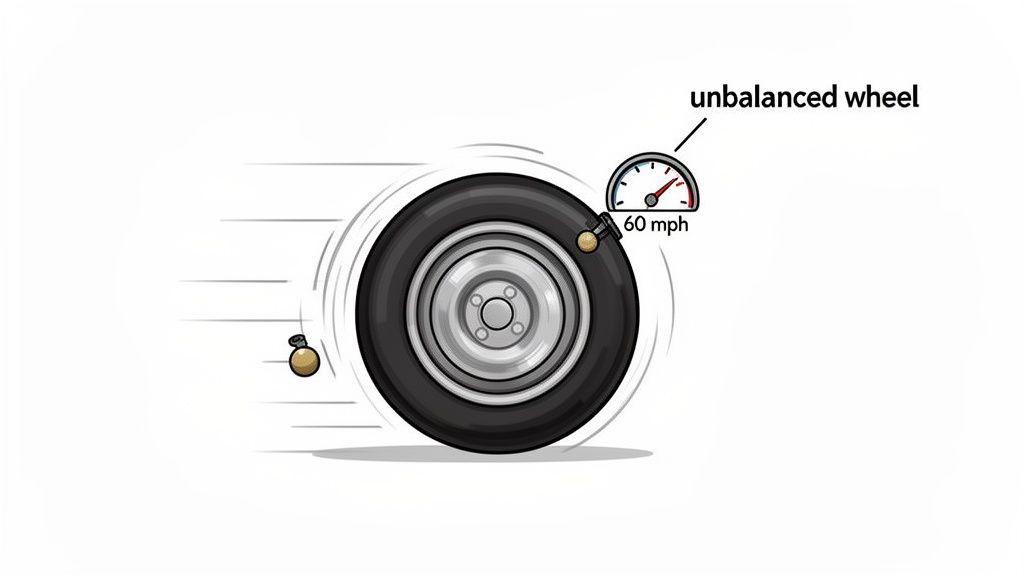
If you’ve ever felt your steering wheel start to shimmy and shake as you merge onto a highway like US-75, you’ve experienced the most common type of vehicle vibration. This specific shake, which often appears around 50-60 mph and might even smooth out at higher speeds, is a classic symptom with a very specific cause: unbalanced tires.
Think of your washing machine during its spin cycle. If you toss in a single heavy, waterlogged towel, the whole machine starts to thump and rock violently. Your car's wheels act the same way when they’re out of balance.
Even a tiny weight difference—as little as a quarter of an ounce—can create a very noticeable vibration once you reach highway speeds. That’s because the rotational force, or centrifugal force, magnifies that small imbalance exponentially as the wheel spins faster. What feels like nothing at 30 mph becomes an annoying and persistent shake at 60 mph.
The Science of Wheel Balancing
A brand-new tire and wheel might look perfectly round, but they are never perfectly uniform in weight distribution. Tiny heavy spots exist in both the tire’s rubber and the wheel’s metal. During a wheel balancing service, a technician uses a specialized machine to spin the wheel at high speed to identify these exact heavy spots.
Why Balancing Matters: An unbalanced wheel doesn't just cause an annoying shake. Over time, it forces your tire to hop and bounce down the road thousands of times per minute. This leads to cupped or scalloped wear patterns on the tread and puts a ton of extra stress on your shocks, struts, and other suspension components.
Once the machine pinpoints the imbalance, the tech counteracts it by attaching small, precise weights to the wheel rim. These weights restore the equilibrium, allowing the entire assembly to spin smoothly without any wobble.
It’s no surprise that unbalanced tires are the most frequent cause of steering wheel vibrations worldwide, typically making themselves known between 50–60 mph. In fact, industry data shows that tire-related issues are behind roughly 50–70% of all customer complaints about steering shake at highway speeds.
Is It Balancing or Alignment?
It's easy to mix up wheel balancing and wheel alignment, but they are two completely different services that solve very different problems. Knowing which is which helps you get the right fix.
- Wheel Balancing: Corrects the weight distribution of the tire and wheel assembly so it spins smoothly. This is the direct fix for vibrations felt at high speeds.
- Wheel Alignment: Adjusts the angles of the wheels relative to the car's frame. This makes sure your tires point straight and make proper contact with the road.
A bad alignment usually causes your car to pull to one side or leads to rapid, uneven tire wear. While severe tire wear from misalignment can eventually cause a vibration, the main symptom of bad alignment is directional pulling, not a speed-specific shake. Understanding the benefits of routine tire rotation, balance, and alignment services is key for every car owner.
Other High-Speed Vibration Culprits
While an imbalance is the number one suspect for highway-speed vibrations, a few other issues can create similar symptoms.
1. Bent Wheel Rims
Hitting a nasty pothole or smacking a curb can easily bend the inner or outer lip of a wheel. Even a slight bend that’s hard to see with the naked eye is enough to throw the entire assembly off-kilter, creating a vibration that feels identical to a simple tire imbalance.
2. Uneven Tire Wear
When tires wear down unevenly from poor alignment or missed rotations, they can develop flat spots or "cupping." As these inconsistent surfaces roll against the pavement, they create a rhythmic vibration. You might also hear a "humming" or "wom-wom" noise that gets louder with speed. Keeping the correct tire pressure is one of the best ways to promote even wear and avoid this.
3. Tire Defects
It's less common, but a tire can fail internally. A separated tread belt, for example, creates a bulge or high spot on the tire, leading to a significant wobble and vibration as it spins. This is a major safety concern and needs to be inspected immediately.
Ultimately, if your steering wheel starts shaking as you get up to speed, your car is sending you a clear message. Getting it checked out for a professional inspection and balance not only makes your ride smoother but also protects your tires and suspension from unnecessary wear and tear.
Why Your Steering Wheel Shakes When You Brake
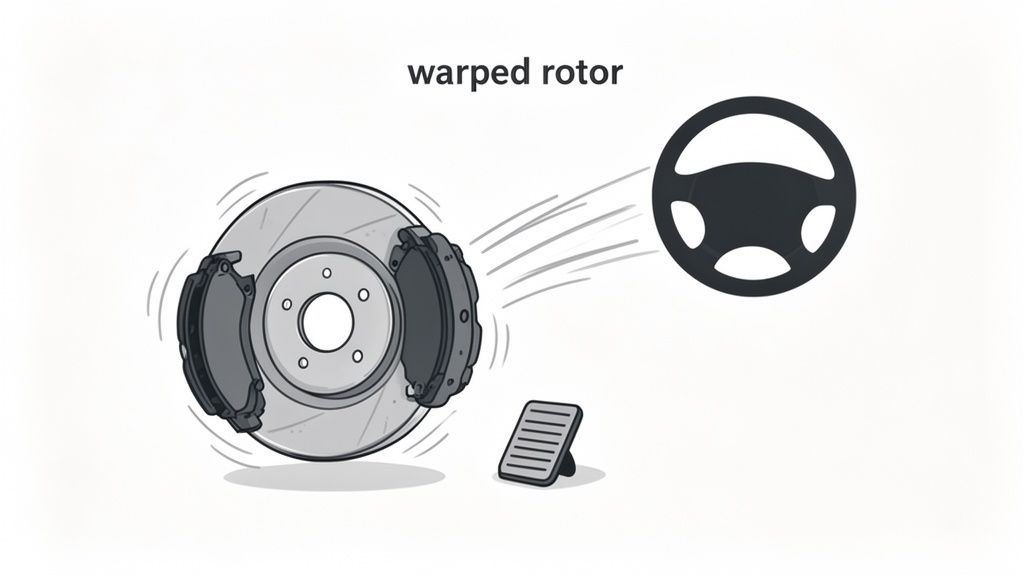
If the vibration in your hands has a clear trigger—the exact moment you step on the brake pedal—the search for the cause gets a whole lot easier. This isn’t like the steady hum of an unbalanced tire at highway speeds. This symptom points directly to your vehicle's braking system, your car's single most important safety feature.
A shake that only happens when you brake is a classic sign that one or more of your brake rotors are warped or uneven. To understand why, we need a quick look at how your brakes actually work.
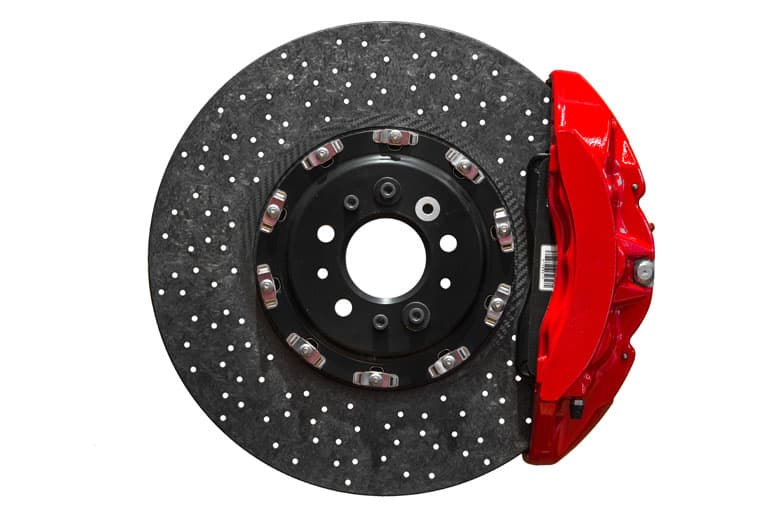
Every time you press the brake pedal, you're commanding a hydraulic caliper to squeeze a pair of brake pads against a spinning metal disc called a rotor. The friction is what slows you down. For that stop to be smooth, the rotor's surface needs to be perfectly flat.
The Warped Rotor Problem
Think about a bicycle wheel for a second. If the metal rim is perfectly straight, the rubber brake pads press against it evenly, bringing you to a smooth, controlled stop. Simple enough.
But now, imagine that same rim has a slight wobble or bend in it. As you pull the brake lever, the pads will grab the bent spot harder and then ease up as it passes. This uneven grabbing creates a pulsing feeling you can feel right in the handlebars.
The Pulsing Effect: A warped brake rotor acts just like that wobbly bike rim. As the uneven rotor spins, the caliper and brake pads are forced to move in and out to follow its imperfect surface. This rapid "grab-release" motion sends a vibration up through your suspension and steering column, right to your hands.
This is exactly why the vibration is so specific. When your foot is off the brake, the pads aren't touching the rotor, so everything feels fine. The moment you apply pressure, those tiny imperfections make themselves known.
What Causes Rotors to Warp?
Brake rotors live a tough life, dealing with incredible heat and pressure. Over time, several things can cause them to lose that perfectly flat shape.
- Extreme Heat: Heavy braking—like what you'd see in stop-and-go traffic or coming down a long, steep hill—generates a massive amount of heat. This intense thermal stress can physically distort the metal of the rotor.
- Improper Torquing: When a technician puts your wheels back on, the lug nuts should be tightened to a specific torque setting using a star pattern. If they're overtightened or tightened unevenly, it puts uneven stress on the rotor hub, causing it to warp.
- Worn Brake Pads: Driving on pads that are worn down to the metal backing plate will gouge and score the rotor surface, creating an uneven mess. If you want to learn more, we explain exactly when to replace brake pads in our detailed guide.
- Sudden Cooling: Hitting a deep puddle after a period of hard braking can cause the hot rotor to cool down too quickly. This is called thermal shock, and it’s a surefire way to warp the metal.
Studies show that brake system issues are a leading cause of steering vibrations, especially when you brake from suburban speeds of 40–60 mph. It’s shocking, but rotor thickness variations as small as 0.03–0.05 mm—about the width of a human hair—are enough to create that noticeable pulsation.
Sticking Brake Calipers
Another related, though less frequent, problem is a sticking brake caliper. The caliper is the hydraulic clamp holding the pads. If rust, debris, or a bad piston prevents it from releasing properly, it will keep one or both pads in constant contact with the rotor.
This constant friction creates nonstop, extreme heat. It will quickly warp the rotor and cause a vibration that gets much worse when you hit the brakes. Two tell-tale signs of a sticking caliper are a sharp, distinct burning smell after you drive and one wheel that is significantly hotter to the touch than the others. Never ignore a braking-related vibration—it's a direct warning about your car's ability to stop safely.
Finding Deeper Causes of Vibration
So, the vibration isn't just happening at highway speeds, and it's not showing up when you brake. Now we need to dig a little deeper. While tires and brakes are always the first place to look, a stubborn shake can point to a more serious problem hiding in your car's suspension or drivetrain. These systems are the unsung heroes of a smooth ride, but when parts start to wear out, they can't do their job anymore.
Think of your car's suspension as a complex network of joints, arms, and shock absorbers—kind of like the cartilage and tendons in your own body. They all work in harmony to soak up bumps and keep your wheels glued to the road. When one of these parts fails, it becomes the weak link in the chain, letting every road imperfection travel right up the steering column and into your hands.
This kind of vibration usually doesn't travel alone. You might also hear a clunking or popping sound when you turn, or maybe the steering just feels a bit loose and sloppy. These are definite red flags telling you something is wrong.
Worn Suspension and Steering Components
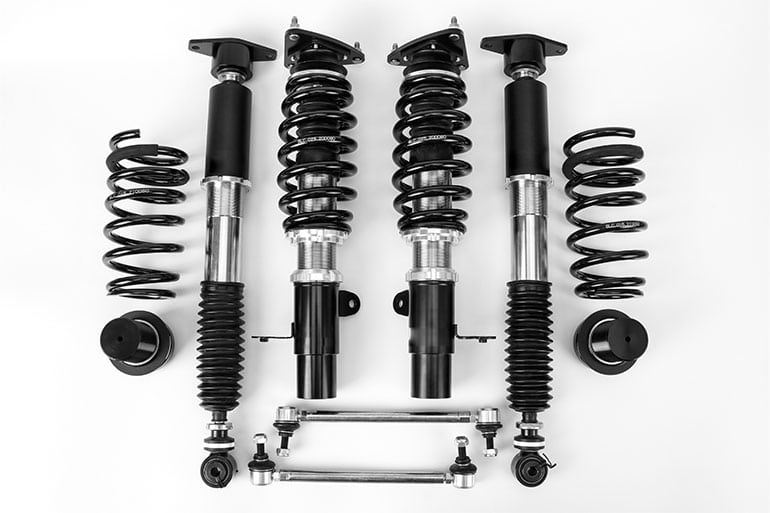
Your car's suspension system has a lot of moving parts, but a few usual suspects are notorious for causing steering wheel vibration. After thousands of miles of constant movement and stress, these components simply wear out.
- Ball Joints: These are the critical pivot points connecting your steering knuckles to the control arms. When they wear down, they develop "play," which is just a fancy way of saying they get loose. That looseness allows the wheel to wobble slightly, creating a vibration you'll feel, especially on rougher roads.
- Tie Rod Ends: As the name suggests, these rods tie your steering rack to your wheels, letting you steer the car. Worn-out tie rod ends create a similar disconnected or vague feeling in the steering, often paired with a shake that feels like it’s coming from the front of the car.
- Control Arm Bushings: These are rubber or polyurethane cushions that isolate the control arms from your car’s frame. Over time, they dry out, crack, and fall apart. When they fail, they can no longer absorb road vibrations, leading to a harsher ride and a subtle shake in the wheel.
A worn suspension part is a lot like a loose hinge on a heavy door. No matter how solid the door is, that sloppy connection will make it rattle and shake every time it moves. That's exactly what’s happening to your wheels when a ball joint or bushing goes bad.
Figuring out which part has failed requires a hands-on inspection. A technician will get the car on a lift and physically check for looseness in the wheels and joints to pinpoint the problem. You don't want to ignore these symptoms—a completely failed ball joint or tie rod can cause you to lose steering control entirely.
Drivetrain Problems Transmitting Vibrations
Sometimes, the vibration isn't coming from the suspension at all. Instead, it’s coming from the parts that transfer power from your engine to the wheels—your drivetrain. When a drivetrain component is the culprit, the vibration often changes with acceleration.
One of the most common issues is a bad CV (Constant Velocity) axle. A worn or damaged inner CV joint can cause a pretty intense shake when you accelerate, which might even disappear once you’re cruising at a steady speed. On the other hand, a worn outer CV joint is famous for the clicking or popping noise it makes during sharp turns.
Another possibility, especially on rear-wheel or all-wheel-drive vehicles, is the driveshaft. If the driveshaft gets bent (maybe from hitting a large piece of debris) or its universal joints (U-joints) fail, it will wobble as it spins. This creates a deep, rhythmic vibration you can often feel in the floor and seats, not just the steering wheel.
Engine Mounts and Idle Vibrations
What if your steering wheel shakes when you're not even moving? If you feel a vibration while stopped at a red light with the engine running, the problem almost certainly isn't your wheels. It's time to look at the engine itself. Your engine is held in place by engine mounts, which are basically heavy-duty rubber shock absorbers.
Their entire job is to isolate the natural vibrations of a running engine from the car's frame. When an engine mount fails—the rubber cracks or the hydraulic fluid leaks out—it can no longer do its job. The engine's vibrations are then sent straight through the frame and up the steering column, causing a noticeable shake in the wheel, even at a standstill.
Of course, engine performance problems like a misfire can also create a rough idle you feel in the wheel. But a bad engine mount is a much more common mechanical reason for idle vibrations. Studies on vehicle comfort have shown just how much engine vibrations affect the driver. In fact, one report found that the average steering wheel vibration at idle was almost twice as high for diesel cars as for gasoline cars, highlighting how much the engine's behavior can be felt. You can read more about these findings on vehicle vibration sources.
Your Pre-Repair Diagnostic Checklist
Before you even think about heading to the shop, you can play detective and start cracking the case of your car’s vibration mystery. Just gathering a few key details about the problem helps a technician figure out the issue faster and more accurately. By paying close attention to the symptoms, you’ll be able to paint a clear picture of what’s going on, which saves time and makes sure you get the right fix.
The goal here is to observe the problem like a pro. Your car is giving you clues, and knowing how to read them makes all the difference. Answering the questions below will arm you with the exact information you need for a productive chat with your service advisor.
When Does the Vibration Happen?
The timing of the vibration is your single most important clue. A technician will almost always start their diagnosis by asking about the specific conditions that trigger the shake. Try to pinpoint the exact circumstances.
- At a specific speed? Does the steering wheel start shaking when you hit 50 mph but then smooth out once you get to 70 mph? This is a classic symptom of an unbalanced tire.
- Only when you brake? If the shaking starts the moment you press the brake pedal, it’s a strong hint that you’re dealing with warped brake rotors.
- During acceleration? A vibration that gets progressively worse as you speed up could point to a worn CV axle or another problem in the drivetrain.
- While sitting still? If you feel a vibration at a red light with the car in drive, the cause is likely a bad engine or transmission mount.
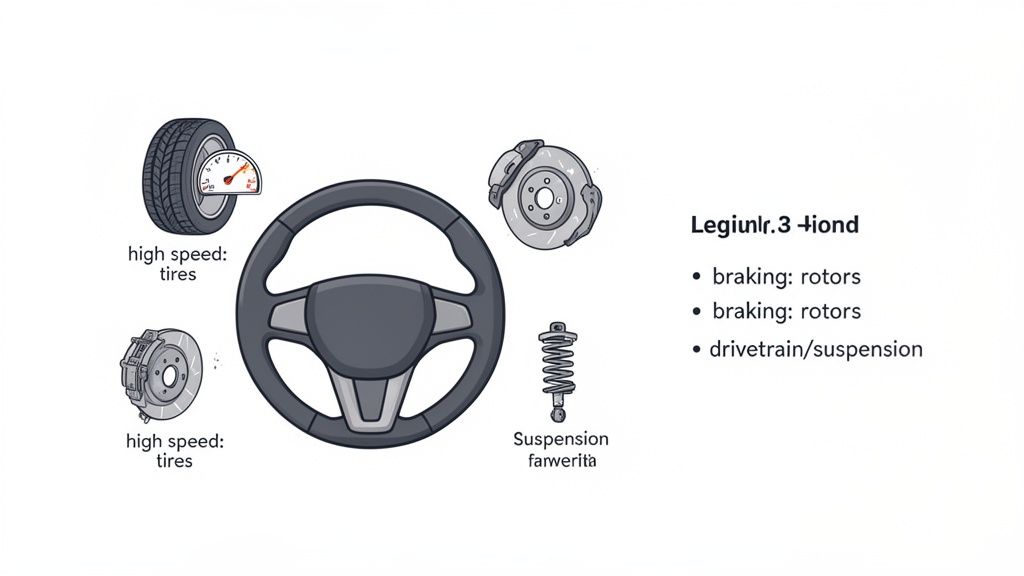
This decision tree infographic shows how different symptoms can point to deeper mechanical issues like worn suspension or a bad axle.
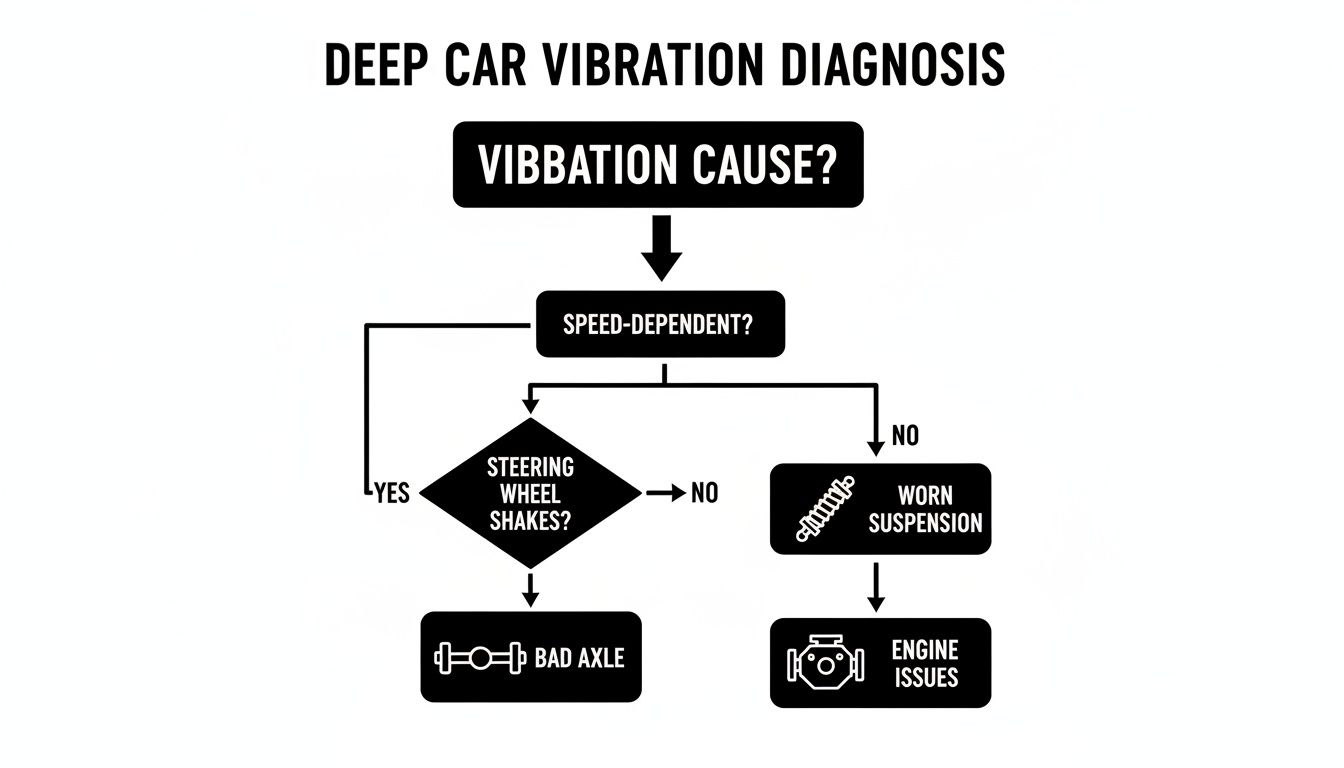
As the chart shows, the diagnostic path changes completely based on whether the vibration is tied to your speed or your brakes, which really helps narrow down the list of potential culprits.
What Else Do You Notice?
Secondary symptoms add another layer of crucial information. A vibration is rarely a completely isolated event, so taking note of anything else that seems out of the ordinary can help lock in a diagnosis.
Pro Tip: Try to distinguish between a shake you feel in the steering wheel versus a vibration you feel in your seat or the floor. A steering wheel shake often points to a problem with the front wheels, tires, or brakes. A seat vibration, on the other hand, typically points to an issue with the rear of the car.
Listen for any unusual sounds that come along with the vibration. A clunking noise when you turn or hit a bump often signals worn suspension parts like ball joints. A high-pitched squeal when braking means your brake pads are worn out, and a deep humming that gets louder with speed could be a bad wheel bearing. Being prepared with these details transforms you from a worried driver into an informed partner in your car’s repair.
How Professionals Diagnose and Fix Vibrations
When you bring your car to a professional with a steering wheel vibration, you’re kicking off a systematic diagnostic process—not just guesswork. It's a methodical approach designed to find the exact cause of the shake, ensuring we get the fix right the first time.
The process almost always begins with a conversation and a road test. A technician will ask you questions similar to those in our diagnostic checklist. When does the shake happen? What does it feel like? Any strange noises? This gives us the initial clues. Then, we'll take the car for a drive to experience the vibration firsthand and confirm the symptoms you’ve described.
The Inspection and Diagnostic Equipment
Back in the shop, your vehicle goes up on a lift for a thorough visual and physical inspection. The technician will carefully examine the tires for uneven wear patterns, check suspension and steering components for any looseness or "play," and look for visible damage to the wheels or brakes. This hands-on check is crucial for finding worn-out parts like bad ball joints or tie rod ends.
If the symptoms point toward a tire or wheel issue, we bring in the specialized equipment.
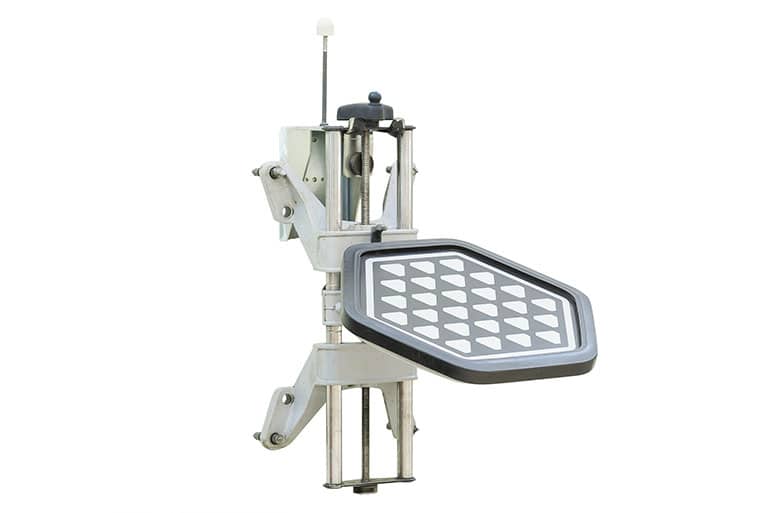
- High-Speed Wheel Balancer: This machine spins each wheel at highway speeds. Using sensitive sensors, it detects even the slightest weight imbalance and tells the technician exactly where to place counterweights to restore a perfect, smooth spin.
- Brake Lathe and Run-Out Gauge: For vibrations that only happen when you brake, a technician will use a run-out gauge. This tool measures the flatness of the brake rotor's surface down to a thousandth of an inch. If it’s warped beyond tolerance, they will either resurface the rotor on a brake lathe to make it perfectly flat again or recommend a replacement.
By combining your feedback with a physical inspection and precise measurements from advanced equipment, technicians can move from a broad symptom—a shake—to a specific diagnosis.
Common Repairs and Why They Work
Once the cause is identified, the repair is usually straightforward. For the most common issue behind what causes steering wheel vibration, a simple tire balance is often all that's needed. If warped rotors are the culprit, resurfacing or replacing them will solve the problem instantly.
For deeper issues, like those caused by hitting a nasty pothole, the fix might involve replacing a bent rim or a worn suspension part. A crucial final step after many of these repairs is a wheel alignment. This service ensures all your wheels are angled correctly according to the manufacturer’s specs, which prevents future uneven tire wear and makes sure your car tracks straight down the road. You can learn more about why a professional wheel alignment service is so important for protecting your vehicle.
This systematic approach isn't just about fixing a shake; it's about guaranteeing a smooth, safe ride.
Frequently Asked Questions About Steering Vibrations
When your steering wheel starts shaking, it's natural to have a few questions. We'll tackle some of the most common concerns drivers have, giving you clear, straightforward answers to help you figure out what's going on with your car.
Can Bad Wheel Alignment Cause My Steering Wheel to Vibrate?
Absolutely. While a car pulling to one side is the classic sign of a bad alignment, it can definitely be a source of vibration. When your wheels aren't aligned correctly, your tires wear down unevenly, leading to odd patterns on the tread that are sometimes called "scalloping" or "feathering."
As those uneven spots hit the pavement, they create a rhythmic vibration that travels right up the steering column to your hands. This is why a good technician will almost always recommend an alignment check after balancing your tires—it makes sure the whole system is working together and protects your investment in new rubber.
How Much Does It Cost to Fix a Steering Wheel Vibration?
The cost to fix a shaky steering wheel really depends on what’s causing it. The fix could be as simple and inexpensive as a tire balance, which is one of the most affordable repairs you can get.
However, if the problem is a warped brake rotor or a worn-out suspension part like a ball joint, the cost will be higher because of the parts and labor involved. The best move is always to start with a professional diagnosis. A thorough inspection will pinpoint the exact problem, so you can get a clear, accurate estimate before any work begins.
Important Takeaway: Don't put off an inspection because you're worried about the bill. A small issue like an unbalanced tire can cause much faster wear on more expensive parts if you ignore it, leading to a bigger repair down the road.
Is It Safe to Drive with a Vibrating Steering Wheel?
It's never a good idea to just ignore a vibrating steering wheel. Even if it seems minor—like a simple unbalanced tire—that constant shaking causes premature wear on your tires, wheel bearings, and other suspension components over time.
The situation becomes much more urgent if the vibration is severe, happens only when you hit the brakes, or comes with any clunking noises. Those symptoms can point to a serious safety issue with your brakes or steering system. For your own safety and the health of your vehicle, you should get any steering wheel shake checked out promptly by a qualified technician.
If you're feeling a shake or shimmy in your steering wheel, don't wait for it to get worse. The ASE-certified technicians at Kwik Kar Oil Change and Auto Care have the expertise and diagnostic tools to accurately identify the cause and get you back on the road safely. Schedule your professional inspection today!