

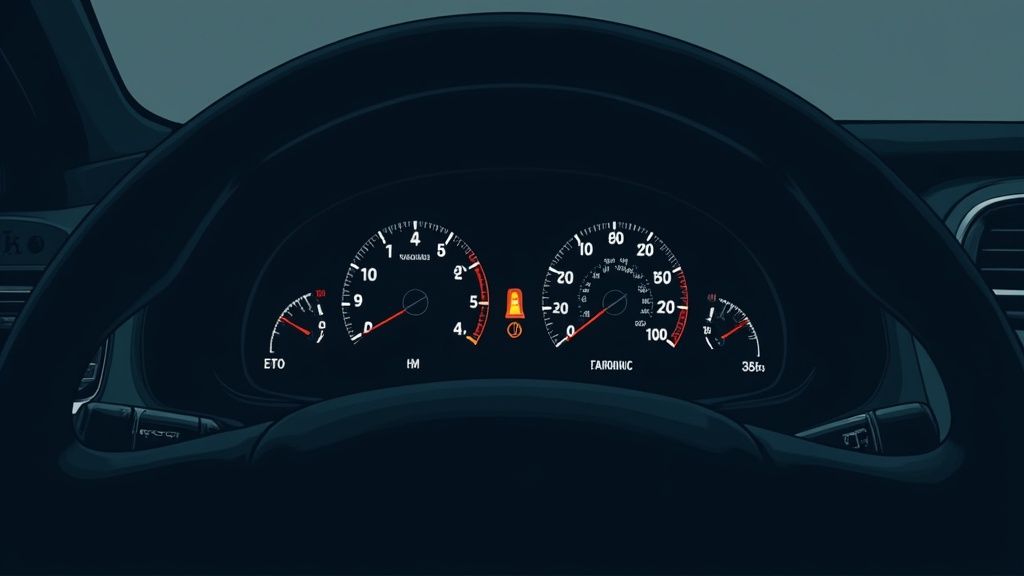
That ominous amber glow on your dashboard – the check engine light – can trigger instant worry. But what does it actually mean? This light serves as your car's way of communicating, a direct link between the intricate network of sensors monitoring your engine and the Engine Control Module (ECM). The ECM is essentially your car’s brain, constantly processing data from these sensors to make sure everything is functioning correctly.
The check engine light can signal a wide array of problems, ranging from minor glitches to serious mechanical failures. A steady check engine light usually suggests a less urgent issue, perhaps something as simple as a loose gas cap or a small sensor malfunction. However, this doesn’t give you a free pass to ignore it. Even seemingly minor problems can worsen if left unaddressed, negatively affecting fuel economy and potentially leading to more extensive damage.
A flashing check engine light, on the other hand, indicates a significant issue that demands immediate attention. This frequently points to a misfire, which can quickly damage costly components like the catalytic converter. Ignoring a flashing check engine light could result in expensive repairs later on. Understanding the reasons behind a check engine light can be daunting. Kwik Kar offers helpful information on their service engine light page to help decipher your car's particular situation.
The check engine light has progressed significantly from its origins as a basic warning system. Modern vehicles employ intricate diagnostic networks that track a wide range of parameters. These systems can detect minute changes in engine performance, emissions, and even the fuel mixture.
This precise monitoring facilitates the early detection of potential problems, preventing major breakdowns and expensive repairs. For instance, a small variation in oxygen sensor readings might indicate a developing issue with the fuel system, allowing for timely intervention.
This advancement in engine diagnostics has also resulted in noticeable differences in the frequency and cost of check engine light repairs. Based on data from over 19.5 million vehicles manufactured between 1996 and 2020, the check engine light reveals a lot about engine and emission issues. Data shows the 2018 Toyota Tacoma was over 50% less likely to encounter a check engine light issue compared to some other models. The average repair cost also varies significantly, with some brands averaging as low as $322. You can find more in-depth information on check engine light statistics. This information highlights the importance of considering the make, model, and year when assessing vehicle reliability and potential maintenance expenses. Understanding these patterns empowers drivers to make informed choices about maintenance and possible repairs.
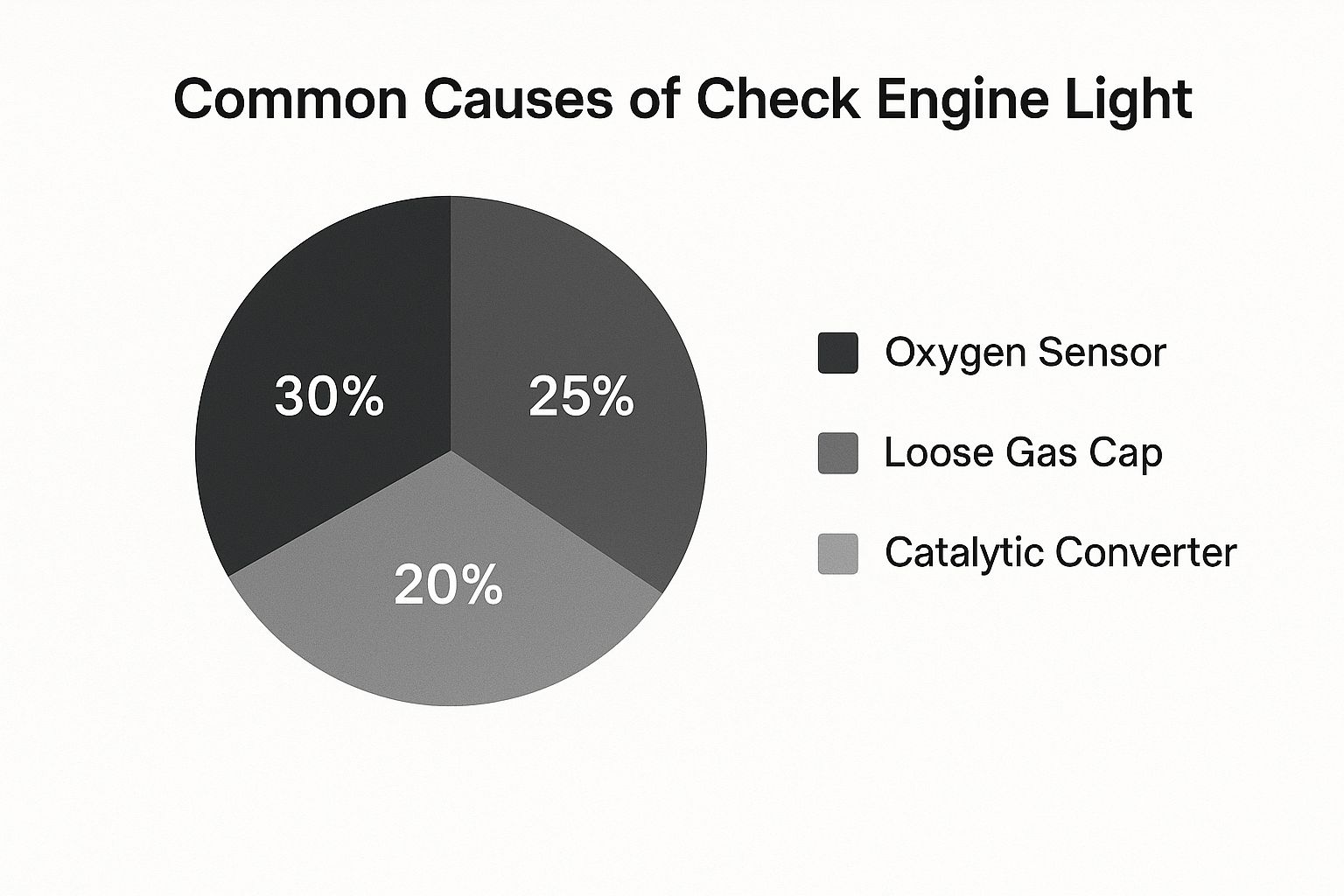
The infographic above illustrates the most common reasons your check engine light might illuminate, focusing on oxygen sensors, loose gas caps, and catalytic converters. These three issues represent a significant percentage of check engine light triggers. Understanding these common problems can save you time and money. Let's explore these and two other frequent causes in more detail.
The oxygen sensor, also known as the O2 sensor, monitors the unburned oxygen in your vehicle's exhaust. The Engine Control Module (ECM) uses this data to adjust the fuel-air mixture for optimal performance and fuel efficiency. A faulty O2 sensor can drastically reduce gas mileage and potentially harm the catalytic converter. Symptoms include decreased fuel economy, rough idling, or hesitation when accelerating.
A loose, damaged, or missing gas cap is a surprisingly common check engine light trigger. The fuel system is designed to be airtight. A loose gas cap allows fuel vapors to escape, which the ECM interprets as a leak in the Evaporative Emission Control (EVAP) system. Fortunately, this is an easy and inexpensive fix, often requiring only tightening or replacing the gas cap.
The catalytic converter is a vital part of your vehicle's emissions system, converting harmful pollutants into less harmful substances. A failing catalytic converter can significantly impact engine performance and lead to expensive repairs, often exceeding $1,500. Symptoms include reduced engine power, a sulfur-like smell from the exhaust, or a rattling sound from under the vehicle.
The mass airflow (MAF) sensor measures the air entering the engine, essential for determining the correct fuel-air mixture. A faulty MAF sensor can cause various problems, including rough idling, stalling, poor fuel economy, and hesitation while accelerating. Cleaning the MAF sensor with a specialized cleaner can sometimes resolve the issue, but replacement is often necessary.
Worn or faulty spark plugs can cause misfires, triggering the check engine light. The ignition system, including the ignition coils and wires, delivers the spark to the spark plugs. Problems within this system can also cause misfires and illuminate the check engine light. Symptoms often include rough idling, engine misfires, and reduced power.
To help visualize the potential costs and complexities associated with these common check engine light triggers, we've compiled the following table:
Common Check Engine Light Triggers and Their Costs
| Issue | Frequency (%) | Average Repair Cost | DIY Difficulty | Symptoms |
|---|---|---|---|---|
| Oxygen Sensor | 25 | $200-$400 | Medium | Reduced fuel economy, rough idling |
| Loose Gas Cap | 15 | $10-$30 | Easy | Check engine light |
| Catalytic Converter | 10 | $1,000-$2,500 | Difficult | Reduced power, sulfur smell, rattling |
| Mass Airflow Sensor | 12 | $200-$400 | Medium | Rough idling, stalling, poor fuel economy |
| Spark Plugs/Ignition System | 18 | $100-$300 | Medium | Misfires, rough idling, reduced power |
Note: Frequency percentages are approximate and can vary based on various factors. Repair costs are averages and can differ based on location and vehicle.
As the table shows, the costs and DIY difficulty can vary significantly. While a loose gas cap is a simple fix, a catalytic converter replacement can be a major expense.
There are other potential causes for a check engine light, such as a faulty thermostat or issues with fuel injectors. For more detailed information on check engine light issues, you can visit MoneyWise. Consulting a qualified technician is always the best course of action for accurate diagnosis and repair.
That unsettling moment when your check engine light illuminates doesn't have to spell disaster. Think of it as your car trying to tell you something. By understanding the initial steps, you can effectively address the issue and potentially avoid larger problems down the line.
First, resist the urge to panic. A steadily glowing check engine light usually signals a less urgent issue, unlike a flashing light which demands immediate attention. Begin with the simple things: is your gas cap tightly sealed? A loose or faulty gas cap is a surprisingly frequent cause. Next, observe your car's performance. Are there any unusual symptoms such as rough idling, reduced fuel economy, or odd noises? These details will be valuable for the next step: diagnosis.
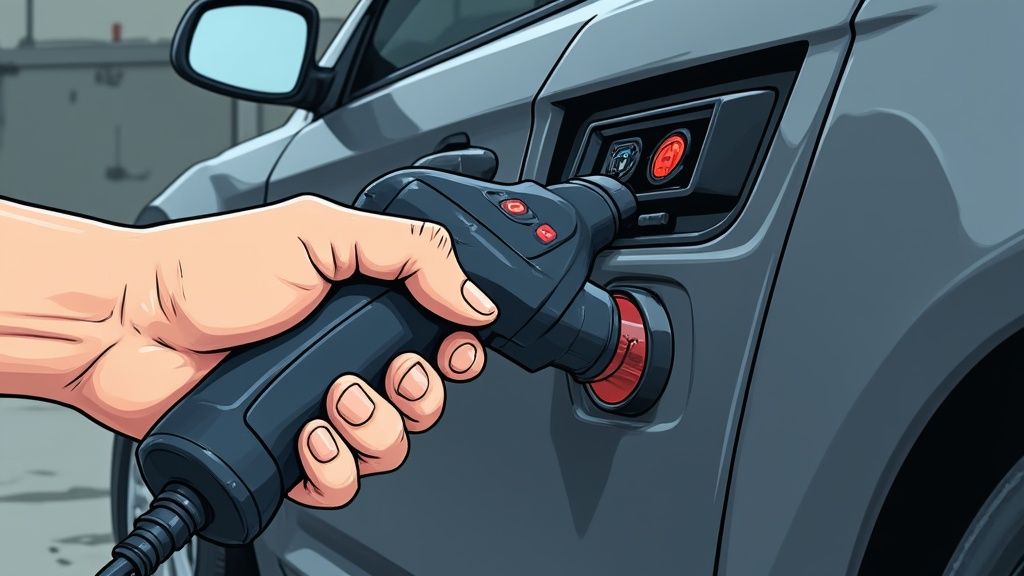
Diagnostic Trouble Codes (DTCs) are the key to deciphering your check engine light. These codes, accessed through your car's On-Board Diagnostics (OBD-II) port, pinpoint the problematic system or area. Various diagnostic tools are available, from basic code readers to more advanced smartphone OBD-II scanners. While helpful, these tools have limits. Consumer-grade tools might miss intermittent issues or pending codes that hint at future failures. For more car maintenance tips, check out this helpful resource: How to master your vehicle inspection.
Smartphone OBD-II readers offer convenient and affordable DTC retrieval. They wirelessly connect to your phone, allowing you to read and sometimes clear codes. However, they often lack the detailed information and advanced features of professional equipment. Mechanics use sophisticated scanners that interpret complex data, perform in-depth tests, and identify issues that consumer-grade tools might overlook.
While some check engine light issues have DIY solutions, others require a professional. If you're experiencing major performance problems, a flashing check engine light, or if you're unsure about interpreting DTCs, consulting a qualified technician is always the best course of action. Their expertise and access to advanced tools can save you time, money, and future headaches. Professional diagnostics can uncover hidden problems, stopping small issues from becoming major repairs. Remember, the cost of a professional diagnosis is often significantly less than the cost of ignoring a problem until it leads to a serious breakdown.
The age of your vehicle plays a significant role in how often that check engine light illuminates. Understanding this connection can help you anticipate potential problems and potentially save money on unnecessary repairs.
Newer cars, especially those under three years old, typically experience fewer check engine light incidents. This is primarily because the components are new and haven't experienced much wear and tear. However, as your car ages, the likelihood of these issues increases.
This increase isn't just bad luck. It's due to the natural degradation of parts and sensors. Just like our bodies require more maintenance as we age, so do our vehicles. If you're facing difficulties with check engine light diagnoses or repair costs, understanding resources like appealing a VA decision (which you can learn more about here) can be a valuable skill in navigating complex situations.
Cars under three years old account for less than 1% of check engine light-related repairs. This low percentage suggests that newer vehicles experience fewer engine and emission problems. As vehicles age, the probability of a check engine light issue increases, reflecting the normal wear and tear on components and sensors. Interestingly, in 2021, the average repair cost for these issues decreased. This trend, however, might be temporary. For more detailed statistics on check engine light issues and their associated costs, you can refer to this article.
Different vehicle ages often have distinct check engine light triggers. Here's a general breakdown:
Early Life (0-5 years): Problems during this period often stem from sensor malfunctions or minor software glitches.
Mid-Life (5-10 years): Emission sensors, such as the oxygen sensor, become more prone to failure. This can negatively impact fuel efficiency and emissions control.
High-Mileage (10+ years): Issues with catalytic converters and other major emission components might arise. These repairs can be significantly more expensive.
The following table provides a statistical breakdown showing how vehicle age correlates with check engine light incidents and average repair costs:
Check Engine Light Frequency by Vehicle Age
| Vehicle Age (Years) | Percentage of CEL Incidents | Average Repair Cost | Most Common Issues |
|---|---|---|---|
| 0-3 | <1% | $50-$150 | Sensor malfunctions, software glitches |
| 3-7 | 5-10% | $150-$300 | Oxygen sensor issues, EVAP system leaks |
| 7-10 | 10-15% | $300-$500 | Catalytic converter problems, ignition system issues |
| 10+ | 15%+ | $500+ | Major engine component failures, transmission problems |
This table provides a general overview. Specific percentages and costs can fluctuate based on vehicle make, model, and maintenance history.
Understanding key maintenance milestones can help prevent many check engine light issues. Following your manufacturer's recommended service schedule is crucial. This schedule often goes beyond basic oil changes and includes critical checks of various components. Additionally, knowing your manufacturer's warranty coverage related to check engine light issues can provide valuable protection. Many warranties cover specific parts and systems, shielding you from costly repairs during the initial years of ownership. Regular maintenance is often a requirement to maintain this warranty coverage.
That pesky check engine light. It's a familiar frustration for many car owners. Do you try to figure it out yourself, or head straight to a mechanic? This decision can have a big impact on both your budget and your car's health. Let's explore how to make the right call.
DIY car diagnostics can be appealing, especially with readily available OBD-II scanners. These handy tools give you access to Diagnostic Trouble Codes (DTCs), those mysterious codes that reveal what's happening under the hood. However, consumer-level scanners have their limits. They might not catch intermittent issues or pending codes, which are key pieces of the puzzle a professional can use to predict future problems. Think of it like checking your temperature at home versus a doctor's visit – both provide information, but the doctor offers a more complete picture.
Professional mechanics, on the other hand, have years of experience and specialized tools at their disposal. They know how to analyze complex data, spot patterns, and diagnose problems a simple code reader might miss. This expertise is particularly valuable when dealing with intermittent problems that aren’t always present. Just like a detective piecing together clues, a skilled mechanic can uncover the root cause of these tricky issues. For more insights, check out this helpful article: How to master your engine diagnostics.
Paying for professional diagnostics can feel like an extra expense. But consider the potential long-term savings. Catching a small problem early can prevent it from becoming a major (and much more expensive) repair. For example, a failing oxygen sensor, if ignored, could damage your catalytic converter, leading to a repair bill over $1,000. Suddenly, a diagnostic fee of $100-$150 seems like a smart investment.
Some check engine light situations are perfectly suited for DIY solutions. A loose gas cap, for instance, is a common culprit and easily fixed. Replacing a faulty mass airflow sensor can also be a manageable task for a hands-on car owner. However, complex issues, particularly those involving multiple DTCs or unusual symptoms, generally require a professional's touch. Trying to fix these yourself could worsen the problem and lead to more extensive damage.
Here’s a simple framework to help you decide:
Warning Light Behavior: Is the check engine light flashing? This requires immediate professional attention. A steady light allows for some initial assessment.
Vehicle Symptoms: Are there noticeable changes in your car's performance? Rough idling, loss of power, or strange noises suggest a more serious issue and often warrant a professional diagnosis.
Personal Mechanical Aptitude: Be realistic about your skills. If you're unsure about a repair, it's always safer to get professional help.
Ultimately, the decision between DIY and professional service depends on a careful evaluation of the situation. By understanding the advantages and limitations of each approach, you can make an informed decision that protects both your car and your wallet.

The dreaded check engine light. For many drivers, it's a source of anxiety and a signal of impending expenses. But what if you could prevent that light from ever coming on in the first place? A proactive approach not only saves you money, but also contributes to the overall health and lifespan of your vehicle.
Regular maintenance is key to preventing check engine light woes. This goes beyond just your standard oil change. Following the manufacturer's recommended service schedule is essential. This includes regular inspections of crucial components like spark plugs, filters, and belts. Catching potential issues early can prevent small problems from becoming major headaches (and repair bills). Interested in learning more about car maintenance schedules? Check out this helpful resource: How often should I service my car?
The parts you choose for your car have a big impact on its reliability. While aftermarket parts may be tempting due to their lower price, they can sometimes cause issues with your car's sensors. This can trigger the check engine light. Original Equipment Manufacturer (OEM) parts are designed specifically for your vehicle, ensuring optimal compatibility. Using OEM parts, or high-quality aftermarket parts designed for your specific make and model, can help prevent these issues.
Believe it or not, your driving habits directly affect your engine's health. Aggressive driving, such as rapid acceleration and hard braking, puts extra stress on your engine. Over time, this can lead to premature wear and tear, potentially triggering the check engine light. Smoother driving habits not only save on gas, but also help prevent costly repairs down the line.
Temperature extremes can also play a role in triggering the check engine light. Extreme heat and cold can impact various engine components, especially your battery and cooling system. Seasonal maintenance, such as checking coolant levels and battery health, can prevent temperature-related check engine light issues. Using the correct oil viscosity for the season is also essential for optimal engine performance.
Taking preventative measures can significantly reduce how often that check engine light comes on. This proactive approach saves money on repairs and can extend the life of your vehicle. Think of it as an investment in your car’s future. Just as regular exercise and a healthy diet contribute to our well-being, consistent maintenance and mindful driving habits contribute to the long-term health of your vehicle.
Those mysterious alphanumeric codes that illuminate your check engine light, known as Diagnostic Trouble Codes (DTCs), offer valuable insights into your vehicle's health. Understanding these codes can transform confusing technical jargon into actionable information, empowering you to address potential issues effectively.
Most cars manufactured since 1996 utilize the standardized OBD-II system, which employs a specific structure for DTCs. Each five-character code begins with a letter indicating the affected system:
Following the letter are four numbers. The first signifies the code type:
The remaining three numbers pinpoint the specific component or system affected. For instance, P0420 signifies a problem with the catalytic converter system efficiency (Bank 1).
Some DTC categories suggest simple fixes, while others point to more serious problems. A loose gas cap, often indicated by a P0440 or similar code related to the EVAP system, is typically easy to resolve. Conversely, codes related to the transmission or engine internals often signal complex and potentially costly repairs.
Numerous online resources, including websites and forums dedicated to automotive repair, can assist you in interpreting DTCs. These resources offer detailed explanations of various codes. However, exercise caution and ensure the information applies to your specific vehicle's make, model, and year.
One common mistake is assuming the first retrieved code represents the only problem. Multiple codes can occur simultaneously and may be interconnected. A faulty oxygen sensor, for example, can trigger additional codes related to fuel mixture or catalytic converter efficiency. This domino effect means one problem can cause others. Therefore, consider the relationship between multiple codes, rather than solely focusing on the first one. Another pitfall is relying solely on generic code definitions without considering your car's specific symptoms. Two cars with the same code can have different underlying issues.
A better understanding of DTCs empowers you to approach check engine light situations with greater confidence. You can ask informed questions and make sound decisions about necessary repairs. Ready to take control of your car’s maintenance and prevent those check engine light anxieties? Kwik Kar Oil Change and Auto Care offers expert diagnostics and comprehensive car care services to keep your vehicle running smoothly. Visit us today at https://www.kkrichardson.com and experience the Kwik Kar difference.
CLICK LINK BELOW TO LEARN MORE ABOUT OUR SERVICES
Get upto $20 OFF on all services.