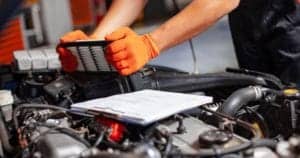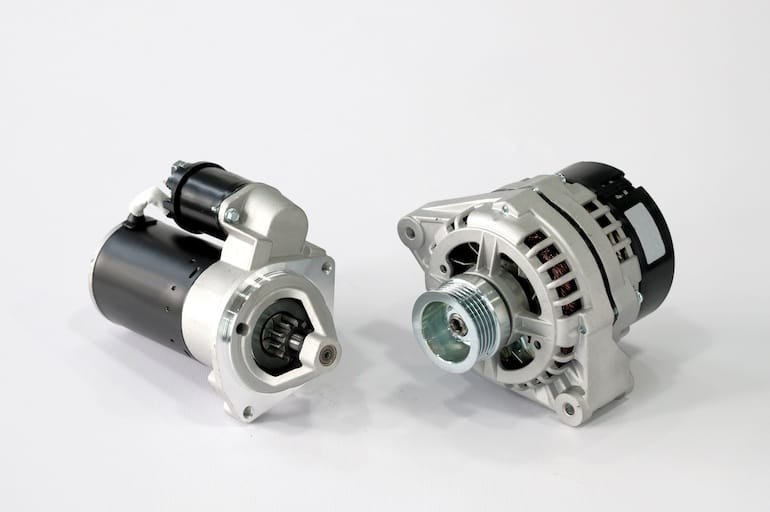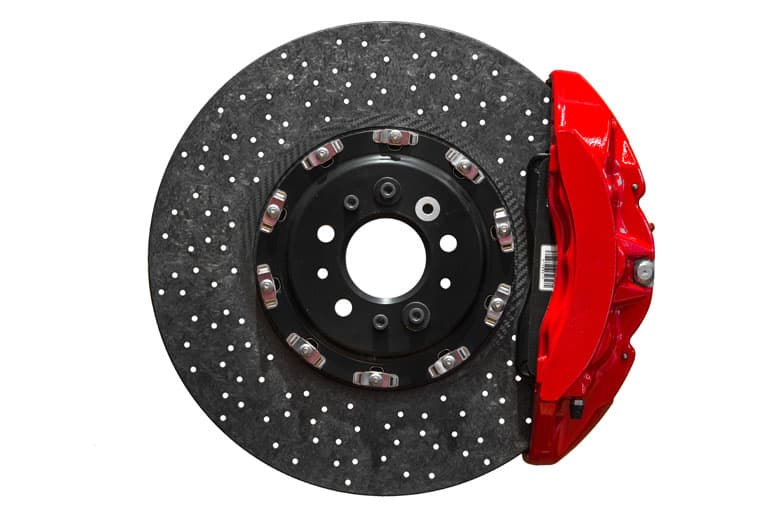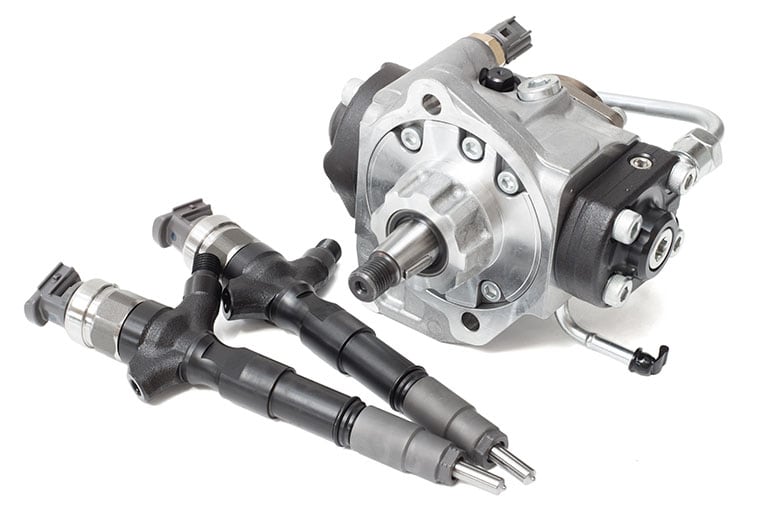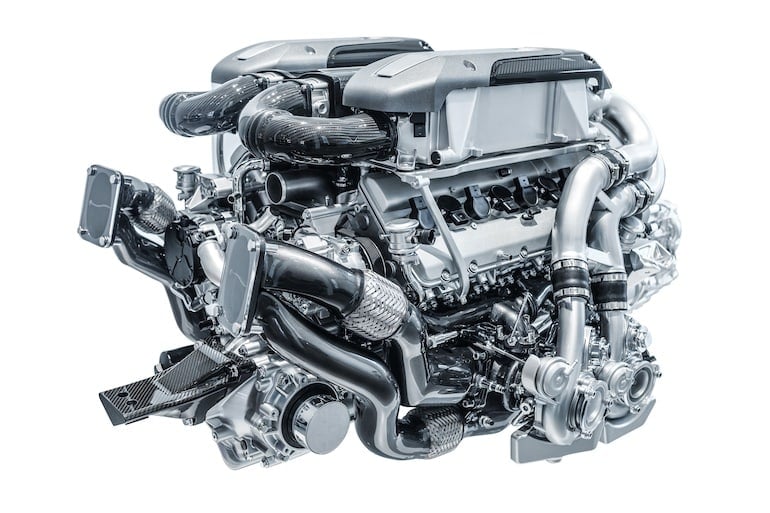
An engine tune-up is a preventative maintenance service that digs deep into the core components affecting your engine's performance. It’s not about fixing one specific problem, but more like a comprehensive health check designed to restore lost fuel efficiency, bring back that "like-new" power, and keep your vehicle running reliably.
Defining The Modern Engine Tune Up
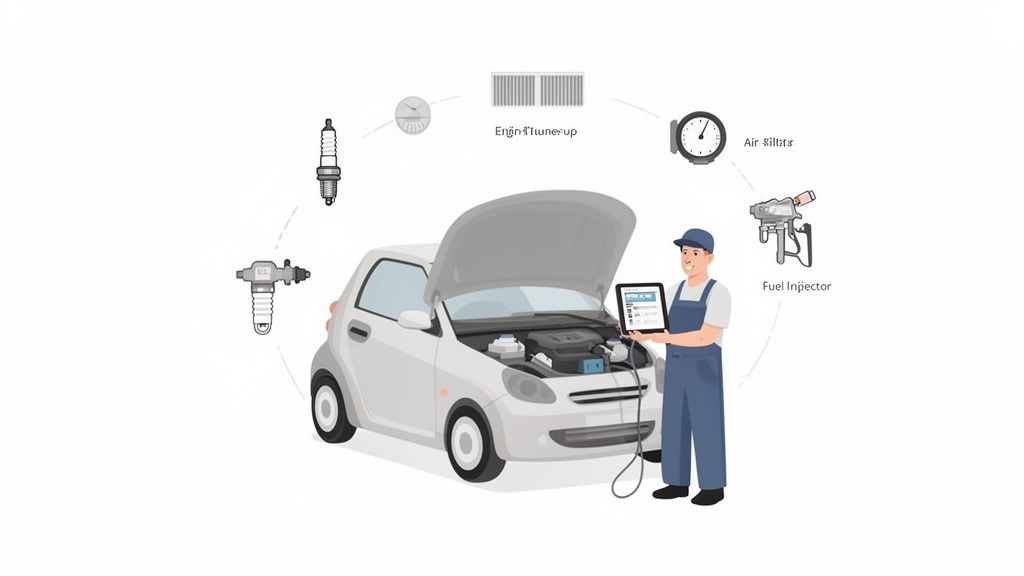
If you're picturing a mechanic leaning over an open hood, manually twisting screws and listening to the engine's hum, you’re thinking of a bygone era. Today’s vehicles are run by sophisticated onboard computers, and the tune-up has evolved right along with them into a data-driven science.
Think of it as restoring the perfect harmony between your engine’s three most critical systems: fuel, air, and ignition. Over thousands of miles, essential parts like spark plugs, filters, and sensors inevitably wear out. This slow decline is what leads to poor gas mileage, sluggish acceleration, and higher emissions. A modern tune-up systematically addresses this by replacing those worn-out parts and making sure the engine's computer is getting accurate data to work with.
A modern engine tune-up is like a fine-tuning orchestra conductor bringing every instrument back into perfect sync. Instead of manual adjustments, technicians use diagnostic tools to read the engine's computer, identify inefficiencies, and replace specific parts to restore peak performance.
The term "tune-up" itself can be a bit confusing because its meaning has shifted so dramatically over the years. What a classic car from the 70s needed is worlds away from what your modern, fuel-injected vehicle requires.
Here’s a quick breakdown to highlight the differences:
Modern Tune Up vs Classic Tune Up
| Service Area | Classic Vehicles (Pre-1990s) | Modern Vehicles (Post-1990s) |
|---|---|---|
| Ignition System | Replace distributor cap, rotor, spark plug wires, and spark plugs. Adjust ignition timing manually. | Replace spark plugs and ignition coils/boots as needed. Timing is computer-controlled. |
| Fuel System | Adjust carburetor, clean fuel lines, replace mechanical fuel filter. | Clean fuel injectors, replace fuel filter, inspect fuel pressure. No carburetor to adjust. |
| Diagnostics | Visual inspection and manual adjustments based on experience and sound. | Connect to the Onboard Diagnostics (OBD-II) port to read computer error codes. |
| Air Intake | Replace air filter and PCV valve. | Replace air filter and PCV valve. May involve cleaning the throttle body or mass airflow sensor. |
As you can see, the focus for modern cars is less on manual adjustments and more on replacing high-wear electronic and filtration components to keep the computer-controlled systems operating within factory specifications.
What Does The Service Involve?
The primary goal is to bring your engine back to its original factory settings for optimal operation. This process typically includes a few key steps:
- Inspection and Replacement: We check key wear-and-tear items like spark plugs, ignition coils, and both the air and fuel filters, replacing them as needed. These are the parts that degrade over time and directly impact performance.
- System Diagnostics: Our technicians connect directly to your car's onboard computer. This allows us to check for stored error codes that might not have triggered your check engine light yet. A full engine diagnostic can pinpoint hidden issues before they become big problems.
- Performance Restoration: By ensuring a clean, powerful spark and the perfect mix of air and fuel, the service directly tackles the root causes of performance loss. You'll feel the difference.
To get a clearer picture of where a tune-up fits in your car's overall health plan, it helps to be clear on how it differs from other checks. You can get more context by understanding the difference between an MOT and a car service, which helps clarify why this specific service is so vital for engine longevity.
How the Tune Up Has Evolved with Automotive Technology
The idea of an engine tune-up has been around almost as long as the car itself, but what it means today is a world away from its origins. It wasn't always a scheduled service at a professional shop—in the early days of driving, it was a necessary skill for any car owner.
Back when the first dedicated auto repair shops started popping up around 1914, shortly after Ford's Model T put cars in more driveways, a tune-up was a completely hands-on affair. There were no computers or electronic sensors. Instead, mechanics relied on a good ear and a trusty set of tools to manually tweak carburetors and adjust ignition points. By the 1930s, manufacturers were printing service manuals recommending tune-ups every 10,000 to 20,000 miles just to keep those early engines chugging along. You can learn more about the history of auto maintenance and its early importance.
The Shift to Efficiency and Electronics
The 1970s marked a huge turning point. The fuel crisis forced automotive engineering to get serious about efficiency, and suddenly, the tune-up became critical for squeezing every last mile out of a gallon of gas. Mechanics zeroed in on optimizing the air-fuel mixture and ensuring the ignition system was firing perfectly to help drivers combat soaring fuel costs.
This era, however, was the last hurrah for the purely mechanical tune-up. The digital revolution was just around the corner, poised to completely change how cars run and how we maintain them.
The biggest leap forward came with the widespread adoption of electronic fuel injection and onboard computers. By the late 1980s and early 1990s, the carburetor was on its way out, replaced by smart systems that could automatically adjust the fuel mixture using data from various engine sensors.
The introduction of the On-Board Diagnostics (OBD-II) system, which became mandatory in all U.S. vehicles in 1996, officially turned the tune-up from a manual art form into a data-driven science. The mechanic’s ear was effectively replaced by the diagnostic scanner.
The Modern Tune Up: A Diagnostic Approach
Today, if you ask "what is an engine tune up," you'll get a very different answer. The service is no longer about constant tinkering and manual adjustments. Instead, it's a precise, diagnostic-led process focused on replacing high-tech parts that have reached the end of their lifespan.
A modern tune-up involves:
- Reading diagnostic codes from the car's computer to pinpoint specific performance issues.
- Replacing long-life spark plugs, which can now last up to 100,000 miles, unlike their old-school counterparts that needed frequent changes.
- Inspecting and replacing ignition coils and boots that are responsible for delivering a powerful, precise electrical charge.
- Cleaning fuel injectors and replacing fuel filters to make sure the engine gets the exact amount of fuel it needs for optimal combustion.
This evolution means today’s tune-up is less frequent but far more targeted. It addresses the sophisticated systems that manage your engine’s performance, ensuring every component is communicating correctly to deliver the power and efficiency you expect from a modern vehicle.
Key Components Inspected During a Tune Up
So, what’s really going on under the hood when you bring your car in for an engine tune up? It’s not about one single fix. Think of it more like a comprehensive check-up for the core systems that help your engine run efficiently, powerfully, and smoothly. We zero in on the high-wear parts that have the biggest impact on performance and gas mileage.
The whole process is methodical, targeting components that naturally wear out over time. Each one has a critical job, and when one part starts to struggle, it can trigger a domino effect that you'll definitely feel from the driver's seat.
Spark Plugs and the Ignition System
The very heart of your engine's power lies in its ignition system. Its one job is to create a perfectly timed, high-voltage spark that ignites the mixture of air and fuel in the cylinders. That tiny explosion is what pushes the pistons down, turns the crankshaft, and ultimately gets your wheels moving.
And the star players in this process? The spark plugs. After thousands and thousands of miles, the electrodes on the plugs get worn down by the intense heat and constant electrical current. This erosion creates a wider gap for the spark to jump across, resulting in a weaker, less effective ignition.
When your spark plugs are worn out, you’ll start to notice a few things:
- Your car might have trouble starting, especially on a cold morning.
- You could feel engine misfires, which feel like a stutter or hesitation when you accelerate.
- Your fuel economy will take a nosedive because the engine isn't burning all the fuel completely.
During a tune up, a technician will pull the spark plugs and give them a close inspection. If they're worn, covered in oil, or damaged, they get replaced. We also check the supporting cast—the ignition coils and spark plug wires that deliver the electricity—to make sure the entire system is firing on all cylinders. Learning the common signs of bad spark plugs can help you spot these problems early on.
Air and Fuel Filters
Your engine needs two things to run well: clean air and clean fuel. Just like an athlete needs to breathe freely, your engine needs an unrestricted flow of air to perform at its peak. Your filters are the unsung heroes that make this happen, essentially acting as your engine's lungs.
An engine tune up is fundamentally about restoring the precise balance of air, fuel, and spark. Clogged filters and worn spark plugs disrupt this balance, forcing the engine to work harder for the same result, which wastes fuel and reduces power.
The engine air filter is the first line of defense, blocking dust, leaves, and other road grime from getting sucked into your engine. Over time, it gets clogged and literally chokes the engine, restricting airflow. This makes the engine work harder and burn more gas, leading to sluggish performance. A new air filter is one of the quickest and most effective parts of a tune up.
In the same way, the fuel filter catches any rust, dirt, or other junk in your gasoline before it can clog up your fuel injectors. A blocked fuel filter can starve the engine of fuel, causing it to hesitate, stall, or even put a strain on the fuel pump.
Fuel System Cleaning and Other Checks
Beyond just replacing parts, a good tune up often involves some deep cleaning. Over time, carbon deposits can build up inside the engine on critical parts like fuel injectors and intake valves. This gunk messes up the fine, misty spray of fuel your engine needs for a clean burn, leading to a rough idle and loss of power. A professional fuel system cleaning dissolves these deposits and brings back that crisp engine response.
Finally, no tune up is complete without a thorough visual check of other key components:
- Belts and Hoses: We'll look for any cracks, fraying, or soft spots in the serpentine belt and other important hoses.
- Fluids: A technician will check the level and condition of vital fluids like your engine coolant and brake fluid.
By hitting all these key areas, an engine tune up gets all your car's systems working together in harmony again. The result is restored performance, better fuel economy, and a more reliable ride.
7 Telltale Signs Your Car Needs a Tune Up
Your car has a way of giving you little hints when something’s not quite right. Sometimes they're subtle, other times they're impossible to ignore. Paying attention to these clues is the key to catching small issues before they snowball into major, expensive repairs. More often than not, an engine tune up is the perfect fix for these common performance problems.
If you're not sure what an engine tune up actually involves, think of it as a wellness check for the three systems that keep your engine breathing, firing, and running strong.
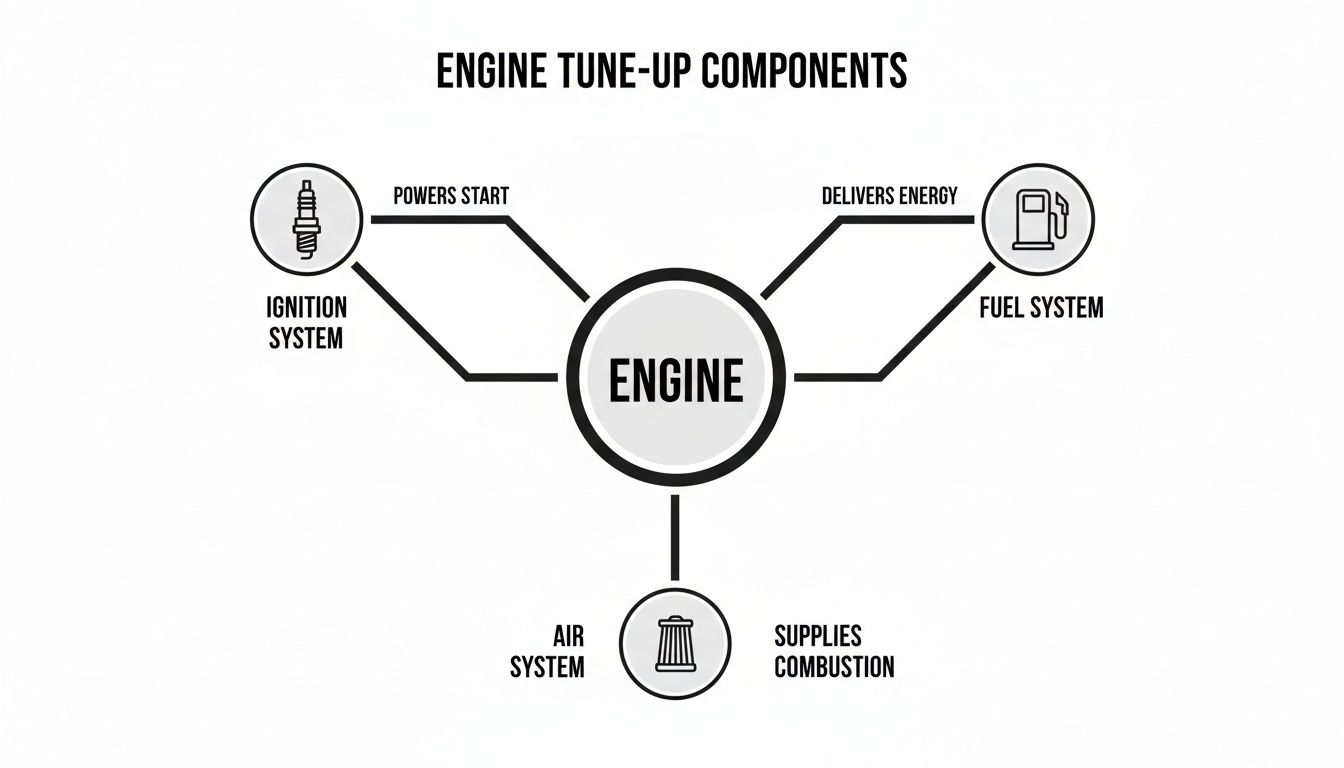
As you can see, the Ignition, Fuel, and Air systems are all interconnected. A problem in one branch can throw the entire system out of whack, which is when you start noticing the symptoms below.
Here are seven classic signs that it might be time to schedule that service.
1. A Sudden Drop in Fuel Economy
Finding yourself at the gas station more often than usual? A noticeable dip in your miles per gallon (MPG) is one of the clearest signs that your engine is working too hard. Components like worn-out spark plugs or a dirty, clogged air filter can force your engine to burn more fuel just to deliver the same amount of power.
2. Rough Idling or Stalling
When you’re stopped at a red light, your engine should be humming along smoothly. If you feel shaking, vibrating, or a sputtering sensation instead, it's often a sign of an ignition system problem. Fouled spark plugs can't ignite the fuel-air mixture properly, causing that rough performance or, in worse cases, causing the engine to stall completely.
3. Trouble Starting the Engine
Does your car take a few extra seconds to turn over, or does the engine just crank and crank before it finally catches? This is a classic symptom of either a weak spark or a fuel delivery issue. A good tune up will address both by inspecting the spark plugs and the fuel filter—two parts that are critical for a quick, reliable start.
An engine tune up is less about fixing a single broken part and more about restoring the engine's original efficiency. By replacing key wear-and-tear items, you're bringing the interconnected systems back into harmony.
4. Sluggish Acceleration
When you hit the gas, does your car feel hesitant or like it's lost its pep? That lack of get-up-and-go is a clear indicator that something's off. This sluggishness is often caused by a clogged fuel filter that's starving the engine of gasoline or an air filter that's choking its air supply.
5. Engine Misfires
An engine misfire feels like a very distinct stumble, jerk, or hesitation while you're accelerating. It happens when one or more of your engine's cylinders fail to fire at the right moment. This is almost always a direct symptom of bad spark plugs or failing ignition components.
6. The Check Engine Light Comes On
This is the most obvious sign of them all. That little glowing light on your dashboard is your car’s way of saying its onboard computer has found a problem. While the light can signal a wide range of issues, components directly related to a tune up—like spark plugs and oxygen sensors—are very common culprits. For a deeper dive, you can learn more about what that check engine light means and why you should never ignore it.
7. Strange Noises from Under the Hood
Listen closely to your engine. Do you hear any unusual sounds like knocking, pinging, or hissing? Pinging or knocking sounds, especially during acceleration, can point to a problem with your ignition timing or carbon buildup inside the engine—both of which are addressed during a comprehensive tune up service.
The Real-World Benefits of a Regular Tune Up
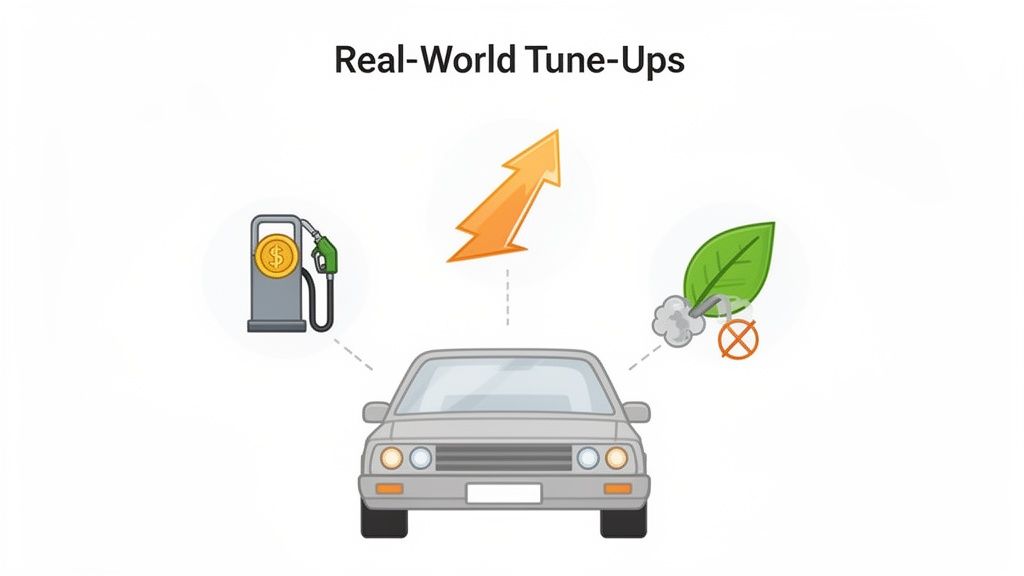
Beyond just ticking a box on your maintenance schedule, a regular engine tune-up is one of the smartest investments you can make in your vehicle. It delivers real, tangible rewards you’ll feel on the road and see in your wallet. This isn't just about fixing things before they break—it's about optimizing your car to perform at its absolute best.
Think of an engine with old, tired parts like trying to run a marathon in worn-out shoes. Sure, you can probably finish the race, but you’ll be slower, less efficient, and working a whole lot harder than you need to. A tune-up gives your engine the new gear it needs to perform effortlessly.
Maximize Your Fuel Efficiency
The first place you'll notice a difference is at the gas pump. When spark plugs are failing and your air filter is clogged with grime, your engine has to burn a lot more fuel to generate the same amount of power. A tune-up restores that delicate balance, making sure every drop of gas is used effectively.
This isn’t just a theory; the connection between proper maintenance and fuel savings has been documented for decades. A landmark 1981 study found that tune-ups fixing emissions-related issues boosted fuel economy by an average of 4.7%. For some cars, that meant using up to 12% less fuel on the highway. You can read the full transportation research to see how those early findings still apply to modern vehicles.
Enhance Performance and Reliability
Remember how crisp and responsive your car felt when it was new? A tune-up can bring that feeling back. By ensuring a strong, consistent spark and clean air and fuel flow, the service directly restores lost horsepower and torque.
This translates into noticeable improvements:
- Smoother Idling: No more sputtering or rough vibrations at stoplights.
- Quicker Acceleration: Your car feels eager and responsive when you step on the gas.
- Greater Reliability: Proactively addressing wear and tear stops small problems from becoming major breakdowns, giving you peace of mind on every drive.
A tune-up is the difference between an engine that's just surviving and one that's thriving. It proactively restores the precision that time and mileage have worn away, ensuring reliability and power are always on tap.
Reduce Your Environmental Footprint
A happy engine isn’t just better for your car—it’s better for the environment, too. A well-tuned engine burns fuel more completely, which drastically cuts down on the harmful pollutants coming out of your exhaust pipe. This not only helps you sail through state emissions tests but also minimizes your carbon footprint, making every drive a little cleaner.
Finding a Trusted Mechanic for Your Engine Tune Up
Realizing your car needs a tune-up is the easy part. The real challenge? Finding the right professional you can trust to do the job. Not all auto shops are created equal, especially when you're dealing with the incredibly complex, computer-controlled systems in today’s vehicles. Choosing the right service center is probably the most important step in making sure the job is done right and your car is protected.
A modern tune-up isn’t about just swapping out a few old parts. It demands a deep understanding of automotive electronics and the skill to read diagnostic data correctly. Think of it like picking a surgeon for a specialized procedure—you want an expert who uses the best tools and has the credentials to back up their experience.
Look for Certified Expertise and Advanced Tools
When you're checking out a repair shop, the first thing to look for is the team's qualifications. Technicians with ASE (Automotive Service Excellence) certifications have gone through tough testing to prove their expertise. This certification is the gold standard in our industry, and it’s a clear sign that the mechanic is a dedicated professional.
Just as important is the shop's equipment. Modern cars are loaded with sensors and computers that are constantly talking to each other and monitoring engine performance. A great mechanic uses state-of-the-art diagnostic equipment to plug directly into your car's brain. This tech lets them pinpoint the exact cause of a problem, taking the guesswork out of the equation for a precise, effective tune-up.
Choosing a mechanic is all about building trust. Look for shops that are transparent with their estimates, use high-quality parts, and hold certifications from respected names like NAPA AutoCare or RepairPal. These are hallmarks of a business committed to quality and customer satisfaction.
The Value of Transparency and Quality Parts
A reputable auto care center will always walk you through a clear, detailed, and transparent estimate before they even think about starting the work. You should know exactly what services they’re recommending and why. There should never be hidden fees or surprise charges when it's time to pay the bill.
Finally, don't be afraid to ask about the parts they use. A shop that’s serious about quality will use durable, high-quality components that meet or even exceed what the original manufacturer recommends. This commitment is what ensures your engine tune-up delivers lasting benefits, restoring your car's performance and reliability for thousands of miles to come.
Common Questions About Engine Tune Ups
Car maintenance can feel like it comes with its own language, and it's easy to get lost in the jargon. When it comes to something like an "engine tune-up," most drivers just want to know the practical details before they hand over their keys. Let's clear up some of the most common questions.
How Much Does a Tune Up Cost?
This is the big one, and the honest answer is: it varies. The cost really depends on your vehicle's make, model, and exactly what it needs. A basic tune-up on a newer car that just needs fresh spark plugs and a filter change might run between $150 and $250.
On the other hand, an older, high-performance, or European vehicle that needs more in-depth work—like replacing ignition coils or cleaning the fuel system—could be closer to $800 or more. It all comes down to the parts and labor involved.
Is It the Same as an Oil Change?
Not at all. Think of an oil change as a single, crucial task focused on keeping your engine's moving parts lubricated. A tune-up is a completely different beast.
A tune-up is a comprehensive check-up and service package. It looks at the bigger picture, inspecting and replacing key parts across the ignition, fuel, and air systems to get your engine running like new again.
A tune-up is a deep diagnostic and restorative service for your engine's core systems, while an oil change is a vital but singular maintenance task.
How Long Does It Take?
The time commitment depends entirely on the scope of the job. A straightforward tune-up on a common four-cylinder engine is usually a two- to four-hour job.
If you have a more complex V6 or V8 engine, or if the technician discovers other issues that need attention, it could easily take up a full day at the shop.
Lots of drivers also wonder what else they can do to keep their engine in top shape. You might find it useful to look into understanding fuel additives and their role in engine health.
Ready to restore your car's performance and efficiency? The ASE-certified technicians at Kwik Kar Oil Change and Auto Care are here to help. Schedule your engine tune up with us today!