An automotive induction service is pretty much a deep cleaning for your engine's 'lungs'—the entire air intake system. This essential maintenance clears out restrictive carbon gunk from critical spots like the throttle body and intake valves, ensuring your engine can breathe freely and mix air and fuel just right.
Your Engine Needs to Breathe
It helps to think of your car's engine like a high-performance athlete. To perform at their best, athletes need clear, unobstructed airways to pull in tons of oxygen. Your engine is the exact same way; it needs a constant, clean flow of air to mix with fuel for the combustion that gets you down the road.
Over thousands of miles, though, these "airways" start to get clogged up. Gummy, tar-like carbon deposits—the leftovers from combustion, like unburnt fuel and oil vapors—build up inside the most important parts of the air intake system:
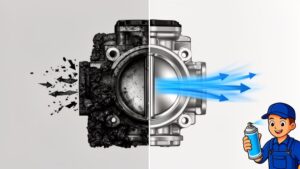
- The Throttle Body: This is the gatekeeper controlling how much air gets into the engine. When carbon builds up, it can stick, leading to a rough idle or sluggish acceleration.
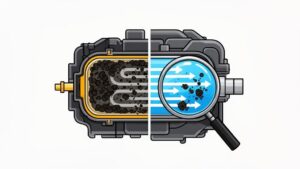
- The Intake Manifold: This network of passages sends air to each cylinder. Clogs can starve some cylinders of air, which can cause misfires and a noticeable loss of power.
- The Intake Valves: These valves are constantly opening and closing to let the air-fuel mix into the combustion chamber. Deposits can keep them from sealing correctly, throwing off the whole combustion process.
An induction service is the fix. A certified technician uses specialized tools and professional-grade solvents to dissolve and flush out all those performance-robbing deposits.
By cleaning out these pathways, the service brings the engine back to its full breathing capacity. This isn't just a simple tune-up; it's a core service for keeping your engine healthy and efficient for the long haul.
To give you a better idea of what we're talking about, we've broken down the key components cleaned during an induction service and why it's so important for each one.
Induction Service at a Glance
| Component Cleaned | What It Does | Why Cleaning It Matters |
|---|---|---|
| Throttle Body | Controls the amount of air entering the engine based on how you press the gas pedal. | Removes sticky deposits that cause rough idling, stalling, and poor throttle response. |
| Intake Manifold | Distributes the air from the throttle body evenly to each of the engine's cylinders. | Clears blockages to ensure every cylinder gets the same amount of air for balanced power. |
| Intake Valves | Open and close to let the air-fuel mixture into the combustion chamber for ignition. | Eliminates carbon buildup that prevents valves from sealing properly, restoring lost compression and power. |
As you can see, each part plays a crucial role, and keeping them clean is the key to a smooth-running, efficient engine.
This diagram shows the exact areas an induction service targets inside your engine.
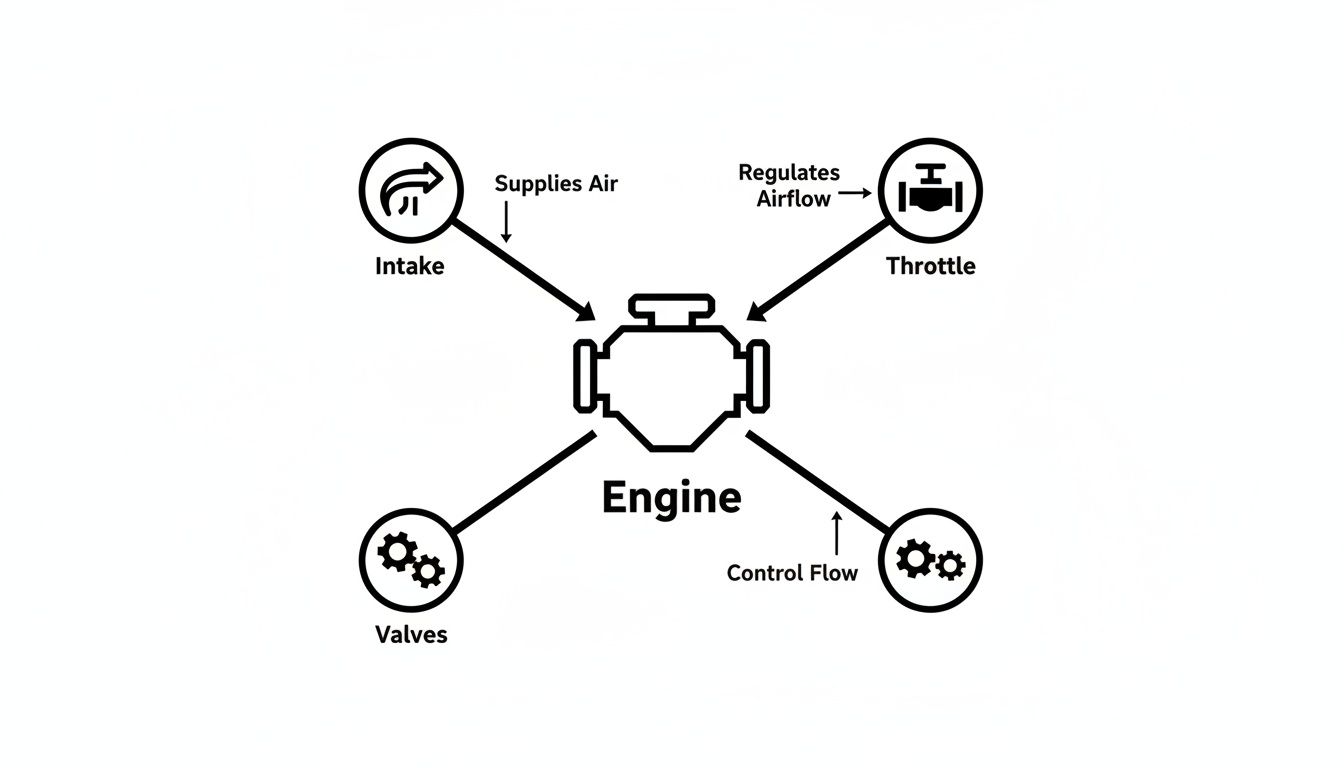
As the diagram illustrates, the service is designed to clean the entire air intake path—from the throttle all the way to the engine's valves—making sure the whole system works together seamlessly.
Why Carbon Buildup Is Choking Your Engine
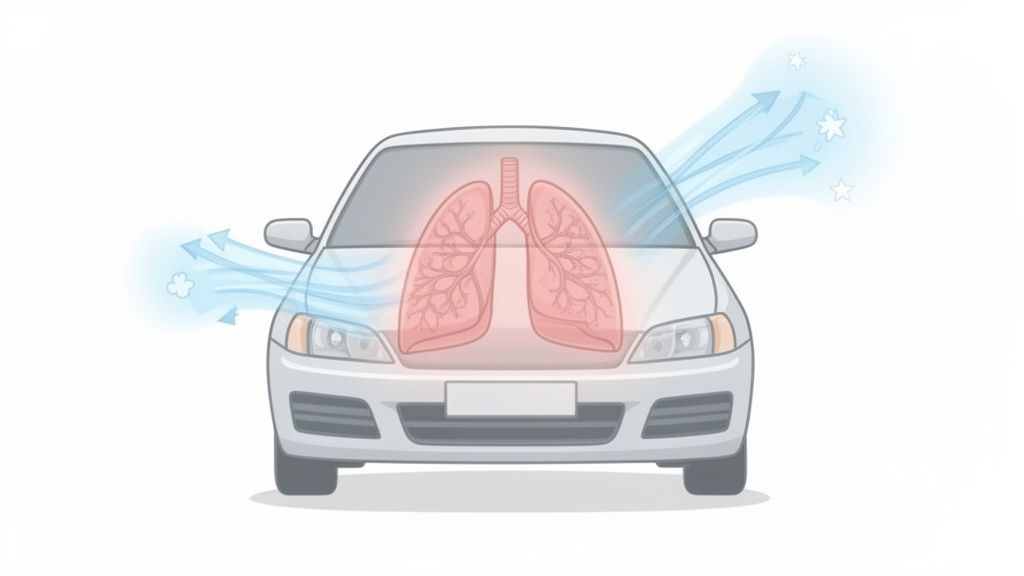
To really get why an induction service matters, just think about your engine's air intake system like your own respiratory system. When everything's clear, you can breathe easily. But if things get clogged up, every breath becomes a struggle.
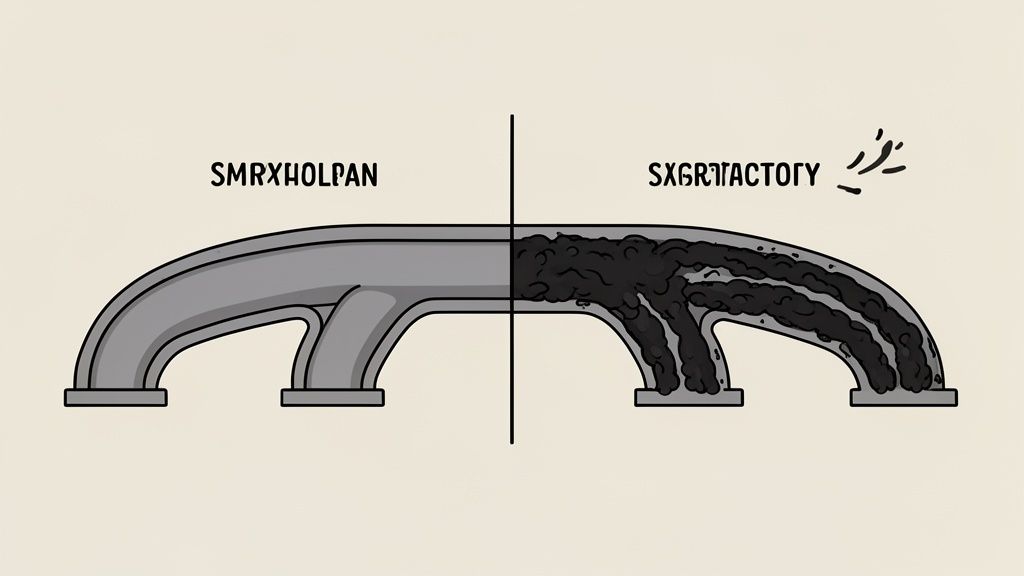
Your engine deals with a similar problem, but its enemy is carbon buildup. This sticky, black gunk is just a natural part of the combustion process—a mix of unburnt fuel, oil vapors, and other contaminants that get baked onto critical engine components over time.
You won't notice it at first. It's a slow, gradual process where these deposits build up, layer by layer, quietly constricting the flow of air. Before you know it, this buildup is silently robbing your engine of its power and efficiency, forcing it to work harder for every mile.
Where Does Carbon Collect?
This gunk doesn’t just build up randomly; it targets the most critical parts of your engine’s intake system. These are precision-engineered components, and even a paper-thin layer of carbon can throw off the entire performance.
The main trouble spots are:
- Intake Valves: Carbon caked onto the back of these valves acts like a sponge, messing up the precise air-fuel mixture your engine needs to run smoothly.
- Throttle Body Plate: A sticky film here can cause the throttle to hesitate or stick, leading to a rough idle and sluggish acceleration.
- Intake Manifold Runners: Deposits in these channels disrupt airflow, preventing it from being distributed evenly to each cylinder.
This is exactly why a professional induction service is so effective. It’s not just a simple additive; it's a targeted procedure designed to dissolve these stubborn deposits in the spots a DIY product could never reach, restoring the engine's ability to breathe freely.
Carbon buildup isn't just a minor issue; it's a physical blockage that actively suffocates your engine. It forces the engine to struggle for air, leading to poor performance, wasted fuel, and higher emissions.
The Impact of Modern Engines
Here’s something most drivers don't realize: modern engines with Gasoline Direct Injection (GDI) are actually more prone to this problem. In older, port-injected engines, the gasoline would spray over the intake valves, providing a constant cleaning effect.
But with GDI, the fuel is injected straight into the combustion chamber, completely bypassing the valves. This means there's no "built-in" cleaning process, allowing carbon to accumulate much faster. For anyone with a GDI engine, an induction service isn't just a good idea—it's essential preventative care. Without it, you could see a noticeable drop in performance in as little as 30,000 miles. The service basically restores the cleaning action these modern engines are missing, keeping them running the way they were designed to.
Warning Signs Your Car Needs an Induction Service
Your car has its own way of communicating problems, often long before a warning light ever pops up on the dash. When carbon buildup starts to restrict your engine’s air supply, the symptoms can be subtle at first, but they become much more obvious over time. Learning to spot these clues is the key to getting ahead of the problem before it snowballs into something more serious.
Instead of waiting for a major failure, you can learn to listen to what your vehicle is telling you. The following symptoms are direct indicators that restricted airflow is hurting your engine's performance and that it might be time for an automotive induction service.
Sluggish Acceleration and Power Loss
One of the first things you'll probably notice is a definite drop in power. Does your car feel like it’s struggling to get up to speed? Maybe it hesitates for a moment when you hit the gas pedal. This sluggishness is a classic sign that carbon deposits are gumming up the works, preventing the throttle body and intake valves from operating smoothly. This disrupts the precise air-fuel mixture your engine needs to accelerate on command.
Your engine is essentially being starved of air, forcing it to work much harder to produce the same amount of power. The result is a car that just feels less responsive and weaker than it used to.
Another tell-tale sign is a rough idle. When you're stopped at a traffic light, your engine should be running smoothly. If you're feeling vibrations, sputtering, or shaking through the cabin, it’s a strong signal that inconsistent airflow is making the engine struggle to maintain a steady rhythm.
An engine that idles roughly is fighting for a stable air-to-fuel ratio at low RPMs. This is often a direct result of carbon buildup interfering with the sensitive components that manage airflow when the car is stationary.
Declining Fuel Economy and Other Red Flags
Have you noticed you’re making more frequent trips to the gas station, even though your driving routine hasn't changed? A sudden drop in your miles per gallon (MPG) is another major red flag. When your engine can’t breathe efficiently, it tries to compensate by burning more fuel to generate the power you need, hitting your wallet directly.
Pay close attention to these other key indicators as well:
- Engine Stalling: In more severe cases, the restricted airflow can become so bad that your engine stalls completely, especially when you're idling or driving at low speeds.
- Check Engine Light: While this light can mean a lot of things, error codes related to engine misfires, lean fuel mixtures, or oxygen sensor faults can all point back to a clogged induction system.
- Engine Pinging or Knocking: An improper air-fuel mixture can cause fuel to detonate unevenly inside the cylinders. This creates a distinct metallic "pinging" sound, especially when you accelerate.
Sometimes, these symptoms can overlap with other issues, like failing fuel injectors. If you're dealing with these problems, our guide on how to test fuel injectors can provide some extra insight.
Let's break down how these common frustrations connect directly to what's happening under the hood.
Connecting Symptoms to the Cause
| Symptom You're Experiencing | What's Happening Inside Your Engine | How an Induction Service Fixes It |
|---|---|---|
| Hesitation or sluggish acceleration | Carbon is blocking the throttle plate and intake valves, delaying the engine's response to your foot on the gas pedal. | It clears these blockages, allowing the throttle and valves to open and close freely for instant response. |
| Rough, shaky idle | Buildup is causing erratic airflow at low speeds, preventing the engine from maintaining a stable, smooth idle. | It removes the deposits, restoring a steady, consistent flow of air for a smooth idle. |
| Worse gas mileage (MPG) | The engine is working harder and burning extra fuel to overcome the lack of air, wasting gas with every mile. | It allows the engine to breathe easily again, restoring its efficiency and improving your MPG. |
| Engine knocking or pinging | An imbalanced air-fuel mixture is causing uncontrolled combustion (detonation) in the cylinders. | It cleans the system, ensuring the correct air-fuel ratio is delivered to prevent engine-damaging knocks. |
By understanding this connection, you can see how a single service can resolve multiple performance issues at once. Recognizing these warning signs early gives you the power to seek a professional diagnosis and restore your vehicle’s health before the problem gets worse.
The Real-World Benefits of a Clean Intake System
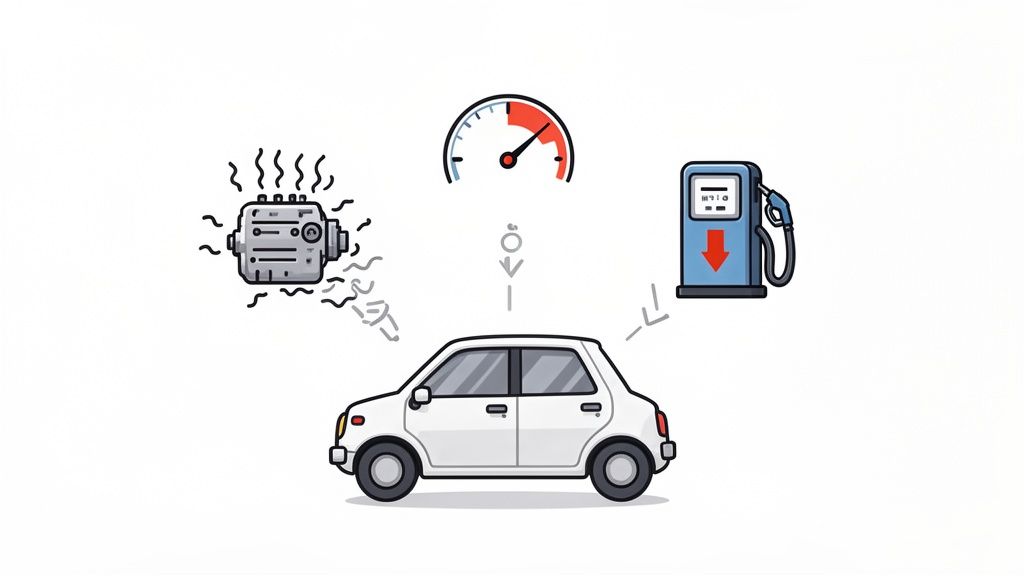
An induction service isn't just another item on a maintenance checklist; it's a direct investment in your vehicle's health that you can actually feel. Once all that built-up gunk is cleared out and your engine can finally take a deep, clean breath, you’ll notice a real difference in how your car performs every single day. Think of it as preventative care that pays you back both at the pump and behind the wheel.
The most immediate payoff is restored performance and smoother acceleration. With clean intake valves and a responsive throttle body, your engine gets the exact amount of air it needs, right when it needs it. That means no more hesitating when you hit the gas pedal—just smooth, steady power that makes driving more enjoyable and reliable.
Improved Fuel Efficiency and Lower Emissions
A clean intake system has a direct impact on your fuel economy. When your engine isn’t fighting against restricted airflow, it doesn’t have to work overtime or burn extra gas just to keep you moving. Clean valves help create the perfect air-fuel mixture, leading to more complete combustion in the engine.
This boost in efficiency means fewer trips to the gas station, saving you money in the long run. For families on a budget or daily commuters, those savings can really add up. On top of that, efficient combustion produces fewer harmful pollutants, helping your vehicle run cleaner and reducing its environmental footprint. This is more important than ever as engine technology evolves, especially with the rise of electric vehicles where induction motors are setting new standards for efficiency. The market for these motors is projected to hit USD 34.36 billion by 2031, driven by their robust design and performance.
An induction service is preventative care that protects your engine. By removing harmful deposits, you extend the life of critical components, helping you avoid more complex and expensive repairs down the road.
Enhanced Engine Longevity
At the end of the day, a clean engine is a happy engine. Those carbon deposits don’t just hurt performance; they cause premature wear and tear on critical parts like valves, pistons, and sensors. A regular induction service is like a deep cleaning for these vital components, making sure they operate exactly as they were designed to.
Just like a fresh air filter lets your engine breathe, this service makes sure the entire pathway is clear. You can learn more about this fundamental maintenance step in our guide to changing your car air filter. By investing in a straightforward procedure like an induction service, you’re actively protecting your engine for the long haul and keeping it reliable for many more miles.
Induction Service vs. Other Fuel System Cleanings
It's easy to get automotive maintenance terms mixed up, especially when they sound so similar. When you’re dealing with performance problems, a mechanic might bring up an induction service or a fuel injector cleaning. While they both aim to get your car running better, they’re not the same thing. Knowing the difference helps you make the right call for your vehicle.
Think of it like this: your engine needs a perfect mix of air and fuel to do its job. An induction service cleans the "lungs," making sure it can breathe properly. A fuel injector cleaning, on the other hand, clears out the "fuel lines." They tackle two completely separate—but equally vital—systems.
The Air Path vs. The Fuel Path
An induction service is all about the air intake system. The main goal here is to scrub away the carbon gunk that builds up on the throttle body, intake manifold, and valves. These are the parts that manage the air flowing into your engine. As we cover in our guide on what is throttle body cleaning, keeping this pathway clean is absolutely essential for a smooth idle and crisp acceleration.
A fuel system cleaning focuses on the other side of the equation—the components that deliver the gasoline. It’s designed to clear out deposits from places like:
- Fuel Injectors: These little nozzles spray a super-fine mist of fuel. If they get clogged, the spray pattern gets messy, and performance suffers.
- Fuel Lines and Filters: This service ensures you have a clean, steady stream of gas flowing from the tank all the way to the engine.
While both services are designed to bring back that "like-new" performance, they solve different root problems. An induction service fixes issues from restricted airflow, while a fuel system cleaning handles problems caused by poor fuel delivery.
Depending on your car's mileage and the specific symptoms you're describing, a technician might recommend one, the other, or sometimes both. Getting this right is becoming more important every day, especially as new energy efficiency rules are shaking up engine technology. These standards have a huge impact on how modern vehicles are designed and maintained. For instance, the U.S. currently holds a 77.3% share of the North American induction motor market in 2024, a trend driven by these very regulations. You can dig into more of these market insights over on Mordor Intelligence.
Why Professional Service Matters for Your Vehicle
Tackling an automotive induction service might look like a tempting weekend project, but this is one job where a DIY approach can cause more headaches than it's worth. Your vehicle's engine is a finely tuned system packed with sensitive electronics and precision parts. Using the wrong solvents or just guessing at the technique can easily fry expensive components like the mass airflow sensor or throttle position sensor, turning a simple maintenance task into a costly repair bill.
Your vehicle is a major investment, and protecting it means trusting trained professionals who have the right equipment and experience. Certified technicians know the ins and outs of different engine types—especially modern GDI engines—and use professional-grade cleaners that are strong enough to bust up stubborn carbon deposits without damaging delicate seals or sensors.
The Right Tools and Expertise
A professional induction service isn't just about spraying a can of cleaner into the intake and hoping for the best. It’s a methodical process that requires specialized equipment to deliver the solvent correctly while the engine is running. This method ensures the cleaning agent actually reaches every nook and cranny of the intake manifold and valves for a deep, effective clean.
That level of precision is exactly why professional service is so important. In the same way an expert ensures your engine's health and longevity, specialized solutions like car window security film can add another layer of protection to your vehicle. Both jobs demand a professional touch to be done right.
Handing your keys to a certified technician gives you real peace of mind. They can accurately diagnose the root cause of any performance issues and confirm if an induction service is even the right fix, saving you from spending money on work you don't need.
Protecting Your Engine for the Long Haul
Opting for a professional service is the best way to get real results that bring your vehicle’s performance and efficiency back to life. Good technicians will guarantee their work, standing behind the service to make sure your engine runs smoothly afterward. The whole point is to clean the system effectively while keeping every single component safe.
This focus on precision and reliability is a big deal across the automotive world, right down to the manufacturing of the motors that power modern cars. Induction motors, for instance, are the workhorses of both industrial machinery and electric vehicles. Their market value hit USD 26.42 billion in 2024 and is projected to climb to USD 46.09 billion by 2032, all because of the demand for dependable performance. You can find more insights on this trend over at Data Bridge Market Research. At the end of the day, whether you're building a motor or servicing an engine, it's professional execution that delivers quality that lasts.
Common Questions About Induction Services
Navigating the world of automotive maintenance can definitely bring up a lot of questions. An induction service is one of those crucial but often misunderstood procedures, so let's clear up some of the most common things people ask. This should help you make confident decisions about your vehicle's health.
One of the first questions drivers have is, "How often do I really need this?" While there's no single magic answer that fits every car, a good rule of thumb is to consider an induction service every 30,000 miles.
Of course, this can change based on your engine type—especially for modern GDI engines—and your personal driving habits. If you do a lot of stop-and-go city driving, you'll likely see carbon buildup happen a lot faster.
Induction Service vs. Tune-Up
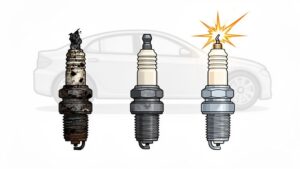
It’s easy to get an induction service confused with a classic engine "tune-up," but they are actually quite different. A traditional tune-up usually involves replacing wear-and-tear parts like spark plugs, wires, and various filters. An induction service, on the other hand, is a very specific cleaning procedure for the air intake system.
While both are meant to improve your engine's performance, they tackle different root causes. A tune-up replaces worn-out components, while an induction service is all about removing the gunk and carbon deposits that are choking off performance. Depending on your car's mileage and symptoms, you might need one, the other, or both to get it running its best.
Think of it this way: a tune-up gives your engine fresh parts to work with. An induction service ensures the pathways for air are clean and clear, allowing those new parts to perform at their peak.
Can I Just Use a DIY Kit?
You've probably seen induction cleaning kits on the shelves at your local auto parts store, but this is one area where calling in a professional is the smarter, safer bet. Those DIY kits often just don't have the power or specialized tools needed to effectively break down hardened carbon deposits deep inside the intake manifold and on the valves.
Even more importantly, using one of these kits improperly can easily damage sensitive electronic components like the mass airflow sensor, which can lead to far more expensive repairs. A professional technician uses the right tools and industry-grade solvents to do the job safely, ensuring a thorough cleaning without putting your engine’s delicate systems at risk.
When it's time for professional maintenance you can trust, count on the ASE-certified team at Kwik Kar Oil Change and Auto Care. We provide transparent, dealership-quality service to keep your vehicle running smoothly. Schedule your appointment online today and drive with confidence.