What Is Quick Oil Change Service: a Driver’s Guide
Most drivers assume a quick oil change means cutting corners. That assumption has been quietly costing people time, money, and peace of mind. A quick oil change service is a focused, efficient maintenance procedure designed to replace your engine oil, swap the filter, and check key fluids in under 20 minutes. No appointment, no waiting room marathon, no dealership markup. For busy drivers who need their car running clean without losing half a workday, understanding what this service actually includes, and where it falls short, is one of the most practical things you can do for your vehicle.
Quick oil changes take 10 to 20 minutes and cover the core maintenance your engine needs between major services.
Best for newer vehicles
Drivers with newer cars and regular schedules benefit most from fast lube services, while older vehicles need more thorough inspections.
Price does not always mean value
Bargain-bin oil and cheap filters can quietly damage your engine over time, making the cheap service the expensive one.
Know your interval
Most synthetic oil vehicles can go 5,000 to 7,500 miles between changes, but real-world driving conditions shift that number.
Quality signals matter
Certified technicians, recognized service centers, and transparent pricing separate trustworthy shops from risky shortcuts.
What is quick oil change service: process and scope
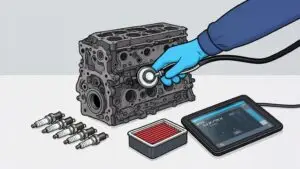
A quick oil change service is exactly what the name promises: a fast, focused procedure that replaces your engine’s old oil, installs a new filter, and confirms your vehicle’s basic fluid levels. That is the core of it. What separates it from a traditional shop visit is the process design. Quick lube facilities are built for throughput, with dedicated bays, trained technicians, and a workflow that eliminates the waiting and scheduling friction of a full-service shop.
Here is what typically happens during a standard quick oil change:
A technician drains the old, degraded oil from your engine
The oil filter is removed and replaced with a new one
Fresh motor oil is added to the manufacturer’s specified level
Basic fluids like windshield washer fluid, coolant, and brake fluid are visually checked and topped off
Tire pressure is often noted, and a quick visual inspection of accessible components is performed
Quick lube technicians complete this entire process in as little as 15 minutes, covering the drain, filter swap, refill, and essential fluid checks. The focus is speed and precision on the tasks that matter most for engine health between comprehensive service visits.
Pro Tip:Ask your technician specifically which fluids they top off and whether the oil filter brand they use meets your manufacturer’s specifications. This one question separates professional shops from assembly-line operations.
What a quick oil change does not include is equally important to understand. You will not get a full multi-point inspection, a brake assessment, or a detailed undercarriage review. Those services belong to a full-service shop or dealership visit. Think of the quick oil change as your engine’s regular hydration. It keeps things running clean and protected, but it does not replace the periodic full checkup your vehicle also needs.
Benefits of quick oil change for busy drivers
For drivers with demanding schedules, the benefits of a quick oil change go well beyond saving time. The no-appointment model alone removes one of the biggest barriers to consistent vehicle maintenance. You pull in, you get serviced, you leave. That simplicity keeps drivers on schedule with their oil changes instead of postponing them for weeks because booking a dealership appointment feels like too much effort.
The practical advantages stack up quickly:
No appointment required. Most quick lube locations accept walk-ins, meaning you can get your oil changed during a lunch break or on the way home.
Fast turnaround.Quick lube shops finish an oil change in 10 to 15 minutes, compared to 30 to 60 minutes at a full-service shop.
Cost-effective for routine maintenance. Quick oil change prices are typically lower than dealership rates, making it easier to stay current with your service schedule.
Ideal for newer vehicles. Cars under warranty with no existing mechanical concerns do not need comprehensive inspections at every oil change. A quick service covers exactly what they need.
Consistent engine protection.Skipping routine maintenance costs drivers up to 75% more over five years due to accelerated wear, sludge buildup, and premature component failure.
Pro Tip:If you drive in stop-and-go city traffic or make frequent short trips under five miles, your oil degrades faster than the mileage interval suggests. Consider shortening your change interval by 10 to 15 percent under those conditions.
The convenience factor also has a real psychological benefit. When maintenance feels easy, drivers actually do it. That consistency is what protects your engine over the long term, not the occasional heroic full-service visit after 8,000 miles of neglect.
Quick oil change vs. full-service and dealership options
Understanding where a quick oil change fits in your maintenance plan requires an honest comparison with the alternatives. Each service type has a specific role, and choosing the wrong one for your vehicle’s condition is where drivers get into trouble.
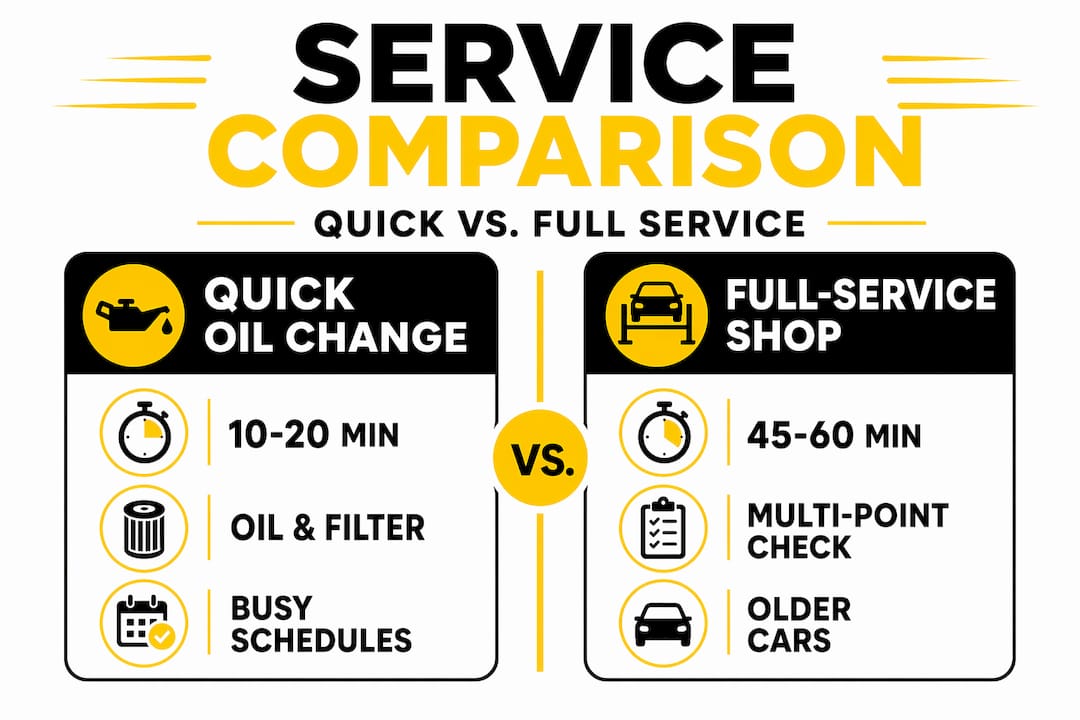
Quick lube shops prioritize rapid oil service, while full-service repair shops invest more time in comprehensive inspections. Neither is universally better. They serve different needs at different stages of a vehicle’s life.
According to J.D. Power’s 2026 analysis, quick lube services are best suited for newer vehicles and busy schedules, while full-service shops are the right call for older or high-mileage vehicles that need a thorough safety review. The mistake most drivers make is treating one service type as a permanent replacement for the other, rather than using both strategically.
Pro Tip:Schedule a full-service inspection once a year or every 15,000 miles, whichever comes first, and use quick oil changes for everything in between. This approach gives you the best of both worlds without overpaying for services your newer car does not yet need.
For a deeper look at how full-service oil changes protect your engine differently, the distinction becomes especially clear for vehicles with over 75,000 miles on the odometer.
How to find a quality quick oil change service
Finding a trustworthy quick oil change near me is not about finding the cheapest coupon. It is about finding a shop where speed does not come at the cost of quality. Mechanics consistently warn that cheap oil and low-quality filters slowly cook internal engine components, turning a $30 “savings” into a $3,000 repair bill.
Here is what to look for when evaluating a quick oil change provider:
Certified technicians. ASE certification signals that the people touching your engine have met a recognized professional standard.
Quality oil and filter brands. Ask what oil brand they use and whether it meets your vehicle’s API and OEM specifications.
Recognized affiliations. Shops recognized by CARFAX or RepairPal have a verifiable service history and accountability standards.
Transparent pricing. A trustworthy shop tells you the price before the work starts, not after the drain plug is already out.
Customer reviews that mention specifics. Generic five-star reviews mean little. Look for reviews that describe what the technician found, explained, or caught.
Before you commit to a shop, ask these three questions directly: What oil brand and viscosity will you use? Does this service include a visual inspection? What is the exact price for my vehicle’s oil type?
A shop that answers those questions clearly and confidently is one worth trusting. A shop that hedges or upsells aggressively before you have even agreed to the base service is one worth leaving. For guidance on selecting a reliable provider in your area, the criteria above apply regardless of location.
How often to get an oil change and what to expect after
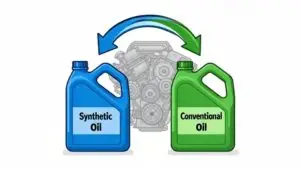
Oil change frequency is one of the most misunderstood topics in vehicle maintenance. The old “every 3,000 miles” rule is outdated for most modern vehicles. Most modern vehicles using full synthetic oil can go 5,000 to 7,500 miles between oil changes, while synthetic blends typically require service every 3,000 to 5,000 miles. Conventional oil falls closer to the 3,000-mile range, especially under demanding conditions.
Here is a practical framework for staying on schedule:
Check your owner’s manual first. The manufacturer’s recommended interval is your baseline. Everything else is an adjustment from that number.
Factor in your driving conditions. Frequent short trips, extreme heat, dusty environments, and heavy towing all accelerate oil degradation beyond what the mileage interval assumes.
Watch for warning signs. Dark, gritty oil on the dipstick, a burning oil smell, or the oil pressure warning light are signals your engine is telling you something. Learn the signs your car needs an oil change before those signals become expensive.
Keep a service log. Write down the date, mileage, oil type, and shop name after every oil change. This record protects you during warranty claims and helps you spot patterns in your vehicle’s needs.
Do a quick check after service. Within 24 hours of your oil change, pull the dipstick and confirm the oil level sits between the minimum and maximum marks. Check underneath the car for any fresh drips near the drain plug or filter. A properly sealed service leaves no trace.
Following these steps turns a routine oil change into a genuine maintenance practice rather than a reactive fix. Your engine does not announce its distress until the damage is already done. Staying ahead of that curve is what separates drivers who rarely face major repairs from those who seem to always be dealing with one.
My honest take on quick oil change services
I have seen thousands of vehicles come through service bays, and the pattern is consistent. The drivers who maintain their oil changes on schedule, even with quick lube services, have engines that look dramatically cleaner at 100,000 miles than those who skip or delay. The oil is doing its job when it is fresh. When it is not, the engine is quietly paying the price.
That said, I want to be direct about one thing: a quick oil change is not a substitute for knowing your vehicle’s full condition. I have watched drivers rely exclusively on fast lube visits for years, only to discover worn brake pads, a cracked belt, or a coolant leak that a simple annual inspection would have caught early. The quick service did its job. The driver just needed to pair it with something more thorough once a year.
My recommendation is straightforward. Use quick oil change services for what they do brilliantly: fast, affordable, consistent engine protection. But do not let the convenience become a reason to avoid a full inspection entirely. The best maintenance plan is one that uses each service type where it excels, not one that replaces all of them with the fastest option available.
The drivers I respect most treat their vehicles the way they treat their own health: routine check-ins for the basics, and a thorough physical when something needs a closer look.
— Kwik
Experience the Kkrichardson difference
If you have been searching for a quick oil change near me that does not make you choose between speed and quality, Kkrichardson delivers both without compromise. At Kwik Kar Oil Change and Auto Care in Richardson, TX, ASE-certified technicians handle your service with the same attention a dealership provides, in a fraction of the time.
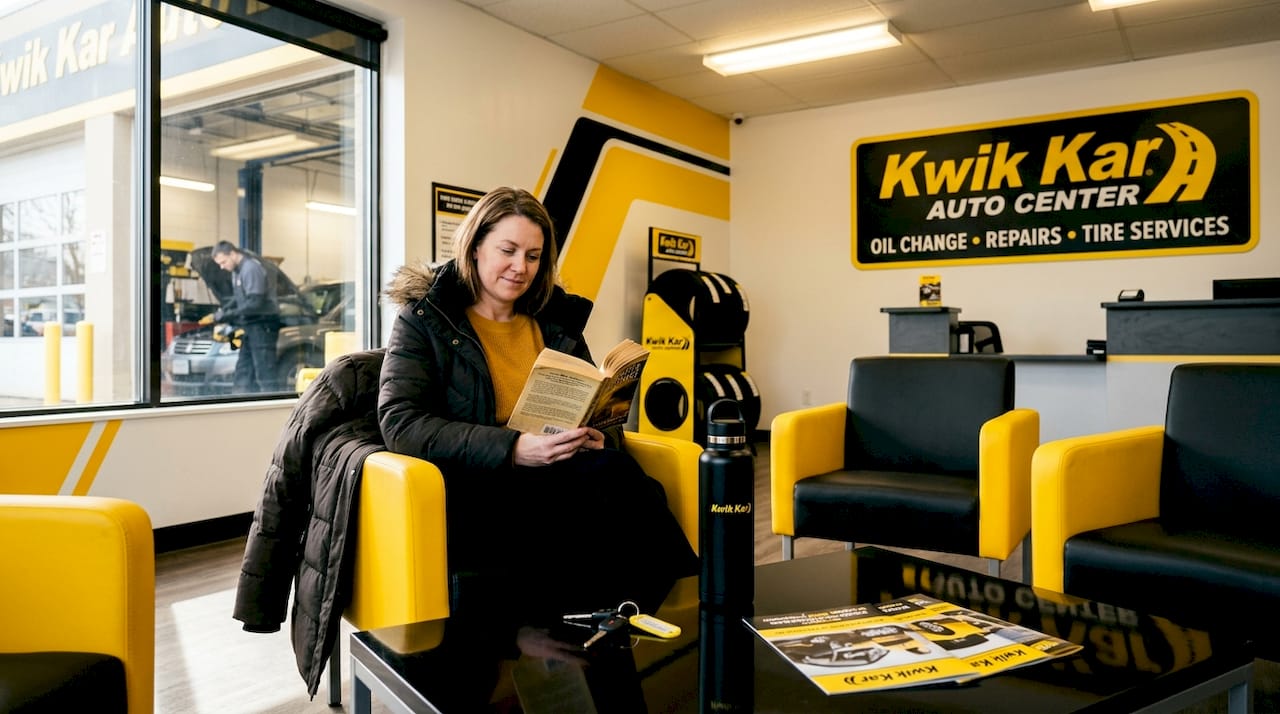
Kkrichardson’s oil change services cover both conventional and full synthetic options, with transparent pricing and no surprise add-ons. The shop is recognized by CARFAX and RepairPal, and offers special discounts for military personnel and first responders. Whether you need a fast routine oil change or a more thorough look at your vehicle’s health, the team at Kkrichardson is equipped to handle it. Visit Kwik Kar’s service center to see the full range of auto repair and maintenance options available, and experience what it feels like to leave a shop confident your car was actually taken care of.
FAQ
What does a quick oil change service include?
A quick oil change service typically includes draining the old engine oil, replacing the oil filter, refilling with fresh motor oil, and topping off basic fluids like coolant and windshield washer fluid. The entire process takes between 10 and 20 minutes.
How often should I get a quick oil change?
Most vehicles using full synthetic oil need an oil change every 5,000 to 7,500 miles, while conventional oil requires service closer to every 3,000 miles. Always check your owner’s manual and adjust for demanding driving conditions like frequent short trips or extreme heat.
Is a quick oil change worth it for my car?
Yes, for newer vehicles with no major mechanical concerns, a quick oil change is an efficient and cost-effective way to maintain engine health. Older or high-mileage vehicles benefit from pairing quick oil changes with periodic full-service inspections.
How do I find a trustworthy quick oil change near me?
Look for shops with ASE-certified technicians, transparent pricing, quality oil brands, and affiliations with recognized organizations like CARFAX or RepairPal. Avoid choosing based solely on the lowest price, since cheap oil and filters can cause long-term engine damage.
What should I check after a quick oil change?
Within 24 hours of service, pull the dipstick to confirm the oil level is correct and inspect underneath the vehicle for any leaks near the drain plug or filter. A properly completed service will show clean oil at the right level with no signs of dripping.

 Kkrichardson’s oil change services cover both conventional and full synthetic options, with transparent pricing and no surprise add-ons. The shop is recognized by CARFAX and RepairPal, and offers special discounts for military personnel and first responders. Whether you need a fast routine oil change or a more thorough look at your vehicle’s health, the team at Kkrichardson is equipped to handle it. Visit Kwik Kar’s service center to see the full range of auto repair and maintenance options available, and experience what it feels like to leave a shop confident your car was actually taken care of.