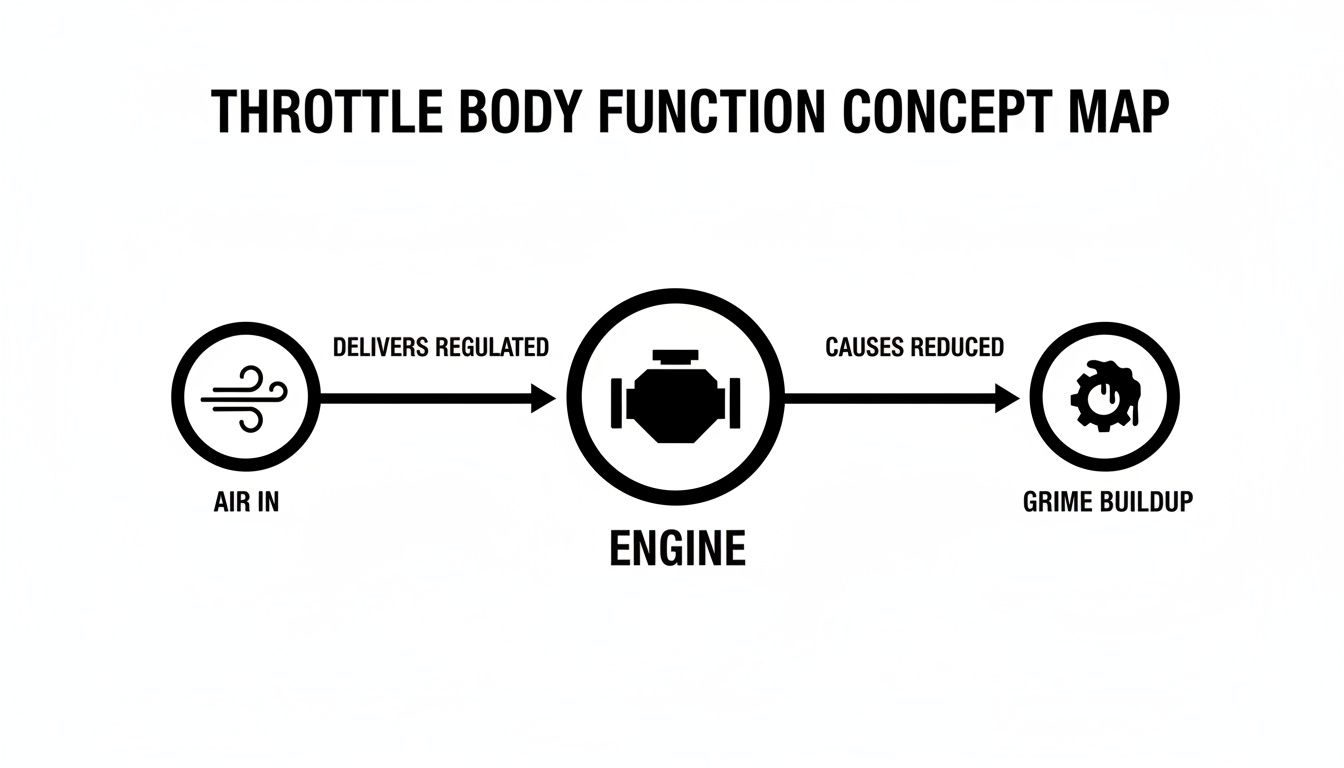
Think of throttle body cleaning as a deep clean for your engine's airways. It’s the process of clearing out all the built-up gunk—carbon, oil, and grime—that naturally accumulates over time. This simple but critical service clears the "throat" of your engine, allowing it to breathe freely and perform its best.
If you've been dealing with a rough idle, sluggish acceleration, or have noticed your fuel economy dipping, a dirty throttle body is a likely culprit.
Understanding Your Engine’s Air Supply
To really get why this matters, it helps to think of your engine as needing to breathe, just like a person. The throttle body is essentially its mouth and windpipe, controlling exactly how much air gets into the engine's combustion chamber.
When you step on the gas pedal, you're not directly injecting fuel. Instead, you're opening a small plate inside the throttle body called a butterfly valve. The further you press, the wider that valve opens, letting in more air. Your car’s computer sees this rush of air and instantly adds the right amount of fuel to match. This precise air-fuel mix is what creates the power that gets you moving. It’s a beautifully simple system that works perfectly—until it gets dirty.
The Problem With Buildup
Over tens of thousands of miles, a sticky, black residue of carbon, oil vapor, and road dirt starts to coat the inside of the throttle body. It especially gums up the edges of that delicate butterfly valve. This isn't a sign of a problem; it's just a normal byproduct of how modern engines, particularly their crankcase ventilation systems, operate.
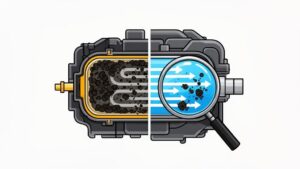
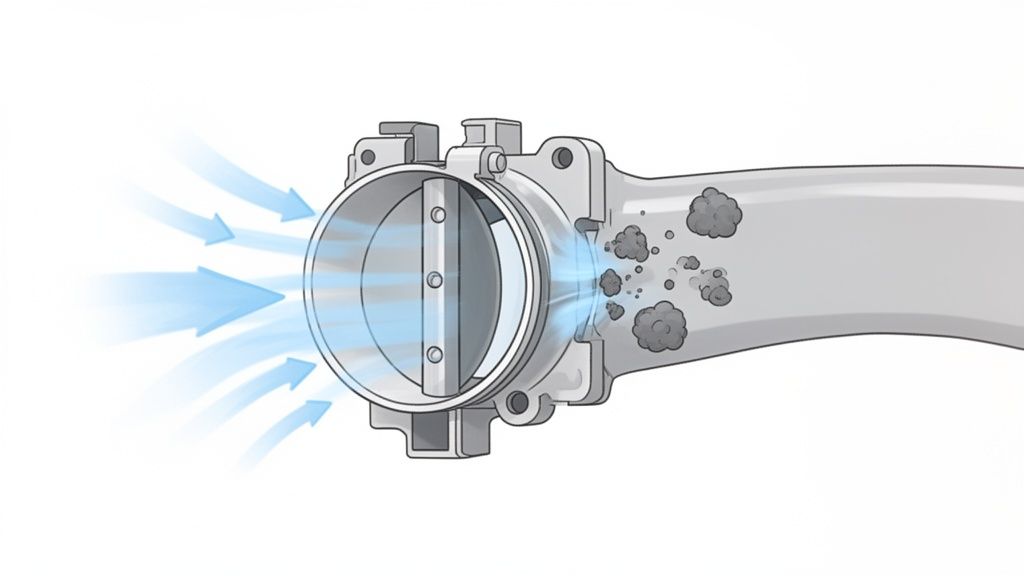
This gunk acts like plaque in an artery, restricting flow and preventing the valve from moving smoothly or closing completely. Your engine starts to struggle to get a consistent and accurate supply of air, especially at low speeds or when you're just idling at a stoplight. That's when you start to feel those performance issues creep in.
The diagram below shows just how this buildup chokes off the airflow your engine desperately needs.
As you can see, the grime directly obstructs the airway, throwing off that crucial air-fuel ratio your engine depends on. A clogged air filter can make this problem even worse, which is another reason why it's so important to know the basics of changing your car's air filter.
This isn't some rare mechanical issue; it's an incredibly common maintenance item. In fact, the global market for throttle body cleaners has already hit USD 1.29 billion—a testament to how many drivers deal with this. Ignoring it can hurt your wallet, too, potentially reducing fuel efficiency by up to 10-15% in as little as 50,000 miles.
To put it simply, here’s a quick overview of what throttle body cleaning is all about.
Throttle Body Cleaning at a Glance
| Aspect | Description |
|---|---|
| What It Is | A service that removes carbon, oil, and grime from the engine's throttle body assembly. |
| Purpose | To restore proper and unrestricted airflow into the engine's combustion chamber. |
| Benefit | Improves idle stability, smooths out acceleration, and can restore lost fuel efficiency. |
| Why It's Needed | Buildup from the engine's ventilation system naturally restricts the butterfly valve over time. |
This table neatly sums up why this straightforward service is a key part of keeping your car running smoothly and efficiently for the long haul.
Signs Your Throttle Body Needs Attention
Your car has ways of telling you when something’s not quite right. A dirty throttle body is one of those issues with some very distinct warning signs. They usually start small, but if you ignore them, they’ll only get worse and start to impact your daily drive.
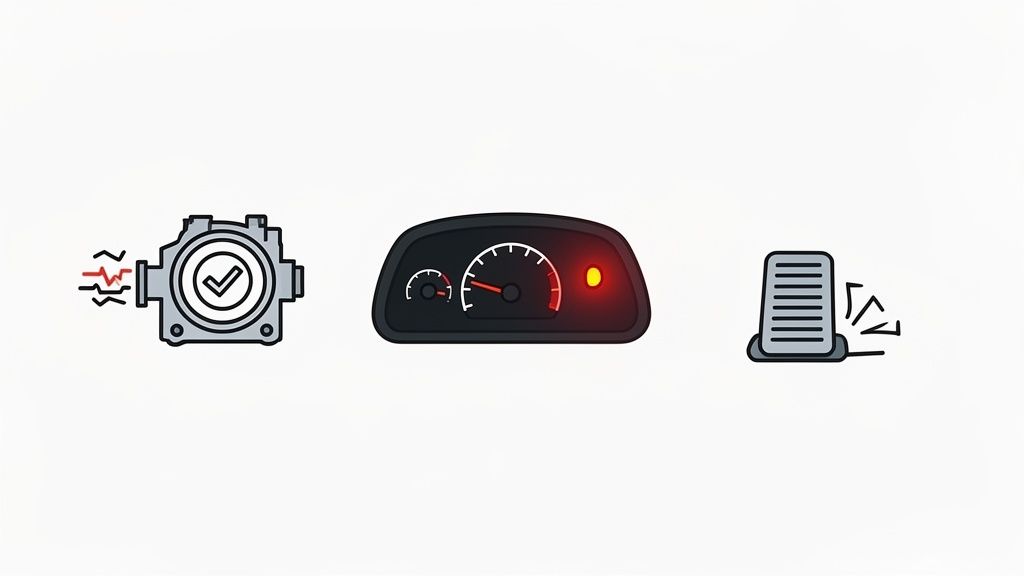
The most obvious sign is a rough or shaky idle. You’ll feel it when you’re stopped at a red light—the engine might vibrate more than usual, or you'll see the RPM needle bouncing up and down. This happens because that gunk and carbon buildup keeps the butterfly valve from closing just right, messing up the smooth, steady airflow your engine needs when it's not working hard.
Performance Issues on the Road
Once you get moving, other symptoms of a dirty throttle body can really make themselves known. You might feel a lag or hesitation when you step on the gas, almost like the engine stumbles for a second before it finally kicks in.
That frustrating delay happens because the sticky buildup is literally making the valve stick, preventing it from opening smoothly. Your car's computer expects more air instantly but isn't getting it. In really bad cases, your car might even stall out at low speeds, like when you’re pulling into a parking spot.
Other key indicators that point toward needing a throttle body cleaning include:
- Decreased Fuel Economy: When airflow is choppy and inconsistent, your engine's computer tries to compensate, often by using more gas than it should.
- Poor Acceleration: The car just feels sluggish. Merging onto the highway or passing someone can feel like a chore because the engine feels underpowered.
- Illuminated Check Engine Light: A restricted throttle body can trigger a whole host of diagnostic trouble codes (DTCs), like P0102 or P0103, which will light up that dreaded symbol on your dashboard.
A dirty throttle body isn't just a minor annoyance; it's your vehicle telling you something important. It’s signaling that a critical part responsible for your engine's breathing is getting clogged up and needs to be cleared out to restore performance.
Connecting the Dots to Airflow
When you get right down to it, every single one of these symptoms comes back to one simple problem: restricted and unpredictable airflow. Think of it like trying to run with a stuffy nose—you can do it, but everything is harder and you definitely won't be at your best. Your engine is going through the same struggle.
This is exactly why knowing what is throttle body cleaning is so vital for modern car care. It isn’t about fixing something that's broken; it’s about performing a deep clean to clear a blockage. Catching these signs early and getting a professional cleaning can stop that buildup from causing much bigger, and more expensive, problems down the road.
The Rewards of a Professional Cleaning
Now that you know the problems a dirty throttle body can cause, let’s talk about the solution. Think of a professional cleaning service as hitting the reset button on your engine’s air intake. It gives your engine a fresh start, delivering real benefits you can feel the moment you drive away.
By letting your engine breathe freely again, a good cleaning brings immediate, noticeable improvements in performance and efficiency.
The first thing you’ll likely notice is a dramatically smoother and more stable idle. That annoying shudder or vibration you felt at stoplights? Gone. Your engine now gets the precise, steady stream of air it needs, making stop-and-go city traffic feel much more comfortable and a whole lot less frustrating.
Restored Power and Responsiveness
A clean throttle body does more than just steady your idle—it brings your car’s acceleration back to life. The hesitation or lag you felt when hitting the gas pedal gets replaced by a crisp, immediate response.
Because the butterfly valve can move without getting stuck on gunk, your engine gets the air it demands instantly. Merging onto the highway or passing other cars feels powerful and effortless once again.
This is a key part of what makes an engine tune-up so effective, as it ensures all your engine’s components are working together just right. A throttle body cleaning simply helps your car perform the way its engineers designed it to.
Improved Fuel Economy and Long-Term Health
Maybe the best benefit of all is the one you’ll see at the gas pump. An engine that breathes efficiently doesn't have to work overtime or waste fuel trying to compensate for inconsistent airflow. This translates directly to better fuel economy, saving you money every time you fill up.
This isn't a small problem, either. The global automotive throttle body market is valued at USD 4.58 billion, a huge number driven by the need to keep cars running right. Studies show a staggering 60% of cars with over 100,000 miles suffer from throttle contamination, but a simple cleaning can reclaim 5-12% of lost MPG. For the average driver, that could mean saving around $150 a year. You can dig deeper into these numbers over at Market Research Future.
By addressing the buildup early, you’re not just fixing a current problem. You are also performing preventative maintenance that reduces unnecessary strain on other vital engine components, contributing to the overall long-term health and reliability of your vehicle.
Comparing DIY and Professional Service
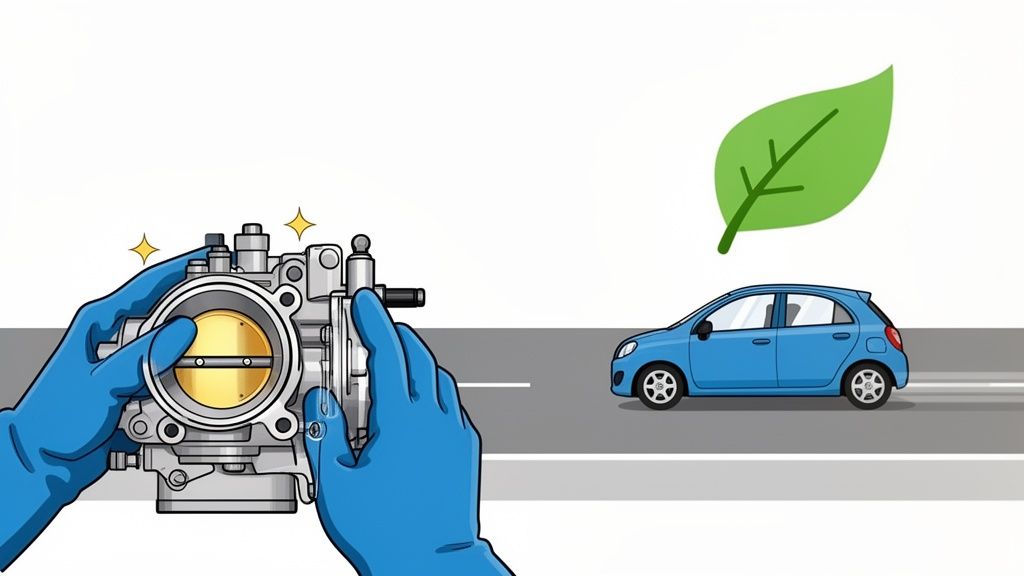
With a ton of online tutorials just a click away, it can be really tempting to try cleaning your throttle body yourself. The basic idea seems simple enough—just spray and wipe, right? But modern cars have added a layer of complexity that can quickly turn a quick weekend project into a costly trip to the repair shop.
Before you grab a can of cleaner, it’s worth understanding what’s really at stake. The main danger in a home attempt is messing with the delicate electronics involved. Today’s throttle bodies aren’t just simple mechanical flaps; they’re sophisticated electronic parts tied directly to sensitive position sensors. One wrong move or the wrong chemical can cause permanent damage.
The Pitfalls Of A DIY Approach
One of the most common mistakes we see is people using an aggressive cleaner, like one meant for brakes or carburetors. These harsh chemicals can strip the special low-friction coatings inside many modern throttle bodies and can completely destroy plastic parts or rubber seals. This kind of damage often leads to erratic engine performance and might even mean you have to replace the entire, expensive unit.
But the biggest hurdle for most DIYers is the critical last step that many online guides gloss over: the idle relearn procedure. After you’ve cleaned everything, your car's computer needs to be told how to work with the throttle valve's new, clean resting position.
If you don't perform this electronic "handshake" correctly, you're in for a world of frustration. Common issues include:
- A high or surging idle that makes the car jumpy and hard to control at low speeds.
- An erratic idle that bounces up and down, making the car run even worse than before.
- New diagnostic trouble codes that light up your check engine light.
The biggest risk of a DIY throttle body cleaning isn't just failing to fix the problem; it's accidentally creating a new, more complicated one. What starts as a simple cleaning can quickly become a headache that requires professional diagnostic tools to sort out.
The Professional Advantage At Kwik Kar
When you bring your vehicle to a certified shop like Kwik Kar, you sidestep all these risks. Our ASE-certified technicians know the specific needs of different makes and models. We use the right, sensor-safe cleaners and have the proper tools to get the job done right without causing any harm.
Most importantly, we have the advanced diagnostic equipment needed to perform the idle relearn procedure perfectly, every single time. This step guarantees your vehicle's computer is calibrated correctly, giving you a smooth idle and optimal performance right out of our bay.
Let's break down the key differences.
DIY vs Professional Service A Quick Comparison
| Factor | DIY Approach | Professional Service (Kwik Kar) |
|---|---|---|
| Tools & Chemicals | May use incorrect, harsh cleaners that can cause damage. | Uses sensor-safe chemicals and specialized tools for the specific vehicle. |
| Expertise | Relies on general online guides, which may not cover your car's specifics. | ASE-certified technicians with experience across all makes and models. |
| Idle Relearn | Lacks the professional diagnostic tools required for proper calibration. | Uses advanced diagnostic equipment to perform the idle relearn procedure correctly. |
| Risk | High risk of damaging sensitive electronics or creating new idle problems. | Zero risk. The job is done safely, correctly, and guaranteed to work. |
| Time & Effort | Can become a time-consuming, frustrating project with unexpected complications. | A quick, straightforward service that gets you back on the road without hassle. |
Ultimately, trusting an expert not only ensures the job is done right but also saves you from the potential headaches and unexpected expenses of a DIY attempt gone wrong. You get peace of mind knowing your car is in good hands.
Why Trust Certified Experts with Your Vehicle?
When it comes to a service as precise as a throttle body cleaning, the line between a successful fix and a costly mistake is razor-thin. It really all boils down to one thing: expertise. While it might look like a simple cleaning job, today’s cars are packed with complex electronic systems that demand a knowledgeable hand. This is where a certified auto care center truly proves its worth.
Choosing a shop with ASE-certified technicians means you’re putting your car in the hands of pros who have met tough industry standards. These experts don’t just rest on their laurels; they go through continuous training to keep up with the latest automotive tech. That ensures they know the specific needs of your vehicle, from using the right sensor-safe chemicals to tightening bolts to exact torque specifications.
The Assurance of Proper Procedures
A certified technician isn’t just cleaning a part—they’re following a precise, manufacturer-recommended playbook. This includes correctly performing the critical idle relearn procedure after the service is done.
Without this electronic recalibration, your engine could actually run worse than before. You might end up with a high or erratic idle that a DIY approach simply can’t fix. It’s this commitment to doing the job right from start to finish that gives you invaluable peace of mind.
You can learn more about what it takes to be a top-tier service center by reading about our ASE and RepairPal certifications. It’s all about making sure every service, big or small, is done to the highest possible standard.
Choosing a certified professional for your throttle body cleaning is an investment in your vehicle's reliability. It guarantees the service is done correctly, safely, and without risking damage to sensitive electronic components, ultimately protecting your car's long-term health.
Just as you trust experts for internal engine care, the same principle applies to maintaining your vehicle's appearance and protection. Understanding the benefits of professional auto detailing services can highlight the broader value of entrusting your car to specialists.
Transparency and Trust
Ultimately, trusting a certified expert is about confidence. It’s about knowing you’ll get a transparent, fair estimate and that the work will be done right the first time.
Professionals have the diagnostic tools to confirm a dirty throttle body is the real cause of your car trouble, saving you from paying for repairs you don’t need. They stand behind their work, making sure you drive away safely with your car’s performance fully restored. When your vehicle's health is on the line, there’s just no substitute for the skill and accountability of a certified technician.
Common Questions About Throttle Body Cleaning
Even after seeing the warning signs and understanding the benefits, it's natural to have a few more questions. To help you feel completely confident about this service, we’ve answered some of the most common things drivers ask us.
Think of this as your quick guide to making the right call for your car's maintenance plan and your budget.
How Often Should I Get This Service Done?
This is easily the most popular question we get, and the truth is, there's no single magic number. A good rule of thumb for most vehicles is to have the throttle body checked and possibly cleaned every 30,000 to 75,000 miles.
But that's just a starting point. Your car's actual needs can change based on a few things:
- Your Driving Habits: Lots of stop-and-go city traffic will gunk up a throttle body much faster than long, smooth highway cruises.
- Your Vehicle's Age and Mileage: Older cars, especially those with higher mileage, are more likely to have the kind of oil blow-by that creates that sticky buildup.
- Engine Type: Some engine designs, like direct injection (GDI) engines, are known for building up carbon a bit faster.
The best strategy is to follow your manufacturer's service schedule while also keeping an eye out for the performance issues we talked about earlier.
If there's one thing to remember, it's this: be proactive. Waiting until your car is idling rough or stalling puts a ton of unnecessary stress on your engine. A preventative cleaning every 30,000 miles can head off a huge percentage of hesitation and stumbling problems, especially in vehicles as they get older.
What Factors Influence the Cost?
A professional throttle body cleaning service will typically run anywhere from $75 to $250. The final price tag really depends on what it takes to get the job done right for your specific car.
First off, your vehicle's make and model are a huge factor. On some cars, the throttle body is sitting right on top of the engine, easy to get to. On others, it’s buried under a bunch of other parts, which means more labor is needed to get it off, cleaned, and put back on correctly.
The amount of buildup also plays a role. A lightly dirty throttle body might just need a quick spray-and-wipe cleaning. But if it's caked with years of thick grime, it will probably have to be completely removed for a more intensive cleaning. At Kwik Kar, we’re always upfront with a clear estimate before we start any work, so there are never any surprises.
Can a Dirty Throttle Body Prevent My Car From Starting?
Absolutely. In severe cases, a completely clogged throttle body can stop your car from starting at all. While it's more common for a dirty throttle body to cause a rough idle or stalling after the engine is already running, a critical blockage can mess up that initial air-fuel mix so badly that the engine can't even fire up.
This is especially true for modern cars with "drive-by-wire" throttles, which don't have a physical cable connecting the gas pedal to the engine. If the electronic throttle control gets so gummed up that it can't open the valve plate, the engine's computer (ECU) won't get the air it needs to start. It’s a perfect example of how a simple maintenance item is tied directly to your car’s basic ability to run.
Keeping your throttle body clean is directly tied to the health of your entire fuel system. It's no surprise that the market for related products, like fuel injector cleaners, is expected to jump from USD 1.0 billion to USD 1.4 billion in the next decade. That sticky throttle body grime can affect injectors on most passenger cars, hurting their spray pattern and causing you to burn more fuel. You can learn more about these fuel system trends to see just how critical this kind of maintenance is.
At Kwik Kar Oil Change and Auto Care, our ASE-certified technicians have the right tools and know-how to perform a thorough, safe throttle body cleaning. We'll make sure your engine can breathe easy again, restoring its performance and giving you peace of mind. Schedule your service with us today at https://www.kkrichardson.com.