If your steering wheel starts to shake when you hit the brakes, pay attention. That vibration is almost always a tell-tale sign of warped brake rotors. It’s a direct message from your car that something isn't right in your braking system.
Don't just turn up the radio and hope it goes away. This is a clear signal that your brakes need a professional look, and soon.
That Unsettling Shake When You Brake—What It Really Means
Feeling a sudden, unnerving vibration through your steering wheel or brake pedal isn't just a minor annoyance—it's your vehicle's way of sending up a red flag. For drivers navigating the daily stop-and-go of Richardson, this wheel shake is a common complaint that points straight to a problem with the brakes.
This isn't an issue you can afford to put on the back burner. The safety implications are very real. A compromised braking system can:
- Significantly increase your stopping distance in an emergency.
- Lead to a loss of control during hard braking.
- Signal that essential components are wearing out unevenly or failing.
Understanding the Immediate Risks
The vibration you feel is the physical result of a mechanical flaw. The most common culprit? Warped brake rotors. Over time, the intense heat from braking can cause the metal disc of the rotor to distort. When you press the brake pedal, the pads grab onto this now-uneven surface, causing that shudder.
Other potential causes include a sticking brake caliper that isn't releasing properly or brake pads that have worn down severely. Whatever the source, the result is the same: a dangerous shake that compromises your ability to stop safely.
Ignoring a wheel shake when braking is a gamble you don't want to take. These parts are at the very heart of your car's safety system. Any sign of a problem warrants a prompt, professional inspection.
For families and fleet managers in our community, this is a symptom we see often at Kwik Kar Oil Change and Auto Care. Our ASE-certified technicians have seen firsthand how warped rotors can increase stopping distances by up to 20% in critical situations. Catching this early is key.
You can dig into brake system performance studies to see just how much of an impact worn components can have. Taking this symptom seriously is the first step toward keeping your car reliable and, most importantly, safe on the road.
Before we dive deeper, let's quickly summarize what that shake might be telling you.
Common Causes of Wheel Shake at a Glance
Use this table to quickly identify what might be causing your vehicle's vibration.
| Symptom | Most Likely Cause | Urgency Level |
|---|---|---|
| Steering wheel shakes only when braking | Warped Brake Rotors | High – Schedule an inspection immediately. |
| Vibration felt at high speeds, even without braking | Unbalanced Tires or Wheel Alignment Issue | Medium – Have it checked soon to prevent tire wear. |
| Shaking is accompanied by a grinding noise | Severely Worn Brake Pads | High – Stop driving and get it inspected. |
| A burning smell comes with the vibration | Sticking Brake Caliper | High – This can cause serious damage quickly. |
This table is a great starting point, but a professional diagnosis is the only way to be certain. Now, let’s look at how you can start narrowing down the problem yourself.
Performing a Preliminary At-Home Diagnosis
Before you even think about picking up the phone to call a mechanic, there are a few simple but effective checks you can do right in your own driveway. A quick visual inspection can tell you a lot about why your wheel is shaking under braking, giving you valuable information for when you do bring it in.
Just remember, safety first. Always make sure your car is on a level surface, in park (or in gear for a manual), with the emergency brake on and the engine completely off.
What to Check First: A Quick Walkaround
Your first stop should be the wheels themselves. It almost sounds too simple, but you’d be surprised how often loose lug nuts are the culprit behind a nasty wheel vibration—and it’s a dangerous problem to ignore. Grab the lug wrench from your trunk and give each nut on all four wheels a check. They should be snug; if you can easily tighten any of them, you may have just found your issue.
This simple decision tree helps visualize the most common cause when your wheel shakes when braking.
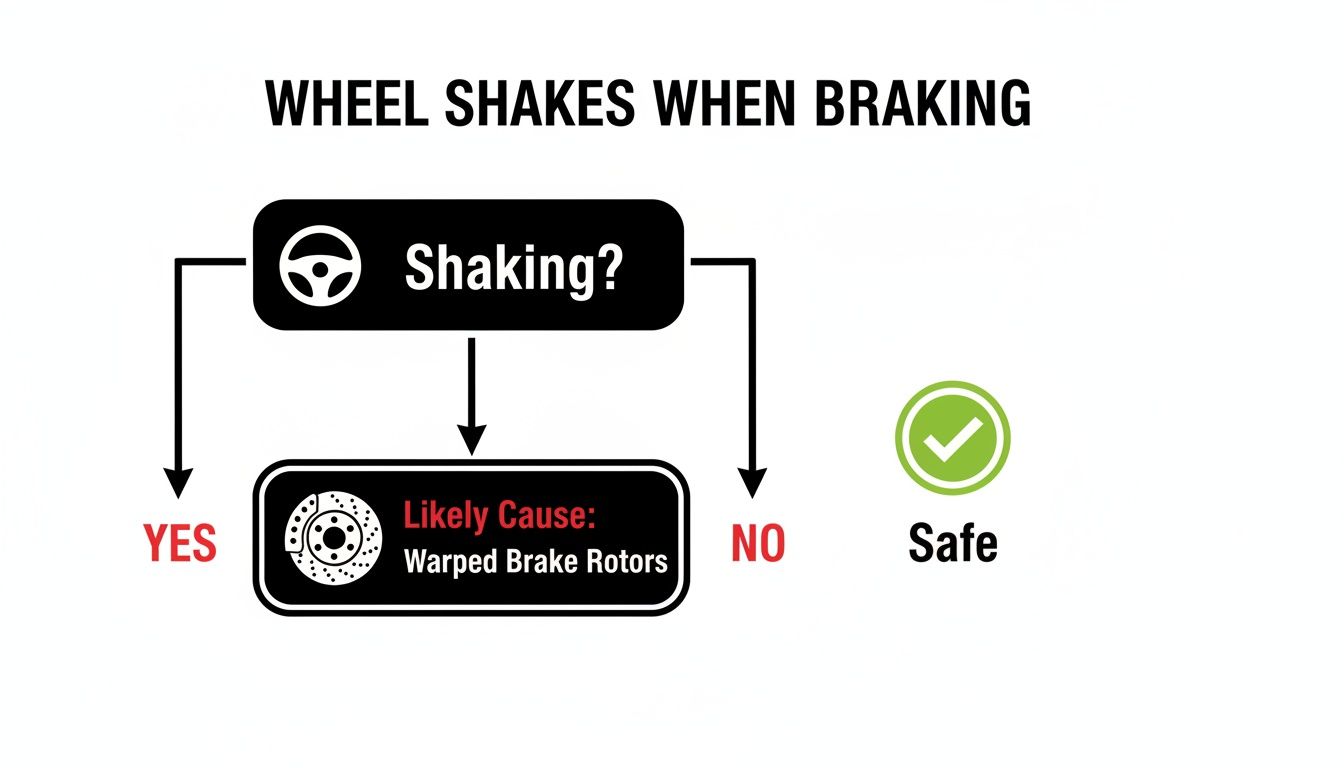
As you can see, a shaking steering wheel that only happens when you brake almost always points straight to a problem with the brake system, usually the rotors.
Inspecting Your Brakes and Tires
With the lug nuts confirmed tight, take a closer look at the brake components you can see through your wheel spokes. You don't need to be a certified mechanic to spot obvious signs of trouble.
Peer at the brake rotor—that’s the large metal disc your wheel is bolted to. Does the surface look smooth and even, or can you see deep grooves or scoring marks? Another dead giveaway of overheating, which is the main cause of rotor warping, is a bluish or purplish discoloration on the metal. This means the rotor has gotten extremely hot, making it highly likely that it has warped.
Next, turn your attention to the tires. Sometimes a tire problem can masquerade as a brake issue, so a quick but thorough check is worth your time.
- Look for Bulges: Run your hand carefully over the sidewall of each tire. Any noticeable bulges or blisters are a serious red flag, indicating the tire's internal structure has failed. This is a major safety hazard.
- Check Tread Wear: Is the tread wearing down evenly across the surface? If you see significantly more wear on the inside or outside edge, it could point to an alignment problem, which can definitely contribute to shaking.
- Inspect for Damage: Do a quick scan for anything embedded in the rubber, like nails or rocks, and look for any cuts or deep cracks.
This quick at-home diagnosis isn't about trying to fix the problem on your own—it's about gathering intelligence. Knowing whether you have loose lug nuts, a discolored rotor, or a bulging tire helps you have a much more productive and confident conversation with your service advisor.
Beyond the immediate diagnosis, consistent upkeep is vital. To ensure all components are regularly inspected, you might want to consult an ultimate travel trailer maintenance checklist which offers great insights on maintaining tires, brakes, and wheel bearings, principles that apply to any vehicle.
When to Stop and Call for Help
These at-home checks are really for spotting the obvious issues. If you’ve checked your lug nuts and given your brakes and tires a good look-over but can't find a clear problem, that’s perfectly fine. In fact, it's useful information.
The absence of an obvious external issue often means the problem lies deeper, maybe with a sticking brake caliper or something in the suspension system. At this point, you’ve done your due diligence. You’ve ruled out the simple stuff and can now call a professional knowing you’ve already covered the basics. This is the perfect time to book an appointment with a trusted shop.
The Prime Suspects: Brake System Failures
When you feel a shake in the steering wheel the moment you hit the brakes, the problem is almost always located somewhere in the brake system itself. This network of parts has the tough job of bringing thousands of pounds of metal to a safe stop, and the forces involved are just massive. It's no wonder that when even one small component is off, you feel it immediately.
By a long shot, the most common cause is warped brake rotors. A rotor is supposed to be a perfectly flat steel disc that your brake pads clamp down on. But heavy braking—especially in city traffic or while towing—generates a ton of heat. This constant cycle of heating and cooling can actually distort the rotor's metal, creating subtle high and low spots across its surface.
Now, when you brake, the pads grab and release over these imperfections hundreds of times a second. That rapid-fire grabbing is exactly what you feel as a pulsation or shake in the brake pedal and steering wheel. It’s the physical symptom of an inconsistent braking surface.
Uneven Brake Pad Wear and Its Impact
Right behind warped rotors, you’ll find unevenly worn brake pads. In a perfect world, your brake pads wear down evenly, keeping a flat surface that makes perfect contact with the rotor. But a few different things can throw that process off balance.
A sticking brake caliper is a classic example. The caliper is the hydraulic clamp that presses the pads against the rotor. If the caliper's piston or the slider pins it moves on get corroded or gunked up, it might not pull back properly when you let off the brake. This leaves one pad in light, constant contact with the rotor, causing it to wear out much, much faster than the other.
This creates a kind of wedging effect when you do brake, where one side of the caliper is squeezing harder. That imbalance is a direct cause of vibrations. For local heroes like our military personnel and first responders who get discounts at Kwik Kar, we provide transparent brake diagnostics that often pinpoint this exact issue. Based on repair trends, uneven pad wear is a top cause of shakes, affecting over 30% of vehicles with more than 50,000 miles.
Pro Tip: If you notice way more brake dust on one wheel compared to the others, that's a huge red flag for a sticking caliper and uneven pad wear on that corner of your car.
Knowing the signs of failing pads is key. You can get a better handle on these symptoms in our guide on when to replace brake pads. Catching it early can save you from having to replace your rotors, too.
Beyond Rotors and Pads: Other Brake System Issues
While rotors and pads are the usual suspects, a few other issues within the brake system can also trigger that dreaded wheel shake.
-
Sticking Brake Calipers: As we mentioned, a caliper that won’t release properly can cause overheating, which leads to warped rotors and chewed-up pads. You might also notice a distinct burning smell after a drive or feel the car pulling to one side.
-
Contaminated Brake Fluid: Brake fluid naturally absorbs moisture from the air over time. This water contamination lowers the fluid’s boiling point. Under heavy braking, the heat can turn this water into steam, creating air bubbles in the brake lines. This leads to a spongy or inconsistent pedal feel that can cause uneven braking forces.
All these parts have to work together perfectly as a team. A failure in one area can create a domino effect that compromises the whole system—and more importantly, your safety. Identifying these prime suspects is the first real step toward getting an accurate diagnosis and a solid repair.
When It Isn’t Your Brakes: Suspension and Wheel Issues
Sometimes, that vibration you feel when braking is a classic case of mistaken identity. Your first thought is almost always the brakes, and for good reason. But what if you've checked them out and everything looks fine? It's time to broaden the investigation.
Other problems can create a nearly identical shake, tricking you into focusing on the wrong parts entirely. Issues with your tires, wheels, suspension, and even your alignment can be the real culprits.
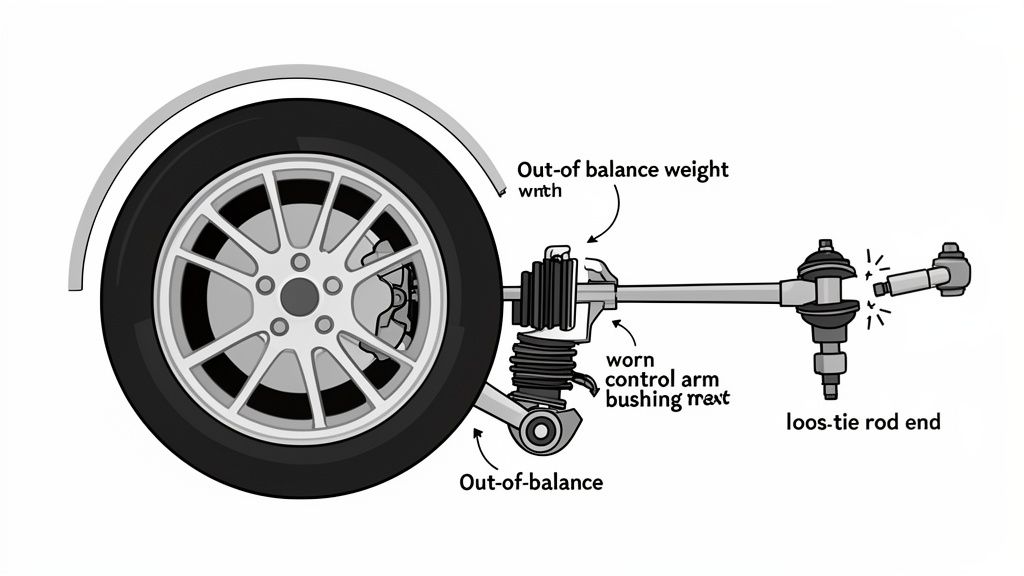
A common and often-overlooked cause is a problem with the tires or wheels themselves. For instance, out-of-balance tires will often cause vibrations at highway speeds, but the problem can become much more obvious when you hit the brakes. As your car’s weight shifts forward during braking, it amplifies any existing imbalance, making the shake feel like it's coming from the brakes.
Worn Suspension Components and Their Role
Your car's suspension is a complex web of joints, arms, and bushings, all working together to keep your ride smooth and your tires planted on the pavement. Over time, these parts wear out, creating excessive movement—or "play"—where there shouldn't be any.
When you apply the brakes, you put a tremendous amount of force on these suspension parts. If something is loose, that force will cause a noticeable shake that travels right up into the steering wheel.
Some of the usual suspects in the suspension system include:
- Worn Ball Joints: These are critical pivot points connecting your wheel hubs to the control arms. When they go bad, the wheel can wobble under braking.
- Failing Control Arm Bushings: These rubber or polyurethane parts are designed to absorb vibrations. Once they crack and degrade, they can't hold components tightly anymore, leading to a shake.
- Damaged Tie Rod Ends: As part of your steering system, worn tie rod ends create slack. That looseness often shows up as a vibration when you brake.
A big giveaway for a suspension issue is when the shake is joined by other symptoms. Listen for clunking noises over bumps, notice if the car feels "floaty" on the highway, or check for uneven tire wear. These are all signs the problem is bigger than just the brake system.
The Importance of Proper Wheel Alignment
Finally, don't forget about wheel alignment. When your wheels aren't all pointing in the same direction, it creates a constant strain on your tires, suspension, and steering components. To see how our technicians get everything pointing the right way, you can read about our professional wheel alignment services here.
A bad alignment can cause subtle vibrations during normal driving that get dramatically worse under the load of braking. If your car also pulls to one side or the steering wheel is crooked when you’re driving straight, a poor alignment is a very likely part of the puzzle. Accurately diagnosing why your wheel shakes when braking means looking at the car as a whole system, where tires and suspension are just as critical as the brakes themselves.
The Professional Repair Process What to Expect
So, you've done your homework and suspect a brake issue. Bringing your vehicle to a certified shop like Kwik Kar is the right call. It helps to know what happens behind the garage door, as it demystifies the whole process and gives you confidence in the work being done. A good repair always starts with a precise diagnosis before a single wrench is turned.
Our professional technicians will kick things off with a thorough visual inspection, which goes much deeper than what you can do at home. They'll get your car on a lift to examine the brake pads, rotors, calipers, and brake lines, looking for any signs of wear, damage, or leaks. After that, they’ll likely take it for a quick road test to confirm the symptoms you’ve described, paying close attention to when the wheel shakes when braking and how bad it feels.
Precision Diagnostics and Repair Paths
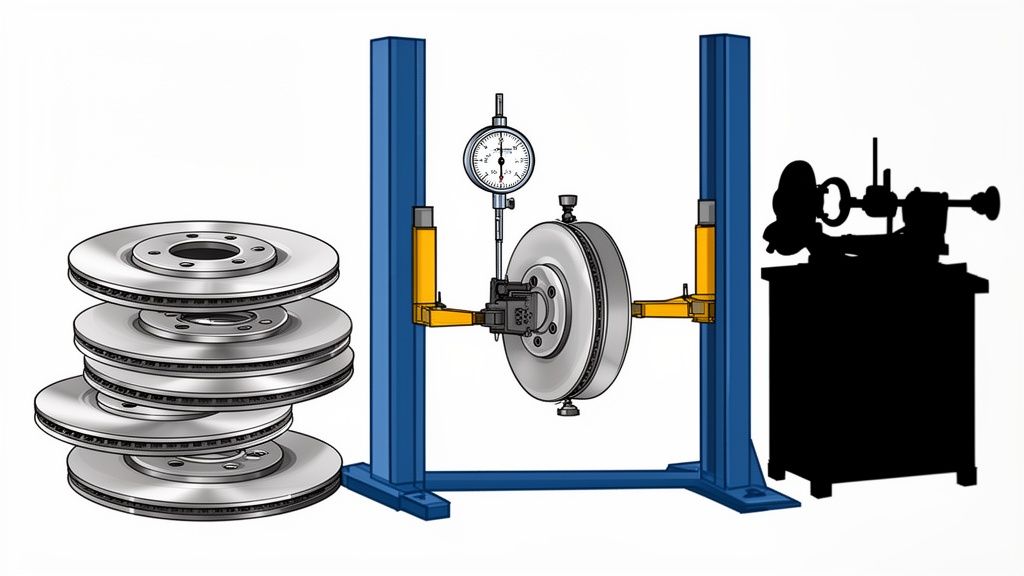
If a warped rotor is the likely culprit, we don't just guess. Our technicians use a specialized tool called a dial indicator to measure "rotor runout." This fancy term just means we're measuring the amount of side-to-side wobble in the rotor as it spins. Industry standards are incredibly tight—we're talking just a few thousandths of an inch. Anything beyond that confirms the rotor is warped and is the source of that annoying vibration.
Once we have a firm diagnosis, you'll generally have two repair options:
- Rotor Resurfacing: If the rotor still has enough thickness, a technician can use a brake lathe to shave a razor-thin layer of metal off the surface. This makes it perfectly flat again and is a great, cost-effective fix for minor warping.
- Rotor Replacement: If the rotor is too thin to be safely resurfaced or the warping is too severe, replacement is the only safe move. We'll install brand-new rotors to get things back to factory spec.
A trustworthy shop will always walk you through why one option is better than the other for your specific situation. The goal is a lasting repair that restores your vehicle’s safety, not a temporary patch that will have you back in a few months.
For small business fleets or anyone who puts a lot of miles on their car, this level of detail is critical. Industry data shows that 40% of brake vibrations can be traced back to warped discs after just 40,000 miles. At Kwik Kar, our CARFAX-backed inspections are designed to extend the life of your brake components by following best practices, like replacing necessary absorbers and shims every time.
Why Quality Parts and Service Matter
When it comes to your brakes, choosing high-quality replacement parts is non-negotiable. Cheaper, low-grade rotors are often made with inferior metal that can't handle heat, making them much more likely to warp again down the road. Opting for quality components and expert installation ensures the job is done right the first time.
Understanding the whole repair process, from diagnosis to parts selection, helps you make an informed decision. For a detailed breakdown of what's involved in professional brake services, our team is always ready to give you a transparent and thorough explanation for your specific vehicle.
Answering Your Top Questions About Brake Vibrations
When you feel that unmistakable shake while braking, a lot of questions pop into your head. Getting straight answers is the first step toward making the right call for your car and your safety. Let's tackle some of the most common ones we hear from drivers.
Can I Just Replace the Brake Pads to Fix the Shaking?
It’s a tempting thought, isn't it? If only it were that simple. Unfortunately, just swapping out the pads almost never solves a shaking problem. That vibration is a tell-tale sign that the surface of your brake rotor is uneven or warped.
When you put brand-new, perfectly flat brake pads against a warped rotor, you're creating a recipe for trouble. Not only will the shaking continue, but those new pads will wear down incredibly fast and unevenly. To get a real, lasting fix, you need a professional to inspect the rotors. They'll tell you if they can be resurfaced or if they need to be replaced altogether.
What’s the ballpark Cost to Fix This?
The cost to sort out a wheel shake can swing pretty wildly because it all depends on what's actually causing it. A simple fix, like getting a tire rebalanced, is usually quite affordable.
However, if warped rotors and worn-out pads are the culprits, you're looking at a more involved repair with new parts and the labor to install them. This can run anywhere from a few hundred to several hundred dollars for each axle, and the final price really depends on your vehicle's make and model.
A trustworthy shop will always walk you through a detailed, clear estimate before they pick up a single tool. You should never be hit with a surprise bill.
Is It Safe to Keep Driving If My Steering Wheel Shakes When I Brake?
Honestly, it's not a good idea. That shaking isn't just an annoyance; it's a clear signal that something is wrong with one of your car's most important safety systems—be it the brakes, suspension, or wheels.
This kind of vibration can seriously compromise how well your brakes work, potentially increasing the distance it takes you to stop, especially in an emergency. For your own safety and the safety of others on the road, you should get your vehicle checked out by a certified technician as soon as you can. Waiting only risks more damage and less reliable braking when you need it most.
If you're dealing with a wheel shake or any other brake concerns, don't let the problem linger. The ASE-certified technicians at Kwik Kar Oil Change and Auto Care have the expertise and the right diagnostic tools to find the root cause and get you safely back on the road. Schedule your brake inspection today and drive with the confidence you deserve.