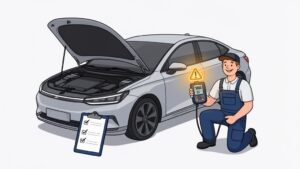
It's a feeling every driver knows: that little jolt of anxiety when a new, unfamiliar light pops up on your dashboard. A calm cruise can instantly turn into a stressful trip, filled with questions and worry. Understanding what those little symbols mean is key, because they are your car's way of talking to you about its health—from simple notifications to serious safety warnings. Pushing them to the back of your mind can lead to bigger, more expensive problems down the road.
What Your Dashboard Lights Are Trying to Tell You
Instead of seeing it as a source of stress, think of your car's dashboard as its main communication center. Every symbol is a specific message sent from your vehicle's vast network of sensors and computers. These lights are designed to be an early warning system, giving you a heads-up about potential issues before they spiral into a major failure.
These indicators aren't there to cause panic; they're there to empower you. They give you the information you need to be proactive, protecting both your safety and your vehicle’s long-term health. When you learn to speak this visual language, you go from being a worried driver to a confident, informed car owner.
Why You Cannot Afford to Ignore Them
Putting off a warning light is a common—but very risky—habit. A recent study brought a startling fact to light: nearly half of all American drivers, a whopping 49%, are on the road with at least one dashboard warning light on. The data showed that 20% of drivers were ignoring a check engine light, while others overlooked alerts for tire pressure (22%) and even their braking systems (11%). You can learn more about these trends by reading the full CarMD report.
This isn't just a statistic; it's a real safety risk and a fast track to hefty repair bills. What starts as a minor issue, like a bad sensor, can quickly cascade into a much larger, more complicated problem if you don't address it.
A dashboard warning light is your vehicle’s way of asking for help. Responding promptly is the best way to prevent a small problem from turning into a roadside emergency.
By understanding these signals, you can make smart, timely decisions. This guide will walk you through the most common dashboard lights, helping you figure out if you're dealing with a simple reminder or a critical alert that requires immediate attention. A little knowledge here can save you a whole lot of time, money, and stress.
Understanding The Color Code of Dashboard Warnings
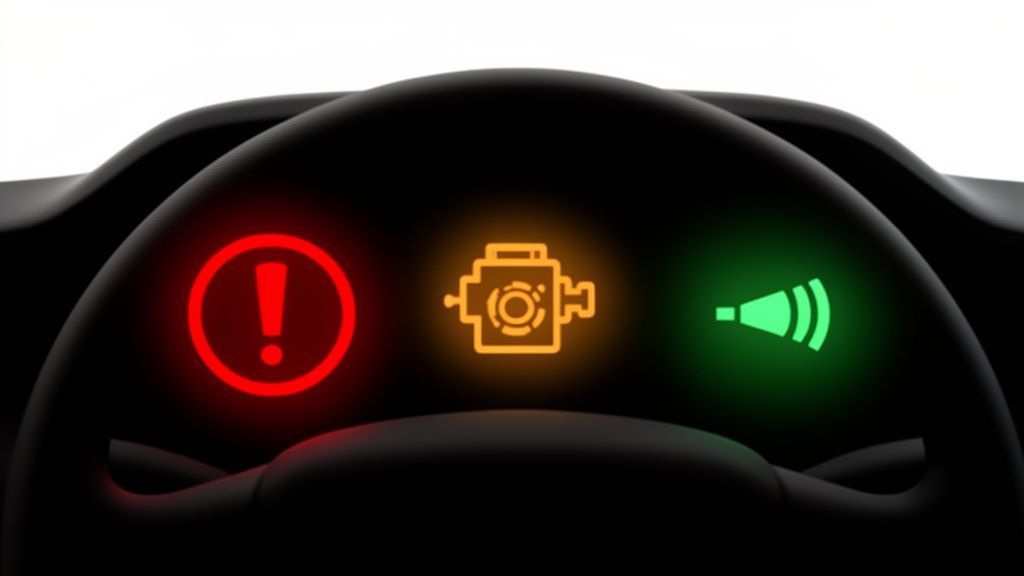
When a light pops up on your dashboard, its color is the first and most important clue you’ll get. Your car’s dashboard isn’t just flashing random symbols at you; it’s using a universal color system to tell you exactly how serious the problem is.
Think of it as a traffic light for your car's internal health. This system is designed for instant recognition, helping you make a quick, safe decision without fumbling for the owner's manual on the side of the road.
The Three Tiers of Warning Colors
The color of a warning light immediately tells you what to do next. Each one signals a different level of severity and calls for a specific response.
Red Lights Demand Immediate Action: A red warning light means something is wrong that could be a serious safety risk or cause major engine damage. This is your car screaming, "Stop now!" Continuing to drive could be dangerous.
Yellow or Amber Lights Mean Caution: Think of these as a "heads-up." Yellow or amber lights indicate a system has an issue or that something needs to be serviced soon. You can usually keep driving, but you should get it checked out as soon as possible to prevent a small problem from turning into a big one.
Green and Blue Lights Are for Information: These aren't warnings at all. They’re simply there to let you know a system is on and working as it should be, like your headlights (green) or high beams (blue).
A Quick Guide to Light Severity
To make it even simpler, here’s a quick reference table to help you assess the urgency of any light that appears on your dash.
| Light Color | Meaning | Required Action | Common Examples |
|---|---|---|---|
| Red | Critical Warning: Serious issue or safety risk detected. | Stop driving safely as soon as possible. Do not continue. | Oil Pressure, Engine Temperature, Brake System, Battery Charge |
| Yellow/Amber | Caution: System malfunction or service needed soon. | Proceed with caution. Schedule a diagnostic check soon. | Check Engine, ABS, Tire Pressure (TPMS), Low Fuel |
| Green/Blue | Informational: System is active and operating correctly. | No action needed. This is a status indicator. | Headlights On, High Beams On, Cruise Control Active, Turn Signals |
Keep this simple guide in mind, and you'll always have a clear idea of what your next step should be.
This global color-coding system, governed by ISO standards, is incredibly effective—but only if drivers understand it. Research shows that while the colors are universal, many of the symbols themselves are not well understood. For a symbol to be considered "well-known," it needs an 85% correct response rate on tests, a mark that many common icons fail to hit.
This gap in understanding often leads drivers to ignore important alerts, especially for less-obvious systems like tire pressure or traction control. You can learn more about these insights on symbol comprehensibility and why it's so important to know your vehicle.
By learning this basic color language—Red for Stop, Yellow for Caution, Green/Blue for Go—you instantly equip yourself to handle almost any dashboard alert with confidence.
Mastering this color-coded language is a fundamental part of responsible car ownership. It takes the guesswork out of the equation and helps you protect your safety and your vehicle's health. The next time a light comes on, your first instinct should be to check its color.
Explaining the Most Common Dash Light Meanings
While your dashboard can flash dozens of different symbols at you, a few key players show up far more often than others. Knowing what these common warnings mean is critical because they're directly tied to your car's most vital systems.
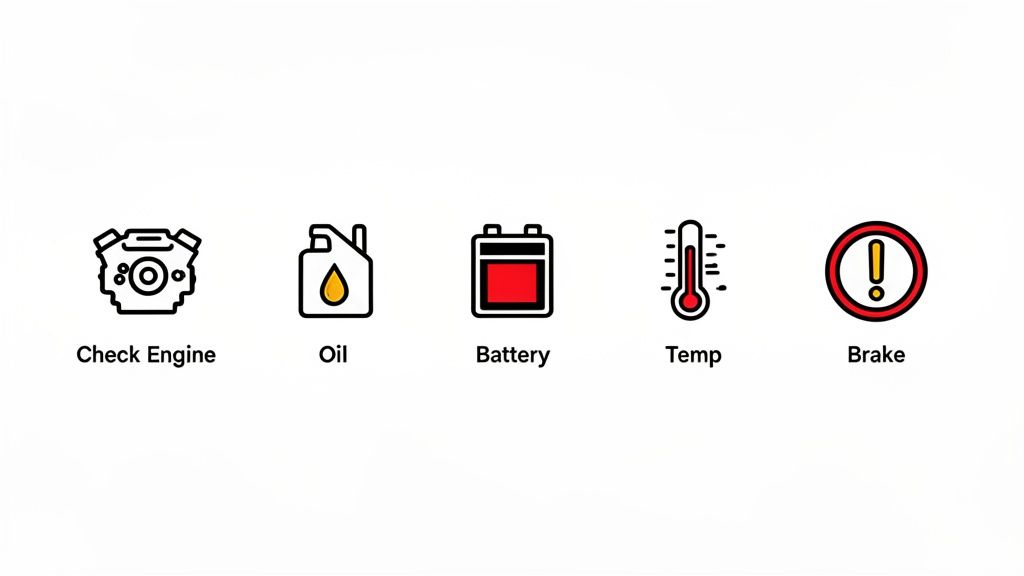
Think of it this way: getting familiar with these core indicators is like learning first aid for your vehicle. It prepares you to handle the vast majority of issues you're likely to face on the road. We'll walk through the "big five" lights that absolutely demand your attention, each telling a unique story about your car's health.
Check Engine Light
This is the one everyone knows and dreads. The Check Engine Light (CEL), which looks like a small engine outline, is your car’s way of saying something isn't right with the engine or emissions system. The cause can be anything from a ridiculously simple fix to a seriously complex problem.
- A Loose Gas Cap: Believe it or not, this is the number one culprit. A cap that isn't screwed on tight disrupts the fuel system's pressure and triggers the light. Always check this first!
- Failing Oxygen Sensor: This sensor is like your engine's nose, sniffing the exhaust to monitor unburned oxygen. When it fails, your car can't get the fuel-air mixture right, which tanks your gas mileage.
- Worn Spark Plugs: Old plugs lead to misfires, meaning your engine isn't burning fuel efficiently. This hurts performance and can eventually wreck your expensive catalytic converter.
A solid amber CEL is a heads-up, but a flashing CEL is an emergency. It means there's a severe problem, like an active misfire, that could destroy expensive parts in a hurry. You can learn more in our detailed guide on what to do when your check engine light comes on.
Oil Pressure Warning Light
Seeing that little red oil can symbol is one of the most serious warnings your car can give you. Motor oil is the lifeblood of your engine—it lubricates moving parts to slash friction and control heat. This light means there's been a dangerous drop in oil pressure.
When the Oil Pressure Light comes on, it’s not just a suggestion—it's an emergency. Pull over and turn off the engine as soon as it is safe to do so to prevent catastrophic engine failure.
This could be caused by a low oil level, a failing oil pump, or a major leak. Driving for even a few more minutes can cause permanent, wallet-busting damage to your engine's internal parts.
Battery Charge Warning Light
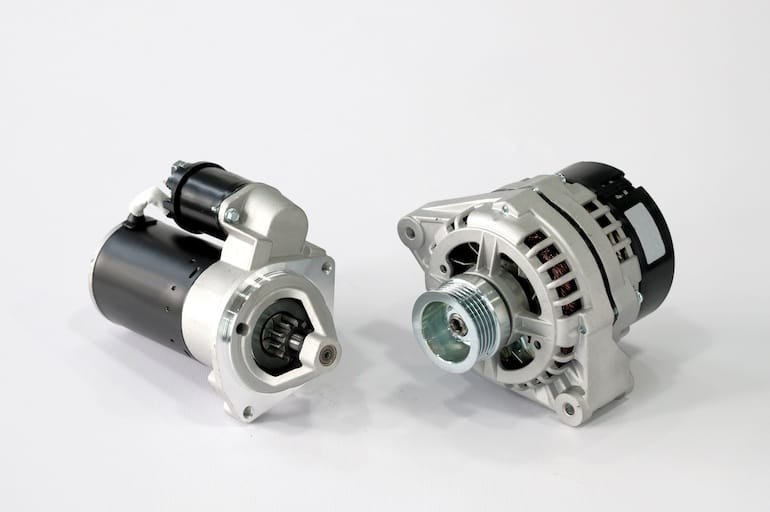
This little red light, shaped like a car battery with plus and minus signs, points to a problem with your vehicle's charging system. While most people assume it means the battery is dead, the real culprit is usually the alternator.
The alternator is what charges the battery and powers all your car's electronics while the engine is running. If it gives out, your car starts running purely on battery power, which won't last long. You might only have a few minutes of drive time before the engine shuts down completely.
Engine Temperature Warning Light
This is another critical red alert, often looking like a thermometer dipped in water. It means one thing: your engine is overheating. An overheating engine can lead to incredibly severe and costly damage, from a warped cylinder head to a cracked engine block.
Pull over somewhere safe and shut the engine off immediately. The most common causes are:
- Low coolant levels
- A stuck thermostat
- A broken water pump or radiator fan
Whatever you do, never try to open the radiator cap when the engine is hot. The system is highly pressurized, and scalding coolant can spray out and cause serious burns. Let the engine cool down completely before you even think about checking fluids.
Demystifying Your Car's Advanced Safety System Lights
Beyond the lights for your engine and fluids, your dashboard is home to a whole suite of warnings for your car’s more advanced safety systems. These aren’t just bells and whistles; they’re sophisticated technologies designed to protect you when things go sideways. Knowing what these lights mean is the key to making sure these systems are ready to act when you need them most.
Think of these systems as your car’s active safety net, constantly working to help you avoid an accident in the first place. When one of these lights pops on, it usually means a key feature has been disabled. Ignoring it is a bit like driving without your seatbelt—you won’t notice the problem until the one moment you desperately need it.
Anti-lock Braking System (ABS) Light
You’ll recognize the ABS light as the letters "ABS" inside a circle. This little light is your direct link to controlled, confident stopping power. Your Anti-lock Braking System is the magic that prevents your wheels from locking up during a hard brake, which is what allows you to steer around an obstacle instead of skidding helplessly into it.
When this amber light comes on, don’t panic—your regular brakes will still bring the car to a stop. However, the crucial anti-lock feature is deactivated. This means that in an emergency stop, your wheels could lock up, sending you into a dangerous skid. You’ll want to have the system inspected quickly to get that vital safety function back online.
Traction and Stability Control (TCS/ESC) Light
This light, often pictured as a car with squiggly lines trailing behind it, is all about keeping your tires connected to the road. It represents two systems that work hand-in-hand: Traction Control (TCS) and Electronic Stability Control (ESC). TCS stops your wheels from spinning when you accelerate, while ESC helps prevent the car from sliding sideways in a turn.
You need to know the difference between a flashing light and a solid one, because they mean very different things:
- A Flashing Light: This is good news! It means the system is doing its job right now, actively helping you maintain control on a slippery or loose surface. Just ease up on the gas until the light goes off.
- A Solid Light: This signals a problem. Just like the ABS light, it means the safety feature has shut itself off. Getting this checked is critical. Modern vehicles rely heavily on these systems for stability, and the National Highway Traffic Safety Administration (NHTSA) estimates that ESC reduces single-vehicle car crashes by a whopping 34%.
Airbag or SRS Light
The Airbag or Supplemental Restraint System (SRS) light is easily one of the most serious warnings on your dashboard. This red light, which might show a seated person with a deployed airbag or simply the letters "SRS," indicates a fault in your car's airbag system.
When the SRS light is on, you should operate under the assumption that your airbags will not deploy in an accident. This isn't a suggestion; it's a direct alert that a primary safety feature is offline, putting you and your passengers at serious risk.
The culprit could be anything from a bad sensor or a damaged "clockspring" connector in the steering wheel to an issue with the seatbelt pretensioners. Driving with this light on fundamentally compromises your car's ability to protect you in a crash. An immediate diagnosis is essential.
Tire Pressure Monitoring System (TPMS) Light
This amber symbol, which looks like a flat tire with an exclamation point inside, is frequently misunderstood. Your Tire Pressure Monitoring System (TPMS) is designed to warn you when one or more of your tires is dangerously low on air—usually 25% below the recommended pressure.
When the TPMS light comes on, it’s not a suggestion to check your tires later; it's a direct warning of an unsafe driving condition right now. Under-inflated tires lead to sloppy handling, longer stopping distances, and a much higher risk of a catastrophic blowout. As soon as you see this light, find a safe spot to pull over and check your pressures with a reliable gauge. Getting them properly inflated will not only turn off the light but will also make your car safer and more fuel-efficient.
When to Pull Over Immediately vs. When to Drive to a Mechanic
Seeing a warning light pop up is one thing; knowing the right way to react is a completely different ballgame. Not every glowing symbol on your dash means you need to slam on the brakes and call for a tow. The key is to stay calm and follow a simple rule of thumb: red means stop, and amber means caution.
This simple framework helps you assess the situation without panic and make a safe decision for you and your vehicle.
Pull Over Safely Now Scenarios
Some lights are your car’s way of screaming for help. Think of them like a fire alarm—they are non-negotiable alerts that signal immediate danger to your vehicle's health or your own safety. When you see one of these, your only job is to find a safe place to get off the road and shut down the engine as quickly as possible.
These critical warnings are almost always red and will often flash to really get your attention.
- Oil Pressure Light: This is one of the big ones. It means your engine has lost oil pressure and isn't being properly lubricated. Continuing to drive, even for a few minutes, can lead to catastrophic engine failure.
- Engine Temperature Light: If this light comes on, your engine is overheating. Pulling over immediately can be the difference between a minor repair and severe damage like a warped cylinder head.
- Battery Charge Light: This light signals a failure in the charging system. Your car is now running only on battery power, which won't last long. Soon, you'll lose all electrical functions, including the engine itself. For a deeper dive, check out our guide on what to do when you see a battery light on your dashboard.
Schedule Service Soon Situations
Amber or yellow lights are more like a friendly heads-up from your car. They’re essentially saying, "Hey, something isn't quite right here, and you should probably get it checked out soon." While it’s not an immediate emergency, ignoring these warnings is like letting a small problem fester until it becomes a major, expensive repair.
These lights mean a system has detected a fault, but the vehicle is generally safe to operate for a short time. Common examples include:
- Check Engine Light (Solid): This is the most common light drivers see. A solid light points to a fault in the engine or emissions system. It's safe to drive, but you should get it diagnosed.
- ABS Light: This means the anti-lock braking feature is offline. Your standard brakes will still work, but you've lost that extra layer of safety.
- TPMS Light: This simply warns you that one or more of your tires has low air pressure—an easy fix that's important for safety and fuel efficiency.
This flowchart can help simplify your decision-making when one of your car's advanced safety system lights comes on.
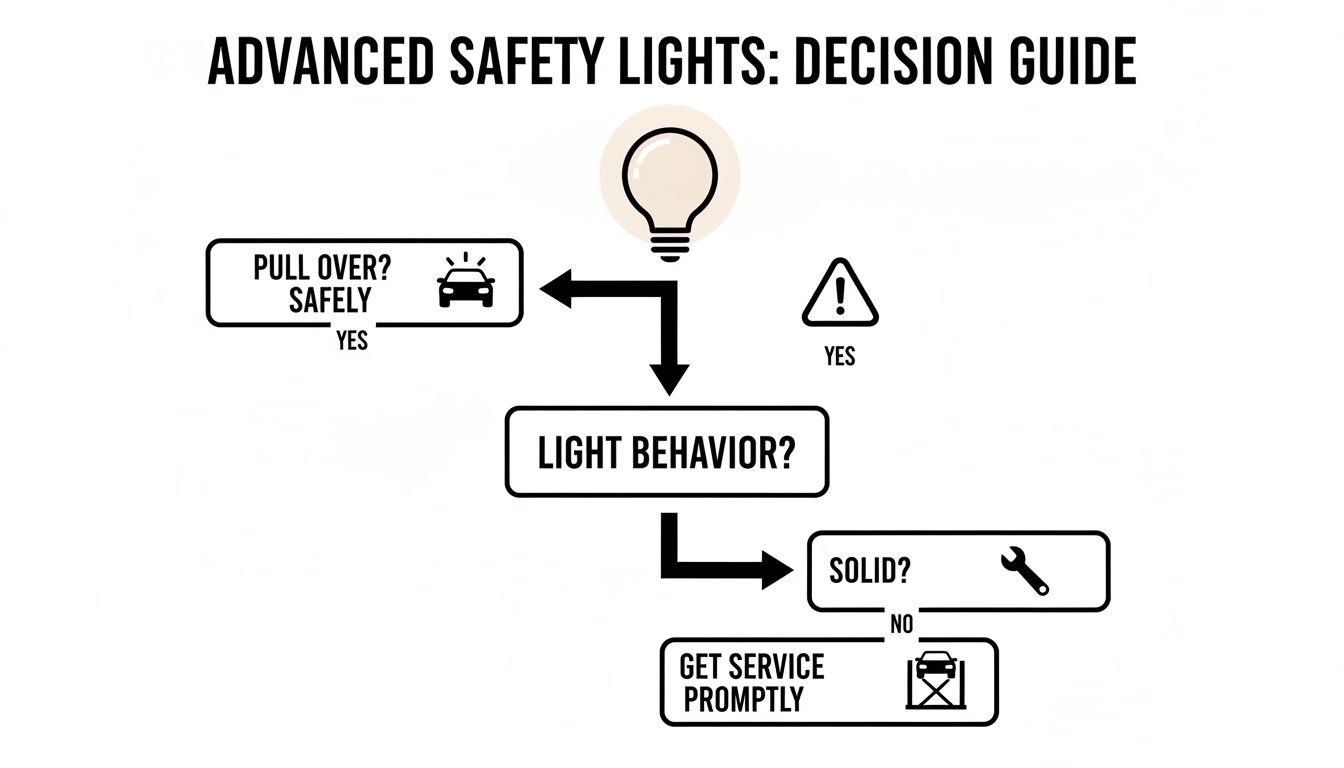
The main takeaway here is pretty straightforward: a flashing light almost always signals an urgent issue that requires you to pull over. A solid light, on the other hand, is a notification to schedule a visit with your mechanic.
Your Next Step with a Trusted Diagnostic Partner
Knowing what your dashboard lights mean is a great first step, but the real solution comes from a professional partner who can turn that knowledge into a fix. When a light points to a problem that's more than a loose gas cap, having a reliable auto shop on your side makes all the difference. This is where the guesswork stops and an expert car trouble diagnosis truly begins.
A trusted shop doesn’t just turn off the warning light; they restore your peace of mind. The trick is finding technicians who can accurately interpret what your car is trying to tell you.
Why Professional Diagnostics Matter
Modern cars are incredibly complex, packed with dozens of computer systems all talking to each other. A basic code reader you can buy online might give you a general idea of the problem area, but it almost never pinpoints the root cause. This is exactly why professional-grade diagnostic equipment is so important.
A warning light isn’t just an alert—it’s the start of a conversation between your car and a skilled technician. The right tools make sure nothing gets lost in translation.
Our ASE-certified technicians use this advanced equipment to get to the bottom of the issue, whether it’s a finicky sensor, a tricky electrical problem, or a mechanical failure. That precision saves you time and money by avoiding unnecessary repairs and guaranteeing the job is done right the first time.
Finding that trusted partner is a key part of the process. Understanding how shops build that trust can be insightful; learning about effective automotive repair shop marketing shows how reputable businesses communicate their expertise and reliability to customers like you.
At Kwik Kar, our ASE-certified team uses state-of-the-art diagnostic tools to give you clear answers and real solutions for any warning light. If you’re seeing an alert on your dash, don’t wait for a small headache to become a major repair bill. Contact us today to schedule a diagnostic check and get back on the road with confidence.
Frequently Asked Questions About Dashboard Lights
Even after breaking down the most common warnings, you might still have a few questions. It's completely normal to be curious about the finer details of your car's warning system. Here, we'll give you direct, clear answers to some of the most common queries we hear from drivers every day.
Think of this as your quick-reference guide for those specific, "what if" scenarios that can still be a little confusing.
Can a Dashboard Light Turn On and Then Go Off by Itself?
Yes, this is a very common situation. A warning light might pop up on your dash only to vanish a little while later. This usually happens when the car's computer logs a temporary, or intermittent, problem that seems to fix itself.
A perfect example is the Check Engine Light. If you forget to tighten your gas cap all the way after filling up, the light might come on. Once you stop and screw the cap on properly, the light will typically turn off after you've driven the car a few times.
However, you should never just assume the problem is gone for good. A light that comes on and off repeatedly is often the first sign of a failing sensor or a deeper issue that needs a professional to diagnose.
How Accurate Are Onboard Diagnostic Scanners?
Those handheld OBD-II scanners you can buy at an auto parts store are definitely handy for a quick check. They can read the basic trouble code that triggered your Check Engine Light, which gives you a general idea of which system is having a problem.
But that's really where their usefulness stops. A trouble code doesn't tell the whole story; it just points you to the scene of the crime, not the culprit.
A consumer-grade scanner tells you where the problem is, while professional diagnostic equipment tells a technician why it's happening.
For example, a code for an oxygen sensor doesn't automatically mean the sensor itself has failed. The real issue could be a vacuum leak, a problem with the wiring, or even a hiccup in the fuel delivery system. Professional diagnostic tools give us much more detailed data, allowing a certified technician to find the root cause and avoid replacing parts you don't actually need.
Does a Check Engine Light Always Mean an Expensive Repair?
Not at all. This is probably the biggest myth about the Check Engine Light. While it can signal a serious issue that might be costly, it's far more likely to be triggered by something minor and inexpensive to fix.
Some of the most frequent causes are surprisingly simple:
- A loose or faulty gas cap
- Worn-out spark plugs
- A failing oxygen or mass air flow sensor
The key is to get the code read and diagnosed as soon as you can. Ignoring the light is what often leads to more significant—and expensive—damage down the road. Addressing it early almost always saves you money.
When a light on your dashboard leaves you with more questions than answers, it's time to talk to the experts. The ASE-certified technicians at Kwik Kar Oil Change and Auto Care use advanced diagnostic equipment to provide clear, accurate solutions for any warning light. Don't let uncertainty put your safety at risk—schedule your diagnostic appointment today at https://www.kkrichardson.com and drive with complete confidence.