You walk out to the driveway, coffee in hand, and there it is. A dark spot under the front of the car that definitely wasn’t there yesterday. Most drivers jump straight to the worst-case scenario. Engine failure. Big bill. Tow truck.
Usually, it’s not that dramatic. But it is something you should take seriously.
Engine oil leaks are one of the most common problems we see on higher-mileage vehicles. The good news is that most leaks follow a pretty predictable path. You notice a spot, maybe catch a faint burning-oil smell, check the dipstick, and then figure out whether you can monitor it for a few days or need to park it now. That decision is where most drivers need help.
This guide is built around that moment. Not just what engine oil leaks are, but how to tell what you’re looking at, what usually causes it, what repairs typically cost, and when it’s time to get a professional diagnosis.
That Mysterious Puddle Under Your Car
You head out for work, see a dark spot under the front of the car, and your first question is simple. Is this something I can watch for a day or two, or do I need to stop driving now?
That’s the right question.
At the shop, we see this all the time on higher-mileage cars, especially vehicles that handle short trips, traffic, and Texas heat. One spot on the driveway does not automatically mean a major engine problem. It does mean oil may be escaping, and the next step is to figure out how fast, from where, and whether the level is dropping.
What to do before the stain spreads
If the drip is fresh, put something absorbent under the vehicle so you can track how much is coming out and keep the mess off the concrete. If you want a quick primer on containment, this guide to oil spill pad basics is useful.
Then check the oil level before you drive any farther. If you need a refresher, Kwik Kar’s guide on how to check car fluids walks through the basics.
Here’s the practical way to look at it:
- One small spot, oil level still full: Usually safe to monitor briefly while you confirm the source.
- Repeated drips in the same place: Plan on an inspection soon. Leaks usually get worse, not better.
- Multiple fresh spots, oil on the undercarriage, or a low dipstick reading: Limit driving until it’s checked.
- Oil pressure warning light, heavy smoke, or oil pouring out: Shut it off and have it towed.
Small leak, small decision. Big leak, fast decision.
Drivers usually do not need a full diagnosis on day one. You need a clean piece of cardboard, a dipstick reading, and a clear look at where the spot is forming under the car. That gives you a usable starting point and helps you decide whether this is a watch-and-wait situation or one that needs a shop right away.
Decoding the Drip How to Identify an Oil Leak
Start simple. Not every puddle under a car is engine oil.
What engine oil usually looks like
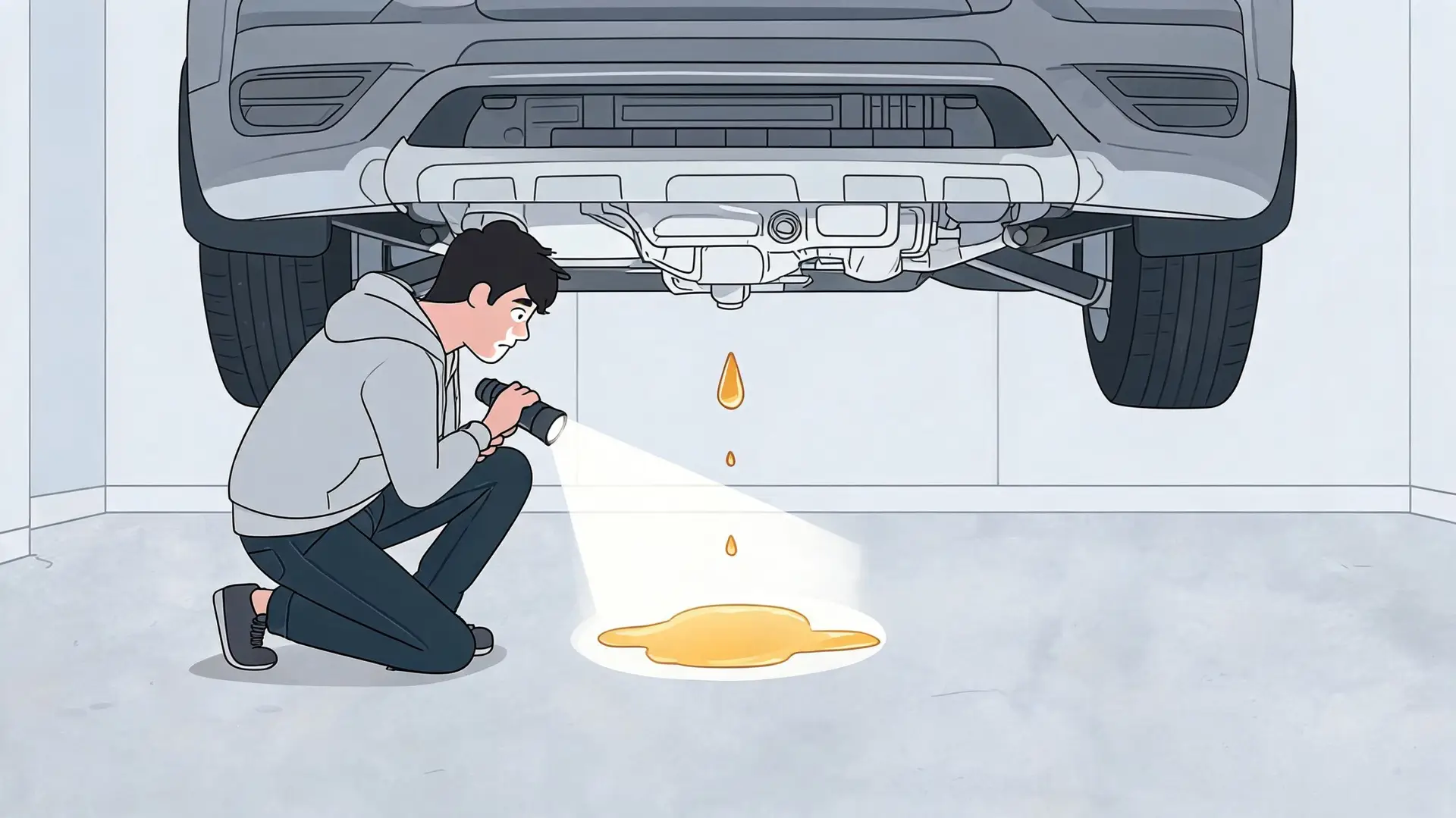
Fresh engine oil is usually amber to brown. Older oil often looks dark brown or black. It feels slick between your fingers and spreads out in a greasy film on cardboard or concrete.
Other fluids can fool you:
- Coolant is often brighter in color and thinner.
- Transmission fluid is often reddish when fresh.
- Water from the A/C is clear and not oily at all.
If the spot is dark, slick, and under the engine area, engine oil is a strong possibility. If you’re not sure, don’t guess based on color alone. Check the dipstick next.
How to check the dipstick the right way
Checking oil sounds basic, but a lot of wrong readings come from doing it too fast.
- Park on level ground. A slope can throw off the reading.
- Shut the engine off and wait a few minutes. You want the oil to drain back down.
- Pull the dipstick and wipe it clean. Use a rag or paper towel.
- Reinsert it fully. Don’t just touch the tip in.
- Pull it again and read the level. Look for the oil line between the marks.
You want the oil level in the safe range. If it’s near the bottom mark or below it, the leak matters more right now than the stain on the driveway does.
For a visual walk-through of what the marks mean, this Kwik Kar article on reading your engine oil level helps clear up a lot of common confusion.
What the oil level tells you
The stain tells you there may be a leak. The dipstick tells you whether the engine is already paying for it.
Use this quick read:
| Dipstick result | What it usually means | What to do |
|---|---|---|
| Full and clean | Leak may be small or recent | Monitor closely and inspect source |
| Low but still on stick | Oil loss is active | Top off correctly and schedule diagnosis |
| Below stick or warning light on | Risk is immediate | Stop driving until checked |
If the oil is low and you also smell burning oil, that’s no longer a driveway nuisance. It’s an engine protection issue.
Also look under the hood with a flashlight. Fresh oil near the top of the engine often points to an upper leak. Oil only on the bottom can come from above and travel down, which is why leak diagnosis can fool people.
The Usual Suspects Common Causes of Engine Oil Leaks
Most engine oil leaks come from a small group of parts. Think of seals and gaskets as the weather stripping of the engine. Their whole job is to keep oil in while the engine deals with heat, pressure, and vibration. Over time, those sealing surfaces harden, shrink, flatten out, or get damaged during service.
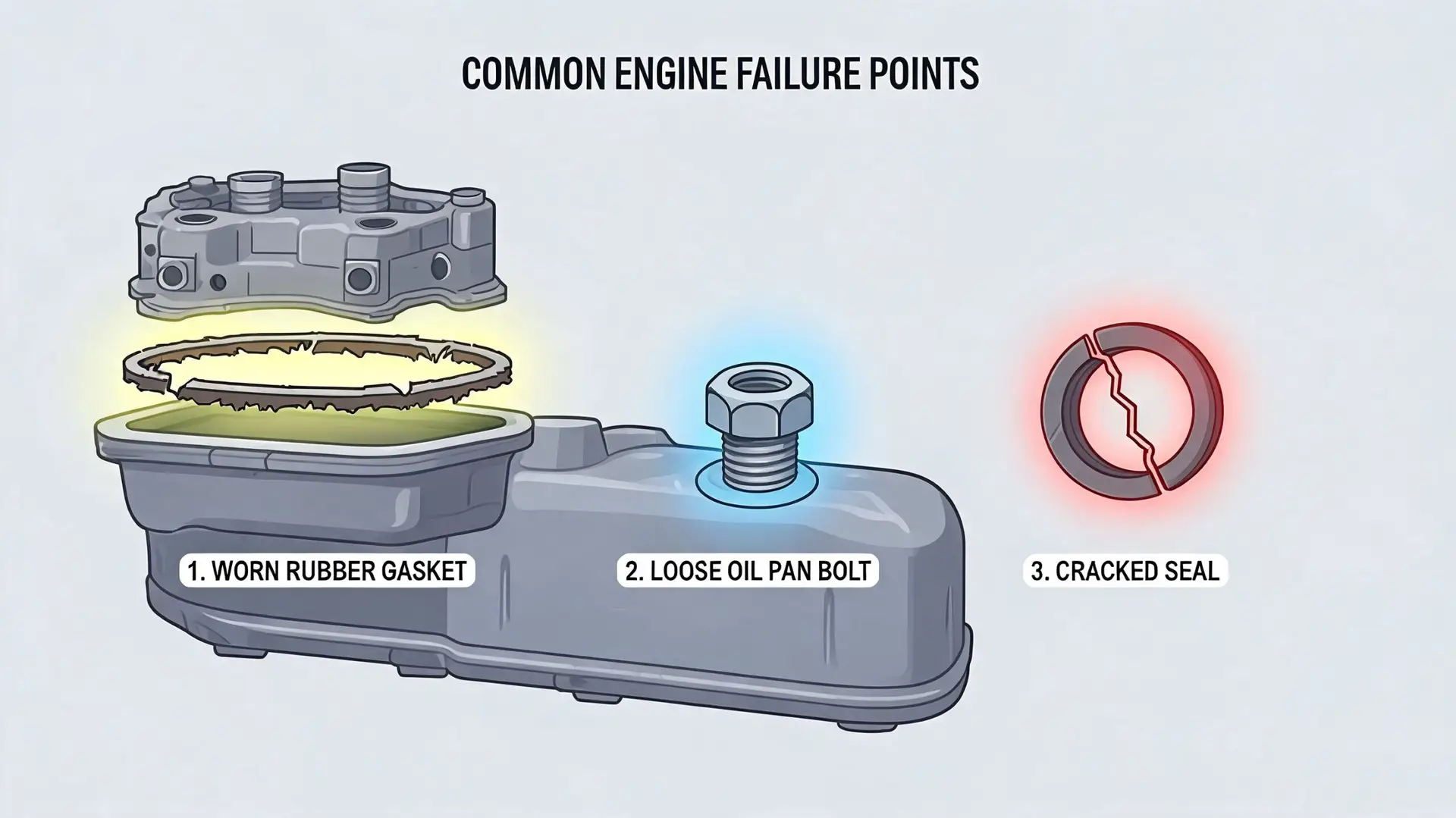
A couple of failure points stand out more than the rest. Valve cover gaskets and crankshaft seals account for 40-60% of persistent oil leaks in vehicles over 100,000 miles, and improperly installed or degraded oil filters can cause 30-50% of leaks reported shortly after an oil change according to this summary of common oil leak sources.
Valve cover gasket leaks
This is one of the classic high-mileage leaks. The valve cover sits on top of the engine, and the gasket seals oil inside while the valvetrain moves underneath it.
When that gasket gets brittle, oil starts seeping out along the top edge of the engine and runs downward. Drivers often notice:
- A burning oil smell after parking
- Oil residue on the top or side of the engine
- Light smoke if oil reaches a hot exhaust surface
This leak often looks worse than it is because oil spreads before it drips.
Oil filter leaks after service
This one matters because it can happen right after maintenance. A filter that’s loose, over-tightened, cross-threaded, or installed with a damaged gasket can leak quickly.
I’ve seen plenty of cars come in after an oil change somewhere else with oil all around the filter area. Sometimes the issue is simple. The gasket didn’t seat right. Sometimes the old gasket stuck to the mounting surface and the new filter went on top of it.
A fresh leak right after an oil change should always make you suspect the filter or its seal first.
Here’s a short explainer if you want to see common leak points in context:
Oil pan gasket leaks
The oil pan is the reservoir at the bottom of the engine. If that gasket starts leaking, gravity does the rest. These are the leaks most likely to leave a regular spot where you park.
Typical clues include a wet lower engine area, oily grime around the bottom of the pan, and drops forming overnight. The tricky part is that oil from higher up can also run down and collect on the pan, so you don’t want to assume the pan gasket is the source just because it’s wet there.
Crankshaft seal leaks and mystery pressure problems
Front and rear crankshaft seals are more involved. They seal around a rotating shaft, so wear and age can catch up with them. These leaks can range from a slow nuisance to a major repair depending on where the seal is and how much labor it takes to reach it.
On high-mileage engines, there’s another wrinkle. A clogged PCV system can build internal pressure and push oil past seals, making it look like the engine has a random gasket failure when the root issue is ventilation. That’s one reason a proper diagnosis matters more than replacing the first wet part somebody sees.
Assessing the Severity Is It a Puddle Drip or Seep
You walk out in the morning, see a dark spot under the engine, and the first question is simple. Can you drive it today, or does it need to stay parked?
That answer depends on three things: how much oil is leaking, how often it leaks, and whether the engine is still holding a safe oil level.
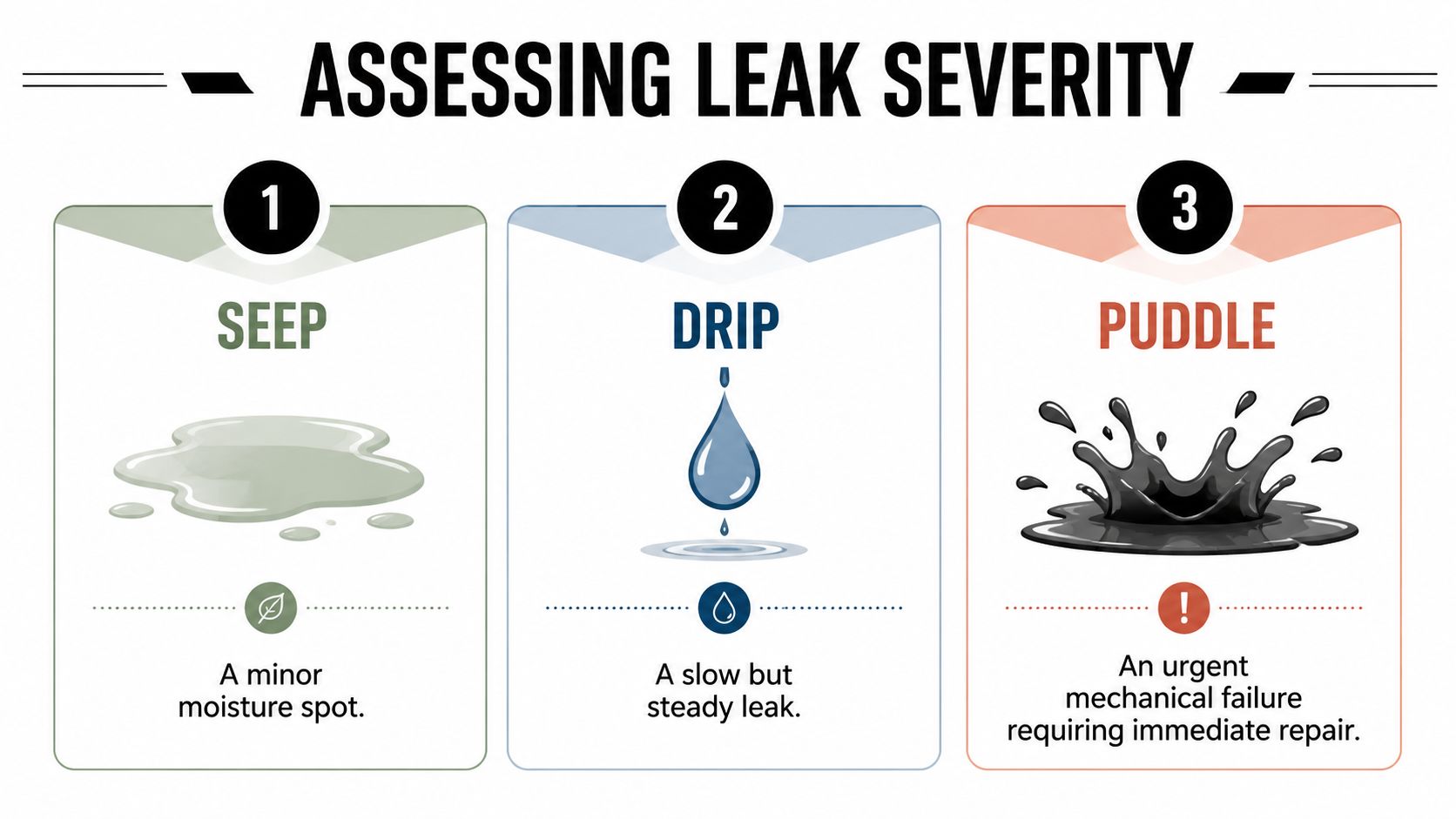
A simple way to classify what you see
Use the stain on the ground together with the dipstick reading. One clue by itself can fool you. A small spot can still matter if the oil level is dropping fast, and a dirty, wet engine may only be an old seep that has collected grime over time.
| Severity | Visual Cue | Recommended Action |
|---|---|---|
| Seep | Thin oily film or damp grime, but no spots on ground | Monitor, check oil level regularly, mention it at service |
| Drip | Small spots after parking, intermittent drops | Schedule diagnosis soon, top off oil as needed |
| Puddle | Noticeable fresh oil accumulation under vehicle | Stop driving until leak is confirmed and oil level is safe |
When watch and wait makes sense
A seep is usually a film around a gasket, cover, or seal. You notice residue, but the driveway stays clean. If the dipstick level stays steady and there is no burning smell, smoke, or warning light, this usually falls into the watch-it category.
A drip needs a quicker plan. Once oil is making it to the ground, the leak is active. Short trips may still be reasonable if the oil level is full and the leak is not getting worse, but this is the point where I tell drivers to schedule an inspection instead of hoping it settles down on its own.
When to stop driving
A puddle changes the decision. Fresh oil under the car means the engine may be losing oil faster than you think, especially after a highway drive or a hot soak in the driveway.
Park it if you see a puddle plus any of these signs: a burning oil smell, smoke from under the hood, oil landing on exhaust parts, or a warning on the dash. If the oil pressure light comes on, treat that as an engine-protection warning, not a reminder to check it later. This quick guide on what the engine oil pressure gauge means explains the difference.
Leak severity is not just about the size of the spot. It is about whether the engine can keep enough oil pressure and oil volume to protect itself while you drive.
A practical decision guide
Here is the rule I use in the shop.
- Seep with stable oil level: Watch and wait
- Drip with an occasional spot: Book diagnosis soon
- Puddle, smoke, or warning light: Stop driving and have it checked
Frequent top-offs also move a leak into the urgent category. If you are adding oil between normal service intervals, the leak is no longer minor from a driver’s perspective. It is costing you oil, creating a mess, and raising the chance that one missed dipstick check turns into engine damage.
Red flags that need quick attention
- Burning smell inside or outside the car
- Smoke from under the hood
- Oil on the driveway every time you park
- Needing frequent top-offs
- Any oil pressure warning
Those symptoms usually mean more than a cosmetic leak. They point to a leak that can affect safety, oil pressure, or both.
What an Oil Leak Repair Costs in 2026
Drivers want a straight answer, and the honest one is that oil leak repairs vary a lot by location and labor involved. The leaking part is often inexpensive. Access is what changes the bill.
Average oil leak repair costs typically range from $300 to $1,500, with valve cover gaskets being the most common repair and oil pan gaskets next in line. That range comes from the same source discussed earlier.
Why one leak is a few hundred and another is much more
A valve cover gasket is usually more straightforward than a rear main seal. An oil filter leak may be simple if it’s just an installation problem. A crankshaft seal can require much more teardown to reach the failing part.
What you’re usually paying for falls into two buckets:
-
Diagnosis
Cleaning the area, tracing the leak path, checking oil level, and sometimes using dye or other inspection methods to confirm the true source. -
Repair
Replacing the failed gasket, seal, or filter, then cleaning residue so the repair can be verified.
A practical cost framework
| Repair situation | Typical cost direction |
|---|---|
| Simple external leak | Usually toward the lower end of the range |
| Common gasket repair | Often somewhere in the middle |
| Hard-to-access seal leak | Often toward the upper end of the range |
The mistake drivers make is chasing the cheapest quote before anyone confirms the actual source. Oil travels. A wet oil pan doesn’t always mean the pan gasket failed. A rushed guess can mean paying twice.
The cheapest oil leak repair is the one that fixes the actual source on the first try.
If you’re budgeting, ask for two numbers. One for diagnosis, one for the repair once the source is confirmed. That gives you a clearer decision point and avoids surprises.
Your Action Plan for Prevention and Repair
You walk into the garage, see a fresh spot under the engine, and now you need a simple answer. Can this wait a few days, or do you need to park it today? That is the right question to ask.
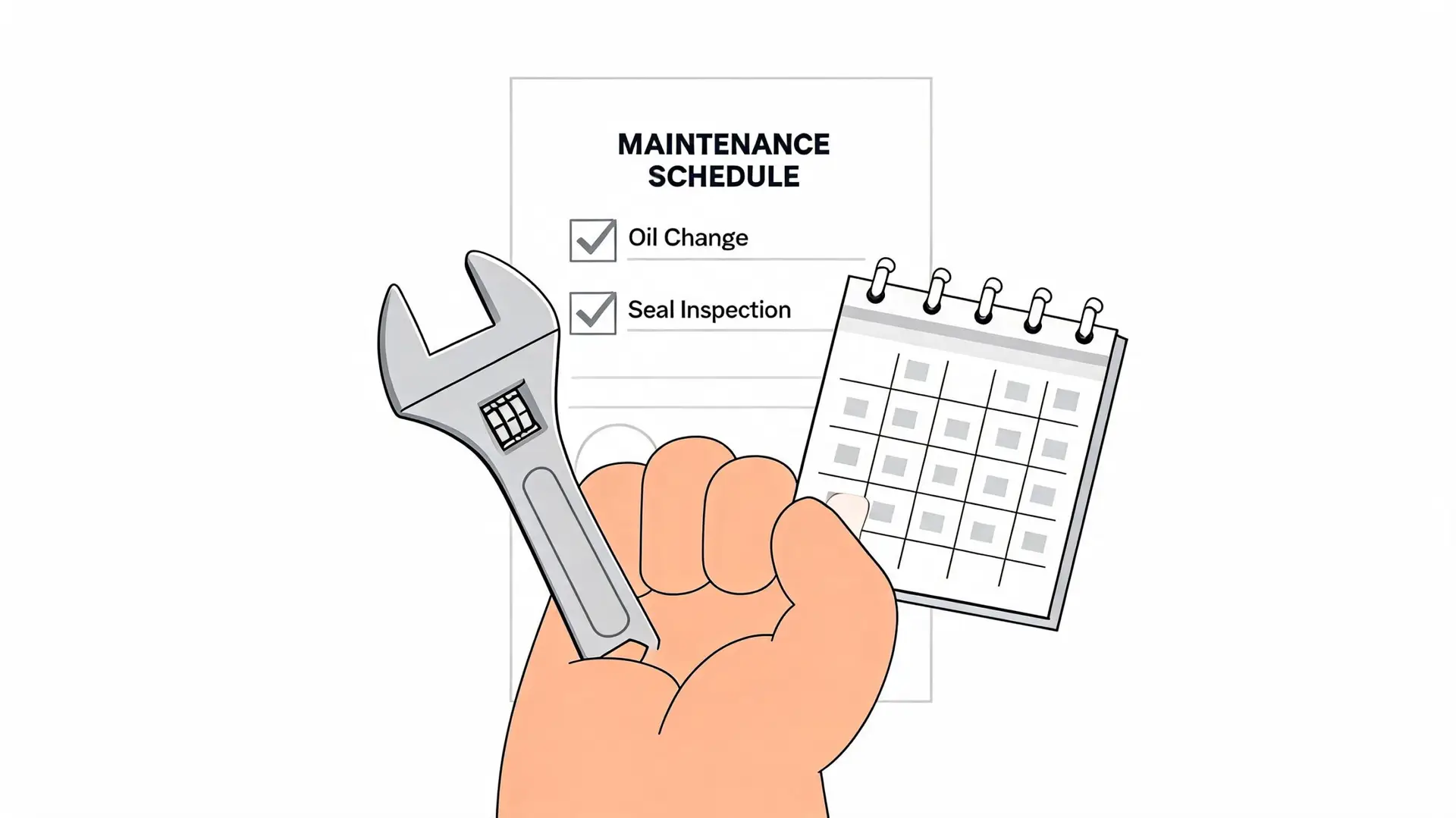
Start with a basic habit that saves engines and money. Check the oil level regularly, especially if you already know the car has a small seep. A leak that leaves a light film on the engine may be something you can monitor for a short time. A leak that drops the oil level between normal checks needs attention sooner.
Prevention is mostly routine work done on time. Regular oil changes give a technician a clean opportunity to spot fresh residue around the valve cover, oil filter housing, drain plug, or pan before the leak spreads and muddies the diagnosis. High-mileage engines also need the PCV system checked. When that system stops venting crankcase pressure properly, oil often starts pushing past seals and gaskets that were holding fine before.
A practical plan looks like this:
- Watch and wait if you see light dampness, no burning smell, no smoke, no warning light, and the oil level stays steady between checks.
- Schedule an inspection soon if you notice drops on the driveway, oil on the engine belly cover, or a level that is slowly falling.
- Stop driving and have it checked right away if the oil pressure light comes on, oil is dripping fast, smoke is coming from the engine bay, or oil is landing on a hot exhaust part.
Avoid shortcuts that often lead to wasted money. Oil additives rarely fix a hardened gasket for long, and they can make the underlying condition harder to judge later. Topping off the oil is fine as a temporary step to get to a shop if the level is safe, but it is not a repair.
If you want to avoid paying for the wrong repair, ask for a diagnosis first and the repair estimate second. That keeps the decision clear. It also helps you compare a minor gasket job against a larger seal repair without guessing.
Kwik Kar Oil Change and Auto Care is one local option for Richardson drivers who want an inspection, oil service, and leak tracing in one place. The important part is not the shop name. It is getting the engine cleaned, checked, and traced to the true source before anyone starts replacing parts.
One more thing. Fixing the leak does not fix the driveway. If the concrete is already stained, this guide to DFW concrete oil stain solutions is a useful local resource.
Catch it early and you usually have options. Wait too long, and the choice gets made for you.