You notice it first on a straight road. The steering wheel isn’t centered, your car drifts a little to one side, and you keep making small corrections just to stay in your lane. That usually sends people searching for firestone wheel alignment, because they want a fast answer and a shop they recognize.
That instinct makes sense. But the bigger question isn’t just where to go. It’s whether you understand what an alignment fixes, what a chain service usually includes, and what can still get missed on newer vehicles with driver-assist systems.
A proper alignment isn’t cosmetic. It’s a steering and suspension adjustment that helps your tires meet the road at the correct angles. When those angles are off, the car can feel nervous, chew through tires, and make daily driving more tiring than it should be.
Is Your Car Pulling You Off Course
When a car pulls left or right, most drivers assume it’s a tire problem. Sometimes it is. But very often, the root issue is alignment.
A simple way to think about it is this. Your vehicle should roll like a shopping cart with all four wheels pointed where they’re supposed to go. If one angle is off, the car starts asking you to compensate. You hold the wheel a little tighter, correct a little more often, and live with a drive that never feels settled.
What that pull usually means
If the car drifts on a flat road, the steering wheel sits crooked when you’re traveling straight, or the tires start wearing unevenly, the alignment needs attention. A helpful outside read on correcting steering pull and tire wear explains why those symptoms tend to show up together.
For local drivers, this related guide on causes and fixes when a car pulls to the right is also worth reviewing before you book service, because it separates alignment issues from tire, brake, and suspension problems.
Practical rule: If you have to “hold” the wheel straight, the car is already telling you something is out of spec.
Why people start with Firestone
Firestone has made alignment a core maintenance service and recommends checks every 6,000 miles or 6 months on its wheel alignment service page. That interval lines up with how many drivers already think about oil change timing, which makes the service easy to remember.
That same page says Firestone performs roughly 9,000 wheel alignments per day, which points to just how common this repair is across its U.S. network. Scale is useful. It also means the basic service model is built around consistency and volume. For many cars, that works fine. For some newer vehicles, you need to ask deeper questions.
Camber Caster and Toe Explained
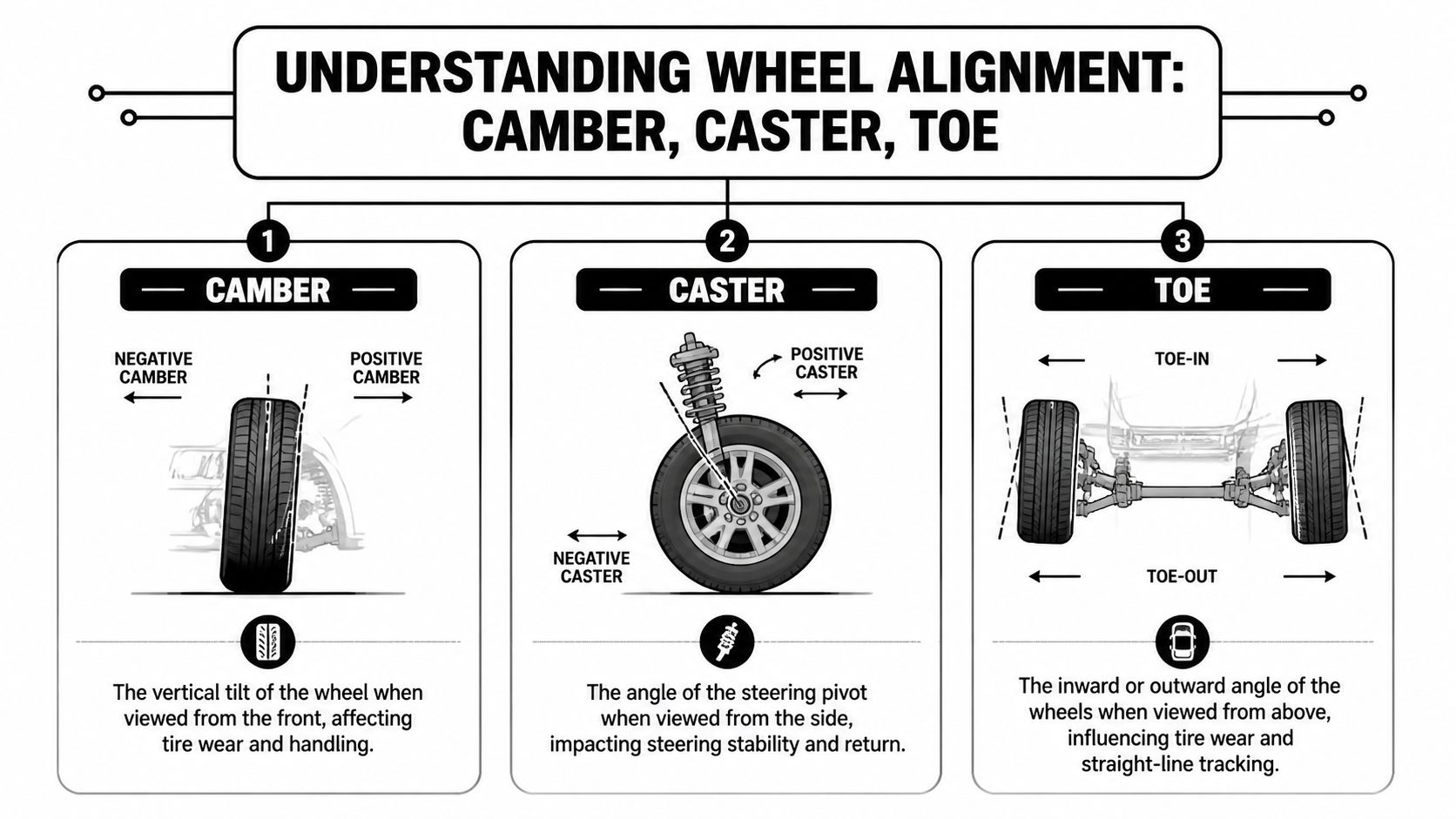
A driver usually notices the symptom first. The wheel needs a small correction on a straight road, or the car feels unsettled over a lane change. What we measure on the alignment rack are the three angles behind that behavior: camber, caster, and toe.
Camber is the wheel’s tilt
Look at the tire from the front of the vehicle. If the top leans in or out, that is camber.
A small camber change can wear one edge of the tread faster than the other. I have seen drivers replace a tire early when the issue was the wheel angle, not the tire itself. Camber also affects how much of the tread contacts the road, which matters for braking and cornering.
Caster affects stability and steering return
Caster is the forward or rearward tilt of the steering axis. The easiest way to describe it is with the front wheel on a shopping cart. That wheel trails behind its pivot and wants to straighten itself out. Your vehicle uses the same principle.
When caster is off, the car may feel vague on center or slow to return after a turn. It may still drive, but it takes more effort to keep it tracking cleanly. Drivers often describe that as a tired or busy steering feel.
Toe points the tires inward or outward
Toe is the angle of the tires viewed from above. If the fronts of the tires point slightly toward each other, that is toe-in. If they point away from each other, that is toe-out.
This angle usually does the fastest damage to tires. Bad toe can scrub the tread across the pavement and leave a feathered pattern you can feel with your hand. It can also make the vehicle dart, wander, or resist holding a straight line.
Why measurement matters on modern cars
These settings are small, but the effect on tire wear and handling is not. Alignment equipment lets a technician compare live wheel angles to factory targets and adjust the suspension with precision that eyeballing cannot match.
That matters even more on newer vehicles with driver-assistance features. If a car has a forward camera, lane-keep assist, or adaptive cruise control, suspension or alignment work may also call for an ADAS calibration check. Large chains often focus on getting the angles back into spec. A certified local shop such as Kwik Kar will usually spend more time confirming whether the camera and radar systems still agree with the vehicle’s new thrust line, because that directly helps maintain vehicle stability and safety.
Here is the practical version:
- Camber changes how the tread sits on the road.
- Caster changes straight-line feel and steering return.
- Toe changes tracking and tire wear the fastest.
When those three angles are right, the vehicle feels settled and predictable. When one is off, the car starts asking for correction every mile.
Recognizing the Signs Your Car Needs an Alignment
Drivers usually don’t walk into a shop saying, “My toe angle is out.” They describe symptoms. That’s exactly how most alignment problems are found in practice.
The signs that matter
Firestone recommends alignment checks every 6,000 miles or 6 months, and it also notes that potholes, curbs, and minor accidents can knock a vehicle out of alignment in its guide to 4-wheel alignment symptoms and service intervals.
The symptoms to watch for are practical and easy to notice:
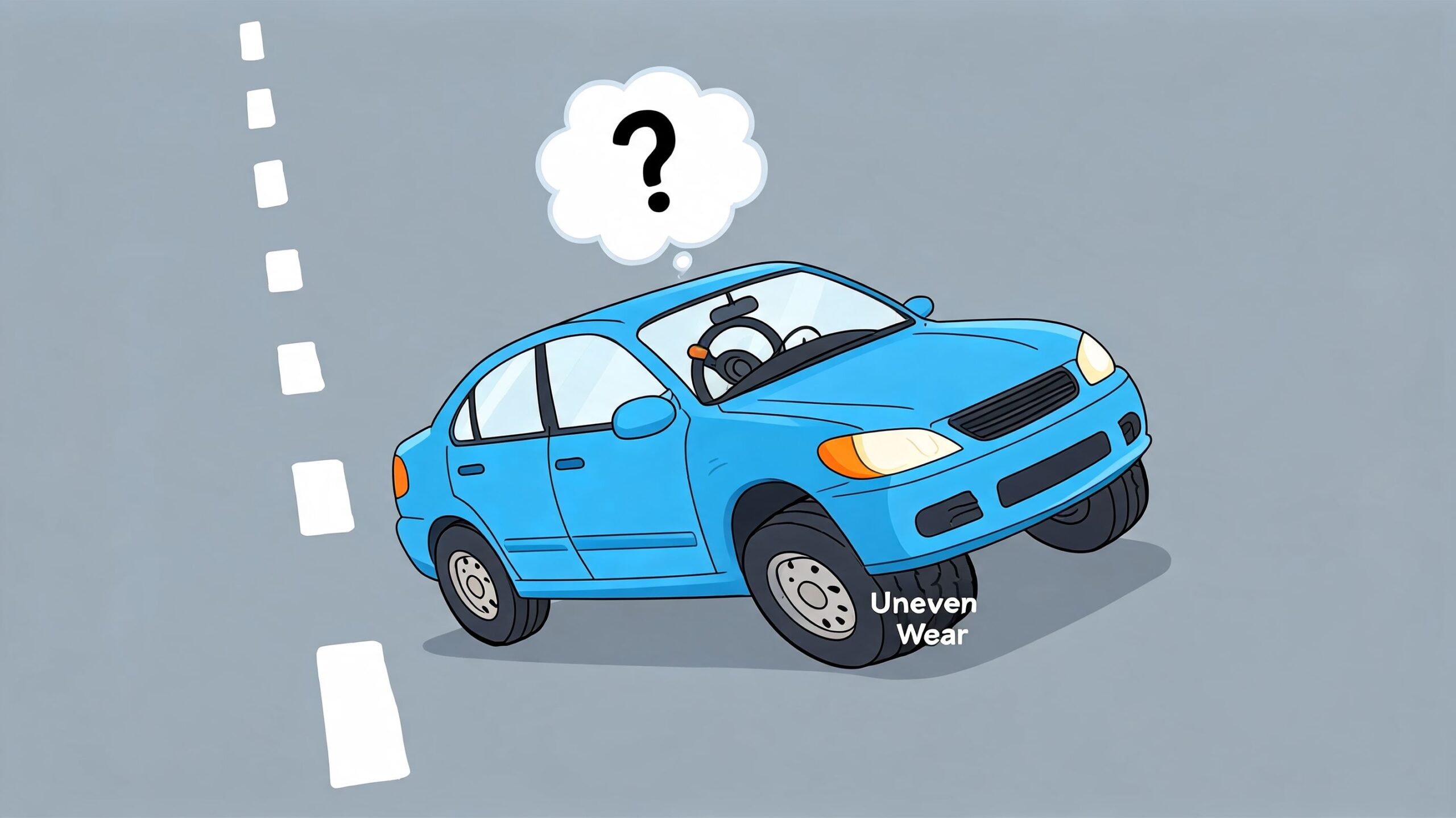
- Vehicle pulling to one side. This often means the car isn’t tracking evenly, so you’re constantly correcting.
- Crooked steering wheel on a straight road. The wheels may be pointed correctly relative to each other, but not centered relative to the steering wheel position.
- Uneven tire wear. Camber and toe problems commonly show up here first.
- Tire squealing noises. That can happen when the tires scrub against the pavement instead of rolling cleanly.
A good consumer-facing explanation of these warning signs and how they maintain vehicle stability and safety can help if you’re trying to decide whether the problem is urgent.
What drivers often miss
An alignment issue doesn’t always announce itself with a dramatic pull. Sometimes the car just feels “off.” The steering may not return cleanly after a corner. It may wander on the highway. You may notice you’re replacing front tires sooner than expected.
Don’t wait for the tread to make the diagnosis for you. By the time wear is obvious, the tires have already paid the price.
When to stop guessing and book it
Schedule an alignment check sooner rather than later if any of these happened recently:
- A pothole hit hard enough to make you wince
- You brushed or bumped a curb
- You were in a minor collision
- You replaced steering or suspension parts
- The wheel no longer sits centered during straight driving
Those aren’t minor triggers. They’re common causes of alignment shifts.
Dissecting the Firestone Wheel Alignment Service
If you’re comparing options, the biggest decision usually comes down to Firestone’s standard alignment versus its Lifetime Alignment program.
Firestone’s appeal is straightforward. It offers a familiar national footprint and a service structure that many drivers can plan around.
What the pricing model looks like
According to this breakdown of the Firestone Lifetime Alignment program, standard alignment costs about $110 per visit, while the Lifetime Alignment package is around $230 for one vehicle. The same source notes that the package reaches break-even at about 2.09 visits and requires customers to return every 6 months or 6,000 miles to remain under coverage.
For a driver who rarely needs alignments, the standard option can be perfectly reasonable. For a high-mileage commuter, rough-road driver, or fleet vehicle that sees frequent curb strikes and potholes, the lifetime package starts to make more financial sense.
If you want a local comparison point before deciding, this overview of a Firestone lifetime alignment coupon and service considerations is useful because it frames the plan around actual driving habits, not just sticker price.
Firestone Alignment Options Per-Visit vs. Lifetime
| Feature | Standard Alignment | Lifetime Alignment |
|---|---|---|
| Typical price | About $110 per visit | About $230 for one vehicle |
| Best for | Infrequent alignment needs | Drivers who expect repeat visits |
| Break-even point | Pay each time | About 2.09 visits |
| Visit requirement | As needed | Return every 6 months or 6,000 miles to stay under coverage |
| Budget style | Lower upfront cost | Higher upfront cost, lower cost over time if used regularly |
What works and what doesn’t
The lifetime package works well for people who come back. That’s the part many customers overlook. The plan only makes sense if you use it.
It doesn’t work as well for the owner who buys the package, forgets about it, and returns only when the tires are already worn. In the shop, I’ve seen that pattern plenty of times. The value is in the repeat inspections, not just the one-time purchase.
Another trade-off is service scope. Price covers alignment. It doesn’t automatically answer whether the shop is also checking for related calibration needs on newer safety systems. That matters more than most drivers realize.
A Look Inside the Alignment Bay
You drop the car off because the steering wheel is crooked and it drifts right on a flat road. From the service counter, wheel alignment can sound like a quick adjustment. In the bay, it starts with a basic question. Can the vehicle be aligned in its current condition?
A technician checks tire pressure, tire wear, ride height, and steering and suspension parts before making any adjustments. If a tie rod has play, a ball joint is loose, or a tire has a broken belt, setting angles first wastes your money. I tell customers it is like setting a door hinge on a bent frame. The numbers may change on the screen, but the problem is still there.
What happens on the rack
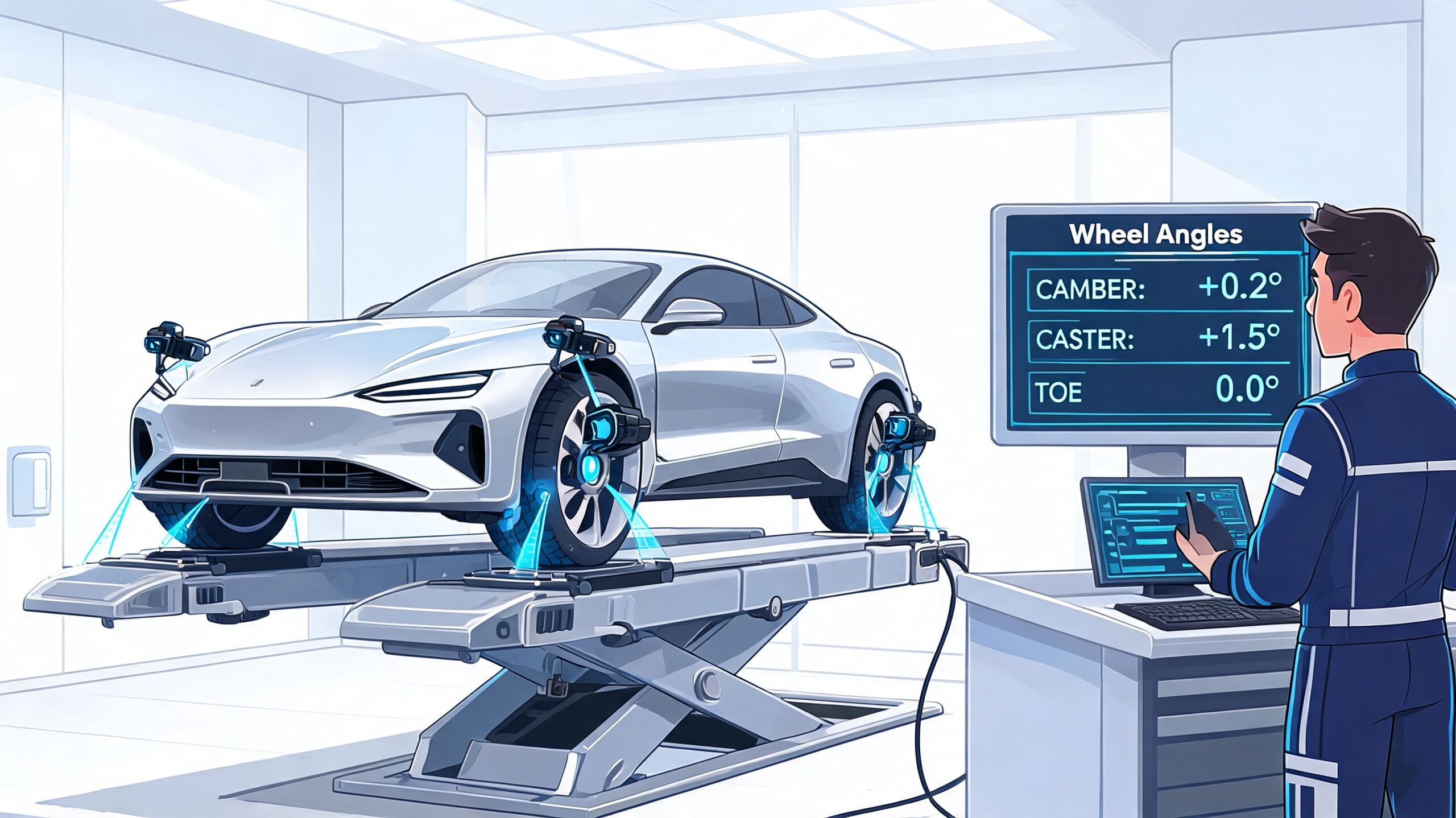
Once the car is on the rack, the technician mounts targets or sensors at all four wheels and performs a compensation procedure so the machine can read true wheel position. The alignment system compares current measurements to factory specifications, then shows where camber, caster, and toe sit before any wrench turns. A proper job also accounts for thrust angle, because the rear axle can steer the whole vehicle slightly off center even if the front toe looks close.
The printout matters. It shows the starting point and the final result, which gives you something better than a verbal “you’re good.” It also shows whether the shop corrected the problem or centered the steering wheel, performing the bare minimum to get the car out the door.
Here is what good alignment work usually includes:
- Pre-checking the chassis for worn or bent parts that can block accurate adjustment
- Reading all four wheel angles instead of focusing only on the front end
- Adjusting the hardware by hand at tie rods, cam bolts, control arms, or other factory adjustment points
- Centering the steering wheel correctly while keeping the vehicle tracking straight
- Printing final measurements so the customer can see what changed
Time in the bay varies with the vehicle and with what the technician finds during inspection. If you want a realistic expectation before you schedule service, this guide on how long wheel alignment usually takes lays it out clearly.
A visual walkthrough makes the process easier to understand:
Modern vehicles add one more layer that many drivers never hear about in the alignment bay. If the car uses lane-keeping assist, a steering angle sensor, or other ADAS features tied to vehicle direction, the job may not be finished when the mechanical angles are back in spec. Some vehicles need a steering angle reset or a full ADAS recalibration after alignment or suspension work. Large chains do not always put that discussion front and center. Certified local shops such as Kwik Kar are more likely to call it out, check service information for your exact model, and tell you whether the safety systems also need to be recalibrated.
The machine gives measurements. The technician still has to interpret them.
That judgment is what separates a quick adjustment from a repair that fixes the complaint.
Why Your Local Certified Shop Might Be the Smarter Choice
For modern vehicles, the conversation around alignment changes. Basic alignment is still basic alignment. But many newer cars don’t stop at steering geometry.
They also rely on Advanced Driver-Assistance Systems, or ADAS. That includes features like lane-keeping assist and other systems that depend on accurate steering and vehicle-position data.
The gap many drivers don’t ask about
Firestone’s alignment guides often don’t emphasize ADAS integration. One source discussing that gap states that 15% of ADAS faults in high-mileage cars were related to misalignment, and it argues that post-alignment recalibration is critical for systems like lane-keeping assist in its discussion of wheel alignment and ADAS considerations.
That doesn’t mean every alignment requires the same follow-up. It does mean drivers should stop assuming alignment alone closes the loop on safety for a newer vehicle.
Why a local certified shop can be a better fit
A local certified shop often gives you something national chains struggle to provide consistently. Conversation. You can ask whether the steering angle sensor needs attention, whether the vehicle had recent suspension work, and whether warning lights or lane-centering behavior changed after an impact.
For Richardson drivers, Kwik Kar Oil Change and Auto Care is one local option with ASE-certified technicians and certifications through NAPA AutoCare, RepairPal, and CARFAX. That combination matters most when the job isn’t just “set toe and send it,” but “check the whole vehicle and confirm no related safety issue is being overlooked.”
When local attention beats chain convenience
Choose the shop that answers these questions clearly:
- Will you inspect suspension and steering parts before aligning it?
- If my vehicle has ADAS features, do you check whether recalibration is needed after the alignment?
- Will I get before-and-after readings?
- If something is bent or worn, will you tell me before charging ahead?
An alignment can make a car drive straighter. A complete post-impact inspection helps make sure it’s still safe.
That difference matters for families, commuters, and fleet vehicles. It also matters for anyone driving a newer vehicle with electronic safety features that depend on the chassis being set correctly.
Your Top Wheel Alignment Questions Answered
Do I need a two-wheel or four-wheel alignment
That depends on the vehicle design and what’s adjustable. Many modern vehicles are best evaluated as a full system, because rear-wheel position affects how the vehicle tracks. Even when only the front is adjustable, the rear still needs to be measured so the technician can see the whole picture.
Can bad alignment damage other parts
Yes. Misalignment puts extra stress on tires first, but it can also add strain to steering and suspension components because the driver keeps correcting and the tires keep scrubbing instead of rolling cleanly. Alignment problems also hide other issues. A worn component can cause poor readings, and poor readings can make a worn component harder to ignore.
Should I get an alignment after buying new tires
In most cases, yes. New tires are a fresh investment. It makes sense to protect them with a proper alignment check so they don’t start wearing unevenly right away.
Can I tell if my alignment is bad just by looking at the tires
Sometimes, but not reliably. Uneven wear can point to alignment trouble, yet tire pressure, suspension wear, and rotation history also affect tread appearance. The rack tells the truth faster than visual guessing.
Does wheel balancing fix an alignment issue
No. Balancing and alignment solve different problems. Balancing addresses vibration caused by uneven weight distribution in the tire and wheel assembly. Alignment addresses the angles at which the tires meet the road.
For drivers who also care about keeping the vehicle looking as good as it drives, 24 Pure Water's detailing advice offers useful maintenance ideas once the mechanical side is sorted.
If your car pulls, your steering wheel sits off-center, or your tires are wearing unevenly, don’t wait for the problem to get expensive. A proper alignment check tells you whether the issue is simple adjustment, worn parts, or a safety-system follow-up that needs attention.
If you’re in Richardson and want a clear answer instead of guesswork, schedule an alignment inspection with Kwik Kar Oil Change and Auto Care. Their ASE-certified team handles routine maintenance, diagnostics, and safety-focused inspections, and they also offer discounts for military, first responders, and healthcare providers.