A lot of drivers start looking up fuel injector cost to fix after the same kind of bad morning. The car starts, but it doesn’t feel right. It shakes a little at the light on Belt Line. It hesitates when you pull into traffic on Central. You notice you’re filling up more often, and now the check engine light is staring at you.
That combination means one thing. Your engine isn’t getting fuel the way it should.
A fuel injector is a small part with a very important job. It meters fuel into the engine at the right time and in the right amount. When it clogs, leaks, sticks, or sprays poorly, the engine can’t burn fuel cleanly. That’s when you feel rough idle, stumble on acceleration, gas smell, or a drop in performance.
The part that worries most owners is the bill. That’s understandable. Injector repairs can be simple, or they can turn into a bigger job depending on the vehicle, the engine design, and whether the injector itself is the problem.
I’ve seen plenty of cars come in with “bad injector” written all over the symptoms, only to find the problem was something else in the fuel or ignition system. I’ve also seen people spend money replacing one injector when a proper diagnosis would have shown that cleaning, testing, or a different repair path made more sense.
That’s why this topic needs straight answers. Not guesses. Not scare tactics. Just a clear explanation of what fuel injectors do, what failure looks like, what affects repair cost, and why a good diagnosis matters before anyone starts replacing parts.
Is Your Car Trying to Tell You Something?
Most injector problems don’t begin with a dramatic breakdown. They start with small changes you notice over a week or two.
Your engine may feel rough at idle. The car may pause when you press the gas. You may smell fuel after parking in the driveway. Sometimes the only thing you notice is that the vehicle doesn’t feel as smooth or responsive as it used to.
The symptoms usually show up before the failure
An injector has one basic task. It has to deliver the right amount of fuel, cleanly and consistently, into the engine.
When that doesn’t happen, the engine has to work around the problem. It might misfire. It might run too lean or too rich. It might waste fuel trying to compensate for a bad spray pattern or a leak.
That’s why these complaints matter:
- Rough idle: The engine may shake or feel uneven at stoplights.
- Hesitation: You press the accelerator and the response feels delayed.
- Fuel smell: A leaking injector can leave a noticeable odor.
- Lower fuel economy: The car may start using more gas than normal.
- Check engine light: The computer may detect a misfire or fuel delivery fault.
None of those symptoms automatically proves you need new injectors. That’s a key point.
Practical rule: Don’t approve injector replacement based on symptoms alone. Approve it after testing confirms the injector is the problem.
Waiting usually makes the repair more expensive
A weak or leaking injector doesn’t just affect drivability. It can create a chain of other problems.
An engine that misfires repeatedly can develop additional wear. A rich-running cylinder can foul plugs. Poor combustion can make the vehicle harder to start and less predictable in traffic. If the issue keeps getting ignored, the final repair usually costs more than it would have if someone had diagnosed it early.
That’s why the right move isn’t panic. It’s inspection.
If your car is talking to you through rough idle, poor throttle response, or a fresh gas smell, it’s worth listening before a manageable repair turns into a much bigger one.
Understanding Your Car's Fuel Injectors
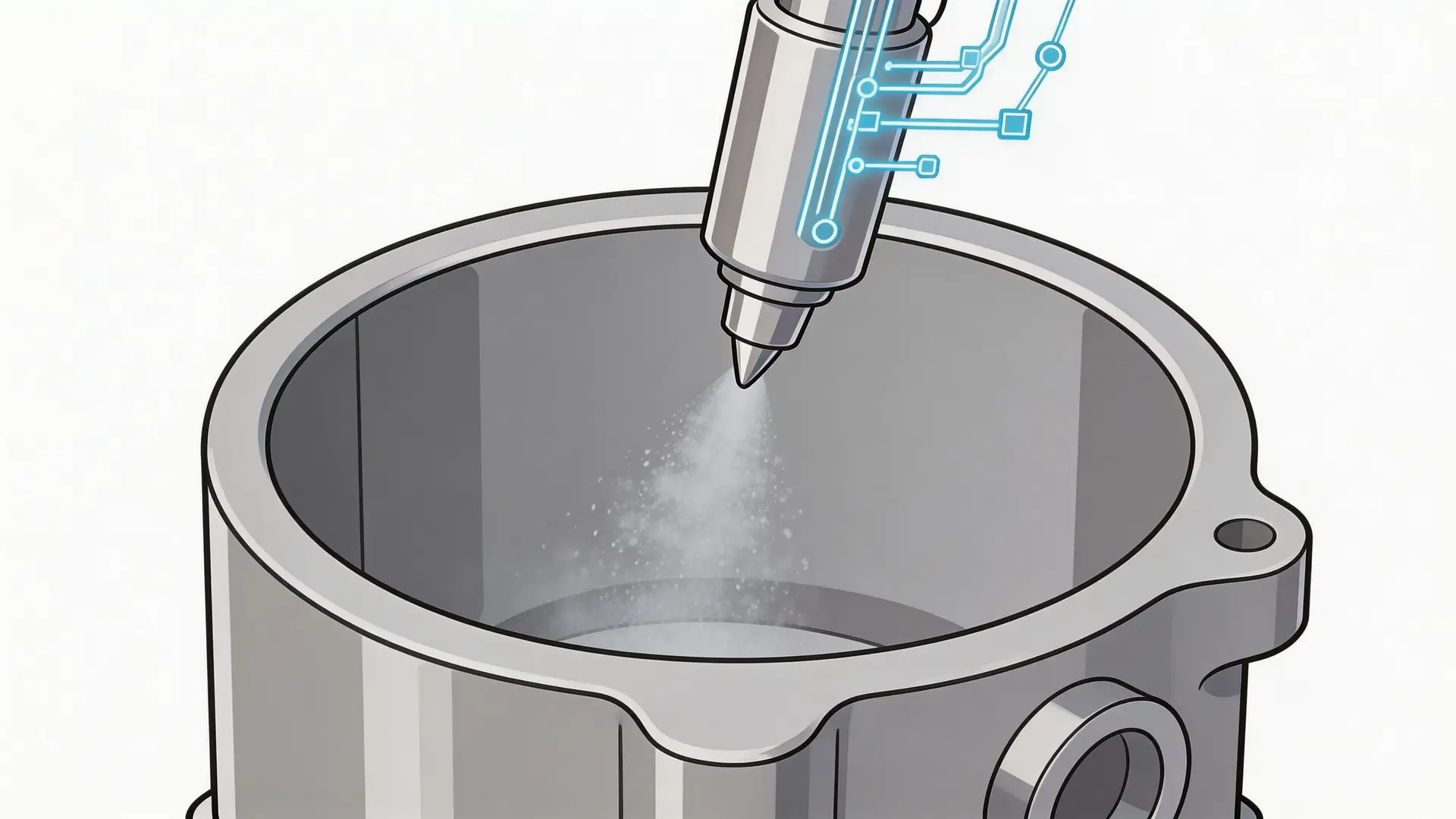
Think of a fuel injector like a computer-controlled spray nozzle. Its job isn’t just to release fuel. It has to release the correct amount, in a fine mist, at the correct moment, over and over again while the engine runs.
Why injectors matter so much
The engine burns a mix of air and fuel. If the injector sprays too little fuel, the engine can run lean and stumble. If it sprays too much, the engine can run rich, smell like fuel, and lose efficiency. If the spray pattern is poor, combustion gets messy.
Modern systems are precise. In gasoline direct injection systems, fuel injectors operate at 2,900 to 4,350 psi and deliver fuel pulses lasting microseconds, which is why even small carbon buildup can cause a 5 to 15% loss in fuel economy and trigger misfire codes, according to RepairPal’s fuel injector replacement estimate page.
That kind of precision explains why injector issues can feel surprisingly noticeable from the driver’s seat.
If you want a closer look at how shops verify injector problems, this guide on how to test fuel injectors gives a useful overview of the testing side.
Five common signs of injector trouble
These are the symptoms I tell drivers to pay attention to first:
- Rough idle or misfire: One cylinder may not be getting the same fuel delivery as the others.
- Poor fuel economy: The engine may burn more fuel trying to maintain performance.
- Fuel odor: A leaking injector can allow fuel where it shouldn’t be.
- Hesitation or weak acceleration: The engine may not respond cleanly when demand changes.
- Check engine light: Misfire and fuel delivery faults often show up here.
What clogged and leaking injectors do differently
Not all bad injectors fail the same way.
A clogged injector tends to restrict fuel flow. That can make the engine run lean on one cylinder, especially at idle or during acceleration. You’ll often notice a stumble, a vibration, or a lack of power.
A leaking injector creates the opposite problem. It may allow too much fuel into the cylinder. That can cause rough running, fuel smell, hard starts, or blackened plugs.
A car can have injector symptoms without needing injector replacement. Spark problems, fuel pressure issues, and restricted filters can mimic the same complaint.
Why drivers get confused
From the outside, every fuel-related problem can feel similar. The car runs rough. The light comes on. Fuel economy drops. That makes it easy to assume the injector itself has failed.
Sometimes that’s correct. Sometimes it isn’t.
That’s why a technician shouldn’t treat the injector as guilty before testing. The right repair starts with identifying whether the problem is a dirty injector, a failed injector, poor fuel delivery, a wiring issue, or a different engine problem that happens to feel the same.
Fuel Injector Cost to Fix A Detailed Breakdown
The biggest mistake I see is treating fuel injector repair like it has one standard price. It doesn’t. The final number depends on the vehicle, the engine layout, how many injectors are involved, and whether the fix is cleaning, replacing one injector, or replacing several at once.
Right near the start, it helps to see the moving pieces visually.
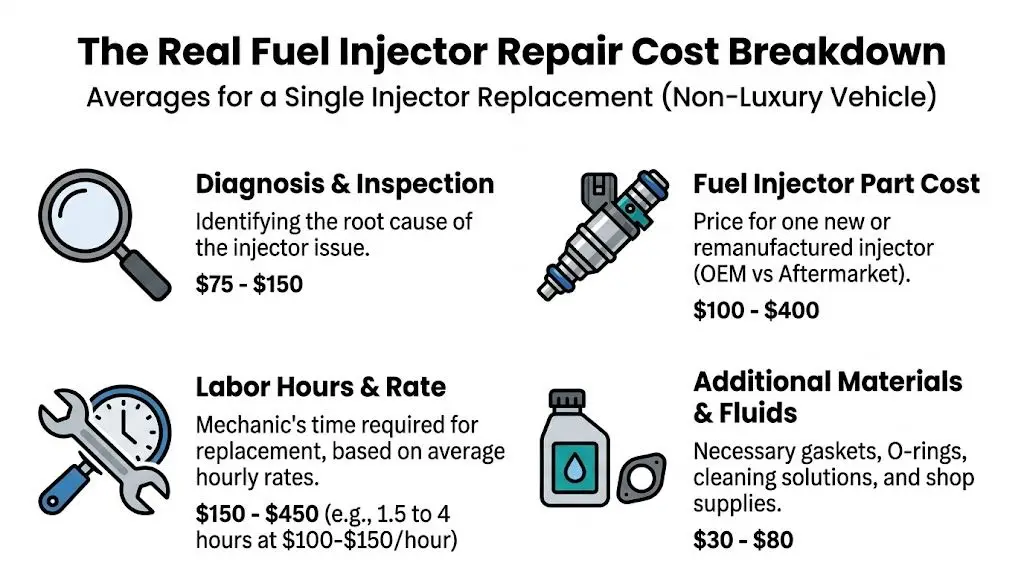
What most gasoline owners should expect
For common gasoline vehicles, total fuel injector replacement cost typically ranges from $336 for a Honda Civic to over $1,760 for a BMW 750Li, and individual injectors can cost from $40 to over $500, with labor making up a significant part of the bill, based on Hot Shot’s fuel injector replacement cost guide.
That range is wide, but it’s real. A small sedan and a luxury engine don’t ask for the same parts, the same labor access, or the same level of teardown.
Cost examples by vehicle type
Here’s a quick benchmark using the verified vehicle examples.
| Vehicle Type | Average Parts Cost | Average Labor Cost | Estimated Total Cost |
|---|---|---|---|
| Honda Civic | $199 to $212 | $137 to $173 | $336 to $385 |
| Ford F-150 | $371 to $423 | $201 to $254 | $572 to $677 |
| BMW 750Li | $1,469 to $1,590 | $290 to $366 | $1,760 to $1,956 |
Those numbers show why two people can both say “I had an injector replaced” and mean very different repair bills.
Parts, labor, and the hidden question
Most owners focus on the injector part itself. That’s only part of the equation.
The larger questions are often these:
- How hard is the injector to access
- Is one injector bad, or are several showing the same wear
- Does the engine need disassembly to reach the rail
- Are you paying for diagnosis, cleaning, replacement, or all three
A vehicle with easy access may keep labor more manageable. A packed engine bay, a higher-end vehicle, or a direct injection setup can move the total much higher.
Here’s a useful walk-through if you want to see a repair process in action.
Cleaning versus replacement
Not every injector issue starts with replacement. If testing shows the injector is dirty rather than failed, cleaning may be the smarter path.
For modern GDI systems, ultrasonic cleaning can run $50 to $80, while full replacement averages $741 to $927, with parts at $464 to $521 and labor at $277 to $406 per RepairPal estimates updated January 2026.
That difference matters. A proper diagnosis can separate a maintenance problem from a hardware failure.
If the injector can be restored with cleaning and verified afterward, paying for diagnosis first can be cheaper than rushing into parts replacement.
Why bills climb fast
Injector repairs get expensive for one simple reason. Access takes time, and time is labor.
Many engines have one injector per cylinder. Once a technician has to remove surrounding components to reach one injector, the owner has to consider whether replacing only the failed one makes sense or whether it’s better to address multiple aging injectors during the same repair window.
That doesn’t mean every car needs a full set. It means the fuel injector cost to fix is tied as much to labor strategy as it is to the injector itself.
Key Factors That Influence Your Final Repair Bill
One owner gets a modest quote. Another gets a number that feels painful. Usually the difference comes down to engine design, parts choice, and labor access, not dishonesty.
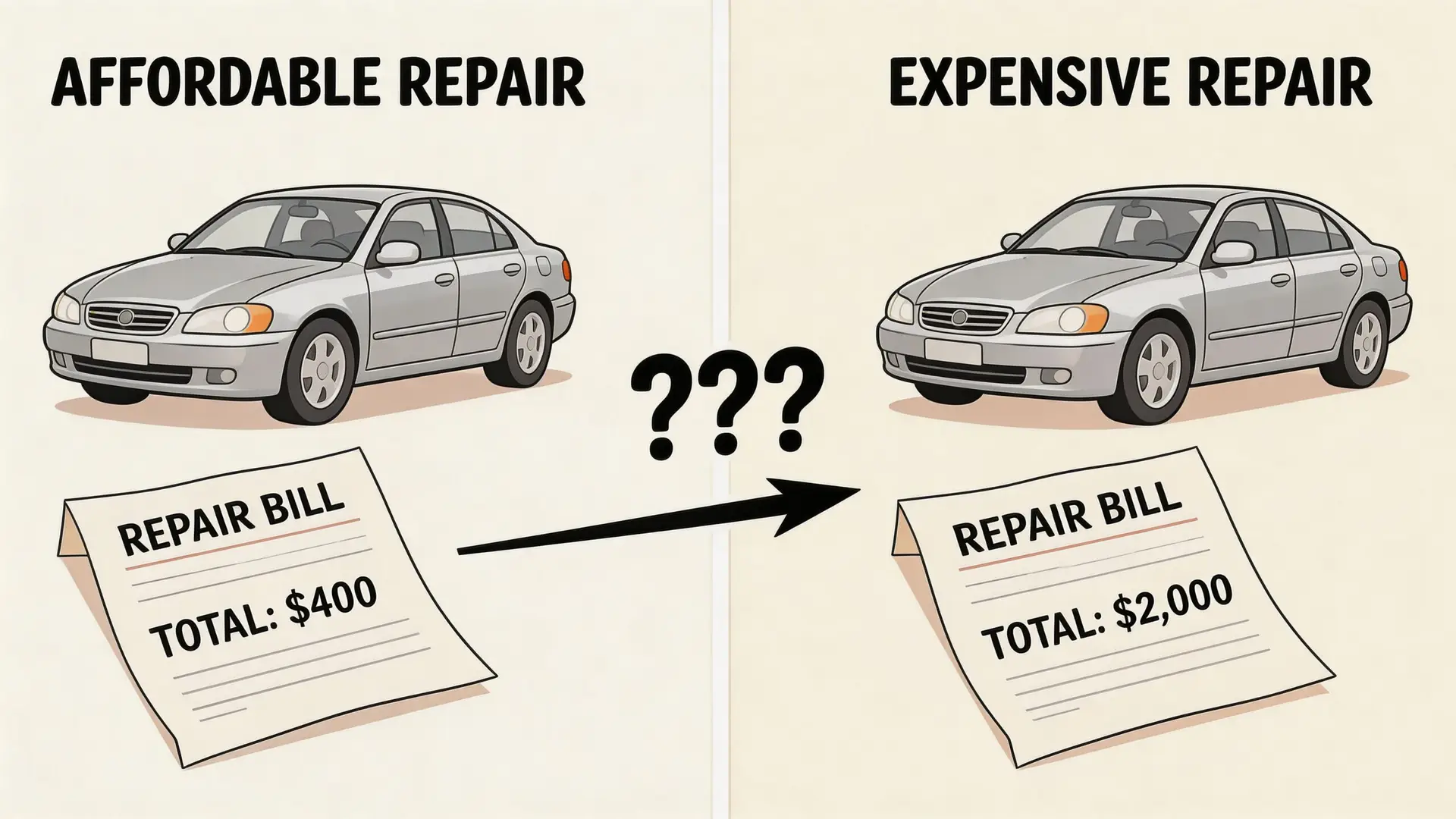
Gasoline direct injection changes the equation
Port fuel injection systems are generally simpler to service than modern direct injection systems. GDI injectors work under much higher pressure and need tighter precision. That usually means more expensive parts and more care during diagnosis and installation.
When owners compare quotes, this is one of the first things I check. If two vehicles are both gasoline models but one uses GDI and the other doesn’t, the repair path may be very different.
Diesel injectors cost more for a reason
Diesel owners already know the fuel system is built differently. The parts are more complex, and the pressure involved is much higher.
According to Highway and Heavy Parts on current diesel fuel injector replacement cost, diesel fuel injector replacements average around $700 per injector including labor, with a full set potentially exceeding $2,500. The same source notes that a faulty diesel injector can reduce fuel efficiency by 20 to 30%.
For diesel trucks, downtime matters as much as the invoice. A truck that runs poorly, starts hard, or burns fuel inefficiently can create operating problems long before it completely fails.
OEM versus aftermarket parts
This choice affects both price and long-term confidence.
OEM parts usually cost more, but they’re designed for that exact application. That can matter on engines that are sensitive to spray pattern, fitment, or calibration.
Aftermarket parts can lower the up-front bill. Sometimes they work fine. Sometimes they introduce questions about consistency, especially on more demanding systems.
The right answer depends on the vehicle, how long you plan to keep it, and whether the part quality gap is worth the savings. On a work truck or commuter car you rely on every day, the cheapest injector isn’t always the cheapest repair.
One injector or several
Many repair decisions become uncomfortable at this point.
If only one injector has failed and the others test well, replacing one may be reasonable. But if the vehicle has age, mileage, or a pattern of related issues, replacing more than one can make sense because labor is already being paid once.
That’s especially true on engines where injector access requires a lot of disassembly. The injectors may not all be dead, but the labor to return later can make a staggered approach more expensive overall.
Access matters more than expected
Two injectors can cost the same on the parts shelf and produce very different repair totals in the service bay.
An injector buried under intake components or packed into a tight engine compartment takes more time to reach. That means more labor. It also means more chances to replace related seals or small hardware while everything is apart.
If you’re also dealing with fuel delivery problems upstream, it’s smart to consider related restrictions too. A partially blocked filter can mimic injector complaints, and this explanation of a clogged fuel filter is worth reading if you’re sorting out rough running symptoms.
A fair injector quote isn’t just about the part price. It reflects the engine design, the diagnosis, and how much labor it takes to do the job correctly.
DIY vs Professional Repair Which Path Is Right for You
Fuel injector work looks easier online than it often is in the bay. That’s why a lot of DIY repairs start with confidence and end with a tow bill, a parts return, or a car that still has the same problem.
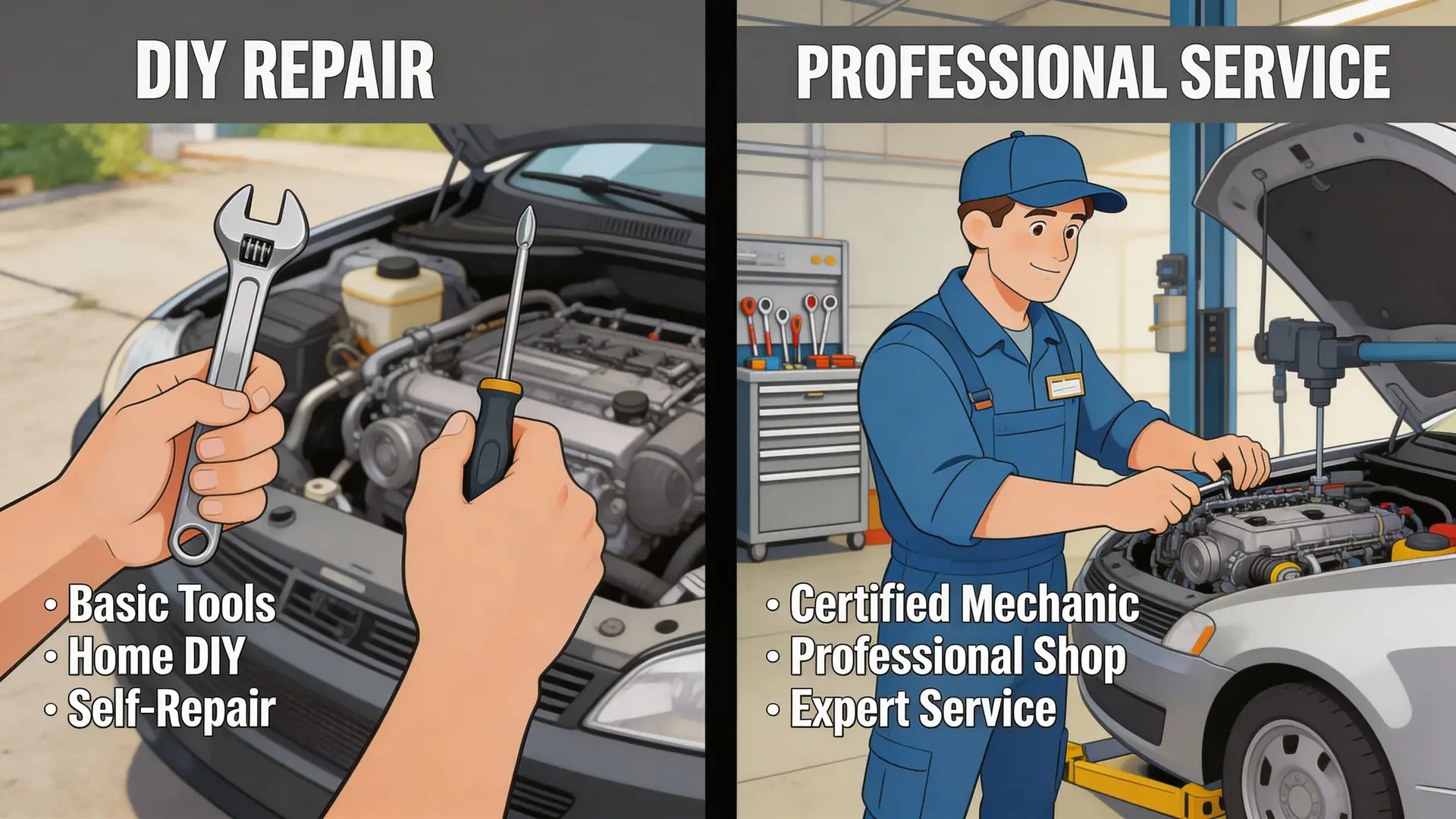
What DIY can do well
If you’re experienced, careful, and working on a simpler setup, basic injector-related maintenance may be realistic. Inspection, symptom tracking, and certain cleaning approaches can be reasonable for a hands-on owner.
That said, the main risk usually isn’t installation. It’s diagnosis.
A rough idle can come from an injector, ignition issue, fuel pressure problem, airflow problem, or contamination. If you replace the injector first and guess wrong, you haven’t saved money. You’ve added cost.
If you’re considering that route, read this first on DIY fuel injector cleaning. It helps separate simple maintenance from work that needs professional testing.
Where DIY gets expensive
Pressurized fuel systems need to be handled correctly. Connectors, seals, O-rings, and rail components can be damaged if they’re rushed or reassembled poorly. On newer engines, it also takes scan data and experience to decide whether the injector is causing the problem or just getting blamed for it.
According to Sunbit’s overview of fuel injector replacement cost, national labor rates for injector replacement average $277 to $406, but an ASE-certified technician using advanced diagnostics might identify injector cleaning as a $50 to $80 alternative to a full $900+ replacement.
That’s the value of paying for accurate diagnosis. Sometimes the expensive-looking shop visit prevents the expensive wrong repair.
Why professional comparison matters
Drivers deal with this same decision in other automotive services too. If you’ve ever looked at comparing professional repair options for something like key replacement, the logic is familiar. The lowest apparent price doesn’t always produce the lowest real cost once time, accuracy, equipment, and rework are included.
The same principle applies here.
- DIY saves labor only if the diagnosis is correct
- Professional service adds cost up front but can avoid unnecessary parts
- Modern injector systems reward precision, not guesswork
My practical advice
If the vehicle is older, simple, and you already know your way around fuel system work, DIY may be worth considering for limited maintenance.
If the car is direct injection, diesel, hard to access, still relied on daily, or showing symptoms that could point in several directions, professional diagnosis is usually the cheaper path in the end.
One local option is Kwik Kar Oil Change and Auto Care, which provides fuel injector maintenance and diagnostics as part of its general automotive service lineup. That matters because injector complaints often overlap with broader drivability issues, and those need to be sorted before anyone starts installing parts.
What to Expect During Your Service at Kwik Kar Richardson
Most drivers come in worried about two things. First, how bad is the problem. Second, how much is this going to cost me.
A good service visit should answer both clearly.
The car gets tested before parts are discussed
The first step is to confirm the complaint. That starts with the symptoms you describe, then moves to scan data, inspection, and fuel system checks.
If the engine is misfiring, the technician needs to determine whether the injector is at fault. If there’s a fuel smell, the source has to be identified. If the car hesitates under load, the issue has to be separated from ignition and airflow faults that can feel similar from the driver’s seat.
That’s where certified diagnostics matter. They reduce the odds of replacing a good injector because something else created the same symptom.
The estimate should make sense to you
Once the shop knows what failed, the estimate should break it down in plain English.
You should be able to see:
- What part or service is recommended
- Whether cleaning is still on the table
- How much of the total is labor
- Whether one injector or multiple injectors are being discussed
- Any related seals, O-rings, or supporting parts included in the job
If you can’t understand the estimate, ask questions. A good shop won’t mind.
Good diagnostics save money in ways customers don’t always see. The savings come from avoiding the wrong repair, repeat labor, and unnecessary parts.
The repair itself should be methodical
Once approved, injector service usually means controlled disassembly, careful handling of the fuel system, replacement or cleaning as indicated, and reassembly with attention to seals and connections.
That sounds basic, but details matter here. A pinched seal or an overlooked leak can turn a completed repair into a comeback.
After the work is done, the vehicle should be tested again. The shop should verify that the rough idle, misfire, hesitation, or fuel smell has been corrected.
You should leave knowing what was fixed
The best outcome isn’t just a smoother-running car. It’s clarity.
You should leave understanding whether the injector was clogged, leaking, electrically faulty, or part of a broader issue. You should also know if anything else needs to be watched later, especially on higher-mileage vehicles where one fuel system problem can be a sign of wear elsewhere.
That kind of transparency matters for commuters, families, and small fleet owners in Richardson because reliability is the whole point of doing the repair in the first place.
Drive with Confidence Schedule Your Fuel Injector Service Today
Injector problems can feel confusing because the symptoms overlap with so many other engine issues. That’s why the right question usually isn’t just “what’s the fuel injector cost to fix?” It’s “what exactly am I fixing?”
Once you know that answer, the repair decision gets easier.
Some vehicles need cleaning. Some need one injector. Some need a broader repair plan because labor access or vehicle age changes the math. The common thread is that accurate diagnosis protects your budget. It helps you avoid paying for parts you didn’t need and catches small fuel system problems before they grow into larger drivability issues.
If your car is idling rough, hesitating, using more fuel, or showing a check engine light, don’t wait for the problem to get louder. A tested answer is always better than an expensive guess.
A healthy fuel system keeps the engine smoother, more efficient, and more dependable on your daily drive through Richardson and beyond.
Frequently Asked Questions About Fuel Injector Repair
Can I drive with a bad fuel injector
Maybe for a short time, but it’s not a good plan.
A failing injector can cause misfires, rough running, fuel smell, poor throttle response, or hard starts. Even if the car still moves, it may not be running safely or efficiently. The longer you wait, the more likely it is that the original injector issue creates additional engine problems.
Is injector cleaning worth trying first
Yes, if testing supports it.
Cleaning makes sense when the injector is restricted by deposits but hasn’t mechanically or electrically failed. Replacement makes more sense when the injector leaks, won’t respond correctly, or can’t produce a proper spray pattern after testing. The key is not choosing the service first and the diagnosis second.
Why does one shop quote less than another
Lower quotes can come from cheaper parts, less diagnostic time, less labor included, or a different repair strategy.
That doesn’t automatically make the lower quote wrong. It does mean you should compare what’s included. Ask whether the quote covers diagnosis, whether seals and related materials are included, and whether the part is OEM or aftermarket.
Should I replace all fuel injectors at once
Not always.
If one injector has clearly failed and the others test well, replacing one may be reasonable. In other cases, especially on higher-mileage vehicles or engines with difficult access, replacing several at once may save future labor. The right call depends on test results, engine design, and how long you plan to keep the vehicle.
How long do fuel injectors last
The answer varies a lot by vehicle and operating conditions.
According to the verified cost and lifespan overview from Hot Shot, high-quality injectors can last 50,000 to 500,000 miles under moderate driving conditions, though many studies place a more conservative service life at 50,000 to 100,000 miles before problems such as misfires, reduced efficiency, or leaks lead to replacement needs.
That wide spread is why maintenance history, fuel quality, and actual test results matter more than mileage alone.
What’s the biggest mistake car owners make
Approving parts before confirming the cause.
A bad injector can cause rough running, but so can other fuel, ignition, and air delivery faults. The most expensive repair is often the one that solves the wrong problem.
If you remember one thing, remember this. A diagnosis is not an extra charge standing in the way of the repair. It’s the step that tells you whether the repair is necessary.
Will a check engine light always mean injector replacement
No.
The check engine light only tells you the computer detected a fault. It doesn’t tell you the failed part with certainty. Misfires, mixture problems, and performance issues can point toward injectors, but they can also point elsewhere. That’s why code reading is a starting point, not a final answer.
If your vehicle is running rough, hesitating, or using more fuel than it should, schedule an inspection with Kwik Kar Oil Change and Auto Care. A clear diagnosis can save you from paying for the wrong repair and help you make the right call for your car, your budget, and your daily drive.