Heater Not Working in Your Car? Causes, Checks and Costs
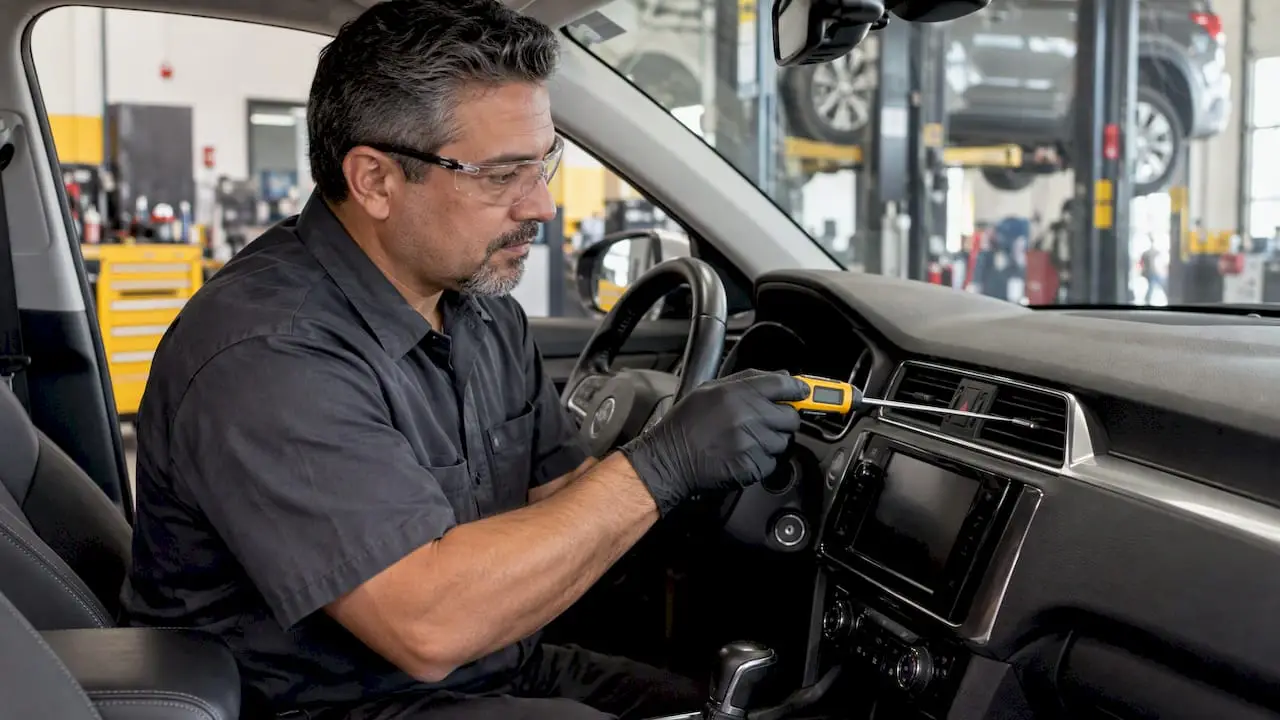
If your car heater is not working, the cause is usually one of a few things: low coolant, a thermostat stuck open, a clogged heater core, trapped air in the cooling system, a faulty blower motor or a blend door that is not directing air properly. Most of these start with how well your engine is circulating hot coolant. This guide helps you sort out which one you are dealing with, what you can safely check yourself, and when to have a technician look at it. It also covers what repairs typically cost.
TL;DR
- A heater runs on engine heat. Hot coolant flows through the heater core, and a fan pushes air across it into the cabin. Weak coolant flow, a cold-running engine or a fan or door fault can each leave you with no heat.
- Check the temperature gauge first. If the engine is overheating, pull over safely and shut it off. Do not keep driving.
- A sweet smell, fogged windows or damp carpet suggest a leaking heater core, which is a job for a professional.
- Repair costs range widely, from a low-cost coolant top-up to several hundred dollars or more for a heater core, depending on the vehicle and cause.
- Kwik Kar Oil Change & Auto Care in Richardson, TX can diagnose it. Call (972) 644-1851.
Table of Contents
- How a Car Heater Actually Works
- Why Is There No Heat When the Engine Is Running?
- Why Is My Heater Blowing Cold Air Instead of Warm?
- What About No Heat at Idle?
- What Can You Safely Check Yourself?
- When to Stop Driving and Get Help
- How Much Does It Cost to Fix a Car Heater?
- Our Perspective: Treat the Heater as a Cooling System Clue
- Heater Repair in Richardson, TX
- A Note on Texas Inspections
- FAQ
- Get Your Heater Checked
- Sources
How a Car Heater Actually Works
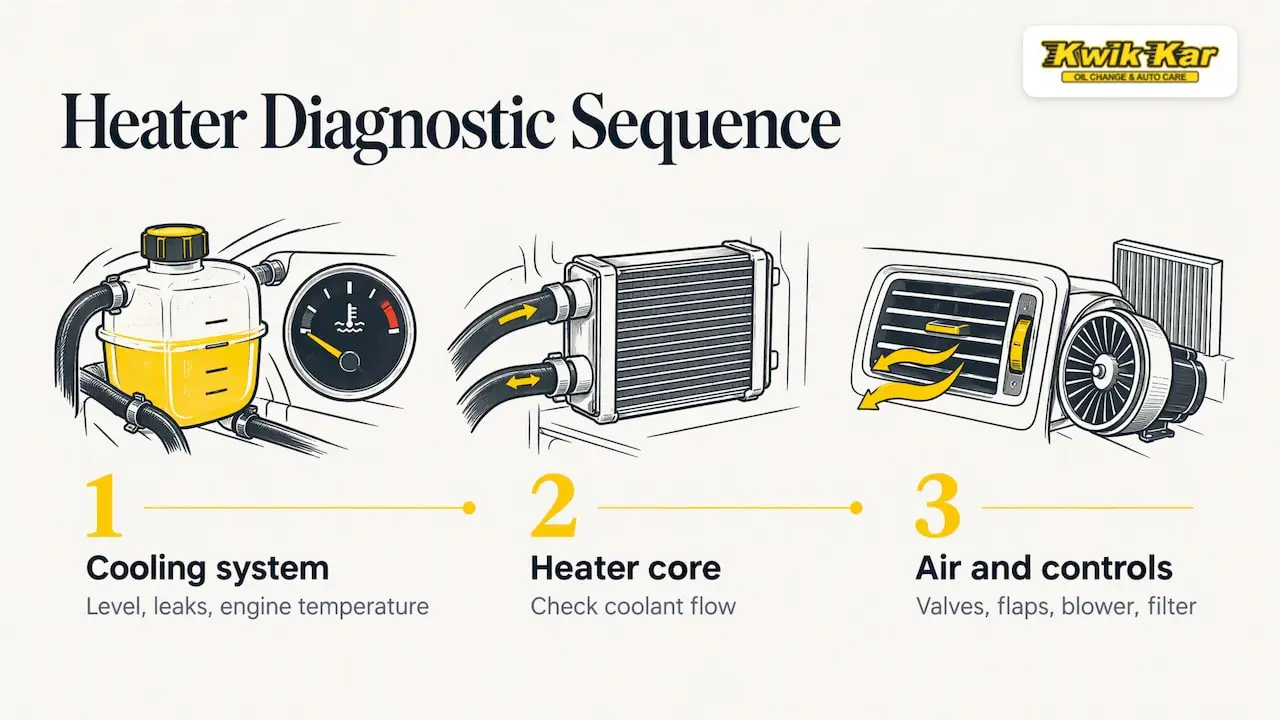
Your car does not make heat for the cabin. It borrows it. Once the engine warms up, coolant absorbs that heat and travels through hoses to the heater core, a small radiator tucked behind the dashboard. The blower motor pushes cabin air across the core, and a set of doors (often called blend doors) decides how much of that air is warmed before it reaches your vents.
That means a heater problem can live in three places: the cooling system, the blower and air path, or the controls. HELLA’s cooling-system diagnostic guidance follows the same logic. Check coolant level, leaks, and whether the engine reaches operating temperature, then coolant flow through the heater core, then valves, flaps, the blower and the cabin filter.
The heater also shares a lot with your air conditioning, since both use the same ducts, blower and doors. If you want to understand how that side fails, car air conditioning leak symptoms show how the climate system can fail in similar ways.
Why Is There No Heat When the Engine Is Running?
The engine can run perfectly and still deliver cold air. These are the usual reasons, roughly in order of how often we think about them.
Low coolant
This is the first thing to rule out. ALLDATAdiy notes that low coolant can keep hot coolant from reaching the heater core. Coolant does not get “used up” in a healthy system, so a low level usually means a leak somewhere. Topping it off without finding the leak only buys time.
If you want to know what a leak looks like, see our guide to coolant leak warning signs and how radiator leaks develop.
A thermostat stuck open
The thermostat holds coolant in the engine until it reaches operating temperature. If it sticks open, the engine runs cool and the heater never gets hot coolant. ALLDATAdiy lists the clues: an engine that takes a long time to warm up, a gauge that stays near cold, or heat that fades at highway speed.
A thermostat stuck closed does the opposite. Coolant cannot circulate to the radiator, and the engine can overheat.
Air trapped in the cooling system
An air pocket can block coolant from reaching the heater core. This often follows a coolant service or repair where the system was not fully bled, and it can cause heat that comes and goes.
A clogged or leaking heater core
Old coolant can cause corrosion and scale that restrict passages. Tomorrow’s Technician describes how this reduces flow to and through the heater core. A restricted core may give you lukewarm air, or heat on one side of the car only.
A leaking core is different. A sweet smell inside the cabin, windows that fog for no reason or damp carpet on the passenger side all point that way, according to ALLDATAdiy. Reaching the core can mean extensive dashboard work, which is why this repair costs more than most.
A heater control valve or water pump problem
Some vehicles use a valve to control coolant flow to the core. If it fails, coolant may not reach it. A weak water pump can also limit circulation, often with an overheating warning alongside.
Why Is My Heater Blowing Cold Air Instead of Warm?
The key detail is whether the engine is actually warm. Start the car, drive for several minutes and watch the gauge.
| What you notice | Likely area | What it suggests |
|---|---|---|
| Gauge stays low, heat weak at speed | Thermostat | Stuck open, engine not reaching temperature |
| Gauge climbs high or warning light on | Coolant level or circulation | Low coolant, air pocket, water pump or thermostat stuck closed |
| Gauge normal, both heater hoses hot, vents cold | Air path or controls | Blend door, actuator, control panel or related circuit |
| Gauge normal, one hose cool | Heater core or valve | Restricted flow |
| Little or no air from vents at any setting | Blower side | Fuse, wiring, blower motor, blocked cabin filter |
ALLDATAdiy says that when both heater hoses are hot but the vents blow cold, the fault may be the temperature-control door, its actuator, the control panel or a related circuit. A tell-tale sign is a faint clicking behind the dash when you change the temperature setting.
Heat that is fine on one side and cold on the other points to a dual-zone blend door fault or a partly blocked core.
What About No Heat at Idle?
Many drivers notice warm air while driving, but cold air when stopped at a light. At idle, coolant moves more slowly because the water pump spins at engine speed. A low coolant level or air pocket shows up first at idle, since there is less flow to carry heat to the core. If the heat returns when you rev the engine, treat it as a coolant-level or circulation issue and have it checked.
What Can You Safely Check Yourself?
A few steps are reasonable for most drivers. Keep your hands away from moving parts, and never open a hot system.
- Let the engine cool completely. Pressurized coolant can cause serious burns. Never open a radiator cap on a warm engine.
- Check the coolant reservoir. ALLDATAdiy suggests checking the reservoir, and the radiator where applicable, once the engine is cool. If you add coolant, use the type your owner’s manual specifies.
- Look for leaks. Look under the car and around hoses for drips or crusty residue. NHTSA’s winter driving guidance recommends maintaining manufacturer-specified coolant and checking the cooling system for leaks.
- Watch the temperature gauge. It should rise and settle at its normal position within a reasonable drive.
- Compare the heater hoses. After warm-up, with great care around belts and fans, both hoses should feel hot. If one is much cooler, flow is restricted.
- Listen and test the fan. Turn the fan through every speed. If it only works on one setting, the blower resistor may be at fault. If it does not work at all, a fuse or the motor is likely.
- Consider the cabin air filter. A badly clogged one can reduce airflow, a point HELLA’s diagnostic list includes.
Pro tip: Write down what you see: gauge position, smells, when the problem happens. That detail speeds up diagnosis.
When to Stop Driving and Get Help
Not every no-heat situation is urgent. A heater that is weak on a mild Richardson morning but otherwise normal is an inconvenience. These signs are different:
- The temperature gauge climbs high or a warning light comes on.
- Steam or smoke comes from under the hood.
- A sweet burning smell or visible fluid leaks. AAA’s belts and hoses guide lists these among the warning signs of hose or cooling-system trouble.
- Windows fog and the carpet is damp, which may mean a leaking heater core.
If the engine begins to overheat, pull over as soon as it is safe and shut it down. AAA advises that continuing to drive despite warning signs can cause substantially greater engine damage.
One more safety point: if you are idling in a closed garage to warm up the car, stop. NHTSA warns against running a vehicle for long periods in an enclosed space because of carbon monoxide.
Hoses deserve a look too. AAA says hoses that are hard, crunchy, extremely soft, sticky or oil-soaked are deteriorating and should be replaced to avoid sudden cooling system failure. A hose failure takes your heat and your engine’s cooling with it.
How Much Does It Cost to Fix a Car Heater?
There is no single price, because the cause decides everything. AutoZone notes that fixing a low-coolant issue may cost anywhere from $20 to $800, depending on the cause and parts replaced. That spread reflects how different a simple top-up is from tracking down and repairing a leak.
In general terms:
- Lower-cost repairs: coolant top-up, a blown fuse, a cabin air filter or a cooling-system bleed.
- Mid-range repairs: thermostat, heater control valve, blower motor, blend door actuator.
- Higher-cost repairs: heater core replacement, because of the labor involved in reaching it, or a water pump.
We do not publish set prices for heater repair, since the vehicle and diagnosis decide the work. After inspecting your car, we explain what we found and what it will cost before work begins. Our technicians are ASE-certified and RepairPal-recognized.
One practical point: replacing aging coolant on the manufacturer’s schedule is often cheaper than repairing the damage old coolant can cause. Your owner’s manual gives the interval for your vehicle, and it is not the same for every car. Our article on coolant in the engine explains why, and common cooling system repairs and costs covers what to expect.
Our Perspective: Treat the Heater as a Cooling System Clue
We see many drivers wait on a weak heater because it feels like a comfort issue. In our experience, it is often the first quiet sign that something in the cooling system needs attention. A low coolant level, a tired thermostat or a hose that is starting to fail can all show up as poor heat before they show up as an overheated engine.
That does not make every heater complaint an emergency. Many are a blower fuse or a blend door. But because the heater depends on the same coolant that protects your engine, we recommend having it inspected rather than guessing, particularly if the gauge is acting up. Our approach is to diagnose first, show you what we find through our digital vehicle inspection, and let you decide.
In North Texas, you might go weeks without needing heat, then need it on the first cold morning. That is also when a hidden problem surfaces. Checking heat in early fall is a simple way to avoid finding out at 6 a.m. in January.
— Kwik Kar
Heater Repair in Richardson, TX
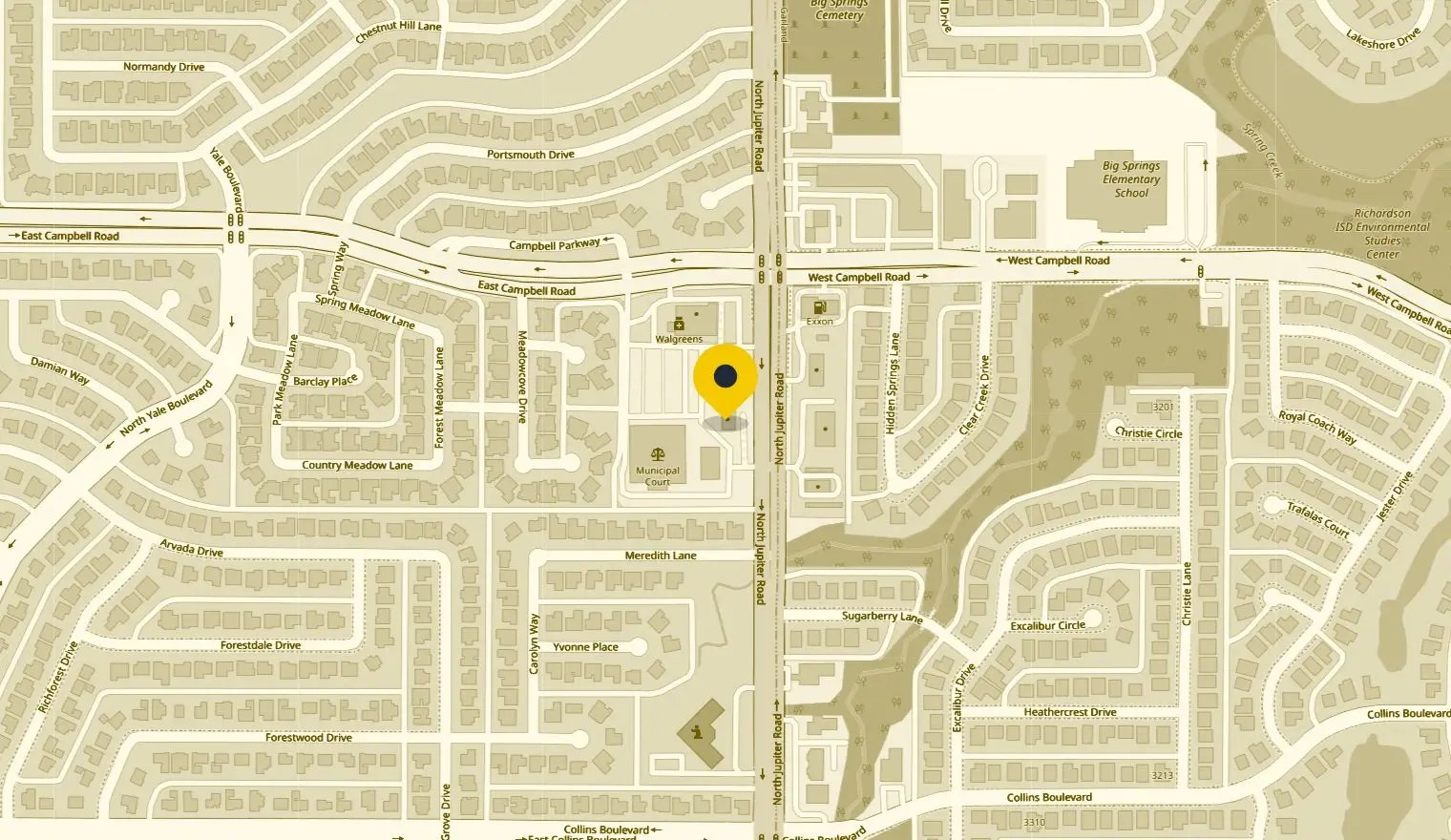
If you want a professional diagnosis, Kwik Kar Oil Change & Auto Care offers auto A/C and heating repair in Richardson, along with radiator and cooling system repair. We serve drivers from Richardson, Plano, Garland, North Dallas and Addison.
Here is what you can expect at Kwik Kar Richardson:
- A check of the cooling system, coolant condition and leaks, along with the blower, controls and air path.
- A clear explanation of the cause and the repair options.
- Military and first responder discounts, which we offer on service.
Any repair that qualifies is covered by our 24-month/24,000-mile limited warranty. That warranty applies only to qualifying repairs, not to every service or inspection, so we confirm what applies to your work when we write it up. You can also read more on our heating and cooling service page.
A Note on Texas Inspections
If you are bringing your car in for cold-weather prep, you may wonder about inspections. Texas ended most non-commercial passenger vehicle safety inspections in 2025, as Fox 4 reported. Emissions testing remains required for qualifying vehicles in applicable counties, including Dallas and Collin. Commercial safety inspections continue in Texas. A heater problem does not affect any of this, but a check engine light might, so it is worth sorting out together.
FAQ
Why is my car running but there is no heat?
The heater needs hot coolant, so the cause is typically that the engine is not warming up, coolant is low, coolant is not circulating or a door in the air path is stuck. Watch the temperature gauge. If it stays low, suspect the thermostat. If it climbs, shut off the engine and have the cooling system inspected.
Why does my car heater blow cold air?
Common causes include low coolant, a thermostat stuck open, trapped air, a clogged heater core, a failed control valve or a malfunctioning blend door. If both heater hoses are hot but the vents are cold, the air-control side is the likelier culprit.
Can I drive with no heat in my car?
If the temperature gauge is normal and there are no leaks, smells or warning lights, you can usually drive to a shop. If the engine is overheating or you notice a sweet smell or steam, pull over safely and call for help instead of continuing.
How long does a heater repair take?
It depends on the cause. A fuse or filter is quick, while a heater core can involve removing parts of the dashboard. We can give you a realistic estimate after we diagnose your vehicle.
Does low coolant always mean a leak?
Usually, yes. A sealed cooling system should hold its level, so a repeated drop deserves an inspection. Topping off alone only delays the repair.
Get Your Heater Checked
If your heater is blowing cold or not at all, we can find out why. Call Kwik Kar Richardson at (972) 644-1851 or schedule an appointment online, and we will walk you through what we find.
Sources
- Why Your Car Heater Blows Cold Air | ALLDATAdiy
- Cooling system check, troubleshooting and diagnostics | HELLA
- HVAC Diagnostics | Tomorrow’s Technician
- Winter Weather Driving Tips: Prepare Your Vehicle | NHTSA
- AAA Make Sense of Car Care: Belts & Hoses
- What to Do When Your Car Breaks Down | AAA
- Troubleshooting Car Heater | AutoZone
- Texas vehicle inspections no longer required in 2025 | Fox 4