You turn the key, crank the fan up, and wait for that first blast of relief. Instead, the vents push out air that feels barely cooler than the cabin. On a hot Richardson afternoon, that can make a short drive feel much longer.
When a car ac not cold complaint comes into the shop, the first goal isn't to add refrigerant or replace parts. It's to diagnose the system correctly. Automotive AC is a sealed loop. If refrigerant is low, something let it out. A recharge can by itself doesn't fix that.
A calm, methodical check saves money and prevents a small problem from turning into a compressor problem. Some issues are simple enough to spot from the driver's seat. Others need manifold gauges, leak detection, and a technician who knows how to read pressure, temperature, and airflow together.
First Checks When Your Car AC Isn't Cold
Start with what the car is telling you before you open the hood. Set the system to MAX AC or recirculation, turn the blower to high, and let it run for a few minutes while you drive or idle in a safe place. Pay attention to two things right away: air volume and air temperature.
If airflow is weak, the system may be cooling but not moving enough air into the cabin. If airflow is strong but warm, the issue is more likely in the refrigerant loop, compressor control, or a heat-soak situation.
Check what you can hear and feel
From the driver's seat, run through this short list:
- Blower sound. Does fan speed change clearly from low to high, or does it sound weak at every setting?
- Vent airflow. Are center vents pushing hard, or does the air feel restricted?
- Temperature change. Does the air start warm and then improve, or stay warm the whole time?
- Unusual noises. Clicking, squealing, or rattling when AC is switched on can point to a clutch or belt-related issue.
- Recirculation response. If recirculation doesn't improve cooling, the cabin may be dealing with more than outside air load.
Don't confuse heat soak with AC failure
A lot of drivers assume warm air in the first few minutes means the AC has failed. In Texas, that's often not the case. A 2025 AAA study found that 62% of AC complaints in hot climates stem from heat soak misdiagnosis, where interior temperatures can reach 140°F+ and cause initially warm vent air even when the system is functioning. The same study says owners of vehicles over 10 years old are three times more likely to report "not cold" from heat soak rather than a mechanical failure, as summarized in this heat-soak AC check guide.
Practical rule: If the cabin has been baking in the sun, give the system time to pull heat out of the seats, dash, glass, and interior panels before you assume a refrigerant problem.
Crack the windows briefly, switch to recirculation once the hottest air is out, and see whether vent temperature improves after several minutes. If cooling gets steadily better, heat soak may be the main issue.
One easy airflow clue
A neglected cabin air filter can make a decent AC system feel weak. If your fan sounds like it's working but little air reaches the vents, inspect the filter before guessing at bigger repairs. If you haven't checked one before, this guide on changing a car air filter shows where many vehicles hide it and what a restricted filter looks like.
If airflow is strong and the air still won't cool after the cabin has had time to shed heat, move on to the basic DIY checks below.
Easy DIY Fixes for Common AC Failures
Some AC complaints come down to airflow restriction or a simple electrical interruption. Those are worth checking before anyone starts talking about compressors or refrigerant service.
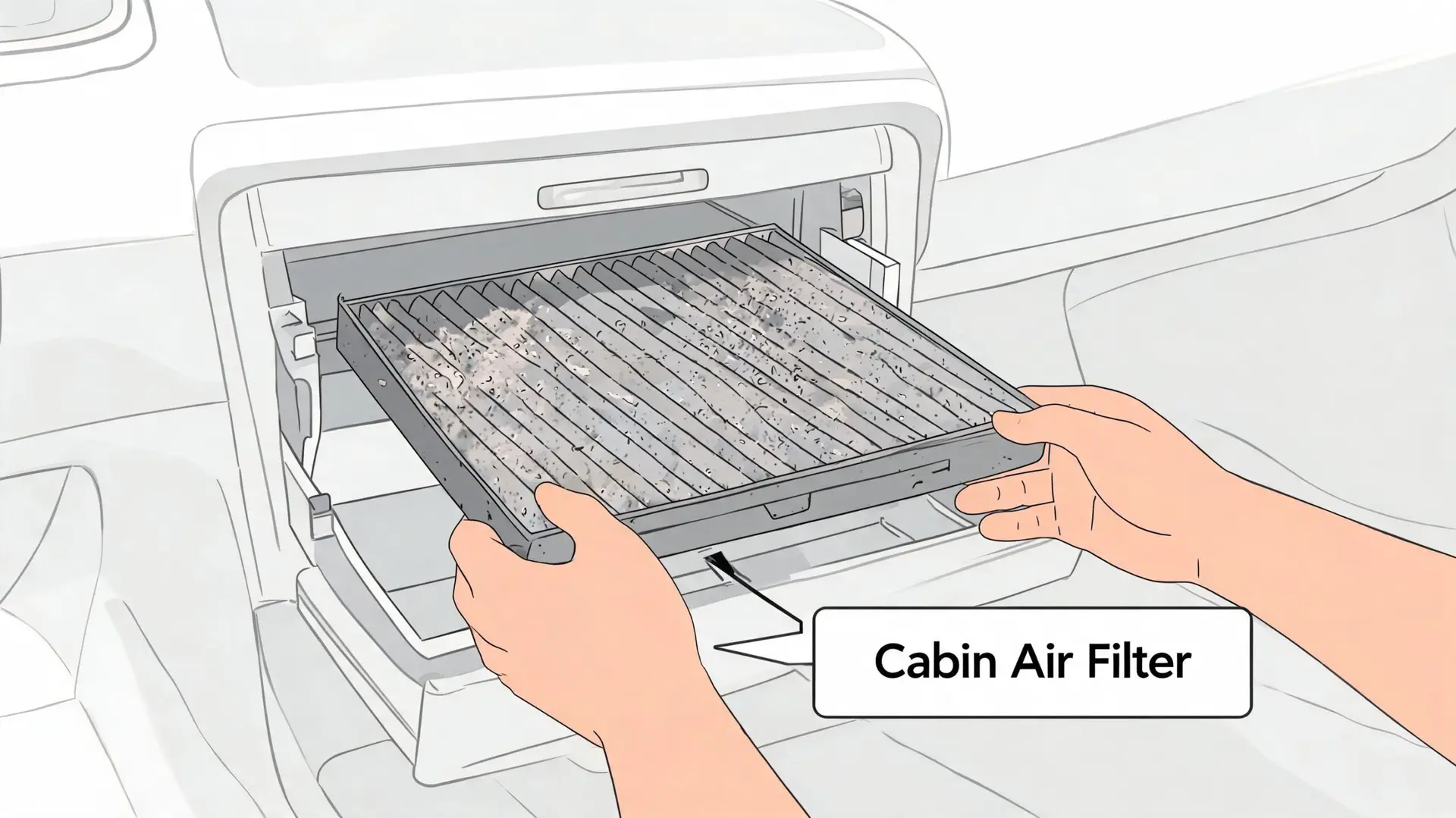
Inspect the cabin air filter
On many cars, the cabin filter sits behind the glove box. On others, it's under a trim panel. Your owner's manual is the fastest way to find it.
Pull the filter out and look for leaves, dust loading, dark discoloration, or a filter element that's warped and collapsed. If it's packed with debris, the blower has to fight for airflow, and the evaporator can't exchange heat properly.
Use this approach:
- Work with the key off. You don't need the HVAC system running to inspect the filter.
- Note the airflow direction. Most filters have an arrow. Install the new one the same way.
- Check the housing. Leaves and loose debris inside the filter tray can get pulled back into the blower path.
- Replace, don't try to rescue. If the filter is heavily loaded, replacement makes more sense than shaking it out.
A fresh cabin filter won't fix every ac not cold complaint, but it can restore airflow enough to tell you whether the problem was simple restriction or something deeper.
Look at the AC-related fuses
If the blower doesn't come on, the compressor never seems to engage, or the system acts completely dead, inspect the relevant fuses. Many vehicles have one fuse box under the dash and another under the hood.
Use your manual or fuse-box diagram and check for AC, HVAC, blower, compressor clutch, or climate control labeling. Then inspect the fuse element visually.
Keep the process basic and safe:
- Use the correct fuse map. Guessing by position is how people pull the wrong fuse.
- Match amperage exactly. Never install a higher-rated fuse because it's what you have nearby.
- Watch for repeat failure. If a replacement fuse blows again, stop there. That points to an electrical fault that needs tracing.
- Check related systems. Some HVAC complaints tie into blower or control-circuit power, not just the compressor.
This quick walk-through helps if you want to see the filter-removal process before trying it yourself:
What these fixes can and can't do
A filter or fuse inspection is worth your time because both are low-risk, inexpensive, and easy to verify. They also answer an important question: is the car failing to move air, or failing to cool air?
If replacing the cabin filter restores strong airflow but the air is still warm, the diagnosis shifts away from the cabin side and toward the sealed AC loop.
That distinction matters. It keeps you from replacing random parts when the underlying problem may be a leak, a pressure issue, or a compressor control fault.
The Truth About AC Refrigerant and DIY Recharge Kits
The most common bad assumption in automotive AC work is this: "It's not cold, so it probably just needs refrigerant."
That's not how the system is supposed to work. Your car's AC is a sealed system. It doesn't consume refrigerant like fuel or engine oil. If refrigerant is low, there's a leak somewhere in the loop. It may be at a hose connection, service port, condenser, seal, or another component, but the charge didn't disappear on its own.
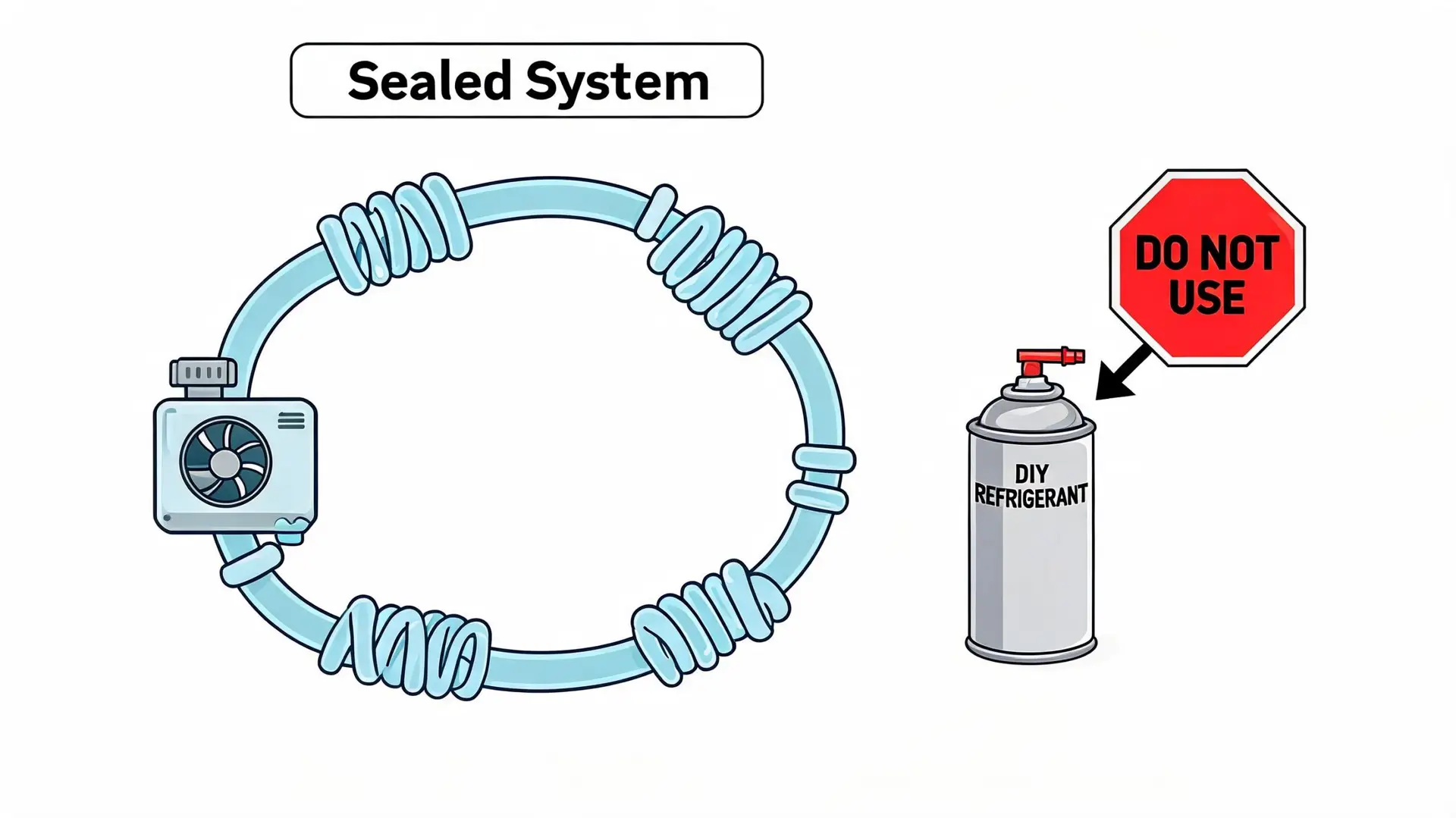
Why the parts-store can is a gamble
DIY recharge cans are appealing because they promise a quick fix. The problem is that they don't tell the full story of what the system is doing under load. A single low-side reading is not a proper diagnosis.
A professional AC diagnosis uses manifold gauges and evaluates suction pressure, head pressure, subcooling, and superheat together. According to HVAC School's explanation of the five-pillar diagnostic method, low suction pressure combined with high superheat indicates an undercharged system, and a proper leak repair and recharge resolves it with an 85% success rate. That matters because it ties the symptom to the fix, instead of guessing.
What goes wrong with a blind recharge
A can won't confirm whether the system is undercharged, overcharged, restricted, or dealing with a control problem. It also won't find the leak.
Common outcomes include:
- Temporary cooling that fades again. The leak is still there.
- Overcharge risk. Too much refrigerant can hurt performance and raise stress on the compressor.
- Misdiagnosis. A warm-air complaint caused by airflow or electrical problems may get mistaken for low charge.
- Contaminated service path. Some DIY products include additives that complicate later professional service.
If you're deciding whether to top it off or diagnose it correctly, a better starting point is understanding what a real car air conditioner recharge service should include. The key step isn't "add refrigerant." It's find the leak, repair it, then charge the system accurately.
A sealed system that is low on refrigerant is already telling you something is wrong. The charge level is the symptom, not the root cause.
Inspecting the Compressor and Spotting Deeper Issues
If the filter looks fine and the fuses check out, it's time to look at the mechanical side. At this stage, many DIY inspections should focus on observation, not disassembly.
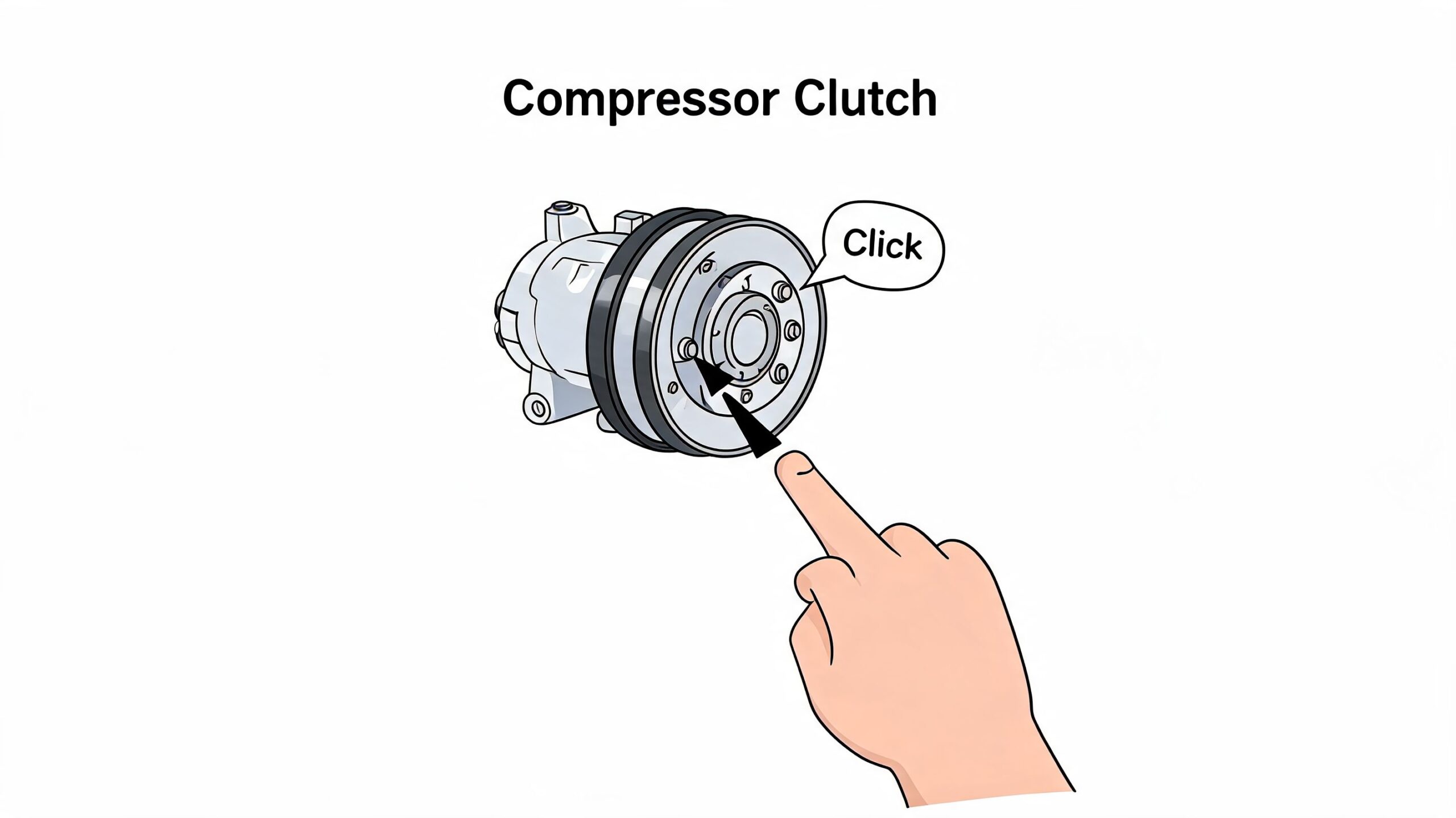
Watch for clutch engagement
With the engine running and AC switched on, the compressor clutch on many vehicles should click and engage. You may hear a distinct click, and the clutch face will begin turning with the pulley.
If you hear the click and see engagement, that means the control side is at least attempting to run the compressor. It doesn't guarantee proper cooling, but it narrows the problem.
If you don't hear anything or the clutch never pulls in, possibilities include:
- Electrical control issues
- Pressure-related lockout
- A failed clutch or compressor assembly
- A blown fuse or relay you may have missed earlier
Stay clear of moving belts and pulleys. This is a look-and-listen check only.
Know the signs of a frozen evaporator
Another common reason for ac not cold is evaporator freeze-up. When the evaporator ices over, airflow drops and the system can start blowing warm or barely cool air because heat transfer is blocked.
A verified industry data point notes that a frozen evaporator coil is responsible for 25% to 35% of "AC not cold" service calls in high-mileage vehicles. The same source says a dirty air filter is the primary cause in 50% of cases, while low refrigerant has a 65% correlation. It also warns that restarting before the coil fully thaws for 4 to 6 hours carries a 40% re-freeze rate, as detailed in this frozen-coil diagnostic reference.
You may suspect freeze-up if you notice:
- Airflow starts normal, then fades
- An iced suction line
- Visible frost near AC lines or components
- Cooling returns only after the car sits off for a while
If you suspect icing, shut the AC off and let the system thaw fully. Repeatedly turning it back on too soon usually makes the same symptom come back.
Where advanced diagnosis begins
Once you reach clutch behavior, possible icing, and pressure-related symptoms, the next step usually requires tools most drivers don't keep at home. Technicians verify system behavior with gauges and temperature readings because pressure alone doesn't tell the whole story.
At that point, replacing parts by hunch gets expensive fast. A compressor may not be the cause even if cooling is poor. A restricted metering device, airflow problem, pressure switch issue, or low charge can create similar complaints from the driver's seat.
Repair Costs and When to Trust the Pros
The hard part about AC repair isn't always the repair. It's avoiding the wrong one. Warm air, weak cooling, clutch complaints, and intermittent performance can overlap enough that guesswork gets expensive.
What proper diagnosis changes
A trained technician doesn't start by asking, "Which part should we replace?" The better question is, "What is the system doing under load?" That means reading pressures correctly, checking temperature behavior, and confirming whether the system is undercharged, overcharged, restricted, or mechanically failing.
As noted earlier in the diagnostic reference, low suction pressure combined with high superheat points to an undercharged system, and a proper leak repair and recharge resolves that pattern with an 85% success rate, while also helping protect the compressor, according to the five-pillar gauge-based diagnostic method.
For drivers in Richardson, one option for this type of service is Kwik Kar Oil Change and Auto Care, where ASE-certified technicians perform heating and cooling diagnostics using professional AC service equipment rather than can-based guesswork.
Common car AC problems and repair estimates
The table below is a practical planning tool, not a quote. Final pricing depends on vehicle design, refrigerant type, part access, and what the diagnosis finds.
| Symptom | Likely Cause | DIY Fixable? | Estimated Pro Repair Cost |
|---|---|---|---|
| Weak airflow from vents | Cabin air filter restriction | Often | Low |
| AC system completely inoperative | Fuse or electrical fault | Sometimes | Low to moderate |
| Air starts cool then fades | Evaporator icing or airflow problem | Rarely | Moderate |
| Warm air with compressor issue | Leak, pressure fault, or compressor-related failure | No | Moderate to high |
| Oily residue around AC components | Refrigerant leak | No | Moderate |
| No cooling after repeated recharge attempts | Unresolved leak or overcharge condition | No | Moderate to high |
Use cost ranges carefully
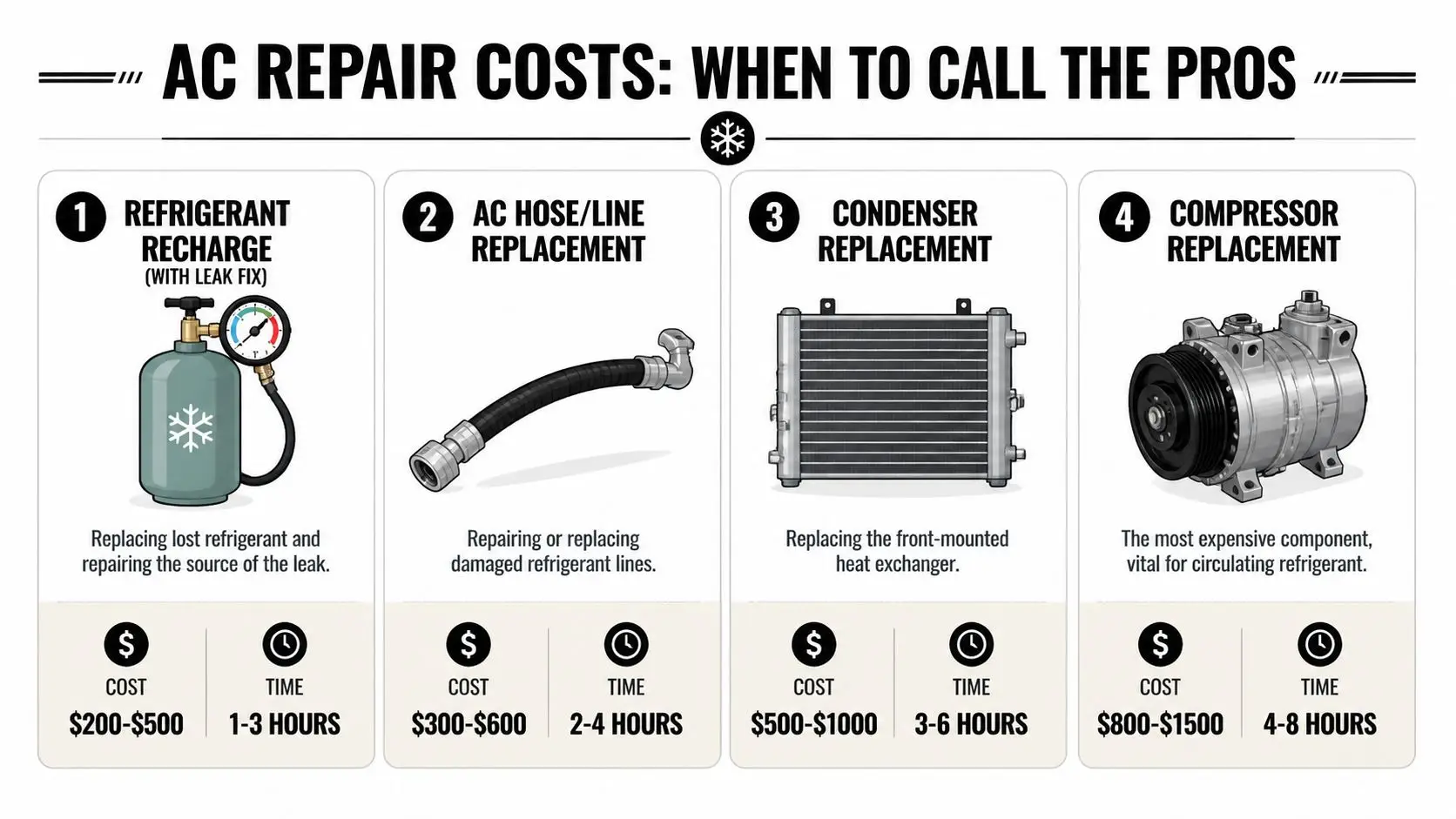
The infographic above shows typical service categories and ranges for common repairs. That's useful for budgeting, but the bigger takeaway is this: diagnosis comes before price.
A warm-air complaint can send one driver home with a filter replacement and another into leak repair, hose replacement, condenser service, or compressor work. The symptoms may sound similar. The fix often isn't.
Paying for an accurate diagnosis once is usually cheaper than buying the wrong part twice.
Your Confident Next Step for a Cool Ride
A car AC problem feels urgent when you're sitting in traffic with hot air coming through the vents. The good news is that you can narrow the issue quickly by checking airflow, listening to the blower, looking at the cabin filter, and ruling out a simple fuse problem.
After that, the line between useful DIY and costly guessing becomes clear. Refrigerant isn't a consumable. If charge is low, the sealed system has a leak. If the evaporator is icing, there's usually an airflow or refrigerant-side reason behind it. If the compressor clutch isn't behaving normally, the answer comes from testing, not assumptions.
That matters most on older, high-mileage vehicles, where one symptom can have several possible causes. The driver feels warm air. The technician has to determine whether the fault is cabin restriction, freeze-up, low charge, electrical control, or a failing component.
If your ac not cold complaint has moved beyond a filter or fuse check, the safest next step is a professional diagnosis with the right gauges, leak detection tools, and an estimate based on evidence. That's how you avoid overtreating the system, protect the compressor, and fix the actual problem instead of the most obvious-looking one.
If your car's AC still isn't cooling the way it should, schedule an inspection with Kwik Kar Oil Change and Auto Care. Our ASE-certified team can diagnose the issue, explain what the system is doing, and give you a clear repair path so you can get back to a cooler, more comfortable drive.