Most drivers know that low oil pressure is a bad sign, but seeing a gauge that reads high oil pressure is just as serious. It’s your engine’s way of telling you that oil is being shoved through its channels with way too much force, creating a dangerous amount of strain instead of providing smooth lubrication.
What High Oil Pressure Really Means for Your Engine

It helps to think of your engine's oil system like its circulatory system, with the oil being its lifeblood. Just like high blood pressure is a major red flag for a person, high oil pressure points to a serious issue in your engine. It’s a signal that something is blocking the oil from flowing freely, causing a pressure buildup that can quickly lead to catastrophic damage.
Proper oil pressure is all about finding that sweet spot. It has to be strong enough to get oil to every corner of the engine but gentle enough that it doesn't do any harm along the way.
The Dangers of Excessive Force
When that pressure shoots up unexpectedly, it puts a ton of stress on the entire lubrication system. The oil pump is forced to work overtime, and the oil itself has a hard time getting to where it needs to be. This can cause some pretty big problems:
- Blown Seals and Gaskets: High pressure can easily push oil right past seals and gaskets that were only meant to handle normal operating pressure. The result? Significant oil leaks.
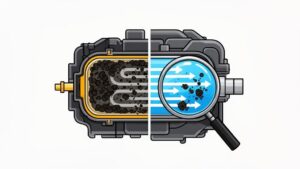
- Damaged Oil Filter: Your oil filter can get completely overwhelmed. In really bad cases, the pressure can actually deform or burst the filter canister, spilling oil everywhere and allowing dirty, unfiltered oil to circulate through your engine.
- Starved Engine Components: This one seems backward, but it’s true. Extremely high pressure can actually keep oil from properly coating moving parts. Instead of creating a protective film, the oil gets blasted away too quickly, leading to more friction and wear on bearings, camshafts, and other critical parts.
An engine with high oil pressure is an engine under duress. Ignoring the warning signs is like continuing to run a marathon with a skyrocketing heart rate—eventually, something will give way, leading to a much more severe and costly failure.
The health of this system is so vital that the global market for automotive oil pressure switches—the very sensors that detect these issues—was valued at USD 820.50 million in 2024 and is projected to keep growing. This trend really underscores how critical these sensors are in catching high oil pressure before it ruins an engine. Discover more about the growth of this market and its importance in modern cars.
Understanding Normal vs. High Pressure
So, what should you be seeing on your gauge? While the exact "normal" range depends on your vehicle, this quick reference guide can help you spot trouble before it gets out of hand.
Oil Pressure Levels and What They Mean
This table gives you a general idea of what different pressure readings mean and what you should do.
| Pressure Level | Typical Gauge Reading (PSI) | Engine Condition | Recommended Action |
|---|---|---|---|
| Normal (Idle) | 25 – 45 PSI | Healthy engine, oil circulating correctly at rest. | Monitor gauge, no action needed. |
| Normal (Driving) | 40 – 65 PSI | Healthy engine under load, pressure increases with RPMs. | Monitor gauge, no action needed. |
| High Oil Pressure | 80+ PSI | Indicates a potential blockage, incorrect oil, or failing part. | Stop driving as soon as safely possible. |
| Dangerously High | 100+ PSI | Severe restriction or system failure. Catastrophic engine damage is imminent. | Shut off the engine immediately and call for a tow. |
If your gauge is consistently reading high, especially after the engine has warmed up, that's a clear signal that your car needs to see a professional right away. Never just assume that high pressure is a good thing; it's a symptom of a problem that requires a fast and accurate diagnosis.
The Most Common Causes of High Oil Pressure

When your dashboard gauge shows high oil pressure, it's not a single problem but a symptom of an underlying issue. Think of it as your engine sending up a flare. Understanding what could be causing it is the first step toward getting things right, and the reasons can range from a simple maintenance oversight to a more serious mechanical failure.
Often, the culprit is something as straightforward as using the wrong kind of motor oil. Oil viscosity is just a fancy word for its thickness. If you use an oil that’s too thick for your engine, it’s like trying to sip a frozen milkshake through a tiny straw. Your oil pump has to work overtime to push that heavy fluid through the engine’s narrow channels, which sends the pressure reading sky-high.
This is particularly noticeable in cold weather. As the temperature outside drops, motor oil naturally thickens up. If you're already using a heavier-weight oil, a cold start can cause a temporary but sharp spike in pressure until the engine warms up and the oil thins out.
The Problem with Incorrect Oil Viscosity
Using the right oil isn't just a suggestion from your car's manufacturer; it's engineered into the very design of your engine. That specific oil weight on the cap (like 5W-30 or 10W-40) is there for a good reason. It’s chosen to ensure the oil flows exactly as needed at different temperatures to protect every moving part.
- During a Cold Start: Oil that’s too thick struggles to get to crucial components like bearings and camshafts. This can cause a lot of extra wear during the first few moments your engine is running, which is when it’s most vulnerable.
- At Operating Temperature: Even once the engine is warm, an overly thick oil can resist flowing properly. This starves parts of lubrication, creating unnecessary friction and putting a huge strain on the oil pump.
Straying from the manufacturer’s recommendation can lead to consistently high oil pressure and, eventually, serious long-term damage. If you’re not sure which oil your car needs, our guide on the differences between synthetic and conventional oil can help clear things up.
Mechanical Failures and Internal Blockages
While using the wrong oil is a common and fixable mistake, a high-pressure reading can also signal a more serious mechanical issue lurking inside the engine. These problems restrict oil flow and really need a professional diagnosis to find and fix.
One of these is a stuck pressure relief valve. This little valve is the oil system’s safety net, designed to open up and bleed off pressure if it climbs too high. But if it gets clogged with gunk or sludge and gets stuck shut, that pressure has nowhere to go. It just keeps building, putting immense strain on your engine’s seals, gaskets, and even the oil filter itself.
It’s a bit like a pressure cooker with a faulty safety valve. The pressure inside just keeps rising with no escape, creating a dangerous and unstable situation. A stuck relief valve does the same thing inside your engine, letting pressure climb to potentially catastrophic levels.
Another major cause is a buildup of engine sludge and other blockages. If oil isn’t changed regularly, it breaks down over time and mixes with contaminants to form a thick, tar-like goo. This sludge can clog up the oil pickup screen or choke off the small passages that oil needs to travel through.
Just like plaque building up in an artery, these clogs restrict flow and force the oil pump to generate much higher pressure just to move the oil around. In bad cases, these blockages can completely starve parts of your engine of lubrication, leading to rapid and severe component failure. That high reading on your gauge is often the first and only warning you’ll get before major damage is done.
Warning Signs and Dangers You Cannot Ignore
That little needle or warning light on your dashboard is just the first clue. When oil pressure climbs too high, your engine often sends out other, more subtle distress signals. Learning to spot these signs can be the difference between a quick fix and a repair bill that costs thousands.
One of the most obvious signs is finding new oil spots on your driveway. Think of your engine's gaskets and seals like the plumbing in your house; when the pressure gets too high, something has to give. High oil pressure can force oil right past these seals, leading to drips and puddles that simply weren't there before.
Listening for Trouble
You should also pay close attention to any strange noises from under the hood. High pressure puts a massive strain on the oil pump, forcing it to work much harder than it was designed to. This stress often creates some very distinct sounds.
- A High-Pitched Whine: This sound often gets louder as you accelerate and points directly to a strained oil pump. It’s a sign the pump is struggling to push oil that’s too thick or is blocked somewhere in the system.
- Ticking or Knocking: While these noises are famously linked to low oil pressure, they can also happen when the pressure is too high. If the pressure prevents oil from properly coating certain parts, you'll get the dangerous sound of metal-on-metal contact.
Ignoring these noises is a serious gamble. An engine that isn't lubricated correctly can seize in minutes, turning a manageable problem into a complete engine replacement.
The Hidden Catastrophic Risks
The most frightening dangers of high oil pressure are the ones you can’t see—until it’s all over. This internal strain can lead to sudden, critical failures that leave you stranded and facing some of the most expensive repairs imaginable.
A perfect example is a burst oil filter. Your oil filter is built to handle normal pressures, usually around 40 to 65 PSI. But when that pressure spikes to 80 PSI or more, the filter canister can bulge, tear, or even burst open. This immediately dumps nearly all your engine oil, causing a catastrophic loss of lubrication.
Unchecked high oil pressure is a ticking time bomb in your engine. It's not a matter of if it will cause a major failure, but when. The cost of a professional diagnosis is a tiny fraction of what an engine rebuild will run you.
Another huge risk is blowing out engine seals. The main seals at the front and back of the crankshaft are especially vulnerable. If extreme pressure forces one of these seals out, you’re looking at a massive oil leak that can drain your engine in no time. Not only does this starve the engine, but the gushing oil can ruin other parts like the timing belt or clutch.
Ironically, the ultimate danger is actually engine component starvation. You’d think more pressure is better, but it’s not. When the pressure is too high, it can literally blast the protective film of oil off critical parts like rod bearings instead of letting it cling and lubricate. Once these bearings fail, the connecting rods can start hammering against the crankshaft, an event that can destroy the entire engine block from the inside out.
How to Properly Diagnose High Oil Pressure
Seeing your oil pressure gauge jump into the red can definitely cause a moment of panic. Before you start imagining the worst-case scenario, it’s best to take a breath and work through the problem like a pro. A good diagnosis for high oil pressure is all about a process of elimination, starting with the simple stuff you can check yourself before moving on to the more advanced tests.
The very first thing to do is pop the hood and confirm the basics. Check your oil level with the dipstick. If the engine is overfilled, even by a little, it can cause pressure to spike. While you're at it, get a look at the oil itself. Is it clean and amber-colored, or is it dark, thick, and sludgy? If you need a refresher, our guide on how to check your car fluids can walk you through it.
Reading the Clues from Your Oil Pressure Gauge
Once you’ve ruled out an overfill, start paying close attention to how the gauge is behaving. The way the reading acts can give you some major clues about what's going on under the hood. Ask yourself a few key questions:
- Is the pressure only high when you first start the car? This is a classic sign of oil that's too thick (wrong viscosity) or just the effect of a cold morning. The pressure should settle back to normal as the engine warms up.
- Is the pressure always high? If that needle stays pegged high even after the engine is fully warm, you’re likely looking at a mechanical issue, such as a stuck pressure relief valve or some kind of internal blockage.
- Did the pressure shoot up all of a sudden? A gauge that goes from normal to sky-high in an instant often points to a faulty oil pressure sending unit. It's basically sending a false alarm to your dashboard.
This flowchart can help you visualize the diagnostic path based on your symptoms, guiding you toward whether it's more likely an engine problem, a sensor hiccup, or a failing seal.

As you can see, things like audible engine noises often point toward mechanical trouble, while visible leaks suggest failing seals. Both of these are signs you need to get to a professional right away.
DIY Checks vs. Professional High Oil Pressure Diagnostics
So, what can you check at home, and when is it time to bring it to the pros? While DIY checks are a great starting point for gathering clues, they can only take you so far. This table breaks down what you can do versus what our certified technicians can do with specialized tools.
| Diagnostic Check | DIY Action | Professional Service | Tools Required |
|---|---|---|---|
| Initial Assessment | Check oil level and condition on the dipstick. | N/A | Dipstick, rag |
| Gauge Behavior | Observe when the pressure is high (cold start, all the time, etc.). | N/A | Your eyes |
| Manual Pressure Test | Not possible at home. | Connect a mechanical gauge directly to the engine to get a 100% accurate pressure reading. | Calibrated mechanical oil pressure gauge |
| Sensor Test | Not possible at home. | Use a multimeter or scan tool to test the sending unit's electrical signals and resistance. | Digital multimeter, professional scan tool |
| Engine Analysis | Listen for unusual noises (knocking, ticking). | Use advanced diagnostics to pinpoint internal issues like a stuck relief valve or sludge buildup. | Stethoscope, scan tools, years of experience |
Ultimately, a manual pressure test is the only way to know for sure if the pressure is truly high or if the dashboard gauge is just giving you a faulty reading. It's the gold-standard test that separates a simple sensor swap from a more involved engine repair.
When a Professional Diagnosis Is the Only Way to Go
Those at-home checks are a great first step, but they can't tell you the whole story. The gauge on your dashboard can be misleading, and that's a big risk to take. This is why the absolute best practice for diagnosing high oil pressure is a manual pressure test performed by a certified technician.
The most critical question in any high oil pressure diagnosis is this: "Is the pressure actually high, or is the gauge just lying?" A professional mechanical pressure test is the only definitive way to get an honest answer and avoid costly misdiagnoses.
Here's how it works: A technician will temporarily remove your car’s electronic oil pressure sensor and screw in a calibrated mechanical gauge. This tool measures the pressure directly from the engine, giving a 100% accurate reading. This one test immediately tells us whether we're dealing with a real internal engine problem or just a bad sensor—a much simpler and cheaper fix.
If that mechanical test confirms the pressure is indeed too high, our ASE-certified technicians at Kwik Kar will use their expertise to dig deeper. They'll figure out if it's a stuck valve, a clogged passage, or something else entirely, ensuring you don't waste money replacing parts that aren't broken.
Your Repair Options and Potential Costs
Once our technicians have found the exact cause of your high oil pressure, the next step is getting it fixed. The right solution depends entirely on the problem we find, with repairs ranging from simple maintenance to more involved mechanical work. Knowing what to expect helps you understand the costs and why a good diagnosis is so important from the start.
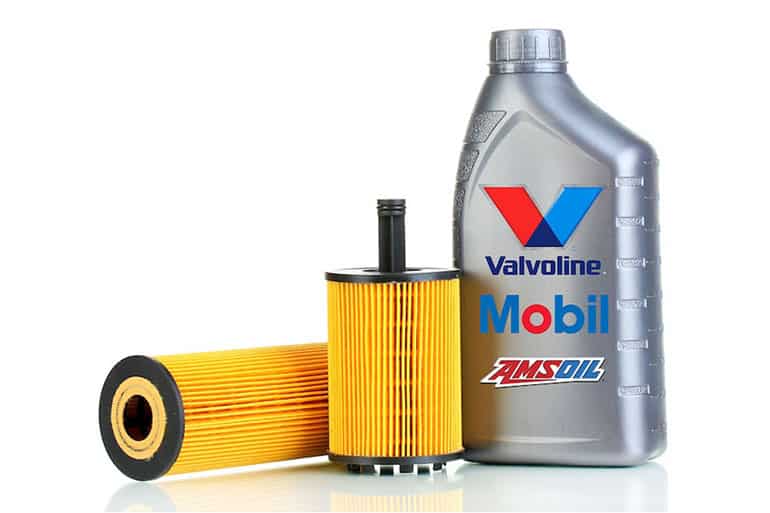
Luckily, the most common fix is also the easiest. If the issue is simply the wrong type of oil or a badly clogged filter, a professional oil and filter change is all you need. We’ll get the right, manufacturer-approved oil in there so it flows exactly as it should, solving the pressure problem on the spot. It's the best possible outcome for any driver.
Breaking Down Repair Costs by Cause
While an oil change is a quick fix, other problems require a bit more time under the hood. Most repair bills are a mix of parts and labor costs, and for high oil pressure issues, labor can often be the bigger part of the bill—especially if we need to get to parts deep inside the engine.
Here’s a look at what different repairs usually involve:
- Faulty Oil Pressure Sending Unit: If our mechanical gauge shows the pressure is fine, the sensor itself is the culprit. This is a pretty straightforward job; we just swap out the old, faulty sensor for a new one.
- Stuck Pressure Relief Valve: This repair is more complex. The valve is usually part of the oil pump, which means we often have to remove the oil pan to get to it. The labor involved here can be significant.
- Engine Sludge Removal: If your engine has a lot of sludge, a normal oil change won't cut it. The fix might involve a special engine flush or, in serious cases, manually cleaning parts like the oil pan and valve covers.
An accurate diagnosis from a certified technician is your best financial protection. Throwing parts at a problem without knowing the cause is a recipe for a big, unnecessary bill.
Getting a professional oil change is key, not just for fixing viscosity issues but for your engine's overall health. You can learn more about what a full service oil change at a certified shop like ours includes and why it’s such a smart investment.
Estimated Costs for High Oil Pressure Repairs
Repair costs can vary a lot depending on your car's make and model, the specific parts needed, and our local labor rates. This table gives you a general idea of what to expect so you can be prepared. Keep in mind, these are just ballpark figures—a detailed quote from our shop is the only way to know the exact cost.
| Repair Service | Estimated Parts Cost | Estimated Labor Cost | Total Estimated Cost |
|---|---|---|---|
| Oil & Filter Change | $20 – $70 | $20 – $50 | $40 – $120 |
| Oil Pressure Sensor Replacement | $30 – $150 | $50 – $100 | $80 – $250 |
| Pressure Relief Valve/Oil Pump Replacement | $100 – $400 | $300 – $800+ | $400 – $1,200+ |
| Engine Sludge Removal / Flush | $20 – $100 | $150 – $400 | $170 – $500 |
That big jump in cost for an oil pump or pressure relief valve is exactly why a proper diagnosis is so critical. Paying for an hour of diagnostic time is a small price compared to paying for hours of labor to replace a part that wasn't even broken. This smart first step ensures your money goes toward fixing the real issue, saving you time, stress, and a whole lot of money.
Here’s the rewritten section, crafted to sound like a human expert and match the provided examples:
Your Next Steps for Handling High Oil Pressure
By now, it’s clear that a high oil pressure reading is your engine’s way of sounding the alarm. Ignoring it is a gamble where the stakes are incredibly high—often the cost of a brand new engine. The single most important thing to remember is this: high oil pressure demands immediate professional attention. Waiting won't make the issue resolve itself; it just gives a small problem time to become a catastrophic and expensive failure.
The anxiety that pops up with any dashboard warning light is completely understandable. The best way to handle that stress is with a clear plan of action. The cost of a proper diagnosis is a drop in the bucket compared to the potential $10,000 to $20,000 price tag of a full engine rebuild. Your first and most crucial step is to get your vehicle to a trusted auto care center for an accurate diagnosis.
Why Kwik Kar Is Your Trusted Partner
For drivers in Richardson, TX, Kwik Kar Oil Change & Auto Care is that trusted partner. We know how stressful it is to see that pressure warning, and our entire approach is designed to give you clarity and peace of mind. We don’t believe in guesswork or just throwing new parts at a problem. We use precision and transparency to find the real root cause.
Our team is built on a foundation of expertise and trust, which is why local drivers have counted on us for years. Here’s what sets our service apart:
- ASE-Certified Technicians: Our mechanics aren't just experienced; they are certified by the National Institute for Automotive Service Excellence (ASE). This means they’ve proven their skills through tough testing and are committed to staying up-to-date with modern vehicle technology.
- Advanced Diagnostic Equipment: We invest in the same state-of-the-art diagnostic tools you’d find at a dealership, including professionally calibrated mechanical gauges for a definitive pressure test. This allows us to tell you for sure if it’s a genuine pressure problem or just a faulty sensor.
When you bring your vehicle to Kwik Kar, you’re not just getting a repair; you’re getting a commitment to honesty. Our certifications from RepairPal and NAPA AutoCare are your assurance of transparent pricing and high-quality workmanship.
A Clear Path to a Reliable Solution
We believe in making auto care simple and stress-free. From the moment you pull in, our goal is to get you back on the road safely without emptying your wallet. Our commitment to the Richardson community is something we take seriously.
We are proud to offer discounts for military personnel, first responders, and healthcare workers as a small thank you for all you do. For all our customers, we provide a comfortable waiting area and convenient scheduling to work around your busy life.
Don't let a warning light decide your engine's fate. Let our team at Kwik Kar Richardson take a look. We will perform a thorough diagnostic check, explain our findings in plain English, and give you a transparent estimate before a single wrench is turned. Schedule your appointment today and drive away with the confidence that your vehicle has been serviced by experts who genuinely care.
Frequently Asked Questions About High Oil Pressure
Even after getting a handle on the causes and risks, a few practical questions almost always pop up. We've gathered some of the most common worries right here to give you quick, clear answers for dealing with high oil pressure safely.
Can I Drive My Car If the Oil Pressure Is High?
The short answer is no—it's a risk you really shouldn't take. While there's a chance the warning is just a faulty sensor, it could also be signaling a serious internal engine problem.
Continuing to drive is a gamble that could lead to blown seals or, worse, critical engine components being starved of lubrication. The smartest and most financially responsible move is to pull over as soon as it's safe, shut off the engine, and arrange for a tow to a certified auto care center.
Does High Oil Pressure Always Mean I Have Too Much Oil?
Not at all. While overfilling the engine with oil is one potential cause, it’s definitely not the only one. In many situations, high pressure is a sign that something is blocking the oil from flowing where it needs to go.
Other common culprits that have nothing to do with the oil level include:
- Using the wrong oil viscosity (oil that's too thick for your engine or the weather).
- A stuck pressure relief valve that isn't opening to release excess pressure.
- Heavy sludge or other blockages clogging up the engine's narrow oil passages.
Without a professional diagnosis, it’s impossible to be certain what’s causing the high reading. That's why getting a hands-on mechanical pressure test is so important.
A high oil pressure reading is your engine's check engine light for its lubrication system. Think of it as a symptom, not a diagnosis. The true cause could be one of several mechanical or maintenance-related issues that require an expert eye to pinpoint accurately.
How Often Should I Have My Oil Pressure Checked?
Your dashboard gauge is always on the job, monitoring oil pressure whenever the engine is running. However, it's designed to alert you only after a problem has already started. For more proactive care, a professional inspection is the way to go.
Making it a habit to have your lubrication system professionally inspected during your routine full-service oil changes is a fantastic idea, especially for older or high-mileage vehicles. A technician can spot the early signs of sludge, check for leaks, and confirm the whole system is in good shape, helping you prevent high oil pressure issues before they turn into major headaches.
Don't gamble with your engine's health. If you're seeing a high oil pressure warning, the expert team at Kwik Kar Oil Change and Auto Care is ready to help. Our ASE-certified technicians will perform a precise diagnosis to find the root cause and get you back on the road with confidence. Schedule your appointment today at https://www.kkrichardson.com.