
Highway vehicle maintenance is defined as the set of targeted inspection and service practices that keep your car safe and reliable under the sustained stresses of high-speed travel. The role of highway driving vehicle maintenance differs sharply from routine city car care because the mechanical demands are entirely different. Your engine runs cooler and cleaner on the open road, but your tires, suspension, cooling system, and rubber components absorb punishment that stop-and-go driving never delivers. Ignoring those differences is how a minor vibration at 30 mph becomes a blowout at 70 mph. Kwik Kar Oil Change & Auto Care sees this pattern regularly, and the fix is always the same: match your maintenance to the miles you actually drive.
How does highway driving affect vehicle components differently?
Highway driving reduces engine and transmission wear but increases stress on tires, suspension, and cooling systems. That trade-off surprises most drivers who assume the highway is easy on every part of the car.
Engine and transmission wear is genuinely lower on highways because RPM stays consistent and operating temperature stabilizes. City driving forces constant acceleration and braking cycles that heat and cool the drivetrain repeatedly, accelerating wear. On the highway, those cycles disappear.
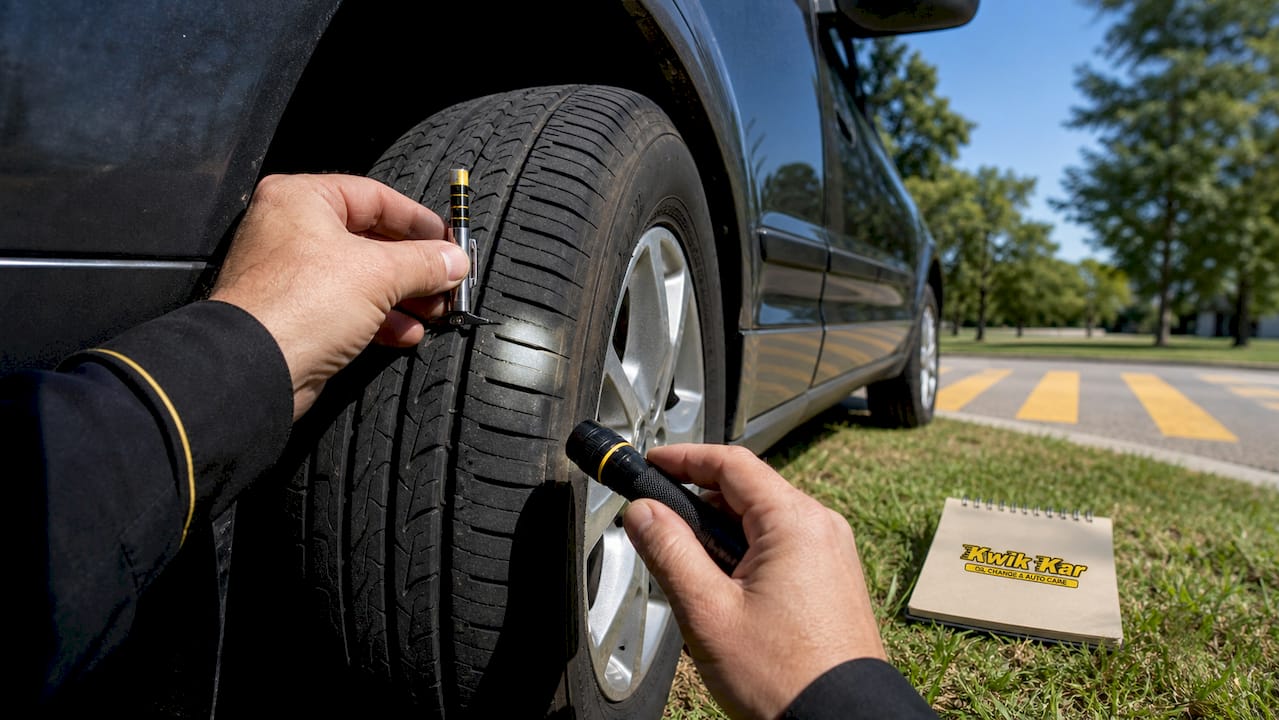
Tires and suspension tell a different story. Highway miles cause greater predictable wear on tires and suspension components because sustained high speeds generate continuous heat and load. A tire running at 75 mph for three hours builds far more heat than the same tire crawling through city traffic. That heat degrades the rubber from the inside out.
The cooling and A/C systems face their own challenge. Highway driving places continuous demand on both systems, increasing thermal stress especially in hot climates. Your radiator and condenser work without rest on a long summer drive, and any marginal weakness in those systems will surface fast.
Here is how the mechanical impact breaks down by component:
- Engine and transmission: Lower wear due to stable RPM and consistent temperature
- Tires: Higher heat buildup and tread wear from sustained speed
- Suspension: Greater cumulative load from road imperfections at speed
- Cooling system: Continuous thermal demand with no recovery periods
- Brakes: Less frequent use than city driving, but still require inspection for fade and fluid condition
Pro Tip: Check your tire sidewalls for small cracks or bulges before any highway trip. Heat stress makes existing sidewall damage catastrophically worse at speed.
What maintenance tasks does highway driving require?
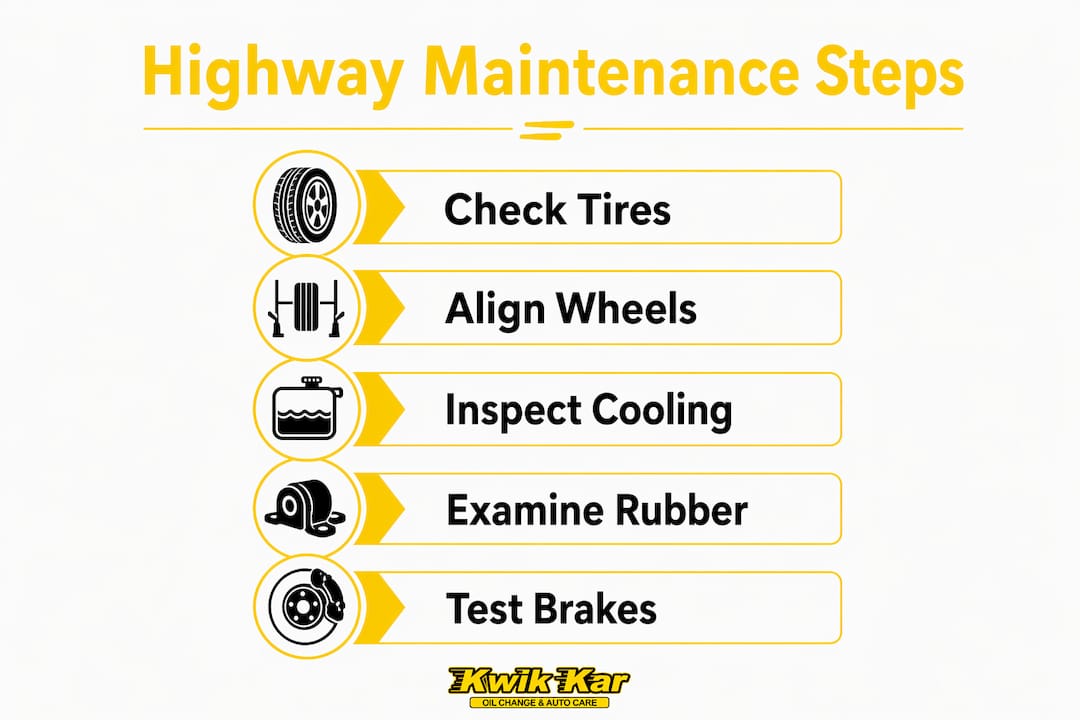
Highway vehicle care follows a different priority order than city car maintenance. Tires, alignment, cooling, and rubber components move to the top of the list.
Tire pressure and tread depth
Tires represent 32% of the automotive service market, which reflects how often they need attention. Checking tire pressure cold before a long trip is the single most effective way to prevent blowouts and improve fuel efficiency. Tread depth below 2/32 of an inch is the legal minimum, but highway driving at speed demands more grip than the legal floor provides.
The five essential maintenance tasks for highway drivers
Tire pressure and tread inspection. Check pressure when tires are cold, before you pull out of the driveway. Use the pressure listed on the door jamb sticker, not the maximum printed on the tire sidewall.
Wheel alignment check. Misaligned wheels cause uneven tire wear and pull the car sideways at highway speeds. A wheel alignment service takes under an hour and protects hundreds of dollars in tire investment.
Cooling system inspection. Check coolant level, hose condition, and radiator cap seal before long drives. A cooling system failure at highway speed generates repair bills that dwarf the cost of a simple flush.
Brake inspection. Highway driving uses brakes less frequently, but brake fluid absorbs moisture over time regardless of mileage. Degraded fluid lowers the boiling point and risks vapor lock during emergency stops.
Belts, hoses, and seals. These components age on a calendar, not an odometer. Inspect them at every service interval, especially if the vehicle sits for long periods between highway trips.
Pro Tip: Ask your technician to check the serpentine belt tension specifically. A belt that looks intact can still slip under the sustained load of highway-speed accessories like the alternator and A/C compressor.
How should you prepare your car for a long highway trip?
A systematic vehicle inspection routine reduces human error and improves safety before highway travel. Running through checks in a fixed order means nothing gets skipped.
Tires first. Inflate to spec, inspect tread depth, and look for sidewall damage. Confirm the spare is inflated and the jack is accessible.
All fluid levels. Engine oil, coolant, brake fluid, power steering fluid, and windshield washer fluid. Low fluid on a short city trip is an inconvenience. Low fluid on a 300-mile highway run is a breakdown.
Lights and electrical. Test headlights, brake lights, turn signals, and hazard lights. A burned-out brake light at highway speed creates serious rear-end collision risk.
Battery condition. A battery showing signs of slow cranking or corrosion at the terminals will fail under the sustained electrical load of a long highway drive.
Check for open recalls. The NHTSA maintains a public recall database searchable by VIN. An open safety recall on your vehicle is a known defect the manufacturer must fix for free.
Address any warning symptoms. Treat minor vehicle issues such as vibrations or cooling performance drops with high concern before highway trips. Sustained driving turns small problems into major failures.
Pro Tip: Pack a roadside emergency kit with a reflective triangle, jumper cables, a tire inflator, and water. A breakdown on a highway shoulder is far more dangerous than one in a parking lot.
What are common misconceptions about highway driving and vehicle wear?
Highway driving carries a reputation for being gentle on vehicles. That reputation is partly earned and mostly misleading.
“Highway miles are easy miles.” Engine miles, yes. Tire and suspension miles, no. Rubber components age due to time and exposure, not just mileage. A car with 40,000 highway miles can have older, more brittle rubber than a city car with the same odometer reading.
“The A/C works better at highway speed because of airflow.” This is the most dangerous cooling myth. Drivers often mistakenly believe that highway airflow keeps the condenser cool, but debris buildup and sustained compressor load actually reduce cooling efficiency. The result is increased system pressure and accelerated compressor wear.
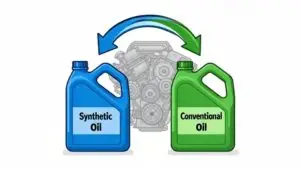
“Oil lasts longer on the highway, so I can skip a change.” Oil does degrade more slowly on the highway. Highway vehicles follow oil change intervals of 7,500 to 10,000 miles, compared to 5,000 to 7,500 miles for city-driven cars. But “slower degradation” is not the same as “no degradation.” Skipping scheduled changes still causes long-term engine damage.
“A small vibration at city speeds is nothing to worry about.” A vibration at 35 mph becomes a violent shimmy at 70 mph. Wheel balance issues, worn tie rods, and tire separation all announce themselves quietly before they fail loudly.
How does calendar-based aging affect highway vehicles?
Calendar aging is the wear that happens to your car whether it moves or not. Heat, UV radiation, and ozone attack rubber and plastic components independent of how many miles you drive.
Rubber components such as belts, hoses, and seals degrade primarily due to calendar aging, UV exposure, and heat, not mileage. A low-mileage highway vehicle can have a serpentine belt that looks fine but is internally cracked and weeks from snapping. The odometer does not tell that story. Only a physical inspection does.
The table below shows which components age on a calendar versus a mileage schedule:
| Component | Primary Aging Factor | Inspection Trigger |
|---|---|---|
| Serpentine belt | Heat and age | Every 4–5 years regardless of miles |
| Coolant hoses | UV and heat cycles | Every 4 years or at visible cracking |
| Brake fluid | Moisture absorption | Every 2 years or per manufacturer spec |
| Tires | UV, heat, and load | Every 6 years minimum, replace at 10 years |
| Door and window seals | UV and ozone | Inspect annually for cracking or leaks |
A comprehensive vehicle inspection checklist targets calendar-based items specifically, not just mileage milestones. Highway drivers who rely only on the odometer to schedule service miss the most time-sensitive failures.
Key Takeaways
Consistent highway vehicle maintenance requires prioritizing tires, cooling systems, and rubber components over engine-focused service, because highway conditions stress those systems most.
| Point | Details |
|---|---|
| Highway stress targets tires and cooling | Engine wear is lower on highways, but tires, suspension, and cooling systems absorb continuous stress. |
| Oil intervals differ by driving type | Highway vehicles can extend oil changes to 7,500–10,000 miles; city drivers should change at 5,000–7,500 miles. |
| Calendar aging overrides mileage | Belts, hoses, and seals degrade from heat and UV regardless of how few miles the car has driven. |
| Pre-trip checks prevent breakdowns | A systematic inspection of tires, fluids, battery, lights, and recalls reduces highway breakdown risk significantly. |
| Minor symptoms become major failures | A small vibration or cooling drop at city speed can become a dangerous failure at highway speed. |
What highway driving has taught us about vehicle care
Highway drivers tend to be the most confident and the least prepared. They know their car runs smoothly at 70 mph, so they assume everything is fine. What they miss is that “smooth” at highway speed masks a lot of developing problems.
At Kwik Kar Oil Change & Auto Care, we see vehicles come in after a long trip with tire wear patterns that tell the whole story. Feathered edges mean alignment was off for hundreds of miles. Center wear means the driver never checked pressure. Both are preventable with a 10-minute inspection before the trip.
The drivers who avoid highway breakdowns are not the ones with the newest cars. They are the ones who treat maintenance as a safety investment rather than a chore. A routine car maintenance checklist followed consistently costs far less than a single roadside tow and repair.
The uncomfortable truth about highway driving is that it rewards preparation and punishes neglect faster than city driving does. At 70 mph, you have less time to react to a failure and less margin for error. The vehicle you drive on the highway needs to be ready before you leave the driveway, not after the warning light comes on.
— Kwik Kar
Kwik Kar Oil Change & Auto Care keeps you road-ready
Heading out on a long highway drive means your vehicle needs to be in peak condition before you leave Richardson. Kwik Kar Oil Change & Auto Care provides expert auto repair and maintenance services covering tires, brakes, cooling systems, fluid checks, and full pre-trip inspections. Every service is performed by ASE-certified technicians recognized by both CARFAX and RepairPal, so you get dealership-level expertise without the dealership price.

Whether you need a brake inspection before a road trip or a cooling system check before summer heat sets in, Kwik Kar Oil Change & Auto Care in Richardson, TX is ready to get your vehicle highway-ready. Military members and first responders receive special discounts. Schedule your brake inspection service or full pre-trip check today and drive with confidence.
FAQ
What is the role of highway driving vehicle maintenance?
Highway driving vehicle maintenance protects tires, cooling systems, and rubber components that absorb continuous stress at high speeds. It differs from city car care by prioritizing sustained-load wear over stop-and-go drivetrain wear.
How often should highway drivers change their oil?
Highway vehicles can follow oil change intervals of 7,500 to 10,000 miles because sustained operating temperatures burn off moisture and fuel residues more effectively than city driving does.
Why do tires wear faster on highway driving?
Sustained high speeds generate continuous heat in the tire, accelerating rubber degradation and tread wear. Tires represent 32% of the automotive service market partly because highway heat stress is one of the most common causes of premature tire failure.
Can a low-mileage highway car still have worn components?
Yes. Belts, hoses, and seals degrade from heat, UV exposure, and calendar aging regardless of mileage. A low-mileage highway vehicle can have brittle rubber components that require immediate replacement.
What should I check before a long highway trip?
Check tire pressure and tread depth, all fluid levels, battery condition, lights, and any open NHTSA recalls by VIN. Address any vibrations or cooling issues before departure, as highway speeds accelerate minor problems into major failures.