OBD Monitors Not Ready? Try Texas Emissions Prep Before Paying a Shop
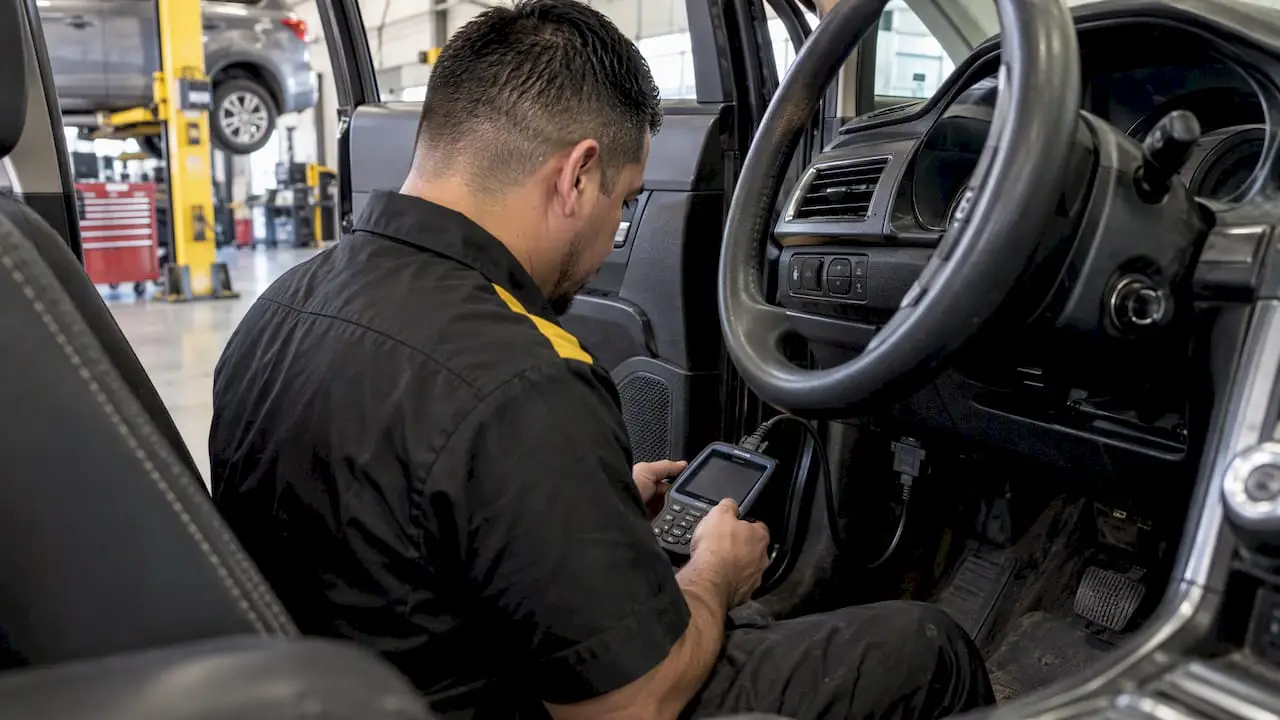
“Not ready” means your vehicle’s computer has not finished running one or more required self-tests, not that your car has failed anything yet. The correct first move is to leave any trouble codes alone, confirm the status with a scan tool, and drive the recommended cycle rather than clearing the codes and hoping the light resets on its own.
TL;DR:
- Most gasoline vehicles set monitors after about a week of varied driving; diesels can take eight weeks or longer because regeneration events are less frequent.
- After an overnight cold start, idle briefly, drive at 55 to 65 mph for 10 to 15 minutes, then mix in city traffic.
- For EVAP, keep fuel between one quarter and three quarters and start cold after an overnight sit; an unset monitor cannot rule out leaks.
- Many inspection programs allow newer vehicles one unset noncontinuous monitor, but state rules vary, so verify the local limit before the appointment.
- After two or three drive cycle attempts without progress, ask a technician to check permanent codes, accumulated warm up cycles, and EVAP leaks.
Table of Contents
- What OBD readiness monitors are and why readiness matters
- Common reasons an OBD monitor shows “Not Ready”
- How long monitors usually take: realistic timeframes and special cases
- EVAP monitor deep dive: why it’s often last and what specific enable criteria matter
- Step-by-step drive-cycle checklist to set monitors and how to verify progress with a scan tool
- When to bring the car to a shop: what professionals check and how they help
- Preparing for an emissions test: day-before verification, state thresholds, and retest options
- Perspective: patience and correct procedure beat quick shortcuts
- Local service offer: diagnostic and emissions-prep package at Kwik Kar Richardson
- FAQ
- Sources
What OBD readiness monitors are and why readiness matters
Every vehicle built since 1996 carries an onboard diagnostic computer that constantly grades its own emissions-related hardware. Each component gets its own monitor, and each monitor reports back one of three statuses: ready, not ready, or not applicable. A “ready” status means the computer has watched that system long enough to form a conclusion. A “not ready” status means the test simply has not run its full course yet.
Monitors split into two families, and the difference matters for anyone trying to pass an inspection. Continuous monitors, covering things like misfire detection, fuel system performance, and comprehensive components run constantly once the engine is on. Non-continuous monitors, covering the oxygen sensor, catalytic converter, and evaporative emissions (EVAP) system, only run when the car meets a specific combination of conditions: a certain engine temperature, a steady speed, a particular throttle position, sometimes a minimum fuel level. Emissions programs focus their attention on non-continuous monitors when deciding whether a car is ready for testing, according to DMV New York.
That distinction explains why a car can drive perfectly and still show “not ready.” The engine isn’t broken. The computer just hasn’t had the right conditions to finish checking itself.
- Continuous monitors run during nearly all engine operation and rarely show “not ready” unless something is wrong.
- Non-continuous monitors need specific driving conditions and can stay unset for days after a battery disconnect or code clear.
- Emissions inspectors typically care most about non-continuous monitor status when they decide whether your vehicle can be tested at all.
Common reasons an OBD monitor shows “Not Ready”
Most “not ready” statuses trace back to one of a handful of causes, and figuring out which one applies to your car tells you whether you can fix it yourself or need a diagnostic visit.
- A battery disconnect or dead battery wiped the computer’s memory. Disconnecting the battery, jump-starting a dead car, or having a battery replaced resets every readiness monitor to “not ready,” and the vehicle needs fresh drive cycles to relearn its own systems.
- Someone cleared trouble codes recently. Clearing codes, whether with a cheap code reader or at a shop, resets monitors the same way a battery disconnect does. DMV New York notes that repeatedly clearing codes to mask a problem is counterproductive because it resets the clock and typically increases the time before monitors are ready again.
- Your driving pattern never gives the monitor what it needs. Short trips to the grocery store never let the engine fully warm up. Pure highway commuting never produces the stop-and-go, variable-load conditions some monitors require. Either extreme can leave a monitor stuck at “not ready” indefinitely.
- The enable criteria for a specific monitor haven’t been met. Some monitors need a fuel level in a particular range, a cold start below a certain outside temperature, or a specific number of warm-up cycles before they’ll even attempt to run.
- The scan tool itself is giving a false reading. EPA testing has found that scanner and vehicle communication mismatches can cause continuous monitors to be misreported as not ready, even though nothing is actually wrong, as documented by EPA. If a continuous monitor shows unset, that’s worth double-checking with a second tool before assuming a mechanical fault.
Pro Tip: Before you do anything else, ask yourself whether the battery was recently disconnected or a code was recently cleared. If the answer is yes, the fix is usually just time and driving, not a repair.
How long monitors usually take: realistic timeframes and special cases
Patience solves most readiness problems. According to DMV New York, most vehicles complete their monitors after about a week of varied city and highway driving, though stubborn cases may require a vehicle-specific drive cycle pulled from the owner’s manual or performed by a technician.
One week of mixed driving clears most readiness issues for gasoline vehicles, according to DMV New York, making patience and a varied commute the simplest fix for the majority of drivers.
Diesel vehicles play by a different clock. EPA guidance notes that gasoline vehicle monitors typically run within about two weeks, while diesel monitors can take eight weeks or more because their readiness depends on events like particulate filter regeneration that don’t happen on every drive. A diesel pickup that sees mostly short errands may need multiple full regeneration cycles before its particulate matter and NOx monitors will ever set.
States also build some flexibility into their rejection rules, because expecting every monitor to be perfectly set on every car is unrealistic. EPA guidance allows inspection programs to proceed with testing even when a limited number of non-continuous monitors remain unset, with model-year-specific thresholds; for many 2001-and-newer vehicles, programs typically allow no more than one unset non-continuous monitor. Older vehicles sometimes get more leeway. The exact threshold depends on your state’s program, so a car that shows one unset monitor isn’t automatically doomed to fail.
EVAP monitor deep dive: why it’s often last and what specific enable criteria matter
If every other monitor is ready and one holdout remains, there’s a good chance it’s EVAP. The evaporative emissions monitor checks for leaks in the fuel vapor system, the hoses, canister, and seals that keep gasoline fumes from escaping into the air. It has some of the strictest enable criteria of any monitor, and EPA analysis of inspection data found EVAP showing a higher “not ready” rate than other monitors, with roughly 9 to 12% of initial inspections flagging EVAP as unset, according to EPA’s readiness analysis.
The strict criteria exist for a reason. EVAP testing involves sealing the fuel system and watching for a pressure or vacuum change over time, which only works under narrow conditions.
- The fuel level usually needs to sit within a specific window, often between a quarter and three-quarters full, because too little or too much fuel throws off the pressure test.
- The engine typically needs a cold start after sitting for several hours, sometimes overnight, so the fuel tank and ambient temperature are close together.
- Outside temperature matters too; some vehicles won’t run the EVAP test in very cold or very hot weather because the readings become unreliable.
A “not ready” EVAP status also means something a lot of drivers miss: the lack of a trouble code doesn’t prove there’s no leak. EPA is direct about this, noting that a “not ready” monitor means the evaluation is incomplete, not that the system passed. If the EVAP monitor has never run, the computer genuinely doesn’t know whether there’s a leak.
Pro Tip: Try to keep your fuel tank between a quarter and three-quarters full for a few days, and let the car sit overnight before a cold start drive. That combination gives the EVAP monitor its best shot at running.
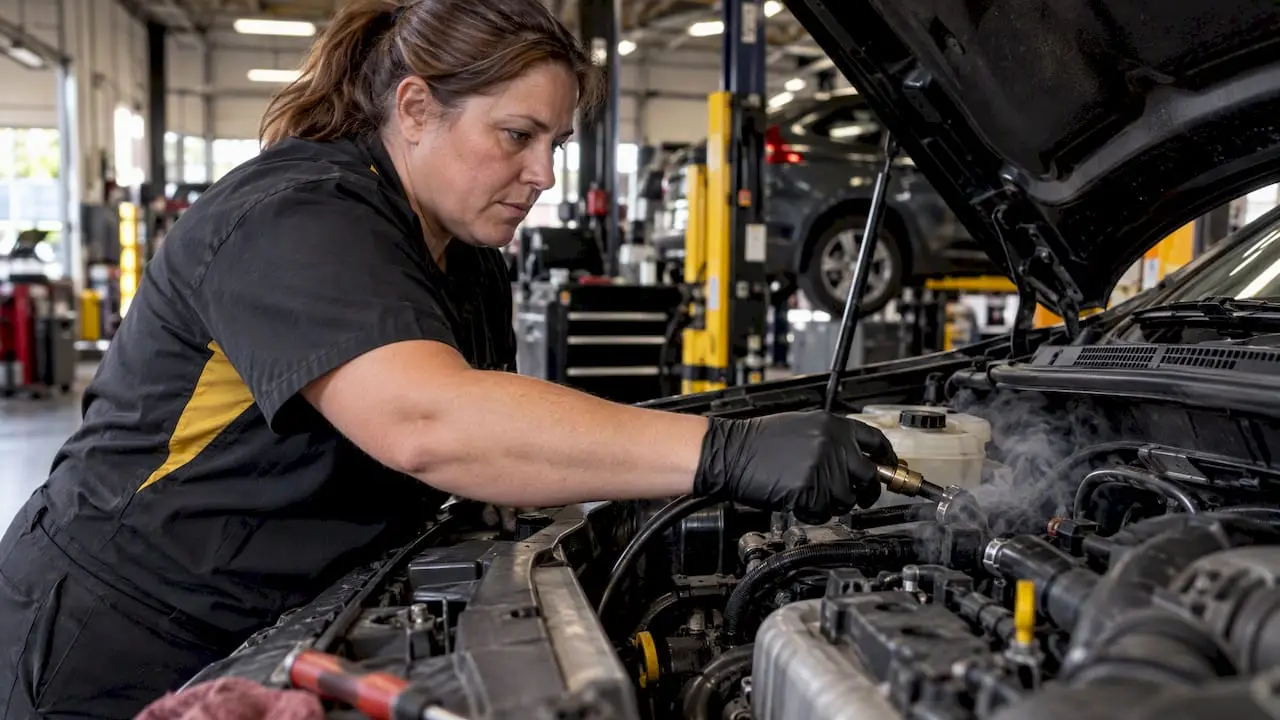
When drive cycles repeatedly fail to trigger EVAP readiness, a shop-performed smoke test is often the more rational next step than replacing parts on a guess. Smoke testing introduces a visible vapor into the sealed fuel system and shows exactly where it escapes, which is faster and more precise than swapping a gas cap, hose, or purge valve one at a time, according to EPA’s EVAP readiness analysis.
Step-by-step drive-cycle checklist to set monitors and how to verify progress with a scan tool
Setting monitors isn’t complicated, but it does require a deliberate sequence rather than just driving around and hoping. Here’s a routine built from the conditions most non-continuous monitors need.
Before you start driving:
- Do not clear any trouble codes, even if the check engine light is on; clearing resets every monitor back to zero.
- Check that your battery terminals are clean and tight, since a weak connection can cause the same reset symptoms as a full disconnect.
- Check fluid levels and tire pressure, since a car that’s otherwise neglected can struggle to complete a clean drive cycle.
- Fill the fuel tank to roughly half, since several monitors, especially EVAP, need fuel level within a specific range.
The drive sequence:
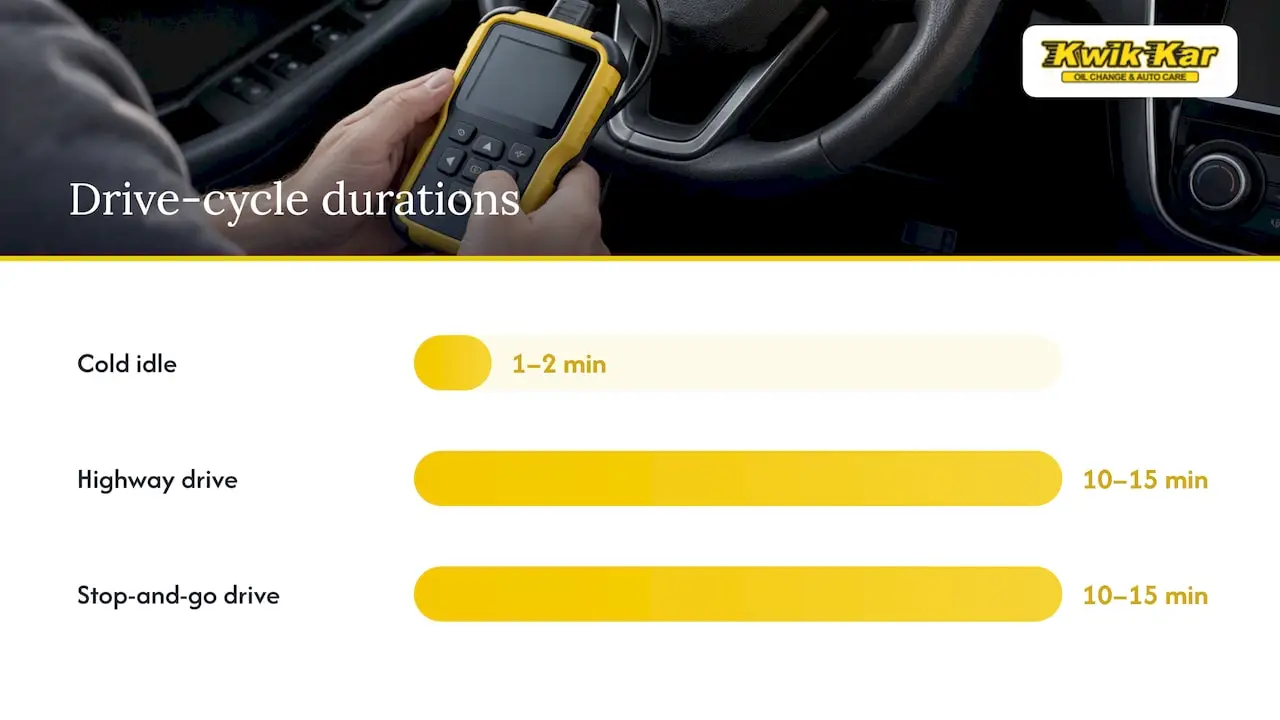
- Start the engine cold, after it has sat for several hours or overnight, and idle for one to two minutes without touching the accelerator.
- Drive at a steady highway speed, ideally 55 to 65 miles per hour, for 10 to 15 minutes without heavy braking or lane changes.
- Follow that with 10 to 15 minutes of stop-and-go driving, mixing moderate acceleration with full stops, similar to city traffic.
- If a monitor still hasn’t set, add a few minutes of idling with the air conditioning on, then another short highway stretch.
- Repeat the full sequence over two or three separate days rather than trying to force everything into one long drive.
Many non-continuous monitors trigger specifically during the transition between engine load and temperature changes, which is why mixing highway and city conditions works better than either alone.
After each drive, plug in an OBD-II scanner and check the readiness status directly rather than guessing. A basic code reader will show which monitors report ready, not ready, or not applicable, so you can see exactly which one is holding things up. If your owner’s manual lists a manufacturer-specific drive cycle, usually a precise sequence of speeds, idle times, and throttle positions, following that exact procedure often succeeds where general driving doesn’t, according to DMV New York.
When to bring the car to a shop: what professionals check and how they help
Some readiness problems need equipment and data access that a basic code reader can’t provide. If you’ve run the drive cycle checklist two or three times with no progress, or if the check engine light itself is on, it’s time for a diagnostic visit rather than another week of guessing.
A proper diagnostic appointment goes beyond a quick scan. Technicians check for permanent trouble codes that won’t clear with a standard reader, calculate how many miles and warm-up cycles have accumulated since the last code clear, and run manufacturer-specific drive cycles when the generic approach has stalled. For EVAP-specific holdouts, a smoke or leak test pinpoints the exact failure point instead of relying on trial-and-error part swaps.
- Permanent DTC review, which shows faults the computer has confirmed even after a code clear.
- Miles and warm-up cycle tracking, to confirm whether the vehicle has simply not been driven enough.
- Manufacturer drive cycle execution, using the exact sequence your model requires.
- EVAP smoke testing, which visually locates vapor leaks other methods miss.
A persistent check engine light deserves attention on its own, separate from readiness status; our guide to check engine light causes walks through what the light typically means. If you’ve gotten this far and the monitor still won’t budge, dealership-style diagnostic workups, similar to the process Liberty CDJR outlines for its own service department, are built around exactly this kind of stubborn case.
Pro Tip: Bring your scan tool’s printout or note which monitors are set and which aren’t before your appointment. It saves diagnostic time and gets a technician straight to the likely cause.
Preparing for an emissions test: day-before verification, state thresholds, and retest options
The night before an inspection appointment is the right time to confirm your car’s status, not the morning of. A quick scan tells you whether you’re ready to go or need another day of driving.
- Scan the vehicle the day before your appointment and note exactly which monitors, if any, show “not ready.”
- Do not clear codes in a last-minute attempt to force a cleaner reading; it resets the monitors you’ve already set.
- If any monitor is still unset, run one more round of the drive-cycle checklist rather than skipping straight to the test.
- Confirm your state’s specific threshold for unset monitors, since programs commonly allow one unset non-continuous monitor on newer vehicles, according to EPA, though the exact rule varies by program and model year.
If the vehicle gets rejected specifically for readiness and not for an actual fault, the fix is usually more driving, not more money. Continue normal mixed driving, let the required miles and warm-up cycles accumulate, and return once the monitor in question has had a real chance to run. Our emissions test preparation guide covers the broader checklist, and if a prior attempt already failed outright, our guide to retesting after a failed emissions test walks through the next steps. For a fuller rundown of what inspectors check beyond readiness, our state inspection checklist is worth a look before your appointment.
If the same monitor refuses to set after repeated driving and a full checklist attempt, that’s the signal to schedule diagnostics rather than keep guessing.
Perspective: patience and correct procedure beat quick shortcuts
The instinct to clear a code and hope for the best is understandable, and it’s almost always the wrong move. “Not ready” is an incomplete test, not a verdict, and clearing codes before the computer has had a chance to finish its evaluation just restarts the clock on every monitor at once. We’ve seen drivers turn a one-week fix into a month-long headache this way.
The sequence that actually works is unglamorous: drive the recommended cycle, check the status with a scanner, and only call in a professional once genuine attempts have stalled. Skipping steps to save a day rarely saves anything. It just moves the wait further down the road, usually right up against your inspection deadline.
— Kwik Kar
Local service offer: diagnostic and emissions-prep package at Kwik Kar Richardson
When drive cycles don’t resolve a stubborn monitor, or when you’d rather skip the guesswork entirely, we offer a straightforward diagnostic path right here in Richardson. Technicians read permanent codes, check miles and warm-up cycles since any prior code clear, and run manufacturer-specific drive cycles when the generic approach has stalled.

Every visit comes with a transparent digital inspection report so you can see exactly what is found and why, backed by recognition from CARFAX and RepairPal, plus discounts for military personnel and first responders. If your check engine light is on alongside a readiness issue, that combination deserves a proper look rather than another week of driving and hoping.
Book an engine diagnostic with us, or browse our full state inspection and repair services to get your vehicle test-ready before your appointment.
FAQ
What does it mean when an emissions test says not ready?
It means the car’s onboard computer hasn’t finished testing one or more emissions-related systems, so the result is incomplete rather than a failure. The usual next step is normal mixed driving for about a week, since most vehicles complete their monitors in that time, according to DMV New York.
How to get an evap monitor ready for a Ford?
Keep the fuel tank between a quarter and three-quarters full, let the vehicle sit for several hours for a true cold start, and then drive a mix of highway and stop-and-go conditions, since EVAP testing needs a specific fuel level and temperature window to run. If the monitor still won’t set after several attempts, the owner’s manual drive cycle or a technician-performed check is the next step, as outlined by EPA’s EVAP analysis.
How long does it take for an O2 sensor to be ready?
The oxygen sensor monitor is non-continuous and typically sets within the same general window as other monitors, often within about a week of varied driving, according to DMV New York. Short trips or a recent battery disconnect can delay it, so steady highway driving mixed with stop-and-go segments speeds things along. If the sensor itself is failing rather than just unset, our guide to bad O2 sensor symptoms explains what to watch for.
How do I get my OBD2 monitor ready?
Avoid clearing any codes, then drive a cold start idle followed by a steady highway stretch and a stop-and-go loop, checking progress with a scan tool after each drive. Most gasoline vehicles complete their monitors within about a week of this kind of mixed driving, while diesel vehicles can take considerably longer due to regeneration requirements, according to EPA.
Sources
- What do you mean my car’s ‘not ready’?, DMV New York
- Performing Onboard Diagnostic System Checks as Part of a Vehicle Inspection and Maintenance Program, EPA