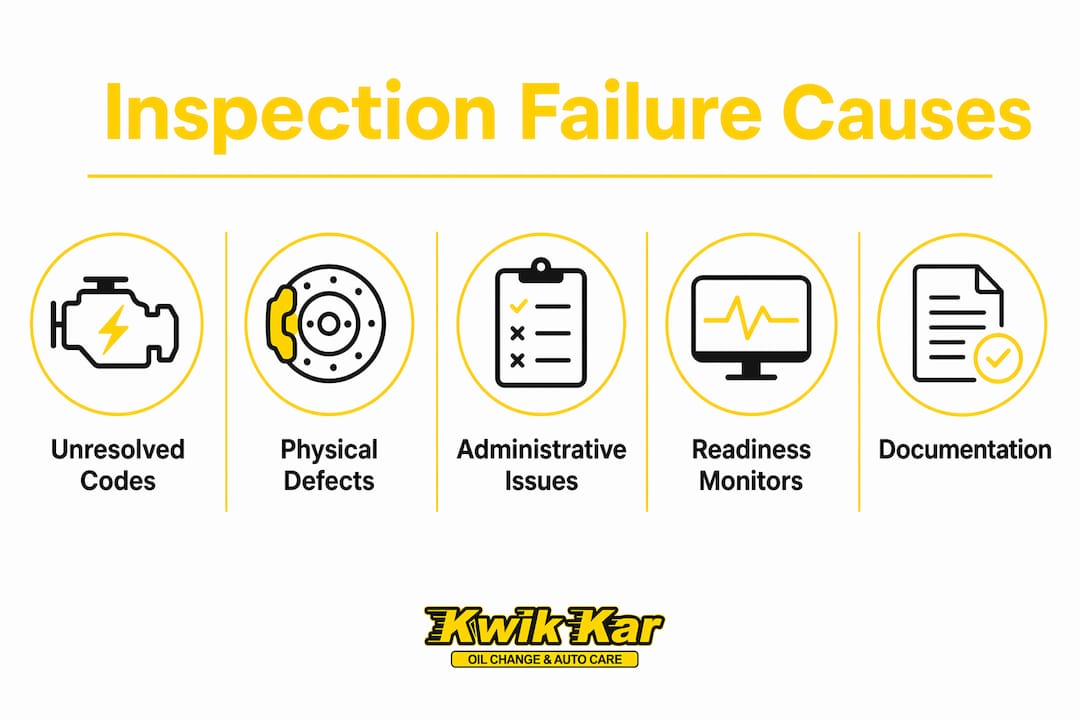
Vehicle inspection failure is defined as a vehicle’s inability to meet required safety, emissions, or compliance standards during a mandatory government or state inspection. Understanding why inspection failure happens in vehicles is not just useful knowledge. It is the difference between a vehicle that stays on the road and one that gets grounded at the worst possible moment. The most common causes fall into three clear categories: active or stored onboard diagnostic fault codes, physical safety defects like worn tires and failing brakes, and administrative oversights such as missing registration documents. Each category is preventable with the right preparation.
Why inspection failure happens in vehicles: fault codes explained
The single most direct cause of inspection failure is an active or stored fault code in your vehicle’s onboard diagnostic system, known as OBD-II. When your check engine light is on, the vehicle is broadcasting a problem to every inspector who plugs in a scan tool. Active fault codes related to emissions systems, brake controls, engine performance, and electrical communication all trigger automatic failure. There is no gray area here. A lit check engine light in an emissions-testing county is an immediate disqualifier.
Common fault code categories that cause inspection failures include:
- Emissions system codes: P0420 (catalytic converter efficiency), P0440 to P0456 (EVAP system leaks), and P0171 or P0172 (fuel trim faults linked to oxygen sensor issues)
- Brake and safety system codes: C-series codes related to ABS module failures or wheel speed sensor malfunctions
- Engine performance codes: P0300 series misfire codes, which directly affect emissions output
- Communication faults: U-series codes indicating module communication failures across the CAN bus network
What catches many drivers off guard is the temptation to clear codes right before an inspection. Clearing codes or disconnecting the battery does not fix the underlying problem. It simply resets the system and forces the vehicle into an unready state, which is itself a failure condition. The check engine light is not a suggestion. It is a diagnostic signal that inspectors are trained to act on.
Pro Tip: Scan your vehicle with an OBD-II reader at least two weeks before your scheduled inspection. Tools like the FIXD sensor or a professional scan at Kwik Kar Oil Change & Auto Care give you time to address fault codes and complete the necessary drive cycles before test day.
What physical defects most commonly cause cars to fail inspection?
Physical safety defects are the second major category of inspection failure causes, and they are the ones most visible to both inspectors and drivers. Brake, tire, and lighting defects accounted for over 75% of commercial vehicle out-of-service orders in 2025 inspections. That figure reflects a pattern consistent across passenger vehicle inspections as well. These are not obscure failures. They are the components your vehicle depends on every single day.
Here are the most common physical defects that lead to inspection failure, in order of frequency:
- Worn tires below minimum tread depth. Most states require a minimum of 2/32 of an inch of tread depth. Pennsylvania’s 2026 inspection guide lists worn tires as the number one physical failure reason. Use the penny test or a tread depth gauge to check all four tires before your appointment.
- Faulty or burnt-out lights. Headlights, tail lights, brake lights, and turn signals are all checked during inspection. A single burnt-out bulb fails the vehicle. Walk around your car at night and have someone press the brake pedal while you confirm all lights respond.
- Brake system problems. Worn brake pads, scored rotors, and ABS warning lights all trigger failure. Your brake pad indicator is designed to warn you before the pads reach a dangerous level. Do not ignore that sound.
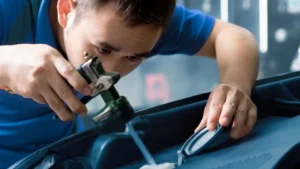
- Windshield damage in the wiper sweep area. A crack or chip that falls within the area your wipers cover is a direct failure point in most states. Small chips can often be repaired inexpensively before they spread.
- Worn windshield wiper blades. Blades that streak, skip, or fail to clear the glass cleanly are a safety defect. Replacing wiper blades costs under $30 and takes five minutes.
- Suspension and steering issues. Excessive play in the steering wheel or worn ball joints and tie rods are flagged during the physical inspection. If your steering wheel shakes when braking, that symptom points to a brake-related suspension issue that inspectors will catch.
Pro Tip: Walk around your vehicle the week before inspection as if you were the inspector. Check every light, look at tire sidewalls for bulges or cracking, and listen for brake noise during low-speed stops. Catching these issues yourself costs far less than a failed inspection and a return trip.
Why administrative and compliance factors cause inspection failure
Not every inspection failure traces back to a mechanical problem. Administrative and compliance issues cause vehicles to fail inspection even when the car itself is in perfect working order. Missing or invalid documents such as expired insurance, lapsed registration, or an outdated inspection certificate are common triggers for failure or enforcement action.
The most frequent administrative failure causes include:
- Expired registration: An inspection station in most states will not process your vehicle if the registration has lapsed. In Texas, for example, registration and inspection are linked through a single renewal system, meaning one lapse affects the other.
- Invalid or missing proof of insurance: Many states require current insurance documentation at the time of inspection. Driving without valid insurance also carries separate legal consequences beyond the failed inspection.
- Outdated inspection sticker: Operating a vehicle with an expired inspection certificate is a ticketable offense in most jurisdictions, and the vehicle will not receive a new sticker until it passes.
The fix here is straightforward. Set calendar reminders 30 days before your registration, insurance renewal, and inspection due dates. Keep physical or digital copies of all three documents in your vehicle at all times. Administrative failures are entirely preventable and represent the most avoidable category of inspection failure causes.
How do OBD-II readiness monitors affect your emissions test result?
OBD-II readiness monitors are internal self-tests that your vehicle’s powertrain control module (PCM) runs to verify that emissions-related systems are functioning correctly. There are typically eight to eleven monitors depending on the vehicle, covering systems like the catalytic converter, oxygen sensors, EVAP (evaporative emission control), EGR, and fuel system. When all monitors show a “ready” or “complete” status, the vehicle is eligible for emissions testing. When monitors are incomplete, the vehicle fails the test regardless of whether any fault codes are present.
| Monitor | Function | Typical Completion Requirement |
|---|---|---|
| Catalyst monitor | Tests catalytic converter efficiency | Highway driving at steady speed |
| EVAP monitor | Checks for fuel vapor leaks | Cold start, specific fuel level, idle period |
| Oxygen sensor monitor | Verifies O2 sensor response | Mixed city and highway driving |
| EGR monitor | Tests exhaust gas recirculation | Warm engine, moderate acceleration |
| Misfire monitor | Detects engine misfires | General driving across RPM range |
The EVAP monitor is consistently the last and most difficult to complete. EVAP monitor completion requires multiple drive cycles, specific cold start conditions, and fuel levels typically between one-quarter and three-quarters of a tank. Drivers who top off their tank or run it nearly empty before testing often find the EVAP monitor refuses to complete.
After a battery disconnect or code clear, readiness monitors reset to incomplete, and restoring them requires 50 to 100 miles of mixed driving over several days. This is why clearing codes the night before an emissions test is one of the most counterproductive things a driver can do. Even with hardware repairs completed, vehicles often fail emissions tests due to incomplete readiness monitors triggered by recent battery disconnects or code clearing.
Pro Tip: Before any emissions retest, scan the PCM for both fault codes and readiness monitor status. If monitors are not ready, complete a proper manufacturer-specified drive cycle before scheduling the test. Kwik Kar Oil Change & Auto Care can run this scan and advise you on exactly which monitors need attention.
How to avoid inspection failure before it happens
Avoiding inspection failure is primarily a maintenance discipline, not a last-minute scramble. Inspection failures rarely happen by random chance. They trace back to known fault codes or safety defects that were present and detectable well before the inspection date. The vehicle was quietly failing you. The inspection just made it official.
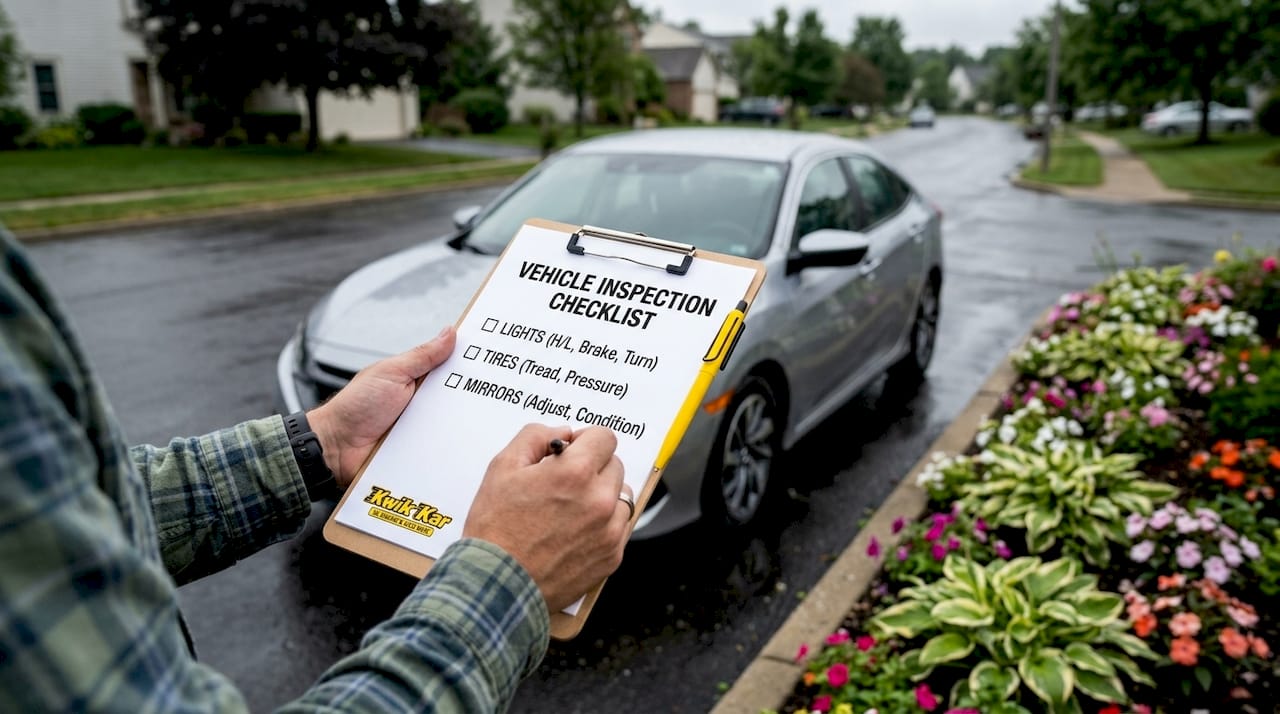
Here is a practical pre-inspection checklist to work through at least two to three weeks before your appointment:
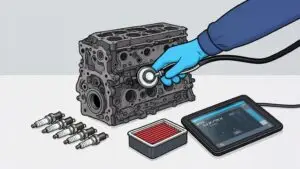
- Run a diagnostic scan. Use an OBD-II scanner or visit a shop for a professional scan to check for active and pending fault codes as well as readiness monitor status.
- Inspect all exterior lights. Check headlights, brake lights, reverse lights, and turn signals. Replace any burnt-out bulbs immediately.
- Check tire tread and pressure. Use a tread depth gauge and a tire pressure gauge. Address any tires below 2/32 of an inch of tread or showing sidewall damage.
- Test your brakes. Listen for squealing or grinding, and feel for pulsation or pulling during stops. A professional brake inspection takes less than 30 minutes and confirms pad thickness and rotor condition.
- Verify all administrative documents. Confirm your registration, insurance, and prior inspection certificate are current and accessible.
- Allow adequate drive time after any repairs. If fault codes were cleared or the battery was disconnected during a repair, drive the vehicle for several days and at least 50 to 100 miles before scheduling the emissions test.
- Address windshield damage. Repair any chips or cracks in the wiper sweep area before the inspection date.
The importance of vehicle maintenance as a year-round practice cannot be overstated. Vehicles that receive regular oil changes, brake checks, and tire rotations at consistent intervals rarely arrive at inspection day with surprises.
Key takeaways
Inspection failure in vehicles is almost always traceable to one of three preventable causes: unresolved fault codes, physical safety defects, or administrative lapses, and each can be caught and corrected before test day with routine maintenance and a pre-inspection scan.
| Point | Details |
|---|---|
| Fault codes cause automatic failure | Active OBD-II codes related to emissions, brakes, or communication trigger immediate inspection failure. |
| Physical defects are the top failure category | Tires, lights, and brakes account for the majority of out-of-service failures across inspection programs. |
| Clearing codes backfires | Resetting codes without fixing the underlying issue creates incomplete readiness monitors, which also fail emissions tests. |
| Administrative issues are fully preventable | Expired registration, missing insurance, or an outdated inspection sticker cause failure with zero mechanical cause. |
| Early scanning saves time and money | Running a diagnostic scan two to three weeks before inspection gives you time to repair and complete drive cycles. |
What we see every inspection season at Kwik Kar
The pattern we see most often is not the dramatic engine failure or the catastrophic brake collapse. It is the driver who cleared their check engine light two days before the test and genuinely believed that solved the problem. It did not. The code came back, or the readiness monitors were still incomplete, and the vehicle failed anyway. That is a wasted trip, a re-inspection fee, and a week of frustration that a single scan two weeks earlier would have prevented entirely.
The second most common scenario is the vehicle that fails on something the owner walked past every single day. A brake light that has been out for three months. Tires that have been visibly low on tread since last winter. These are not hidden failures. They are visible ones that did not get addressed because there was no immediate consequence until inspection day arrived.
My honest advice is this: treat your pre-inspection preparation the same way you treat preparing for a job interview. You do not show up and hope for the best. You review the requirements, check your presentation, and fix what needs fixing before you walk in the door. A vehicle inspection checklist reviewed three weeks out gives you enough runway to handle every category of failure, from fault codes to paperwork. The vehicles that pass on the first attempt are not lucky. They are maintained.
— Kwik Kar
Get your vehicle inspection-ready at Kwik Kar Richardson
Kwik Kar Oil Change & Auto Care in Richardson, TX gives you the diagnostic clarity and repair expertise to walk into any inspection with confidence. Our ASE-certified technicians, recognized by both CARFAX and RepairPal, run full OBD-II diagnostic scans to identify active fault codes and check readiness monitor status before your test date. From brake repair and engine diagnostics to electrical system repairs and pre-inspection vehicle checkups, we address every category of failure cause under one roof. Military members and first responders receive special discounts. Schedule your pre-inspection service at Kwik Kar Richardson and arrive at your inspection appointment prepared, not surprised.
FAQ
What is the most common reason cars fail inspection?
Active OBD-II fault codes, particularly those related to emissions systems, are the most frequent cause of inspection failure. Physical defects like worn tires, faulty lights, and brake problems follow closely behind.
Does clearing the check engine light help pass an inspection?
Clearing the check engine light without fixing the underlying fault does not help. It resets readiness monitors to an incomplete state, which itself causes failure during emissions testing, and the original fault code typically returns within a short drive.
How long does it take for readiness monitors to complete after a battery disconnect?
Restoring OBD-II readiness monitors after a battery disconnect or code clear typically requires 50 to 100 miles of mixed city and highway driving over several days. The EVAP monitor is often the last to complete and requires specific cold-start conditions.
Can a car fail inspection for paperwork reasons alone?
A vehicle can fail inspection solely due to missing or expired documents, including invalid insurance, lapsed registration, or an outdated inspection certificate, even if the vehicle is mechanically sound.
How far in advance should I prepare for a vehicle inspection?
Preparing two to three weeks before your scheduled inspection gives you enough time to run a diagnostic scan, address any fault codes, complete the necessary drive cycles, repair physical defects, and verify all administrative documents are current.