Fast Fuse Voltage Drop Tests to Find Parasitic Battery Drain in Richardson
A parasitic battery drain is likely when you keep needing jump starts or find your battery dead overnight despite a healthy alternator. Test the battery and charging system first with a digital multimeter (DMM), then check for excess current draw with an inductive clamp. If the pattern continues, bring the vehicle to a shop like Kwik Kar Oil Change and Auto Care for professional diagnostics.
TL;DR:
- Checking the battery and charging system first can often identify whether a drain exists, saving time before testing for parasitic draw.
- Modern vehicles often carry small electronic modules that can intermittently wake up and cause unpredictable, hard-to-trace drains if not properly diagnosed.
- Using a digital multimeter and inductive clamp correctly, along with systematic testing steps, is essential for accurately locating the circuit responsible for the drain.
- Most parasitic drains stem from simple causes like leftover aftermarket accessories or faulty switches, not necessarily complex wiring faults or deep electrical issues.
- Professional diagnostic help is recommended if the drain remains elusive after basic tests, especially for intermittent faults or high-voltage system concerns.
Table of Contents
- Recognize the Signs: How Parasitic Drain Usually Presents
- What Usually Causes Parasitic Drain
- Tools You Need and Safety Checks Before You Test
- Step-by-Step Testing Workflow for Diagnosing a Drain
- How to Isolate the Offending Circuit Quickly
- Fixing the Drain and Next Steps
- Keep It From Happening Again
- When to Trust a Shop: What Professional Diagnostics Add
- Our Take on Diagnosing Battery Drains
- Book Battery Testing or Drain Diagnosis in Richardson
- Sources
- FAQ
Recognize the Signs: How Parasitic Drain Usually Presents
A car battery that drains overnight, even though nothing was left on, is the clearest signal something is pulling power while the vehicle sits. The pattern matters as much as the symptom: a slow, gradual decline over several days often points to an aging battery, while a sudden dead battery after one quiet night usually means an active parasitic draw.
Watch for these signs:
- A slow crank or a single click when you turn the key.
- Dim headlights or interior lights that seem weaker than usual.
- Dashboard warning lights flickering at startup.
- Needing a jump start more than once in a week without other explanation.
Modern vehicles typically carry a nominal parasitic draw of roughly 30 to 50 milliamps at rest, though some newer models settle closer to 5 to 10 milliamps. Anything well beyond that range, especially readings in the hundreds of milliamps or higher, points to a genuine drain worth chasing down.
What Usually Causes Parasitic Drain
Before reaching for advanced tools, run through the usual suspects. Most drains trace back to something simple that got overlooked rather than a deep electrical fault.
- Aftermarket accessories left powered, including dash cams, phone chargers, or anything plugged into a 12V outlet that stays energized even with the engine off.
- Interior, trunk, or glovebox lights stuck on because a door pin switch failed to release.
- Improperly installed aftermarket electronics, such as stereos, alarms, or remote starters, wired directly to a constant power source instead of switched ignition power, a pattern AAA Central Penn identifies as a common culprit.
- Faulty alternator diodes that allow current to bleed backward into the battery when the engine is off.
- Shorted wiring or stuck relays, often from chafed insulation rubbing against a metal edge.
- Module wake-up glitches, where a computer module fails to return to sleep mode after the car is parked.
Today’s vehicles carry far more electronic modules than they did a decade ago: infotainment systems, keyless entry receivers, collision-avoidance sensors, and telematics units all draw small amounts of power even when parked. Each one is a potential point of failure, and a module that occasionally forgets to sleep can create an intermittent drain that only shows up some nights and not others. That inconsistency is exactly what makes modern parasitic drains harder to pin down than the simpler electrical faults of older cars.
Tools You Need and Safety Checks Before You Test
Diagnosing a parasitic drain properly takes more than a wrench and a hunch. Before you touch a single connection, gather the right equipment and understand what you’re working around.
You’ll want:
- A digital multimeter (DMM) with milliamp capability for measuring small currents.
- An inductive amp clamp for reading current without breaking a circuit, ideal for intermittent drains.
- A memory saver or parallel switch to keep modules powered while you work.
- A fuse puller and clear access to the fuse panel.
- Gloves and eye protection, since battery acid and sparks are both real risks.
Keep sparks away from the battery, remove your keys or smart fob to prevent the vehicle from waking unexpectedly, and never block battery vents. A swollen, leaking, or heavily corroded battery calls for a professional inspection rather than a DIY test. If your vehicle is a hybrid, plug-in hybrid, or electric vehicle, stop here: high-voltage systems require specialized training and should go straight to a shop.
Pro Tip: Disconnecting the battery to “reset” a suspected drain often erases the very fault you’re chasing. Use a memory saver instead so the vehicle stays in its normal electrical state while you test.

Step-by-Step Testing Workflow for Diagnosing a Drain
A parasitic drain diagnosis works best as a sequence. Skipping steps almost always leads to chasing the wrong problem.
- Test the battery and alternator first. A weak battery or a failing alternator mimics the symptoms of a parasitic drain, and AAA Auto Repair notes that many battery complaints trace back to charging system failure or simple battery age rather than an actual draw. Batteries typically last 3 to 5 years, and heat accelerates that decline, so check the battery’s date code before you go further.
- Confirm state of charge with a DMM. A healthy resting battery should read close to 12.6 volts; anything noticeably lower suggests you’re dealing with a charging or battery issue, not necessarily a drain.
- Quantify the draw. An inductive amp clamp is the preferred tool for intermittent drains since it measures current without opening the circuit, while a series ammeter works for steady, repeatable drains when it’s safe to connect one. Fluke’s testing guide walks through the in-series connection method step by step.
- Let the vehicle fall asleep. Modules need time to power down after the engine shuts off, sometimes 20 to 40 minutes depending on the manufacturer. Drive the car, park it, and wait before taking your reading, or use a memory saver to hold the electrical state steady while you set up.
- Record your reading and compare it to normal. A draw in the expected 30 to 50 milliamp range is unremarkable. A reading in the hundreds of milliamps, or one that spikes unpredictably, confirms an active parasitic drain worth isolating.
Rushing step one is the single most common DIY mistake. Chasing phantom wiring faults on a car that simply has a three-year-old battery wastes hours that a five-minute voltage test would have saved.
How to Isolate the Offending Circuit Quickly
Once you’ve confirmed a real drain, the next job is finding which circuit is responsible. Two methods dominate professional shops for good reason: they’re fast and they don’t require disconnecting the battery.
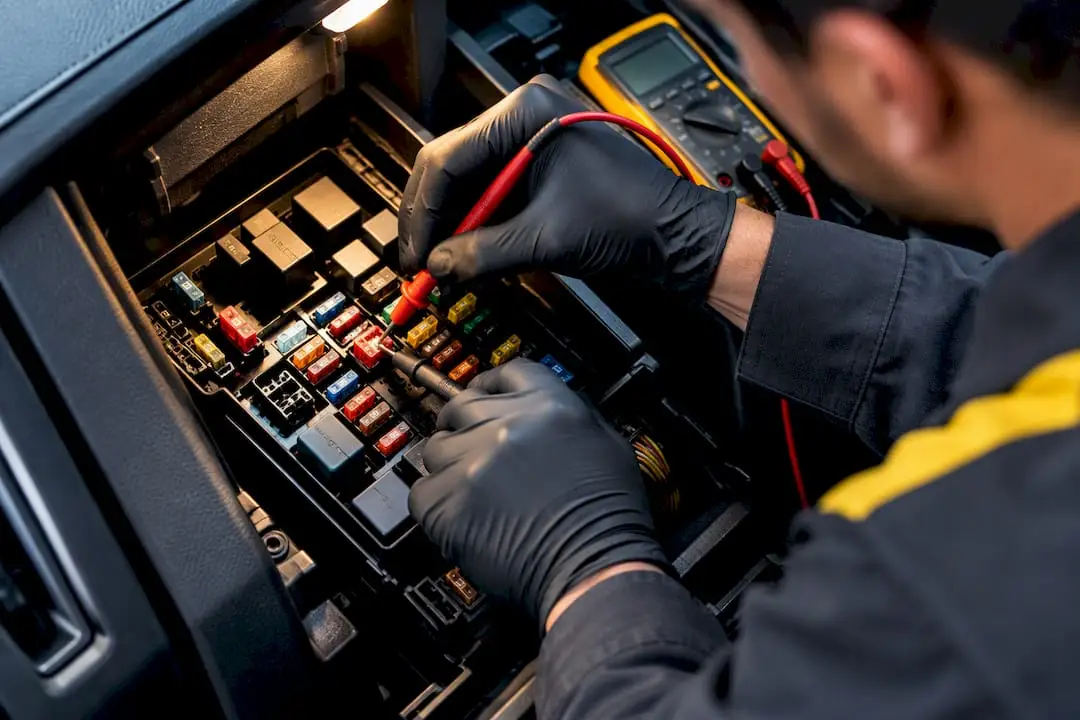
- Fuse voltage-drop testing uses a DMM set to millivolts, probing across each fuse’s contacts while current flows. FenderBender’s testing approach converts that millivolt reading to milliamps using a reference chart, letting you scan the entire fuse panel without pulling a single fuse.
- The fuse-pull method involves removing fuses one at a time while watching the ammeter or clamp reading drop. It works, but pulling fuses can wake sleeping modules and mask the very fault you’re hunting, so it’s best used as a backup rather than a first move on newer vehicles.
- Inductive current probes let you trace a draw down a wiring harness without cutting into it.
- Thermal imaging can reveal a relay that’s stuck closed and running warm, though AAA’s Car Doctor column is clear that thermal cameras and inductive probes are supplements to systematic circuit checks, not replacements for them.
- CAN-bus activity checks with a scan tool can show which module is refusing to sleep, a diagnostic layer that typically requires shop-grade equipment.
Pro Tip: Older diagnostic habits of fully disconnecting the battery to isolate a fault often erase the fault itself. Keeping the battery connected, whether through a memory saver or by using the voltage-drop method, preserves the exact conditions that caused the drain.
Fixing the Drain and Next Steps
Once you’ve traced the drain to a specific circuit, the fix usually falls into one of a few categories. Simple wiring problems can often be corrected without replacing major components.
- Rewire aftermarket accessories to switched power instead of a constant 12V source, or remove them entirely if they’re not essential.
- Replace failed relays or door pin switches that are keeping lights or modules powered.
- Repair chafed or shorted wiring, particularly near door hinges, trunk hinges, and engine mounts where harnesses flex repeatedly.
- Replace a battery or alternator when testing shows either has failed, since a battery near the end of its 3 to 5 year lifespan or a diode leaking current from a failing alternator can look exactly like a wiring fault.
If the drain still hasn’t shown itself after a reasonable diagnostic session, it’s time for a shop visit. A professional diagnostic session typically takes longer for intermittent faults than for steady ones, since the technician may need to let the vehicle sleep multiple times to catch the fault reliably. Bring your notes: when the drain happens, how often you’ve needed a jump, your battery’s age, and any voltage or current readings you’ve already taken. Those details cut diagnostic time significantly.
Keep It From Happening Again
Preventing a repeat drain comes down to a handful of habits that take little effort but pay off over the life of the battery.
- Test the battery annually after year three, and again before extreme summer or winter temperatures arrive, since AAA notes that proactive checks after three years help catch failures before they strand you.
- Clean battery terminals regularly to prevent corrosion from interfering with the connection.
- Confirm the battery is mounted securely, since vibration accelerates internal wear.
- Use a battery tender during long storage periods, and unplug dash cams, chargers, or other accessories if the car will sit for more than a few days.
- Take occasional longer drives rather than relying only on short trips, since a full charge cycle needs sustained driving time, not just a quick trip to the store.
Pro Tip: A battery that struggles to hold a charge after repeated short trips isn’t necessarily failing. It may simply never be getting a full recharge cycle before the next short trip drains it again.
When to Trust a Shop: What Professional Diagnostics Add
Some drains are straightforward enough to solve in a driveway. Others, particularly intermittent module wake-ups or faults buried deep in a wiring harness, call for shop-grade tools and the time to let a vehicle cycle through its sleep pattern more than once.

Professional shops handle battery testing and replacement using ASE-certified technicians and may provide digital vehicle inspections so you can see exactly what was tested and what was found. Some shops are recognized by CARFAX and RepairPal, and transparent pricing means you know the scope of work before it starts.
Before your visit, jot down when the drain happens, any voltage or current readings you’ve already taken, and your battery’s approximate age. Those details help a technician narrow the diagnosis faster instead of starting from zero.
Our Take on Diagnosing Battery Drains
Most guides treat parasitic drain diagnosis as a single dramatic hunt for a hidden short. In practice, the boring first step, testing the battery and alternator, resolves more cases than any amount of fuse-pulling ever will. Skipping it is the most common reason DIY diagnostics drag on for days.
The bigger blind spot is timing. A drain that isn’t given time to reveal itself, because the vehicle never got the chance to fully power down, produces false readings that send people chasing wiring faults that don’t exist. Patience during the sleep cycle matters more than any single tool on your workbench.
If there’s one thing worth prioritizing, it’s sequencing: confirm the battery and charging system, then measure the draw, then isolate the circuit. Reverse that order and you’ll spend hours solving a problem that a five-minute voltage test would have caught.
— Kwik Kar
Book Battery Testing or Drain Diagnosis in Richardson
A stubborn parasitic drain rarely gets easier to find on your own once it hides behind an intermittent module fault or a wiring short buried in a harness. Professional auto care centers offer battery testing and replacement services with detailed inspection reports and transparent pricing, so you know what is being tested and why.

- Get your battery and charging system tested before assuming the worst.
- Ask about the current $20 off battery replacement offer when you book.
- Bring your symptom notes and any readings you’ve already taken to speed up the visit.
Visit our Battery Testing & Replacement page to see what’s included, or head to our shop landing page to schedule your appointment today.
Sources
- Battling battery drain: 8 sneaky factors impacting your car’s power | AAA Central Penn
- Advanced battery drain diagnostics | FenderBender
- A new approach to testing parasitic draw | FenderBender
- How to find parasitic battery drain with a multimeter | Fluke
- Bad alternator vs. bad battery: A quick guide | AAA Auto Repair
FAQ
How do you solve a parasitic battery drain?
Test the battery and alternator first to rule out a charging fault, then measure the parasitic draw with a multimeter or inductive clamp once the vehicle has fully powered down. From there, use fuse voltage-drop testing to isolate the exact circuit and repair or replace the faulty component, whether that’s a wire, relay, or accessory.
What are the most common causes of parasitic battery drain?
The most frequent causes include aftermarket accessories left plugged into 12V outlets, interior or trunk lights stuck on from a faulty door switch, and improperly wired aftermarket electronics like alarms or remote starters, according to AAA Central Penn. Faulty alternator diodes and modules that fail to enter sleep mode are also common culprits.
How much does it cost to fix a parasitic battery drain?
The cost depends entirely on the cause, ranging from a simple accessory rewire to a full alternator or wiring repair, and Kwik Kar does not publish a flat price for drain diagnosis since scope varies by vehicle. Contact your local Kwik Kar for a diagnostic estimate based on your specific symptoms.
How do you tell if you have a parasitic drain?
A parasitic drain typically shows up as a dead or weak battery after the car has sat overnight, along with slow cranking, dim lights, or repeated jump starts, even though the alternator tests normally. If a multimeter or inductive clamp shows a draw well above the typical 30 to 50 milliamp resting range, a parasitic drain is likely confirmed.