Your Oil Life Monitor Explained: What Drivers Need to Know
How Does an Oil Life Monitor Work?
Your oil life monitor (OLM) estimates how much usable service life remains in your engine oil by tracking real operating data, not by chemically testing the oil itself. When that percentage drops or a “Change Oil” message appears, it’s a prompt to schedule service, not a signal that your engine is about to seize. OLMs are generally reliable when the correct oil grade was installed, the oil level is right, and the system was properly reset after the last service. Outside those conditions, the estimate can drift.
Before you do anything else:
Pull out the dipstick and check oil level and color
Confirm the shop used the oil grade your owner’s manual specifies
Verify the OLM was reset after your last oil change
Treat the alert as a scheduling prompt, not a crisis
When to trust it: Follow the OLM when you know the correct oil was used and the system was reset. When to override it: Switch to your owner manual’s severe-service interval if you do mostly short trips, tow regularly, or drive in extreme temperatures, and always change oil at least once a year regardless of mileage.
Pro Tip:Check your dipstick monthly even when the OLM shows plenty of life remaining. The monitor assumes your oil level is correct — it cannot detect a slow leak or consumption issue.
Key Takeaways
An oil life monitor estimates remaining oil service life from driving data, not chemical analysis, so its accuracy depends entirely on correct oil grade, proper oil level, and a verified reset after every service.
Point
Details
OLMs estimate, not measure
Most monitors use algorithms and ECU data, not physical oil testing, to calculate remaining life.
Correct inputs are critical
Wrong oil grade, low level, or a missed reset makes the OLM’s percentage unreliable for the next interval.
One-year rule applies
Change oil at least every 12 months regardless of mileage, because chronological oxidation is real.
Override for severe service
Short trips, towing, and extreme temperatures qualify as severe service; follow the manual’s shorter interval.
Kwik Kar verifies the full picture
ASE-certified technicians check level, grade, and filter condition before resetting the OLM, ensuring the next interval is accurate.
Understanding the role of oil life monitor systems starts with knowing which signals feed the algorithm. Most OLMs run entirely on ECU data, pulling from multiple sensors simultaneously to build a picture of how hard your oil is working.
The core inputs include:
Engine revolutions: Total revolutions since the last reset; more revolutions mean more mechanical shear stress on the oil
Temperature cycles: How often the oil reaches temperatures high enough to burn off moisture and fuel dilution versus how often it stays cold
Cold starts: Each cold start introduces raw fuel into the oil before combustion stabilizes, shortening oil life faster than any highway mile
Idle time: Extended idling keeps oil temperatures low, preventing the thermal purging that removes contaminants
Coolant and oil temperature: Where sensors exist, actual thermal data replaces estimated values
Ambient temperature: Extreme cold or heat changes how quickly oil degrades
Load and towing data: Some systems read throttle position or transmission data to flag heavy-load operation
Cold starts are particularly punishing. Fuel dilution and moisture accumulate during short trips where the engine never fully warms up, which is why a commuter who drives three miles each way will see the OLM drop faster than someone logging steady highway miles.
Synthetic oils and modern engine technology have shifted practical drain intervals well beyond the old 3,000-mile default. Today, a typical range looks like this:
Oil Type
Typical OLM-Guided Interval
Notes
Conventional
5,000–7,500 miles
Shorter with severe-service patterns
Synthetic blend
a moderate to longer mileage interval
Varies by OEM algorithm
Full synthetic
7,500 miles
Subject to manufacturer caps
The three types of oil life monitors and what they mean for you
There are three practical OLM categories, and knowing which one your vehicle uses changes how much you should rely on it.
Mileage-based counters are the simplest form. They count miles from the last reset and trigger a warning at a fixed interval, typically 3,000 or 5,000 miles. There is no algorithm, no sensor input, and no adjustment for driving style. If you own a vehicle with this system, the monitor is essentially a reminder sticker in digital form. Follow your owner manual’s intervals directly.
Algorithm-based monitors are the most common type in vehicles built after roughly 2000. These systems pull ECU data continuously and apply mathematical models to estimate degradation. GM, Ford, Honda, and Chrysler/Fiat all use variations of this approach. The algorithm adjusts for your actual driving patterns, so a highway driver and a city commuter in identical vehicles will see different percentages at the same mileage. The trade-off is that the system still assumes correct oil grade and proper oil level; it cannot see what is actually in the crankcase.
Direct oil-condition sensors go a step further by measuring physical or electrical properties of the oil itself, such as dielectric constant, conductivity, or soot content. VW, Audi, BMW, and Mercedes-Benz use variations of this technology on many models. These sensors give a more direct read on actual oil condition, which is why some European manufacturers support extended drain intervals with confidence. That said, even sensor-based systems depend on the correct oil specification being installed.
What each type means for your maintenance habits:
Mileage counter: follow the manual, period
Algorithm-based: trust the percentage but verify oil grade and level at each service
Sensor-based: higher confidence in the interval, but still confirm correct oil spec and filter quality
How algorithm-based OLMs calculate the percentage you see
The number on your dashboard is the output of a continuous calculation, not a simple countdown. OEM algorithms collect ECU inputs and apply penalty factors for conditions that accelerate oil degradation, then decrement a stored starting value of 100%.
Think of it as a bank account that gets charged at different rates depending on how you drive. Highway miles at steady speed cost very little. A cold start on a freezing morning costs more. Sustained idling in stop-and-go traffic costs more still. Towing a trailer on a hot day drains the account fastest of all.
The penalty factors typically include:
Thermal load penalty: Oil that repeatedly cycles through extreme temperatures oxidizes faster; the algorithm charges more per revolution under high thermal stress
Cold-start penalty: Each cold start triggers a fixed deduction because of the fuel dilution and moisture introduced before the engine reaches operating temperature
Idle penalty: Low-temperature idling prevents the thermal purging that would otherwise extend oil life
Manufacturers also build in safety caps. Some GM systems, for example, limit maximum intervals to 7,500 miles or one year on certain models, regardless of what the algorithm calculates. These caps exist because extended drains, even with perfect driving patterns, can allow chronological oxidation and additive depletion that the algorithm does not fully capture.
When can you trust the OLM, and when should you override it?
The OLM is a well-engineered tool, but it operates on assumptions. Technician skepticism about OLMs centers on exactly those assumptions: correct oil grade, correct oil level, and a properly executed reset. When any of those conditions fail, the estimate becomes unreliable.
Conditions that reduce OLM accuracy:
Wrong oil viscosity or specification installed at the last service
Low oil level from consumption or a slow leak (the OLM cannot detect this)
Monitor was not reset after the last oil change
High-mileage engine with worn seals or increased blow-by
Low-quality oil filter that saturates faster than the algorithm expects
Vehicle driven almost exclusively on very short cold trips
Vehicle sitting for weeks between uses
What algorithm-only systems cannot detect:
Actual oil level
Fuel or coolant contamination in the oil
Filter saturation
Additive depletion from chronological aging rather than mileage
The one-year rule matters more than many owners realize. If you drive very few miles, change oil at least every 12 months because moisture and oxidation accumulate with time, not just mileage. Some OLMs include a time-based trigger, but not all do.
Chronological degradation is real, and the algorithm may not fully account for it.*
When a “Change Oil” message is a scheduling prompt: If the light just appeared and the dipstick shows clean oil at the correct level, you have time to book an appointment within the next few days. When to stop driving: If the low oil pressure warning light illuminates alongside any oil-related message, that is a different situation entirely. Pull over safely and do not restart the engine until the cause is identified.
Owner manuals list both normal and severe service intervals. Short trips under five miles, towing, dusty roads, and extreme temperatures all qualify as severe service and shorten safe intervals regardless of what the OLM displays.
How major manufacturers implement oil life monitoring
Each OEM takes a slightly different approach, and knowing your brand’s behavior helps you interpret the numbers correctly.
Manufacturer
System Type
Key Behavior
Notable Cap or Rule
GM
Algorithm-based OLM
Percentage readout; adjusts for driving patterns
Some models: 7,500-mile or 1-year cap
Ford
Algorithm-based IOLM
Percentage readout; includes 1-year timer on some models
1-year change rule applies
Honda
Algorithm-based Maintenance Minder
Percentage readout; flags service at 10%
Flags multiple service items simultaneously
Chrysler/Fiat
Algorithm-based OLM
Percentage readout; some models are ethanol-aware
Interval adjusts for fuel blend
VW/Audi
Oil level + temperature sensor
Measures oil properties more directly
Extended intervals with correct spec oil
BMW/Mercedes
Oil condition sensor (many models)
Dielectric or conductivity measurement
Longest intervals; highly spec-dependent
Reset behavior is where many owners and even some shops make costly mistakes. OEM algorithms depend on a correct reset to establish the new starting point. A reset performed before the oil change, or skipped entirely, corrupts the next interval’s calculation. On used vehicles, a previous owner’s incorrect reset history can make the OLM’s current reading meaningless.
Your owner’s manual contains the vehicle-specific reset procedure. On most modern vehicles it involves a sequence through the instrument cluster menu, but the exact steps vary enough that guessing is not worth the risk. Keeping a service sticker and a written log gives you a cross-check independent of whatever the OLM displays.
What to do when your OLM shows low oil life
Work through these steps in order before deciding whether to drive to a shop or call for help.
Park safely and turn off the engine. Do not continue driving while diagnosing the alert.
Wait two minutes, then check the dipstick. Note the level (add oil if below the minimum mark) and the color. Black oil is normal; milky or foamy oil signals coolant contamination and means do not restart.
Check for a strong fuel smell on the dipstick. Fuel dilution produces a noticeable gasoline odor and a thinner-than-normal feel on the dipstick surface.
Confirm the oil grade. Check your last service receipt or the sticker on the windshield. If the wrong viscosity was used, the OLM’s remaining estimate is unreliable.
Verify the OLM was reset after the last service. If you are unsure, treat the current percentage as suspect.
Log the date and mileage. Write it down or photograph the odometer. This record matters at the next service visit.
Schedule service. If the oil looks normal and the level is correct, you can drive to a shop within a few days. If the level is low, top off with the correct grade before driving.
When to seek a technician immediately: low oil pressure warning light, visible oil under the vehicle, oil level dropping faster than expected between checks, or the OLM percentage falling abnormally fast between services. These patterns point to a mechanical issue that the OLM cannot diagnose on its own. Knowing the signs your car needs attention beyond the dashboard alert is part of responsible ownership.
Pro Tip:Keep a small notebook in the glove box and record every oil change: date, mileage, oil brand and grade, and who performed the service. That log is the fastest way to catch a reset error or a wrong-oil installation before it becomes an engine problem.
A shop’s perspective on reading OLM data responsibly
At Kwik Kar Oil Change & Auto Care, ASE-certified technicians treat the OLM percentage as one data point, not the whole story. When a vehicle comes in at the OLM’s prompt, the team checks oil level and color on the dipstick before touching the drain plug, confirms the oil grade against the manufacturer’s specification, and inspects the filter for signs of early saturation. For high-mileage vehicles or those with unusual OLM drop rates, a direct oil inspection or analysis guides the decision rather than the percentage alone. The OLM gets reset only after the correct oil and filter are confirmed installed, and the service record is documented digitally so the next interval starts from a verified baseline. The goal is never to sell an unnecessary oil change; it is to make sure the engine is actually protected, not just the dashboard light.
Ready to bring your vehicle in at the OLM prompt?
When your dashboard tells you it is time, Kwik Kar Oil Change & Auto Care in Richardson, TX handles the full workflow: dipstick level and color check, oil grade verification against your manufacturer’s specification, drain and refill with the correct oil and a quality filter, OLM reset confirmed, and a digital service record sent to you before you leave.
Every service uses the oil viscosity your OEM specifies, so the algorithm’s next interval starts from a reliable baseline. Military personnel and first responders receive special discounts, and the shop’s CARFAX and RepairPal recognition means your service history is documented where it counts. Book your oil change at Kwik Kar Richardson today and leave knowing the monitor was reset correctly, not just the light.
Yes, with conditions. OLMs are generally reliable when the correct oil grade was installed and the monitor was properly reset after the last service. If either of those conditions is uncertain, verify with a dipstick check and consult your owner’s manual interval.
How does an oil life monitor work?
How accurate is a GM oil life monitor?
GM’s OLM is one of the most studied algorithm-based systems and is considered conservative and reliable when the correct oil is used. Some GM models include a hard cap of 7,500 miles or one year, whichever comes first, as an additional safety limit regardless of the algorithm’s output.
How accurate are Ford oil life monitors?
Ford’s Intelligent Oil-Life Monitor uses a similar algorithm approach and includes a one-year timer on many models, meaning the system will prompt a change after 12 months even if the mileage-based percentage has not reached zero. Following that time-based trigger is especially important for low-mileage drivers.
What happens if the oil life monitor is not reset after a service?
The algorithm continues counting from wherever the percentage was before the oil change, which means it will trigger the next alert far too early or, if reset was done incorrectly at a partial value, give a false sense of remaining life.

 Your oil life monitor (OLM) estimates how much usable service life remains in your engine oil by tracking real operating data, not by chemically testing the oil itself. When that percentage drops or a “Change Oil” message appears, it’s a prompt to schedule service, not a signal that your engine is about to seize. OLMs are generally reliable when the correct oil grade was installed, the oil level is right, and the system was properly reset after the last service. Outside those conditions, the estimate can drift.
Before you do anything else:
Your oil life monitor (OLM) estimates how much usable service life remains in your engine oil by tracking real operating data, not by chemically testing the oil itself. When that percentage drops or a “Change Oil” message appears, it’s a prompt to schedule service, not a signal that your engine is about to seize. OLMs are generally reliable when the correct oil grade was installed, the oil level is right, and the system was properly reset after the last service. Outside those conditions, the estimate can drift.
Before you do anything else:
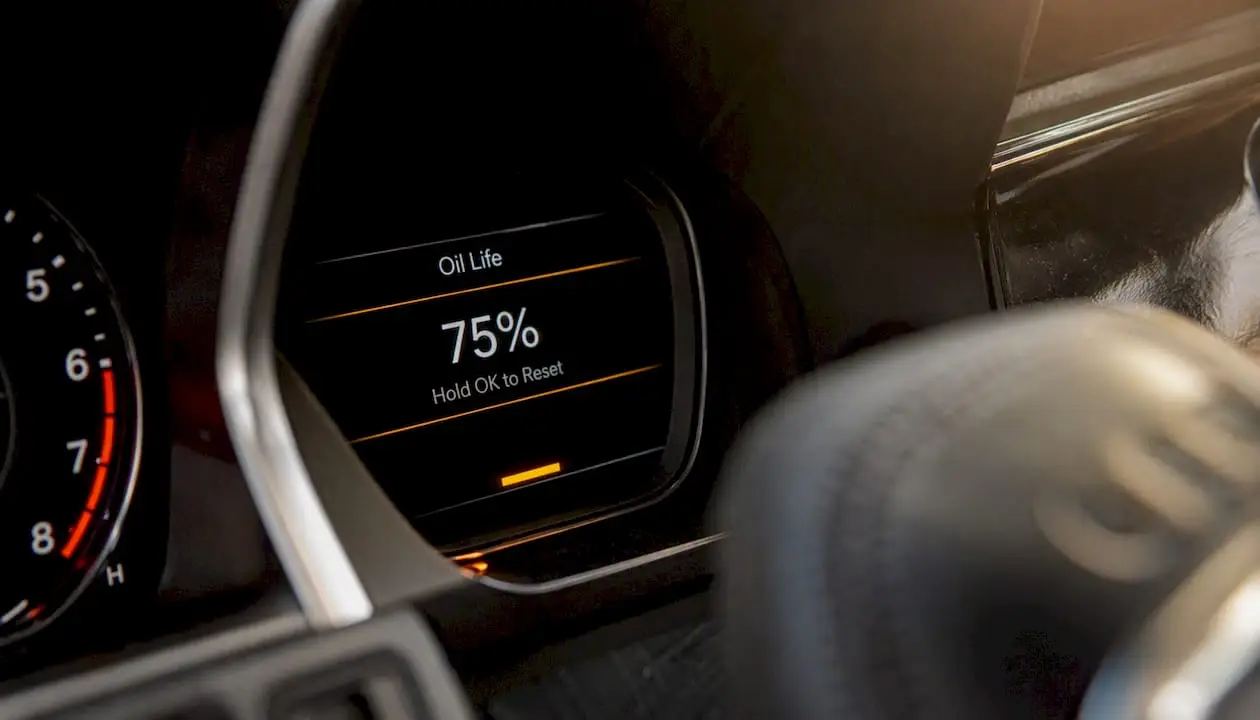 Think of it as a bank account that gets charged at different rates depending on how you drive. Highway miles at steady speed cost very little. A cold start on a freezing morning costs more. Sustained idling in stop-and-go traffic costs more still. Towing a trailer on a hot day drains the account fastest of all.
The penalty factors typically include:
Think of it as a bank account that gets charged at different rates depending on how you drive. Highway miles at steady speed cost very little. A cold start on a freezing morning costs more. Sustained idling in stop-and-go traffic costs more still. Towing a trailer on a hot day drains the account fastest of all.
The penalty factors typically include:
 Every service uses the oil viscosity your OEM specifies, so the algorithm’s next interval starts from a reliable baseline. Military personnel and first responders receive special discounts, and the shop’s CARFAX and RepairPal recognition means your service history is documented where it counts. Book your oil change at Kwik Kar Richardson today and leave knowing the monitor was reset correctly, not just the light.