Your registration renewal notice shows up, and somewhere in the process you see the words that make a lot of Texas drivers pause: inspection required. If you're in Richardson, that usually leads to the same questions. What exactly gets checked? What fails? What can you fix yourself before you come in?
The good news is that state inspection requirements aren't nearly as mysterious as they look from the outside. Most failures come from a short list of everyday issues like a burned-out bulb, worn wiper blades, a warning light, or tires that are past their useful life. Once you know what the technician is looking for, the process gets much easier to manage.
For local drivers, there's one more wrinkle. A lot of online articles either stay too generic or focus on another state's rules. That doesn't help much when your vehicle is registered in Dallas County and you need clear answers about local emissions testing, reinspection timing, and the 2026 OBD-II changes that affect many newer vehicles.
Understanding Your Vehicle's Annual Checkup
A state inspection is your car's yearly checkup for road use. It's not the same as a full diagnostic visit, and it's not the same as routine maintenance. The goal is narrower. The state wants to confirm that the vehicle meets the required standards to operate legally and safely.
In practical terms, there are two types of checks drivers usually hear about. The first is a safety inspection, which focuses on parts that directly affect control and visibility, such as brakes, tires, lights, steering, and related equipment. The second is an emissions inspection, which checks whether the vehicle's emissions systems are working as required.
That distinction matters because a vehicle can drive fine and still fail. A car may stop, steer, and run normally, but if the emissions system has a fault or the readiness monitors aren't set, it can still be rejected in an emissions county. The reverse is also true. A car may have no warning lights on the dash but still fail on a worn tire or bad lamp.
What drivers usually experience
Drivers don't think about inspection requirements until registration time. Then the clock feels short, and every little dashboard light suddenly seems more important. That's normal.
What works is simple preparation:
- Check the obvious items first: Lights, wipers, tire condition, and your horn are easy to test at home.
- Pay attention to warning lights: If the check engine light is on, don't assume it will clear itself.
- Bring the car in before your deadline gets tight: That gives you room to fix anything without rushing.
A smooth inspection usually starts days earlier, not in the parking lot.
Once you treat the inspection like a predictable checklist instead of a surprise test, it becomes much easier to pass confidently.
Why State Vehicle Inspections Are Required
State inspection requirements exist for two basic reasons. One is public safety. The other is air quality, especially in larger metro areas where traffic and population put more pressure on emissions programs.
The national picture shows how uneven these rules are. As of 2025, 37 U.S. states mandate some form of vehicle inspection, and 14 enforce periodic safety inspections, including Texas according to Motor's 2025 overview of vehicle inspection laws. Some states require safety checks every year, some require them every two years, some focus on emissions in urban areas, and some have no regular requirement for resident-owned vehicles.
That patchwork can make online advice confusing. A guide written for Florida, Pennsylvania, or Virginia may be technically accurate for that state and still be useless for a Richardson commuter. Inspection law is local by design.
Safety on the road
A state inspection is meant to catch problems before they become roadside failures. Brakes that don't respond correctly, tires with unsafe tread, or lights that don't work at night put more than the driver at risk. They affect everyone sharing the road.
That's part of why inspection programs continue to matter. They create a regular point where someone physically checks the vehicle instead of assuming everything is fine because it starts every morning.
Practical rule: If a part affects stopping, steering, traction, or visibility, expect it to matter during inspection.
Air quality in metro areas
Emissions programs serve a different purpose. They focus on whether the vehicle's emissions controls are functioning properly, especially in counties where air quality standards are a bigger concern. For drivers in the Dallas area, that's not abstract policy. It directly affects whether a vehicle can complete registration.
Here's the trade-off drivers run into. Emissions inspections can feel stricter than they used to be, especially on older high-mileage vehicles. But for counties that require them, they're part of the legal path to keeping the vehicle current.
If your registration lapses while you sort it out, the problem can expand beyond maintenance into traffic enforcement. If you're already dealing with a citation related to registration status, Ticket Shield's guide on how to defend an unregistered vehicle charge is a useful legal overview of what those cases can involve.
A Complete Guide to Inspection Items
Pull into the bay with a check engine light on, one brake light out, and front tires worn on the inside edge, and the result is usually predictable. Drivers do not need a mystery. They need a clear picture of what gets checked and what tends to cause trouble.
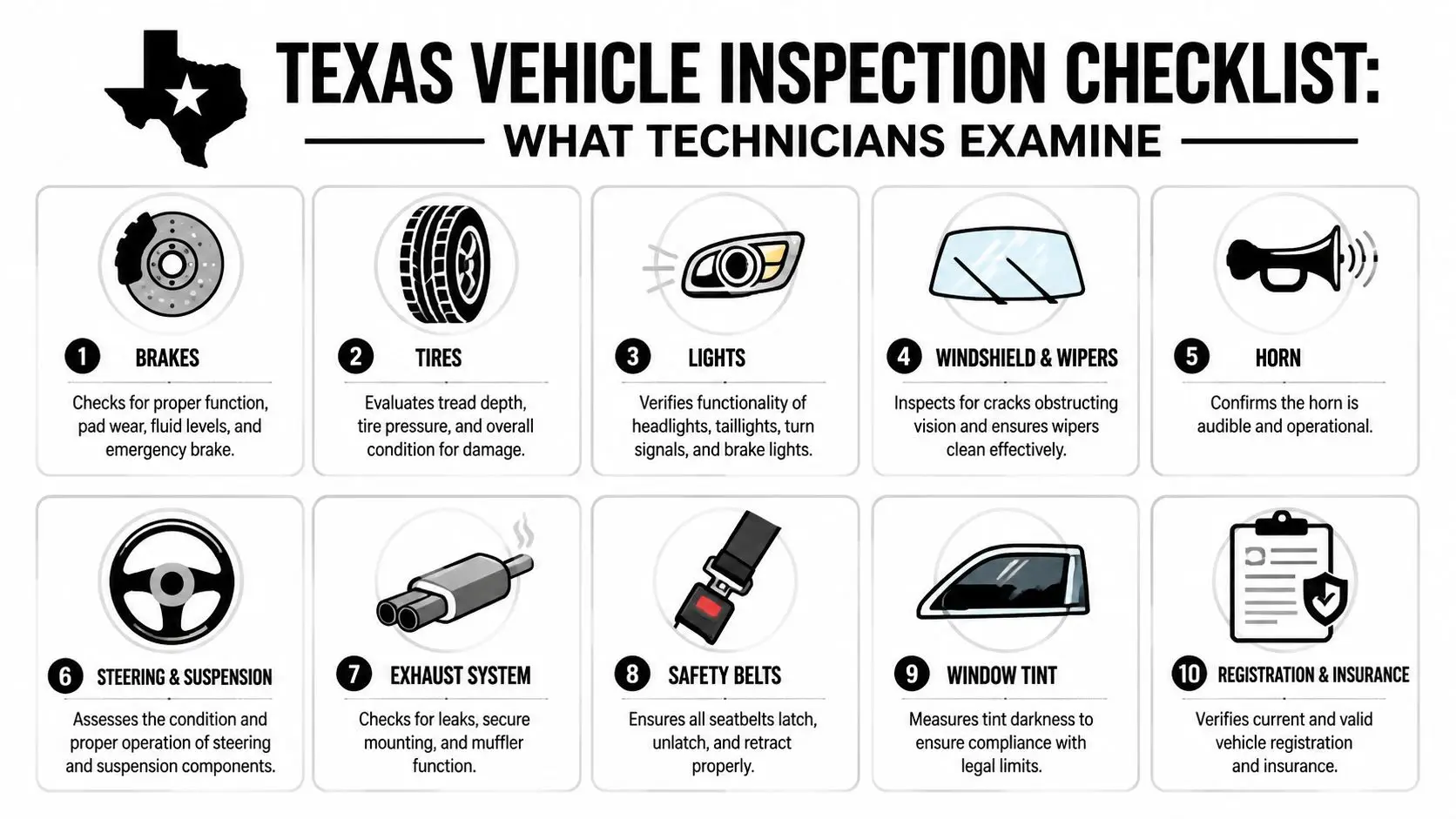
A good way to look at inspection items is by function. Can the vehicle stop safely, stay under control, let you see, and communicate your actions to everyone around you? That practical standard applies across the country, even though the exact checklist and emissions rules change by state. In Texas, and especially around DFW, the details matter.
Brakes, tires, and wheel contact
Brakes get attention first because drivers feel brake problems every day. A soft pedal, pulling during stops, grinding, or vibration does not always mean the same repair, but each symptom tells a technician where to look. Inspection failure points usually come from worn components, hydraulic issues, or anything that affects safe stopping.
Tires tell their own story.
Low tread is the obvious problem, but I also look at shoulder wear, cupping, cords, sidewall damage, and mismatched wear patterns. Those signs can point to alignment problems, weak suspension parts, or inflation issues that have been building for months. If you want a practical way to check your vehicle before coming in, our vehicle inspection checklist for Texas drivers covers the items worth catching in your driveway.
Wheels and suspension matter here too. A vehicle can have decent tires and still feel unsettled on the road because a steering or suspension part has too much play. That is the kind of issue many drivers describe as wandering, shaking, or feeling loose over bumps.
Lights, steering, and visibility
Lighting problems are common because bulbs fail without warning. One bad brake light or turn signal is enough to create a safety concern and, in many states, an inspection problem. Headlights, tail lights, signal lamps, and other required lighting need to work as intended.
Steering components have to respond correctly, without excessive looseness or binding. Suspension parts need to support stable handling. In the shop, driver comments help a lot here. If the car drifts, clunks over bumps, or needs constant correction on Central Expressway, say so before the inspection starts.
Visibility items are more basic, but they still matter:
- Windshield and glass: The driver needs a clear, legal view of the road.
- Wipers: They need to clear the glass well enough for normal rain conditions.
- Mirrors: Required mirrors must be present and usable.
- Horn: It must work on demand.
- Safety belts: They must latch and function properly.
Exhaust, emissions, and compliance items
Many national articles remain too general on this topic. Safety inspection items are only part of the picture. In emissions counties, the vehicle also has to show that its emissions system is working properly, and that is becoming more important as newer test procedures rely heavily on onboard data.
For many Richardson drivers, that means the OBD-II system matters as much as any visible part on the car. If the check engine light is on, monitors are not set, or someone recently cleared codes to turn the light off, the vehicle may not be ready for testing even if it drives fine. That trade-off catches people by surprise. The car feels normal, but the system still shows a fault or incomplete readiness.
A few other items can affect the outcome depending on the state and vehicle type:
- Exhaust system condition: Leaks, missing components, or unsafe routing can create a problem.
- Window tint: Tint must stay within legal limits where applicable.
- Registration and insurance verification: Drivers should bring current documents if required by the state process.
The simplest way to prepare is to treat inspection items like a real-world safety and compliance check, not a formality. If a part affects stopping, steering, visibility, signaling, or emissions readiness, it deserves attention before you pull into the station.
Texas Inspection Rules for Richardson Drivers
A lot of drivers in Richardson find out the local rules the hard way. The car runs fine, registration is due, they stop in for an inspection, and then an emissions monitor is not ready or a county-specific requirement catches them off guard.
What applies in Dallas County
That is the difference between a national overview and what happens in North Texas. Texas inspection rules are statewide, but Richardson drivers also have to account for Dallas County emissions requirements that do not apply in every part of Texas.
For many passenger vehicles here, the inspection is really two checks tied together. One is the state safety inspection. The other is the emissions portion required in counties covered by the Texas emissions program. If a vehicle has an emissions issue, a clean-looking car can still fail.
Texas also treats some vehicles differently based on age, type, and where they are registered. Newer vehicles, motorcycles, trailers, and certain other categories can fall under different rules or fee structures. Drivers who want the local process in plain English can review Texas state inspection details for Richardson motorists.
The reinspection window
If your vehicle fails, the clock matters.
Texas gives drivers a limited reinspection period at the same station after repairs are made. That rule is helpful if the problem is straightforward, like a bad bulb, worn wiper blades, or an emissions repair that can be finished quickly. The smart move is to fix the exact item on the report and return promptly, instead of starting over somewhere else.
I tell drivers this all the time at the shop. Save the failed inspection report, ask questions before you leave, and make sure the repair addresses the reason for the failure, not a guess.
The 2026 OBD-II change
Richardson drivers should pay close attention to the emissions side of the program, especially with upcoming OBD-II enforcement changes in emissions counties. For Dallas County vehicles that qualify for OBD-based testing, readiness status and check engine light history matter just as much as the way the vehicle feels on the road.
The practical trade-off is simple. Clearing a code, disconnecting the battery, or finishing a repair the night before inspection can turn one problem into two. The warning light may be off, but the system may still show incomplete readiness. That is a common DFW-area failure point, especially at the end of the month when drivers are out of time.
A few patterns come up often in Richardson:
| Common DFW issue | Why it causes trouble |
|---|---|
| Recent battery disconnect | OBD readiness monitors may not be ready |
| Check engine light was recently cleared | The system may still show incomplete data |
| High-mileage vehicle | Aging sensors and emissions parts fail more often |
| Last-minute inspection visit | There may be no time left for a proper drive cycle or repair |
Local drivers get better results when they stop in with a little margin. If your vehicle is registered in Dallas County and uses OBD-II emissions testing, do not wait until the deadline to find out whether the system is ready.
Your Pre-Inspection Checklist to Pass the First Time
You pull into the inspection lane on your lunch break, and a burned-out brake light sends you right back out. That is the kind of failure drivers in Richardson can usually avoid with five minutes at home.
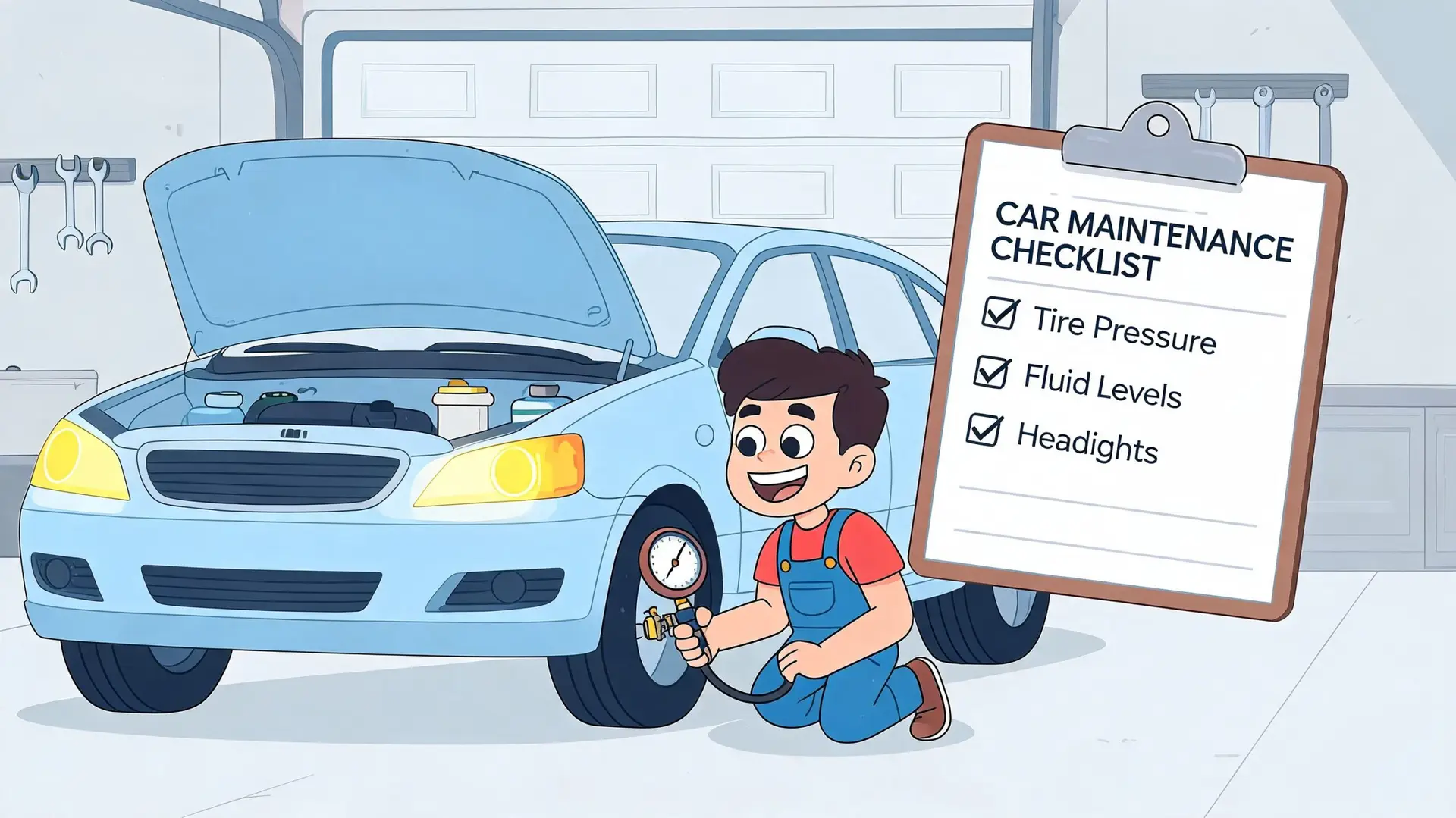
A pre-check does not replace an inspection. It does help you catch the common, inexpensive problems that waste a trip. I tell drivers to focus on the items you can verify in the driveway without tools, then leave enough time to fix anything you find.
The quick checks worth doing yourself
Start with the basics that fail often:
- Walk around the car with the lights on: Check headlights, brake lights, turn signals, and marker lights. A wall, garage door, or a second person makes this easier.
- Look at your wiper blades: If they chatter, smear, or leave wide streaks, replace them before you come in.
- Test the horn: A weak horn still counts as a problem.
- Check visible tire condition: Watch for low tread, sidewall damage, or uneven wear that suggests another issue.
- Make sure seat belts latch and retract: This gets missed more often than drivers expect.
- Check the windshield in the driver's view: Chips and cracks are not all equal. The location matters.
Pay attention to the dash, too. In Dallas County, an active check engine light can stop a passing result on emissions-related testing, and a recently cleared code can leave the system unready even if the car seems to drive fine. That trade-off catches a lot of last-minute inspections in the DFW area.
What helps and what wastes a trip
| Prep that helps | Prep that usually backfires |
|---|---|
| Replacing a bad bulb before the visit | Hoping an intermittent light works long enough to pass |
| Swapping worn wiper blades | Showing up with split or hardened rubber |
| Checking tires in daylight | Finding exposed wear after you are already in line |
| Diagnosing a warning light properly | Disconnecting the battery and expecting the monitor status to reset in your favor |
Bring the vehicle in after normal driving if you have done recent battery work or engine repairs. That gives the system a better chance to complete its checks before inspection day.
Passenger-car inspections are not the same as federal commercial truck rules, but the lesson is similar. The same neglected areas keep causing failures: lights, tires, wipers, warning lights, and safety items drivers stop noticing because the car still feels usable.
If you want a fuller at-home prep guide, our vehicle inspection checklist for drivers gives you a practical list to run through before you head to the shop.
How Kwik Kar Makes Your Inspection Simple
A certified inspection station does more than print a pass or fail result. It gives you a reliable process, trained eyes on the vehicle, and a clear explanation if something needs attention.
The biggest advantage of choosing a full-service shop instead of an inspection-only stop is convenience. If the car fails for something simple like a bulb, wiper blades, battery issue, or brake concern, you don't have to leave, find another repair shop, and restart the process elsewhere. The issue can be diagnosed and corrected in the same place.
That matters because inspection deadlines rarely arrive at a convenient time. Most drivers are fitting this into a workday, a school pickup schedule, or a packed week. When repairs and reinspection can happen without a second round of logistics, the whole process gets easier.
Why trained inspection matters
Shops that perform this work correctly don't guess. They inspect systematically, verify what the rules require, and explain the result in plain language. That's especially important for emissions-related failures, where a driver may need to know whether the issue is an active fault, a readiness problem, or tampering concern.
There's also a broader reason these programs matter. States with mandatory inspection programs experience 5-9% reductions in overall crash rates, according to GoodCar's review of inspection programs. That doesn't mean every failure would have caused a crash, but it does reinforce the value of having trained professionals look over the systems that matter most.
A good inspection visit should leave you with clarity, not confusion.
Frequently Asked Questions About State Inspections
What should I bring to my inspection appointment
Show up with the vehicle, proof of insurance, and the registration paperwork you normally keep in the glove box. If the car recently had emissions repairs, a battery replacement, or diagnostic work for a check engine light, mention that up front. That helps the inspector make sense of readiness monitor issues and saves time.
If you want a quick cost breakdown before you come in, our guide on how much Texas state inspections cost explains the current Texas fees and what drivers in this area usually pay.
I just moved to Texas and my vehicle is new
This trips up a lot of new Texas residents. A newer vehicle may not be on the same inspection timeline as an older one, and registration timing can change what you need on your first visit.
The smart move is to check your registration paperwork early instead of waiting until the month it expires. In the shop, I see more avoidable problems from last-minute inspections than from actual mechanical surprises.
What if my vehicle fails
Failing an inspection does not always mean a major repair. In Richardson, common failure points are worn wiper blades, bad bulbs, tire issues, a check engine light, or OBD-II readiness monitors that have not reset after recent battery work or repairs.
Texas does allow a short reinspection window at the same station after a failed inspection, but drivers should verify the current rule with the Texas Department of Public Safety because deadlines and conditions matter. Waiting too long can turn a simple recheck into a full repeat visit.
Ask for the exact reason it failed. Then fix the root cause, not just the symptom. For example, clearing a check engine light without repairing the fault usually leads right back to another failed test.
Do EVs and hybrids need inspection in Texas
Yes. Electric vehicles and hybrids still have to meet the applicable Texas inspection requirements for safety items such as lights, tires, windshield wipers, horn, mirrors, and glass.
The emissions side is where the rules can differ by vehicle type and county. That matters in North Texas because Richardson drivers are dealing with local requirements, not generic advice written for another state. It also matters more as 2026 OBD-II changes get closer and more drivers ask how readiness and onboard data affect inspection results.
How long does the inspection take
A clean, well-maintained vehicle usually goes through fairly quickly. A vehicle with warning lights on, borderline tires, or questions about emissions readiness takes longer because the inspector has to verify what the system is showing.
The fastest way to get in and out is simple. Check every exterior light before you come in, make sure the wipers clear the glass, and do not ignore a warning light the week your registration is due.
If you are not sure the car is ready, getting it looked at before inspection day is usually cheaper than losing time on a failed visit and coming back again.
If your registration deadline is close or you want a second opinion before inspection day, Kwik Kar Oil Change and Auto Care can help. Our ASE-certified team handles inspections, diagnostics, brakes, tires, bulbs, wipers, and the small fixes that often keep Richardson drivers from passing on the first trip.