TPMS Sensor Battery Life: How Long It Lasts and What to Do
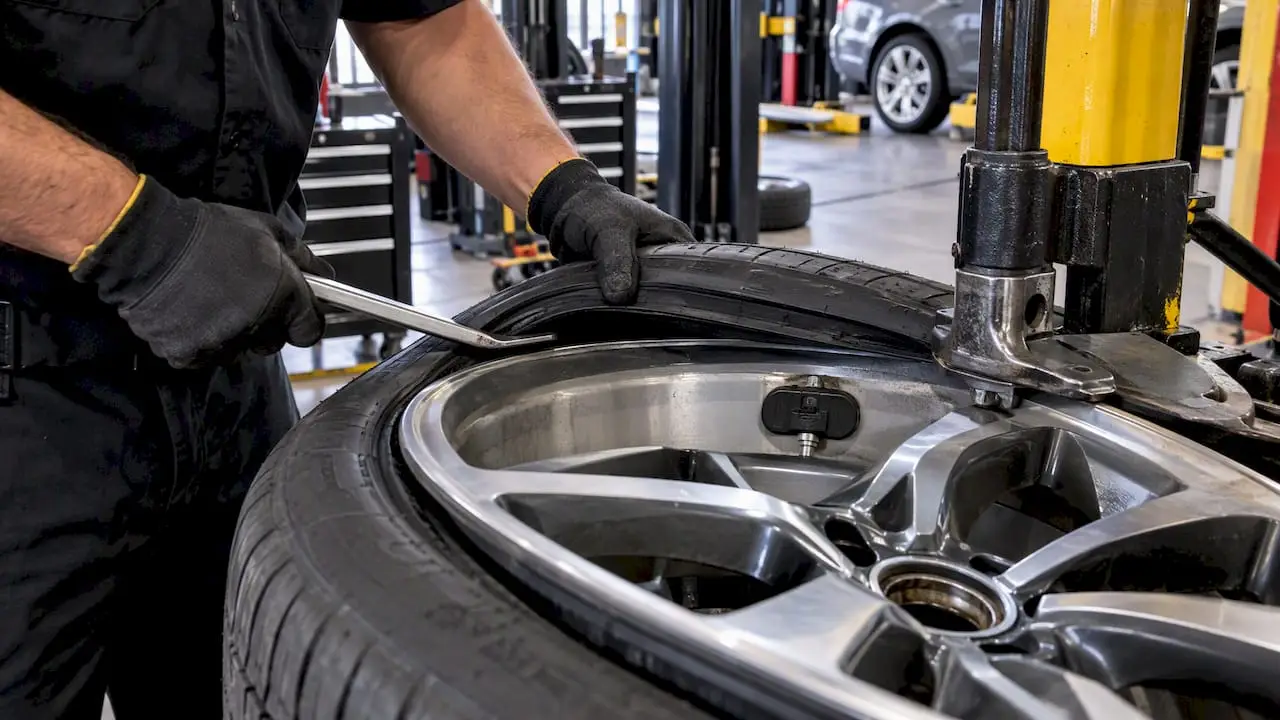
Most TPMS sensor batteries last about 5 to 12 years, and most vehicles land somewhere around 7 to 10. The battery is sealed inside the sensor, so when it dies you replace the whole sensor, not just the battery. In Richardson, where short city commutes and summer heat both work against small batteries, a flashing tire pressure light on an older vehicle is often a sign that a sensor is simply at the end of its life.
This guide explains what drives that lifespan, how to tell a dying sensor from a low tire, what replacement involves, and what it typically costs. We also cover where Texas inspection rules fit in, because the question comes up often at our counter.
TL;DR
- Direct TPMS sensor batteries commonly last 5 to 12 years, with 7 to 10 years the most commonly cited average.
- The battery is sealed in the sensor with potting compound. It can’t be swapped on its own, so the sensor is replaced as a unit.
- A TPMS light that blinks for about a minute and then stays on usually points to a system fault, such as a dead sensor. A steady light with no blinking usually means low pressure.
- If one sensor fails from age, the others are likely close behind. Ask about replacing them together when the tires come off anyway.
- Texas no longer requires safety inspections for most passenger vehicles, so a TPMS warning won’t fail an inspection. It is still a safety signal worth acting on.
Table of Contents
- How long do TPMS sensor batteries last?
- Why you can’t just replace the battery
- Signs a TPMS sensor battery is failing
- How a technician checks sensor health
- Replace one sensor or all four?
- What TPMS sensor replacement costs
- Can you keep driving with a bad sensor?
- Texas inspections and your TPMS light
- Our perspective at Kwik Kar
- Getting TPMS and tire work done in Richardson
- Frequently asked questions
- Schedule a TPMS and tire check
- Sources
How long do TPMS sensor batteries last?
The honest answer is a range. Industry sources have long quoted five to 12 years and up to about 100,000 miles for sensor batteries, and consumer-facing guides such as AutoZone’s TPMS fault page put most at five to ten years. Real-world reports vary. Some owners still run original sensors past ten years, and others lose one at six.
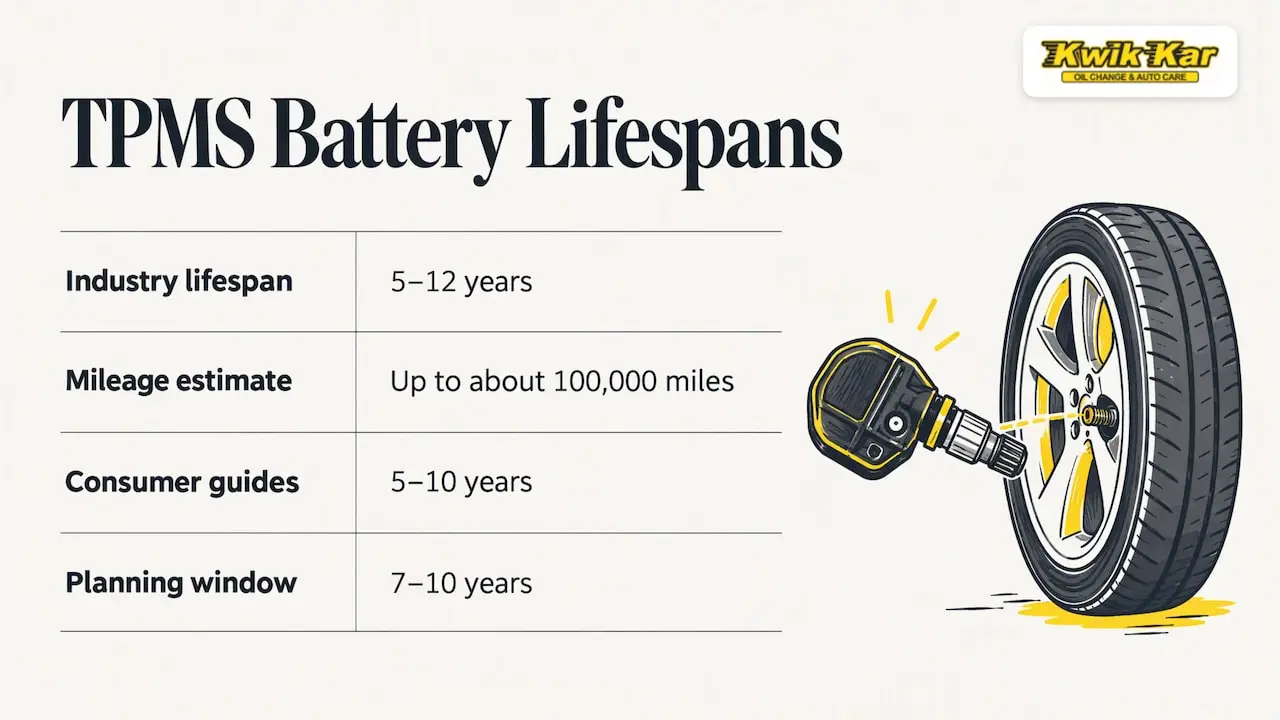
For planning, think of 7 to 10 years as the normal window and treat anything beyond that as a bonus. If your vehicle is that old, a sensor failure is not a surprise or a defect. It is wear, like a worn brake pad.
What actually shortens battery life
A direct TPMS sensor is a small radio transmitter with a tiny battery. Anything that makes it transmit more, or stresses the cell, takes life away.
- Driving pattern. Most sensors wake up and transmit when an internal accelerometer detects movement. A vehicle that spends more time moving sends more signals. Stop-and-go driving, where sensors keep waking and reporting, can use the battery faster than steady highway miles.
- Heat. Sustained high temperatures are hard on small batteries. North Texas summers, with pavement and brake heat feeding into the wheel, are not gentle.
- Sensor quality. Higher-quality sensors tend to carry longer-lasting batteries, and design differs between manufacturers.
- Pressure sampling rate. Some systems check pressure more often than others, which is built in and outside your control.
The practical takeaway: age matters more than mileage for many drivers. A low-mileage vehicle that sat for years can still have sensors that are fading.
Why you can’t just replace the battery
People reasonably ask whether a battery swap is possible. In practice, no. TPMS sensors are encased in molded plastic and sealed with potting compound to protect the electronics from moisture, vibration and road debris. That seal is what makes them survive inside a spinning tire, and it also makes the battery physically inaccessible.
Parts retailers say the same: the batteries aren’t designed to be replaced. Trying to scrape or melt away the compound tends to damage the circuitry and risks a leaking cell. Manufacturers also describe the sensor in two parts, the sensor body and the valve stem. Some components, such as valve stem hardware, are serviceable. The battery inside the body is not.
So the real question is never “can the battery be replaced.” It is “when should the sensor be replaced, and should the others go with it.”
Signs a TPMS sensor battery is failing
A dying sensor rarely announces itself with a clear message. These are the patterns we see most.
- The TPMS light flashes, then stays on. On many vehicles, a light that blinks for roughly a minute at startup and then stays lit indicates a system fault rather than low air. Your owner’s manual confirms the exact behavior for your model.
- One wheel position shows no reading. Some dashboards display each tire’s pressure. A dash that shows dashes or no value for one corner points to a sensor that has stopped transmitting.
- The light returns after you inflate the tires. If all four tires are at the pressure on your door-jamb placard and the light still comes on, the cause is probably not air.
- The light appears on cold mornings, then goes out. Weak batteries can struggle in the cold. It can also be genuine pressure drop, so check the tires first. Our guide on how Texas weather affects tire pressure explains why temperature swings trigger the light.
- The sensor is simply old. If your vehicle is ten years old and the light is on, age alone makes a sensor a prime suspect.
USA Today’s overview of TPMS faults lists a dead sensor battery among the most common reasons for a warning light, alongside damaged sensors and other faults.
First, rule out the easy cause
Before assuming a bad sensor, spend five minutes on this checklist.
- Check all four tires, and the spare if your vehicle monitors it, with a reliable gauge while the tires are cold.
- Inflate to the pressure on the driver’s door-jamb placard, not the number molded on the tire sidewall.
- Drive a few miles and see whether the light clears. Some systems need a short drive to update.
- If it stays on or blinks, have the system scanned.
Pro tip: If you need a refresher, our post on correct tire pressure walks through reading the placard and checking pressure properly.
How a technician checks sensor health
A TPMS scan tool can read each sensor’s ID, pressure, temperature and, on many sensors, a battery status. This is where it gets subtle. A status of low, or a reading around 10 to 15 percent, often means only six months to a year of remaining life, and readings can be ambiguous between tool brands and sensor types.
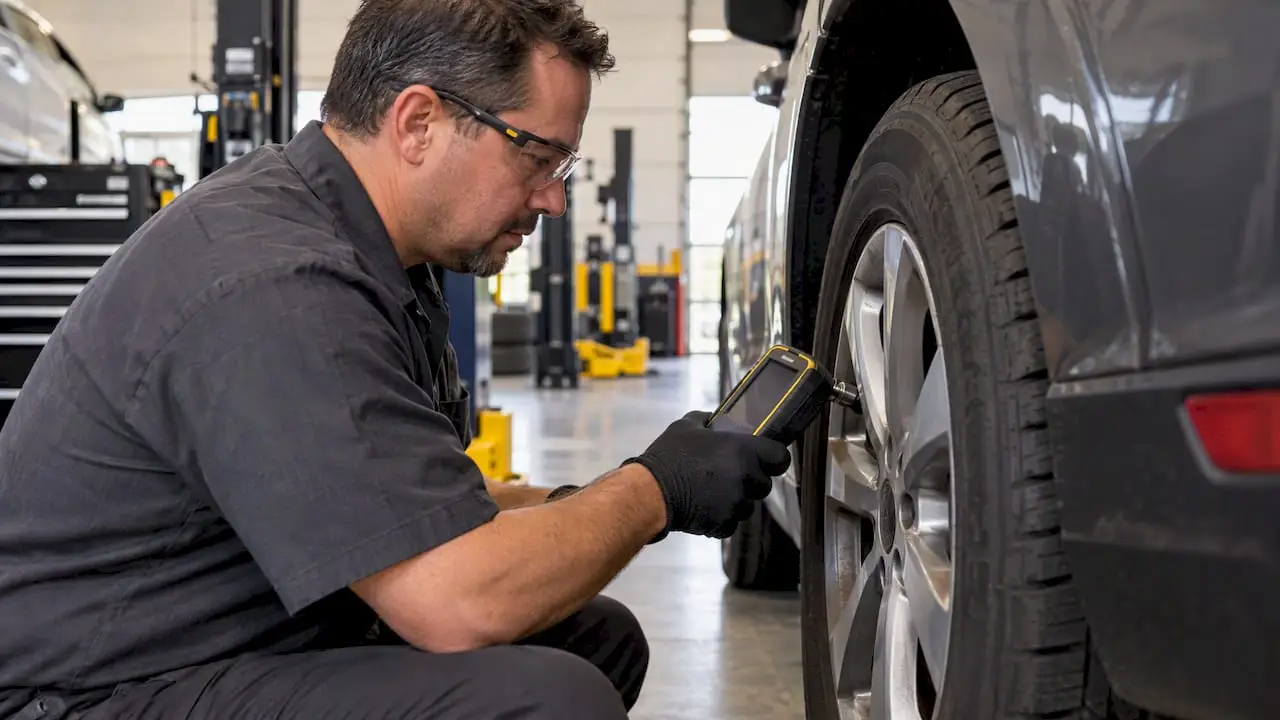
That is why a proper check matters. A scan can show which sensor is not reporting, whether the problem is a dead sensor or a communication issue, and whether a sensor needs to be paired to the vehicle after replacement. Guessing based on the light alone can lead to replacing parts you did not need.
Replace one sensor or all four?
This is the decision most owners wrestle with, and neither answer is right for every vehicle.
| Situation | Typically makes sense |
|---|---|
| Sensor damaged in a tire change or by a curb or pothole, rest of vehicle is newer | Replace the damaged sensor |
| One sensor dead from age, vehicle 7 or more years old | Discuss replacing all four |
| Tires are being replaced soon anyway | Consider doing sensors at the same time, since the tire is already off the wheel |
| Sensor shows low battery status on a scan | Plan on replacement within months, ideally at a tire change |
The reasoning is simple. Professionals generally suggest replacing sensors together, much like replacing a pair of headlights, because sensors installed at the same time wear out on a similar schedule. Each separate visit means dismounting a tire again, and that labor is a large part of the bill.
This is a judgment call, not a rule. If your vehicle is three years old and a sensor was damaged, replacing all four makes no sense. If it is eleven years old and the first sensor has just died, a second failure within a year is a real possibility.
What TPMS sensor replacement costs
Prices vary by vehicle, sensor type and shop, so we won’t quote one number for every car. Published national figures give a sense of scale. One parts retailer’s guide reports typical totals of roughly $250 to $340 per wheel at dealerships and full-service shops, with the sensor itself ranging from about $50 to $300. Lower totals are possible with quality aftermarket parts, and some vehicles cost more.
What moves the price:
- OEM versus aftermarket sensors. Some vehicles accept programmable sensors that cover many models. Others need a specific part.
- Programming or relearn requirements. Some vehicles need a relearn procedure after the new sensor is installed so the vehicle recognizes it.
- Tire condition. If a tire is old or worn, replacing it at the same time avoids paying mounting labor twice.
- Valve stem hardware. Service kits for seals, nuts and cores are routine parts of a tire dismount and are inexpensive compared with the sensor.
We don’t publish fixed prices for TPMS work because the right sensor and procedure depend on your vehicle. Call us with your year, make and model and we can talk through what it will involve before you commit to anything.
Can you keep driving with a bad sensor?
You can, but the system is no longer watching your tires. Underinflation is hard to spot by eye, and a slow leak can go unnoticed on a warm day until a tire is badly low. Low pressure affects handling, braking distance, tire wear and fuel economy, and underinflated tires run hotter.
That doesn’t mean a blinking light is an emergency. It means you should do your own pressure checks with a gauge more often, perhaps every couple of weeks, until the system is repaired. If the light is steady, treat it as low pressure first and check the tires right away.
If the tires look uneven or you are seeing unusual wear, our guides on when to get new tires and seven tire warning signs can help you judge what you are looking at.
Texas inspections and your TPMS light
This is a frequent point of confusion. Since January 1, 2025, House Bill 3297 ended the safety inspection program for non-commercial vehicles. Commercial vehicles are still required to pass a safety inspection. Emissions inspections remain required in certain counties, and vehicles in those counties must pass before registration. Dallas and Collin counties, where Richardson sits, are among them.
A TPMS warning is not part of the emissions test, so a dead sensor would not be the reason a passenger vehicle fails it. It remains a useful safety system, and the lack of an inspection simply means nobody else will remind you to fix it. The State Inspection page on our site covers Texas emissions and commercial inspections, and our guide to Texas safety versus emissions requirements explains who needs what.
Our perspective at Kwik Kar
We see this on vehicles from Richardson, Plano, Garland, Addison and North Dallas, usually when a driver has come in for something else. The TPMS light has been on for months and has become part of the dashboard scenery. Then a tire needs replacing and the question comes up.
Our view is practical. A TPMS sensor battery is a wear item with a long fuse. When it runs out, the sensor goes with it, and the cheapest time to deal with it is when a tire is already being dismounted. We would rather scan the system, tell you which sensors are reporting and let you decide, than push you toward replacing all four on the spot. Sometimes one damaged sensor is the whole story. Sometimes an older vehicle is telling you the set is nearly done.
What we won’t do is suggest that a blinking light means your car is unsafe to drive to the shop. It means the monitoring is down, and that deserves a prompt but calm appointment. Our ASE-certified technicians explain what they find, and our digital inspection reports give you something concrete to look at before approving work.
— Kwik Kar
Getting TPMS and tire work done in Richardson
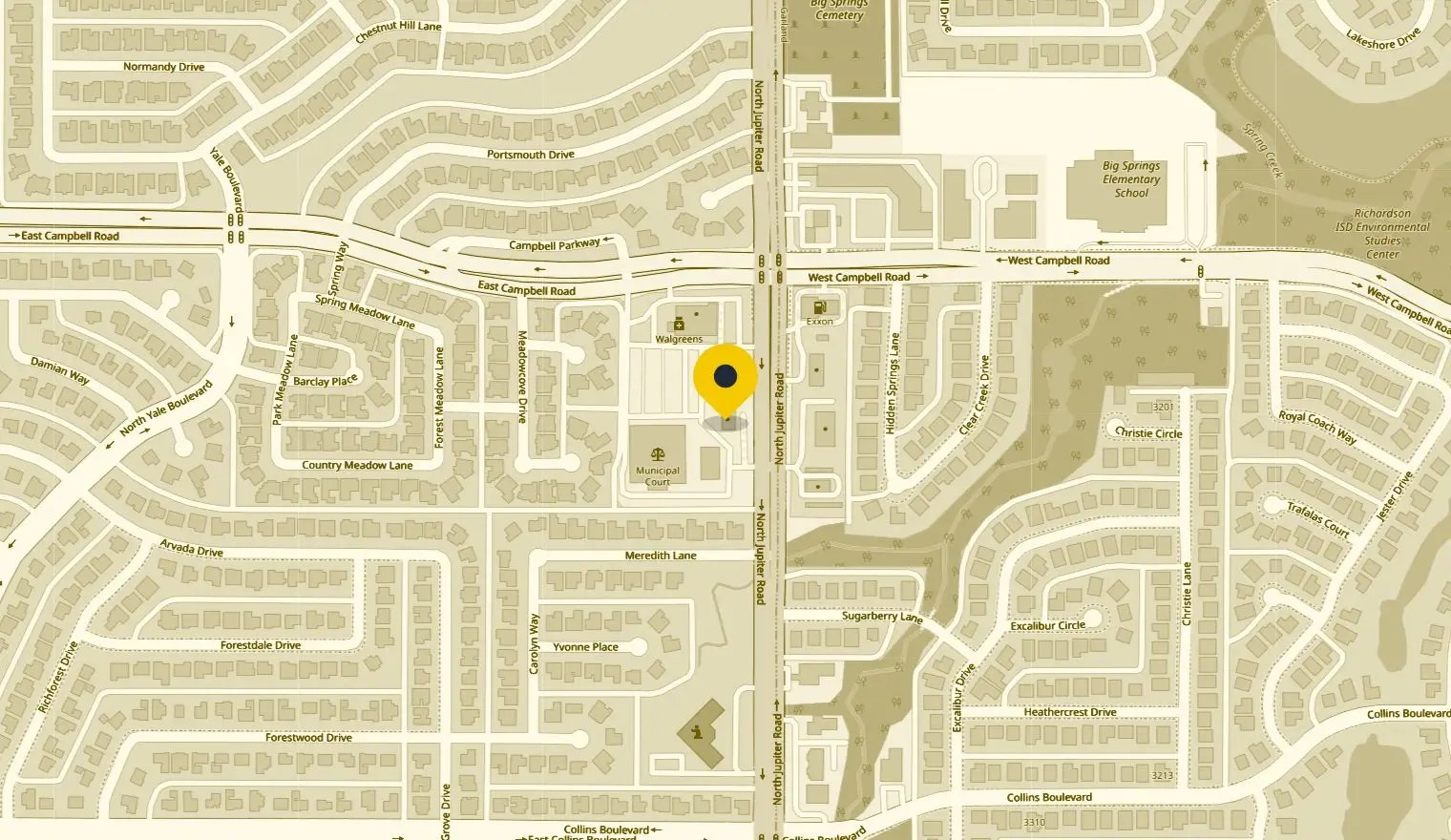
If your light is on and the tires check out, bring the vehicle to Kwik Kar Oil Change & Auto Care in Richardson. Our tire sales and service team can inspect the tires, diagnose the warning and talk through your options. If you are already shopping for tires, current tire coupons are posted on our site, so check the terms there.
Where repairs qualify, our 24-month/24,000-mile limited warranty may apply. It covers qualifying repairs only, not every service or inspection, so ask us what applies to your specific work. We also offer discounts for military members and first responders. Call (972) 644-1851 to ask about details.
Frequently asked questions
How long do TPMS sensors last?
Most last 5 to 12 years, and 7 to 10 years is the common average. Driving habits, heat and sensor quality all play a part. Age is usually a better predictor than mileage.
Can a TPMS sensor battery be replaced separately?
Not in practice. The battery is sealed inside the sensor with potting compound, and attempting to dig it out risks damaging the electronics. The sensor is replaced as a complete unit.
How much does it cost to replace a TPMS sensor?
It depends on the vehicle, the sensor type and the labor involved. National figures run from about $120 to over $300 per wheel depending on parts and shop. Call us with your vehicle details to discuss what yours needs.
Should I replace all four sensors at once?
Often worth considering on an older vehicle, because sensors installed together tend to wear out together. On a newer vehicle with one damaged sensor, replacing only that one is reasonable. A scan helps you decide.
Will a bad TPMS sensor fail my Texas inspection?
Not for most passenger vehicles. Texas ended non-commercial safety inspections in 2025, and TPMS is not part of the emissions test. Commercial safety inspections continue.
Schedule a TPMS and tire check
If your tire pressure light has been on or flashing, we are happy to take a look. Call Kwik Kar Richardson at (972) 644-1851 or schedule an appointment online at a time that suits you.
Sources
- TPMS Sensor Batteries, Life Expectancy, and Replacement, TPMSDirect
- Changing TPMS Sensor Batteries, Tire Review
- Reading what you can’t see: TPMS sensor signals, Tire Review
- Is a TPMS Sensor Battery Replacement Possible? CarParts.com
- TPMS Sensor Replacement Cost, CarParts.com
- Serviceable vs. Replaceable TPMS Sensor Components, Schrader
- Understanding Tire Pressure Sensor Fault, AutoZone
- Car tire pressure sensor not working? USA Today
- Vehicle Title and Registration Information for New Texans, TxDMV
- Texas inspection reminder calendar, TxDMV