Stop Musty Car AC Smell: 6 DIY Checks Drivers Can Do Before a Shop Visit
That musty smell hitting you when you turn on the AC almost always comes from mold or bacteria growing on the evaporator core, a dirty cabin air filter, or a clogged condensate drain. If the odor is strongest right at startup, the evaporator is the likely culprit. Start by checking the cabin filter and looking for a steady drip under the passenger-side firewall.
TL;DR:
- A musty smell at startup often indicates mold growth on the evaporator or a clogged condensate drain, especially if the odor fades quickly.
- Replacing a damp or dirty cabin filter and clearing the drain are quick DIY fixes, but persistent odors or water inside the cabin require professional diagnosis.
- Higher outdoor humidity accelerates microbial growth, making regular maintenance, including filter changes and drain checks, essential in humid climates.
- Proper post-drive habits, like running the blower with the AC off for a few minutes, can help prevent mold buildup and keep odors from returning.
- Breathing in mold or bacteria from a contaminated AC system may worsen allergies or respiratory issues, so ongoing odors should be addressed promptly with expert help.
Table of Contents
- Why Does My AC Smell Musty? Quick Checks and DIY Fixes
- When Should You Call a Professional for a Musty AC Smell?
- How to Stop AC Mildew Smell From Coming Back
- Mold vs. Mildew vs. Bacteria: What’s Actually Growing in Your AC?
- Can Breathing AC Mold or Bacteria Actually Hurt You?
- What Actually Causes That Musty Smell in Your Car AC?
- How Humidity Affects That Musty Car Smell
- How Kwik Kar Richardson Diagnoses and Fixes Persistent Musty AC Odors
- What Our Technicians See Most Often
- Sources
- FAQ
Why Does My AC Smell Musty? Quick Checks and DIY Fixes
Before you assume the worst, figure out when the smell shows up. That timing tells you almost everything.
If the odor hits hard the second you start the car and fades within a minute or two, you’re smelling trapped moisture and microbial growth on the evaporator that built up overnight. If it lingers the entire drive, you’re more likely dealing with a saturated cabin filter or a deeper contamination problem that a quick blast of fresh air won’t clear.
Here’s how to work through it yourself:
- Run the AC for five minutes and note the pattern. Strong at first, fading fast, points to evaporator moisture. Constant and unchanging points to the filter or ductwork.
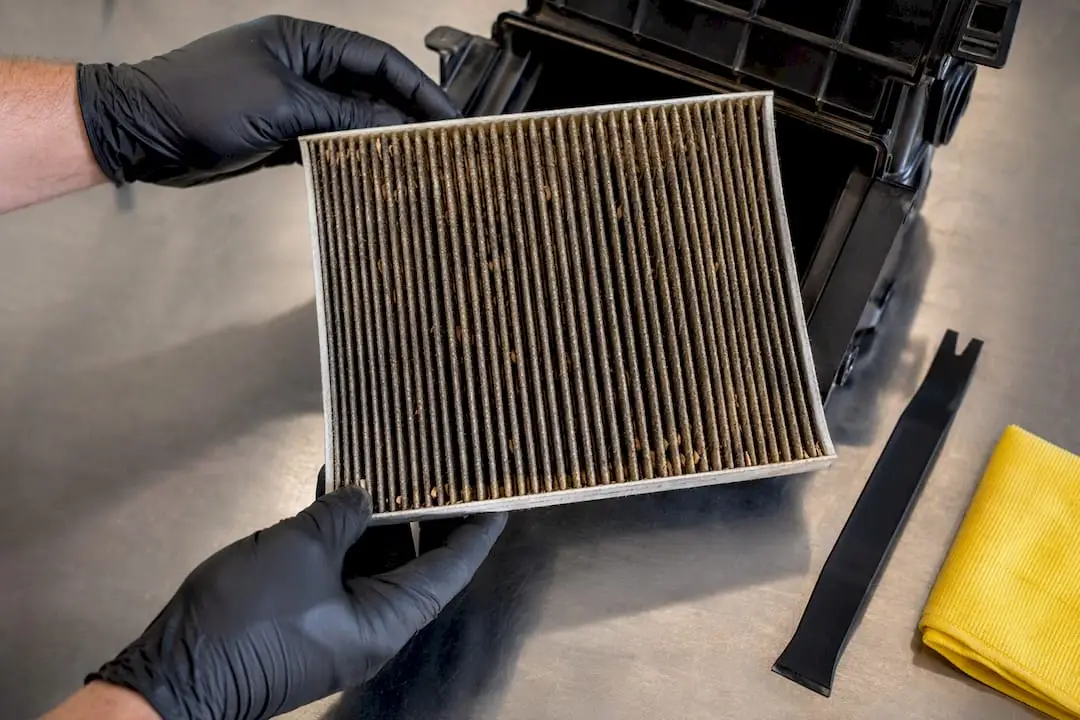
- Find and inspect the cabin air filter. It’s usually behind the glovebox or under the dash on the passenger side. Pull it out. If it’s gray, damp, or smells like a wet basement, that’s your answer, at least in part.
- Replace the filter if it’s dirty. A clogged or damp cabin filter both causes odors and chokes airflow, and swapping it is the fastest fix available to you.
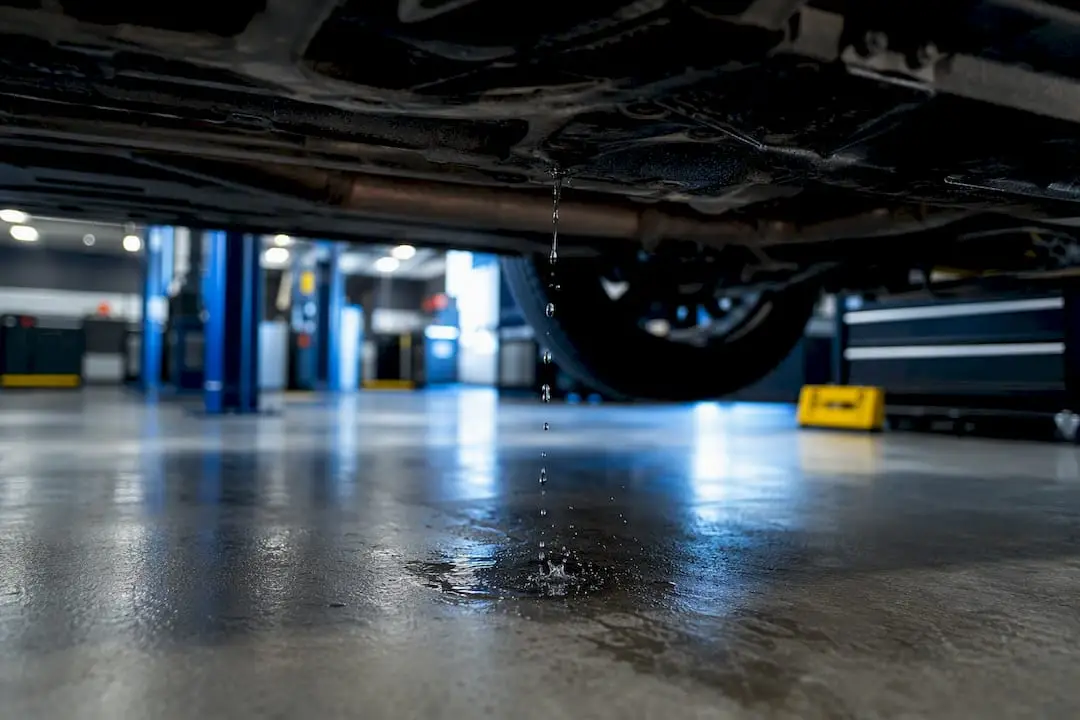
- Check the condensate drain. Run the AC for ten minutes, then look under the car near the passenger-side firewall for a small puddle or steady drip. No drip usually means the drain line is clogged and needs clearing.
- Clear a clogged drain carefully. A thin zip tie fed gently into the drain tube from underneath, or a wet/dry vacuum applied at the drain opening, can dislodge debris without damaging the line.
- Treat the evaporator with a foaming cleaner. Automotive-grade foaming cleaners sprayed into the intake plenum, not the vents, work far better than any household spray.
A few things matter here beyond the steps:
- Pull the cabin filter out before using a foaming cleaner. A soaked filter blocks the cleaner from reaching the evaporator fins.
- Never spray household disinfectants or air fresheners near the blower motor or its wiring. They can be ineffective at best and a fire or short-circuit risk at worst.
- If the carpet or headliner is wet, or the smell survives a full filter change and drain clearing, you’re past the DIY stage. Deep evaporator contamination needs professional access.
If you’re not sure where to start, our guide on how to fix AC in a car walks through the same diagnostic order with more visuals, and our cabin air filter replacement guide covers filter locations by vehicle type.
Pro Tip: Before you shut the car off after any drive, switch off the AC compressor but leave the blower fan running for two to three minutes. That short burst of airflow dries out the evaporator and starves the mold that causes the smell in the first place.
When Should You Call a Professional for a Musty AC Smell?
DIY fixes handle a lot of cases, but not all of them. Watch for these red flags:
- The musty smell returns within days of a filter swap or foam treatment.
- You notice water pooling on the cabin floor or a wet carpet on the passenger side.
- Cooling performance has dropped along with the odor.
- You smell something sweet or like coolant, which points to a leak rather than mold.
- The smell comes with electrical or burning notes, which is never a DIY situation.
When you bring the car in, a shop does more than spray a can of cleaner and call it done. Professional technicians rely on specialized tools such as UV dye and electronic leak detectors to find contamination and moisture sources that hide behind the dash, well past what a driver can see or reach. That level of access is the real value of a shop visit: certainty, not guesswork.
A typical inspection covers the evaporator box, blower assembly, and drain path, and may include a targeted evaporator foam treatment if biofilm has built up on the fins. For interiors that have been genuinely saturated with odor, whether from a spill, flooding, or long-term neglect, ozone treatment is sometimes used, but only in unoccupied vehicles and only as a last resort given the health risks ozone poses if inhaled directly.
A good shop backs up its findings with photos and a written diagnostic report before starting work. That documentation matters for two reasons: it shows you exactly what was contaminated, and it protects any warranty coverage tied to the repair.
How to Stop AC Mildew Smell From Coming Back
Fixing the smell once is easy compared to keeping it from returning. A few habits do most of the work.
Run the blower fan alone for two to three minutes before you shut the car off, every time. This single habit reduces evaporator moisture more reliably than any product you can buy, and it costs nothing.
- Use fresh-air mode instead of constant recirculation when humidity outside isn’t extreme. Recirculation traps moisture inside the cabin, which is exactly what mold needs.
- Run the AC occasionally in winter, even for a few minutes. It circulates refrigerant oil through the seals and keeps the system from drying out.
- Replace the cabin air filter regularly under normal conditions, and more often if you drive through dusty roads, construction zones, or heavy pollen seasons.
- Keep the cowl intake, the vent grille at the base of the windshield, clear of leaves and debris. A clogged cowl traps moisture right where outside air enters your HVAC system.
- Check sunroof drain tubes and floor mats for hidden dampness. A wet mat under the driver’s seat can smell exactly like a moldy AC system.
Fleet vehicles and cars in humid climates need this on a schedule, not an as-needed basis. If you manage several vehicles, build cabin filter checks and drain inspections into routine service intervals rather than waiting for a complaint.
Pro Tip: If you live somewhere hot and humid, a filter that’s rated for 15,000 miles in Colorado might need attention at 8,000 to 10,000 miles here. Humidity accelerates everything.
Mold vs. Mildew vs. Bacteria: What’s Actually Growing in Your AC?
The words “mold” and “mildew” get used interchangeably, but they’re not identical, and the distinction matters more than you’d think for how stubborn the smell is.
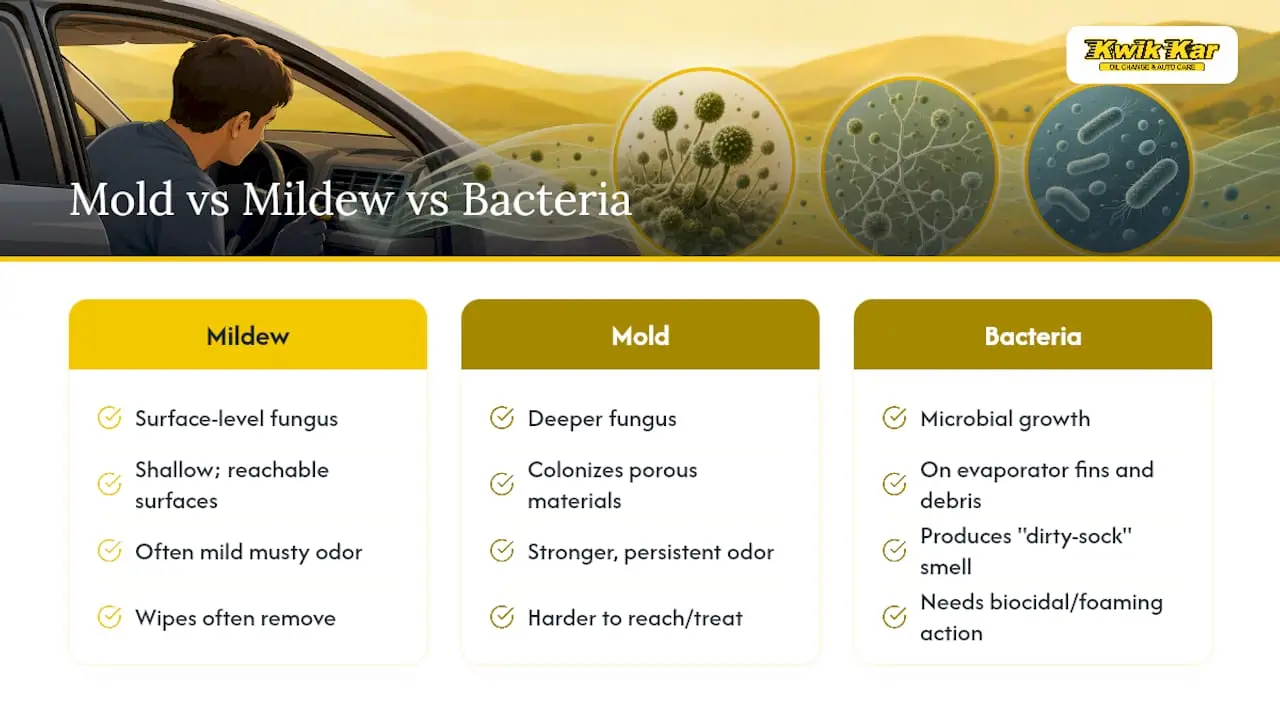
Mildew is a surface-level fungus, typically flat and easy to wipe away once you can reach it. It tends to show up on the cabin filter or the plastic housing near the vents. Mold, by contrast, grows deeper and can colonize porous surfaces like foam insulation inside the HVAC box, which is much harder to reach and treat.
Bacterial growth is the third piece, and it’s often the actual source of that “dirty sock” smell people associate with AC systems. Bacteria thrive in the same damp conditions as mold and mildew but produce their own distinct compounds as they break down organic material trapped in the evaporator fins, road grime, pollen, skin cells, and moisture combined.
In practice, most musty car AC odors involve some mix of all three. That’s part of why a single wipe-down or air freshener rarely solves the problem for good. A foaming evaporator treatment works because it’s formulated to disrupt all three types of growth at once, not just mask the smell mildew or bacteria leave behind.
Can Breathing AC Mold or Bacteria Actually Hurt You?
For most healthy drivers, a musty AC smell is unpleasant rather than dangerous. It’s an air quality nuisance, not typically a medical emergency.
That said, it’s not something to ignore indefinitely, especially for certain passengers. Mold spores and bacterial byproducts circulating through your vents can trigger or worsen symptoms for anyone with allergies or asthma, including sneezing, coughing, throat irritation, headaches, or a general sense of stuffiness during longer drives. Kids and older passengers tend to notice these effects more than a healthy adult driver behind the wheel.
If you or someone who regularly rides in your car has a compromised immune system or chronic respiratory condition, treat a persistent musty smell as a priority rather than a background annoyance. The fix, cabin filter replacement and evaporator treatment, is inexpensive relative to the discomfort of breathing contaminated cabin air every day.
The honest takeaway: this isn’t a public health crisis, but it is a fair reason to move a musty smell up your maintenance list instead of letting it linger for months.
What Actually Causes That Musty Smell in Your Car AC?
The mechanism is simpler than most drivers assume. Your AC evaporator cools air by passing it over cold coils, and that process pulls moisture out of the air, the same way a cold glass of water sweats on a humid day. That condensation is supposed to drain outside through the condensate line.
When everything works correctly, that moisture drips harmlessly onto the pavement under your car. Trapped condensation on the evaporator becomes a problem when the drain is partially clogged, the evaporator surface stays wet longer than it should, or dust and pollen accumulate in that damp environment and give mold and bacteria something to feed on.
Mold and bacteria need three things to establish themselves: moisture, organic material, and time without disruption. Your parked car, especially overnight or over a weekend, provides all three. The evaporator sits wet, the cabin filter traps pollen and debris, and nothing moves the air until you start the engine again.
That’s also why the odor often fades a few minutes after startup. That initial blast clears out concentrated volatile compounds that built up while the car sat still, but the underlying biofilm doesn’t go anywhere. It just settles back down and starts producing odor again the next time your car sits idle.
How Humidity Affects That Musty Car Smell
Humidity is the fuel behind nearly every musty AC complaint, and it explains why the same car can smell fine in a dry climate and terrible somewhere sticky.
Higher outside humidity means your AC system pulls more moisture out of the air to keep the cabin cool, which means more water passing over and lingering on the evaporator. In a naturally dry region, that moisture evaporates faster between drives. In a humid one, it sits there, giving mold and bacteria a longer window to establish themselves before you even start the car again.
This is part of why fleet vehicles and daily commuter cars in humid areas need tighter maintenance intervals than the same models running in arid climates. It’s not that the AC hardware is different, it’s that the operating environment gives microbial growth a head start.
You can manage this without any special equipment. Favor fresh-air mode over recirculation whenever the outside air isn’t unbearably humid or polluted, since recirculation traps cabin moisture instead of exchanging it. Keep windows cracked briefly after a rainy drive if you can. And lean on that fan-dry habit before shutting the car off, because it directly counters what humidity does to the evaporator overnight.
None of this eliminates humidity’s effect entirely, but it shrinks the window mold and bacteria get to work with.
How Kwik Kar Richardson Diagnoses and Fixes Persistent Musty AC Odors
If you’ve replaced the filter, cleared the drain, and the smell keeps coming back, it’s time for a professional look, not another can of foam cleaner. This problem affects many drivers, from single-car commuters to local fleet accounts that can’t afford a musty AC complaint from every passenger.

Our technicians run the full diagnostic path: evaporator box access, drain inspection, and blower assembly checks, backed by the kind of tools DIY methods simply can’t replicate. We handle cabin air filter replacement, evaporator foam treatments, condensate drain service, and deeper HVAC diagnostics for smells that trace back to electrical or coolant sources rather than mold. Every technician on our floor is ASE-certified, and Kwik Kar Oil Change & Auto Care carries recognition from both RepairPal and CARFAX, so you’re not gambling on an unknown shop for something as personal as the air your family breathes on every drive.
When you book, tell us when the smell shows up (startup versus constant), whether you’ve already tried a filter swap or foam treatment, and whether you’ve noticed any moisture inside the cabin. That information helps us skip straight to the right diagnostic instead of starting from zero. Findings are documented with photos and a written report before work begins. Discounts are offered to military personnel and first responders as a thank-you to those who serve the community.
Ready to get that smell handled for good? Schedule a diagnostic appointment with our team, or browse our full AC repair services to see exactly what’s included before you come in.
What Our Technicians See Most Often
Most musty AC calls we get trace back to one of three things: biofilm that’s built up on the evaporator over months of humid driving, a condensate drain that’s been quietly clogged for longer than the driver realized, or a cabin filter that simply never got changed on schedule. None of these are dramatic failures. They’re maintenance gaps that grow slowly enough that drivers get used to the smell before they decide to act on it.
Our advice stays consistent: try the quick checks first, filter, drain, a little fresh-air driving, and give it a few days. If the smell persists past that, or if you see any water inside the cabin, stop treating it as a nuisance and book a proper HVAC diagnostic. For anyone in the car with allergies or asthma, don’t wait even that long. Musty air isn’t just unpleasant for sensitive passengers, it’s a daily irritant that’s cheap to fix and easy to ignore until it isn’t.
— Kwik Kar
Sources
- Your Car’s AC Stinks When You Turn It On. Here’s Why — Motor1
- How to get rid of musty smell from a car air conditioner — Consumer Reports
- Car AC smells musty? Here’s exactly why (and how to fix it) — CarTipsDaily
FAQ
Why does my car AC smell musty only when I first start it?
Moisture and microbial growth on the evaporator concentrate overnight, so the importance of learning to diagnose the source first to stop car odour for good cannot be overstated, as the smell peaks at startup and fades once airflow disperses those trapped compounds.
Can I fix a musty AC smell myself?
Often, yes. Replacing a dirty cabin filter, clearing the condensate drain, and applying a foaming evaporator cleaner resolves most cases, though deep evaporator contamination needs professional service.
How often should I replace my cabin air filter to prevent odors?
Regularly under normal driving, sooner if you’re in a dusty, pollen-heavy, or humid area where growth accelerates.
Is a musty AC smell dangerous to my health?
For most healthy people it’s a nuisance rather than a hazard, but it can trigger symptoms for anyone with allergies, asthma, or a compromised immune system.
When should I take my car to a shop instead of doing it myself?
Book a professional inspection if the smell returns after a filter change, you find water or wet carpet inside the cabin, cooling performance drops, or you notice a sweet coolant smell. A professional shop runs full evaporator, drain, and blower diagnostics for exactly these cases.