
A professional car AC recharge usually runs $250 to $550, with many standard services landing around $266 to $348. The final price depends heavily on your vehicle, the refrigerant it uses, and whether the shop finds a leak or other problem during service.
On a hot Richardson afternoon, most drivers don’t care what refrigerant is in the system. They care that the vents are blowing warm air and the cabin feels like a greenhouse before they reach Central Expressway. That’s usually when the question comes up: “How much is this going to cost me?”
The honest answer is that the basic recharge fee only tells part of the story. A small sedan that needs a straightforward service can land on the lower end, while a newer model with R1234yf refrigerant, or any vehicle with a leak, can climb quickly. The difference between a simple top-off and a proper diagnosis is where a lot of people get surprised.
I’ve found that customers make better decisions when they know what to ask before approving the work. Not just “What’s the recharge price?” but “Which refrigerant does my car use?” and “Does this estimate include leak testing?” Those two questions alone clear up most of the confusion around car ac recharge cost.
Feeling the Heat? Understanding Car AC Recharge Costs
You start the car after work, turn the AC to max, and get lukewarm air. A lot of drivers in Richardson walk in expecting a quick refill and a small bill. Sometimes that happens. A lot of the time, the price changes because the system needs more than refrigerant.
That is the part many shops do not explain clearly enough.
The recharge itself is only one line on the estimate. The bigger cost drivers are usually the refrigerant your vehicle takes and whether the system is leaking. If your car uses R1234yf instead of an older refrigerant, material cost goes up. If the system is low because refrigerant escaped, adding more may cool the cabin for a short time but will not fix the reason it stopped working.
A quote can look low at first because it only covers adding refrigerant. A more complete service may include recovering what is left in the system, checking pressures, verifying vent performance, and testing for leaks if the charge is low. Those are different jobs, and they should not be compared as if they are the same.
Practical rule: Ask what the price includes, what refrigerant the vehicle uses, and whether leak testing is part of the visit.
The leak test is often the critical decision point. If the shop finds a leaking hose, seal, condenser, or compressor problem, the recharge stops being the full repair and starts becoming one step in the repair. That is where bills change fast, and it is also where clear answers matter most.
Before you approve AC work, get these basics answered:
- What refrigerant does the vehicle use? This affects both supply cost and the equipment needed to service it.
- Is the quote for a recharge only, or for diagnosis too? A cheap refill can become expensive if the system will not hold a charge.
- Is the system slightly low, or nearly empty? An empty system usually points to a leak, not normal wear.
- If a leak is found, what repair is most likely? That helps you judge whether the initial service is likely to solve the problem or just confirm a larger issue.
Drivers who ask those questions usually avoid the biggest surprise on an AC invoice. If you want a plain-English look at what a proper service includes, Kwik Kar breaks it down in this guide to car air conditioner recharge service.
Car AC recharge cost is not just about topping off the system. It is about whether the shop is charging for refrigerant only, or for the diagnosis needed to keep you from paying for cold air twice.
Breaking Down the Average AC Recharge Cost
A recharge invoice usually has two buckets: service time and refrigerant. For many drivers, the labor side is larger than expected because proper AC work involves recovery equipment, system checks, and charging the vehicle to the factory specification, not just adding refrigerant until it feels cold.
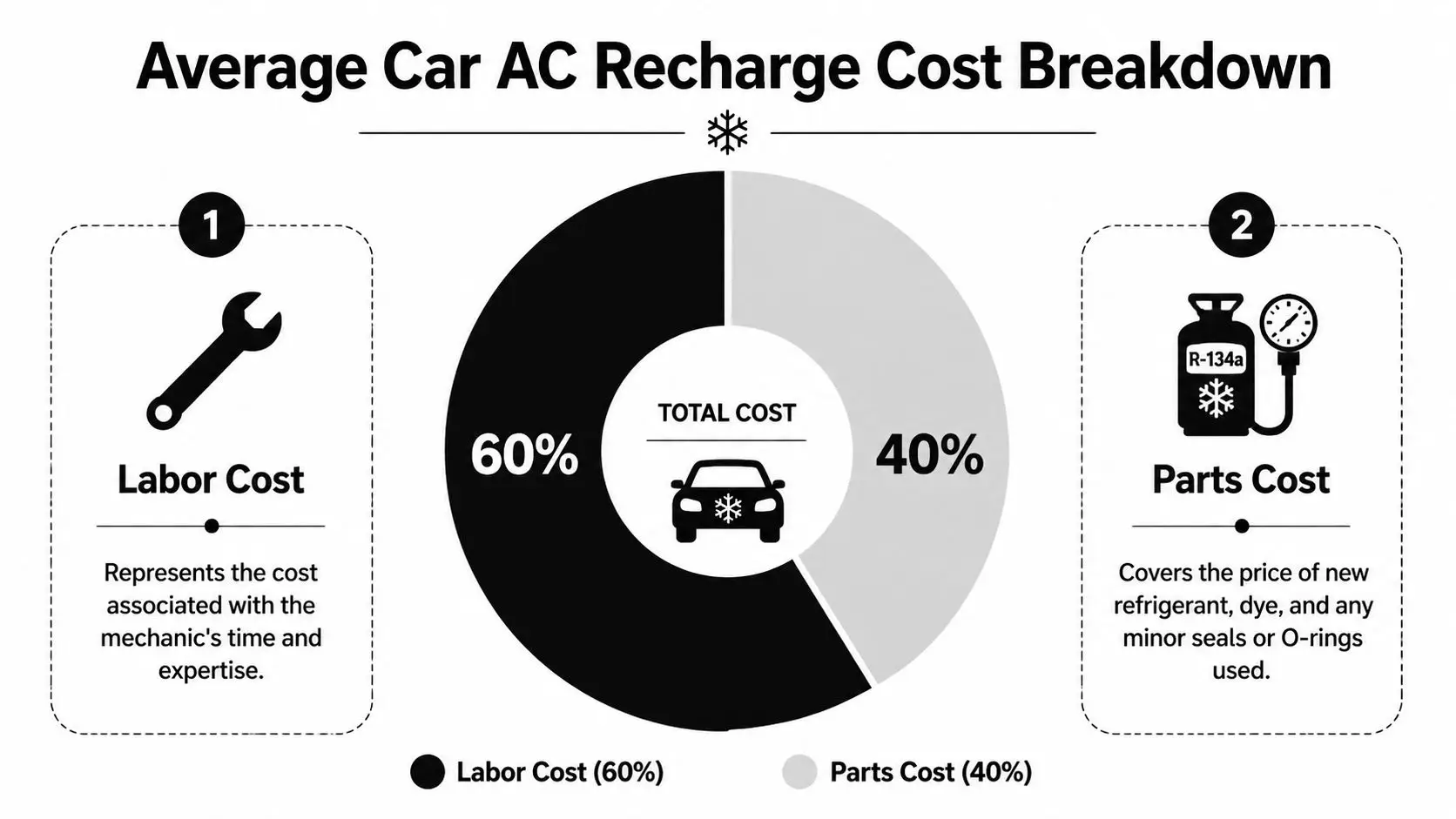
That matters because the advertised recharge price is rarely the whole story. A low sticker price may only cover adding refrigerant. A proper service often includes recovering what is left in the system, measuring it, pulling a vacuum if needed, recharging by weight, and verifying vent temperature and pressures afterward.
What labor usually covers
At the shop level, labor is the part that protects you from paying for the same problem twice. The technician has to confirm the refrigerant type, connect the machine, check pressures, watch for signs of leakage or overcharge, and make sure the system cools correctly before the car leaves.
If the system is nearly empty, labor can also include the time spent determining whether a recharge makes sense at all. That is why a quick quote over the phone can change once the car is inspected. For a plain-English look at the steps involved, Kwik Kar explains them in this guide to car air conditioner recharge service.
What the parts side includes
On an AC ticket, “parts” often means refrigerant first. It can also include UV dye, service port caps, small seals, or O-rings if the technician finds minor sealing issues during service.
The hidden multiplier is refrigerant type. Two vehicles can come in with the same complaint and leave with very different invoices because one uses a less expensive refrigerant and the other uses a newer, costlier one. If leak repair enters the job, the recharge becomes only one line on the estimate.
Here’s a practical way to compare quotes:
| Service Component | Basic Recharge ('Top-Off') | Comprehensive Service |
|---|---|---|
| Refrigerant added | Adds refrigerant if system is low | Recovers, measures, and recharges to spec |
| Labor focus | Shorter service with limited checks | More technician time for full procedure |
| System evaluation | Basic pressure check | Broader inspection for performance issues |
| Leak investigation | Often limited or not included | May include diagnostic steps if a leak is suspected |
| Best fit | AC was slightly weak and no other symptoms | AC is warm, empty, inconsistent, or recently serviced |
A top-off has its place. It is usually a poor value if the system has a leak and cannot hold the charge.
Vehicle size still changes the baseline
System capacity also affects price. Larger vehicles, dual-zone setups, and rear AC systems usually need more refrigerant and more time to service correctly, so the baseline cost goes up before any repairs are added.
That is the part many customers miss. The recharge fee is only the starting number. Refrigerant type, system capacity, and whether the shop finds a leak are the items that usually decide whether the final bill stays reasonable or climbs fast.
Key Factors That Change the Price
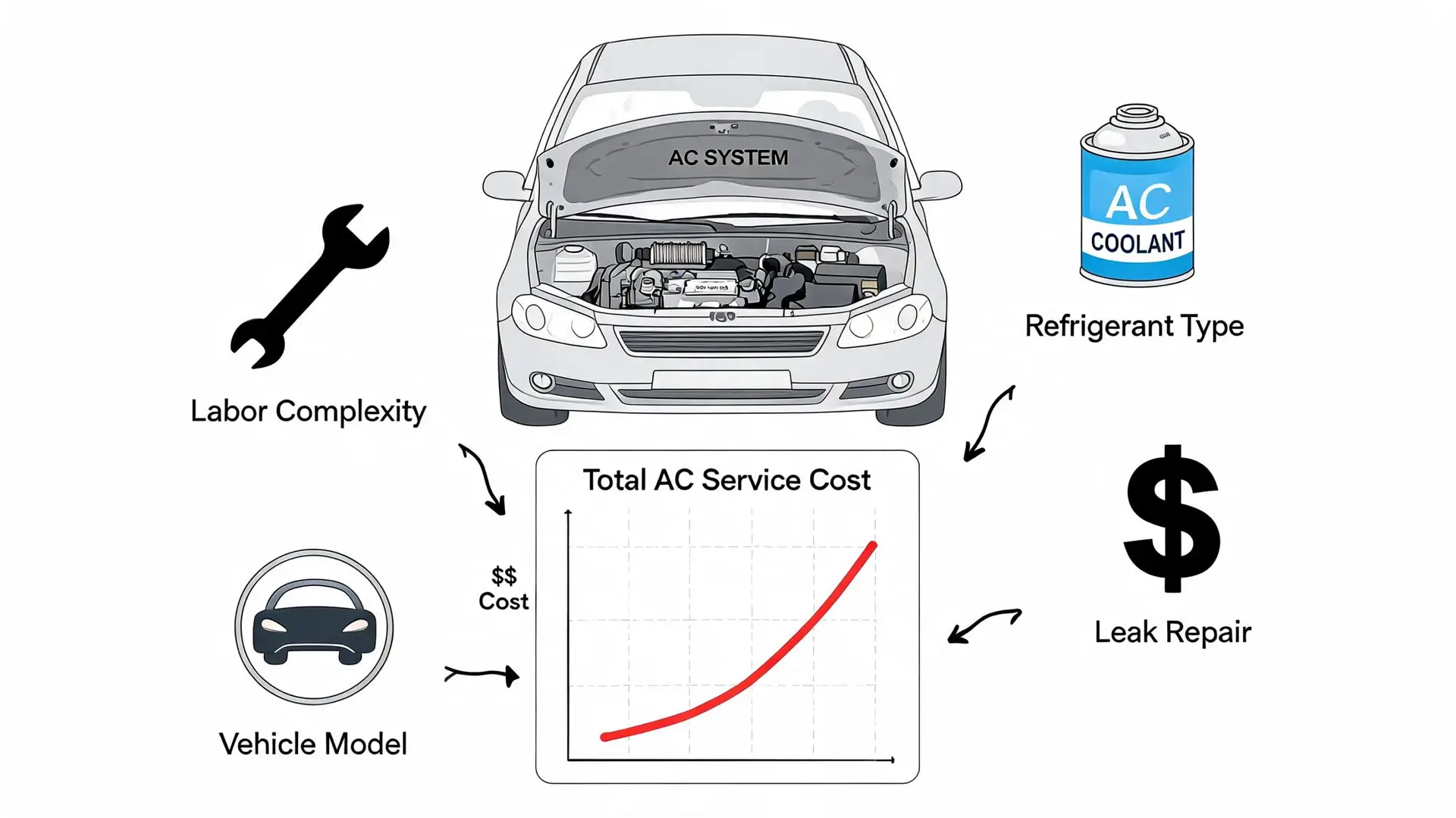
A recharge quote can change fast once the technician identifies what the system needs. The shop may start with a basic service price, but the final bill usually moves based on refrigerant type, system size, and whether the loss of cooling comes from a leak instead of normal wear.
Refrigerant type changes everything
Refrigerant type is often the biggest hidden price driver. Two cars can need the same basic AC service and still end up with very different estimates because one uses R134a and the other uses R1234yf.
That matters for two reasons. The refrigerant itself can cost a lot more, and the shop must use the correct recovery and recharge equipment for that system. If you want to ask one smart question before approving the work, ask which refrigerant your vehicle uses and how much of the estimate is tied to that alone.
Vehicle size affects refrigerant quantity
Bigger AC systems usually cost more to recharge correctly. A compact sedan, a three-row SUV, and a vehicle with rear AC do not hold the same amount of refrigerant, so the parts cost and service time can change even if the symptom sounds identical.
I see this catch people off guard all the time. One driver compares a quote with a friend or neighbor, but the vehicles are not built the same, so the comparison does not really help.
Leak diagnosis often decides whether the bill stays modest or climbs
Here is the critical fork in the road. If the system is low, the technician still has to answer why it is low.
A small leak at a Schrader valve, hose connection, condenser, or evaporator can turn a simple recharge into a diagnosis-and-repair job. That is usually where the price gap opens up. Refrigerant added to a leaking system may cool for a short time, then escape again, which means paying twice for the same problem.
If your vents blow cool one day and warm the next, or the air starts cold and fades at idle, those are common signs the issue may be bigger than a recharge. This guide on why your car AC isn't cold even with the fan on explains the symptoms that often point to a leak or component problem.
Ask the service advisor this: “Does this quote include leak testing, or is it only a recharge?”
Shop type and region still affect the total
Labor rates still vary by market and by shop. Dealer pricing is often higher than independent repair shops, and metro areas usually run higher than smaller towns because overhead is different. That does not mean the higher quote is wrong. It means you need to see what is included.
A low advertised recharge price may only cover adding refrigerant. A higher quote may include recovering the old charge, measuring what came out, checking pressures, verifying vent temperature, and inspecting for signs of leakage. Those details matter more than the headline number.
In practical terms, the total usually comes down to four things:
- Which refrigerant your vehicle requires
- How much refrigerant the system holds
- Whether the system needs service or has a leak that needs repair
- What the shop includes in the quoted labor and diagnostic time
DIY AC Recharge Kits vs Professional Service
You buy a recharge can on the way home because the AC is blowing warm and the kit costs a lot less than a shop visit. By the next weekend, the air is warm again, and now you are paying for refrigerant twice while still not knowing why it leaked out in the first place.
That is the core trade-off.
A DIY kit can be a low-cost short-term option if the vehicle uses the correct refrigerant, the system is only slightly low, and you understand that you are topping off a system, not confirming why it lost charge. The trouble is that many drivers are dealing with more than low refrigerant. They are dealing with a small leak, an overcharged system from a previous refill, or a component problem that a can and gauge will not identify.
Where DIY kits can get expensive
The can on the shelf is only part of the cost. Hidden price multipliers show up fast if the vehicle takes a more expensive refrigerant, if the system has leaked down enough to need testing, or if a bad seal or hose is letting the new charge escape.
DIY kits also leave out a few things that matter:
- Refrigerant identification: Using the wrong refrigerant creates bigger problems than a warm cabin.
- Charge accuracy: Many systems are sensitive to charge level. Too little or too much can both hurt cooling.
- Leak confirmation: If refrigerant is low, there is usually a reason.
- System performance checks: Vent temperature and pressure readings need to make sense together.
That is why a cheap fix can turn into the more expensive path.
When professional service makes more sense
Professional AC service is not just paying someone to add refrigerant. A shop uses recovery and recharge equipment, verifies the refrigerant type, checks system pressures, and looks for signs that a leak or component fault is driving the problem. On newer vehicles, that matters even more because charge amounts are precise and the refrigerant itself may cost enough that guessing gets expensive fast.
From a technician’s standpoint, the smartest question is not whether a can is cheaper today. It is whether the system is likely to hold the charge and cool correctly after the service.
Professional service usually makes more sense if:
- The AC was cold recently and now fades again
- You do not know which refrigerant the vehicle uses
- The system has already been recharged once
- Cooling changes at idle or in traffic
- You want the cause identified before paying for refrigerant
Expensive AC repairs often start with a small leak that got topped off a few times instead of tested and repaired early.
If you want a clearer picture of what proper diagnosis and repair can involve, this guide on how to fix car AC problems walks through the common failure points.
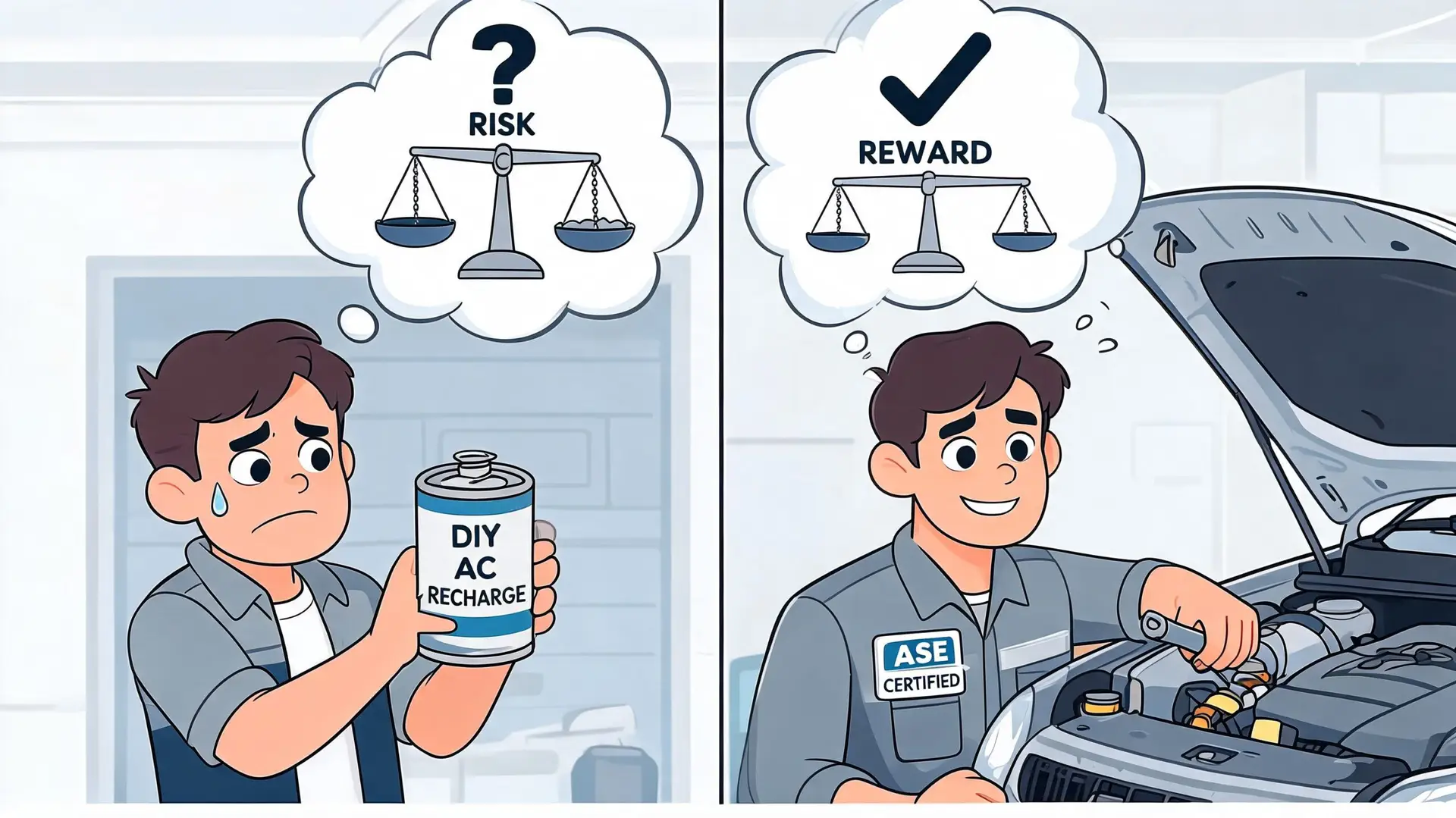
A quick visual can help if you’re deciding whether to tackle it yourself or book service.
What works better long term
DIY recharge kits have a place, but they are best for someone who understands the risk and is willing to accept that the can may only buy time. Professional service costs more upfront because it aims to answer the expensive questions first. Is the refrigerant correct? Is the charge level accurate? Is there a leak? Is another part of the system failing?
Those answers are usually what determine whether your AC repair stays affordable or turns into repeat visits and a bigger bill.
The Kwik Kar Advantage for AC Service in Richardson
When a vehicle comes in for AC concerns, the process matters as much as the price. Good service starts with identifying the refrigerant type, checking how the system is performing, and deciding whether the vehicle needs a straightforward recharge or a deeper diagnostic approach.
At Kwik Kar Oil Change and Auto Care, AC work is handled by ASE-certified technicians using shop equipment designed for proper recovery, evacuation, recharge, and performance verification. That matters on newer vehicles where refrigerant type and exact charge level can’t be guessed.
What a customer should expect from a proper AC visit
A solid AC appointment should feel straightforward, not mysterious. The customer should know what the shop found, what the service includes, and whether the estimate covers only refrigerant service or additional diagnosis.
A typical visit should include:
- Initial inspection: The technician checks the complaint, confirms vent performance, and looks for obvious signs of system trouble.
- Refrigerant verification: The shop confirms which refrigerant the vehicle uses before quoting the job.
- Machine-based service: Refrigerant is recovered and recharged using the correct equipment rather than guesswork.
- Post-service check: The system is rechecked to confirm cooling performance and catch obvious concerns before the car leaves.
Why transparency matters more than a low opening quote
A low teaser price can sound great until it turns into a second visit because nobody looked for the cause of the problem. A clear estimate is usually the better value, especially when the system may need more than a refill.
That’s also where certification and shop standards help. Kwik Kar’s background with CARFAX, RepairPal, and NAPA AutoCare reflects a process-driven approach that many drivers want when they’re trusting a shop with modern AC service. For local customers, practical extras like discounts for military, first responders, and healthcare providers can also make the visit easier to budget.
The best AC estimate isn’t the lowest number on the phone. It’s the one that tells you what the shop is actually going to do.
Simple Tips to Extend Your AC System's Life
You can’t prevent every AC problem, but you can reduce the odds of turning a small issue into a major repair. The most expensive part of neglect is that it often shows up later, not right away.
According to Synchrony’s automotive AC recharge cost overview, a compressor replacement averages $1,319 to $2,515. That’s why timely diagnosis matters. Repeatedly recharging a struggling system without addressing the cause can get expensive fast.
Habits that help
A few simple practices go a long way:
- Run the AC and defrost regularly: This helps circulate refrigerant and keeps seals from sitting unused for long stretches.
- Pay attention to changing performance: If the air takes longer to cool or turns warm at idle, don’t ignore it.
- Keep the condenser area clean: Leaves, dirt, and road debris can interfere with heat transfer.
- Address weak cooling early: Small leaks and minor issues are easier to deal with before they stress the compressor.
- Replace the cabin air filter when needed: Restricted airflow can make a healthy AC system feel weak.
What not to do
Don’t treat repeated recharges as normal maintenance if the system keeps losing cooling. In a properly functioning system, that pattern usually points to a fault that should be inspected.
And don’t wait until the hottest week of summer if the AC has already been acting up. Once the compressor starts working harder than it should, the repair path can get much more expensive.
If your AC is blowing warm, cycling strangely, or just not keeping up with the Texas heat, schedule an inspection with Kwik Kar Oil Change and Auto Care. Our ASE-certified team can check the system, explain what’s needed, and help you decide on the most sensible next step without the guesswork.