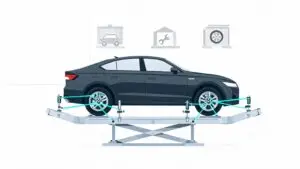
A standard four-wheel alignment usually costs $75 to $150, and a front-end alignment usually costs $50 to $100. If your car is pulling to one side, your steering wheel sits crooked, or your tires are wearing unevenly, that price is often far less than what neglected alignment problems can cost later.
Most drivers in Richardson don’t start shopping for a cost wheel alignment because they’re curious. They start because something feels off on the road. The car drifts when the wheel is straight. The steering doesn’t feel centered. Maybe you looked at the front tires and one edge looks more worn than the other, like a pair of shoes that wore down unevenly because you kept walking with one foot tilted.
That’s usually the moment to stop guessing and get clear about two things. First, what an alignment should reasonably cost. Second, what you’re paying for. Alignment isn’t just a “make the wheel straight” service. It protects tires, supports stable handling, and helps keep suspension parts from taking extra stress they don’t need.
Your Guide to Understanding Wheel Alignment Costs
The hardest part for a lot of drivers isn’t deciding whether alignment matters. It’s figuring out whether the quoted price makes sense.
A fair price depends on the kind of alignment your vehicle needs, the suspension design under it, and whether the car is ready to be aligned. That last part matters more than is often realized. If a shop finds worn steering or suspension parts first, an alignment can’t hold properly until those issues are addressed.
What most drivers are really paying for
When you pay for an alignment, you’re paying for measurement and correction. A technician checks whether the wheel angles match what your vehicle was designed to run, then adjusts them back toward spec so the car tracks properly and the tires roll the way they should.
That’s why the sticker price alone doesn’t tell the full story. Two vehicles can both need “an alignment,” but one may be a straightforward job and the other may involve a larger suspension system, tighter access, or additional checks before any adjustment starts.
Practical rule: The cheapest alignment isn’t the best value if the vehicle leaves with worn parts, an off-center wheel, or settings that won’t hold.
For drivers who want a little extra background before booking service, this expert advice on tire care gives helpful context on how alignment and tire maintenance work together.
Why local drivers ask about value, not just price
In Richardson, a lot of vehicles see daily commuting, stop-and-go traffic, rough pavement, and the occasional pothole hit. That combination is hard on alignment. So the right question usually isn’t just, “What does a wheel alignment cost?” It’s, “What will it save me from if I handle it now?”
That’s where alignment earns its keep. A proper service can help you avoid tire wear, poor road feel, and suspension trouble that starts small and gets expensive.
Signs Your Vehicle is Crying Out for an Alignment
One of the most common things drivers tell me is, “It still drives, so I wasn’t sure if it was serious.” That’s exactly how alignment issues linger longer than they should.
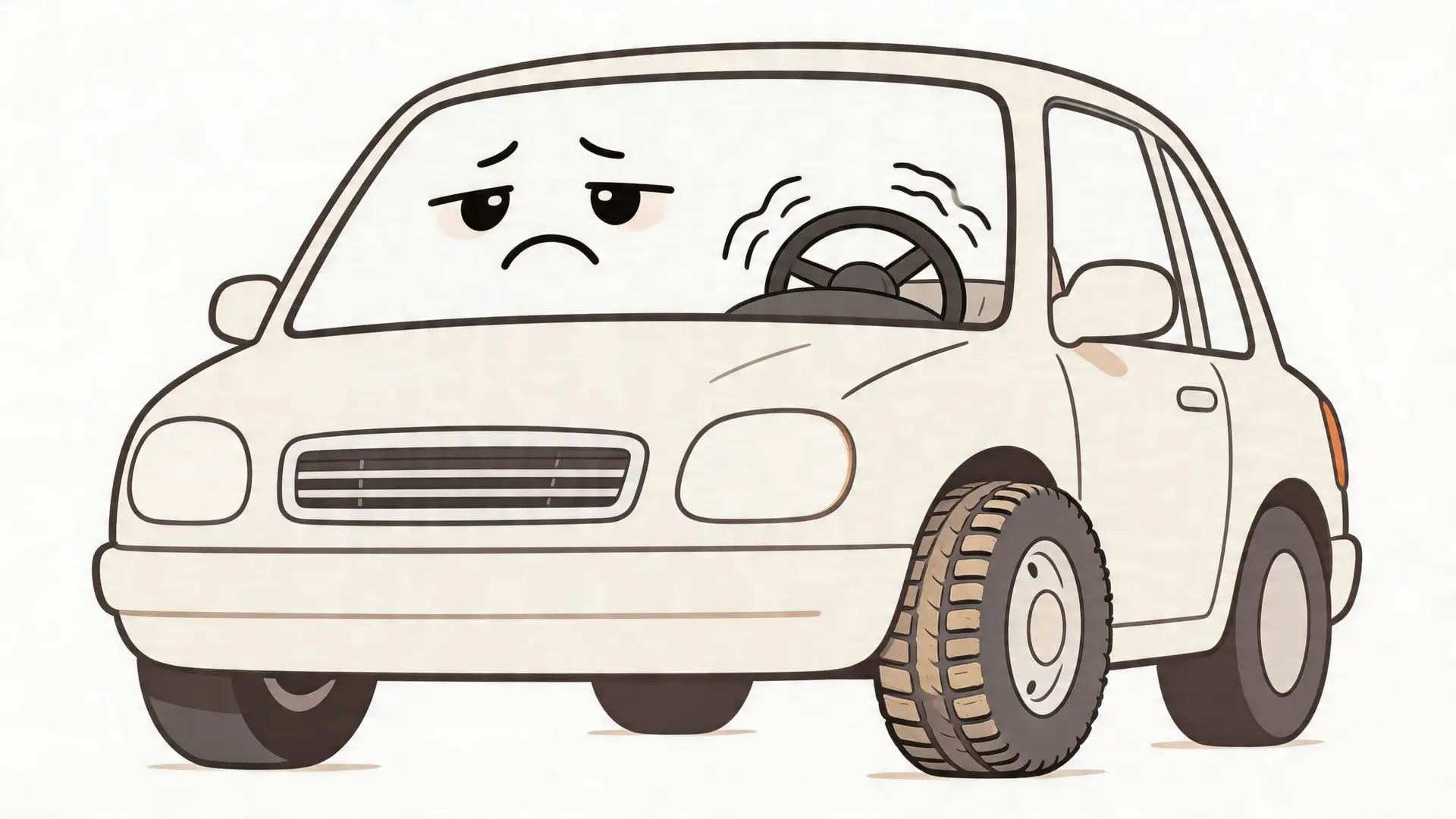
A car rarely announces misalignment with one big dramatic failure. It usually nags you with smaller clues. You feel the steering wheel tug on a straight road. You notice the wheel is slightly off-center even though you aren’t turning. Or the car feels unsettled, like it wants to wander instead of holding a clean line.
What it feels like behind the wheel
Misalignment often shows up in ways drivers can feel before they can explain them.
- The car pulls left or right: You’re on a flat road, your hands are steady, and the vehicle still drifts.
- The steering wheel sits crooked: The car moves mostly straight, but the wheel doesn’t look centered while doing it.
- You feel vibration or instability: Not every vibration is alignment related, but alignment can contribute to a steering feel that seems busy or unsettled.
These symptoms matter because they affect confidence. A vehicle that doesn’t track correctly asks you to keep correcting it. That gets tiring on a commute and can become a safety issue when road conditions get worse.
A crooked steering wheel is one of the clearest clues, and this guide on a crooked steering wheel and what it can mean is worth reading if that’s the symptom you’re noticing most.
What you can see on the tires
Your tires often tell the story before a dashboard light ever will. If one edge of the tread is wearing faster than the rest, or one front tire looks different from the other, the alignment may be off.
Imagine dragging the sole of a shoe sideways instead of setting it down flat. The rubber wears away, but it doesn’t wear evenly. Tires do the same thing when the wheel angles aren’t right.
Your vehicle doesn’t need to be undriveable to need alignment. Small handling changes and uneven tread are often the first warning signs.
If you want to see the issue explained visually, this short video does a good job of showing what drivers should watch for before tire wear gets worse.
When to stop waiting
Some situations push alignment higher on the priority list.
- After hitting a pothole or curb: Even one hard impact can knock things out.
- After suspension or steering work: New parts need the geometry checked.
- After installing new tires: It makes sense to protect that investment right away.
- When the car just feels different: Drivers know their own vehicles well. If it suddenly feels wrong, trust that instinct.
Ignoring these signs doesn’t usually make them disappear. It just gives the tires more time to wear in the wrong pattern.
What a Professional Wheel Alignment Service Includes
A professional alignment is part measurement, part adjustment, and part inspection. Good service starts with checking whether the vehicle can be aligned correctly. If something in the steering or suspension is loose or damaged, no machine can compensate for that.
The actual alignment revolves around three main angles. You don’t need to memorize them, but understanding what they do makes alignment quotes much easier to understand.
The three angles that matter
Camber is the inward or outward tilt of the wheel when viewed from the front. If the top of the tire leans too far in or out, the tread won’t meet the road evenly.
Caster affects steering stability and return. It’s easier to think of caster as the angle that helps the steering feel planted and come back toward center after a turn.
Toe is whether the fronts of the tires point slightly inward or outward relative to each other. Toe problems are especially hard on tires because the tread scrubs instead of rolling cleanly.
Alignment is like setting all four feet of a table so it sits flat. If one point is off, the whole vehicle can feel wrong.
Two-wheel and four-wheel are not the same service
A common source of confusion is that a two-wheel alignment and a four-wheel alignment are different jobs for different vehicle setups.
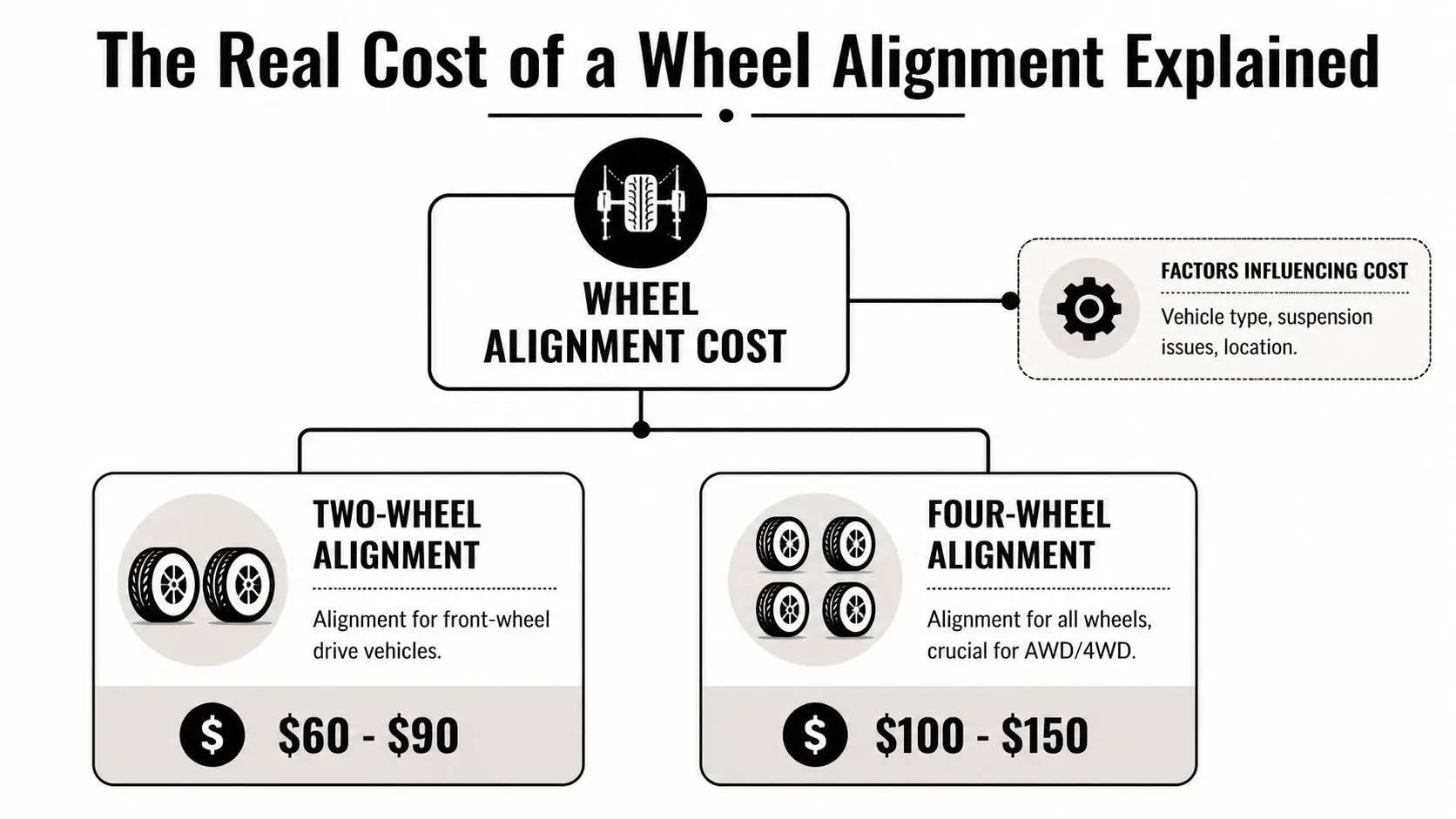
According to Jiffy Lube’s alignment cost and suspension overview, front-end alignments typically range from $50 to $125 and four-wheel alignments range from $100 to $250. That same source notes that two-wheel alignments are generally suited to older vehicles with solid rear axles, while four-wheel alignments are essential for vehicles with independent rear suspension. It also notes that rear alignment problems can create thrust angle errors that cause “crab walk” and accelerate tire wear by 20% to 30% per 10,000 miles.
What happens during the service
A proper alignment visit usually includes a sequence like this:
| Service step | Why it matters |
|---|---|
| Visual inspection | Checks for worn or damaged parts that can prevent a stable alignment |
| Angle measurement | Shows where camber, caster, and toe are currently sitting |
| Adjustment | Brings the wheel angles back toward factory specifications |
| Steering wheel centering | Makes sure the wheel position matches the car’s straight-ahead path |
The takeaway is simple. The service isn’t just “adjust the front and send it.” On many modern vehicles, the rear suspension plays a direct role in how straight the vehicle tracks and how evenly the tires wear.
A Practical Breakdown of Wheel Alignment Costs
If your car pulls on Plano Road, the steering wheel sits crooked on Central, and the front tires are starting to wear like a pair of shoes with one heel ground down, the alignment price matters. So does what that price saves you from later.
According to Tire World’s wheel alignment pricing breakdown, the national average cost for a complete four-wheel alignment ranges from $75 to $150, while front-end alignments typically cost $50 to $100. The same source notes that pricing can vary by location and vehicle, that some luxury vehicles can exceed $250, and that lifetime alignment packages often range from $180 to $250.
What those numbers look like in the shop
A low quote can be fair. A higher quote can also be fair.
The difference usually comes down to the vehicle, the suspension design, and whether the technician can make the needed adjustments without running into worn parts, seized hardware, or prior damage. From a shop-floor standpoint, alignment pricing is labor plus equipment plus time spent getting the car to hold spec, not just time spent turning adjusters.
That matters because the cheapest alignment is not always the least expensive choice over the life of the car.
Why the price can still be a good value
Alignment service protects expensive parts you already paid for. Tires are the big one. If the angles are off, the tread can scrub away long before the tire should be done, especially on the inside edge where many drivers do not notice it until cords are close. Suspension parts also take extra stress when the vehicle is constantly fighting itself down the road.
At Kwik Kar Richardson, we see this trade-off all the time. A driver hesitates at an alignment charge, then ends up replacing tires early because the vehicle kept dragging them sideways. Spending on alignment at the right time often costs less than replacing even one premature tire.
Here is a practical way to look at it:
- Lower upfront cost: A simpler alignment on a vehicle that needs fewer adjustments
- Higher ticket, broader correction: A service that addresses all wheel angles the vehicle design allows
- Longer-term budgeting option: A lifetime plan for drivers who put on a lot of miles or keep hitting rough roads and potholes
For more local pricing context, this breakdown of Firestone wheel alignment cost and related considerations can help you compare how different shops structure similar services.
What you should expect from a fair estimate
A good estimate should tell you what service you are paying for and what could keep the alignment from holding after the work is done. If a quote is vague, ask the shop to slow down and explain it in plain English.
Look for these details:
- Alignment type: Whether the quote is for a two-wheel or four-wheel alignment
- Vehicle-specific labor: Whether your car, truck, SUV, or performance setup changes the work involved
- Pre-existing issues: Whether worn suspension or steering parts could limit the result
- Package choices: Whether a one-time service or lifetime plan fits how you drive
That kind of clarity helps you compare shops accurately. It also helps you avoid paying twice for a problem that should have been identified the first time.
Factors That Can Change Your Final Alignment Price
Two vehicles can arrive with the same complaint and leave with very different invoices. That’s normal. Final price depends on what the technician finds under the car, not just what the customer feels from the driver’s seat.
Vehicle design changes the labor
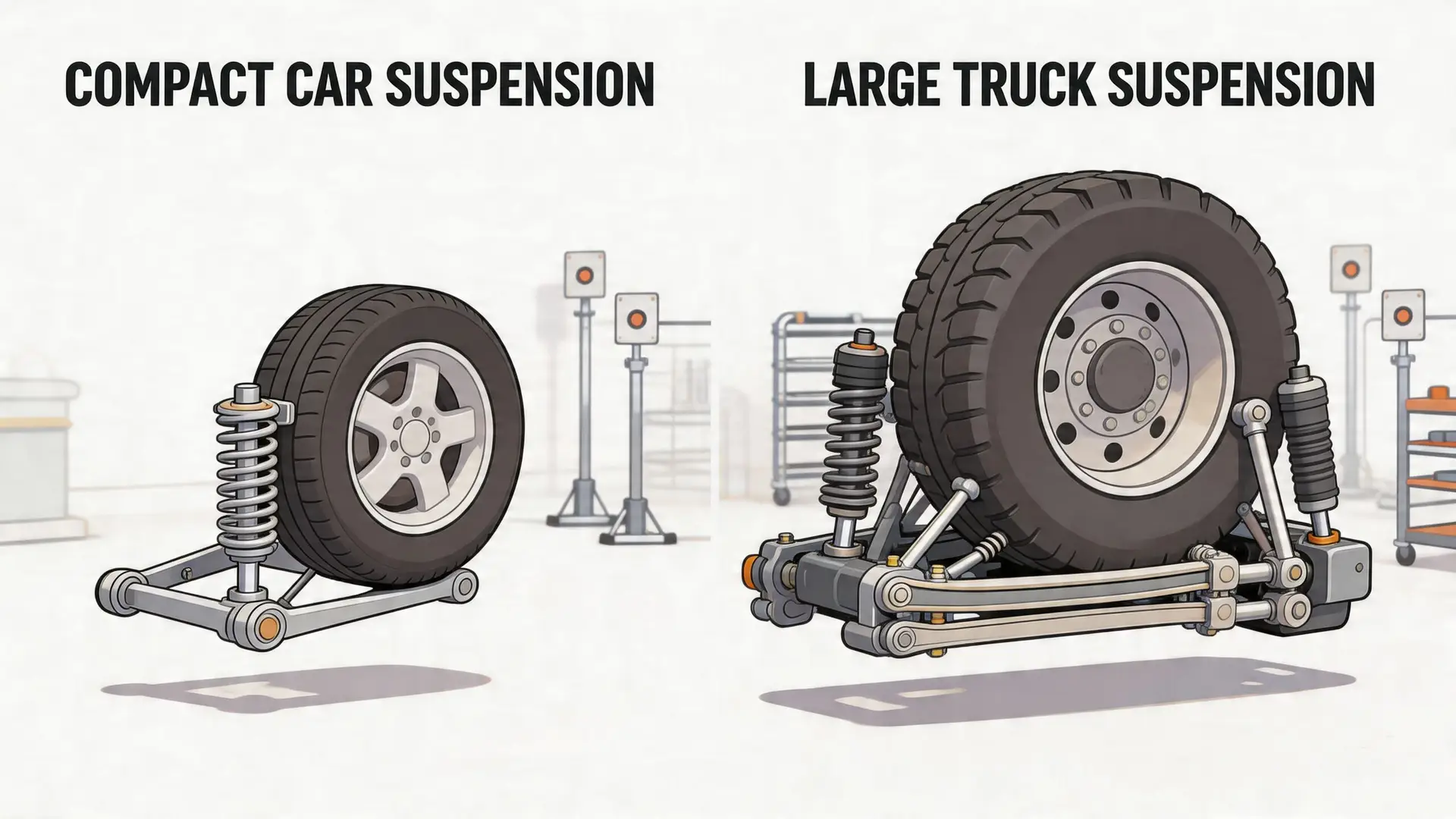
A compact sedan and a larger truck don’t ask for the same amount of work. Bigger vehicles often have components that take more time to inspect and adjust. Luxury vehicles can add another layer because their suspension systems are often more complex and less forgiving.
According to JD Power’s guide to wheel alignment cost and misalignment damage, just 1° of toe misalignment can increase tire wear by over 50% within 6,000 miles. The same source notes that luxury vehicles with complex suspensions can run $150 to $200+ for alignment because they may require specialized 3D laser scanners and ECU recalibration.
Damage can turn alignment into a two-part repair
This is the trade-off many drivers don’t see until the car is on the rack. Sometimes the alignment itself isn’t the problem. The problem is that a damaged or worn part has knocked the alignment out and will keep doing it until that part is repaired.
A significant pothole hit is a good example. The same JD Power source notes that a major pothole impact can justify an immediate alignment check to help prevent further damage, including control arm bushing failure that can cost $300 to $600.
Shop-floor reality: If a tie rod, bushing, or related suspension part is loose, aligning the car before fixing it is like setting a ladder on soft ground. It won’t stay where you put it.
Why inspection isn’t an upsell
Drivers sometimes worry that pre-alignment inspection is just a way to add work. In reality, inspection protects the customer from paying for adjustments that won’t last.
Here’s why shops check first:
- Worn parts won’t hold settings: The numbers may look correct on the machine, then shift again on the road.
- Impact damage changes geometry: A curb or pothole can bend or loosen components.
- Complex systems need precision: Luxury and advanced suspension setups leave less room for shortcuts.
The final bill reflects more than “turning a few bolts.” It reflects the condition of the steering and suspension system that has to support those alignment settings once the vehicle leaves the shop.
Your Trusted Wheel Alignment at Kwik Kar Richardson
Drivers don’t just need an alignment machine. They need a shop that knows when a vehicle is ready for alignment, when it isn’t, and how to explain the difference clearly.
At Kwik Kar Richardson, the alignment service is handled by ASE-certified technicians in a full-service shop backed by CARFAX, RepairPal, and NAPA AutoCare certifications. That matters because alignment quality depends on both equipment and diagnosis. If the steering wheel is off-center, the tires are wearing strangely, or a pothole hit changed how the vehicle feels, the job starts with checking the system, not guessing.
What drivers should expect from a good alignment visit
A good shop experience is usually straightforward.
| What matters to the customer | What the shop should provide |
|---|---|
| Clear pricing | A transparent estimate before work begins |
| Honest diagnosis | An explanation if worn parts prevent a proper alignment |
| Professional service | Technicians trained to measure and adjust accurately |
| Convenience | Scheduling that fits a commuter’s week |
That’s especially important for families with daily drivers, owners of older vehicles, and small business fleet managers who can’t afford repeated visits for the same issue.
Why local trust signals matter
Certifications aren’t just logos on a wall. They tell you the shop works to recognized standards and follows established repair practices. For a service like alignment, that helps because customers need confidence that the vehicle will leave tracking properly, not just looking good on paper.
The shop also offers discounts for military, first responders, and healthcare providers, which can make routine maintenance easier to budget.
A reliable alignment visit should leave you with three things. A vehicle that tracks correctly, an explanation you can understand, and no confusion about what you paid for.
If you’re comparing options locally, the wheel alignment service page for Richardson drivers shows what to expect from a dedicated service appointment.
How You Can Save Money on Wheel Alignments
The cheapest way to handle alignment is usually to catch it early. Once the tires start wearing in the wrong pattern, the cost isn’t just the alignment anymore. Now you’re talking about shortened tire life and extra stress on suspension parts.
Smart ways to keep alignment costs down
A few habits make a real difference:
- Pair alignment with new tires: New tires deserve a straight starting point. That helps protect the investment you just made.
- Don’t ignore small symptoms: A slight pull or crooked wheel is easier to deal with early than after tire wear sets in.
- Ask about lifetime packages if you drive a lot: For high-mileage drivers, commuters, and fleet vehicles, that kind of plan can make sense when the math works for your usage.
- Avoid curb and pothole impacts when you can: You won’t dodge every rough patch in Richardson, but reducing hard impacts helps preserve alignment longer.
Spend for stability, not just the invoice
Alignment savings come from total ownership cost, not just today’s bill. The best decision is usually the one that protects tires, keeps the car stable, and avoids bigger repairs later.
If you’re trying to decide whether to book the service, use a simple test. If the car pulls, the wheel is off-center, or the tires look uneven, don’t wait for the problem to become obvious to everyone else too. By then, the rubber has usually been paying the price for a while.
If your car is drifting, your steering wheel is crooked, or your tires are starting to wear unevenly, Kwik Kar Oil Change and Auto Care can help you get a clear diagnosis and a straightforward alignment recommendation for your vehicle.