You’re usually not searching how to know if car needs alignment on a good day. It’s more often after the steering wheel starts feeling a little off on Campbell Road, or the car keeps drifting just enough that you’re correcting it without thinking. Nothing feels dramatic. It just doesn’t feel right.
That’s how alignment problems usually start. Not with a warning light. With a pull, a crooked steering wheel, or tire wear that shows up before you expected it. The tricky part is that drivers often confuse those symptoms with tire pressure issues or wheel balance problems. They can feel similar at first, but the fix is different.
Your Car Might Be Telling You It Needs an Alignment
A lot of alignment issues begin with a very ordinary moment. You hit a pothole, clip a curb in a parking lot, or drive over rough pavement for months and never think much about it. Then one morning the car doesn’t track straight anymore.
That’s common because rough roads really do move things out of spec. Driving on rough roads takes a toll. In 2023, breakdowns from pothole damage increased by 33%, highlighting just how easily daily driving can knock your vehicle's wheels out of alignment according to wheel alignment facts and figures.
What alignment actually means
Alignment isn’t about the tire itself being defective. It’s about the angles of the wheels and suspension. When those angles shift, the tires stop meeting the road the way the manufacturer intended.
The main settings a technician checks are:
- Camber: whether the tire leans inward or outward.
- Caster: how the steering axis is positioned, which affects straight-line stability and return-to-center feel.
- Toe: whether the front edges of the tires point inward or outward.
When one or more of those settings moves out of range, the car may pull, the steering wheel may sit crooked, and the tires may start scrubbing across the road instead of rolling cleanly.
Practical rule: If your car suddenly feels different after a pothole, curb hit, or suspension repair, don’t wait for obvious tire damage. Check the alignment early.
Why this matters beyond annoyance
A bad alignment doesn’t always make a car feel unsafe right away. Sometimes it’s subtle. But subtle problems can still wear tires faster, make the steering less predictable, and cover up other suspension issues.
Most drivers don’t need alignment theory. They need a way to tell whether the problem they feel is alignment, or something else. That’s where a few simple driving clues and a quick tire inspection can save a lot of guesswork.
Reading the Signs from Behind the Wheel
The first clues usually show up while you’re driving, not while the car is parked. Two signs matter more than the rest: a steady pull and an off-center steering wheel.
Check for a steady pull
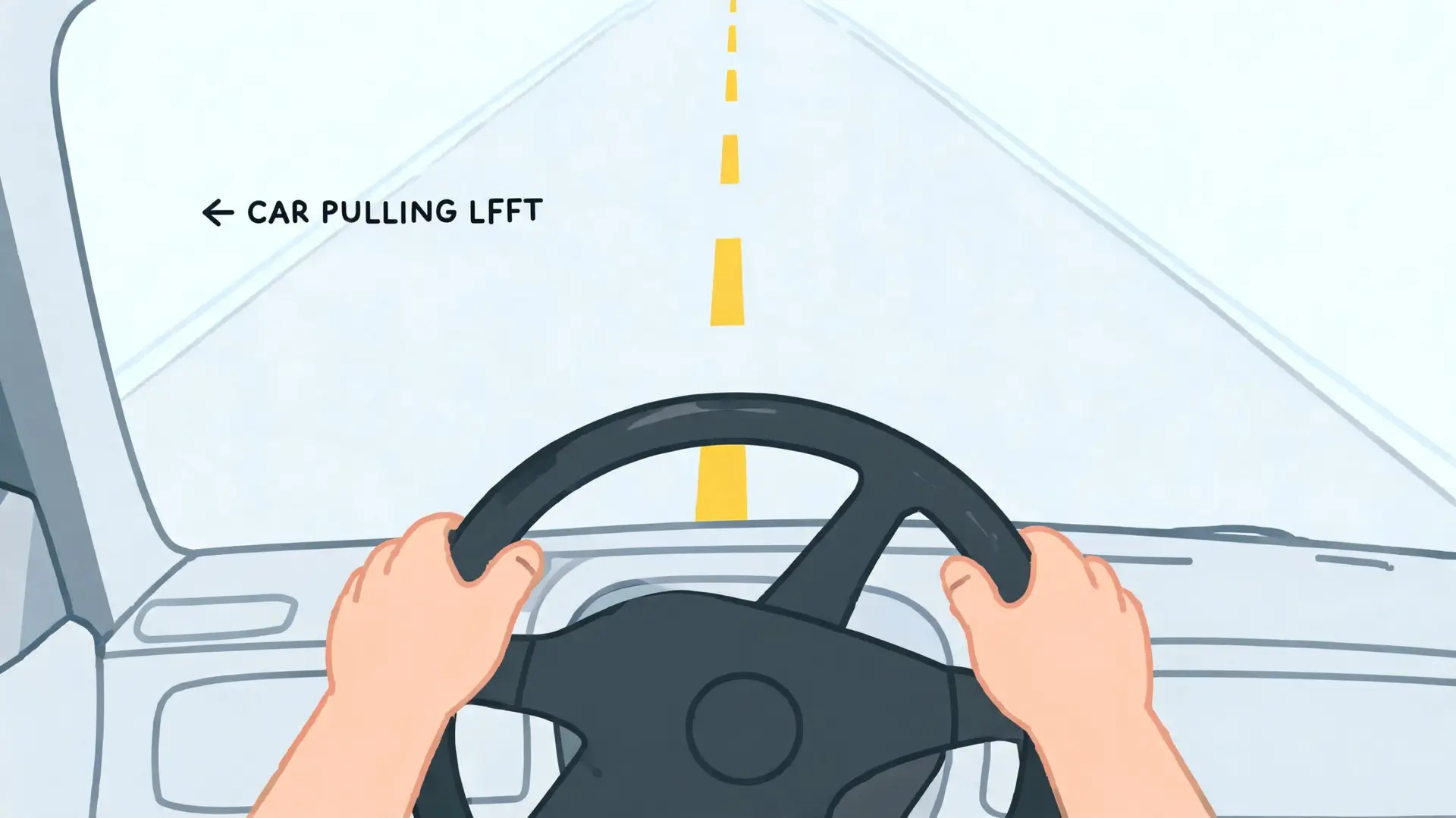
Find a flat, straight road and pay attention to what the car does when you relax your grip slightly. If the vehicle consistently drifts left or right, that’s one of the clearest signs of misalignment.
A useful benchmark comes from this alignment road-test reference. In a road test, a vehicle drifting more than two feet over a quarter-mile distance with hands off the wheel is a strong signal of misalignment, according to industry benchmarks.
That doesn’t mean you should perform a long hands-off test in traffic. Use common sense and keep control of the car. The point is simple: on a level road, the car should not need constant correction just to go straight.
If your vehicle tends to drift one way and you’re not sure whether it’s normal road crown or an actual issue, this guide on when a car pulls to the right can help you sort out what you’re feeling.
Look at the steering wheel position
The second sign is easier to miss because drivers adapt to it. You may be driving straight, but the steering wheel sits slightly left or right instead of centered. The logo isn’t level. The wheel might sit at what feels like 11 o’clock or 1 o’clock while the car tracks forward.
That usually means the wheels are no longer pointed in agreement with each other. You’re holding the steering system in a corrected position just to keep the car straight.
If the steering wheel isn’t centered on a straight road, don’t treat it like a harmless quirk. It’s usually a measurement problem, not a personality trait of the car.
A short visual can help if you want to compare what proper steering behavior should look like while driving.
What these signs do not always mean
A pull doesn’t automatically mean alignment. Tire pressure differences, uneven tire construction, brake drag, or worn suspension parts can create similar symptoms. But if the pull is consistent and the steering wheel is off-center too, alignment moves much higher on the list.
That’s why tire inspection matters next. The road feel tells you what the car is doing. The tread tells you how long it’s been happening.
Inspecting Your Tires for Clues
Tires keep a record of alignment problems better than most drivers realize. You don’t need a lift or shop equipment to see the first clues. You just need good light and a few minutes.
What uneven wear is telling you
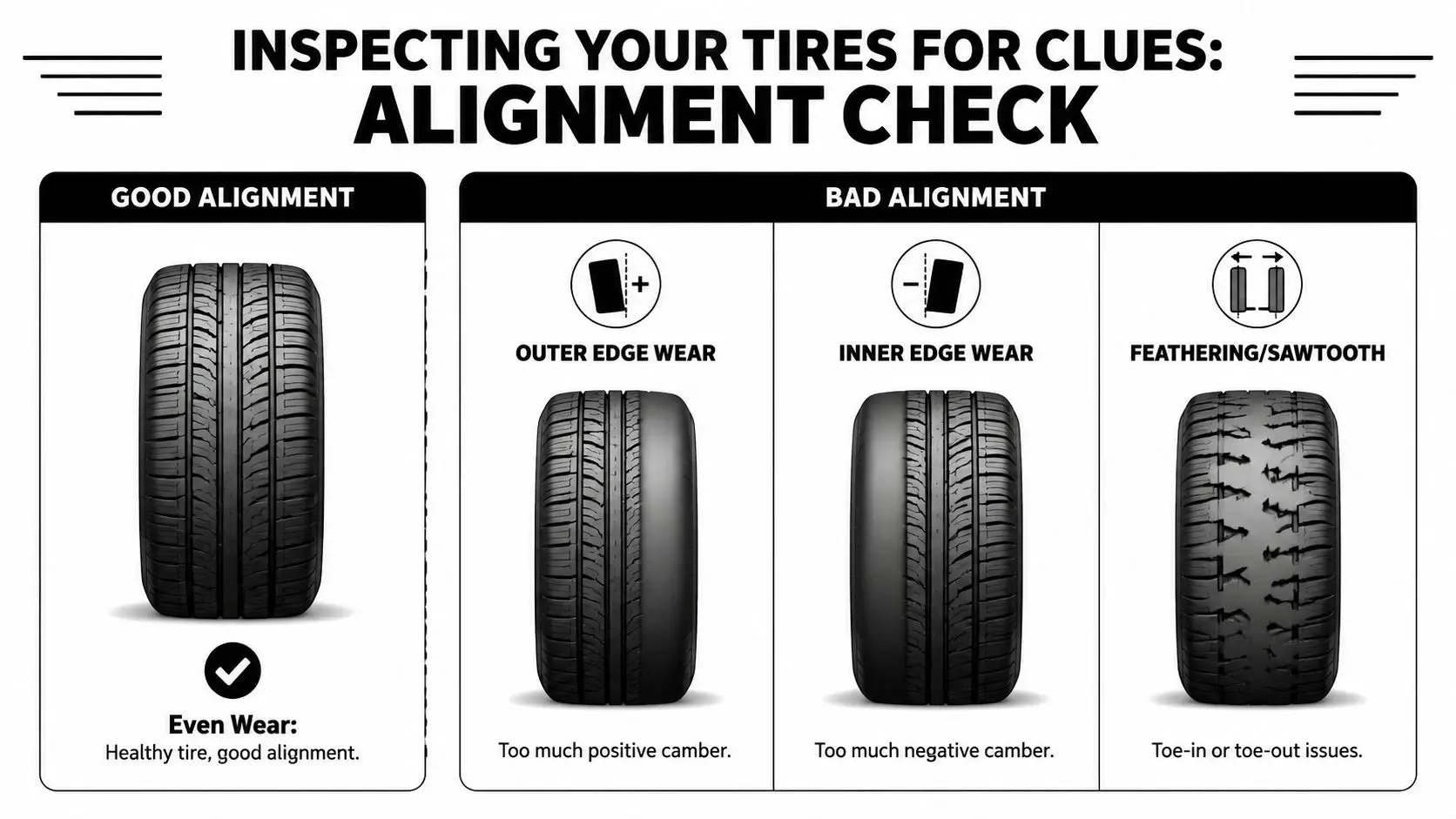
Start by turning the front wheels so you can see the tread face clearly. Then compare the inner edge, center, and outer edge of each tire.
These patterns matter most:
- Outer edge wear often points to a camber problem.
- Inner edge wear can also point to camber, but in the opposite direction.
- Feathering across the tread blocks often suggests a toe issue. If you run your hand across the tread, it may feel smooth one way and sharp the other.
Those patterns are different from simple underinflation or overinflation wear. Alignment wear tends to favor one edge or create a sawtooth feel. Pressure-related wear usually follows a different pattern across the tread surface.
A quick driveway check
You don’t need to overcomplicate it. Use this routine:
- Turn the wheel for visibility. Check both front tires first because alignment symptoms usually show there earliest.
- Compare one side to the other. If one tire’s inner or outer edge is clearly wearing faster, that’s useful evidence.
- Feel the tread by hand. Feathered tread often feels more obvious than it looks.
- Look for matching patterns. Similar edge wear on both tires can tell a stronger story than one damaged spot from a single road hazard.
Tire wear is a history report. Pulling tells you what the car is doing today. Uneven tread tells you what it has been doing for weeks or months.
If you want a simple baseline before diagnosing wear, this guide on good tire tread depth is a useful starting point.
For fleet vehicles, tread condition also matters from a compliance and safety standpoint. If you manage work trucks or delivery vehicles, this guide to DOT tire compliance for fleets is worth keeping on hand because it helps separate everyday wear checks from issues that can turn into inspection problems.
What doesn’t prove alignment by itself
One damaged patch on one tire doesn’t always mean the alignment is off. A separated tire, old suspension component, or impact damage can produce odd wear too. That’s why tread clues work best when they match what you feel from the driver’s seat.
If the tire wear looks normal but the steering wheel shakes at higher speeds, you may not be dealing with alignment at all. That’s where balance comes in.
Alignment vs Balance What Is the Difference
Many drivers get steered wrong here. Alignment and balancing both involve the wheels and tires, but they solve two different problems.
One is about direction and angles. The other is about weight distribution.
A recent finding shows how often people mix them up. A 2024 Tire Industry Association study found that 42% of drivers misattribute tire balance issues to alignment, which can lead to incorrect service requests and higher repair costs, as noted in this analysis of alignment confusion.
The simplest way to separate them
If the car pulls or drifts, think alignment first.
If the car vibrates or shimmies, especially at certain highway speeds, think balance first.
That’s not a perfect rule for every car, but it works well as a starting point.
| Symptom | Likely Cause: Misalignment | Likely Cause: Imbalance |
|---|---|---|
| Car pulls left or right on a straight road | Yes | Uncommon |
| Steering wheel sits off-center while driving straight | Yes | Uncommon |
| Uneven inner or outer edge tire wear | Yes | Uncommon |
| Feathered tread | Yes | Uncommon |
| Vibration that shows up mostly at higher speed | Uncommon | Yes |
| Shake felt in seat or steering wheel without a steady pull | Uncommon | Yes |
| Problem feels constant at many speeds | Often | Less typical |
| Problem appears strongest in a narrower speed range | Less typical | Often |
What each one feels like in real driving
Misalignment usually feels like the car wants to choose a lane for you. You’re correcting the steering all the time, even if only a little. It may also feel less settled after a turn, with the wheel not returning to center the way it should.
Imbalance feels more like a repeating shake. The steering wheel may tremble, the seat may buzz, and the vibration often becomes more noticeable as road speed rises. Then it may change or fade at a different speed.
The trade-off that matters
Requesting “an alignment” every time something feels wrong isn’t always the smart move. If imbalance is the issue, the alignment may check out fine and the vibration will still be there. On the other hand, balancing a tire won’t fix a car that drifts across the lane or chews through the inside edges of the tread.
Ask for diagnosis, not just a service. The symptom should decide the test.
There’s also overlap. A vehicle can have both problems at once, especially after tire replacement, curb impact, or suspension work. That’s why a proper inspection should start with tire condition, pressure, and a road test before anyone starts turning adjustment points.
What to Expect During a Professional Alignment
You bring the car in because it pulls right on Plano Road, and the first question is whether it needs alignment, balancing, or something worn underneath. A good alignment visit should answer that clearly.
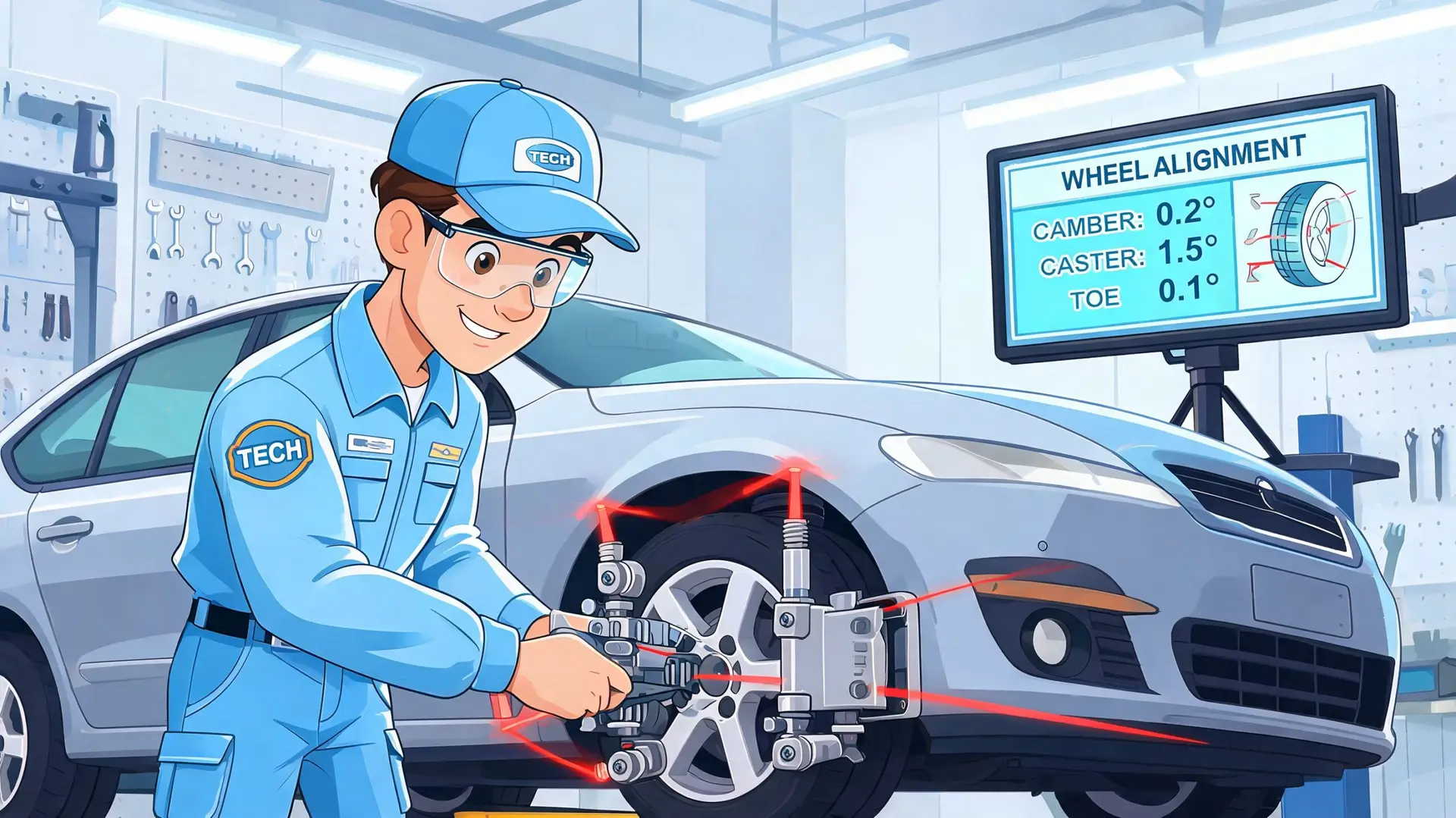
A professional alignment starts with measurements and inspection. The technician checks tire pressure, tread condition, ride height, steering linkage, suspension joints, and wheel bearings before making adjustments. That matters because loose or damaged parts can throw off the readings and keep the settings from holding after the car leaves the rack.
If a tie rod end, ball joint, control arm bushing, or wheel bearing has play, the alignment machine may show changing numbers as the vehicle settles. In that situation, the alignment angles are not the whole story. The worn part has to be addressed first or the car may still wander, wear tires, or come back with the same complaint.
Once the vehicle is set up on the rack, the equipment measures camber, caster, toe, and thrust angle against factory specs. The useful part for the driver is the printout. A pre-alignment report shows what is out of range. A post-alignment report shows what changed and whether the correction brought the car back into spec.
This is also where alignment gets separated from tire balance in a practical way. If the alignment readings are good but the steering wheel still shakes most at highway speed, I would be looking harder at tire balance, tire condition, or a bent wheel than at alignment. If the numbers are off and the steering wheel sits crooked or the car drifts on a flat road, alignment moves back to the top of the list.
If you want a clearer idea of the process before you book service, this overview of where to get a car aligned walks through what a proper shop visit should include.
Newer vehicles can add another step. After alignment or suspension work, some cars may also need driver-assistance systems checked or recalibrated so features like lane-keep assist and front cameras work from the correct vehicle centerline. Older, high-mileage vehicles usually have a different problem. Rusted or seized adjustment points, sagging springs, and worn suspension parts can turn a simple alignment appointment into diagnosis and repair first.
A solid alignment visit usually includes these basics:
- Tire pressure and tire condition checked before measurements
- Steering and suspension inspected for looseness or damage
- Clear explanation of what angles are adjustable on that vehicle
- Before-and-after printouts
- Straight answer if the symptom points more toward balancing, tire issues, or worn parts
At Kwik Kar Oil Change and Auto Care, that means ASE-certified technicians check the full picture before finalizing an alignment. If the car needs balancing, suspension repair, or tire replacement instead, that should be called out plainly.
One side note from the shop floor. Clean mounting surfaces and properly handled components matter more than drivers realize, especially during detailed repair work. If you want a look at that side of the trade, this article on ultrasonic cleaners for auto care covers the cleaning side well.
If your car is pulling, the wheel is off-center, or the tires are wearing unevenly, getting it checked early usually saves money. Catching the underlying cause before the tires are ruined is the whole point.