10–15 Minute Checks for a Burning Oil Smell, Richardson Drivers
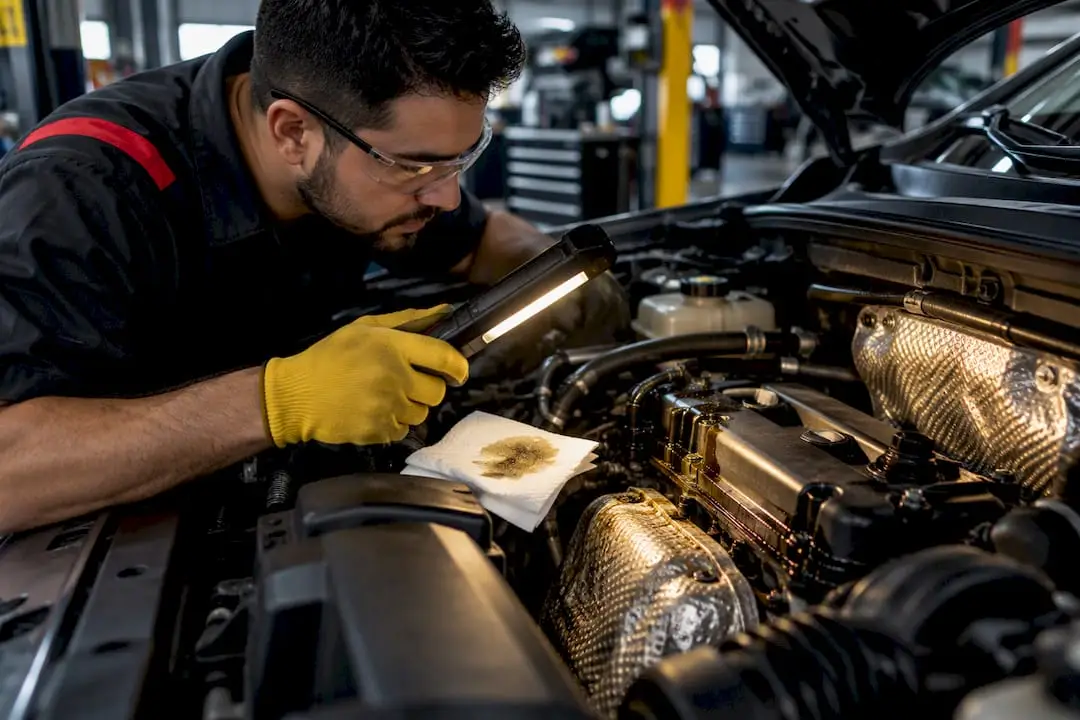
A burning oil smell almost always means oil has either dripped onto a hot engine part or is being burned somewhere it shouldn’t be, like inside the combustion chamber. Pull over safely when you first notice it, shut off the engine, and look for smoke, puddles, or dashboard warning lights before deciding whether to keep driving. If you see heavy smoke, flames, or an oil pressure warning light, stop immediately and call for a tow rather than risk further damage.
TL;DR:
- Oil leaks onto hot engine parts, such as the valve cover gasket or oil pan, are common causes of burning oil odors, often accompanied by visible oil film or puddles.
- Burning oil inside the engine due to worn piston rings or valve seals can cause internal smoke and a drop in oil levels without visible leaks.
- Checking the dipstick and inspecting the underside of the car, engine bay, and exhaust system are quick methods to identify external leaks or internal burning signs.
- Immediate safety steps include pulling over, shutting off the engine, waiting for it to cool, and contacting roadside assistance if warning lights or heavy smoke are present.
- A mechanic may perform dye and smoke testing to locate leaks accurately and recommend repairs such as gasket replacements, PCV valve service, or turbo oil line fixes.
Table of Contents
- Common Mechanical Reasons a Car Smells Like Burning Oil
- Quick, Safe Checks to Narrow Down the Cause
- What a Mechanic Inspects and Common Repairs
- External Leak or Internal Burn: Why the Difference Matters
- How Kwik Kar Diagnoses and Fixes Burning-Oil Problems
- Why Checking Oil Early Beats Paying for Bigger Repairs Later
- Schedule a Diagnostic or Repair at Kwik Kar Richardson
- Sources
- FAQ
Common Mechanical Reasons a Car Smells Like Burning Oil
Most burning oil odors trace back to one of two situations: oil leaking onto something hot, or oil getting consumed inside the engine faster than it should. Knowing which category you’re dealing with helps you gauge urgency before you even pop the hood.
- Valve cover gasket leak symptoms typically show up as an oily film on the top of the engine, near the exhaust manifold, producing a sharp burning odor at idle or low speed.
- Oil pan or filter housing leaks drip lower, often landing on the exhaust pipe rather than the manifold, and tend to smell strongest from underneath the car.
- Spilled oil after a recent service visit is common and usually burns off within a few miles as residual oil on the block heats up.
- Internal oil consumption from worn piston rings or failing valve seals lets oil seep past into the combustion chamber, where it burns along with fuel.
- A failing PCV valve can pull oil vapor into the intake system, creating a burnt smell along with rough idle or a check engine light.
- Turbocharged engines face a particular risk: a deteriorating oil feed pipe can leak oil directly onto a red-hot turbo housing, which is both a burning smell and a fire hazard.
- Overfilled oil from a recent change often burns off on the exhaust manifold until the excess is gone.
Other fluids mimic this smell. Burning transmission fluid smells sweeter and more acrid, while leaking coolant tends to smell sweet rather than smoky. If your engine oil is low and you also notice a burnt-sweet smell, don’t assume it’s just oil. Note, too, that catalytic converters on newer vehicles can mask visible exhaust smoke even when oil is burning internally, so the absence of smoke doesn’t rule out a real problem.
Quick, Safe Checks to Narrow Down the Cause
Before you diagnose anything, get the car and yourself out of harm’s way. Pull off the road onto a flat shoulder or parking lot, put the vehicle in park, and turn off the engine. Let things cool for at least 10 to 15 minutes. Hot oil, hot exhaust components, and a hot turbo housing can cause burns, so patience here isn’t optional.
Once it’s safe to approach:
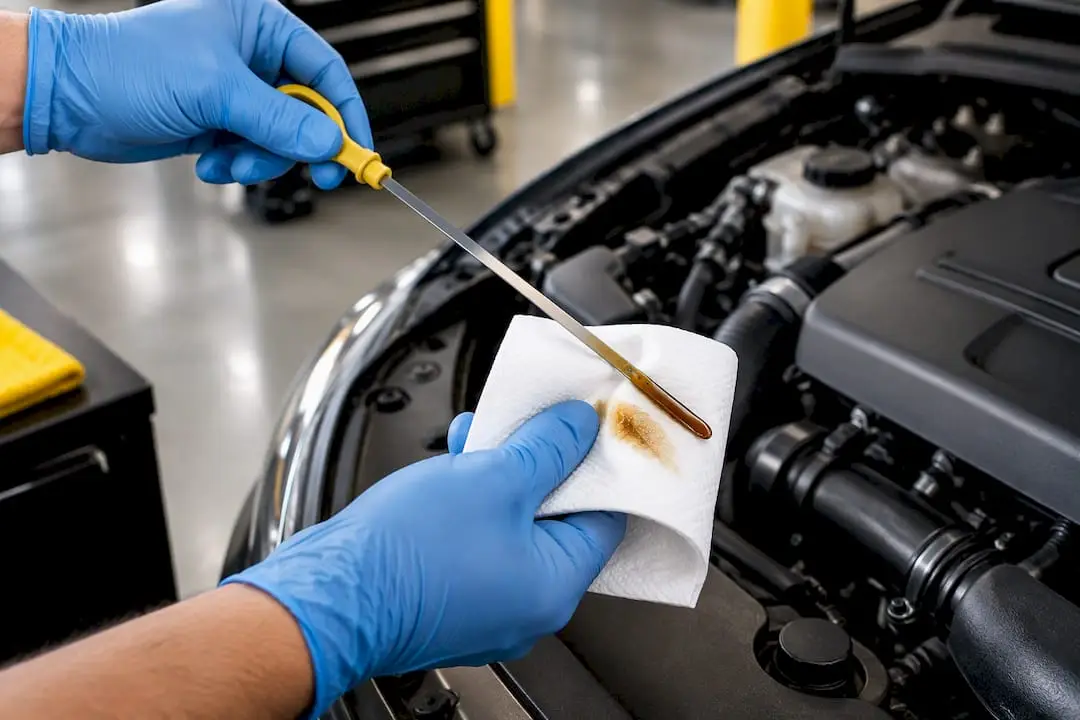
- Check the dipstick. With the engine off and cool, pull the dipstick, wipe it clean, reinsert fully, then pull it again to read the level. A reading below the “add” mark suggests oil loss, and regular monitoring is one of the most reliable ways to catch a slow burn before it becomes a serious problem.
- Look underneath the car for fresh puddles or drips, particularly near the front and center of the engine bay.
- Inspect the valve cover and oil filter area for a wet, oily sheen, which points toward a gasket or seal leak.
- Check the tailpipe and exhaust manifold for oily residue or discoloration, and watch the exhaust for blue or gray smoke while the engine idles.
- Note any dashboard warning lights, especially the oil pressure light, and glance at the temperature gauge to rule out overheating.
- Smell where it’s strongest. A burnt oil odor coming through the vents often means oil is contacting a hot manifold or being drawn into the intake, rather than a cabin air filter issue.
If the oil pressure light comes on, the smell is joined by visible smoke, or you can’t find the dipstick or don’t feel confident checking it, call for roadside assistance rather than continuing on.
Pro Tip: Keep a folded paper towel in your glovebox for dipstick checks. A quick wipe test tells you more about oil color and consistency than a glance ever will, and it takes ten seconds.
What a Mechanic Inspects and Common Repairs
A shop won’t just guess at the source. Expect a systematic process that starts broad and narrows down to the exact leak point.
- Visual inspection of the engine bay, exhaust manifold, and undercarriage for oil trails and wet spots.
- Dye testing, where a UV-reactive dye is added to the oil and the engine is run so a technician can spot the leak’s exact origin under black light.
- Smoke testing to find intake or vacuum leaks that might be pulling oil vapor through the PCV system.
- PCV valve inspection, since a stuck-open or failed valve is a frequent, inexpensive culprit.
- Oil consumption or compression testing when no external leak is found, but the oil level keeps dropping, which points toward internal wear.
Repairs range from quick to involved. A PCV valve replacement or oil filter housing gasket is often a same-day fix. A valve cover gasket job takes longer depending on the engine layout, and a turbo oil line repair requires more disassembly around the turbocharger. If compression testing reveals worn rings or damaged valve seals, you’re looking at a bigger internal repair, and it’s worth asking your shop for photos, a written inspection report, and a clear explanation of what test results led to their recommendation. A shop worth trusting won’t hesitate to show you the evidence.
External Leak or Internal Burn: Why the Difference Matters
An external leak and true internal oil burning look similar from the driver’s seat but call for very different responses.
Signs of an external leak:
- Visible oil trail on the ground or engine bay
- Smell strongest right after shutdown, often with a wisp of smoke from under the hood
- Oil level drops slowly and steadily, matching visible drip evidence
Signs of internal burning:
- Oil level falls with no puddles or visible leak anywhere
- Blue or gray exhaust smoke, though it may be faint or absent on newer vehicles
- Fouled spark plugs, rough idle, or gradually worsening fuel economy
Here’s the complication: some newer production vehicles burn oil internally without producing the blue smoke drivers expect, because modern catalytic converters and exhaust systems process it before it’s visible. That’s exactly why dipstick checks matter more than watching the tailpipe. It’s also worth checking whether your manufacturer has issued a technical service bulletin or warranty extension for known oil consumption issues on your specific engine, since some automakers have extended coverage after documented complaints.
How Kwik Kar Diagnoses and Fixes Burning-Oil Problems
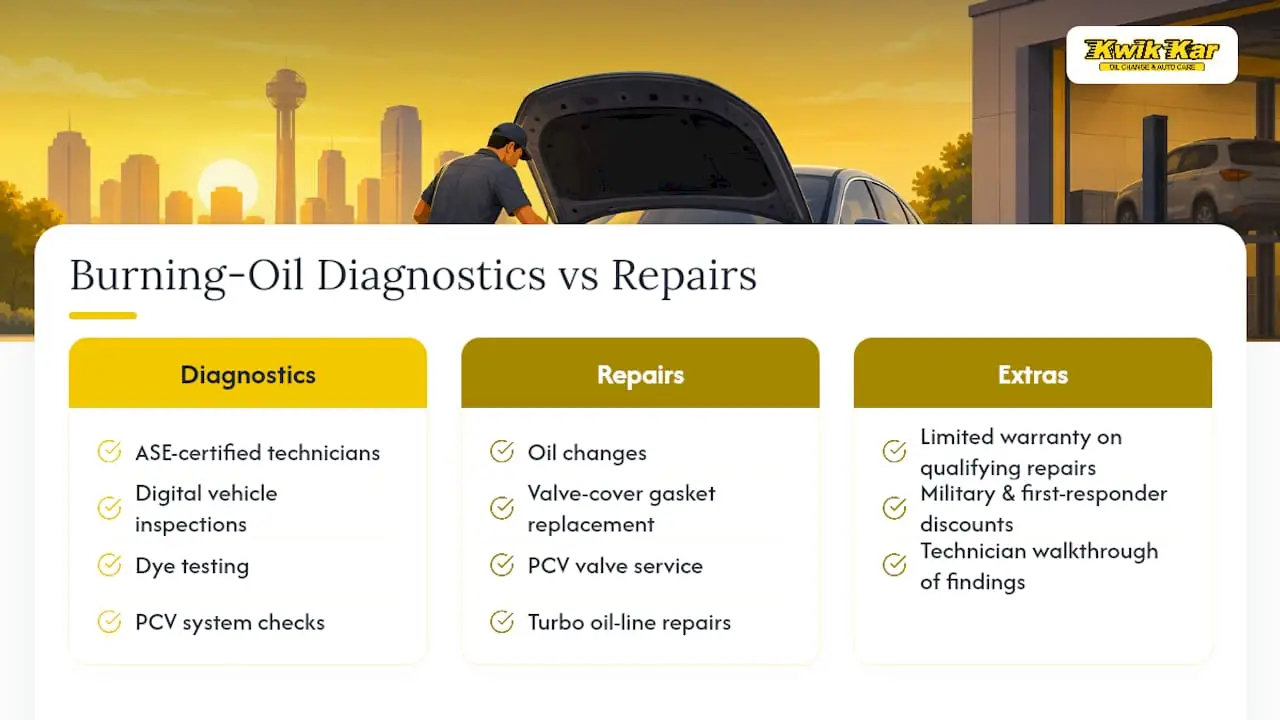
ASE-certified technicians run digital vehicle inspections alongside dye testing, PCV system checks, and full engine diagnostic scans to help pinpoint the source of a burning oil smell. Common repairs performed in-shop include oil changes, valve cover gasket replacement, PCV valve service, turbo oil line repairs, and broader engine diagnostics when internal wear is suspected.
Inspections can include digital photos showing the leak or wear point, and qualifying repairs may come with a limited warranty. Special discounts may be available for military personnel and first responders on eligible services. If you’re noticing a burnt oil smell on your commute, bring the car in and expect a straightforward walkthrough of what the technician finds and why.
Why Checking Oil Early Beats Paying for Bigger Repairs Later
Modern engines have gotten quieter about their problems, not better behaved. Consumer Reports has documented multiple recent models that burn oil at a concerning rate while showing little or no visible exhaust smoke, which means the dashboard and tailpipe can’t be trusted as your only warning system anymore.
A dipstick check takes less time than checking a text message. Catching a valve cover gasket leak or a failing PCV valve early keeps oil away from your catalytic converter and spark plugs, and it’s a fraction of the cost of an engine repair down the road. Simple, consistent maintenance is still the cheapest insurance policy your engine has.
— Kwik Kar
Schedule a Diagnostic or Repair at Kwik Kar Richardson
The service provider offers documented, photo-backed diagnoses before repairs begin. This helps drivers understand what needs fixing before approval.

If you’ve noticed a burnt oil smell during your commute, don’t wait for it to turn into a bigger repair bill. Book an engine diagnostic to pinpoint the source, or if a recent top-off or service visit is the likely culprit, schedule an oil change to get things reset. For gasket replacements, PCV service, or other repairs uncovered during inspection, the full range of auto repair services covers what you need in one visit. Ask for digital inspection photos with your appointment, and if a repair qualifies, it’s backed by the shop’s 24 month/24,000-mile warranty. Richardson drivers, families, commuters, and fleet managers can request an appointment directly through Kwik Kar Oil Change & Auto Care and get a clear answer instead of a guess.
Sources
This guide draws on Consumer Reports’ reporting on oil-consuming engines and manufacturer responses, AAA’s guidance on detecting a car burning oil, and AAA’s explanation of low oil pressure risks. For general engine-bay odor troubleshooting, Diamond Brite’s guide to diagnosing vehicle odors offers additional practical context.
- How to tell if your car is burning oil — AAA
- Kia recall for turbocharger oil feed pipe — Consumer Reports
FAQ
What does it mean when you smell burnt oil?
A burnt oil smell usually means oil has dripped onto a hot engine component like the exhaust manifold or turbocharger, or that oil is being burned inside the engine due to worn seals or rings. The exact cause depends on whether you also see smoke, puddles, or a dropping oil level.
Can I still drive my car if it smells like burning oil?
It depends on what else you notice. If there’s no smoke, no warning lights, and the oil level checks out fine, you can typically drive carefully to a shop, but heavy smoke, flames, or an oil pressure warning light means you should stop immediately and call for a tow.
How do I fix a burning oil smell?
The fix depends on the source: a leaking valve cover gasket or oil pan needs a gasket replacement, a failed PCV valve needs replacement, and a turbocharger oil line leak requires professional repair due to fire risk. A proper diagnosis, including a dye test or smoke test, identifies the exact leak point before any repair is made.
Is burning oil smell bad for you?
Breathing burnt oil fumes for extended periods can irritate your eyes, throat, and lungs, so it’s best to drive with windows cracked and get the issue diagnosed promptly rather than living with the smell. If the odor is strong inside the cabin rather than just underhood, treat it as a signal to get the vehicle inspected soon.