You press the brake pedal at a light on Belt Line Road, and it sinks farther than it did last week. The car still stops, but the pedal feels soft and vague. That’s usually the moment people start searching for the cost to bleed brakes.
That concern is valid. A brake pedal shouldn’t feel mushy, inconsistent, or low. In the shop, that symptom often tells us the hydraulic system isn’t transferring force the way it should. Sometimes the fix is a straightforward brake bleed. Sometimes it points to old fluid, a recent brake repair, or another issue that needs inspection before parts get replaced unnecessarily.
For Richardson drivers, the price matters, but so does knowing what you’re paying for. Families want confidence in the school run. Fleet managers need vehicles on the road, not sitting with avoidable brake problems. Owners of older, high-mileage cars want to avoid turning a fluid issue into a much bigger repair.
When Your Brake Pedal Feels Spongy What It Means
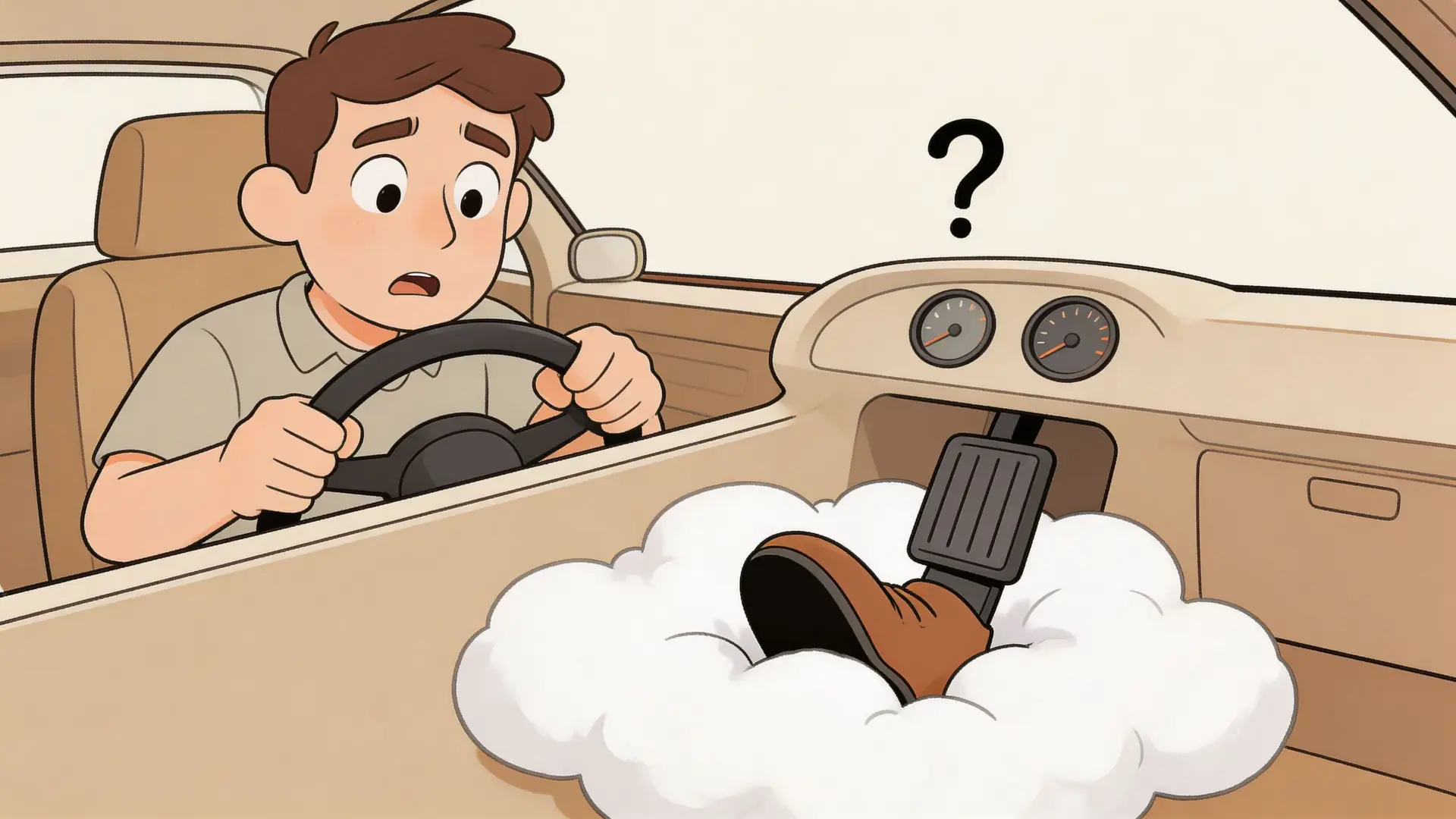
A spongy pedal usually shows up in ordinary driving first. You’re easing into traffic, slowing for a yellow light, or backing out of a parking space, and the brake pedal feels softer than normal. It may travel lower before the brakes respond, or it may feel uneven from one stop to the next.
That’s not a “wait and see” symptom. It’s a warning.
What drivers usually notice first
In real service bays, customers rarely walk in and say, “I think there’s air in my hydraulic brake lines.” They say things like:
- The pedal feels soft
- I have to push farther to stop
- The brakes worked better a month ago
- The pedal changed after brake work
- The fluid looks questionable
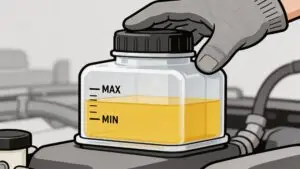
If you’ve already checked the reservoir, it helps to understand what the level can and can’t tell you. Kwik Kar’s guide on brake fluid level is a useful starting point for that basic check.
Why this feeling matters
Your brake system relies on hydraulic pressure. When the system is healthy, pedal force transfers cleanly through brake fluid to the calipers or wheel cylinders. When air gets into that sealed path, the pedal feel changes because air doesn’t behave like brake fluid.
The result is less confidence and less consistency. You may still stop, but the pedal response can feel delayed or weak.
A soft pedal isn’t just an annoyance. It’s one of the clearest signs that the braking system needs attention before the problem grows.
A spongy brake pedal can show up after a caliper replacement, line repair, fluid deterioration, or a small leak that let air enter the system. It can also appear in older vehicles that haven’t had brake fluid serviced in a long time.
The practical takeaway
If the pedal suddenly feels different, don’t judge the issue by whether the car “still stops.” Brake problems often start with reduced feel before they become obvious failures. That’s why the right next step isn’t guessing. It’s having the system checked and finding out whether the car needs a bleed, a flush, or a deeper repair.
What Is Brake Bleeding and Why Is It Necessary
Brake bleeding removes trapped air from the brake lines. That’s the simple version, and it’s the one most drivers need.
Think of the brake system like a sealed garden hose that’s supposed to stay full of liquid. If an air bubble gets inside, pressure no longer transfers smoothly. You squeeze, but part of that force gets absorbed by the bubble instead of moving the fluid cleanly. That’s why the pedal feels soft.
What a technician actually does
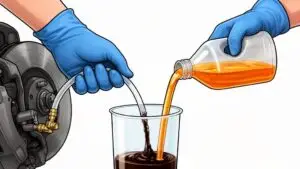
A proper bleed means opening the bleeder valves in sequence and pushing fluid through until the trapped air is expelled. On many vehicles, the process starts at the wheel farthest from the master cylinder and works inward. Depending on the setup, a technician may use pedal pressure, a vacuum bleeder, or another method suited to the system.
The job sounds simple until you run into rusty bleeder screws, fragile hardware, or a vehicle with a more involved ABS procedure.
Bleeding versus a full flush
These two services get lumped together all the time, but they’re not the same.
- Brake bleeding focuses on removing air from the system.
- A brake fluid flush replaces the old fluid throughout the system.
That difference matters because old brake fluid creates its own problems over time. Hygroscopic DOT 3/4 brake fluids absorb about 2-3% moisture annually, which can drop the fluid's boiling point from a dry 401°F to a wet 284°F. This can cause the fluid to boil under hard braking, creating vapor pockets (air) that lead to a spongy pedal and significantly reduced stopping power (YourMechanic).
Why old fluid changes the decision
If air entered the system because a part was replaced, a bleed may be the main need. If the fluid is dark, contaminated, or overdue for service, a flush often makes more sense. It solves the immediate pedal issue and addresses the condition of the fluid itself.
For a closer look at how contamination affects braking, Kwik Kar’s article on dirty brake fluid lays out the warning signs in plain language.
Practical rule: If the pedal is soft and the fluid condition is poor, fixing only the air issue may not be enough.
When bleeding becomes necessary
Common triggers include:
Recent brake repairs
Caliper, hose, line, or master cylinder work can introduce air.Fluid degradation
Moisture and contamination can change how the system behaves.Leaks or low fluid events
Even a small problem can let air into the hydraulic circuit.Persistent pedal softness
If the pedal doesn’t feel firm and predictable, the system needs diagnosis.
A good brake service doesn’t start with selling a flush or a bleed. It starts with identifying which one fits the condition of the car.
Breaking Down the Professional Cost to Bleed Brakes
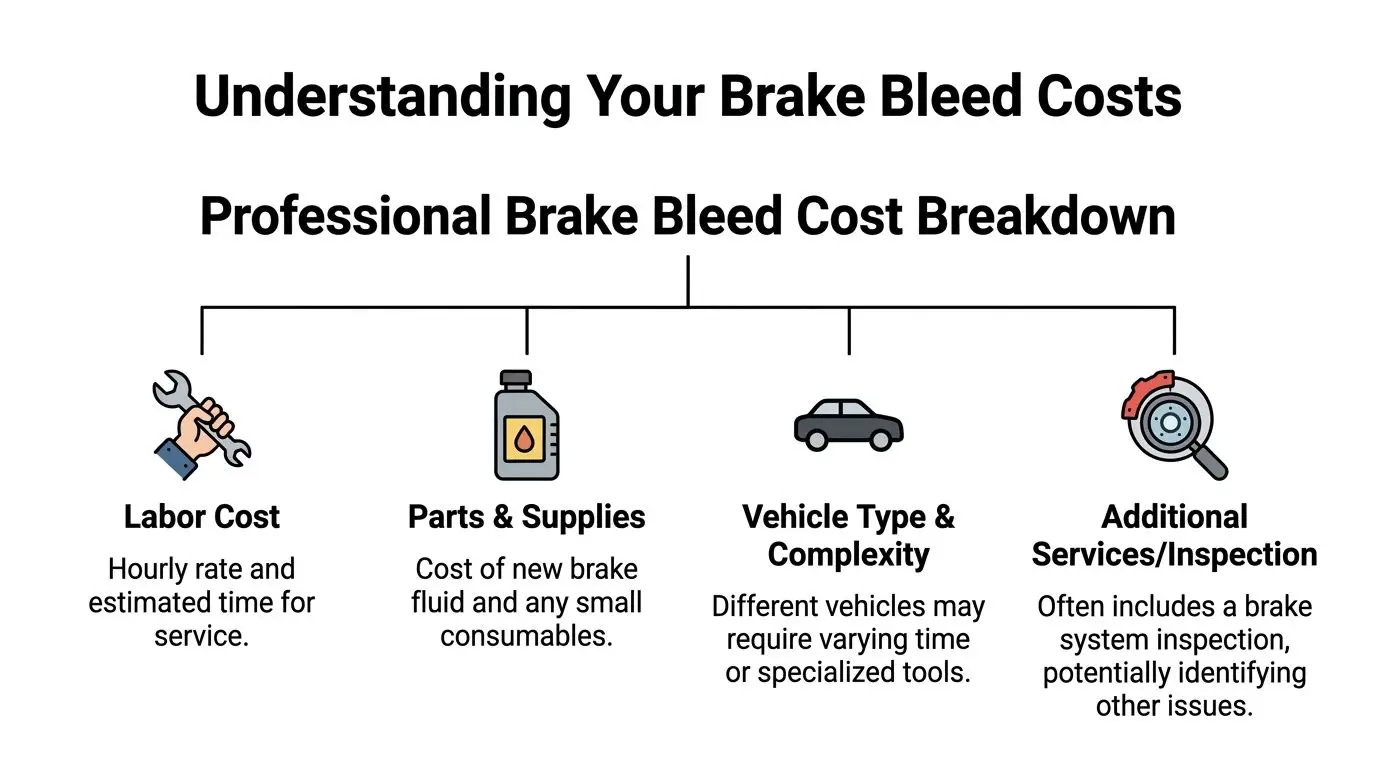
Most drivers want one number. In practice, the cost to bleed brakes depends on labor time, fluid type, vehicle design, and whether the service is limited to air removal or part of a broader brake inspection.
Across the U.S. in 2025, a professional brake bleed service typically costs between $100 and $225. Independent shops usually charge $110–$170, while dealerships can range from $150–$225, especially for vehicles with complex hydraulic anti-lock braking systems (CarParts).
Labor is usually the biggest piece
Brake fluid itself is not the expensive part. Labor usually drives the invoice.
A technician has to inspect the system, confirm the cause of the soft pedal, access the bleeder screws, follow the proper sequence, and verify pedal feel when the work is done. If the vehicle has seized bleeders, corrosion, or a more involved ABS process, the time and care required go up.
That’s one reason a brake bleed at a dealership often costs more than the same basic service at an independent shop.
Vehicle complexity changes the price
Two cars can need “the same” service and end up with different estimates.
A straightforward hydraulic system on an older sedan is generally simpler than a newer vehicle with a more complex anti-lock braking system. Trucks, performance vehicles, and some later-model imports may require extra steps or more careful procedures to restore a firm pedal.
Here’s what tends to affect price most:
Vehicle age and design
Newer systems can be more procedure-sensitive.Brake system condition
Rust, stuck bleeder screws, or damaged hardware add time.Type of fluid required
The correct DOT fluid matters, especially if the manufacturer has specific requirements.Scope of service
A simple bleed is different from a bleed combined with diagnosis or a full fluid exchange.
Why estimates can vary so much
Shops don’t all build estimates the same way. Some quote only the bleed itself. Others include a broader brake inspection, fluid replacement, or system check. That’s why a low advertised number can look attractive until you find out it doesn’t cover the actual issue.
A clear estimate should tell you what the shop found, what service it recommends, and whether the price is for a targeted bleed or a fuller fluid service. In a professional shop, transparency matters for more than customer trust. It’s also part of sound operating practice, along with protections such as garage liability insurance that help legitimate repair facilities manage the risks tied to vehicle service work.
The best brake estimate isn’t the shortest one. It’s the one that matches the condition of the car and explains the work plainly.
What local drivers should ask before approving service
If you’re comparing prices in Richardson, ask these questions:
| Question | Why it matters |
|---|---|
| Is this quote for a bleed or a full flush? | Those are different services. |
| Does it include inspection time? | A spongy pedal can have more than one cause. |
| Are there ABS-related procedures involved? | Some systems need extra steps. |
| What fluid does my vehicle require? | Using the correct fluid protects seals and performance. |
If you want a plain-language overview of when a full fluid exchange is the better call, Kwik Kar’s article on brake flush service helps separate routine maintenance from symptom-based repair.
Brake Service Costs for Richardson Drivers and Fleets
National averages help, but local drivers don’t live in national averages. They drive in Richardson traffic, deal with stop-and-go commuting, and try to balance safety with a maintenance budget that has to cover more than brakes.
For local families, brake service is usually about confidence. If the pedal feel changes, if the car has been on older fluid for too long, or if another shop recently performed brake work, getting the system checked early is the safer and cheaper path than waiting for the problem to get worse.
High-mileage vehicles need a different mindset
Older cars and trucks often don’t need fancy theory. They need honest inspection.
On high-mileage vehicles, brake service can become more involved because hardware may be rusted, bleeder screws may be stubborn, and fluid may have gone too long without attention. That doesn’t always mean a big repair bill. It does mean the technician needs to check the system carefully before anyone assumes a quick bleed will solve everything.
With older vehicles, the smartest money usually goes toward prevention and inspection, not guesswork.
That’s especially true for Richardson commuters who put steady daily miles on their vehicles. Soft pedal complaints in aging cars often come with years of deferred fluid service, and that can affect lines, calipers, and ABS components over time.
Why fleets should think differently than retail drivers
Fleet managers have a separate problem. One truck or van down for brake work can disrupt deliveries, appointments, or jobsite schedules. Looking up a single-vehicle estimator online doesn’t really answer the budgeting question for a small business with several vehicles to maintain.
While most online estimators provide costs for individual vehicles, they often fail to address fleet-specific pricing. There is a significant opportunity for small business managers to negotiate bulk discounts of 10-20% for servicing multiple vehicles, a value proposition that ASE-certified shops like Kwik Kar can offer to ensure fleet safety and control maintenance costs (RepairPal).
A fleet approach works better when service is planned, not reactive. For truck-heavy operations, a practical resource like this preventive maintenance checklist for trucks can help managers build a routine around inspections instead of emergency repairs.
Who benefits most from scheduled brake care
Families
Brake feel, stopping consistency, and inspection timing matter more than chasing the lowest quote.Small business fleets
Predictable service windows help reduce downtime and make costs easier to manage.Military personnel and local essential workers
When discounts are available, it often makes more sense to use certified service than gamble on a marginal DIY savings.
The DIY vs Professional Brake Bleed A Cost and Safety Analysis
DIY brake bleeding makes sense on paper. You buy fluid, a bleeder kit, maybe a vacuum tool, and save the labor charge. For the right person on the right vehicle, that can work.
But brakes aren’t a forgiving system to learn on. If you leave air in the lines, over-tighten a bleeder screw, damage old hardware, or use the wrong procedure on an ABS-equipped vehicle, you can end up paying for the job twice.
What DIY costs and what it asks of you
While a DIY brake bleed kit costs only $30-$50, the risks are substantial for non-professionals. Anecdotal data from mechanics suggests that 20-30% of DIY brake jobs may fail safety inspections due to improperly bled lines or other errors, often leading to a more expensive professional redo. This is especially true for older, high-mileage vehicles where components may be seized or brittle (CARFAX).
DIY also asks for more than tools. It asks for:
- Correct fluid selection
- Clean handling so contaminants don’t enter the system
- Proper wheel sequence
- Care around old bleeder screws
- Enough judgment to know when the problem is not just trapped air
Side-by-side comparison
| Factor | DIY (Do-It-Yourself) | Professional Service (Kwik Kar) |
|---|---|---|
| Upfront cost | Lower parts cost if nothing goes wrong | Higher than DIY because labor is included |
| Tools needed | Bleeder kit, hand tools, fluid, possibly vacuum equipment | Shop tools and brake service equipment already on hand |
| Time | Can take longer, especially for first-timers | Usually more efficient because the process is routine |
| Risk level | Higher if air remains, hardware breaks, or procedure is wrong | Lower because diagnosis and execution are handled by trained technicians |
| ABS complexity | Can be difficult on some vehicles | Better suited to systems that need a more controlled process |
| Best fit | Experienced DIYers with a simple vehicle and good access | Most daily drivers, high-mileage vehicles, fleets, and safety-first owners |
Where DIY usually goes wrong
The most common mistake isn’t lack of effort. It’s underestimating the system.
Someone sees a soft pedal, opens one bleeder, replaces a little fluid, and assumes the issue is solved. Then the pedal still feels off because the full sequence wasn’t completed, the reservoir ran low during the process, or the actual problem was fluid condition or a failing part.
Another common issue is old hardware. On a high-mileage vehicle, a bleeder screw can seize in place. If it snaps, the job changes quickly.
If your vehicle already has age, rust, or brake history behind it, DIY savings can disappear fast.
When professional service makes more sense
Professional service is the better call when:
- The pedal changed after recent brake work
- The vehicle has ABS and the procedure isn’t straightforward
- The car is older and the hardware may be brittle
- You need a firm answer, not a trial-and-error fix
- The vehicle carries family, employees, or work equipment every day
There’s nothing wrong with doing your own maintenance when the job matches your skill and tools. Brake bleeding just sits in a category where a mistake affects the one system you count on every time traffic stops suddenly.
How to Save Money on Your Next Brake Service
The cheapest brake bleed is often the one you don’t end up needing because the fluid was serviced on time and the system was checked before symptoms got worse.
That’s the practical way to lower brake costs over time. Stay ahead of fluid condition, catch small issues early, and avoid turning moisture contamination into component damage.
Focus on prevention first
A full brake fluid flush, which replaces all contaminated fluid, is a key preventative measure. Performing this service every 2 years or 30,000 miles can prevent moisture-induced corrosion in brake lines and ABS modules, saving drivers from potential future repairs that can cost between $300 and $1,000 (AutoZone).
That matters because fluid neglect doesn’t usually announce itself with one dramatic failure. It shows up as poor pedal feel, corrosion risk, and expensive parts later.
Smart ways to keep the bill under control
Bundle inspections with routine visits
If your car is already in for other maintenance, ask for a brake check while it’s on site.Don’t ignore pedal changes
A soft pedal caught early is easier to diagnose than a brake system that’s been driven with the problem for months.Use discounts when you qualify
Military personnel, first responders, and healthcare workers should always ask whether the shop offers a service discount.Approve the right service, not the biggest one
Sometimes the system needs a targeted bleed. Sometimes it needs a full fluid service. The savings come from accurate diagnosis.
One option local drivers can compare
Kwik Kar Oil Change and Auto Care offers a brake fluid flush service and performs brake fluid exchange work that includes removing old fluid, flushing the system when needed, and refilling with the correct brake fluid. For Richardson drivers, that’s one local option to compare alongside other certified shops when you’re deciding how to address a soft pedal or overdue fluid service.
Drive with Confidence Schedule Your Brake Check Today
A spongy pedal is one of those symptoms you shouldn’t talk yourself out of. If the brake pedal feels softer, lower, or less predictable than it used to, the system needs attention. Sometimes the fix is a straightforward bleed. Sometimes it’s a fluid issue or a related repair. Either way, getting it checked early is the safer move.
The cost to bleed brakes is easier to manage than the cost of waiting until fluid contamination, corrosion, or a worsening hydraulic problem turns into a larger repair. For Richardson drivers, especially families, fleet managers, and owners of high-mileage vehicles, clear diagnosis matters as much as the price.
If you want a transparent estimate and a brake inspection from ASE-certified technicians, schedule a visit and get an answer before that soft pedal becomes a bigger problem.
If your brake pedal doesn’t feel right, contact Kwik Kar Oil Change and Auto Care for a clear inspection and estimate. We help Richardson drivers make sense of brake service without guesswork, so you can get back on the road with confidence.