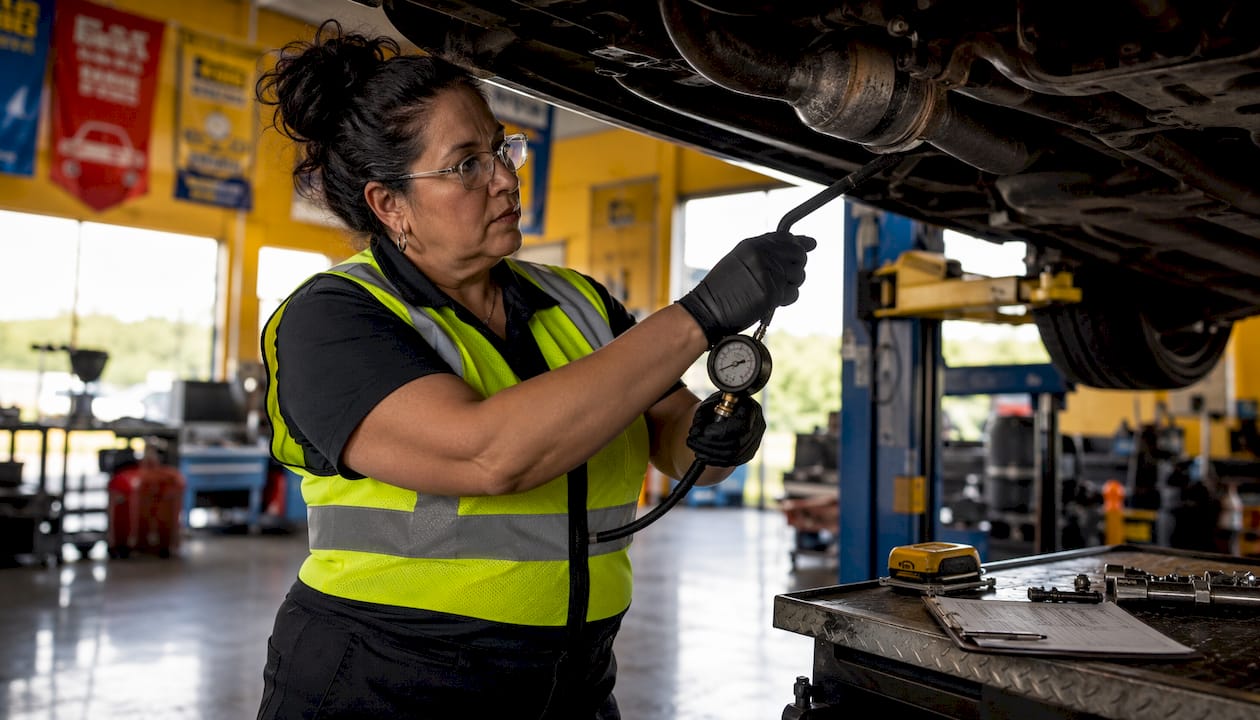
State inspector certification is the official authorization granted to qualified individuals to perform mandated vehicle and safety inspections under state law. It confirms that an inspector has completed approved training, passed written and practical exams, cleared a background check, and holds the legal authority to enforce compliance with safety and emissions standards. Without valid certification, any inspection a person conducts carries no legal weight, and motorists relying on that inspection risk fines, failed registration, or invalid compliance status.
Key facts about state inspector certification at a glance:
- Certification is a legal credential, not a professional title. It grants specific enforcement authority under state law.
- Certified inspectors verify that vehicles meet government-mandated safety and emissions standards at the time of inspection.
- Certification is not permanent. Most states require periodic renewal every few years.
- Background checks are mandatory in most jurisdictions, and certain criminal convictions disqualify applicants.
- Certification directly affects career advancement, earning potential, and the legal scope of work an inspector can perform.
What does a certified state inspector actually do?
Certified inspectors are regulatory partners, not just technicians. Their job is to serve as gatekeepers of road and environmental safety, following official technical handbooks with precision on every inspection. The core duties include inspecting vehicles for safety and emissions compliance, maintaining and calibrating inspection equipment, documenting findings accurately, and submitting reports to the appropriate state agency.
Beyond the technical work, inspectors communicate results directly to vehicle owners, which demands clear, professional customer service. When a vehicle fails, the inspector issues a rejection sticker or violation notice. That decision carries legal weight, so accuracy and impartiality are non-negotiable.
- Inspect vehicles against state safety and emissions criteria
- Operate, calibrate, and maintain inspection equipment to required standards
- Document all findings and submit reports to state agencies
- Issue rejection stickers or violation notices for non-compliant vehicles
- Communicate inspection results and compliance requirements to vehicle owners
- Participate in periodic training updates as regulations change
- Follow official technical handbooks on every inspection without exception
Pro Tip: Keep a detailed log of every inspection, including equipment calibration records. State auditors can request these at any time, and thorough documentation protects both your certification and your employer.
What qualifications do you need to become a state inspector?
The baseline requirements vary by state, but the pattern is consistent across jurisdictions. Most states set the minimum age at 17 or 18 years old, require completion of a state-approved training program, and mandate passing both written and practical exams before issuing a license.
- Age: Minimum 17 or 18 years old depending on the state
- Training: Completion of a state-approved course covering emissions control, inspection regulations, equipment operation, quality control, and customer service
- Written exam: Passing scores vary depending on license class and state
- Practical exam: Demonstrated ability to conduct a full inspection, including equipment use
- Background check: Criminal history screening; certain convictions disqualify applicants to protect public trust
- Experience: Some states, including Virginia, require at least one year of practical experience as an automotive technician or an approved training substitute
- Technical knowledge: Familiarity with vehicle emissions systems, safety components, and state inspection procedures
How does the state inspector certification process work?
The process follows a defined sequence, and skipping any step means starting over. Virginia’s process, for example, requires applicants to submit Form SP-170B along with a Criminal History Record Request before any license is issued. New York’s DMV processing time runs 6–8 weeks from application to approval, so plan the timeline carefully.
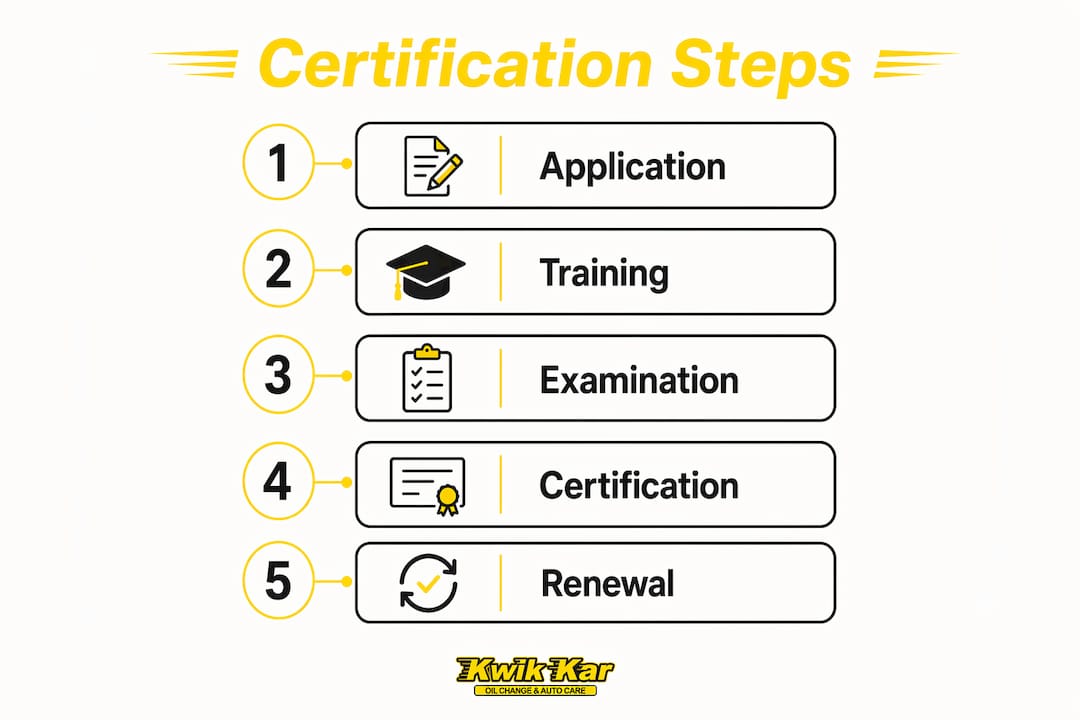
- Enroll in an authorized training course. State-approved programs run 8–16 hours and cover emissions regulations, equipment operation, quality control, and customer service.
- Complete all coursework and practical training components. Attendance and participation requirements are strict.
- Pass the written examination. Minimum passing scores vary depending on the state and license class.
- Pass the practical exam. Demonstrate a complete vehicle inspection, including proper use of required equipment such as an optical headlight aimer.
- Submit your application with required documentation. This includes government-issued ID, training completion certificates, and any state-specific forms.
- Undergo a background and criminal records check. Processing can add weeks to the timeline.
- Receive your official certification and inspector license from the issuing state agency.
- Track your license expiration date. Renewal requires completing re-certification training before the license expires, typically every 2–4 years.
Ongoing requirements and what keeps your certification valid
Certification is a living credential, not a one-time achievement. Inspectors must complete renewal or refresher training before their license expires, and most states set that window at 2–4 years. Kentucky, for instance, allows recertification up to six months before the four-year certificate expires. Miss that window, and you lose the legal authority to conduct inspections until the credential is reinstated.
- Renewal training is mandatory, not optional, and must be completed before expiration
- Lapsed certification means any inspection performed is legally invalid
- Background requirements remain in effect; new disqualifying convictions can trigger suspension or revocation
- Exam retake waiting periods apply in most states (30 days after a first failure, six months after subsequent failures in Virginia)
- Administrative processing for new applications can take up to 8 weeks in some states, so plan ahead
Pro Tip: Set a calendar reminder six months before your certification expires. That buffer gives you time to find an approved renewal course, complete it, and submit paperwork without any gap in your legal authority to inspect.

Key Takeaways
Certified state inspectors hold legal enforcement authority that expires without renewal, making ongoing training as critical as the initial certification process.
| Point | Details |
|---|---|
| Certification grants legal authority | Without valid certification, inspections carry no legal weight and motorists risk fines or failed registration. |
| Training covers more than mechanics | Approved courses include emissions regulations, equipment calibration, quality control, and customer service. |
| Exam scores matter | Written passing scores vary depending on state and license class. |
| Renewal window is 2–4 years | Most states require re-certification training before the license expires to maintain inspection authority. |
| Background checks are mandatory | Certain criminal convictions disqualify applicants and can trigger revocation of an existing license. |
FAQ
What is the purpose of a certificate of inspection?
A certificate of inspection confirms that a vehicle met government-mandated safety and emissions standards at the time of inspection. It serves as legal proof of compliance and is typically required for vehicle registration or title transfers.
What are the main roles and responsibilities of a state inspector?
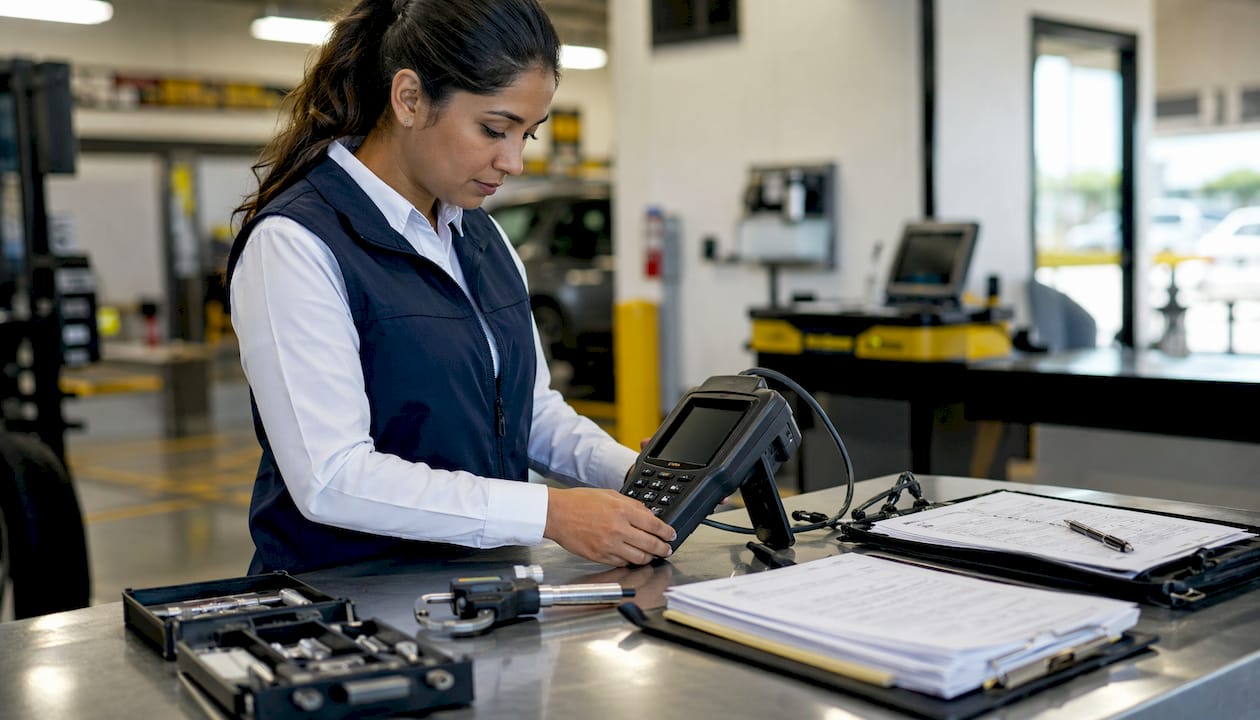
Certified state inspectors examine vehicles for safety and emissions compliance, maintain and calibrate inspection equipment, document findings, issue rejection notices for failing vehicles, and communicate results to vehicle owners professionally.
What are the four types of vehicle inspections?
The most common categories are safety inspections, emissions inspections, combined safety and emissions inspections, and commercial vehicle inspections. Requirements and inspector certification classes vary by vehicle type and state.
What do you need to become a state inspector?
You generally need to be at least 17 or 18 years old, complete a state-approved training course of 8–16 hours, pass written and practical exams, clear a background check, and submit a formal application to the state licensing agency.