EVAP Leak Symptoms: What You’ll Notice and What to Do
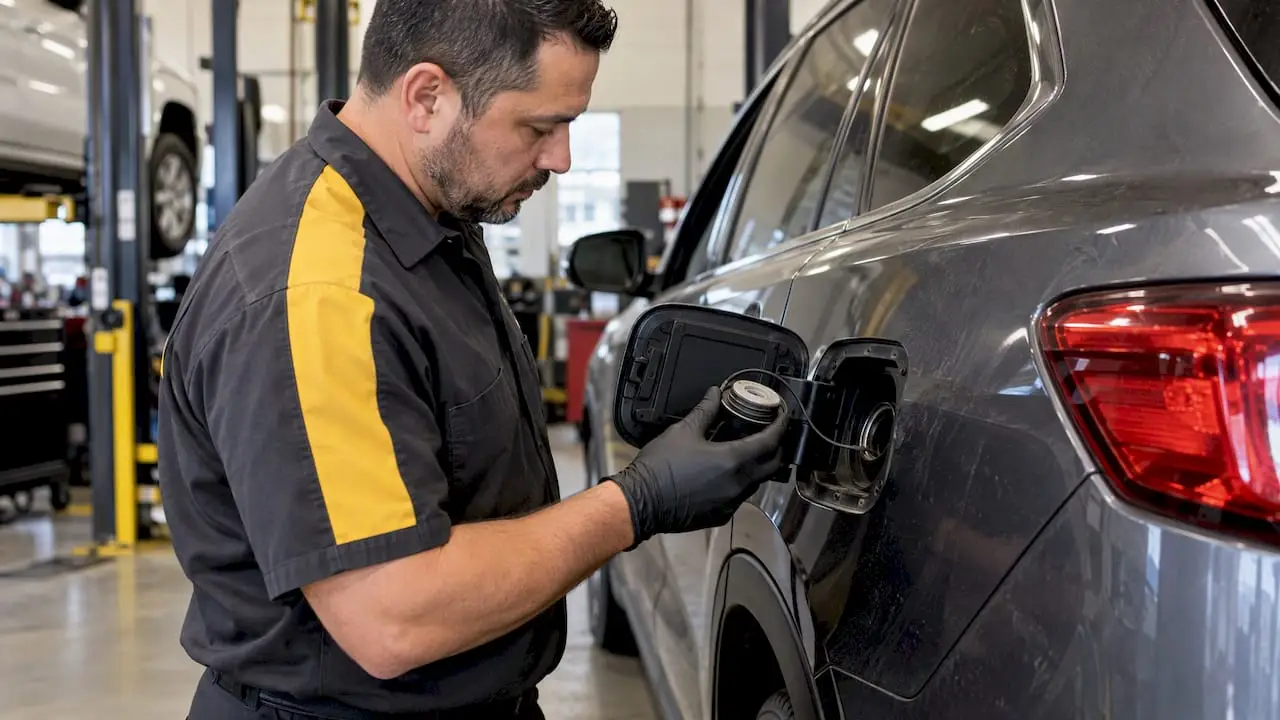
The most common sign of an EVAP leak is a check engine light, often with a small-leak code such as P0442 or P0456. Some drivers also notice a faint gasoline smell, and some find out only when a vehicle fails an emissions test. Most cars drive normally with an EVAP leak, which is why the problem is easy to ignore. If you’re in Richardson, Plano, Garland, Addison or North Dallas and the light is on, a diagnosis at Kwik Kar Oil Change & Auto Care at (972) 644-1851 can tell you whether it’s a loose cap or something deeper.
TL;DR
- The usual EVAP leak symptoms are a check engine light, a fuel-vapor smell and, in some cases, a failed emissions inspection. Many vehicles feel completely normal.
- A loose, worn or wrong gas cap is the cheapest and most common thing to check first, but it is not the only cause. Hoses, valves, the filler neck and the charcoal canister can all leak.
- A trouble code points to the EVAP system. It does not name the failed part, so a leak test or smoke test is often needed to find the actual leak.
- Strong gasoline odor, visible liquid fuel or wetness near the tank is a different situation from a small vapor leak and deserves prompt professional attention.
- Texas ended most non-commercial passenger vehicle safety inspections in 2025, but emissions testing still applies to qualifying vehicles in Dallas County.
Table of Contents
- What the EVAP system does
- The most common EVAP leak symptoms
- What the codes mean: small leak, large leak and others
- Common causes, from simple to complex
- What to check yourself first
- How a technician finds the leak
- When an EVAP leak is urgent, and when it isn’t
- Texas rules: why this matters in Richardson
- After the repair: why clearing the code isn’t enough
- Our perspective on EVAP leaks
- Getting EVAP trouble checked in Richardson
- FAQ
- Book an EVAP diagnosis
- Sources
What the EVAP system does
EVAP stands for evaporative emissions control. Gasoline gives off vapor, especially on a hot Texas afternoon. Instead of letting that vapor escape into the air, your vehicle traps it in a charcoal canister and later feeds it into the engine to be burned.
The system is a sealed network. It typically includes the fuel cap, filler neck, the tank, vapor lines and hoses, the charcoal canister, and a purge valve and vent valve that open and close at set times. A leak anywhere in that network lets vapor out.
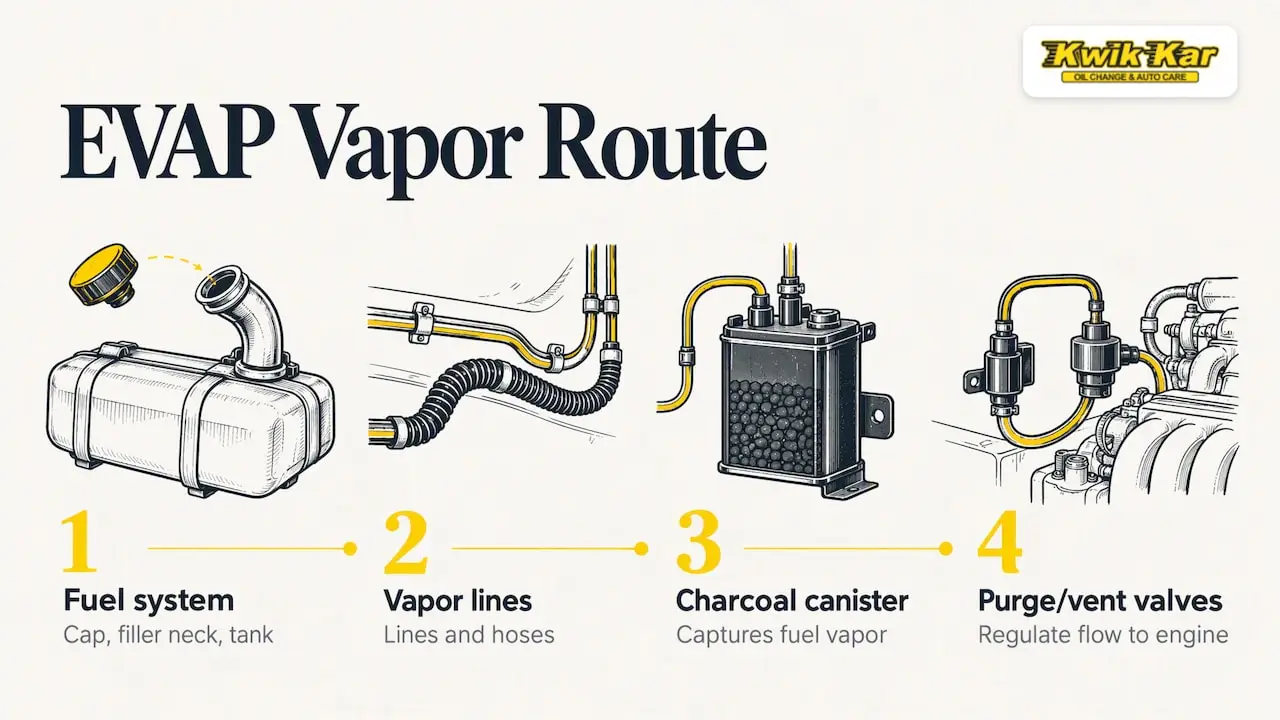
Because the system manages vapor and doesn’t directly make the engine run, a leak rarely changes how the car drives. The EPA explains that on-board diagnostics (OBD), required on all model-year 1996 and newer light-duty cars and trucks, monitor the fuel system for leaks and warn you through the malfunction indicator light. That light is your early warning, not a verdict.
The most common EVAP leak symptoms
A check engine light
This is the symptom nearly everyone sees first. The vehicle runs a self-test on the sealed system, and if it can’t hold pressure or vacuum as expected, it stores a code and turns on the light. The light may come on a day or two after the fault begins, because the test only runs under certain conditions, such as a particular fuel level and a cooled-down engine.
The light is not specific. It can illuminate for several unrelated reasons, so the stored code matters more than the light itself.
A gasoline smell
A faint fuel-vapor smell near the rear of the car, around the fuel door, or in a closed garage can point to vapor escaping from a cracked hose or a damaged filler neck. The EPA’s OBD guidance specifically lists a gasoline-vapor smell as something owners may notice.
A smell from the tailpipe is a separate topic. If that’s what you’re noticing, our guide to an exhaust that smells like gas covers those causes.
A failed emissions inspection
Sometimes the first sign is a rejection slip. In Texas, the emissions test in affected counties checks items that include the evaporative emissions control system and the gas cap. A leak, or a monitor that hasn’t finished running, can stop you from passing.
Smaller, less reliable clues
Some sources list slightly lower fuel economy, hard starting after fueling, or a rough idle. These are possible but inconsistent, and they are just as often caused by something else. Don’t use them to confirm an EVAP leak. Treat them as a reason to have the car scanned.
No symptoms at all
A vehicle can leak vapor without a light. The EPA’s MOVES3 evaporative emissions report notes that OBD does not catch every leak, and it attributes evaporative leaks to deterioration such as corroded fuel lines, filler necks and cracked hoses, as well as missing gas caps and improper maintenance. A car that feels fine has not been cleared of a leak.
What the codes mean: small leak, large leak and others
Many readers search for a “small EVAP leak code.” These are the codes that come up most often in EVAP diagnosis, as listed by common code references:
| Code | Typical description | What it suggests |
|---|---|---|
| P0440 | General EVAP system malfunction | Something in the system isn’t working, cause unspecified |
| P0442 | Small leak detected | A very small opening, often a cap seal, hose or connection |
| P0455 | Large leak detected | A larger opening, such as a missing or unseated cap or a disconnected hose |
| P0456 | Very small leak detected | The smallest leaks, often the hardest to locate |
| P0446 | Vent control circuit problem | A vent valve or its circuit |
Descriptions can differ slightly by manufacturer, so a scan tool and the vehicle’s service information matter. The key point is that a code describes what the computer observed. It doesn’t say which part failed. EPA’s explanation of OBD makes the same distinction: the system flags the malfunction and stores data, and a technician still has to find the cause.
Common causes, from simple to complex
Start with the easy checks, but don’t assume the cap is always to blame.
- The gas cap. It may be loose, cracked, missing, the wrong type, or have a worn seal or stripped threads.
- Cracked or brittle vapor hoses. Heat and age harden rubber and plastic lines.
- A corroded or cracked filler neck. Road salt isn’t a big Texas issue, but moisture, age and debris still take a toll.
- A stuck purge valve or vent valve. These open and close electronically, and a valve stuck open or closed can set a code.
- A damaged charcoal canister. Overfilling the tank can saturate it, and age or physical damage can crack it.
- A leaking fuel tank or fuel-tank-side component. This is less common, and also harder to reach.
In the EPA’s MOVES3 report, a Colorado field study attributed about 70% of evaporative leaks to deterioration, and about 30% to factors such as improper maintenance, tampering and missing gas caps. That figure comes from that specific study, not from every vehicle population, but it shows that worn components are a major source, not just a loose cap.
What to check yourself first
If the light came on shortly after you refueled, a few minutes of checking is reasonable. These steps are safe and need no tools.
- Turn off the engine and let the vehicle sit before you handle anything near the fuel door.
- Look at the gas cap. Confirm it’s the correct cap for your vehicle, check for cracks or a flattened or torn seal, and make sure the threads aren’t damaged.
- Reseat it. Tighten until it clicks as the manufacturer intends.
- Drive normally for a few days. Some monitors take multiple drive cycles to rerun, so the light may not clear right away.
- Note any smell or wetness near the tank or fuel door.
If the light stays on, or a cap that’s visibly damaged is replaced and the code returns, stop guessing. EPA test guidance for inspection programs treats the cap as one component with its own pass or fail check, using a pressure-loss or flow standard, which is a reminder that a cap can look fine and still leak.
Pro tip: Avoid topping off the tank after the pump clicks off. Forcing extra fuel in can push liquid toward the vapor system and the canister, which isn’t designed to handle liquid.
How a technician finds the leak
Replacing parts based on a code alone is the most expensive way to handle an EVAP fault. A methodical diagnosis usually goes like this:
- Scan and review data. The technician reads the stored code, freeze-frame data and monitor status.
- Visual inspection. The cap, the filler neck and accessible hoses and connections are checked for damage.
- Controlled leak test. The sealed system is tested to confirm whether it holds. EPA inspection guidance describes visual and pressure-decay testing for gas caps.
- Smoke test. Many shops use a low-pressure smoke machine to push visible vapor through the system and watch where it escapes. It is the most common answer to the question of how to find a tiny leak.
- Component checks. Purge and vent valves can be tested electrically and for flow.
Please don’t try a DIY smoke test with makeshift tools near the fuel system. Fuel vapor is flammable, and an ignition source, a spark or the wrong pressure can cause harm or damage the system. This is work for trained technicians with the proper equipment.
When an EVAP leak is urgent, and when it isn’t
A small vapor leak with the light on, no smell and normal driving is usually a repair to schedule, not an emergency. It does still release fuel vapor, which the EPA associates with evaporative emissions and ozone pollution, and a lit check engine light can hide a second fault that arrives later.
The situation changes if:
- You smell strong gasoline, particularly inside the cabin or in a garage.
- You see liquid fuel under the vehicle or wetness around the tank or filler area.
- The odor is getting noticeably stronger.
Liquid fuel is a safety matter, not an emissions detail. Park the vehicle outside, away from ignition sources, and call a shop. Don’t keep it in an enclosed space. If the check engine light is flashing, that suggests a different and more urgent problem, such as an engine misfire, and it shouldn’t be waved off as an EVAP issue.
Texas rules: why this matters in Richardson
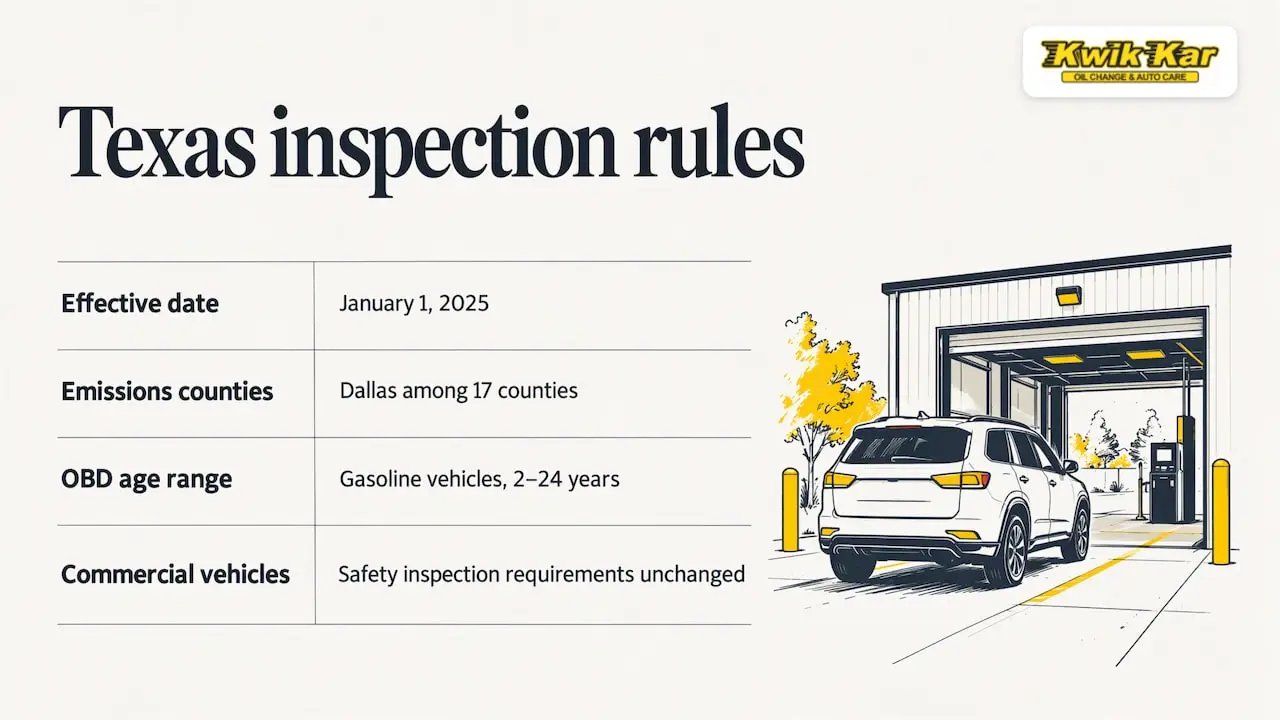
Texas ended most non-commercial passenger vehicle safety inspections effective January 1, 2025. That change doesn’t mean the light is optional. TxDMV lists Dallas among the 17 emissions counties, and emissions inspections are still required for qualifying vehicles before registration renewal. The state’s inspection criteria say gasoline vehicles from 2 through 24 years old in those counties receive the OBD test, which includes the evaporative system and the gas cap.
Commercial vehicles are a separate category. TxDMV states that commercial inspection requirements did not change, so fleets still need passing commercial safety inspections.
If you want the full picture, read our guides on Texas safety versus emissions requirements and how the Texas state inspection process works. For a cleaner view of why vehicles get rejected, see why vehicles fail emissions inspections.
After the repair: why clearing the code isn’t enough
Clearing a code turns the light off. It doesn’t prove the leak is gone. Modern vehicles run self-tests called readiness monitors, and after a repair or a code reset those monitors have to complete again. The California Bureau of Automotive Repair’s OBD reference notes that readiness monitors must be rerun after a reset and that completion depends on proper operating conditions. Texas has its own program, but the monitor logic is the same OBD standard.
In practice, this is why a car can show “not ready” right after a repair. Before an emissions test, ask your shop two things:
- Was the actual leak located and confirmed, not just the code cleared?
- Are the monitors ready, or do they still need drive cycles?
Our article on OBD monitors that aren’t ready explains how to prepare before paying a shop for a retest.
Our perspective on EVAP leaks
At Kwik Kar in Richardson, the EVAP light is one of the most misunderstood warnings we see. Drivers either panic because it’s a fuel system problem, or they ignore it because the car feels fine. Neither reaction helps.
We’d rather start with the evidence. Our ASE-certified technicians read the data, inspect what can be reached, and confirm the cause before recommending a repair. We share what we find through digital vehicle inspections, so you can see the reasoning and decide, instead of being handed a parts list. A cap that needs replacing is a small fix, and we’ll say so. A failing valve or a cracked line is a bigger one, and we’ll explain why.
We also don’t treat every EVAP code as an emergency. A small-leak code with no odor typically allows time to schedule. A strong fuel smell or liquid fuel doesn’t. Our job is to help you tell the difference.
When a qualifying repair is completed here, our 24-month/24,000-mile limited warranty may apply. It covers qualifying repairs only, not every service or inspection, so ask us what applies to your specific work.
— Kwik Kar
Getting EVAP trouble checked in Richardson
If your check engine light is on, or an emissions test has gone wrong, Kwik Kar offers check engine light diagnostics along with repair for related systems. You can see what we handle on our auto repair services page. Belts, hoses and other wear items are part of our work too, and so are Texas emissions and commercial inspections.
We serve drivers from Richardson, Plano, Garland, Addison and North Dallas, plus local fleets. We offer discounts for military members and first responders, so mention it when you call. Our phone number is (972) 644-1851.
FAQ
Can I drive with an EVAP leak?
Usually yes, for a short time, if it’s a small vapor leak with no strong odor and no liquid fuel. The vehicle will keep releasing fuel vapor, and the light may hide other faults. If you smell strong gasoline or see fuel, stop driving and have it inspected.
Will a loose gas cap really turn on the check engine light?
Yes, it can. A cap that isn’t seated or has a worn seal can break the system’s seal and set a small-leak code. If the light remains after you tighten or replace the cap, the cause is likely elsewhere, and the system should be tested.
What is a smoke test for an EVAP leak?
A technician feeds low-pressure smoke into the sealed EVAP system and watches for where it escapes. This pinpoints leaks too small to see, such as a pinhole in a hose or a bad seal. It should be done with proper equipment, not at home.
Will an EVAP leak make me fail a Texas emissions test?
It can. In Dallas County, qualifying gasoline vehicles get an OBD test that includes the evaporative system, and an active fault or unfinished monitors can cause a failure. Texas ended most non-commercial passenger vehicle safety inspections in 2025, but emissions testing remains.
How much does it cost to fix an EVAP leak?
It depends entirely on the cause. A gas cap is a small expense, while a canister, tank-side part or hard-to-reach line costs more. We don’t quote prices without diagnosing the vehicle, so call (972) 644-1851 for an estimate based on what we find.
Book an EVAP diagnosis
If your light is on or a smell has you wondering, the team at Kwik Kar Richardson can look at it with you. Schedule an appointment online or call (972) 644-1851.
Sources
- EPA: OBD Frequently Asked Questions
- EPA: Evaporative Emissions from Onroad Vehicles in MOVES3
- EPA: IM240 & Evap Technical Guidance
- EPA: Toyota Motor Corporation Settlement
- TxDMV: Register Your Vehicle
- Texas DPS: Inspection Criteria for Emission Inspection
- California BAR: Smog Check OBD Reference Guide